
2012 · Mythology
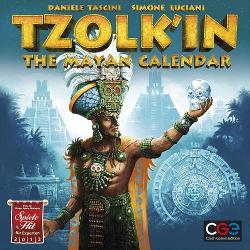
Tzolk'in: The Mayan Calendar
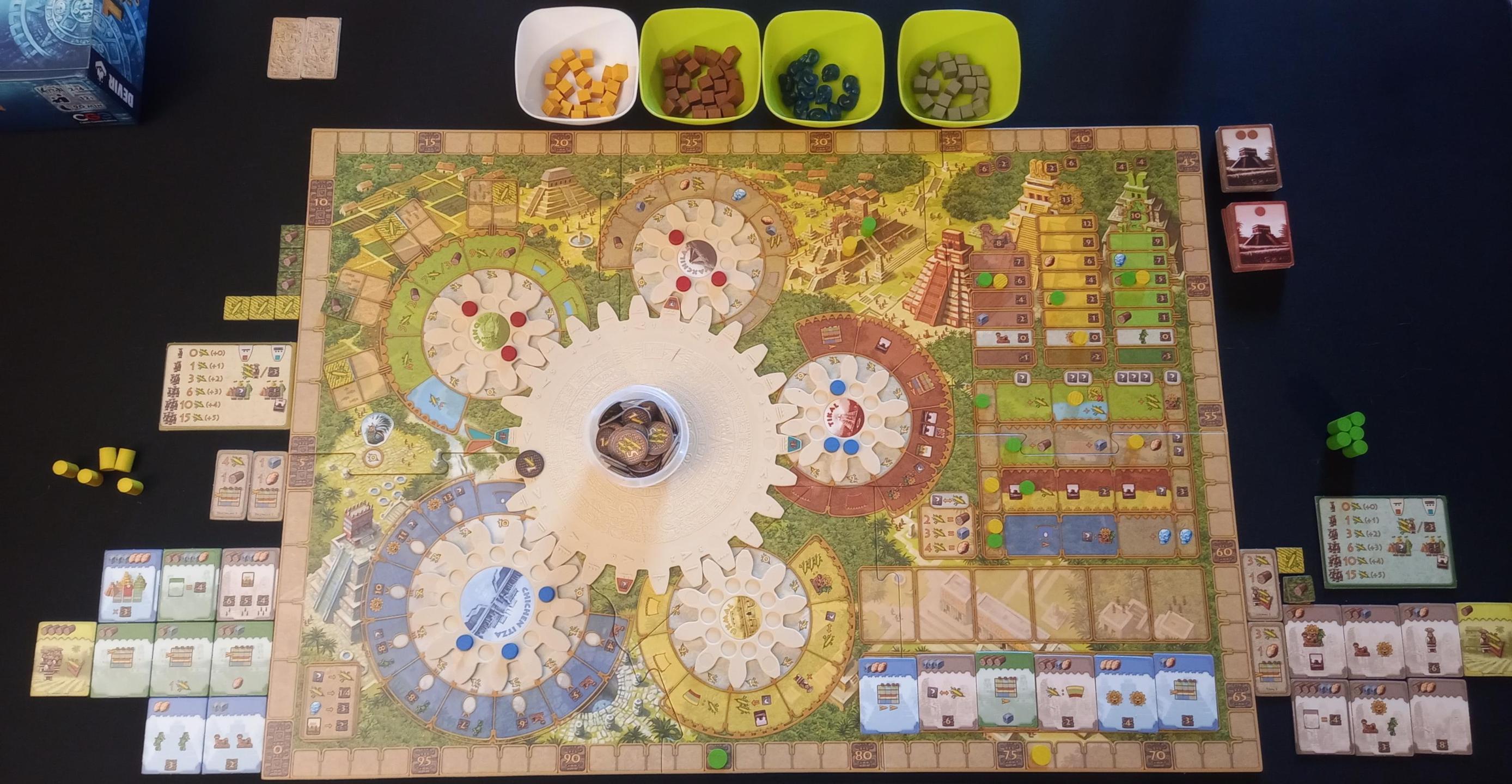
Players lead rival Mayan tribes, place workers on a network of interlocking gears, and time actions as the gears rotate to reach different action spaces. On a turn, players either place one or more workers on the lowest visible gear positions (paying corn as a resource) or pick up one or more workers and resolve the action associated with their current gear position. Later positions yield stronger effects, so players balance delaying workers for bigger rewards against being forced to retrieve them. The round structure advances as the central gear completes a revolution and the game ends then. Players score by building structures, making offerings, collecting resources and fulfilling other objectives to earn points.
- Players
- 2–4 best 4
- Playing time
- 90 min
- Age
- 13+
- Complexity
- 3.7 / 5
About the game
- Art
- Publisher



Expansions
See them in Ludoya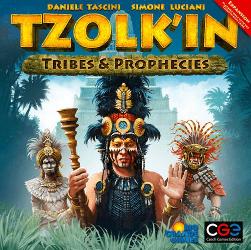
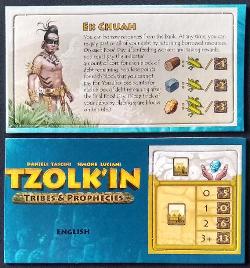
Photos from Ludoya tables
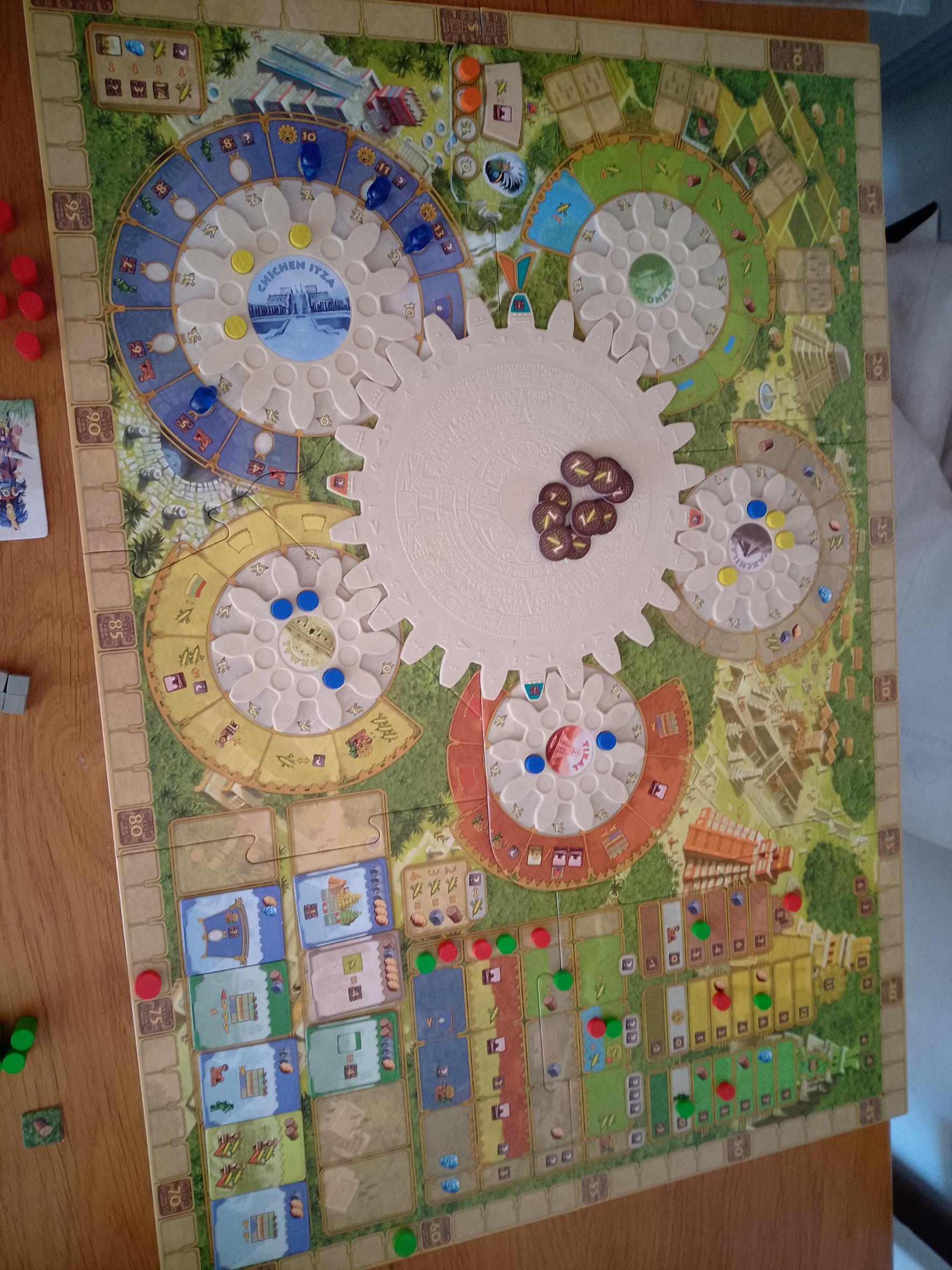
All photos in Ludoya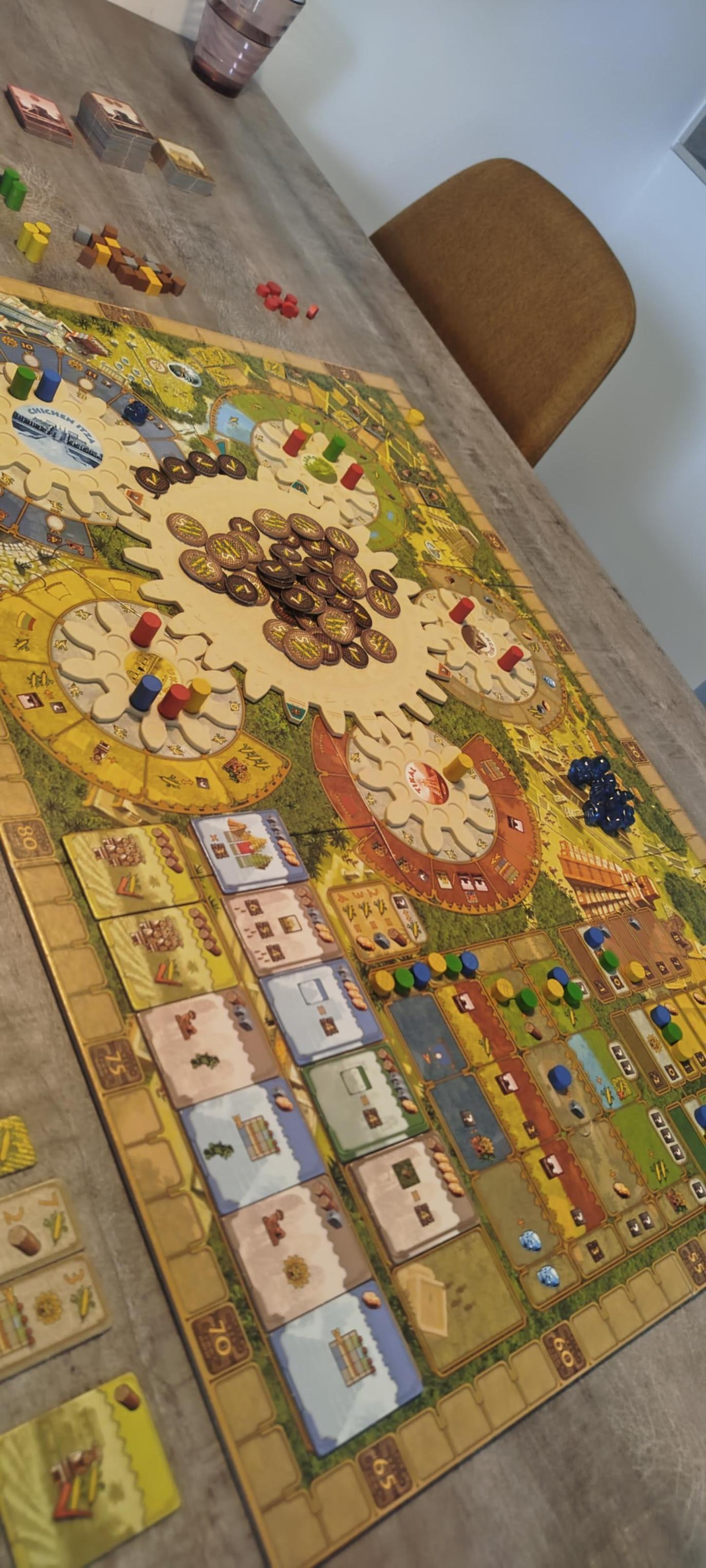
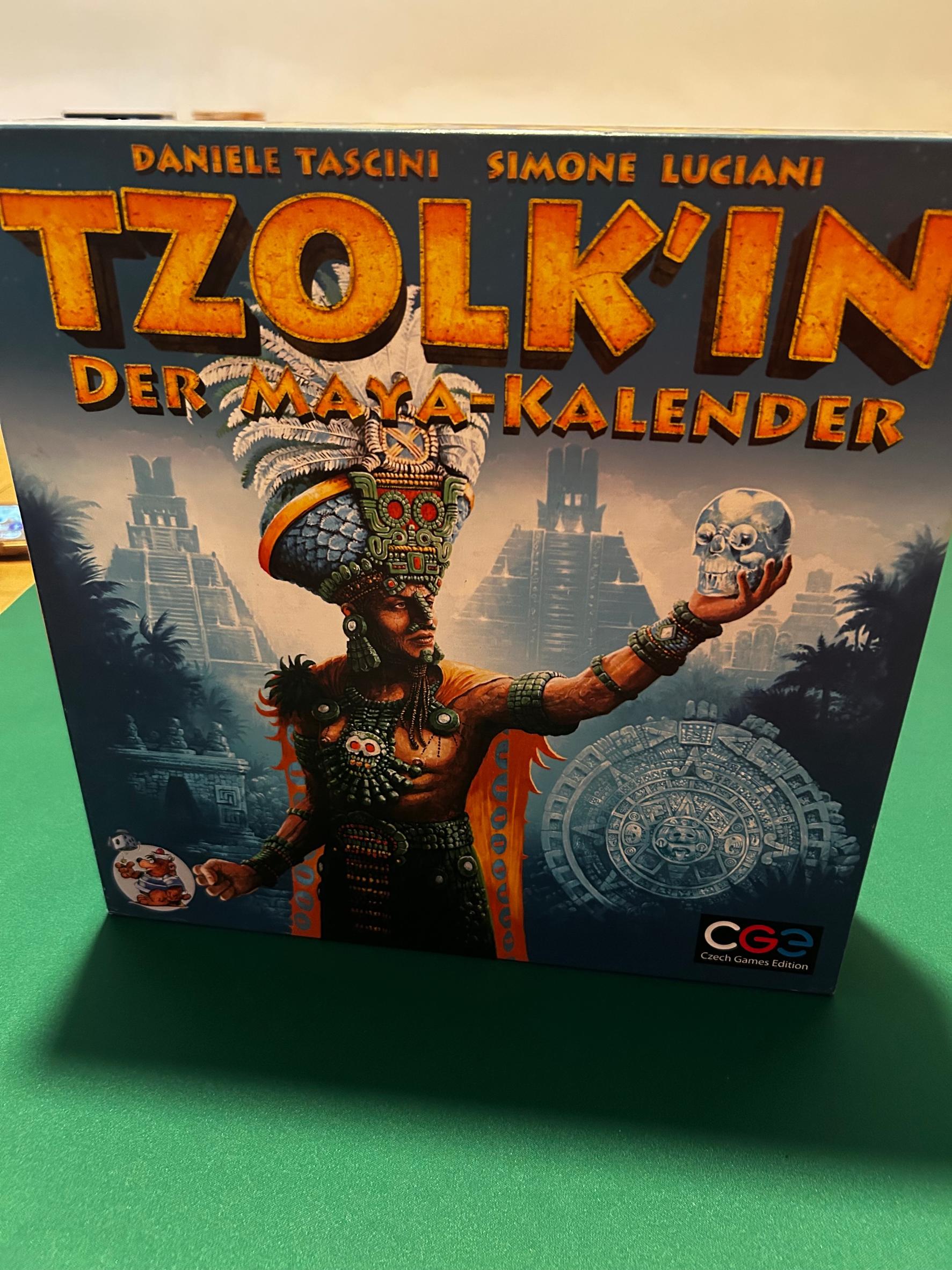
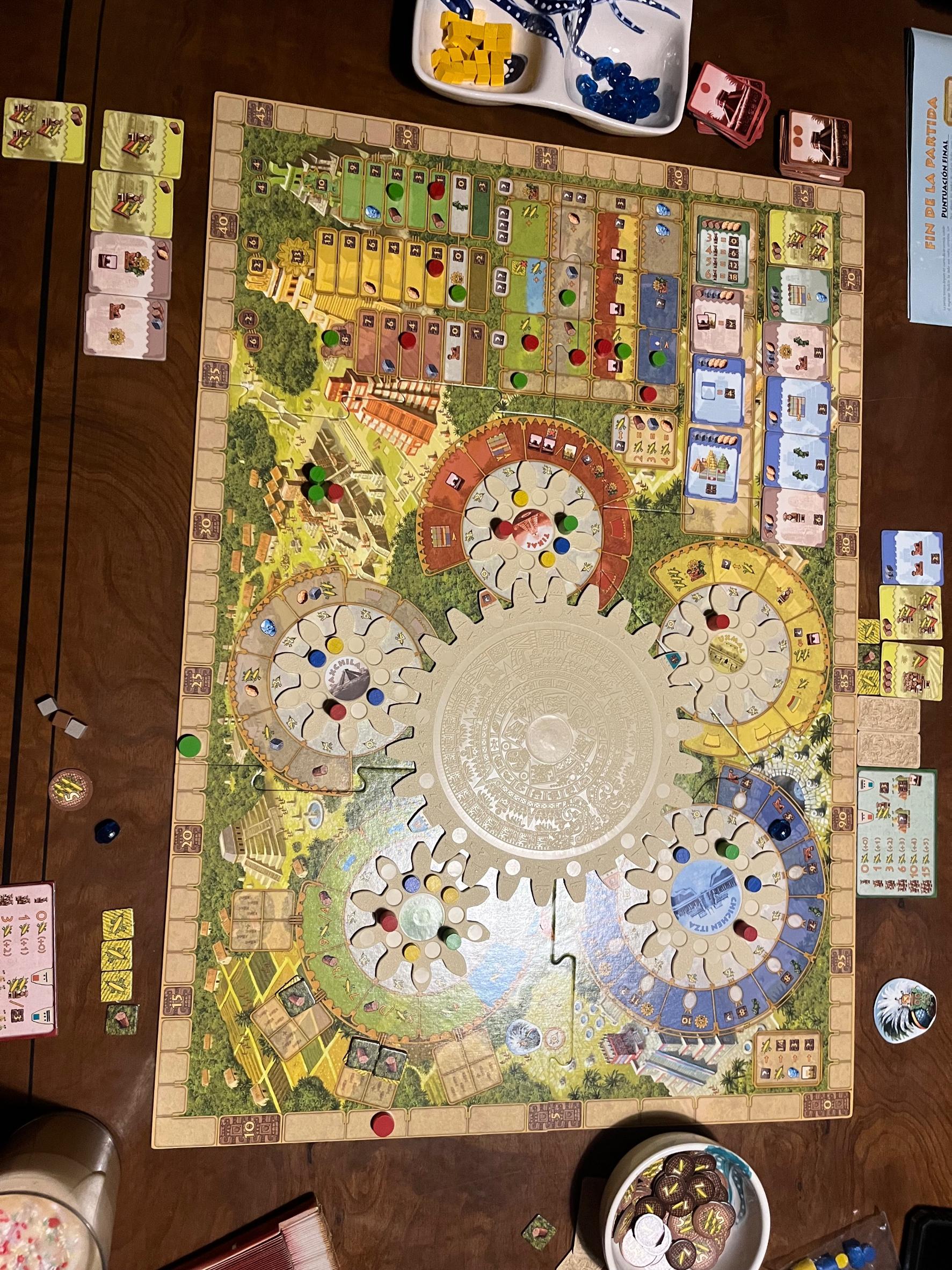
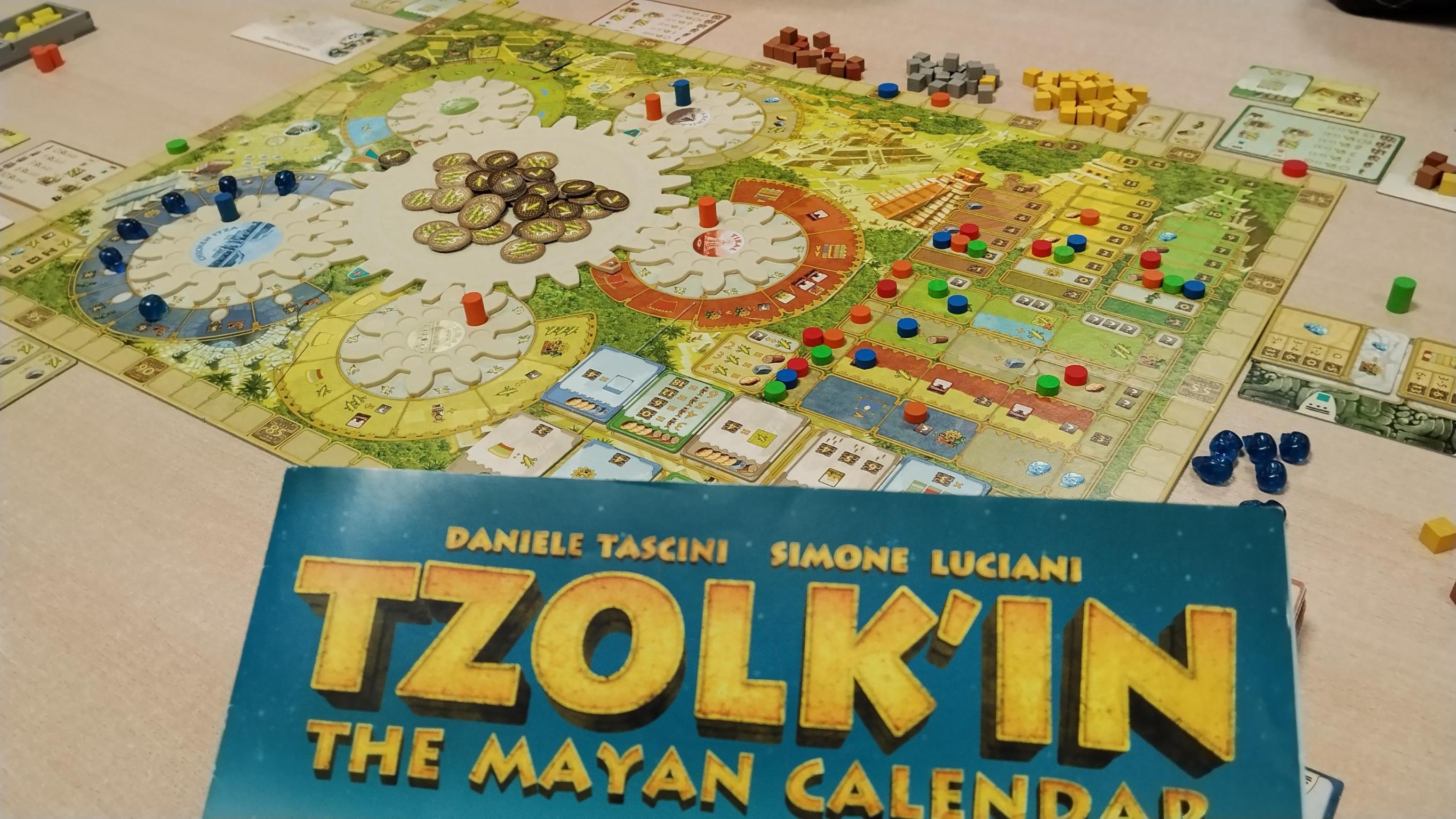
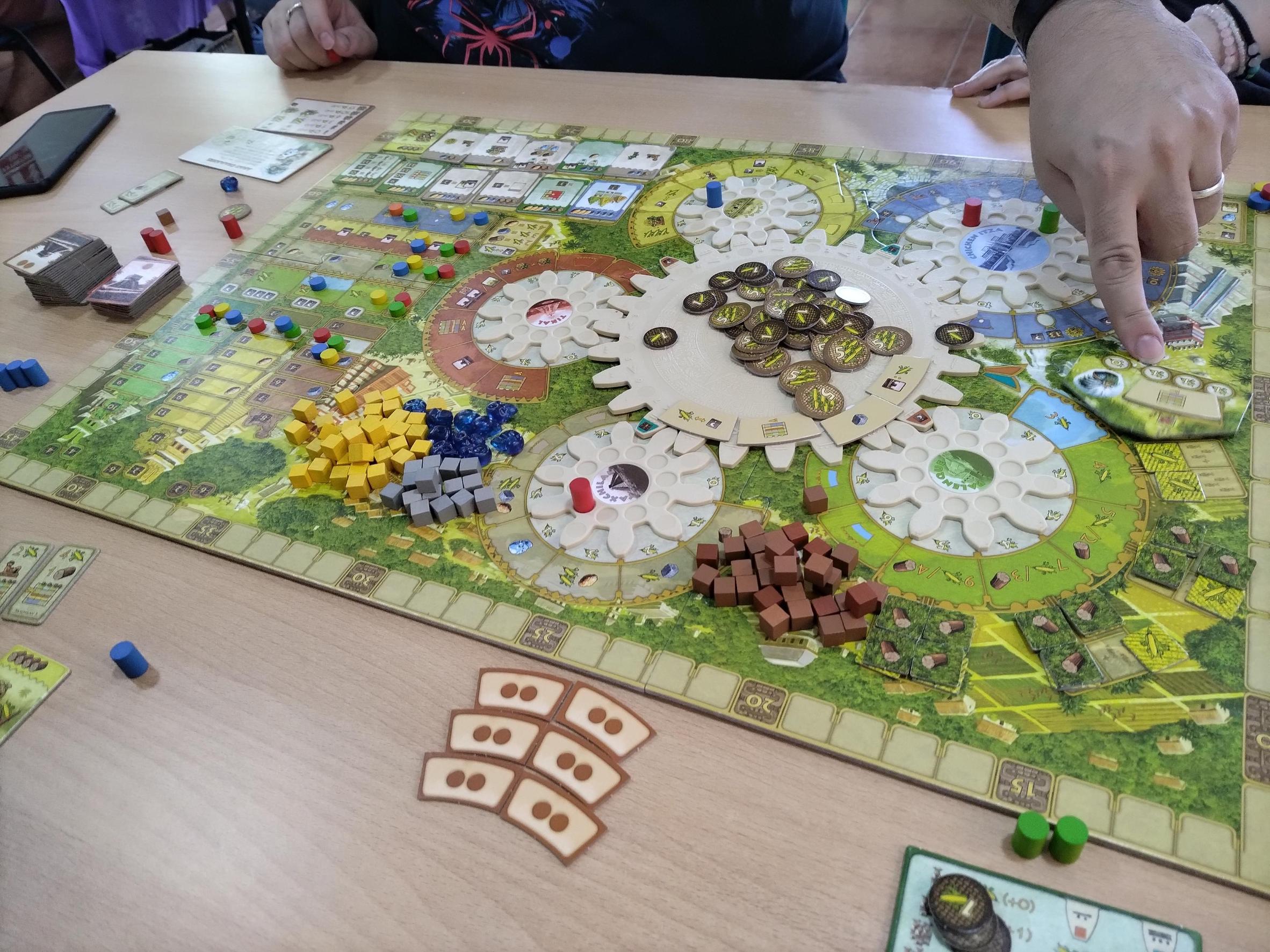
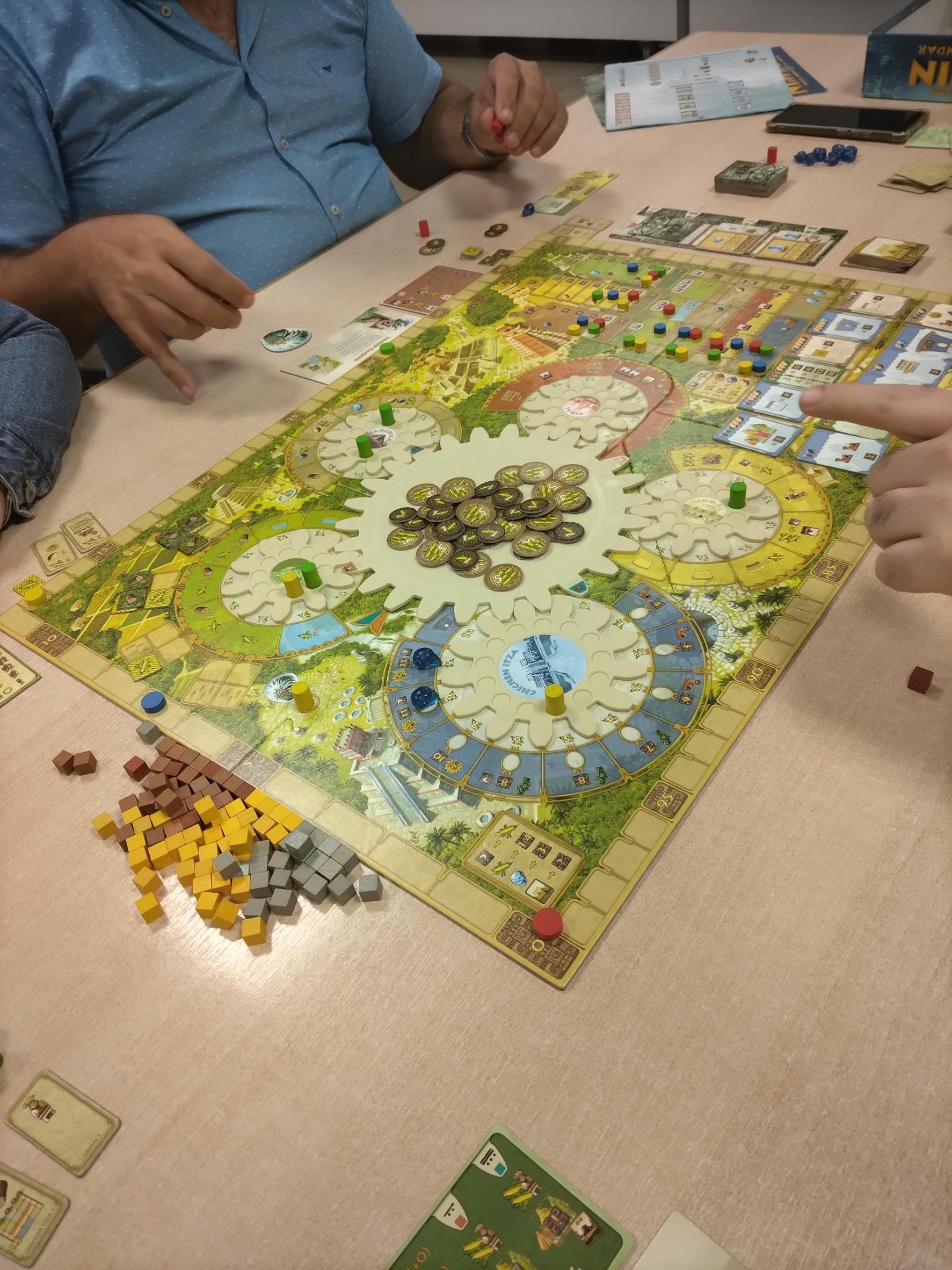
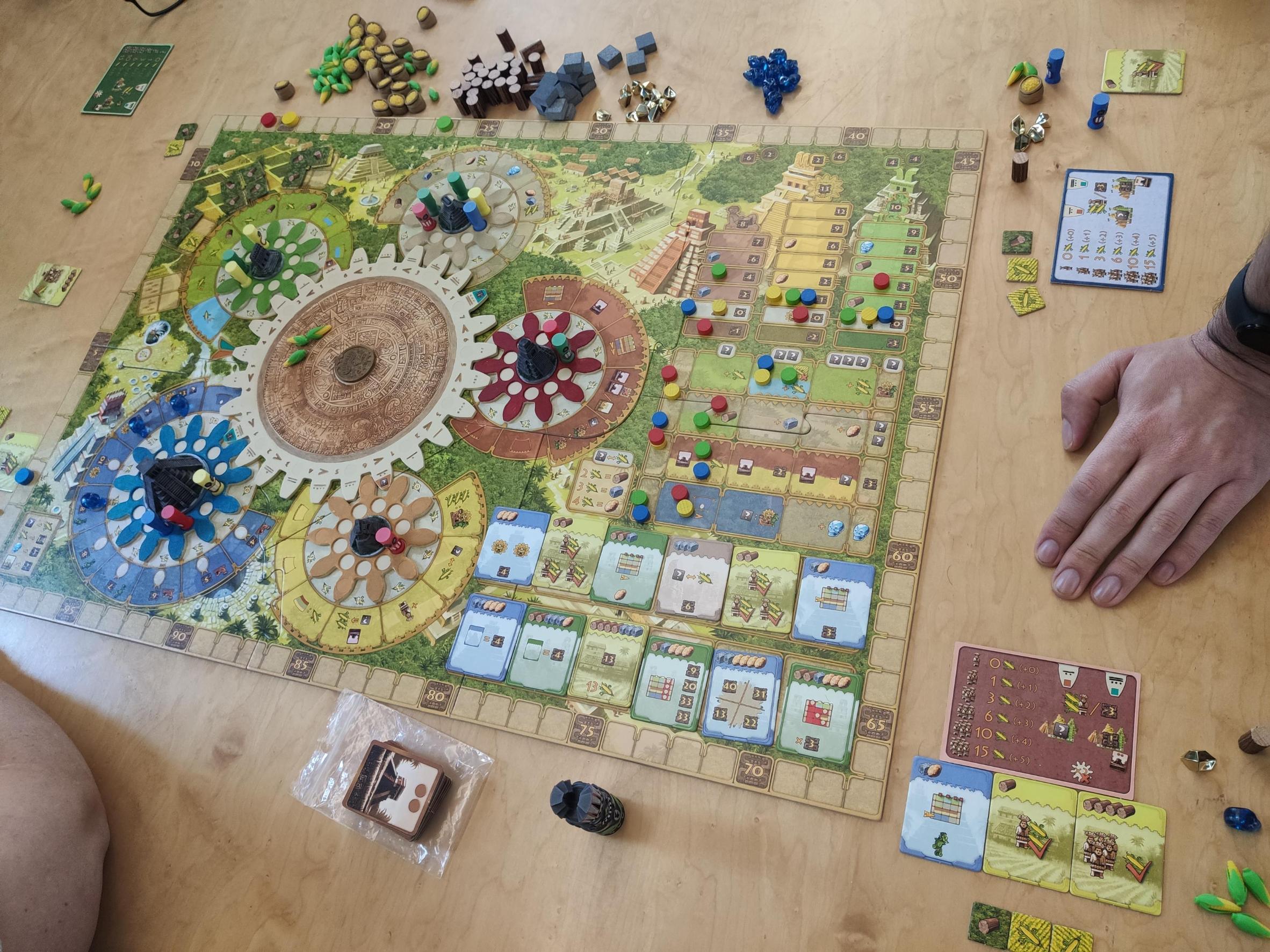
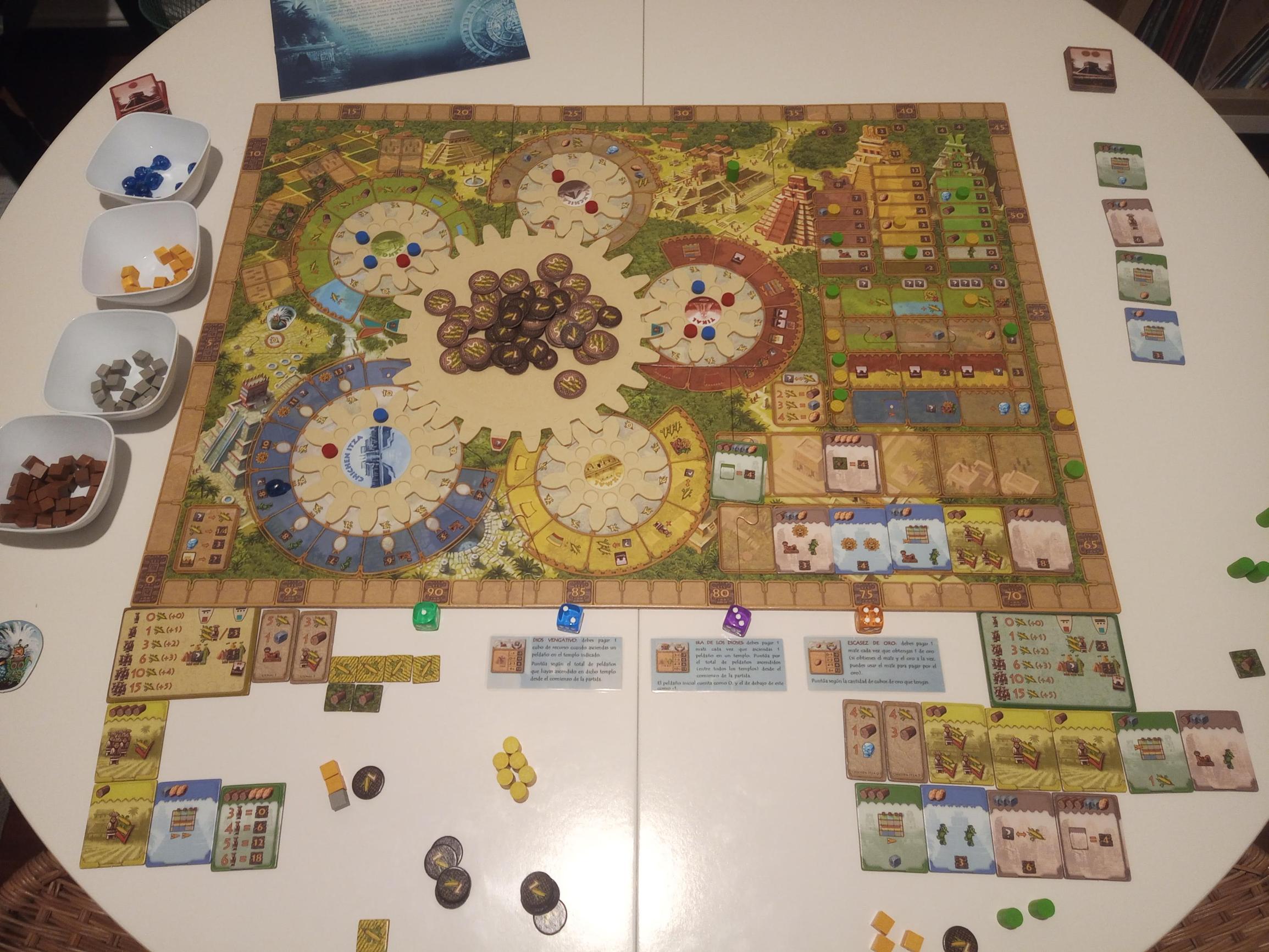
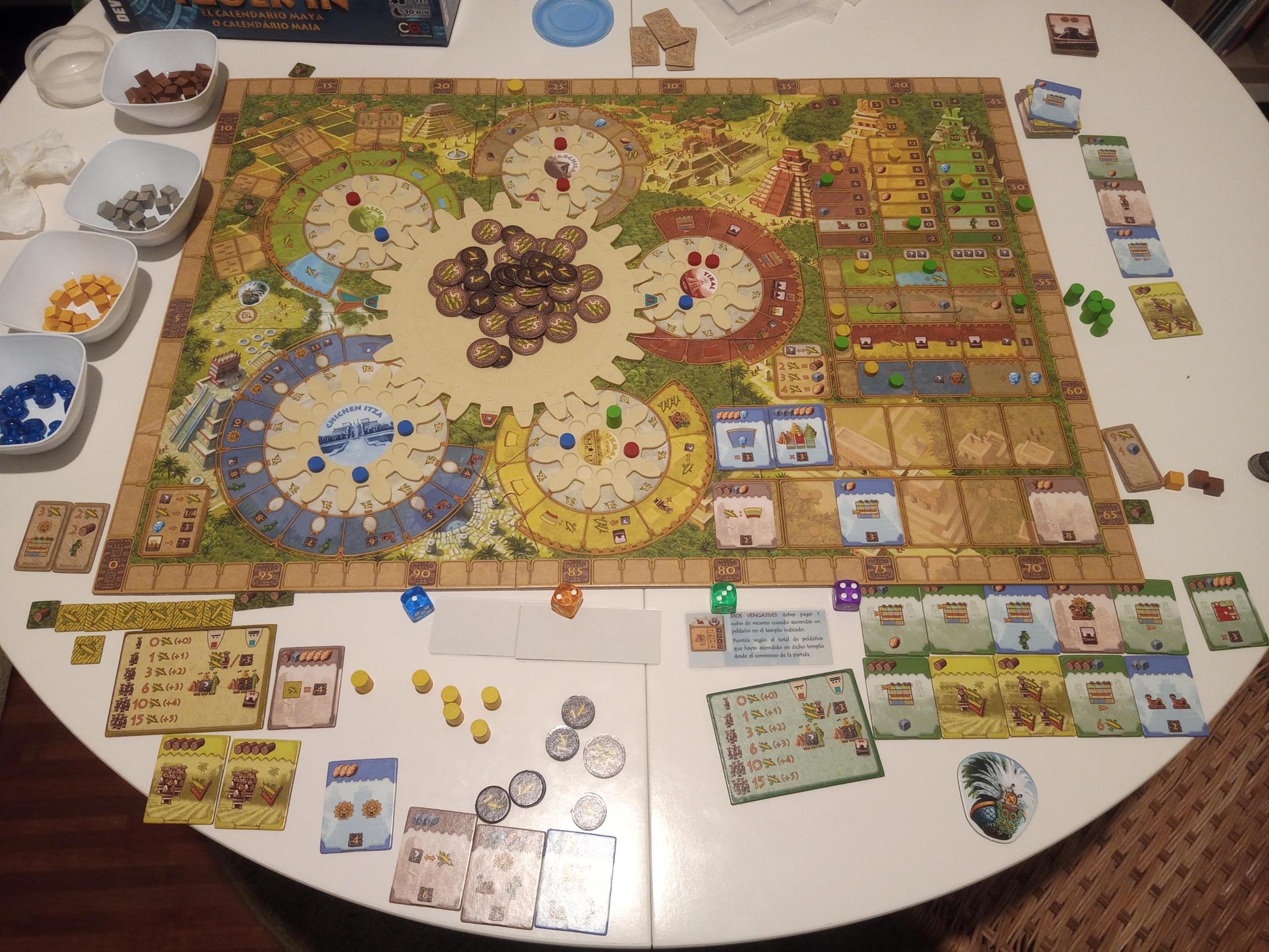
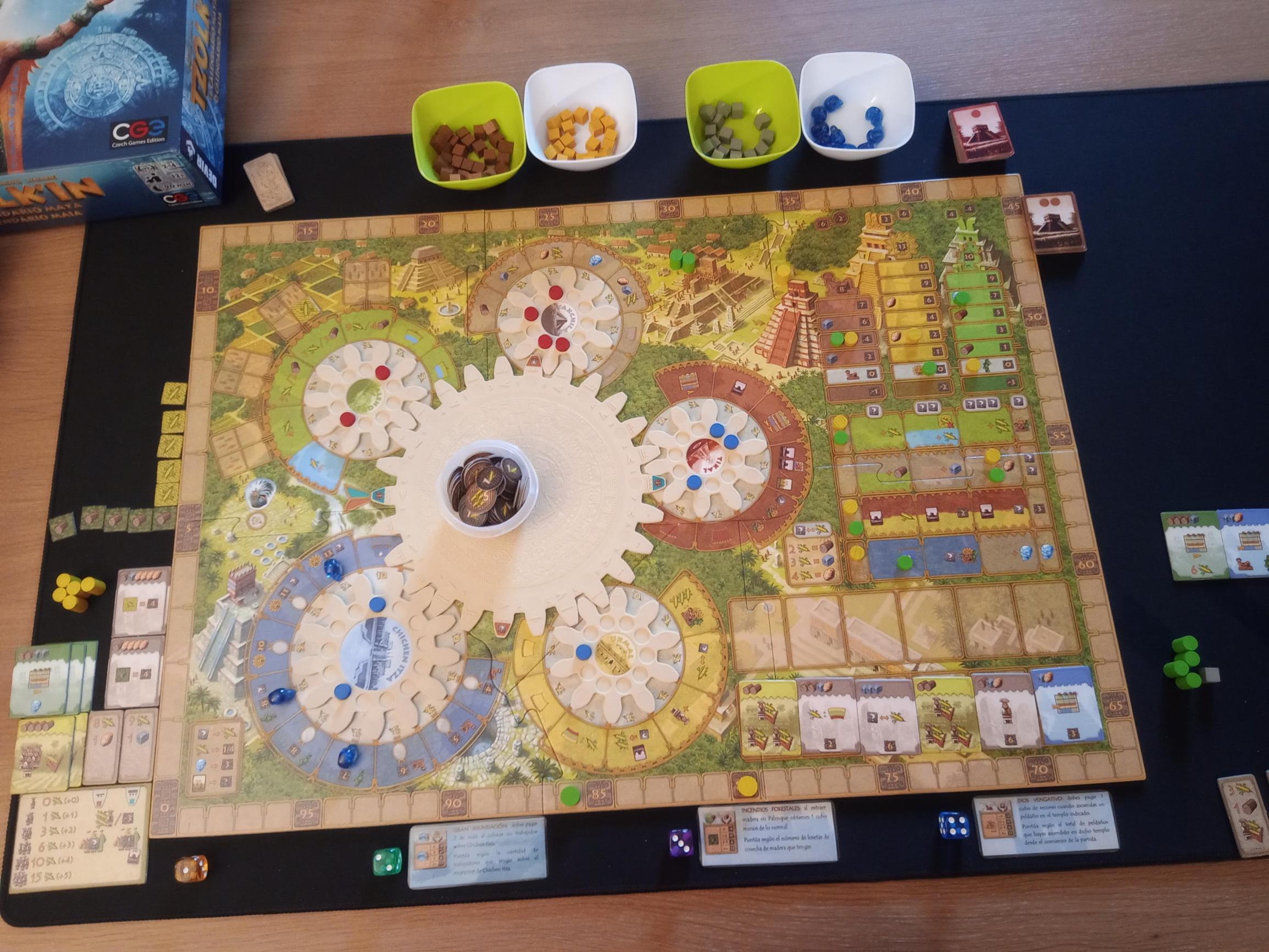
Where to buy it
Shop prices and second-hand copies, checked every day.
On Ludoya's tables
Full stats in Ludoya- 1,095
- Plays logged
- 1,031
- Players
- 1h 43m
- Average play
- 347
- In collections
- 52
- On wishlists
- 1
- Pre-ordered
8.0/10
from 193 Ludoya reviews
By player count
Mestremuten9.0 Rating: 5/5 Production value: 3/4 Is the game in my collection/Love to have?: 1/1
Played it 7 times
Bart Henry10.0 Ocena z dodatkiem - must have. :) Bez dodatku oceniłbym nieco niżej, szybciej się ogra. Plemiona i Przepowiednie odświeżają grę.
Played it 7 times
Elfrikijugon9.5 Autoregalo reyes (2024).
Played it 4 times

Rules questions
Answered from the rulebook by Ludoya's rules assistant.
On my turn, can I place some workers and pick up others?
No. You must either place one or more workers or pick up one or more workers; you can’t do both on the same turn, and you can’t skip your turn (p. 6).
Where do I put workers, and how much corn does placement cost?
Each worker goes on the lowest-numbered unoccupied space on the chosen gear. Pay the space number for each worker, plus the placement cost for the number of workers you place shown on your player board (p. 6).
Can I use a lower-numbered action when I pick up a worker?
Yes. You may perform the action at the worker’s space, choose a lower-numbered action on the same gear by paying 1 corn per step back, or take no action; another worker occupying that lower space doesn’t prevent you (pp. 6–7).
Do workers that reach the end of a gear get to take an action before they come off?
No. When the calendar advances, workers on the highest-numbered space are returned to their owners without an action, so pick them up before they are pushed off (p. 7).
Do we feed workers in the first round, since the calendar starts on a Food Day?
No. The marked tooth at the start represents the final Food Day after one full revolution, so the first round is not a Food Day. On Food Days, pay 2 corn per worker in play, including workers on gears; lose 3 points for each worker you can’t feed (p. 13).
What do I get from the temples on a Food Day?
At the middle-of-age Food Days, take the resources or skulls shown on your current step and every lower step. At the end-of-age Food Days, score only the points on your current step, then award the temple’s bonus to the highest player or split half the bonus among tied players (p. 13).
Score sheet by Ludoya
Tzolk'in: The Mayan Calendar score sheet
Every scoring category, from the Ludoya kit. On your phone the totals add up by themselves.





Free, on web, Android and iOS
Play Tzolk'in: The Mayan Calendar with Ludoya
- Keep it in your collectionTrack your copy and its expansions, lend it to friends, or put it on your wishlist and get told when the price drops.Add it to your collection
- Log every playScores, winners, timers and photos, then your stats: win rate, favourite player count, best score.Log a play
- Settle rules questionsAsk anything about the rules and get an answer from the rulebook, with the page to check it on.Ask the rules assistant
- Find people to play it withClubs, game nights and events near you that bring this game to the table.See events
Game facts (players, playing time, age, credits) from BoardGameGeek.