
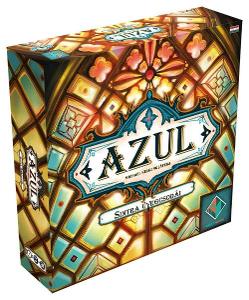
2018 · Rejtvény
Azul: Sintra üvegcsodái
Players assemble stained-glass windows by drafting translucent glass panes and placing them on a double-sided window panel. Each round, players take sets of colored panes from common displays, manage surplus that can cause penalties, and arrange pieces to complete patterns on their personal board. Scoring occurs during and after rounds for completed panels, specific patterns, and color sets, with an added Colour Bonus mechanic each round that rewards particular color collections. The game uses a tower for discarded panes and plays over six rounds; the highest scoring player wins.
- Játékosok
- 2–4 legjobb: 3
- Játékidő
- 30–45 perc
- Kor
- 8+
- Bonyolultság
- 2 / 5
A játékról
- Tervezés
- Grafika
- Publisher



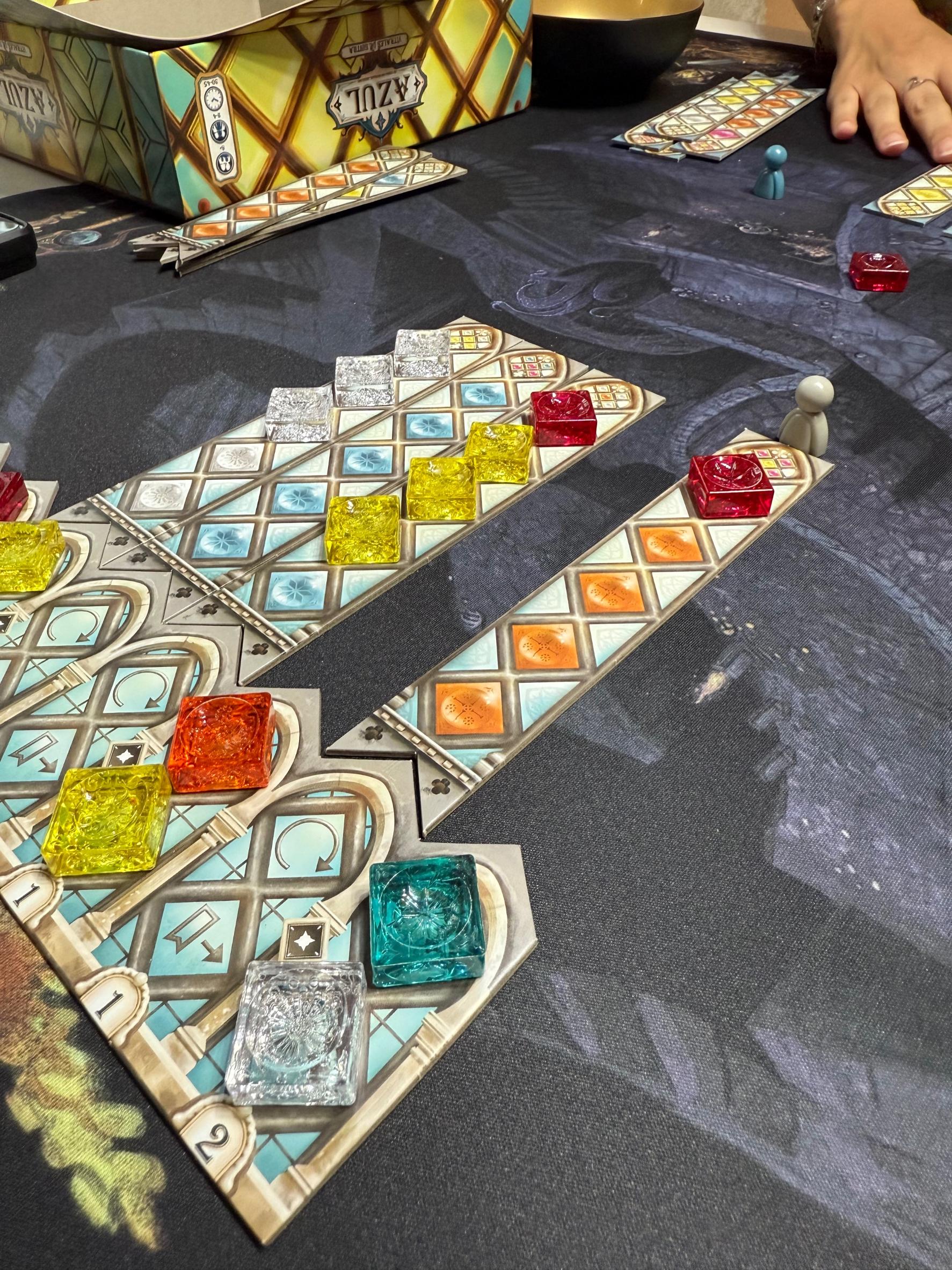
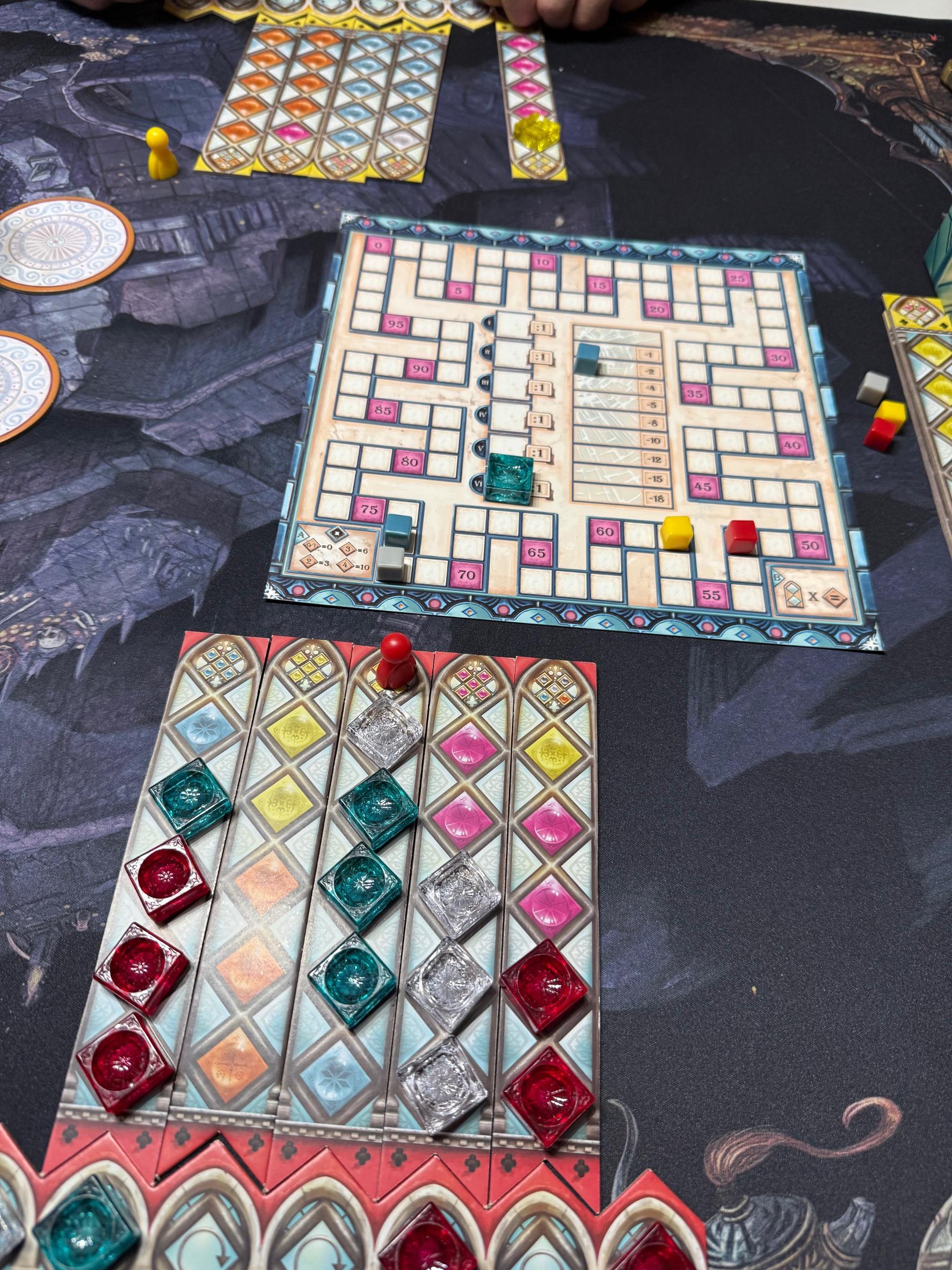
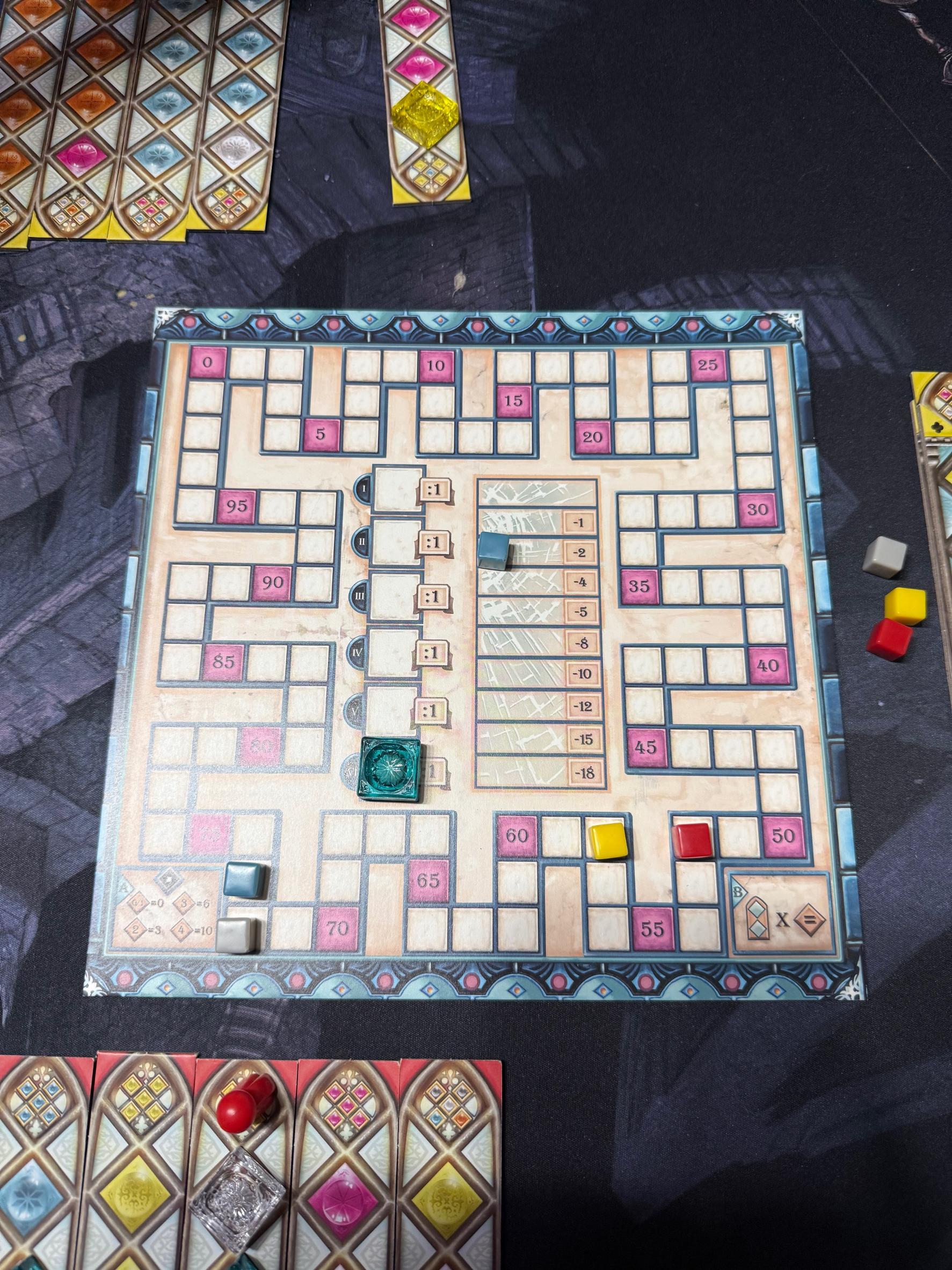
Fotók a Ludoya asztalairól
Minden fotó a Ludoyában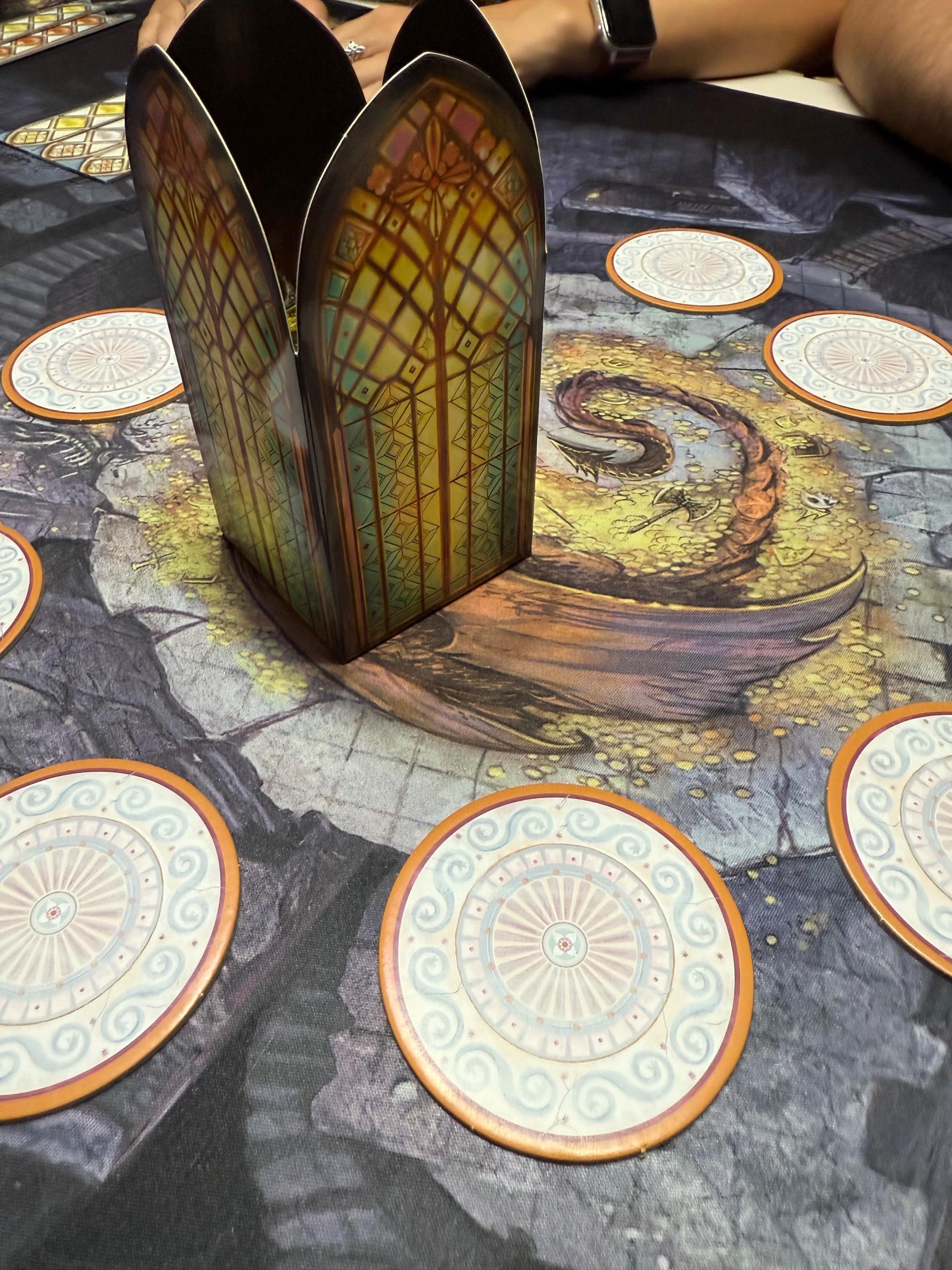
Hol vásárolhatod meg
Bolti árak és használt példányok, naponta ellenőrizve.
A Ludoya asztalain
Teljes statisztika a Ludoyában- 511
- Rögzített játszmák
- 428
- Játékosok
- 37m 23s
- Átlagos játékidő
- 155
- Gyűjteményekben
- 14
- Kívánságlistákon
6,9/10
64 Ludoya-értékelés alapján
Evan5,9 This game uses the basic tile selection mechanism from Azul 1, and applies it to a new puzzle. The player boards get randomized at the start of the game, so each player is going for different colors at different points. You no longer have a prep area, rather your tiles are placed directly into columns. When a column is full, it scores for itself, and for each column completed to it's right. Then you mark the completion, flush the tiles out of it and flip it over so it's available for a second completion but this time with different colors. You also have a meeple who starts on the left, and clicks to the right above whichever column you place your tiles into, who prevents you from placing tiles to the left of his current position. A new option during your turn is essentially passing to reset him to the left most position. It's so hard to judge this game on it's own merits for me at this point. I know I should allow this game to be it's own beautiful creature, but to me Azul 1 is such a perfectly designed game. To meddle with it to the extent here feels uncomfortable. My brain is telling me, this is just Azul, with much harder to track information. With the new players boards it's harder to see who needs what when. There's a mechanism where starting round 2, one color of tile is more valuable to complete which alters the math. Players can pass, which changes the flow of knowing who will get stuck with the giant pool of solid color nonsense. It's like Azul but more chaos. I do think that this impression might just be the natural result of meeting a brand new, unfamiliar game, yet because it's called Azul, and uses the same tile selection as Azul, I feel like I should intuitively know and understand it like Azul, a game I've played a lot of. The puzzle here is compelling once you can see and understand it. Predicting the flow of the game should come with more time and plays. I do think this isn't as elegant as Azul 1. I don't see this unseating Azul 1 in my heart. :star: Art, Iconography and components functional :star: Clever or interesting mechanisms :star: Reasonably low downtime between turns with mildly AP players :star: Multiple plays stay interesting :star: Low or mitigatable luck elements :star::star::nostar::nostar::nostar: Raw enjoyment
- Base [ 02 ] -

Szabálykérdések
A Ludoya szabályasszisztense válaszol a szabálykönyv alapján.
Can I place pieces on strips to the left of my glazier?
No — you may only place the pieces on the strip beneath your glazier or any strip to his right; never on strips to his left (page 3).
What happens to extra pieces I pick that don't fit on the chosen strip?
Any excess pieces that don't fit are considered broken: move your marker down one space on the broken glass track per broken piece and drop those pieces into the glass tower; if you have no matching space at all all picked pieces are broken, but if you have at least one reachable matching space you must place there even if others will break (page 3).
If I take pieces from the center, do I get the starting player tile and a penalty?
Yes — the first player each round to take pieces from the center also takes the starting player tile and their marker on the broken glass track is moved one space down (page 2).
When I complete a pattern strip, what exactly happens with placement and scoring?
When a strip is completed you first score color bonus points equal to how many pieces on the strip match the top piece of the round indicator, then remove all five pieces, keep one to place into the palace window (drop the other four into the glass tower), flip or remove the strip as instructed, and immediately score that window plus any windows to its right that contain pieces (pages 3–4).
Can I choose to just move my glazier instead of taking pieces, and are there restrictions?
Yes — instead of picking pieces you may move your glazier back to your leftmost pattern strip, but you cannot move him above an empty slot and if he is already above your leftmost strip you cannot take this action (page 4).
How do the final bonuses for Palace Side A and Side B work?
Side A: for each ornament you score 10/6/3/0 points if all 4/3/2/≤1 surrounding frames hold pane pieces; Side B: count your completed windows and choose a color, then gain (completed windows × number of panes of that color on your palace); ties are broken by who lost fewer points on the broken glass track (page 5).






Ingyenes, weben, Androidon és iOS-en
Játszd a(z) Azul: Sintra üvegcsodái játékot a Ludoyával
- Tartsd a gyűjteményedbenKövesd a példányodat és a kiegészítőit, add kölcsön a barátaidnak, vagy tedd fel a kívánságlistádra, és szólunk, ha csökken az ára.Add hozzá a gyűjteményedhez
- Rögzíts minden játszmátPontok, győztesek, időzítők és fotók, aztán a statisztikáid: győzelmi arány, kedvenc játékosszám, legjobb pontszám.Játszma rögzítése
- Döntsd el a szabályvitákatKérdezz bármit a szabályokról, és választ kapsz a szabálykönyvből, az oldallal együtt, ahol ellenőrizheted.Kérdezd a szabályasszisztenst
- Találj játszótársakat hozzáKlubok, játékestek és események a közeledben, ahol ez a játék asztalra kerül.Események megtekintése
Játékadatok (játékosok, játékidő, kor, alkotók) forrása: BoardGameGeek.