

2023 · Tárgyalás
Hegemony: Lead Your Class to Victory
Simulate a contemporary nation as one of four socio-economic groups—workers, middle class, capitalists or the state—in this asymmetric, card-driven politico-economic game. Players manage resources, control workers or companies, build or subsidize industries, and influence policy areas such as taxation, labor market and foreign trade. Voting, political maneuvering and targeted actions change the policy environment that constrains and enables each faction’s goals. Each faction has distinct capabilities and victory conditions, so players pursue different strategies while reacting to shifting policies and crises. The extended edition adds additional Crisis & Control content to expand tensions and options.
- Játékosok
- 2–4 legjobb: 4
- Játékidő
- 90–180 perc
- Kor
- 14+
- Bonyolultság
- 4,3 / 5
A játékról
- Publisher



Kiegészítők
Nézd meg őket a Ludoyában Hegemony: Lead Your Class to Victory – Historical Events2023
 Hegemony: Lead Your Class to Victory – Crisis & Control2023
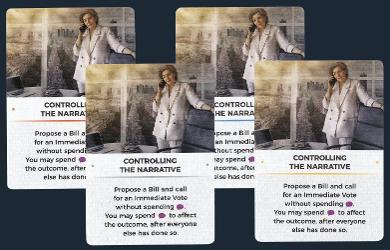 Hegemony: Lead Your Class to Victory – Controlling the Narrative Promo Card2024
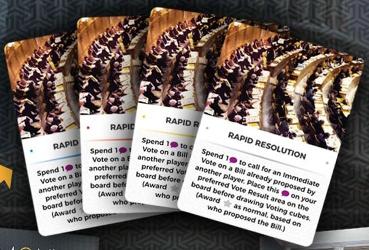 Hegemony: Lead Your Class to Victory – Rapid Resolution Promo Card2024
 Hegemony: Shadows of Authority2026
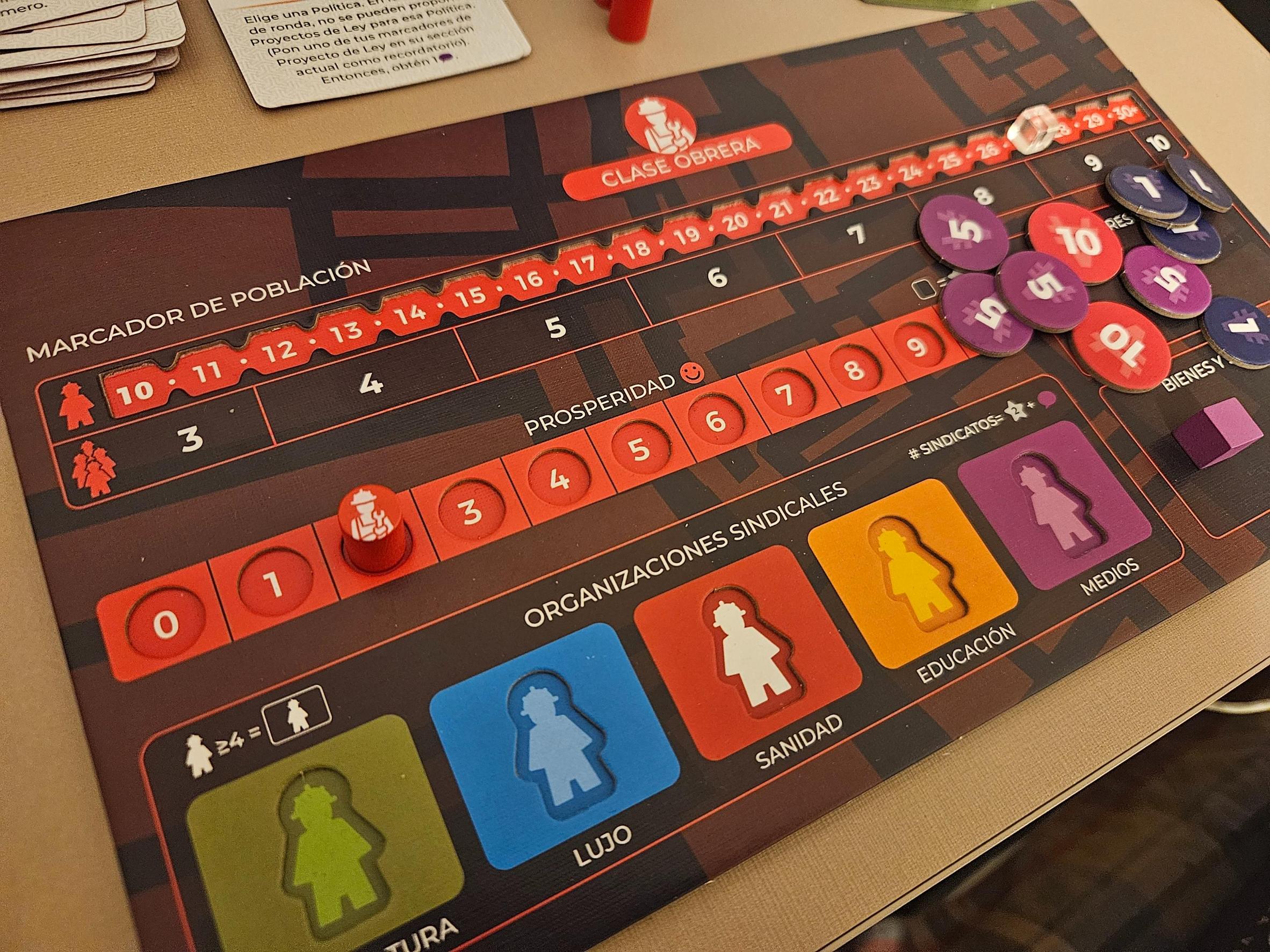
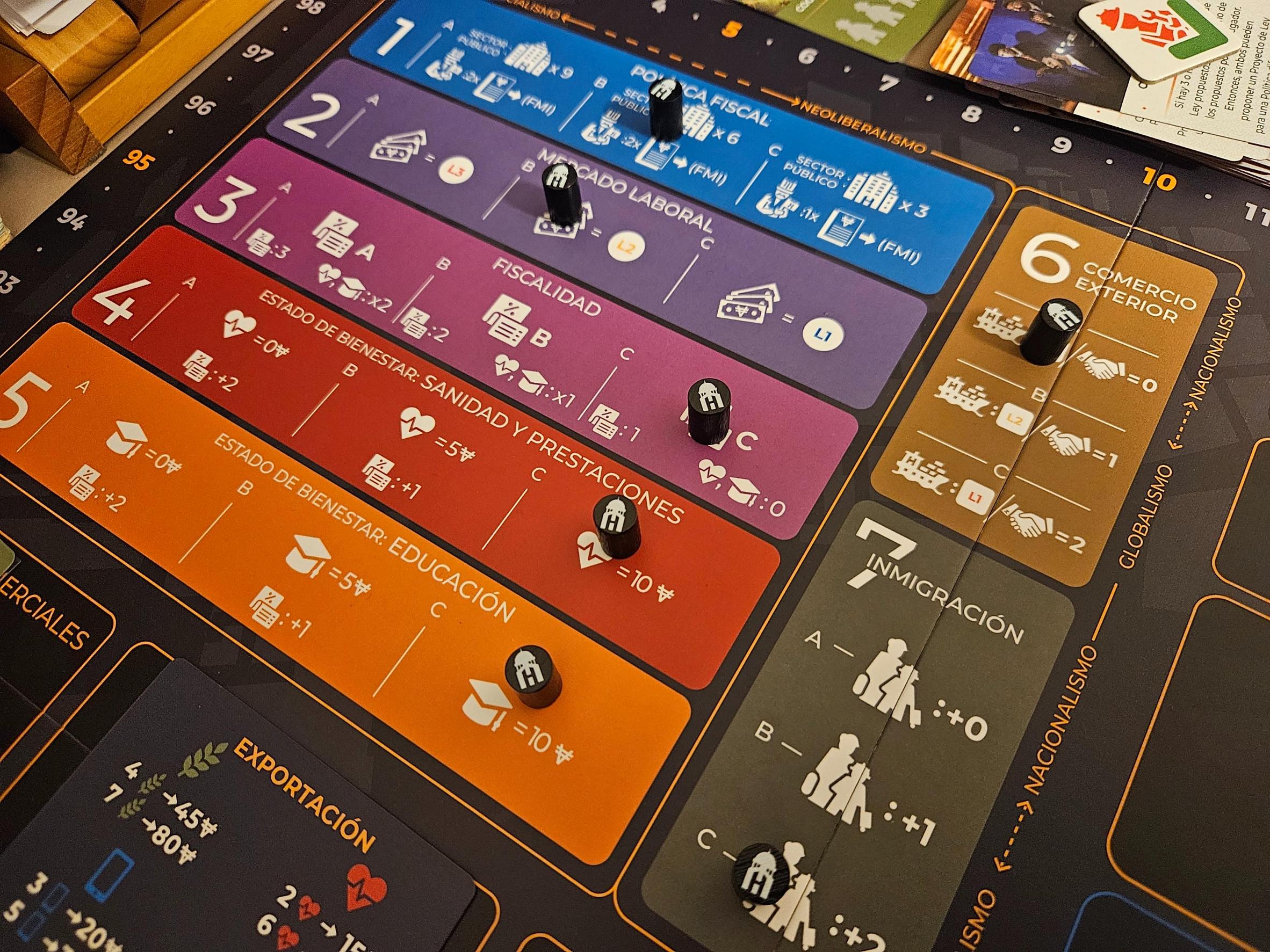
Fotók a Ludoya asztalairól
Minden fotó a Ludoyában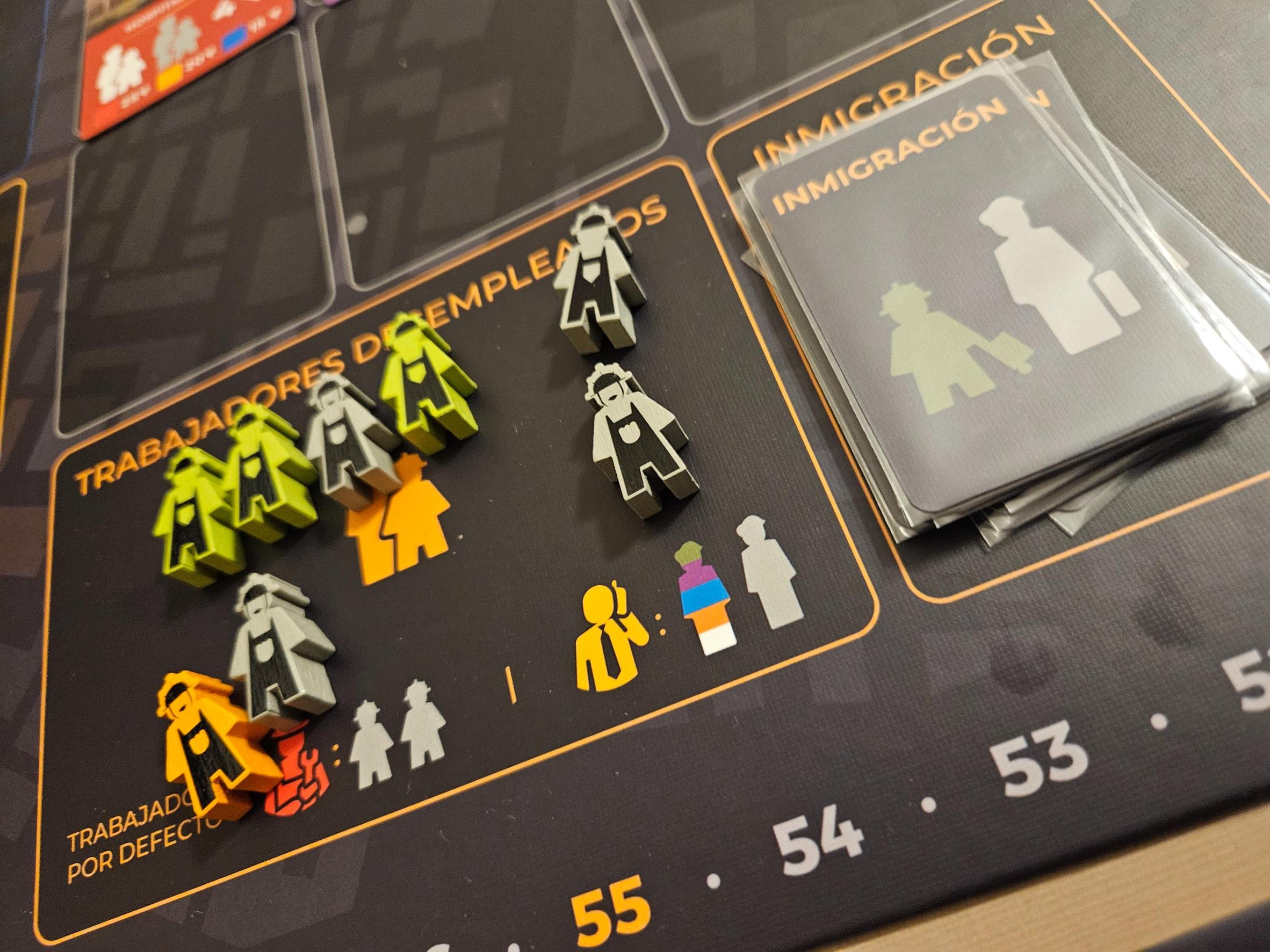
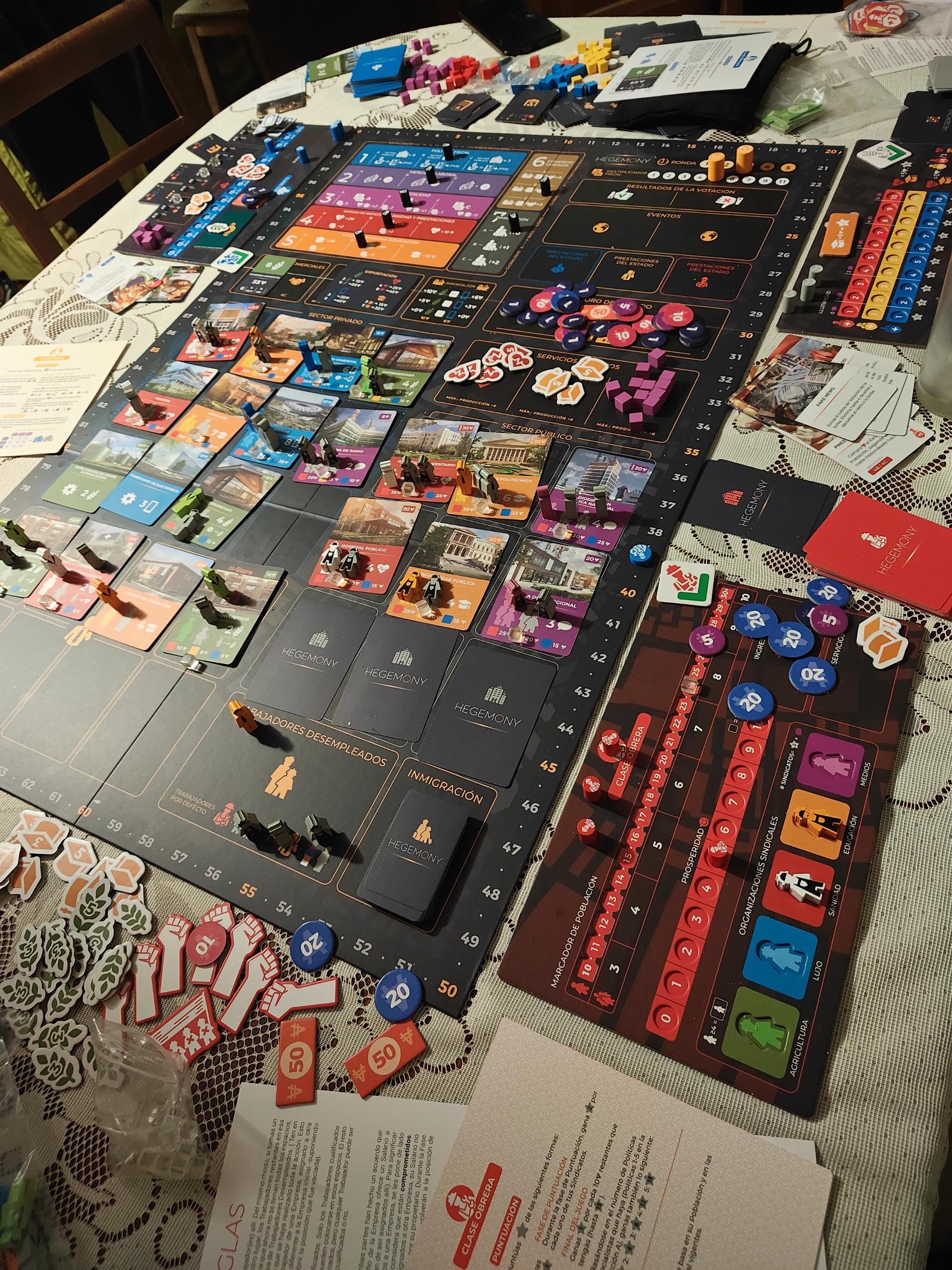
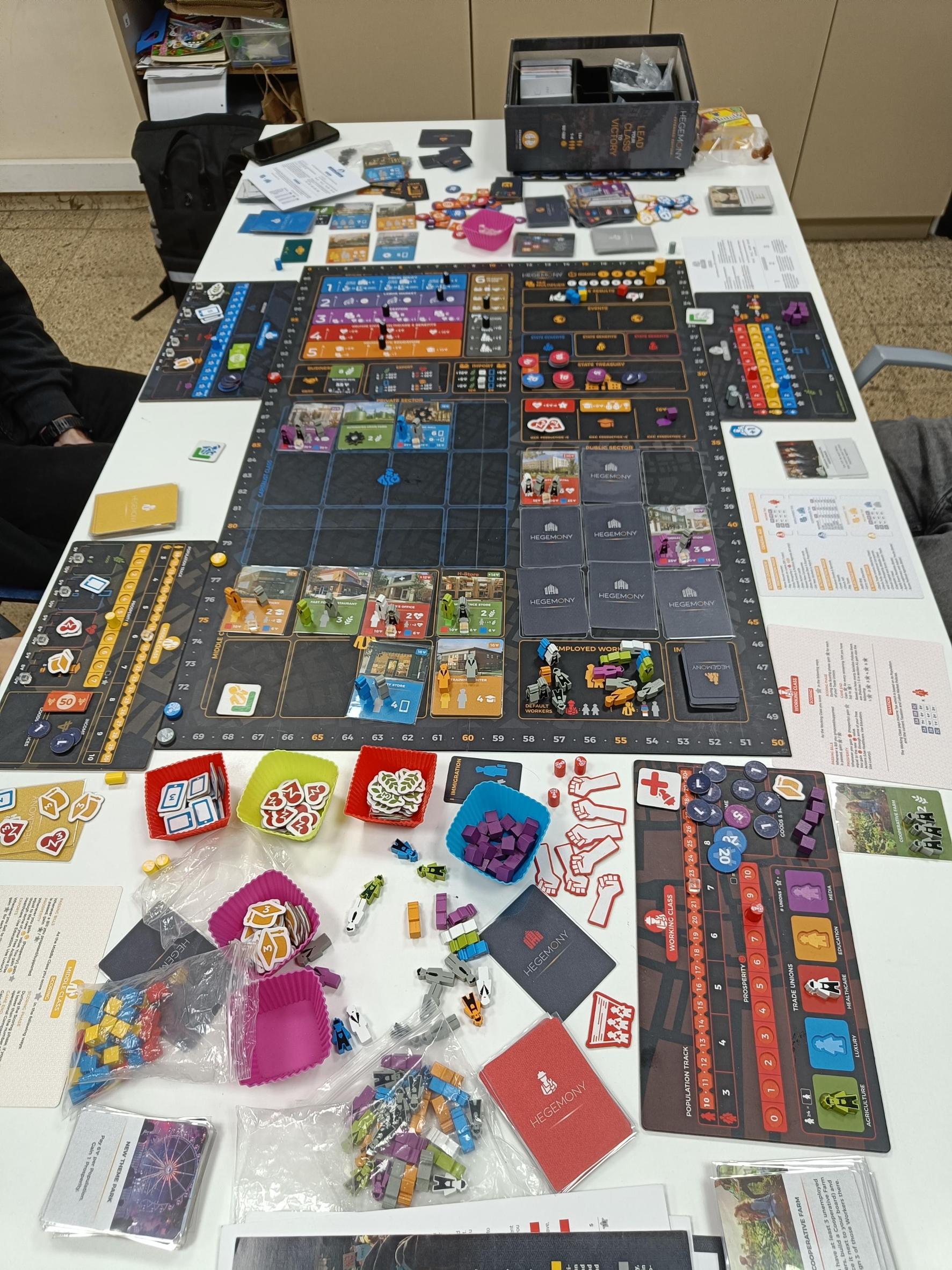
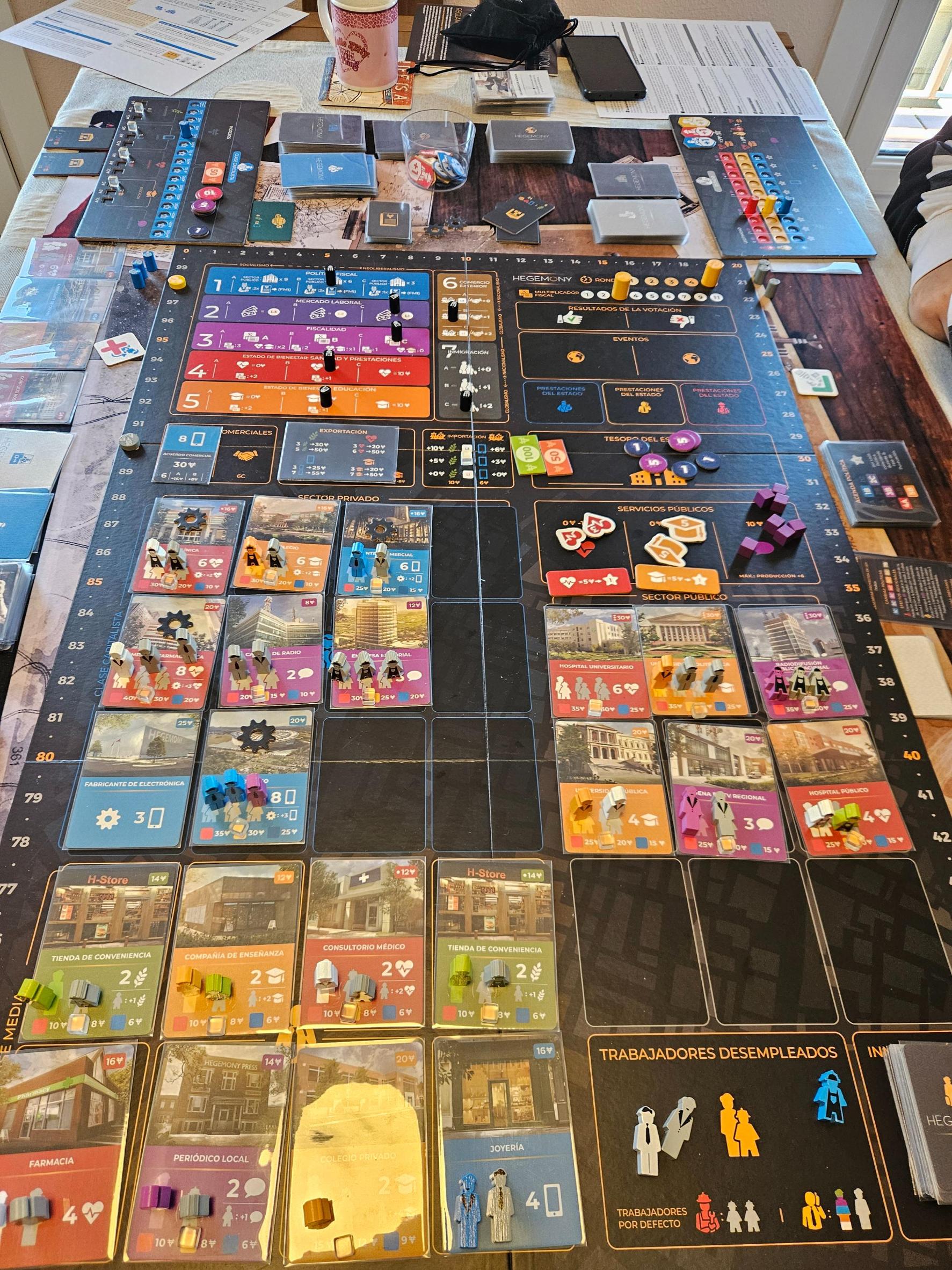
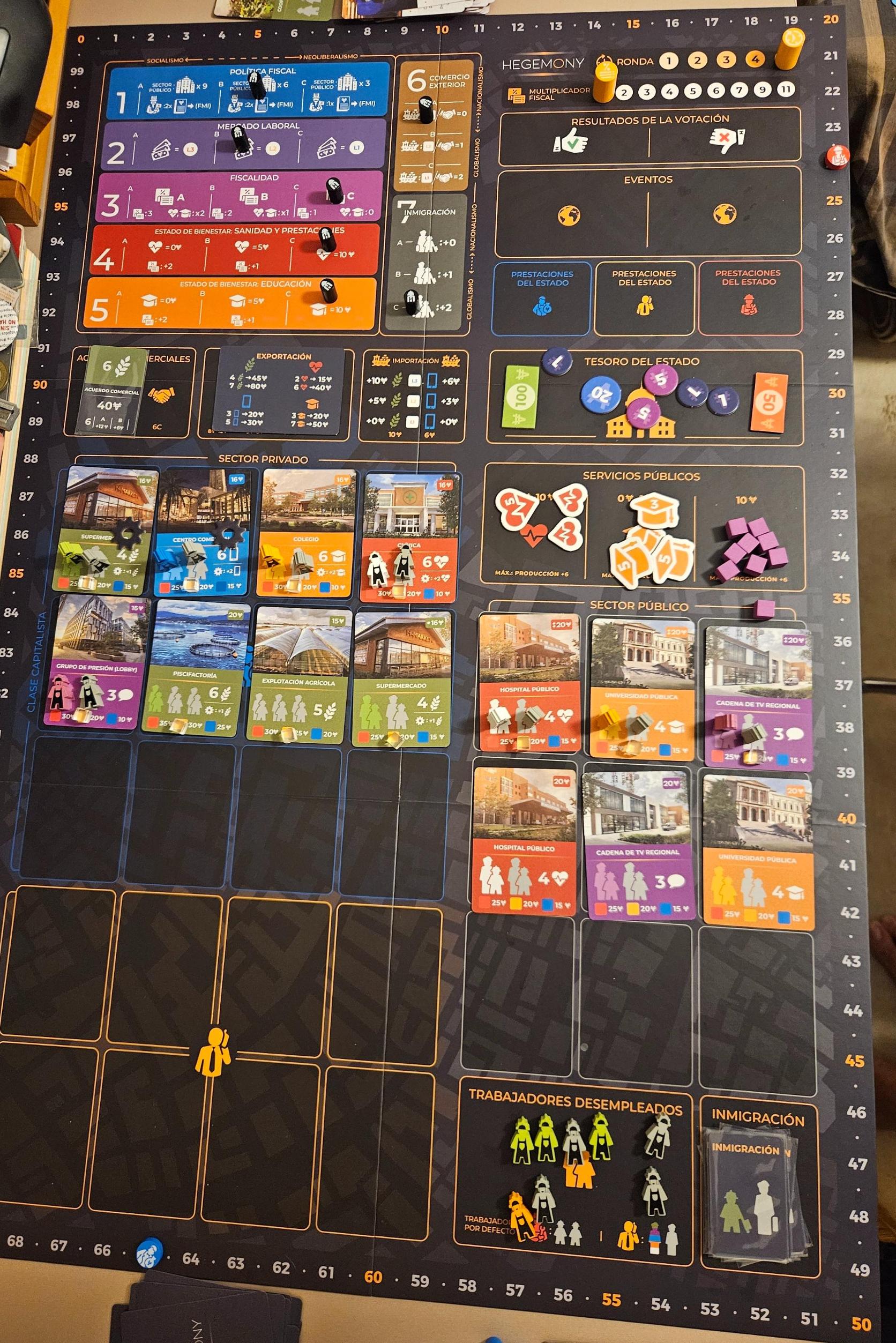
Hol vásárolhatod meg
Bolti árak és használt példányok, naponta ellenőrizve.
A Ludoya asztalain
Teljes statisztika a Ludoyában- 378
- Rögzített játszmák
- 613
- Játékosok
- 4h 28m
- Átlagos játékidő
- 163
- Gyűjteményekben
- 53
- Kívánságlistákon
- 1
- Előrendelve
7,9/10
78 Ludoya-értékelés alapján
+Crisis and Control Expansion
Игра классная, но почти одноразовая. Так как механика победа у каждой фракции одна. При этом дизайн и сеттинг очень классные. Играли с друзьями всё интересно, но правила порой спотыкаются. Некоторые вещи избыточны. Повторно играть не хочется, но о проведённой партии не жалею.
Una gran experiència, massa exigent d'entrada, però val la pena



Szabálykérdések
A Ludoya szabályasszisztense válaszol a szabálykönyv alapján.
If a worker is "committed" can I assign them to another company or lower their wage or sell that company?
Committed Workers cannot be assigned elsewhere, their Wage cannot be lowered and their Company cannot be sold by its owner while they are committed; they return to standing during the Production Phase when they produce (p.15). There are exceptions noted in the FAQ (for example the State may sell Public Companies even if they have committed Workers in some cases) (p.35).
When I place a Strike token, what actually happens during Production—do workers get paid or does the company produce?
A Company with a Strike token that remains (i.e. wages are still L1 or L2) skips production and pays no Wages, and the striker gains 1 Influence; Strike tokens on Level 3 Wages are discarded before resolution (pp.15–16). If a Company with a Strike token becomes non‑operational (workers removed), the token is simply removed and no Influence is gained (p.35).
When do I have to take a Loan, what does a Loan do, and what triggers IMF intervention?
You must take a Loan only when forced to pay a mandatory cost and cannot cover it; taking a Loan places a Loan card and gives you 50¥, and you pay 5¥ interest each Preparation Phase until you pay it off (p.33). If the State has more Loans than allowed by Fiscal Policy and cannot pay them in the Check IMF step, the IMF intervenes: all proposed Bills are discarded, policies are forced to change (public companies may be sold, wages forced to L1, Tax Multiplier and import prices adjust), the State attempts to pay off Loans at 55¥ each, and Legitimacy markers are halved (p.33).
How are taxes calculated and what is the Tax Multiplier—how do Policies affect it?
During Pay Taxes you pay Income Tax (based on Labor Market and Taxation policies for Companies where you have Workers) and Employment Tax equal to your number of operational Companies multiplied by the Tax Multiplier (p.25). The Tax Multiplier’s base value is set by the Taxation Policy and is further modified (or doubled/ignored) by the Welfare policies for Health and Education, so always recalculate it immediately when those policies change (p.31).
Can I sell resources to the State or to the Foreign Market even if the State can’t afford or store them, and can I sell Companies that have committed Workers?
You cannot sell more resources to the State than it can store, but you may sell an amount the State cannot afford—if it accepts the sale it will be forced to take a Loan (p.36). Selling to the Foreign Market follows the Export/Business Deal card rules and each listed transaction can be performed once per action (pp.18–19). Generally you may not sell a Company that has committed Workers, except in specified cases such as forced Public Company sales caused by policy/IMF effects (pp.19, 33).
How do elections work—what do the voting cubes from the bag represent, how is Influence used, and what is an Immediate Vote?
In the Elections Phase you first refill the bag with Class cubes, then for each proposed Bill draw 5 cubes (these represent initial votes) and players declare in favor/against; after that each player may secretly spend Influence to add votes to their side and ties go to the Bill’s proposer (p.12). When you Propose a Bill you may spend 1 Influence to call an Immediate Vote, which resolves that Bill right away using the same election mechanics and awards 3 VP to the passing proposer (pp.18, 32).
Hasonló játékok
 Hegemony: Lead Your Class to Victory – Extended Edition2023
 John Company2017
 John Company: Second Edition2022
 Federation2022
 Argent: The Consortium2015
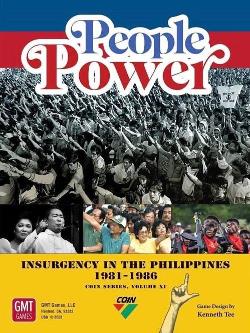 People Power: Insurgency in the Philippines, 1981-19862023
 Világrend2026
 Wir sind das Volk!2014
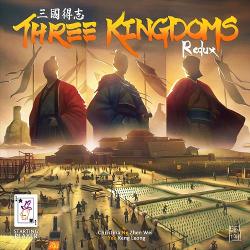 Three Kingdoms Redux2014
 Andromeda's Edge: Deluxe Edition2024
 Die Macher1986
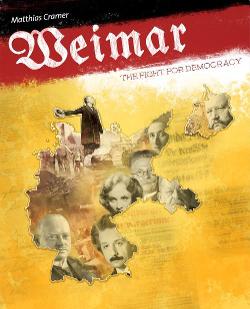 Weimar: The Fight for Democracy2023
Akiknek megvan, ezeket is birtokolják









Ingyenes, weben, Androidon és iOS-en
Játszd a(z) Hegemony: Lead Your Class to Victory játékot a Ludoyával
- Tartsd a gyűjteményedbenKövesd a példányodat és a kiegészítőit, add kölcsön a barátaidnak, vagy tedd fel a kívánságlistádra, és szólunk, ha csökken az ára.Add hozzá a gyűjteményedhez
- Rögzíts minden játszmátPontok, győztesek, időzítők és fotók, aztán a statisztikáid: győzelmi arány, kedvenc játékosszám, legjobb pontszám.Játszma rögzítése
- Döntsd el a szabályvitákatKérdezz bármit a szabályokról, és választ kapsz a szabálykönyvből, az oldallal együtt, ahol ellenőrizheted.Kérdezd a szabályasszisztenst
- Találj játszótársakat hozzáKlubok, játékestek és események a közeledben, ahol ez a játék asztalra kerül.Események megtekintése
Játékadatok (játékosok, játékidő, kor, alkotók) forrása: BoardGameGeek.