
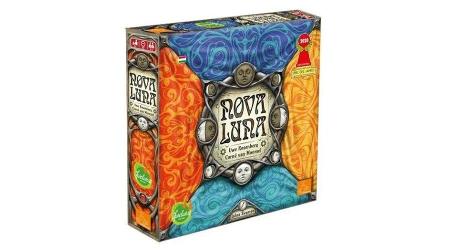
2019 · Rejtvény
Nova Luna
A játékosok egy közös kerékről draftolnak lapkákat, majd a saját táblájukhoz adják őket, feladatokat és színes szomszédsági mintákat létrehozva a követelmények teljesítéséhez. Minden lapka egy vagy több feladatot hoz létre; egy feladat teljesítéséhez a megfelelő színű lapkákkal kell körbevenni, és ekkor a játékos rátehet egy jelölőt arra a feladatra. A játékosoknak előre kell tervezniük, mert minden lehelyezett lapka új feladatokat és lehetőségeket hoz létre. A körök lényege, hogy a játékos választ egy lapkát a kerékről, lehelyezi, majd megoldja az esetlegesen teljesített feladatokat. A játék akkor ér véget, amikor egy játékos az összes jelölőjét lehelyezte.
- Játékosok
- 1–4 legjobb: 2
- Játékidő
- 30–60 perc
- Kor
- 8+
- Bonyolultság
- 1,9 / 5
A játékról
- Tervezés
- Grafika
- Publisher



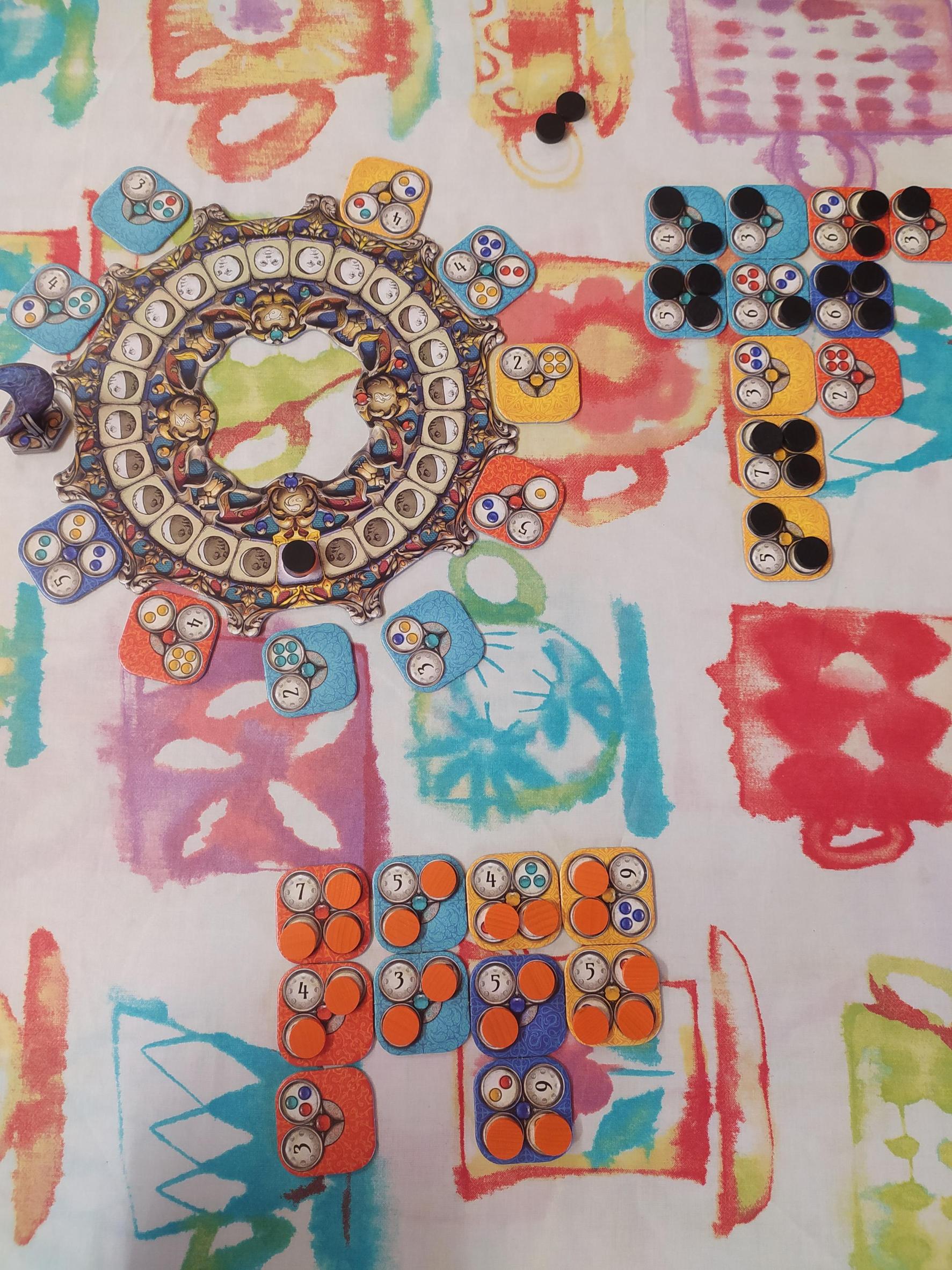
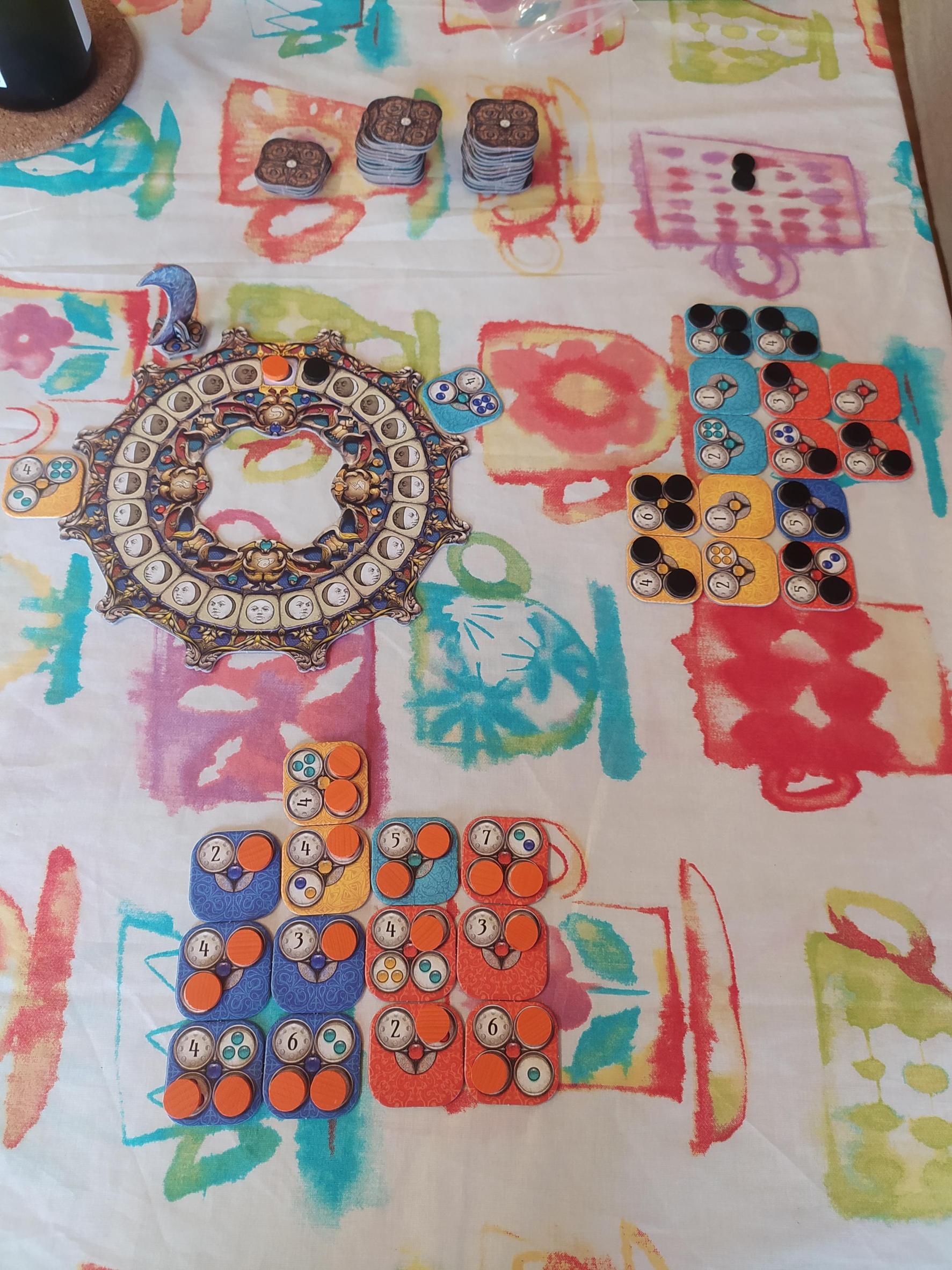
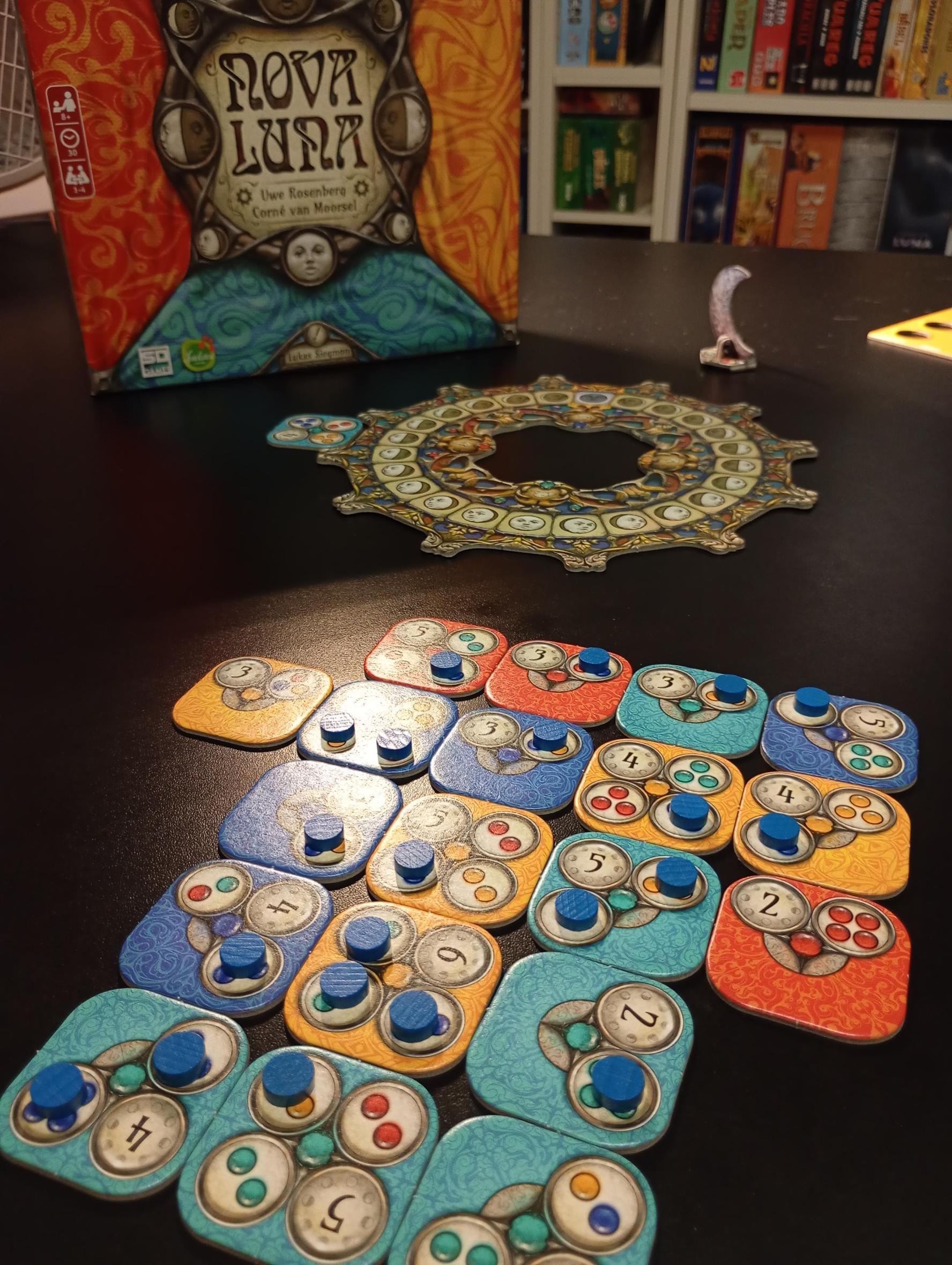
Fotók a Ludoya asztalairól
Minden fotó a Ludoyában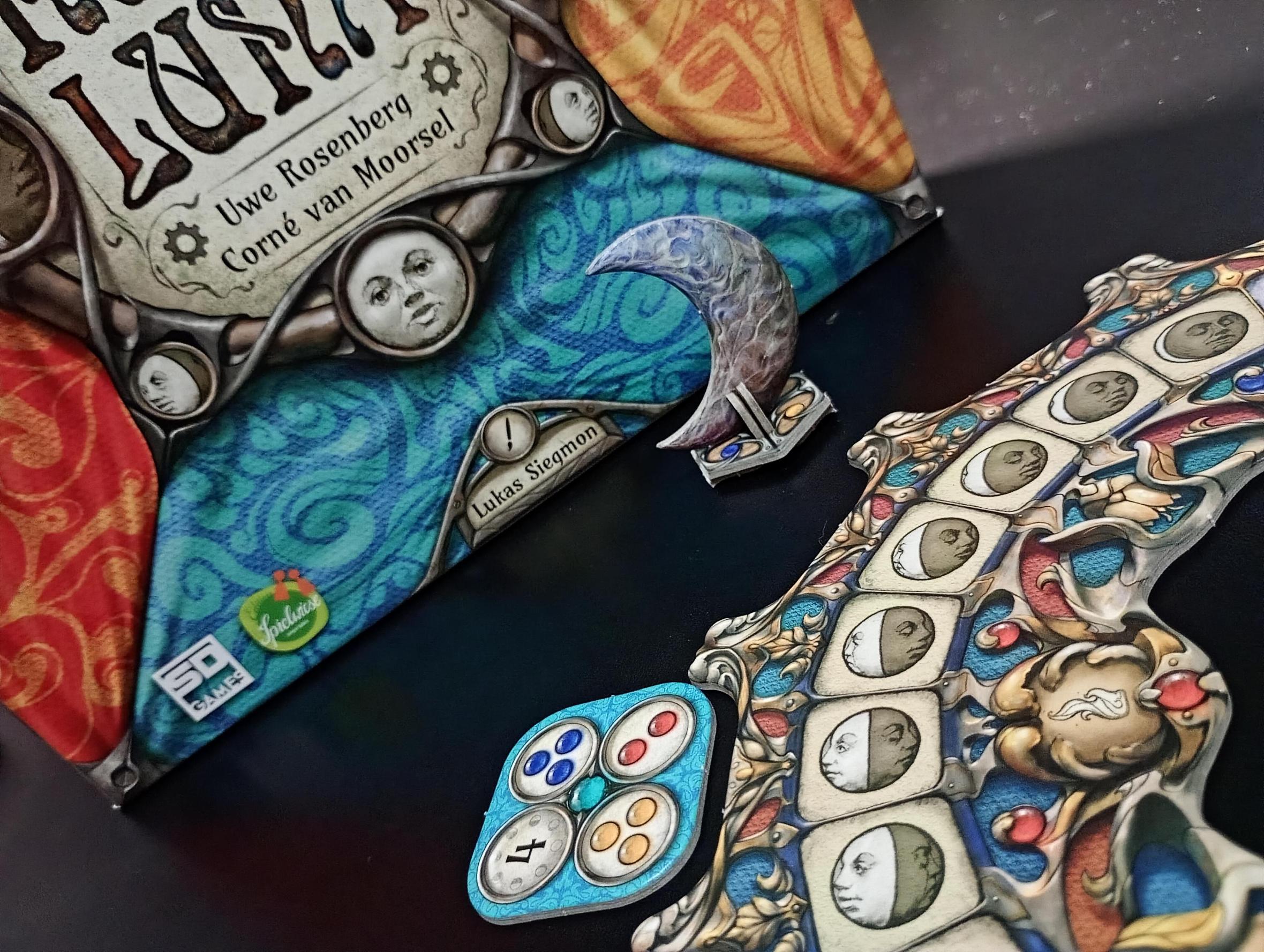
Hol vásárolhatod meg
Bolti árak és használt példányok, naponta ellenőrizve.
A Ludoya asztalain
Teljes statisztika a Ludoyában- 1417
- Rögzített játszmák
- 743
- Játékosok
- 26m 40s
- Átlagos játékidő
- 185
- Gyűjteményekben
- 25
- Kívánságlistákon
- 2
- Előrendelve
6,9/10
80 Ludoya-értékelés alapján
Juego del cansino Uwe con aires de Patchwork donde deberemos colocar fichitas según vayamos cumpliendo objetivos de losetas.
Daniel6,5 Ludoteca Mama
Evan5,9 Players move their pawns around the time wheel a number of steps equal to the number on the tile they take from the three tiles in front of the moving tile selection marker, then they add the tile to their play area, just like in the game patchwork. Each tile has a color, and a number of circles on it, each with some number of smaller colored orbs. When a tile in your area is surrounded by tiles of the colors printed in the orbs of one of your circles, you cover it with a disc. The goal of the game is to be the first player to run out of discs. The puzzle element gets interesting as tiles of the same color can chain by 1 space, so if I have a tile that needs three blues next to it, I can put blue1 adjacent to it, then blue 2 above blue1, and blue 3 below blue1 and then I've met the goal on the tile. Since every tile has it's own requirements, your goal is to orchestrate things where you can complete multiple circles with the fewest moves. The game works better the fewer players you have, as the more planning you can do. The puzzle is thinky and satisfying, but I do have some concerns as to the game's staying power. I also wish the game came with some neutral circle markers you could use to cover circles that you are no longer able to complete, just to reduce the visual load. Of course this would be easy to find custom bits for. ★ Art, Iconography and components functional ★ Clever or interesting mechanisms ☆ Reasonably low downtime between turns with mildly AP players ☆ Multiple plays stay interesting ★ Low or mitigatable luck elements ★★★★☆ Raw enjoyment


Szabálykérdések
A Ludoya szabályasszisztense válaszol a szabálykönyv alapján.
Can I take any tile from the Moon Wheel or only those on the selection track?
You take tiles from the selection track; after you take a tile you refill the selection track from the Moon Wheel and then resolve the rest of your action (including advancing the moon marker). (p3)
When I take a tile, how far do I move my moon marker?
After taking a tile you advance the moon track by the tile’s printed time cost (the number shown on the tile). (p2, p3)
Do corner tasks count tiles diagonally or only orthogonally?
Corner tasks count only orthogonally adjacent tiles; groups of the same color that are orthogonally connected are counted as groups for task fulfillment. (p4)
Does the tile I just placed count toward fulfilling its own corner tasks?
No — the tile you place does not count as part of the surrounding color groups for its own corner tasks (see the examples illustrating origin-color exclusion). (p4, p5)
How is the solo game different — what changes should I watch out for?
Solo play uses a two‑phase sequence with token stacks, special selection‑track rules, and adjusted scoring/penalties specific to solo mode; follow the solo setup and procedures listed for single‑player games. (p6)




Ingyenes, weben, Androidon és iOS-en
Játszd a(z) Nova Luna játékot a Ludoyával
- Tartsd a gyűjteményedbenKövesd a példányodat és a kiegészítőit, add kölcsön a barátaidnak, vagy tedd fel a kívánságlistádra, és szólunk, ha csökken az ára.Add hozzá a gyűjteményedhez
- Rögzíts minden játszmátPontok, győztesek, időzítők és fotók, aztán a statisztikáid: győzelmi arány, kedvenc játékosszám, legjobb pontszám.Játszma rögzítése
- Döntsd el a szabályvitákatKérdezz bármit a szabályokról, és választ kapsz a szabálykönyvből, az oldallal együtt, ahol ellenőrizheted.Kérdezd a szabályasszisztenst
- Találj játszótársakat hozzáKlubok, játékestek és események a közeledben, ahol ez a játék asztalra kerül.Események megtekintése
Játékadatok (játékosok, játékidő, kor, alkotók) forrása: BoardGameGeek.