
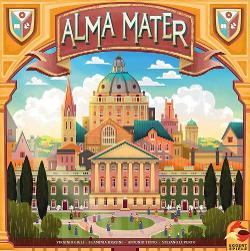
2020 · Renaissance
Alma Mater
Players act as headmasters of independent 15th-century universities working to raise their institution’s reputation and standing. On each turn, players recruit staff and students, develop expertise across four academic disciplines, and engage in exchanges of knowledge with other schools. Actions generate influence, resources, and advancement in disciplines; players allocate hires and research to build their university over the course of the game. Scoring reflects reputation, discipline mastery, and institutional growth, with strategic trade-offs between immediate gains and long-term prestige.
- Players
- 2–4 best 4
- Playing time
- 90–150 min
- Age
- 12+
- Complexity
- 3.7 / 5
About the game
- Publisher





Expansions
See them in Ludoya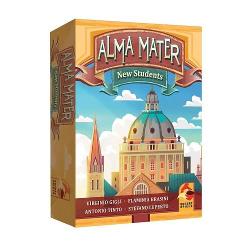
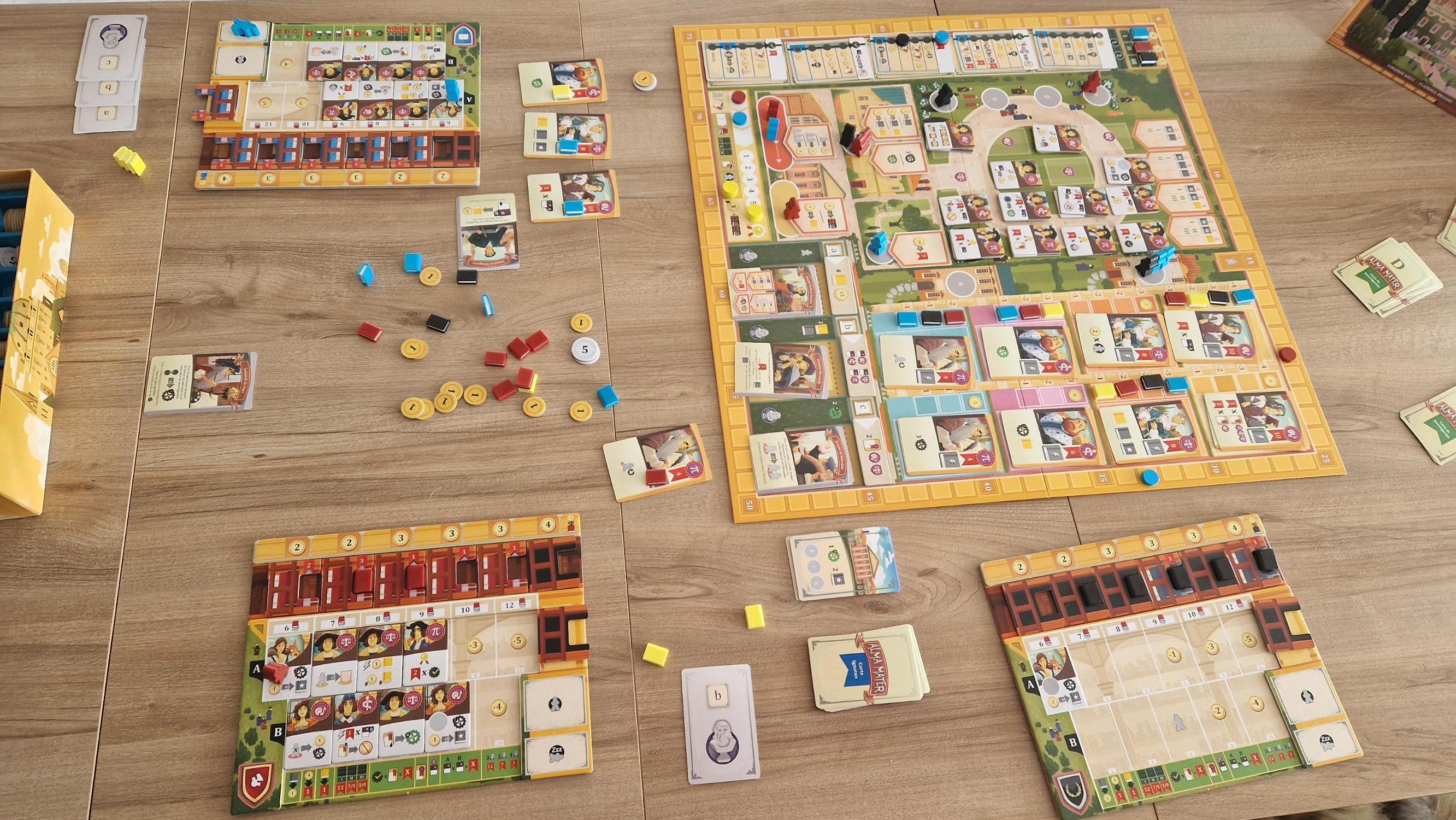
Photos from Ludoya tables
All photos in Ludoya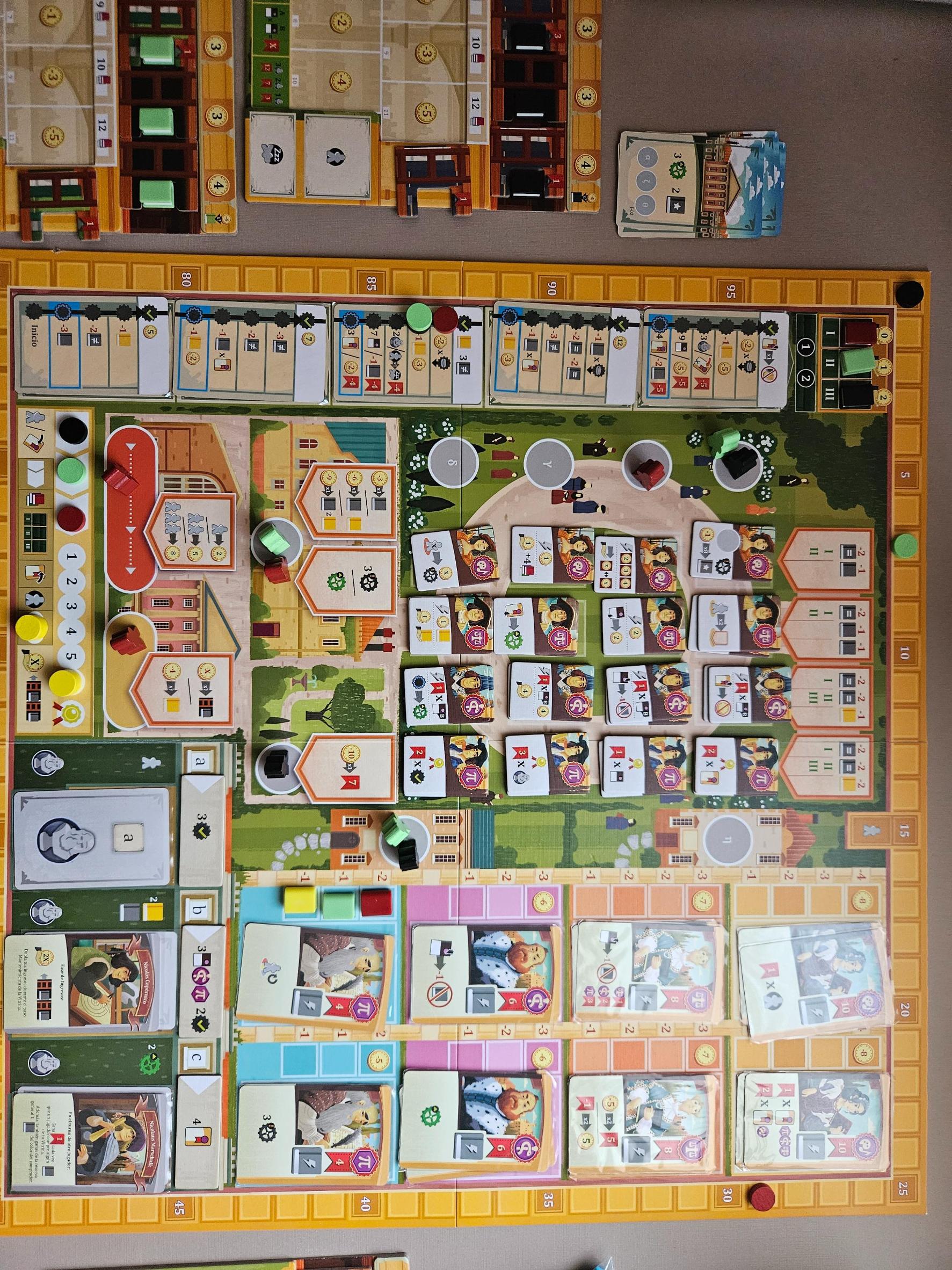
Where to buy it
Shop prices and second-hand copies, checked every day.
On Ludoya's tables
Full stats in Ludoya- 116
- Plays logged
- 187
- Players
- 2h 9m
- Average play
- 97
- In collections
- 13
- On wishlists
7.8/10
from 31 Ludoya reviews
Evan8.5 This is a worker placement game where you have to do everything, as opposed to similar looking games that reward specialization. Your path through the game changes every play, as most of the goals and cards you have access to will be different. The puzzle hits hard right out of the gate with an initial starting resources draft, the results of which can really make or break your strategy. The game has no take that and no randomness outside of the initial setup of the game. The key element that makes this game special is the player interaction through resource production. Each player in the game has a resource of books in their color. This resource is largely only produced by that player, yet it's needed by opponents to pay costs requiring sets of differently colored books. When you take the action to produce your books, you can put some of them up for sale, available to the other players who will pay you to gain them with the buy books action space. Unbought books still pay out income at the end of the round, although less than what you would have gotten from another player buying from you. The timing and strategy of when to produce, how much to put for sale vs to keep for your own action costs and when to buy from another player elevates this game beyond what was already a fascinating puzzle. :star: Art, Iconography and components functional :star: Clever or interesting mechanisms :star: Reasonably low downtime between turns with mildly AP players :star: Multiple plays stay interesting :star: Low or mitigatable luck elements :star::star::star::star::nostar: Raw enjoyment
Rules questions
Answered from the rulebook by Ludoya's rules assistant.
How many masters do I have to place on an action space that's already been used this round?
To use an unoccupied action space you place 1 master; if there are already masters on that space you must place one more master than the highest number of masters of a single color already there, and you may not use a space where you already have masters. (p. 8)
If a professor has already been recruited by someone else, do I still have to pay ducats to recruit them?
If another player recruited the professor before you, you must pay exactly the same books that player paid but you do not pay any ducats; after recruiting you may immediately give a free lecture and then exhaust the professor. (p. 9)
What's the difference between green and black research steps — do I always have to meet costs to advance?
A green research step lets you advance one level on the research track without meeting the requirements or paying the cost, while a black research step only lets you advance if you meet the shown requirements or pay the cost; if you gain both in the same turn you may choose the order, and you cannot save research steps for later. (p. 5)
When is the book reputation set and how does it affect student recruitment and income?
The book reputation track is established at the end of the first round (and rearranged in later rounds) based on players' positions on the research track; it determines which textbook ranks/colors you must spend to recruit students and also modifies the ducats you gain during the income phase. (pp. 7, 8)
If I place a tutor on the bishop, does it count toward determining next round's turn order?
Tutors count as masters for most effects but tutors placed on the bishop do not affect the player order; only regular masters on the bishop determine turn order. (p. 8; bishop rules p. 10)









Free, on web, Android and iOS
Play Alma Mater with Ludoya
- Keep it in your collectionTrack your copy and its expansions, lend it to friends, or put it on your wishlist and get told when the price drops.Add it to your collection
- Log every playScores, winners, timers and photos, then your stats: win rate, favourite player count, best score.Log a play
- Settle rules questionsAsk anything about the rules and get an answer from the rulebook, with the page to check it on.Ask the rules assistant
- Find people to play it withClubs, game nights and events near you that bring this game to the table.See events
Game facts (players, playing time, age, credits) from BoardGameGeek.