
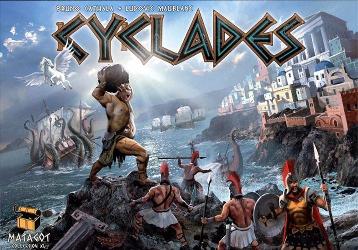
2009 · Fighting
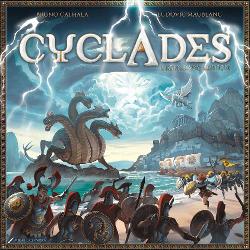
Cyclades
Players vie for divine favor and build colonies across a chain of islands in a competitive auction and area-control game. Each round, players bid to gain the exclusive favor of one god, then use that god’s power—army movement and fortresses, navy movement and ports, priests and temples, philosophers and universities, or extra income—to expand, recruit, and develop. Players must balance honors across all five gods and manage fleets and land forces to secure and protect territory. The first player to establish two fully built cities wins.
- Players
- 2–5 best 5
- Playing time
- 60–90 min
- Age
- 13+
- Complexity
- 2.8 / 5
About the game
- Publishers





Expansions
See them in Ludoya
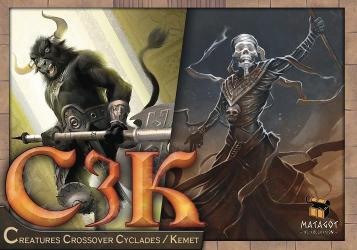
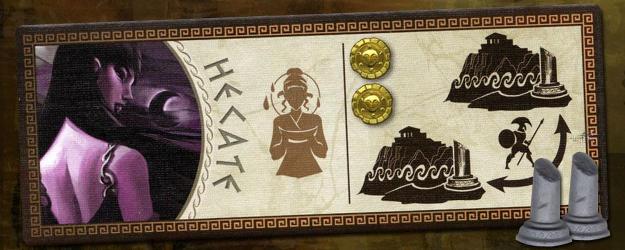
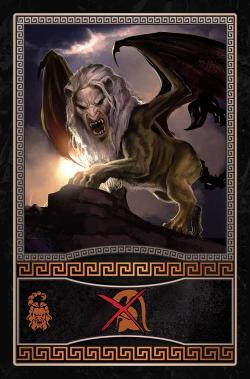
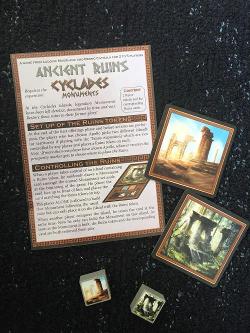
Photos from Ludoya tables
All photos in Ludoya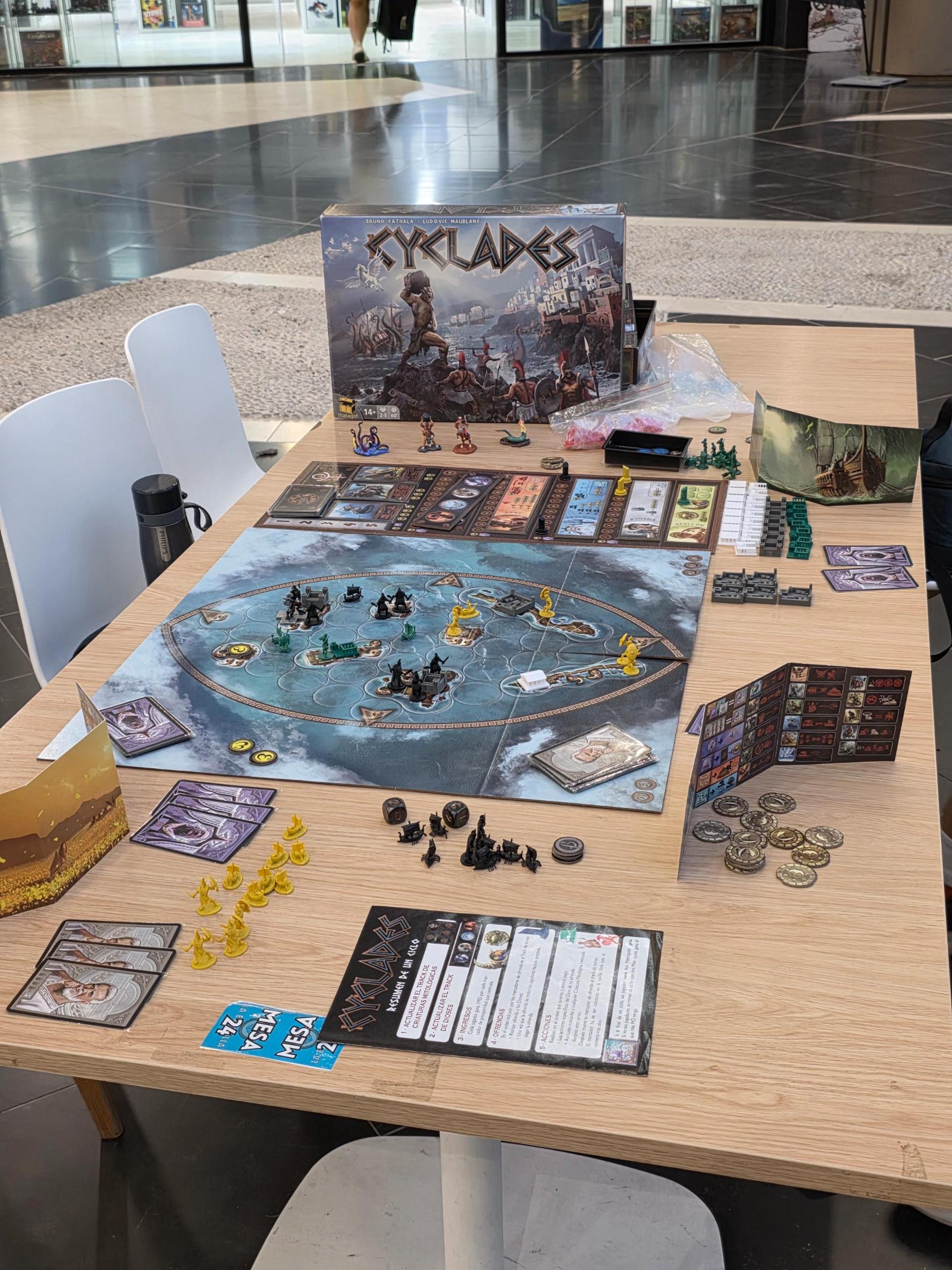
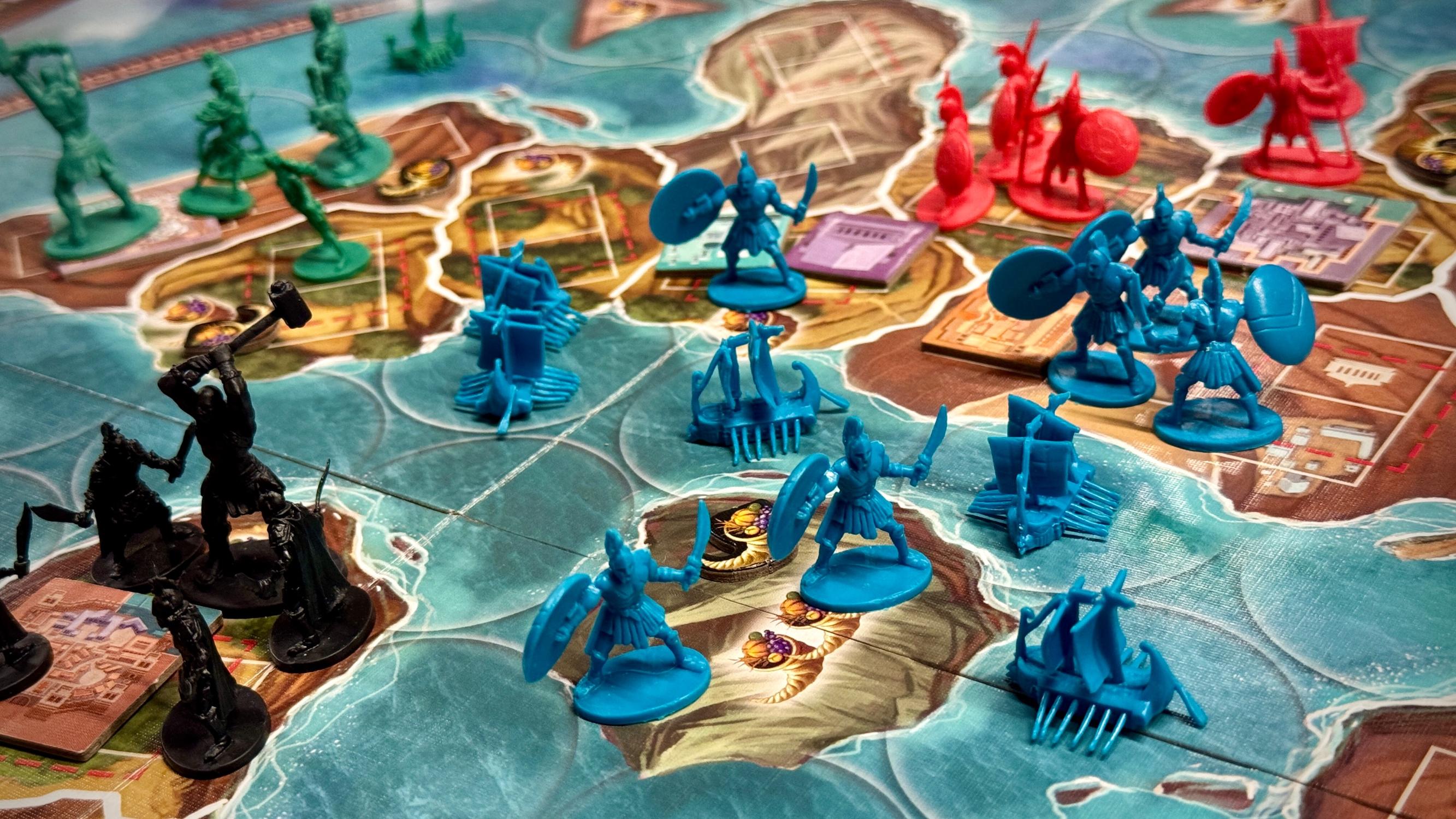
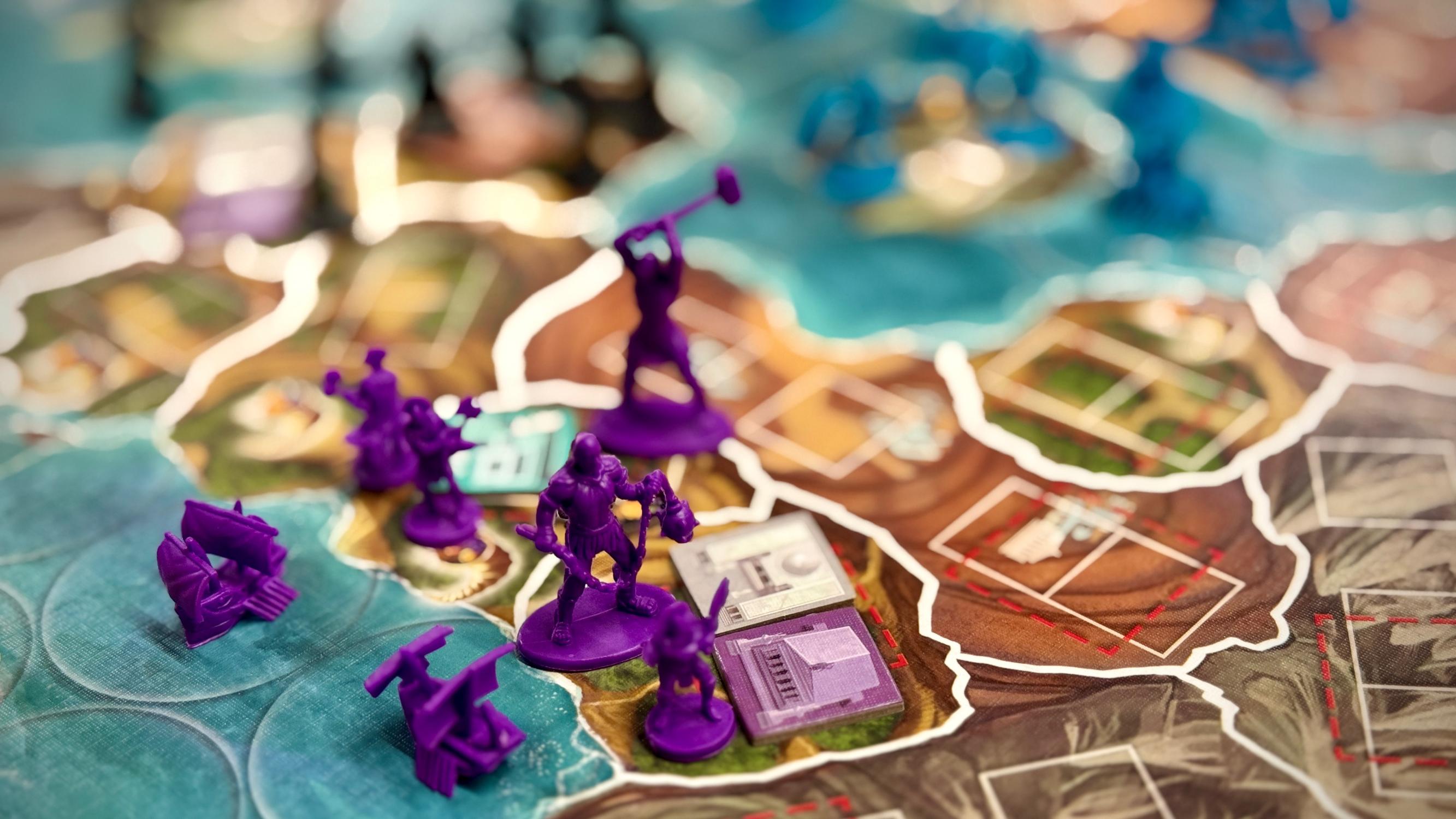
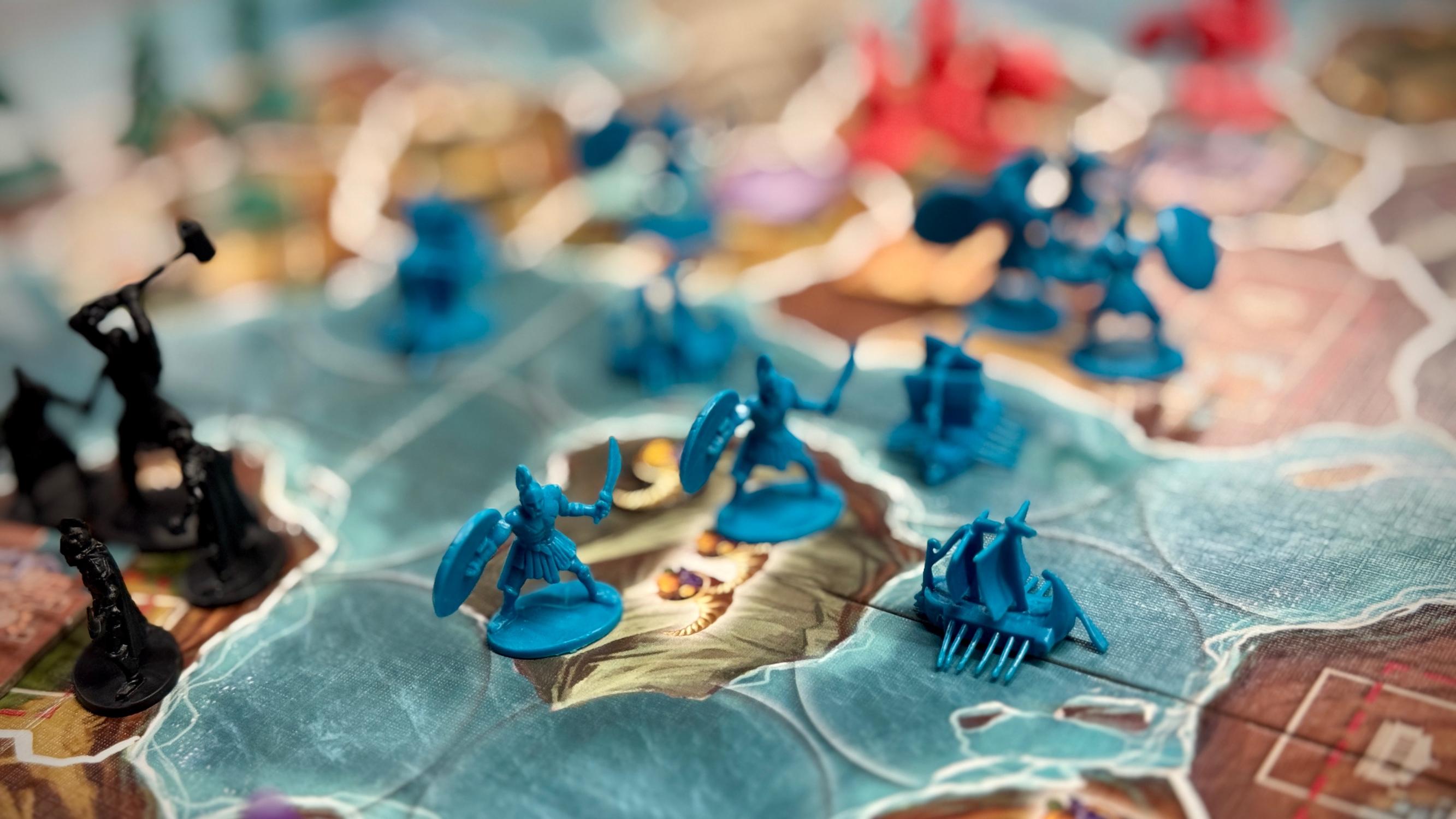
Where to buy it
Shop prices and second-hand copies, checked every day.
On Ludoya's tables
Full stats in Ludoya- 292
- Plays logged
- 377
- Players
- 1h 58m
- Average play
- 107
- In collections
- 30
- On wishlists
7.3/10
from 92 Ludoya reviews
Daniel7.0 Con Expansiones: Cyclades: Titans
Mestremuten6.0 Rating: 3/5 Production value: 3/4 Is the game in my collection/Love to have?: 0/1
Vesper7.0 NeedsToBePlayed


Rules questions
Answered from the rulebook by Ludoya's rules assistant.
Can I place an offering I can't afford?
No — the rules forbid making an offering you cannot pay; you must be able to pay the full offered amount (p.3). Priests reduce the offering by 1 GP each but you must still pay at least 1 GP for an offering (see Priests, p.4).
If someone outbids me on a God, do I have to choose a different God right away?
Yes — if you are outbid you must take your marker back and immediately bid on a different God; any chain of outbids must be resolved before the next player places an offering (p.3).
If I buy a Mythological Creature can I keep it and use it later?
No — a Creature’s power must be used immediately when bought and then the card is placed in the discard pile; new Creature cards are only placed on the track at the beginning of each cycle (pp.3–2).
What exactly does choosing Apollo do, and do I have to pay for it?
Apollo requires no offering (you may place your offering marker there without spending), and grants 1 GP if you own more than one isle or 4 GP if you own a single isle; the first player to choose Apollo that round also takes a prosperity marker — Apollo offers no other actions (pp.3,6).
How are battles resolved and what do Fortresses and Ports do?
Each combatant rolls one die and adds the number of Troops/Fleets they have; defenders add +1 per Fortress (island) and +1 per Port (adjacent sea spaces), the lowest result loses one unit (ties cause both to lose one), and assaults repeat until one side remains (p.5).
How do I create a Metropolis — do the four buildings have to be on the same isle?
You create a Metropolis by either owning the four different buildings (Port, Fortress, Temple, University) anywhere — you immediately discard them to place a Metropolis on an empty space (destroy buildings if no space) — or by discarding four Philosophers; you can also gain one by conquering an isle that already has a Metropolis (pp.4,6).




Free, on web, Android and iOS
Play Cyclades with Ludoya
- Keep it in your collectionTrack your copy and its expansions, lend it to friends, or put it on your wishlist and get told when the price drops.Add it to your collection
- Log every playScores, winners, timers and photos, then your stats: win rate, favourite player count, best score.Log a play
- Settle rules questionsAsk anything about the rules and get an answer from the rulebook, with the page to check it on.Ask the rules assistant
- Find people to play it withClubs, game nights and events near you that bring this game to the table.See events
Game facts (players, playing time, age, credits) from BoardGameGeek.