
2021 · Economic
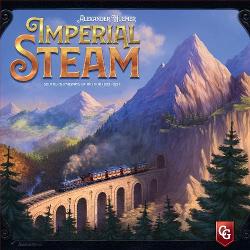
Imperial Steam
Manage an industrial-era business by recruiting workers, producing goods, and laying railroad track to expand a transportation network across Austria. Players allocate labor between factories and track-building, route goods to cities with varying demand, and fulfill public contracts that pay out at key moments. Progression and scoring hinge on network connections and accumulated net worth once the Trieste link is completed, with careful economic planning and timing needed to outcompete rivals.
- Players
- 2–4 best 4
- Playing time
- 120 min
- Age
- 12+
- Complexity
- 4.2 / 5
About the game
- Design

Expansions
See them in Ludoya
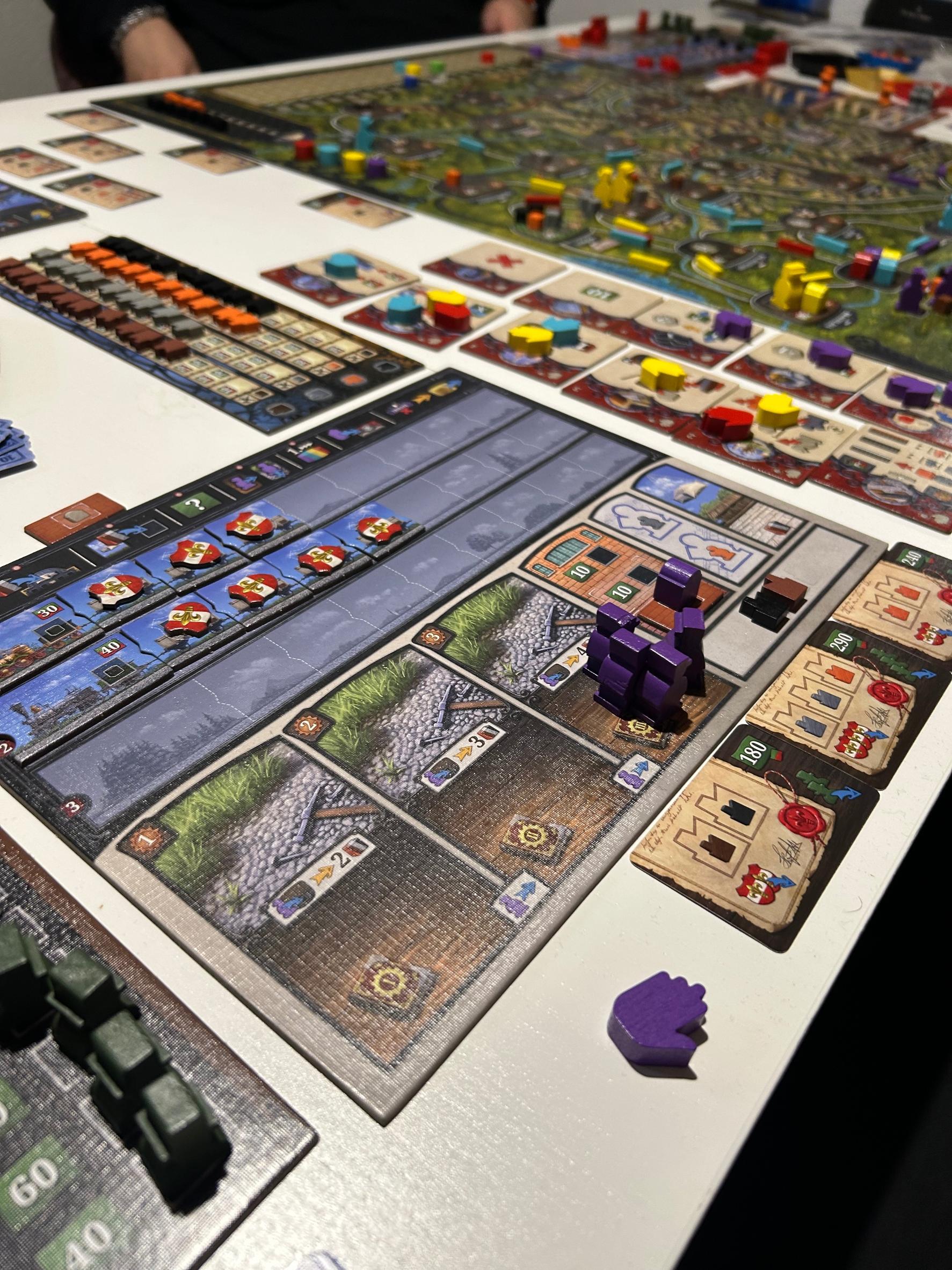
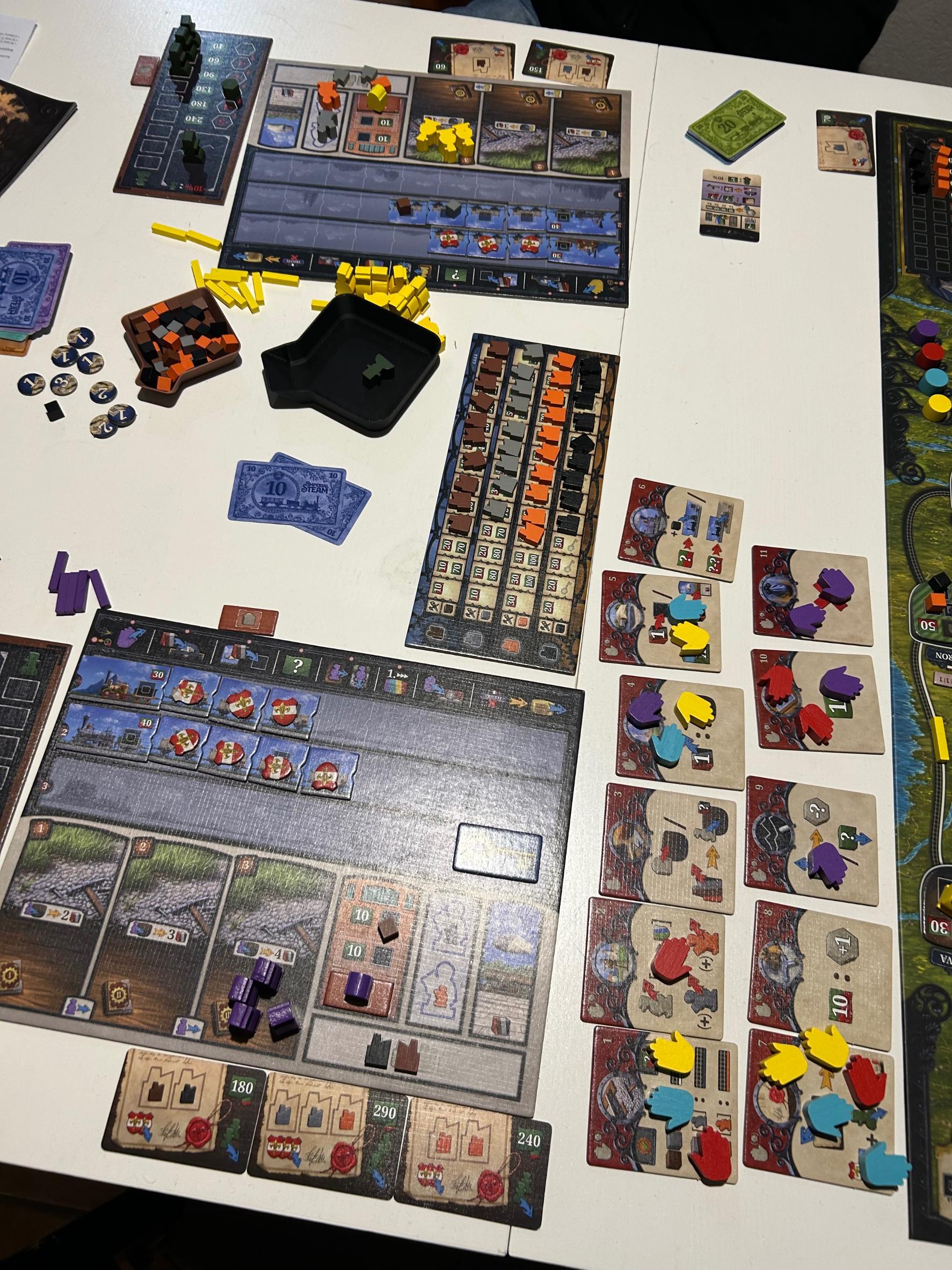
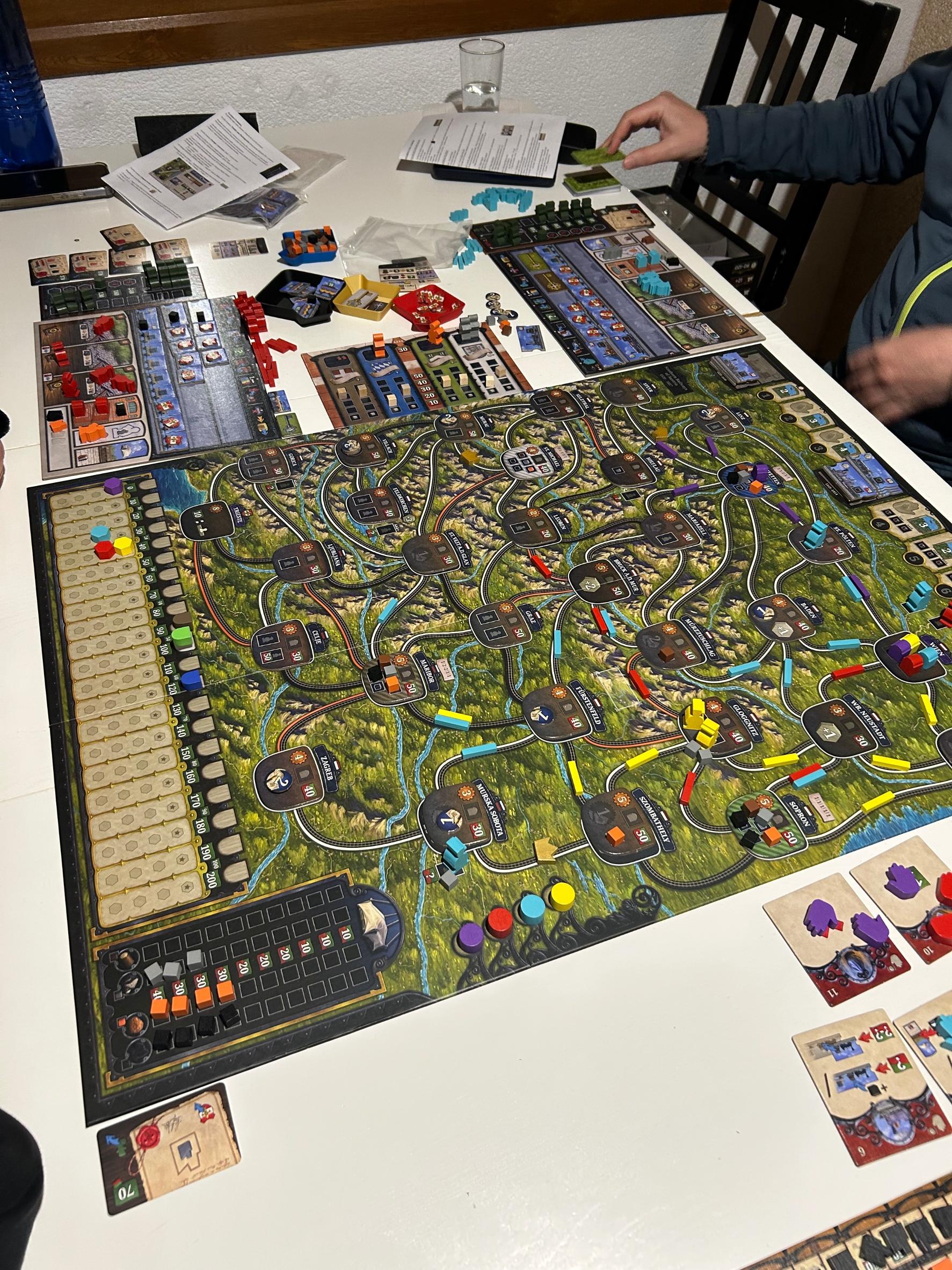
Photos from Ludoya tables
All photos in Ludoya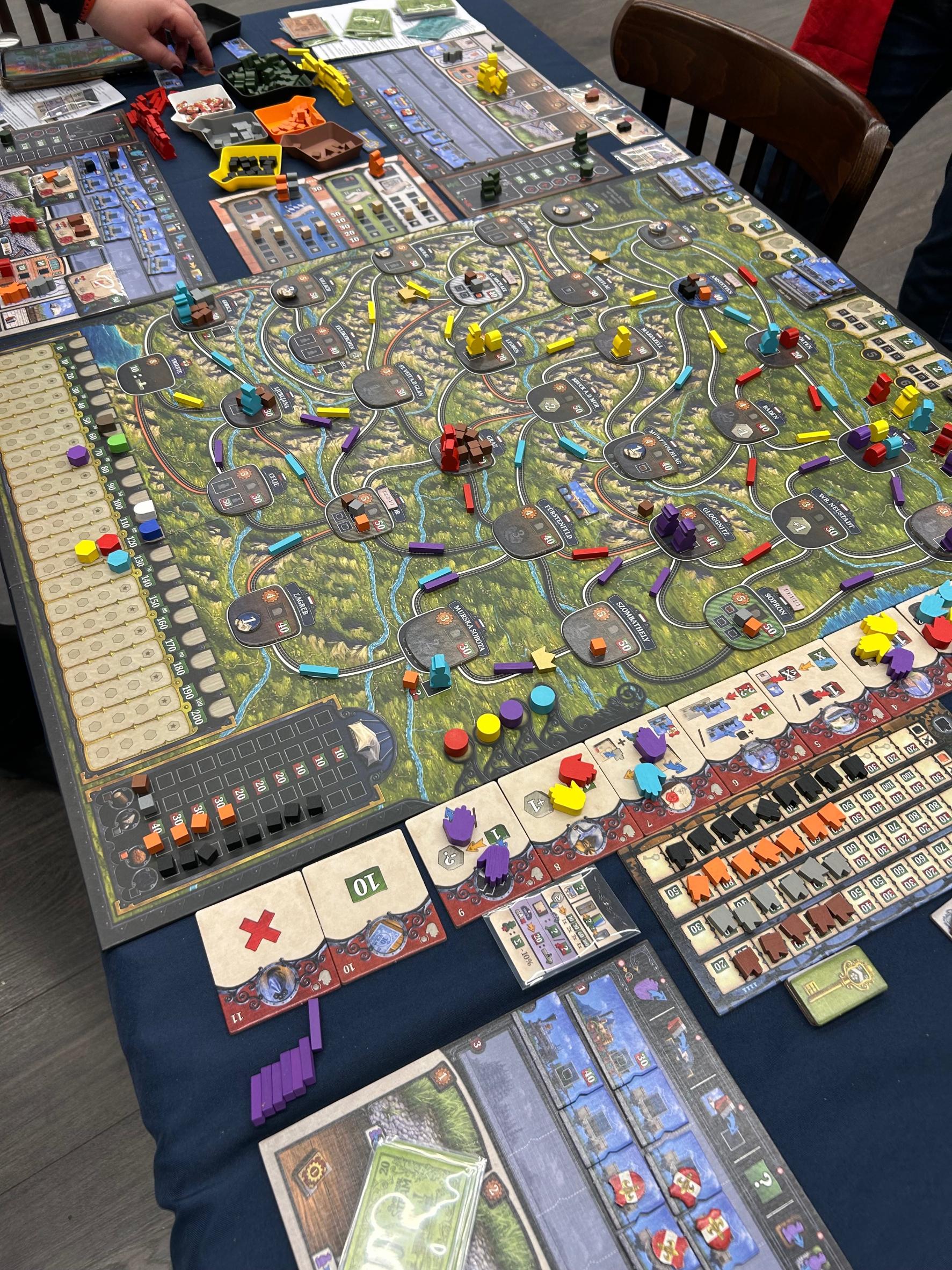
Where to buy it
Shop prices and second-hand copies, checked every day.
On Ludoya's tables
Full stats in Ludoya- 82
- Plays logged
- 144
- Players
- 2h 43m
- Average play
- 87
- In collections
- 18
- On wishlists
7.1/10
from 29 Ludoya reviews
Brutal3.0 I can't understand this type of games from a design point of view. If you start badly you probably won't recover, if you make mistakes early on you'll probably be out of the game... Given the amount of games there are to play, this type of proposals are not attractive.

Rules questions
Answered from the rulebook by Ludoya's rules assistant.
Do I have to pay the gulden I bid in the blind‑bid for influence at game start?
No — you secretly reveal a hand of Gulden cards to place your Player Influence marker in the matching column, then you return those cards to the bank; you do not pay them (page 10).
If I use the same Main Action tile again later in the round, is there a penalty?
Yes — before placing another Main Action hand on a tile you’ve already used this phase, you must decrease your influence 1 step for each of your Main Action hands already on that tile (page 13).
What do I need to pay and commit when I build track?
You may place up to 2 tracks per action, must spend a total of 1 wood, 1 stone and 1 iron (whether you place 1 or 2 tracks), pay 10 guldens to each opponent who already has a track on that connection, and assign workers whose total Experience is at least the sum of the Effort numbers of the new cities (pages 14–16 and 15).
How does the Deliver a Good free action work — do I need to spend coal and where does the good come from?
To deliver you must spend 1 coal from your board (not the landing), take one good from beside one of your workers on the map and place it on the city's Demand space, then take the payment shown on the Factory board; delivering to a Hub City also increases that city’s influence and coal deliveries can award City Key tokens (pages 26–27).
When I buy or upgrade a train, do I get coal on the new engine?
When you buy a Steam Engine tile you take 1 coal and place it on the engine, but upgrading does not grant coal — you may only transfer a coal from the replaced engine to the new one if applicable (page 23).
Do contracts count if nobody connects Wien to Trieste at game end?
If nobody has connected Wien to Trieste, all contracts are worthless; if at least one player connected Trieste, filled contracts earn their value and unfilled contracts cost you their value, and players not connected to Trieste must pay other players 20 guldens per traversed connection when using their track to reach Trieste (pages 28–29).











Free, on web, Android and iOS
Play Imperial Steam with Ludoya
- Keep it in your collectionTrack your copy and its expansions, lend it to friends, or put it on your wishlist and get told when the price drops.Add it to your collection
- Log every playScores, winners, timers and photos, then your stats: win rate, favourite player count, best score.Log a play
- Settle rules questionsAsk anything about the rules and get an answer from the rulebook, with the page to check it on.Ask the rules assistant
- Find people to play it withClubs, game nights and events near you that bring this game to the table.See events
Game facts (players, playing time, age, credits) from BoardGameGeek.