
2018 · Farming
Lowlands
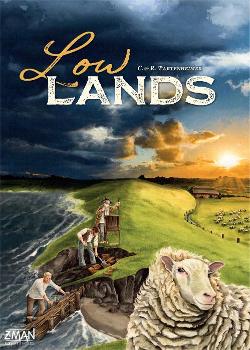
Players build and expand individual farms on a flood-prone coastal plain, using resource cards to create pastures, add buildings, and breed sheep for profit. A worker-placement mechanic assigns farmers to actions on the farm or to construction of a communal dike; contributing resources to the dike helps protect everyone from periodic tides but diverts labor from personal development. Buildings and farm expansions unlock new abilities and scoring opportunities, while progress on the dike track grants rewards and mitigates penalties if floods occur. Players balance personal growth and cooperative defense to maximize points by game end.
- Players
- 2–4 best 3
- Playing time
- 50–100 min
- Age
- 12+
- Complexity
- 3.1 / 5


Where to buy it
Shop prices and second-hand copies, checked every day.
On Ludoya's tables
Full stats in Ludoya- 70
- Plays logged
- 104
- Players
- 1h 40m
- Average play
- 42
- In collections
- 8
- On wishlists
7.3/10
from 19 Ludoya reviews
Rules questions
Answered from the rulebook by Ludoya's rules assistant.
When do we resolve floods (Turn of the Tide), and what do we do when one appears?
Resolve flood events when a Turn of the Tide card is triggered during the round; follow the flood resolution procedures and timing described in the Turn of the Tide / Work phase section (see page 5).
Can I place farm expansion tiles anywhere on my farmyard, or are there placement restrictions?
Expansion and feature tiles must be placed according to the building placement rules and the placement icons shown on those tiles; see the building examples and placement rules on pages 6–7 for the exact restrictions. (Page 6 explains tile types and icons; page 7 covers placement examples.)
How does the 'contribute to the dike' action work — do I place tiles or spend resources, and what does it give me?
The contribute-to-the-dike action is resolved as described on page 7: you follow the action's placement and contribution rules to advance dike segments, and completed segments produce the effects and progress tokens outlined there and on page 8. (Pages 7–8 cover examples, completing segments, and progress tokens.)
What happens during Upkeep — when do sheep breed and when do we collect income?
All Upkeep steps (breeding, income, farmers, sheep market adjustments, first-player determination, and flood/High Tide checks) are performed in the order shown in the II Upkeep section; breeding and income resolution timing are explained on page 10. (Page 10 lists each Upkeep step and when to apply them.)
If a storm surge breaks a dike segment, what are the consequences and how does it affect scoring?
Storm surge resolution, the differences between a dike holding or breaking, and their effects on components and final scoring are detailed in the Storm Surge / final scoring section on page 11; follow those procedures to determine flooded pieces and scoring adjustments. (See page 11 for break/hold effects and end-of-game scoring rules.)
Can I house extra sheep in buildings, and when are housed sheep counted (for breeding/scoring)?
Housing sheep and the rules for when housed sheep are counted (for breeding and scoring) are described in the Upkeep and housing rules on page 10; consult that page for how buildings interact with housing and when those sheep are considered. (See page 10 for the housing sheep rules.)





Free, on web, Android and iOS
Play Lowlands with Ludoya
- Keep it in your collectionTrack your copy and its expansions, lend it to friends, or put it on your wishlist and get told when the price drops.Add it to your collection
- Log every playScores, winners, timers and photos, then your stats: win rate, favourite player count, best score.Log a play
- Settle rules questionsAsk anything about the rules and get an answer from the rulebook, with the page to check it on.Ask the rules assistant
- Find people to play it withClubs, game nights and events near you that bring this game to the table.See events
Game facts (players, playing time, age, credits) from BoardGameGeek.