
2010 · Post-Napoleonic
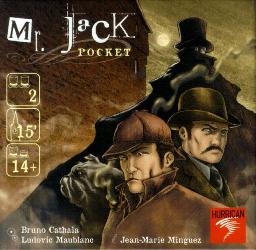
Mr. Jack Pocket
A compact deduction game set on a 3x3 grid of street cards showing the suspects. One player secretly controls the guilty party while the other controls Holmes, Watson and a dog that rotate around the grid and “look” along rows and columns. Each round players take turns choosing from four shared actions — moving a detective, rotating or swapping street cards, or drawing an alibi — with action selection changing who plays how many. At the end of the round the guilty player declares whether they are visible; the detectives win by identifying the culprit, while the guilty player wins by remaining hidden until escape.
- Players
- 2
- Playing time
- 15 min
- Age
- 14+
- Complexity
- 1.8 / 5
About the game
- Publisher




Expansions
See them in Ludoya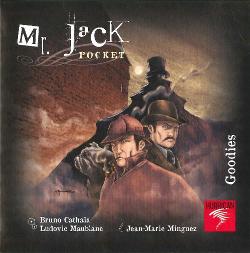

Where to buy it
Shop prices and second-hand copies, checked every day.
On Ludoya's tables
Full stats in Ludoya- 235
- Plays logged
- 108
- Players
- 17m 42s
- Average play
- 94
- In collections
- 3
- On wishlists
6.7/10
from 45 Ludoya reviews
Mestremuten5.0 Rating: 2/5 Production value: 2/4 Is the game in my collection/Love to have?: 1/1
Played it 6 times
Mohasz6.0 There's something about this game that just doesn't click with me. It's really unique and clever, but I always find myself being underwhelmed after playing it. I really wanted to like this one for its uniqueness and cleverness, but in the end it just didn't click. I always feel dumb while playing it. :) It'll have to go finally. Maybe I'll give the app a chance someday.
No plays logged
Fun 3/5 · Interaction 5/5 · Appeal 3/5 · Uniqueness 4/5 · Replayability 3/5 · Accessibility 3/5
No plays logged

Rules questions
Answered from the rulebook by Ludoya's rules assistant.
Who takes the first action, and how does the turn order work?
On odd-numbered turns, the Investigator chooses one action, Mr. Jack chooses two of the remaining actions, then the Investigator takes the last one. On even-numbered turns, Mr. Jack takes one first, the Investigator takes two, and Mr. Jack takes the last action (p. 6).
When Mr. Jack says whether he can be seen, which suspect tiles do we turn over?
If he can be seen, turn over suspect tiles that are not in any Detective’s line of sight; if he cannot be seen, turn over those that are in a Detective’s line of sight. Walls block line of sight, and the tile’s wall must keep facing the same way when it is flipped (pp. 8–9).
Do we have to use every action, and can we rotate the same tile twice?
All actions are mandatory. A tile cannot be rotated if it has already been rotated that turn (p. 7).
Do I reveal an Alibi card when I take it?
The Investigator reveals the card and, if its character is still a suspect, clears that suspect; Mr. Jack takes the card face down and keeps it secret. Hourglasses on an Alibi card count toward Mr. Jack’s total, but an Investigator’s revealed card makes Mr. Jack lose any hourglasses on it (p. 8).
What exactly makes each player win?
The Investigator wins if only one suspect remains after an Appeal for Witnesses. Mr. Jack wins after an Appeal if he has at least six hourglasses in total from Turn tokens and Alibi cards; if both objectives are met, the rules give a special-case resolution (p. 10).
Similar games
 Whitehall Mystery2017
 Cereal Killer2025
 Castle Nightingale2026
 Fugitive2017
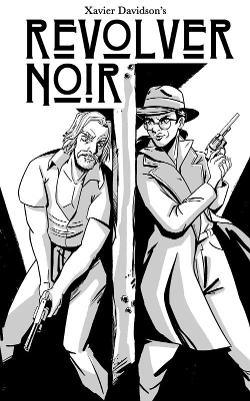 Revolver Noir2021
 Letters from Whitechapel2011
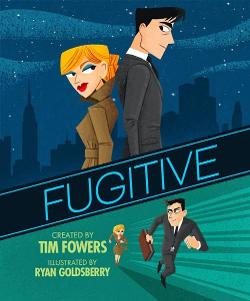 Fugitive (Second Edition)2023
 Mr. Jack in New York2009
 Watson & Holmes2015
 Awkward Guests 2: The Berwick Cases2023
 Scotland Yard: Sherlock Holmes Edition2022
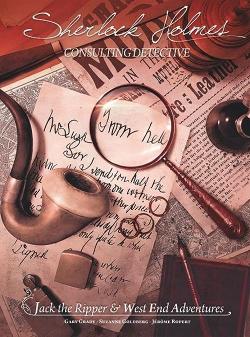 Sherlock Holmes Consulting Detective: Jack the Ripper & West End Adventures2016












Free, on web, Android and iOS
Play Mr. Jack Pocket with Ludoya
- Keep it in your collectionTrack your copy and its expansions, lend it to friends, or put it on your wishlist and get told when the price drops.Add it to your collection
- Log every playScores, winners, timers and photos, then your stats: win rate, favourite player count, best score.Log a play
- Settle rules questionsAsk anything about the rules and get an answer from the rulebook, with the page to check it on.Ask the rules assistant
- Find people to play it withClubs, game nights and events near you that bring this game to the table.See events
Game facts (players, playing time, age, credits) from BoardGameGeek.