

2023 · Budowanie terytorium
Amritsar: The Golden Temple
Players act as advisors and patrons helping the Maharaja rebuild a sacred temple in historical Amritsar. Gameplay revolves around a mancala-style sowing mechanic: move workers and an elephant to perform 1–3 actions per turn, such as gathering stone and market resources, advancing on knowledge tracks, upgrading a personal board, and calling on the mahout for special help. Donations to the temple convert resources into prestige, which determines the winner at game end. Strategic coordination of workers and timing of actions drives efficiency and point scoring.
- Gracze
- 1–4 najlepiej w 3
- Czas gry
- 60–120 min
- Wiek
- 14+
- Złożoność
- 3,3 / 5
O grze
- Projekt
- Grafika
- Wydawca


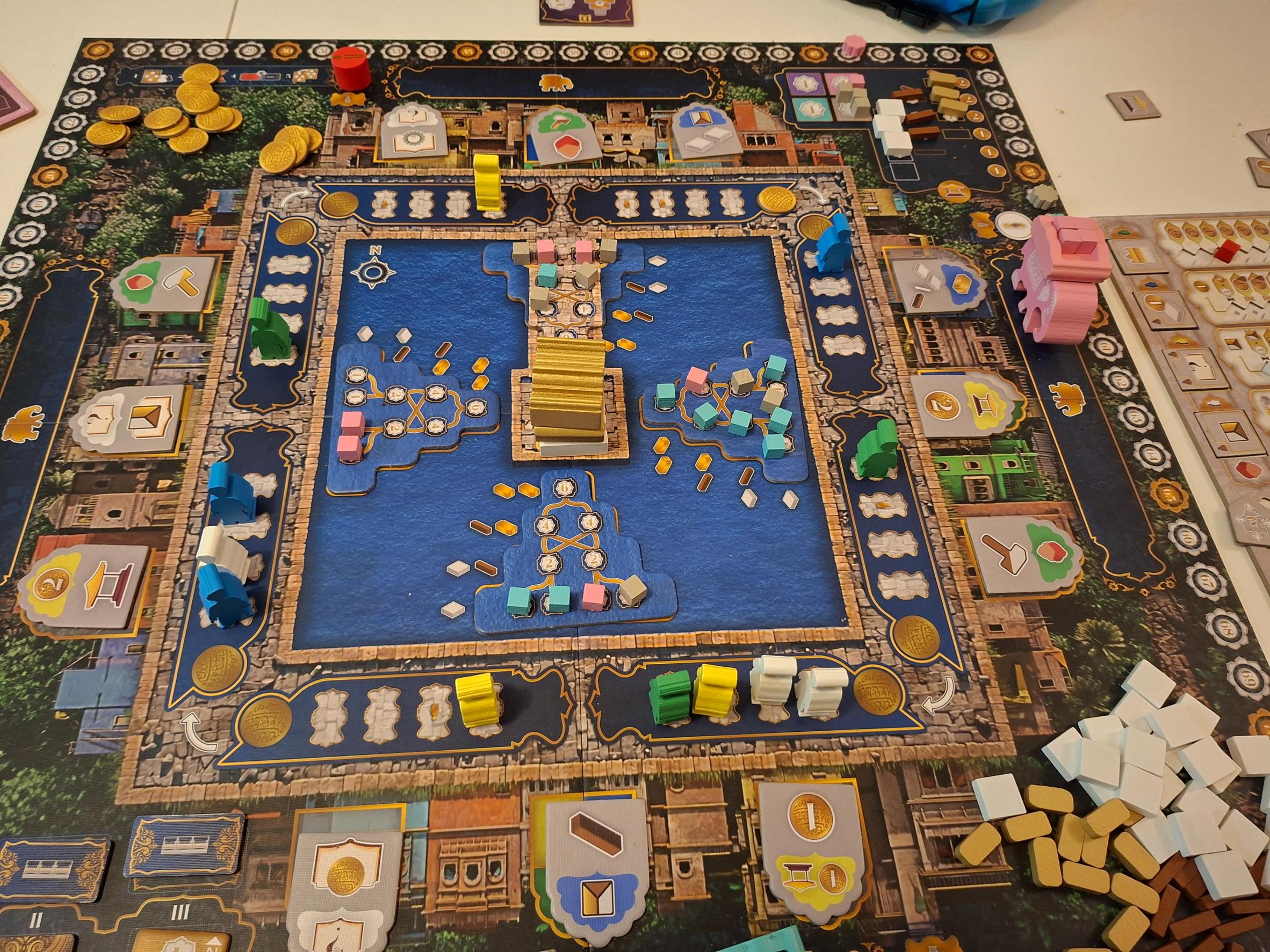
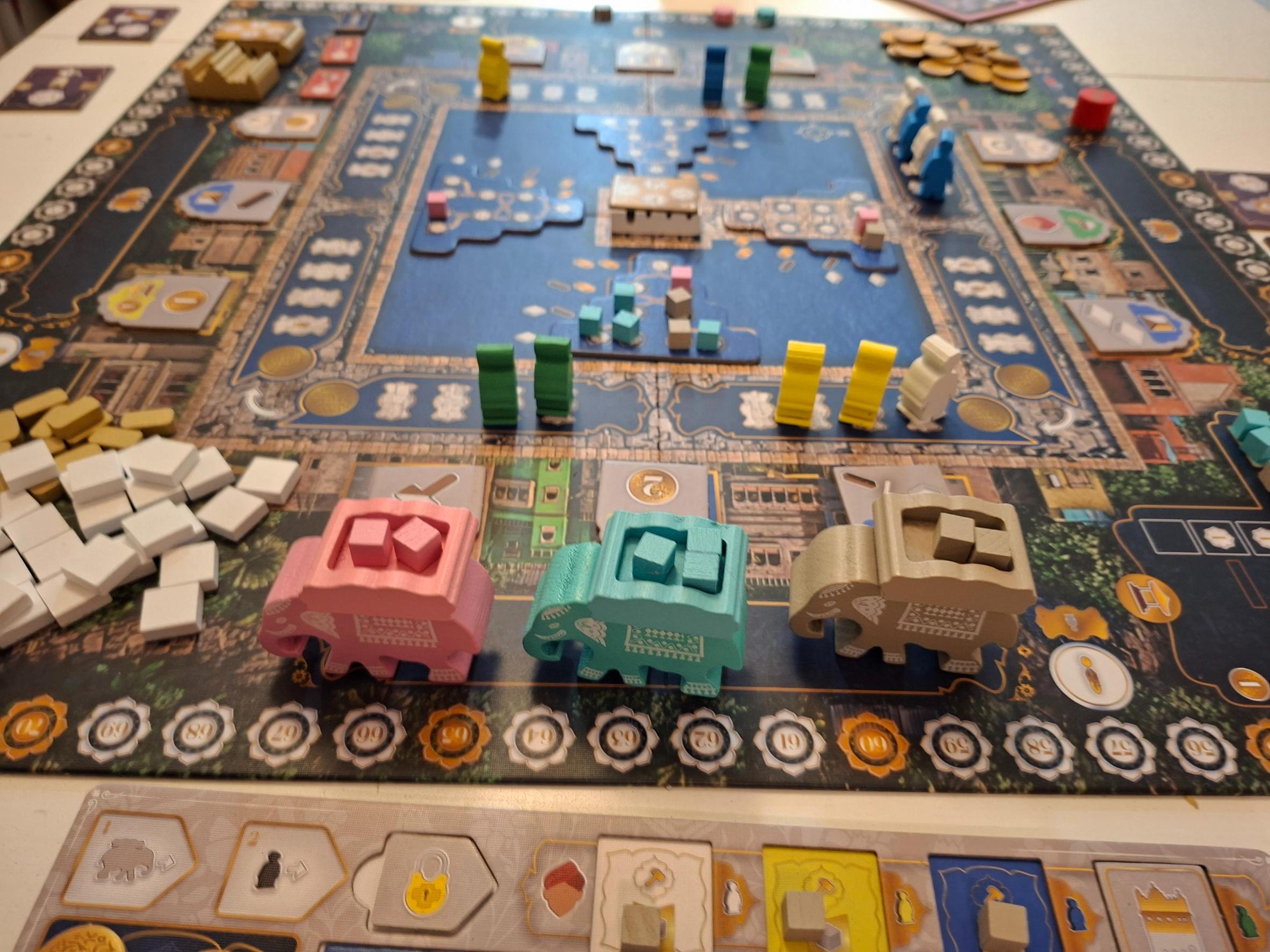
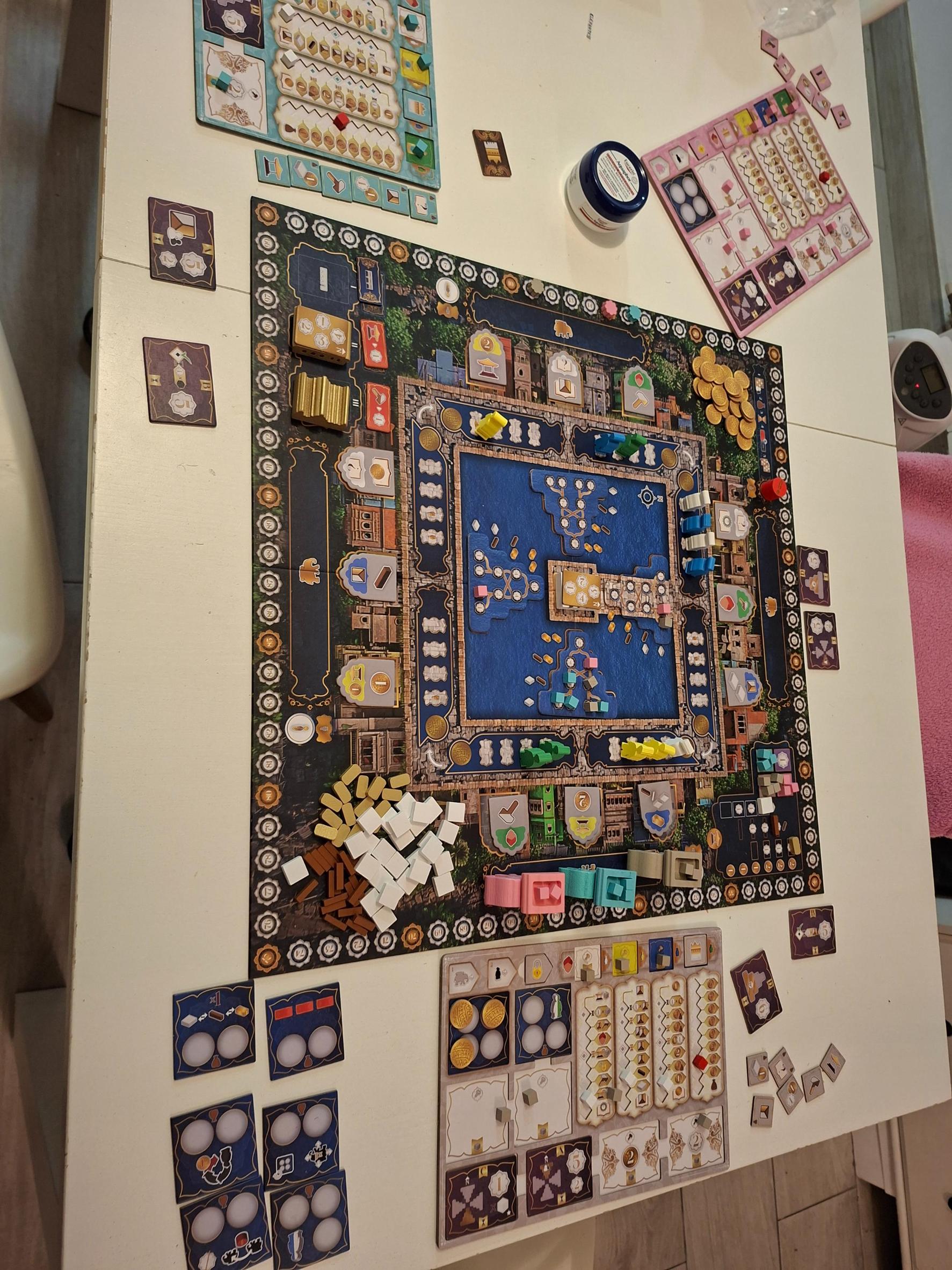
Zdjęcia ze stołów Ludoya
Wszystkie zdjęcia w Ludoya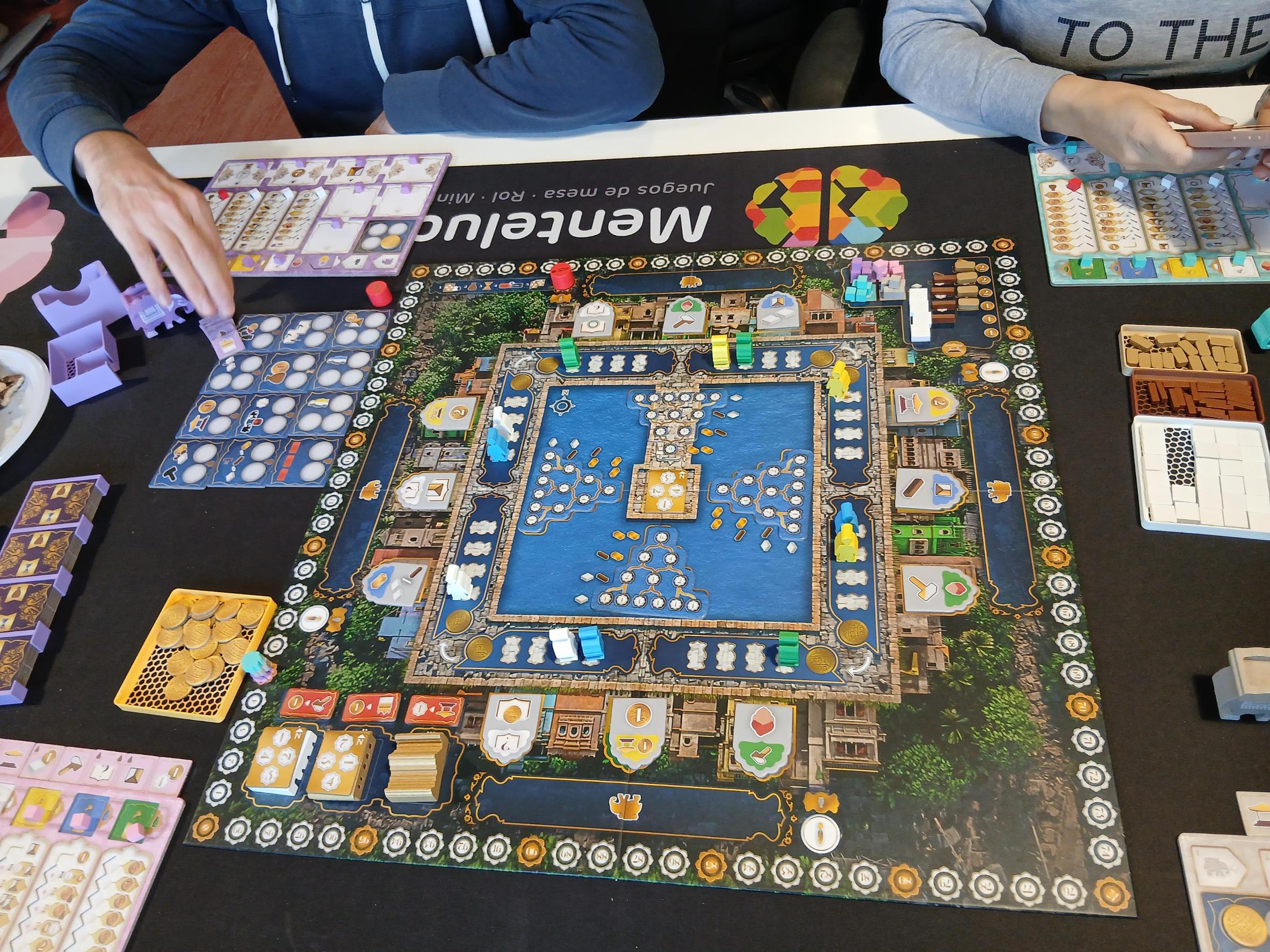

Gdzie kupić
Ceny w sklepach i egzemplarze z drugiej ręki, sprawdzane codziennie.
Przy stołach Ludoya
Pełne statystyki w Ludoya- 155
- Zapisane rozgrywki
- 220
- Gracze
- 1h 52m
- Średnia rozgrywka
- 71
- W kolekcjach
- 13
- Na listach życzeń
6,9/10
z 30 recenzji w Ludoya
Eva8,0 Muy entretenido
Creo que es un juego que se disfruta más cuando llevas un par de partidas jugadas, y, aún así, me ha gustado mucho desde la primera y (de momento) única partida.
Pierwsze wrażenia · 1 rozgrywka
Garfield2,0 Mechanisms works, but this has a heavy AP warning on it! You can't plan ahead because the turn before yours can change much. Avoid playing it at 4 at all costs. Waiting time can be 10min between turns. Just mechnisms salad but it's not that fun.
Brak zarejestrowanych rozgrywek
Ddavebowman6,0 eladva
Brak zarejestrowanych rozgrywek

Pytania o zasady
Odpowiedzi z instrukcji od asystenta zasad Ludoya.
Do elephants and workers move on the same part of my turn, or are they separate?
They are separate: your turn has Phase 1 (optional) to move your Elephant, Phase 2 (obligatory) to move Workers, and a possible Phase 3 Elephant move only if you unlocked the Movement Token on your board (see p.5–6).
If the active player uses a Worker colour I also have a Mahout for, can I copy their action?
Yes — immediately after the active player finishes, other players clockwise may ‘follow’ and perform the Mahout action matching that Worker colour if they have it on their board; the active player scores 1 PP per follower (p.7).
Where and how can I make donations to the Temple?
You can only make donations using a Mahout Tile and only in the District where your Elephant is located; Donation Tiles have 4 Levels with specific resource costs and higher-Level spaces require the two spaces below to be occupied, and you gain PP as described when placing a Counter (p.5).
Can I buy and sell the same Resource type during the same turn or market action?
No — on the same turn you cannot buy and sell the same type of Resource, even if you perform multiple Market actions; also any Market action where you buy or sell grants a Donation Counter from your Market space to your Elephant (p.9).
Are Storehouse benefits one-time or permanent?
Acquired Storehouses can grant an immediate benefit (taken when you add that Storehouse) and/or a permanent benefit that applies for the rest of the game; your Starting Storehouse has no benefit (p.12).
When I move up a Knowledge track do I get its benefit right away or later?
You get the Benefit shown for the step immediately when you move up a Knowledge track; additionally the rules list special End-of-Decade and End-of-Game Knowledge effects that apply at those times (p.11).
Podobne gry




















Za darmo, w przeglądarce, na Androidzie i iOS
Graj w Amritsar: The Golden Temple z Ludoya
- Miej ją w swojej kolekcjiŚledź swój egzemplarz i jego dodatki, pożyczaj go znajomym albo dodaj go do listy życzeń i dostań powiadomienie, gdy cena spadnie.Dodaj do swojej kolekcji
- Zapisuj każdą rozgrywkęPunkty, zwycięzcy, minutniki i zdjęcia, a potem twoje statystyki: procent zwycięstw, ulubiona liczba graczy, najlepszy wynik.Zapisz rozgrywkę
- Rozstrzygaj spory o zasadyZapytaj o dowolną zasadę i dostań odpowiedź z instrukcji, ze stroną do sprawdzenia.Zapytaj asystenta zasad
- Znajdź ludzi do wspólnej gryKluby, wieczory gier i wydarzenia w pobliżu, na których ta gra trafia na stół.Zobacz wydarzenia
Dane gry (gracze, czas gry, wiek, twórcy) z BoardGameGeek.