
2019 · Budowanie miast
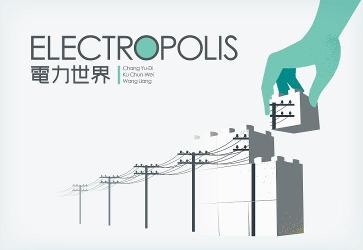
Electropolis
Players act as competing mayors planning energy infrastructure for a growing city. Each turn they select actions in a dynamic turn-order system to obtain construction permits, claim tiles, and place buildings across zoned areas. Choices balance coal plants, renewable sources, and nuclear options, each with different costs, outputs, and long-term effects. Timing and interaction matter: take early turns to secure powerful tiles or delay to gather resources and expand building options. Scoring reflects electricity production, city development, and strategic placement. The game emphasizes planning, resource management, and tactical interaction among players.
- Gracze
- 2–4 najlepiej w 3
- Czas gry
- 50–70 min
- Wiek
- 12+
- Złożoność
- 2,4 / 5
O grze
- Grafika
- Publisher




Gdzie kupić
Ceny w sklepach i egzemplarze z drugiej ręki, sprawdzane codziennie.
Przy stołach Ludoya
Pełne statystyki w Ludoya- 42
- Zapisane rozgrywki
- 58
- Gracze
- 1h 12m
- Średnia rozgrywka
- 11
- W kolekcjach
- 6
- Na listach życzeń
3,5/10
z 7 recenzji w Ludoya
Evan2,5 This is a little city grid building game with a few mean twists. Each round in player order, players pick a tile selection space. The later you go in turn order, the more tiles you pick up from the ring. Tiles come in three varieties. Power plants, buildings that give you popularity, and energy resources that you need to activate the power plants. In addition to picking the tiles up, you also draft a placement card. The placement card determines where in your grid you are allowed to place tiles. Early in the game, the cards come with endgame scoring bonus criteria, later in the game they come with some small immediate bonus. When you take tiles, you must take a grouping of all adjacent tiles. This means going later in turn order might mean you miss out on the key tiles you needed, and also have to take a mess of tiles you can't place, which get discarded for a VP penalty. Additionally, when you score your board at the end of the game, you lose massive points if your popularity rating isn't greater than the pollution sum of your powered plants. Largely the popularity buildings give you a penalty if placed next to power plants, so this gets tough fast. Power plants also produce more VP when the same kind of plant is placed in an adjacent chain of tiles. Essentially the game sets you up for needing a lot of things to work out in your favor. You need the card you take to allow you to place where you need to place, you need the tiles you need to come up in the circle at the right time, you need other players not to snatch what you need from you, and you need the energy resources to make your work count for anything, while also keeping mental track of how much pollution you will have at the end of the game, since you don't track it as you go, and making sure to get the popularity buildings. I had hoped this would be a wild ride, but ultimately I found it very frustrating. :star: Art, Iconography and components functional :star: Clever or interesting mechanisms :star: Reasonably low downtime between turns with mildly AP players :nostar: Multiple plays stay interesting :nostar: Low or mitigatable luck elements :star::nostar::nostar::nostar::nostar: Raw enjoyment















Za darmo, w przeglądarce, na Androidzie i iOS
Graj w Electropolis z Ludoya
- Miej ją w swojej kolekcjiŚledź swój egzemplarz i jego dodatki, pożyczaj go znajomym albo dodaj go do listy życzeń i dostań powiadomienie, gdy cena spadnie.Dodaj do swojej kolekcji
- Zapisuj każdą rozgrywkęPunkty, zwycięzcy, minutniki i zdjęcia, a potem twoje statystyki: procent zwycięstw, ulubiona liczba graczy, najlepszy wynik.Zapisz rozgrywkę
- Licz punkty bez papieruKorzystaj z arkuszy wyników i pomocy do gry od społeczności i pozwól Ludoya zsumować punkty.Znajdź arkusze wyników
- Znajdź ludzi do wspólnej gryKluby, wieczory gier i wydarzenia w pobliżu, na których ta gra trafia na stół.Zobacz wydarzenia
Dane gry (gracze, czas gry, wiek, twórcy) z BoardGameGeek.