
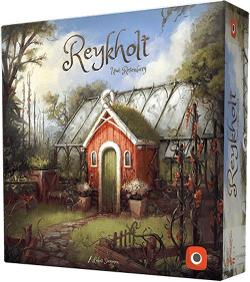
2018 · Rolnictwo
Reykholt
Players take the role of geothermal farmers on an Icelandic island, cultivating unexpected vegetables and fruits by harnessing geothermal energy. Each round players hire and use workers, plant and harvest specific crops, and time deliveries to meet tourist demand during a short season. Resource management, worker placement, and planning which crops to grow when determine scoring as players compete to attract visitors and earn the most revenue.
- Gracze
- 1–4 najlepiej w 3
- Czas gry
- 30–60 min
- Wiek
- 12+
- Złożoność
- 2,2 / 5
O grze
- Projekt
- Grafika
- Publisher



Dodatki
Zobacz je w Ludoya
Zdjęcia ze stołów Ludoya
Wszystkie zdjęcia w Ludoya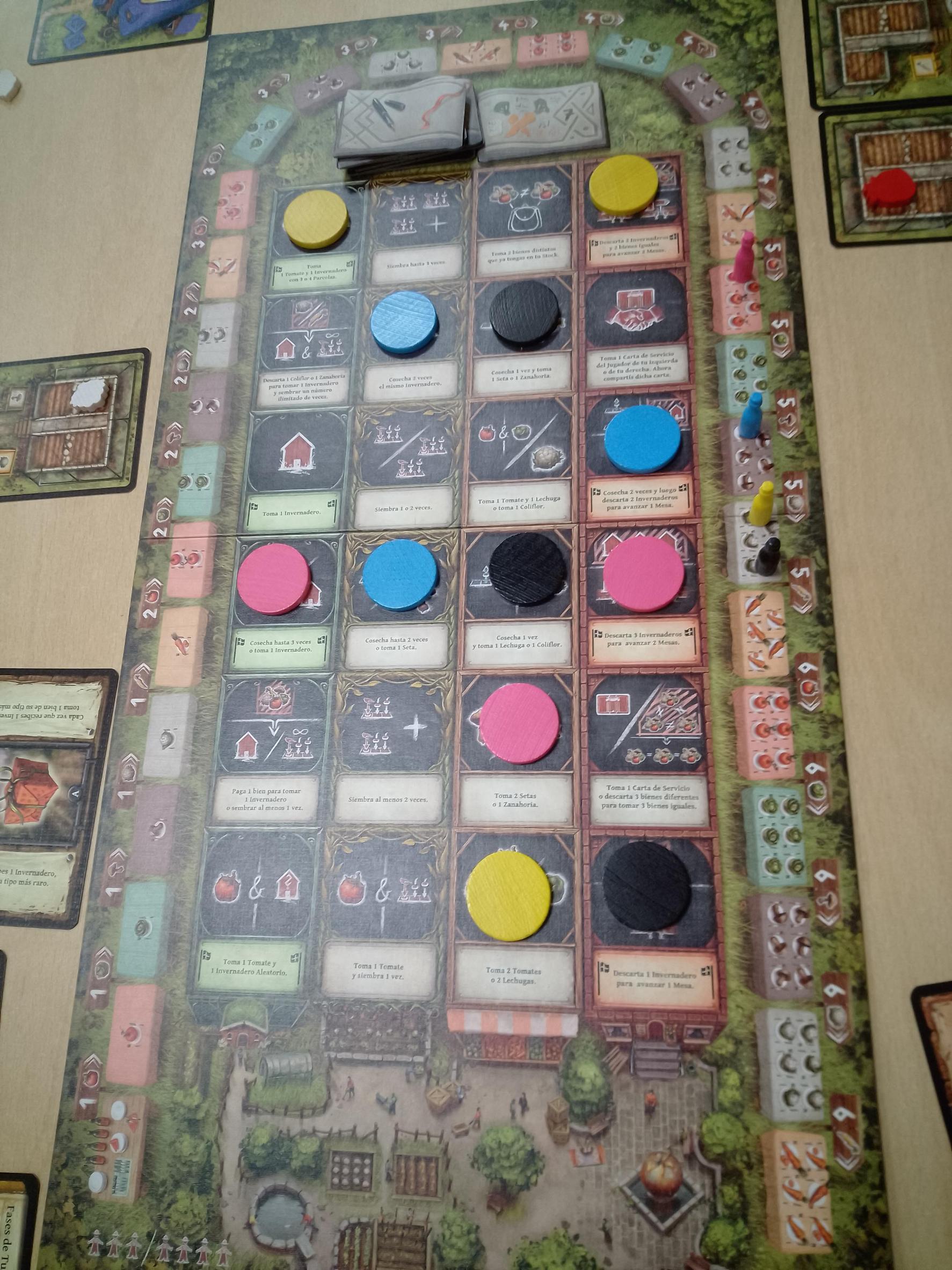
Gdzie kupić
Ceny w sklepach i egzemplarze z drugiej ręki, sprawdzane codziennie.
Przy stołach Ludoya
Pełne statystyki w Ludoya- 92
- Zapisane rozgrywki
- 73
- Gracze
- 46m 12s
- Średnia rozgrywka
- 44
- W kolekcjach
- 6
- Na listach życzeń
4,6/10
z 17 recenzji w Ludoya
Evan3,5 This game is what I thought Loyang would be when I first looked at it. It uses the same card driven field mechanism, where you buy a field card with a set number of spaces for goods. The fewer spaces on the card, the more valuable the type of good that can grow there. When you seed a good onto a card you fill the card with tokens from the supply of the matching type. Each turn you pull a single good from each field Agricola style, but there are action spaces on the central board that let you get extra pulls. It's a lighter game, with a printed time of only 1 hour. The worker placement board is a static grid of printed spaces. Each player also gets a set of exactly three workers, with no ways to gain more. The only variable element that changes from game to game is that there is a set of five cards that are available to be taken which give the player who selects it a special power. The game comes with five-ish sets of these cards, each set consisting of 6 cards. I think more unlock when you play through the "story mode" of the game, which is a mode for players used to the mechanisms of the game. I'm curious about it, but I haven't dipped into it yet. There's a single action spot to take one of these cards, and another which gives you the benefit of a card taken by one of the players sitting to your left or right. Ultimately the goal of all this is at the end of each round, you buy steps on the victory point track. Each step costs an increasing number of matching vegetables, in the sequence of resource rarity. So, the first step is 1 tomato, then 1 lettuce, then 1 mushroom, then 1 cauliflower, then 1 carrot, then 2 tomatoes, 2 lettuce, ect, going all the way to 6s and 7s. The dance of the game comes from this scoring process. On a single step during scoring, you can advance to that step and gain the printed resources rather than spending them. You can additionally go as many steps as you can pay for. Most importantly, the player furthest along the score track pays to advance first, and if a player lands in the same spot as someone else, they land in front of that player. So really, the keys to this game come down to, which space will you hit and gain instead of spend, and when do you want to be in the back of the line vs the front of the line, because tie breakers are frequent and game defining in the last round. I was setting up for a solo game of this when my 5 year old came and asked if he could play. He can't really read yet, but the game has good icons and he was actually able to understand it really well. I had to give him advice from time to time about what a good move would be for him next, but honestly the game does railroad you a little in terms of there being somewhat obvious choices for you depending on your path through the game, so the advice I was giving him was often his only sensible move. I played my best game as well, and went into the cards pretty significantly, since my son was focused on getting fields and the process of growing vegetables. In the end I won by only a single table. I think it's time for me to admit there isn't enough depth here. I took at look at what the story mode adds, just in case, and it's just random punishing/beneficial event cards and variable goals to reach. Not very impressive. Disappointed, but that's fine, I don't have to like every Uwe game. :star: Art, Iconography and components functional :nostar: Clever or interesting mechanisms :star: Reasonably low downtime between turns with mildly AP players :nostar: Multiple plays stay interesting :star: Low or mitigatable luck elements :star::star::nostar::nostar::nostar: Raw enjoyment
Mestremuten7,0 Rating: 3/5 Production value: 3/4 Is the game in my collection/Love to have?: 1/1



Za darmo, w przeglądarce, na Androidzie i iOS
Graj w Reykholt z Ludoya
- Miej ją w swojej kolekcjiŚledź swój egzemplarz i jego dodatki, pożyczaj go znajomym albo dodaj go do listy życzeń i dostań powiadomienie, gdy cena spadnie.Dodaj do swojej kolekcji
- Zapisuj każdą rozgrywkęPunkty, zwycięzcy, minutniki i zdjęcia, a potem twoje statystyki: procent zwycięstw, ulubiona liczba graczy, najlepszy wynik.Zapisz rozgrywkę
- Licz punkty bez papieruKorzystaj z arkuszy wyników i pomocy do gry od społeczności i pozwól Ludoya zsumować punkty.Znajdź arkusze wyników
- Znajdź ludzi do wspólnej gryKluby, wieczory gier i wydarzenia w pobliżu, na których ta gra trafia na stół.Zobacz wydarzenia
Dane gry (gracze, czas gry, wiek, twórcy) z BoardGameGeek.