
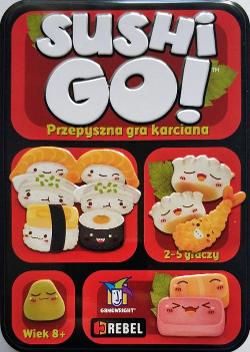
2013 · Gra imprezowa
Sushi Go!
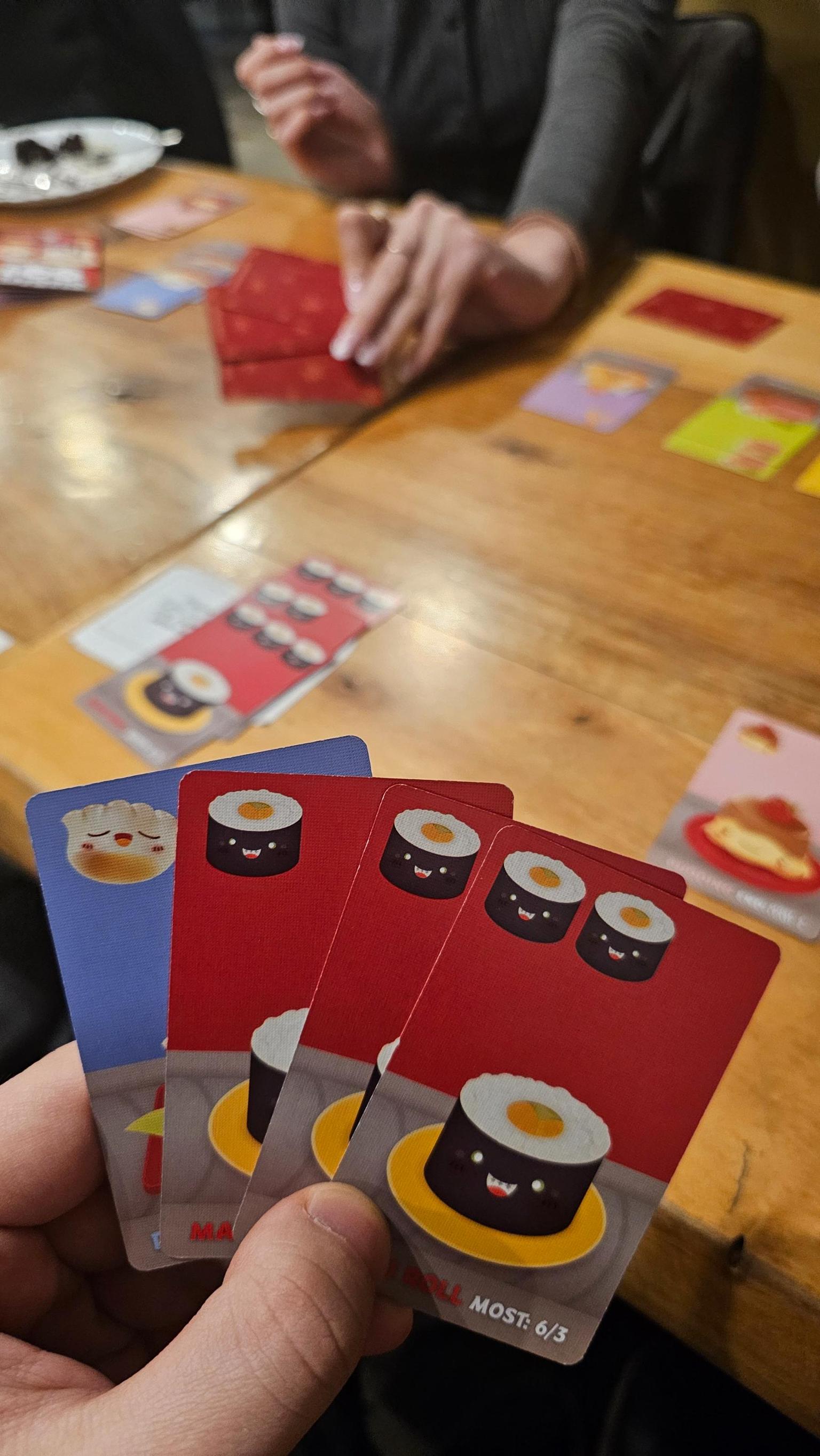
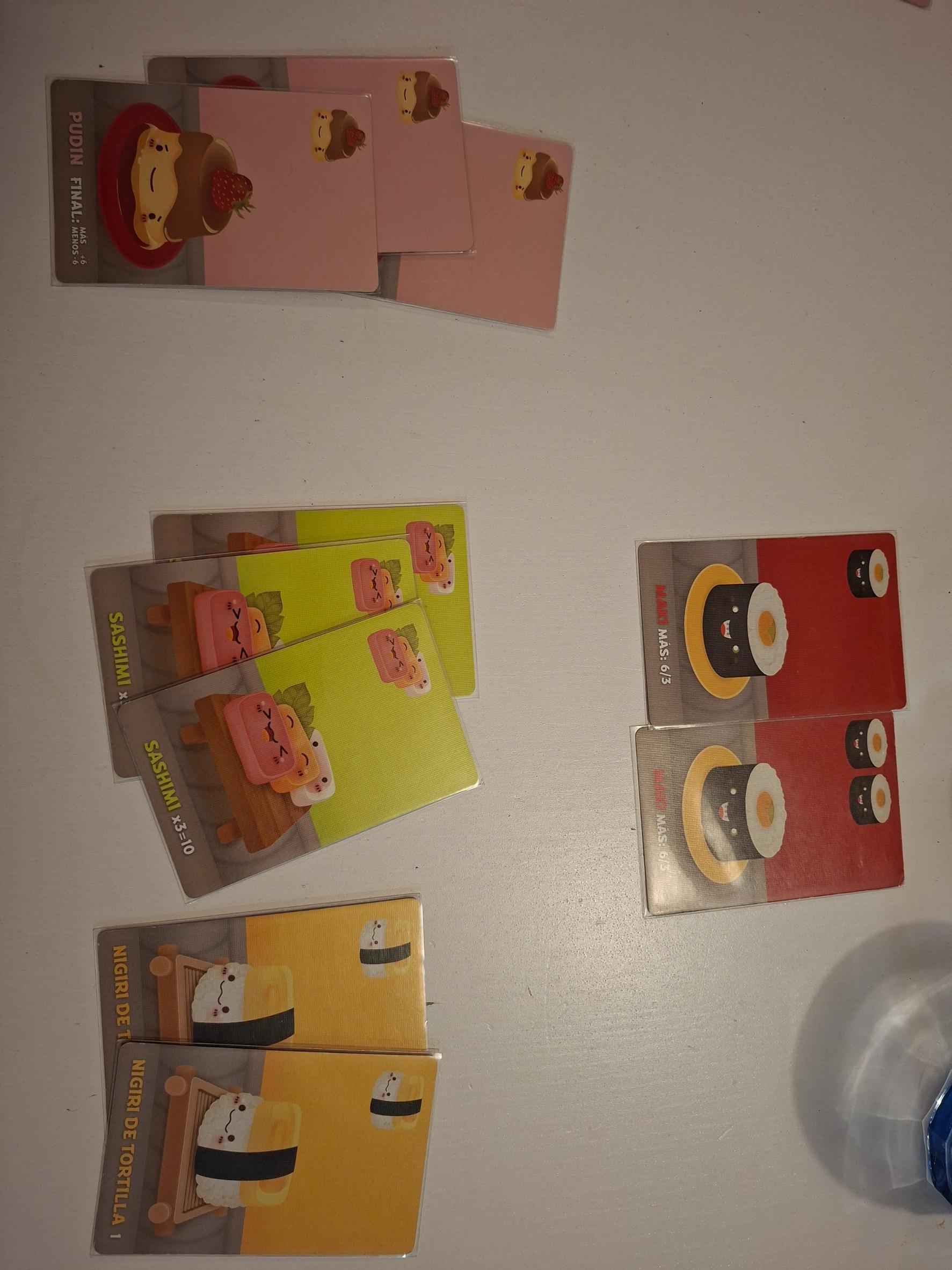
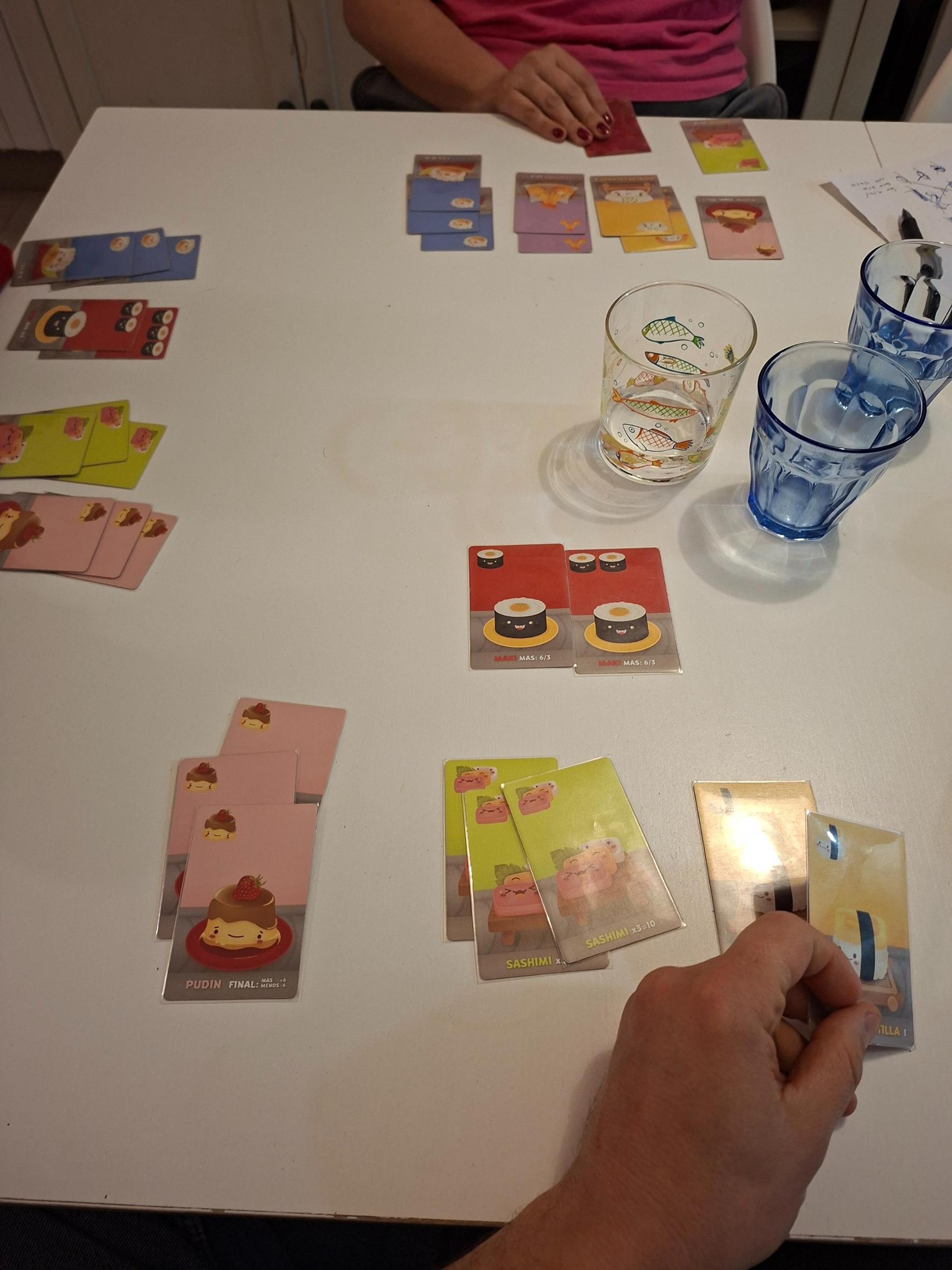
Gracze siadają przy taśmie z sushi, wybierają karty z ręki, a w każdej turze przekazują pozostałe karty następnemu graczowi. Karty przedstawiają różne dania, które punktują na różne sposoby: zbieraj zestawy maków, kompletuj trójki sashimi, używaj wasabi, by podbić wartość nigiri, i gromadź puddingi, które punktują na koniec gry. Każda runda przebiega szybko i ma proste zasady: gracze jednocześnie wybierają kartę i ją odkrywają, a potem przekazują ręce dalej, aż wszystkie karty zostaną zabrane. Ograniczony wybór i zmieniająca się pula kart w kolejnych rundach sprawiają, że trzeba podejmować strategiczne decyzje i blokować przeciwników.
- Gracze
- 2–5 najlepiej w 5
- Czas gry
- 15 min
- Wiek
- 8+
- Złożoność
- 1,2 / 5
O grze
- Projekt





Dodatki
Zobacz je w Ludoya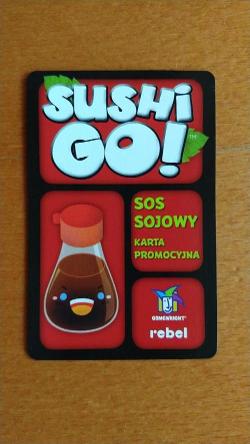
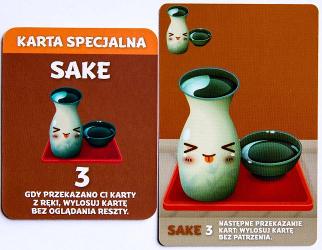
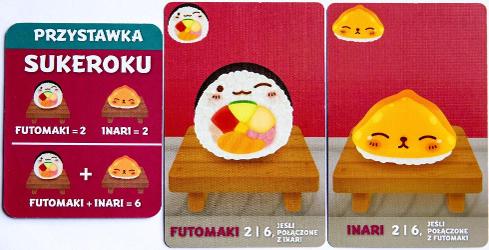
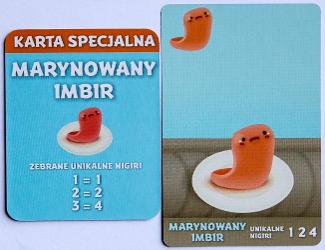

Zdjęcia ze stołów Ludoya
Wszystkie zdjęcia w Ludoya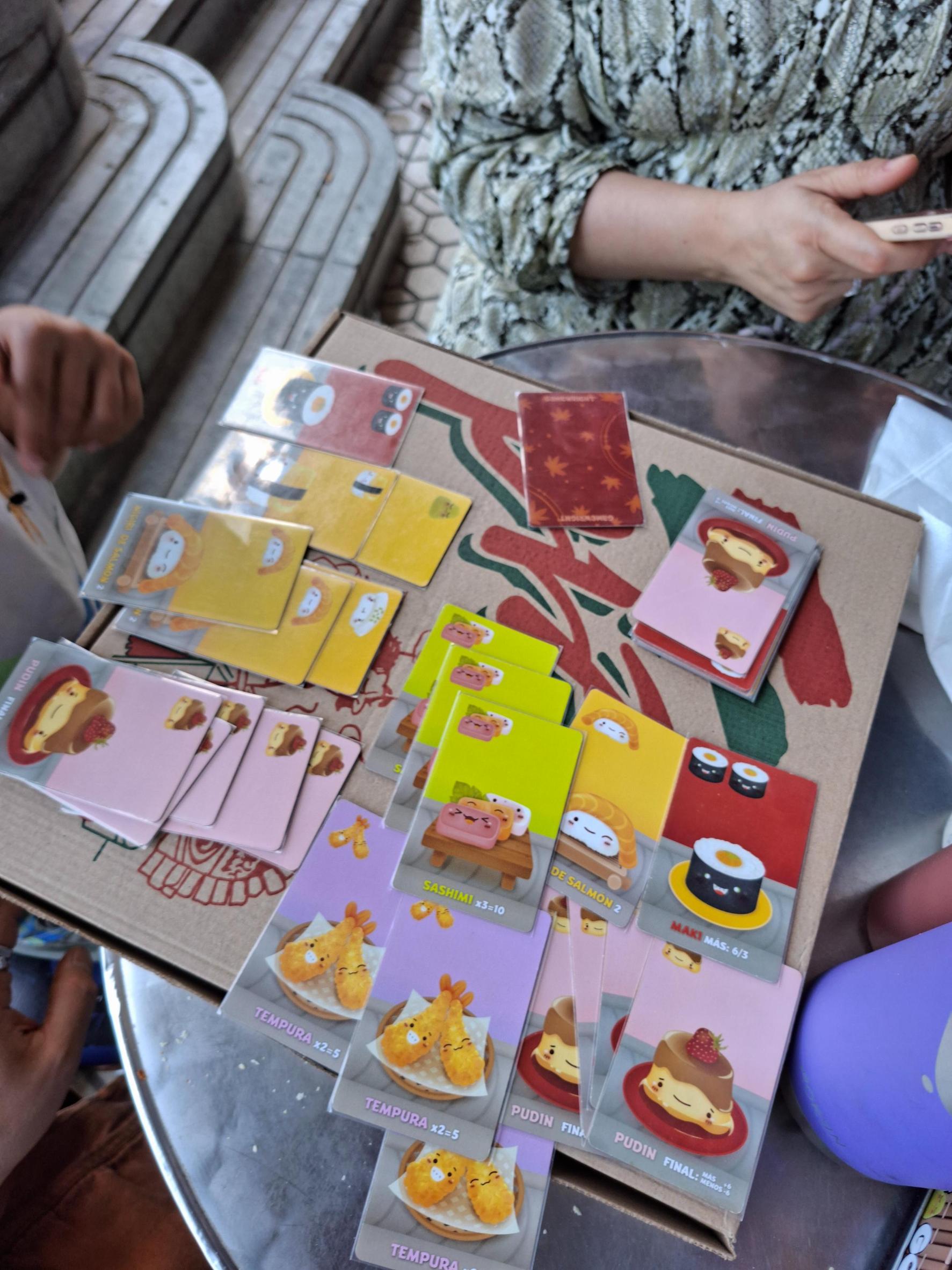
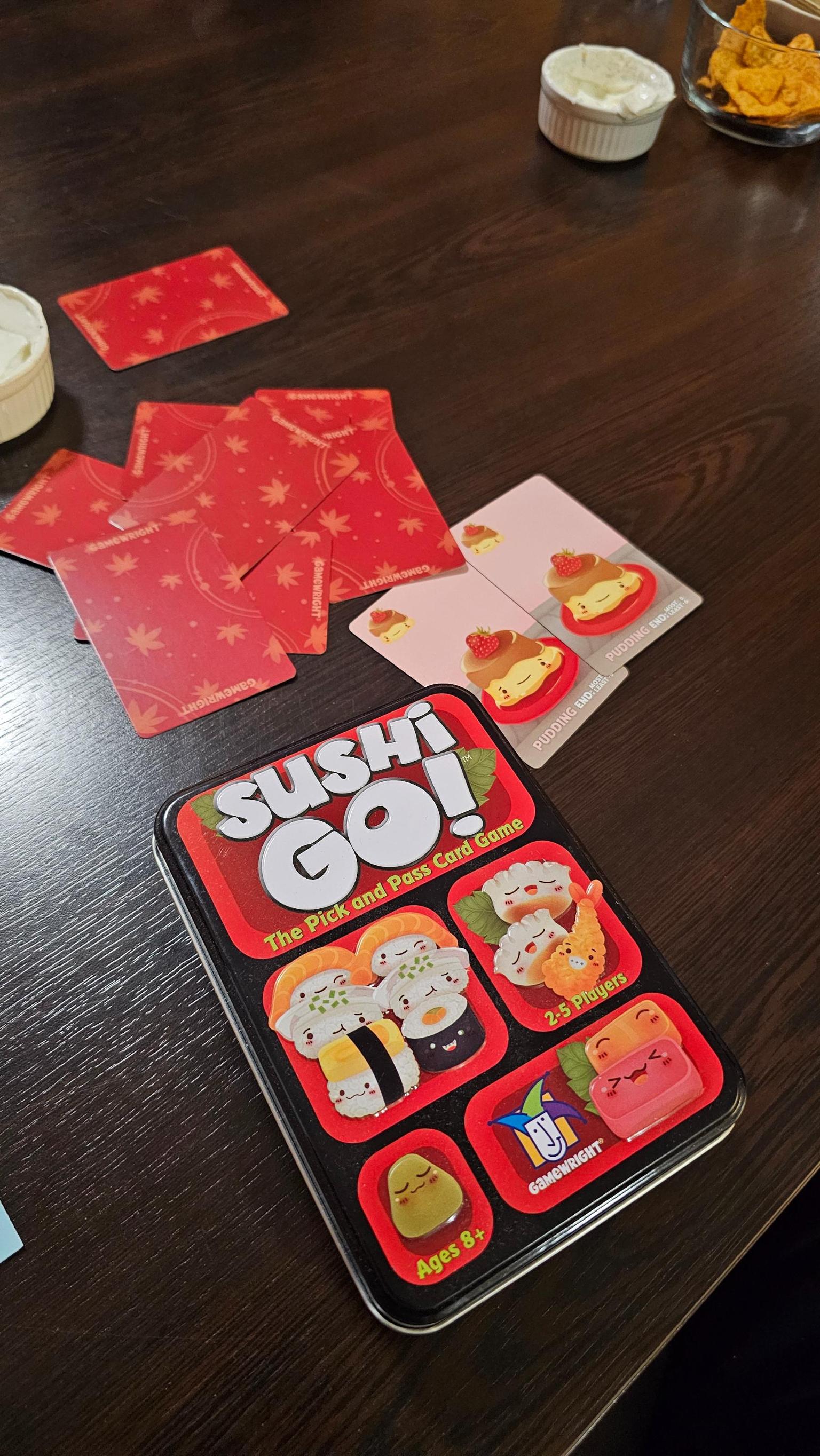
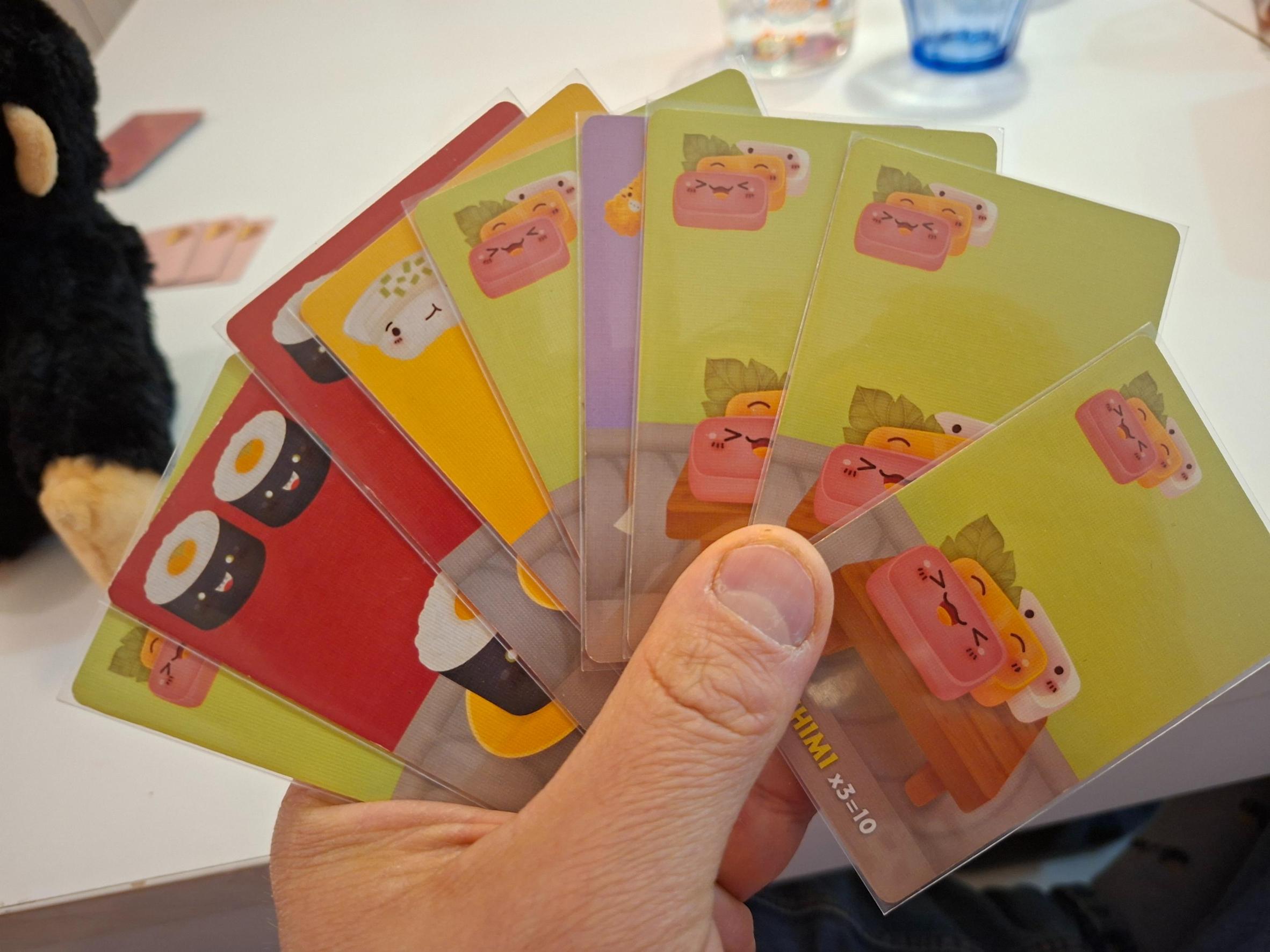
Gdzie kupić
Ceny w sklepach i egzemplarze z drugiej ręki, sprawdzane codziennie.
Przy stołach Ludoya
Pełne statystyki w Ludoya- 2118
- Zapisane rozgrywki
- 1371
- Gracze
- 15m 39s
- Średnia rozgrywka
- 603
- W kolekcjach
- 9
- Na listach życzeń
6,8/10
z 236 recenzji w Ludoya
Ivan6,3 Diversión 3/5 · Interacción 3/5 · Atractivo 3/5 · Originalidad 3/5 · Rejugabilidad 3/5 · Accesibilidad 5/5
Brak zarejestrowanych rozgrywek
Mestremuten7,0 Rating: 4/5 Production value: 3/4 Is the game in my collection/Love to have?: 0/1
Zagrane 5 razy
10 Euros
Brak zarejestrowanych rozgrywek

Pytania o zasady
Odpowiedzi z instrukcji od asystenta zasad Ludoya.
How does drafting work — do we pick cards face-down or face-up, and which way do we pass the hands?
Each round everyone secretly chooses one card from their hand (face-down) and then all players reveal simultaneously; after revealing, pass the remaining hands to the left (standard) and repeat until hands are empty (Rulebook, p.4; summary list, p.12).
If I play a Wasabi, can I put more than one Nigiri on it or use it after playing other cards?
A wasabi triples the score of one subsequent nigiri only — you may place a single nigiri on a wasabi to get triple value (one nigiri per wasabi) (Rulebook, p.5; nigiri/wasabi scoring, p.9).
How do Chopsticks work — how do I take two cards and what happens to the Chopsticks card?
When you play Chopsticks you may later use it instead of taking one card to take two cards from your hand (announce 'Sushi Go!'), then return the Chopsticks card to your played area (Rulebook, p.6).
How are Maki rolls scored and what happens if players tie for first or second?
Count maki icons; the player with the most maki gets 6 points and the second-most 3 points; if players tie they split the combined points for those places (ignore remainders), and a player must have at least one maki to score (Rulebook, p.7).
When do we score Pudding and do they get discarded between rounds?
Puddings are scored only at the end of the game (after all rounds); the most puddings scores +6 and the fewest −6 (ties split), and they are not discarded between rounds — note the 2-player exception for negative scoring (Rulebook, p.9; end-of-game pudding scoring, p.10).
What happens to the last card in each hand at the end of a round — do we still play it?
Yes — when only one card remains in each hand players simultaneously place that final card into their play area, then score the round; after scoring all non-pudding cards are discarded to prepare for the next round (Rulebook, p.6; discard/pudding exception, p.9).
Oficjalny arkusz punktacji
Arkusz wyników gry Sushi Go!
Każda kategoria punktacji, z zestawu Ludoyi. W telefonie sumy liczą się same.
Arkusze wyników i pomoce do gry
- Full Game Kit
- Sushi go
- Puntuació Sushi Go! 3 ronded






















Za darmo, w przeglądarce, na Androidzie i iOS
Graj w Sushi Go! z Ludoya
- Miej ją w swojej kolekcjiŚledź swój egzemplarz i jego dodatki, pożyczaj go znajomym albo dodaj go do listy życzeń i dostań powiadomienie, gdy cena spadnie.Dodaj do swojej kolekcji
- Zapisuj każdą rozgrywkęPunkty, zwycięzcy, minutniki i zdjęcia, a potem twoje statystyki: procent zwycięstw, ulubiona liczba graczy, najlepszy wynik.Zapisz rozgrywkę
- Rozstrzygaj spory o zasadyZapytaj o dowolną zasadę i dostań odpowiedź z instrukcji, ze stroną do sprawdzenia.Zapytaj asystenta zasad
- Znajdź ludzi do wspólnej gryKluby, wieczory gier i wydarzenia w pobliżu, na których ta gra trafia na stół.Zobacz wydarzenia
Dane gry (gracze, czas gry, wiek, twórcy) z BoardGameGeek.