
2020 · Talous
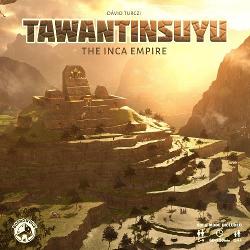
Tawantinsuyu: The Inca Empire
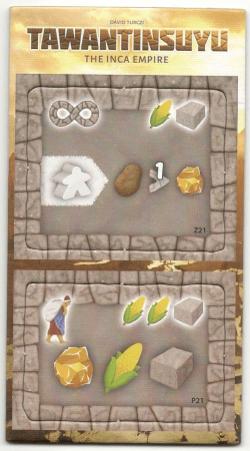
Players assume the roles of rival heirs in the Inca capital, recruiting villagers with five distinct worker types and placing them on terraced locations below the Sun Temple to perform actions. Workers remain on the board and trigger linked actions; matching adjacent workers grant extra actions while some types grant placement bonuses or removal abilities. Manage resources (potatoes, corn, stone, gold), discard god cards or pay gold to place workers, build production buildings and stairs up the temple hill, sculpt statues, and muster armies to conquer villages across four regions. Move a High Priest around the Coricancha to access powerful temple actions, reduce placement costs, and score points from stairs, statues, temple advancements, military control, and finished tapestries.
- Pelaajat
- 1–4 paras 3
- Peliaika
- 60–120 min
- Ikä
- 14+
- Monimutkaisuus
- 4,1 / 5
Tietoa pelistä
- Suunnittelu


Laajennukset
Katso ne Ludoyassa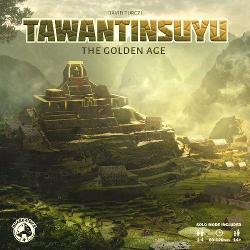

Mistä ostaa
Kauppojen hinnat ja käytetyt kappaleet, tarkistettu päivittäin.
- PelipeikkoVarastossa 49.95 €
- Dragons LairLoppu varastosta 349 kr
- Miniature MarketVarastossa 42 $
- Cardhaus GamesVarastossa 44.99 $
- SpelexpertenVarastossa 477 kr
- Zatu GamesVarastossa 41.95 £
- GameplayTarkista saatavuus 53.9 €
- 401 GamesVarastossa 51.95 $
Ludoyan pöydissä
Kaikki tilastot Ludoyassa- 70
- Kirjatut pelisessiot
- 102
- Pelaajat
- 2h 26m
- Keskimääräinen peliaika
- 71
- Kokoelmissa
- 5
- Toivelistoilla
- 2
- Ennakkotilattu
6,5/10
15 Ludoya-arvostelun perusteella
Sääntökysymykset
Ludoyan sääntöapurin vastaukset sääntökirjasta.
Do roaming and descending movement cost food, and how do Steps reduce those costs?
Yes — Roaming and Descending require you to pay the food cost shown, and each built Step reduces those food costs as specified; Steps also grant VP when built (p.9).
Can I place multiple workers on the same space/task, and how does adjacency affect task results?
You can place more than one worker and adjacent workers increase the number of tasks/resources gained (adjacency bonuses apply); follow the space’s icons for any stacking limits or special distribution rules (pp.9–10).
What's the difference between Passive and Production buildings — when do Production buildings trigger and flip?
Passive buildings provide their listed effects when you use their placement/action and remain as passive effects, while a Production building’s “Produce One” action gives its benefit and the production building is then resolved/flipped as described (pp.12,16,19).
How does Conquest work in 2-player games — do I flip and discard Soldiers and what rewards do I get?
In 2‑player Conquest you play Army cards and follow the flip/discard soldier steps, place the conquest marker, and immediately receive the VP and region rewards listed for that conquest (p.15).
What happens at the Festival — how are potatoes penalized and how is VP scored?
Festival scoring awards VP in the listed tiers (1/2/4), resolves merchant/Temple/Conquest scoring and other festival effects, and applies potato penalties (negative VP for leftover potatoes) as specified during the Festival resolution (p.17).
If I buy a worker during my turn, can I use it immediately or exceed the 2-worker placement limit?
You cannot exceed the 2‑worker placement limit and worker purchases occur at end of turn (subject to the recruit cap), so newly bought workers are not available for actions until after purchase resolution (pp.16,8).
Samankaltaiset pelit
 Teotihuacan: City of Gods – Deluxe Master Set2024
 Terracotta Army2022
 Galileo Galilei2024
 Orloj: The Prague Astronomical Clock2025
 Pillars of Heracles2025
 Nippon: Zaibatsu2026
 Empires: Age of Discovery2015
 Imperium: Legends2021
 Imperium: Horizons2024
 Ants2025
 Teotihuacan: City of Gods2018
 Amritsar: The Golden Temple2023


Ilmainen, verkossa, Androidilla ja iOS:llä
Pelaa peliä Tawantinsuyu: The Inca Empire Ludoyalla
- Pidä se kokoelmassasiPidä kirjaa kappaleestasi ja sen laajennuksista, lainaa sitä ystäville tai lisää se toivelistallesi ja saat tiedon, kun hinta laskee.Lisää se kokoelmaasi
- Kirjaa jokainen pelisessioPisteet, voittajat, ajastimet ja kuvat, sitten tilastosi: voittoprosentti, suosikkipelaajamäärä, paras tulos.Kirjaa pelisessio
- Ratkaise sääntökysymyksetKysy mitä tahansa säännöistä ja saat vastauksen sääntökirjasta sekä sivun, josta voit tarkistaa sen.Kysy sääntöapurilta
- Löydä pelikavereitaKerhot, peli-illat ja tapahtumat lähelläsi, joissa tätä peliä pelataan.Katso tapahtumat
Pelin tiedot (pelaajat, peliaika, ikä, tekijät) lähteestä BoardGameGeek.