
2004 · Transportation
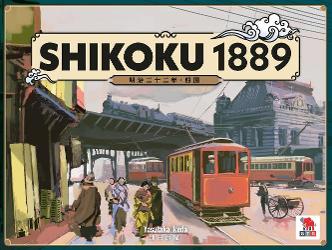
Shikoku 1889
Players invest in and manage railroad companies on a compact, terrain‑heavy map of 19th‑century Shikoku. The game alternates share‑dealing rounds, where players buy and sell stock, with operating rounds in which corporations run trains, collect revenue from cities, and upgrade as old locomotives become obsolete. Majority shareholders control corporate actions during operations, deciding routes, train purchases, and dividend policies. The economy evolves over time, increasing city values and changing train availability, and the winner is the player with the highest combined cash and stock value at game's end.
- Players
- 2–6 best 4
- Playing time
- 180–240 min
- Age
- 14+
- Complexity
- 3.8 / 5
About the game
- Design

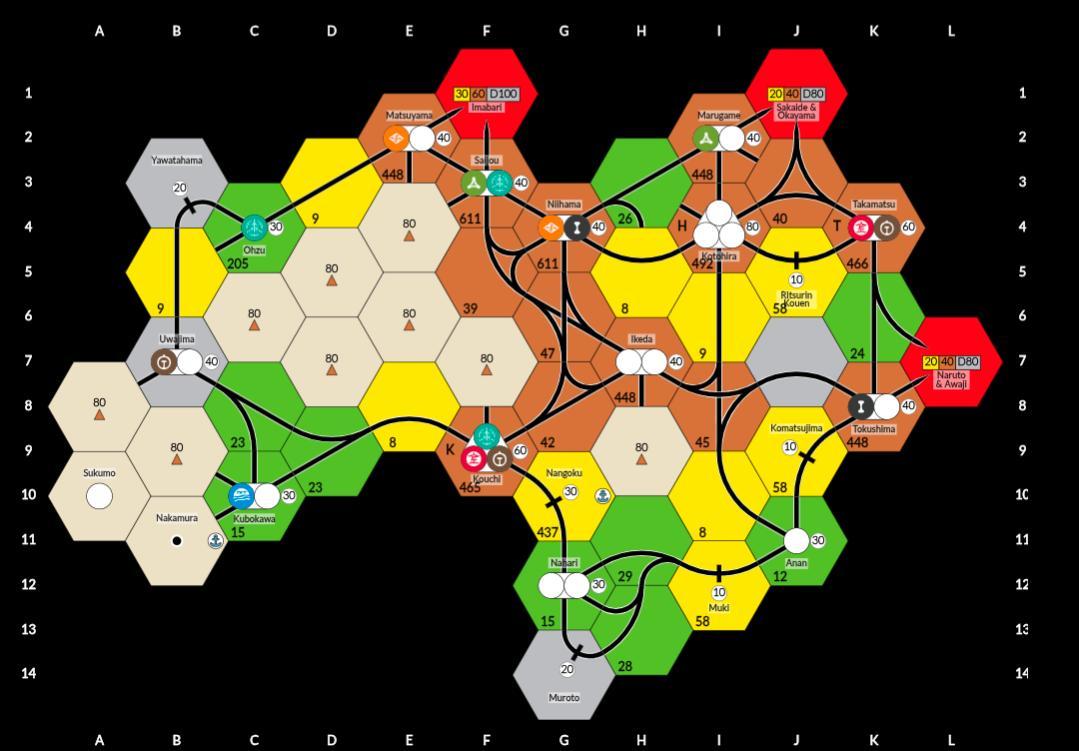
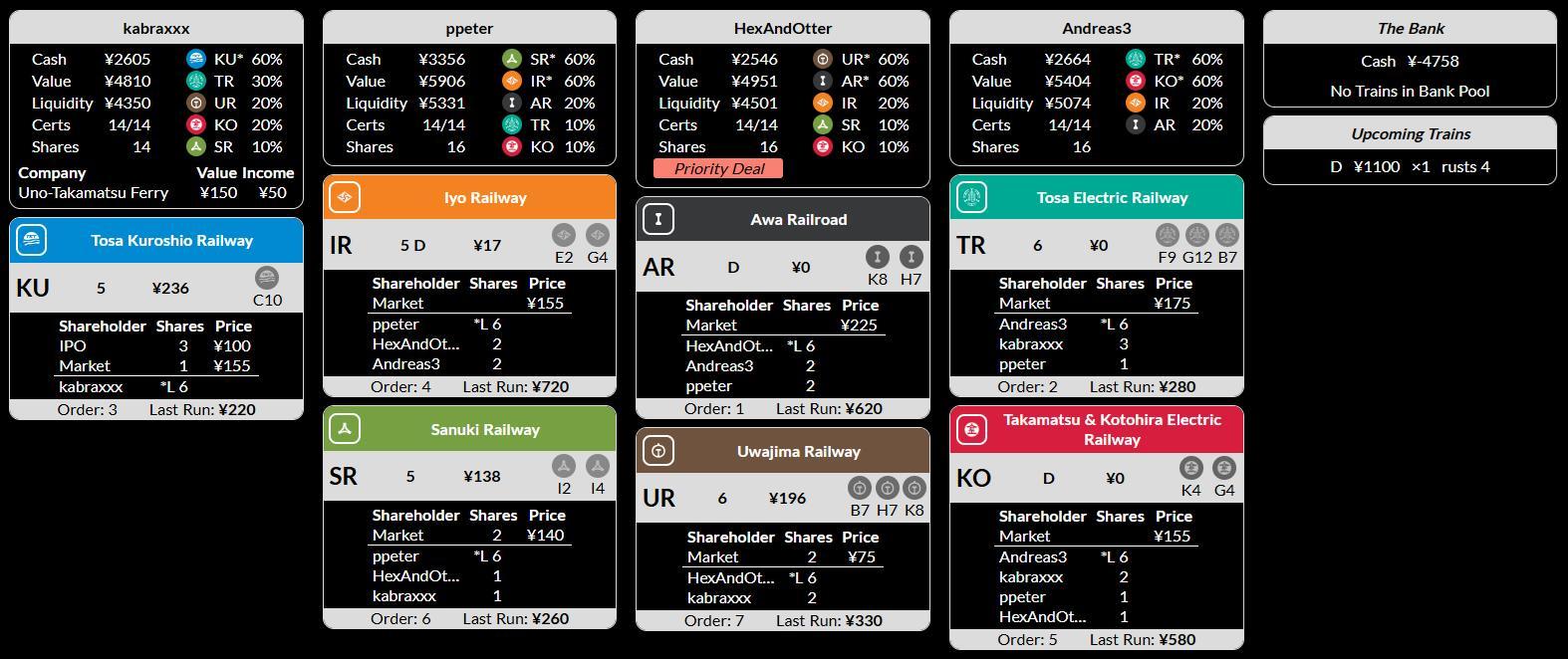
Photos from Ludoya tables
All photos in Ludoya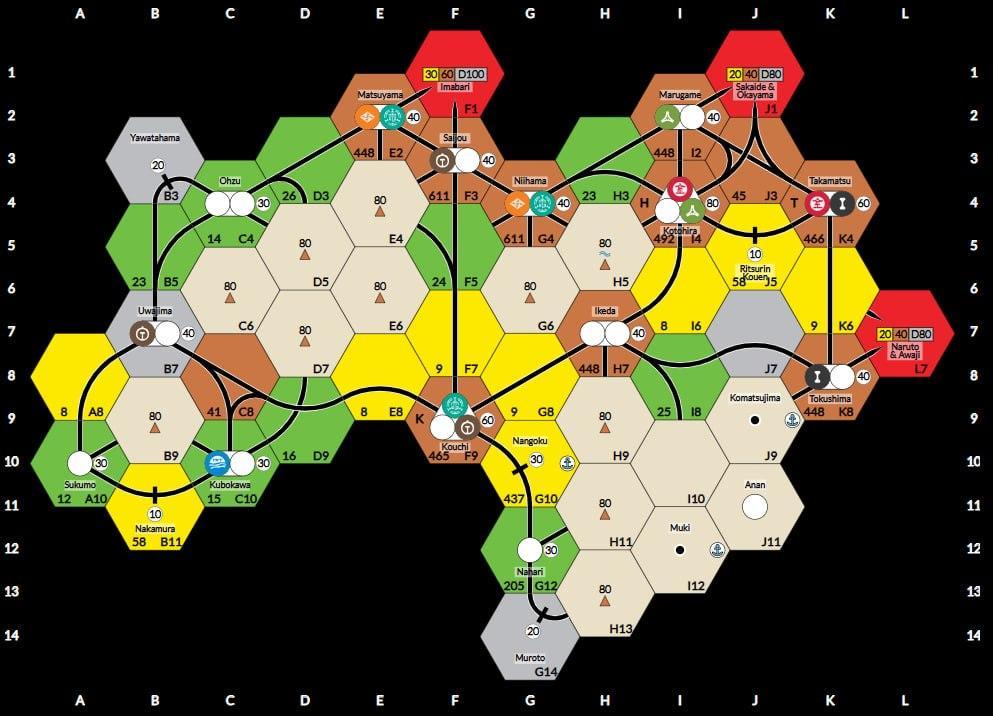
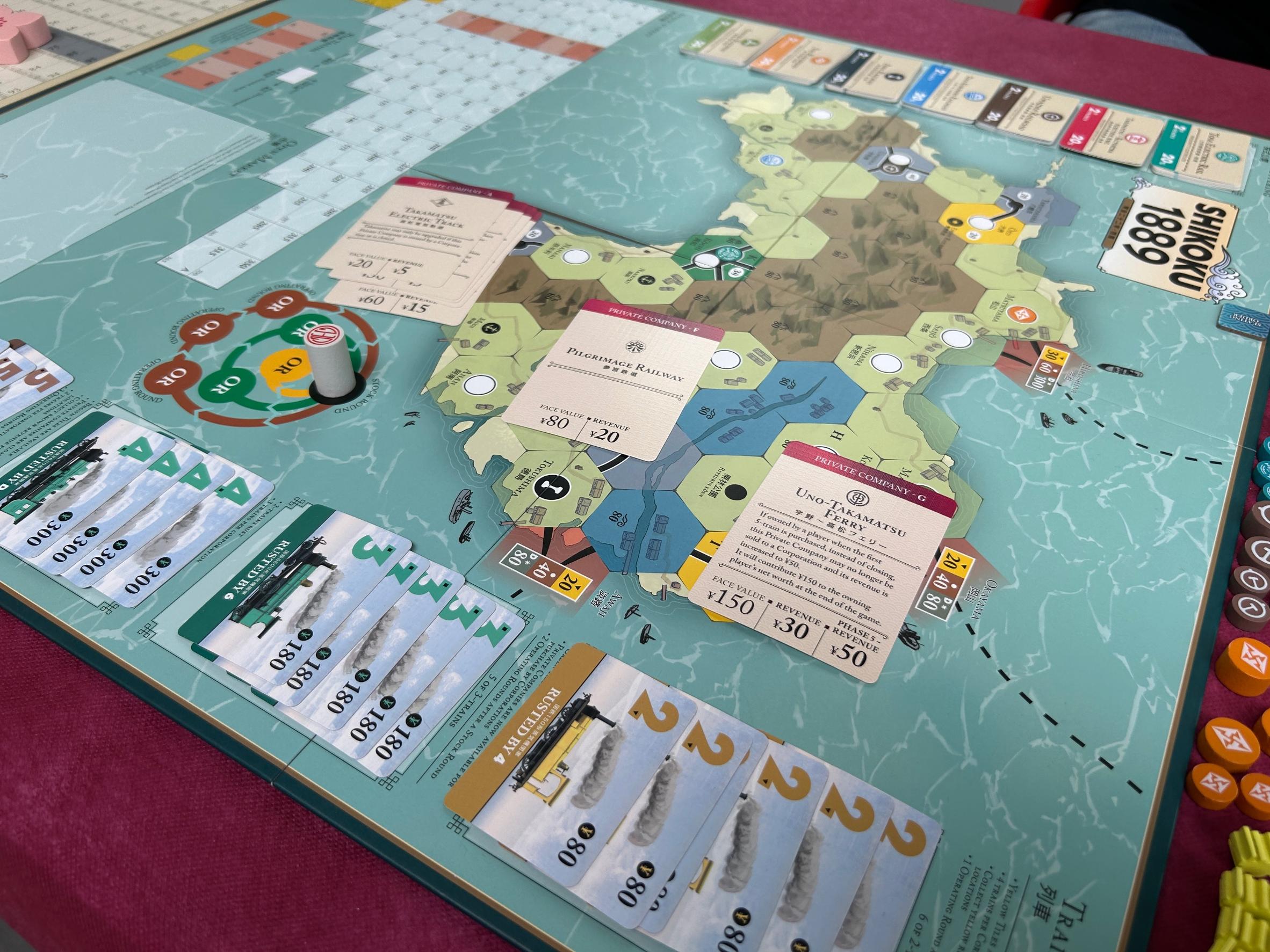
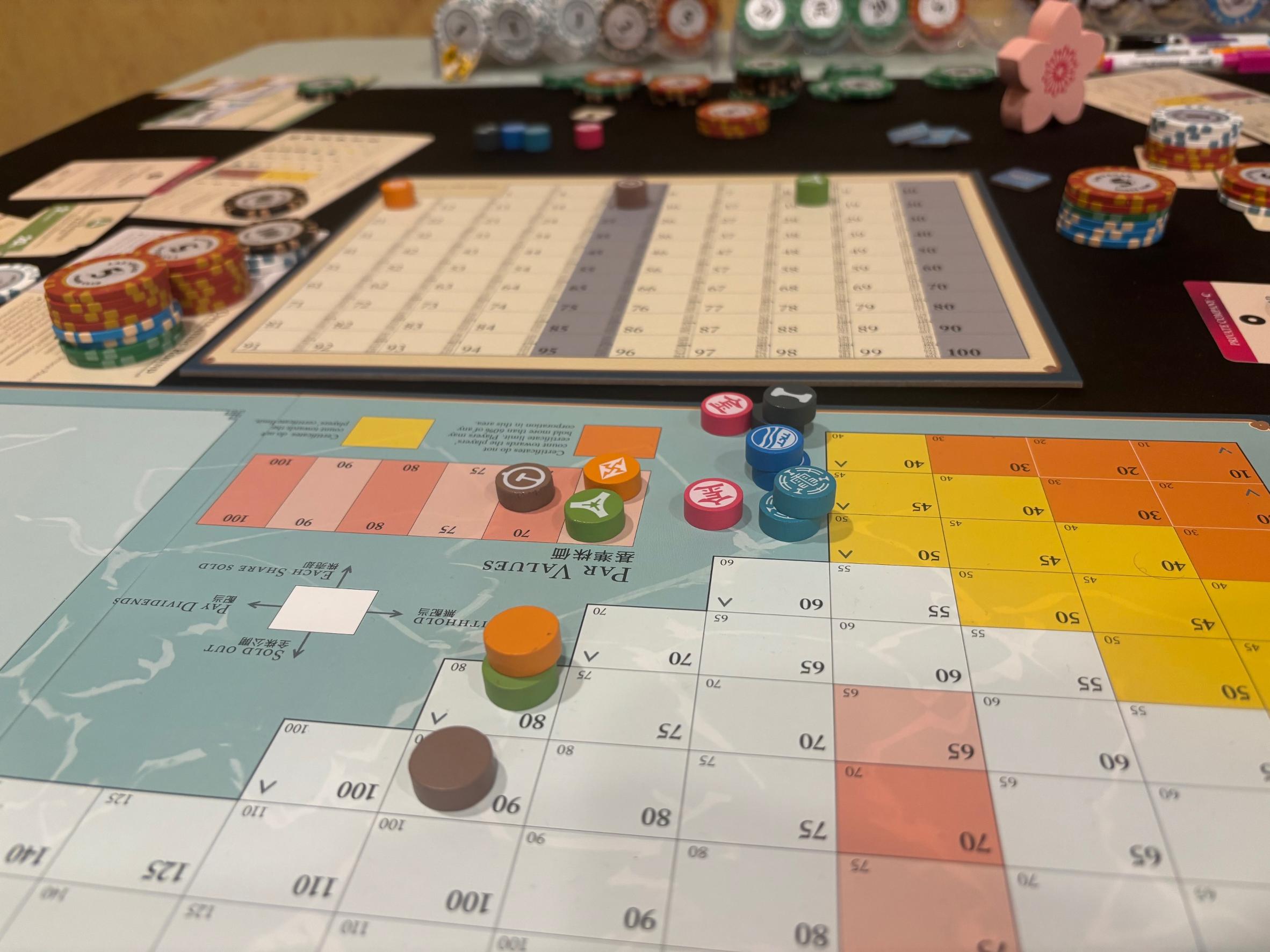
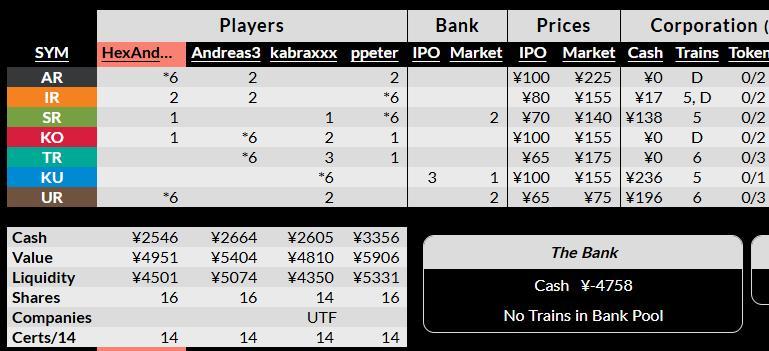
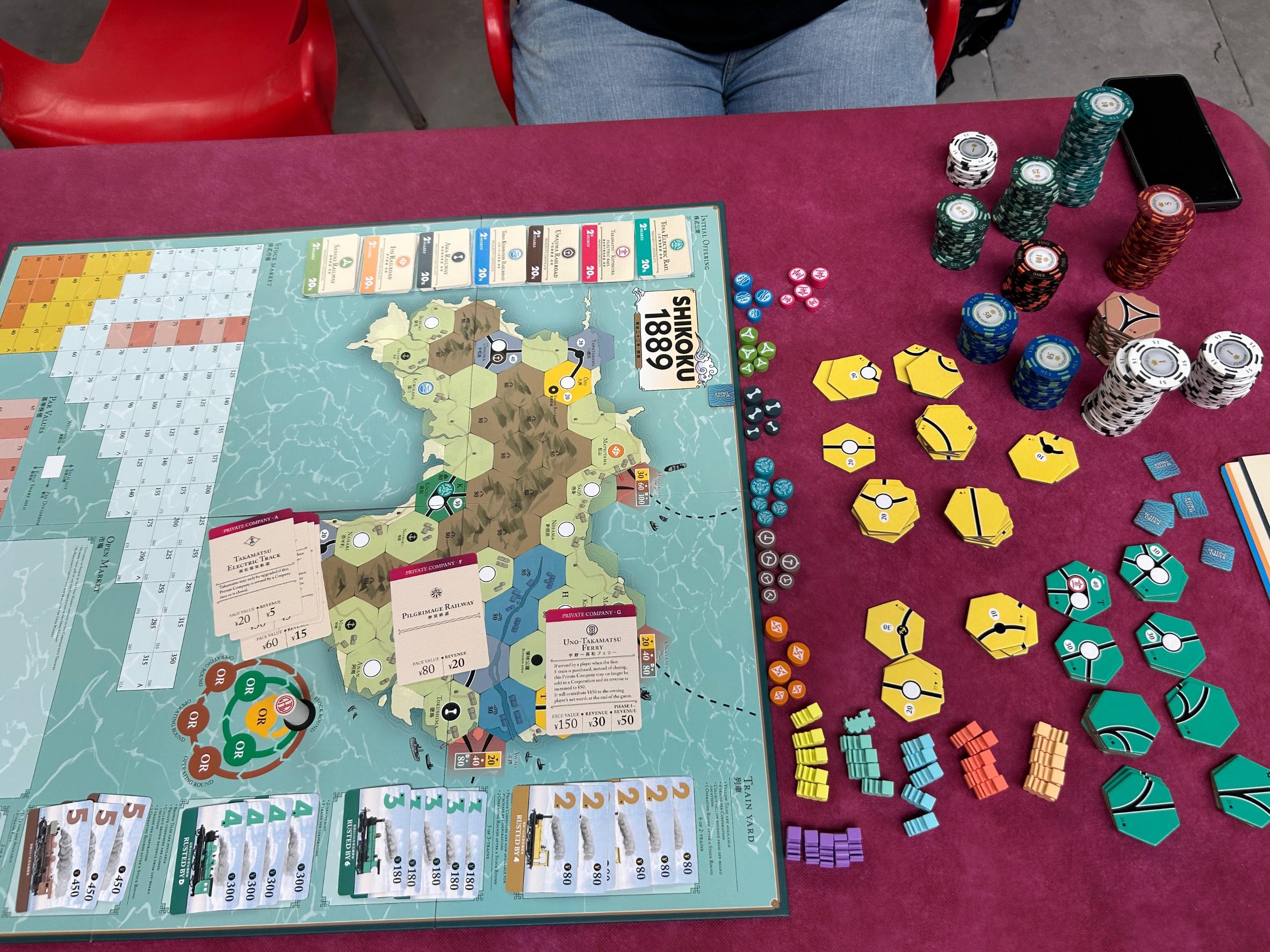
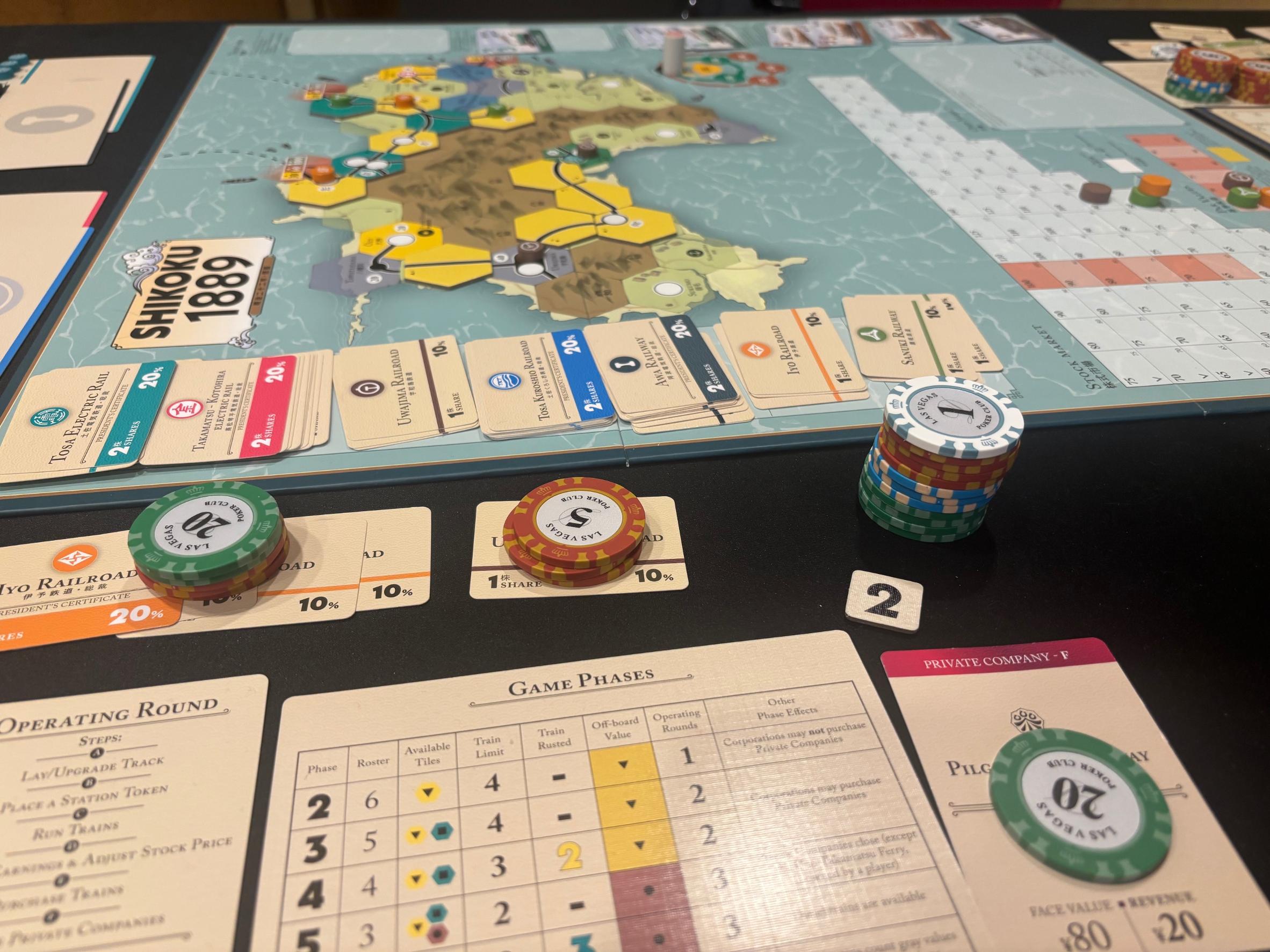
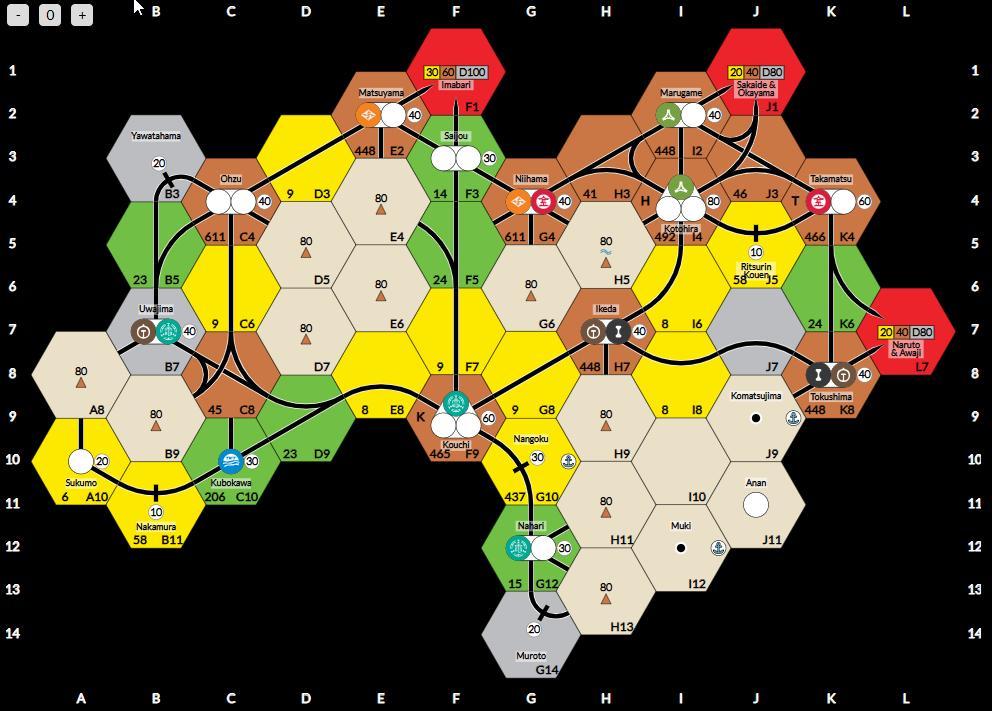
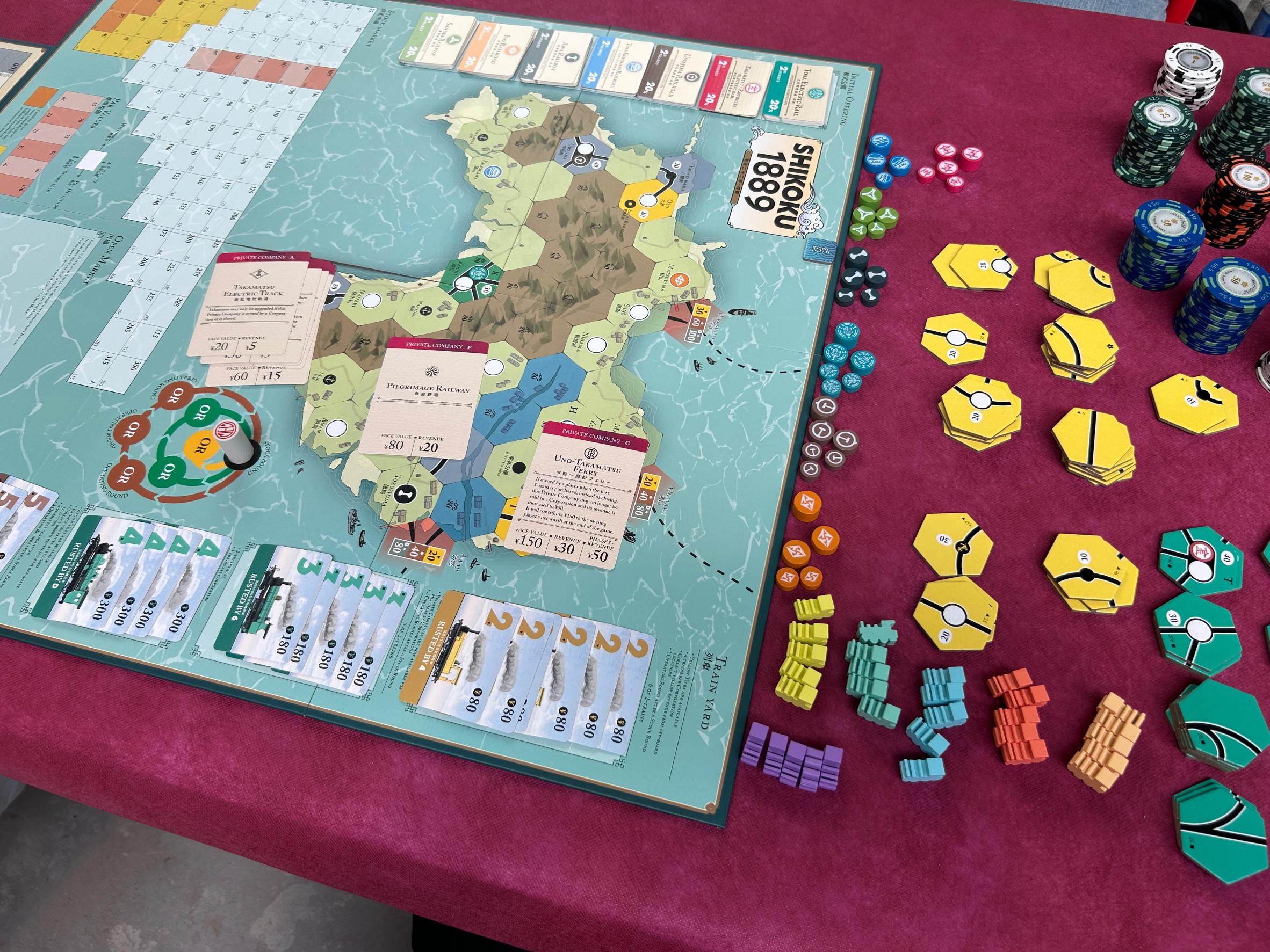
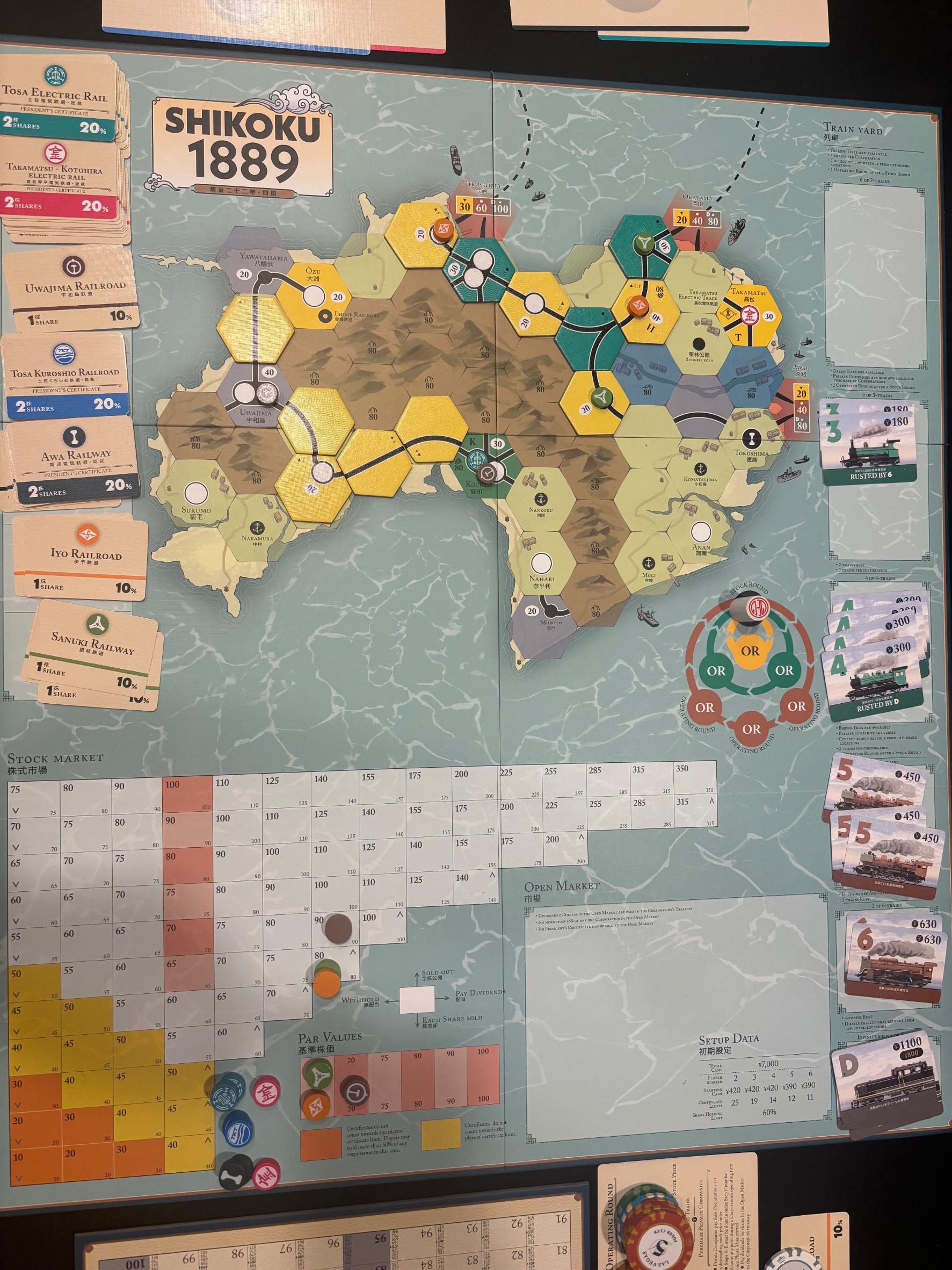
Where to buy it
Shop prices and second-hand copies, checked every day.
On Ludoya's tables
Full stats in Ludoya- 118
- Plays logged
- 130
- Players
- 4h 14m
- Average play
- 41
- In collections
- 7
- On wishlists
- 3
- Pre-ordered

Rules questions
Answered from the rulebook by Ludoya's rules assistant.
How does the private-company reserve-bid auction work — what happens when I place a reservation on a company that isn’t the topmost?
Reservation bids mark your right to buy a non-top Private Company later; when that company becomes topmost a single reservation bidder buys it for their reserved price, while multiple reservation bidders resolve it in a closed auction among only those reservers (bids must increase by at least ¥5). (Rulebook pp.14–16).
On my Stock Round turn can I sell and buy shares in any order, and can I sell in the first Stock Round?
On your stock action you may sell one or more shares and/or purchase one certificate, and you may do both in either order (but not sell–buy–sell). However, no shares may be sold in the first Stock Round. (Rulebook pp.17–18).
When does a corporation ‘float’ and when does it start operating?
A corporation floats when only five shares remain in its Initial Offering; the president then places the charter, pays capital equal to 10× par to the Bank, and places station tokens, and only floated corporations take turns in Operating Rounds (unfloated companies are skipped). (Rulebook p.18).
What triggers trains to rust and what happens to rusted trains?
Phase changes caused by the first purchase of a new train rank trigger rusting events (rusting occurs at the start of Phases 4, 6, and D as noted), and when a train rank rusts all trains of that rank are immediately removed from play without compensation. (Rulebook pp.23, 25).
My corporation has a station with connectivity but no train — am I forced to buy one, and what if we can’t afford it?
If a corporation has a station token with connectivity to another revenue center it must own a train by the end of its train‑purchase step and is forced to buy one; it may buy from another corporation or the Train Yard/Open Market, the president may contribute cash and must sell legally allowable shares, and failure to raise required funds forces the president into bankruptcy and ends the game. (Rulebook p.24).
Similar games
 18Chesapeake2018
 1824: Austrian-Hungarian Railway2019
 1862: Railway Mania in the Eastern Counties2013
 1830: Railways & Robber Barons1986
 1822: The Railways of Great Britain2016
 1861: Railways of the Russian Empire & 1867: Railways of Canada2020
 1846: The Race for the Midwest2005
 The Old Prince 18712022
 18USA2017
 1822PNW2023
 1848: Australia2007
 18172010
People who own it also own

Free, on web, Android and iOS
Play Shikoku 1889 with Ludoya
- Keep it in your collectionTrack your copy and its expansions, lend it to friends, or put it on your wishlist and get told when the price drops.Add it to your collection
- Log every playScores, winners, timers and photos, then your stats: win rate, favourite player count, best score.Log a play
- Settle rules questionsAsk anything about the rules and get an answer from the rulebook, with the page to check it on.Ask the rules assistant
- Find people to play it withClubs, game nights and events near you that bring this game to the table.See events
Game facts (players, playing time, age, credits) from BoardGameGeek.