
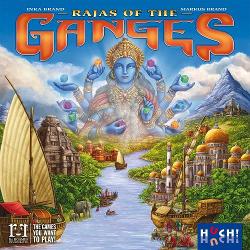
2017 · Dice
Rajas of the Ganges
Players act as 16th-century Indian nobles developing their estates into prosperous provinces for the empire. They roll and assign dice as workers to take actions on a shared board, building market tiles and monuments, expanding estates, and managing resources. A parallel karma track affects scoring and grants immediate and endgame benefits, so players balance short-term wealth against long-term reputation. Play focuses on dice management, worker placement, and timing to optimize income, expansion, and fame.
- Players
- 2–4 best 4
- Playing time
- 45–75 min
- Age
- 12+
- Complexity
- 2.9 / 5
About the game
- Design
- Publisher




Expansions
See them in Ludoya Rajas of the Ganges: Goodie Box 12019
 Rajas of the Ganges: Goodie Box 22020
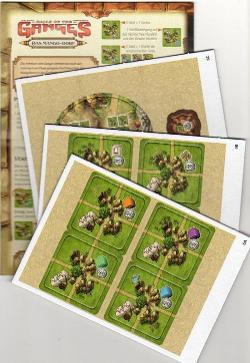 Rajas of the Ganges: Mango Village2017
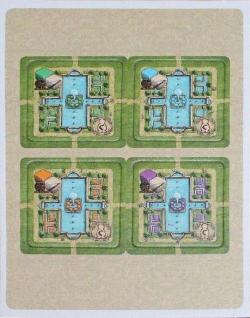 Rajas of the Ganges: Snake Expansion2018
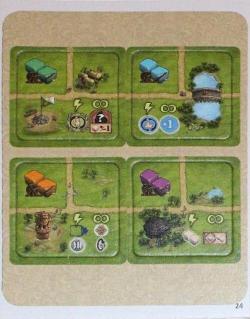 Rajas of the Ganges: Tiger Expansion2018
 Deutscher Spielepreis 2018 Goodie Box2018
 Brettspiel Adventskalender 20172017
 Brettspiel Adventskalender 20182018
 Rajas of the Ganges: Blessings of Kedarnath2019
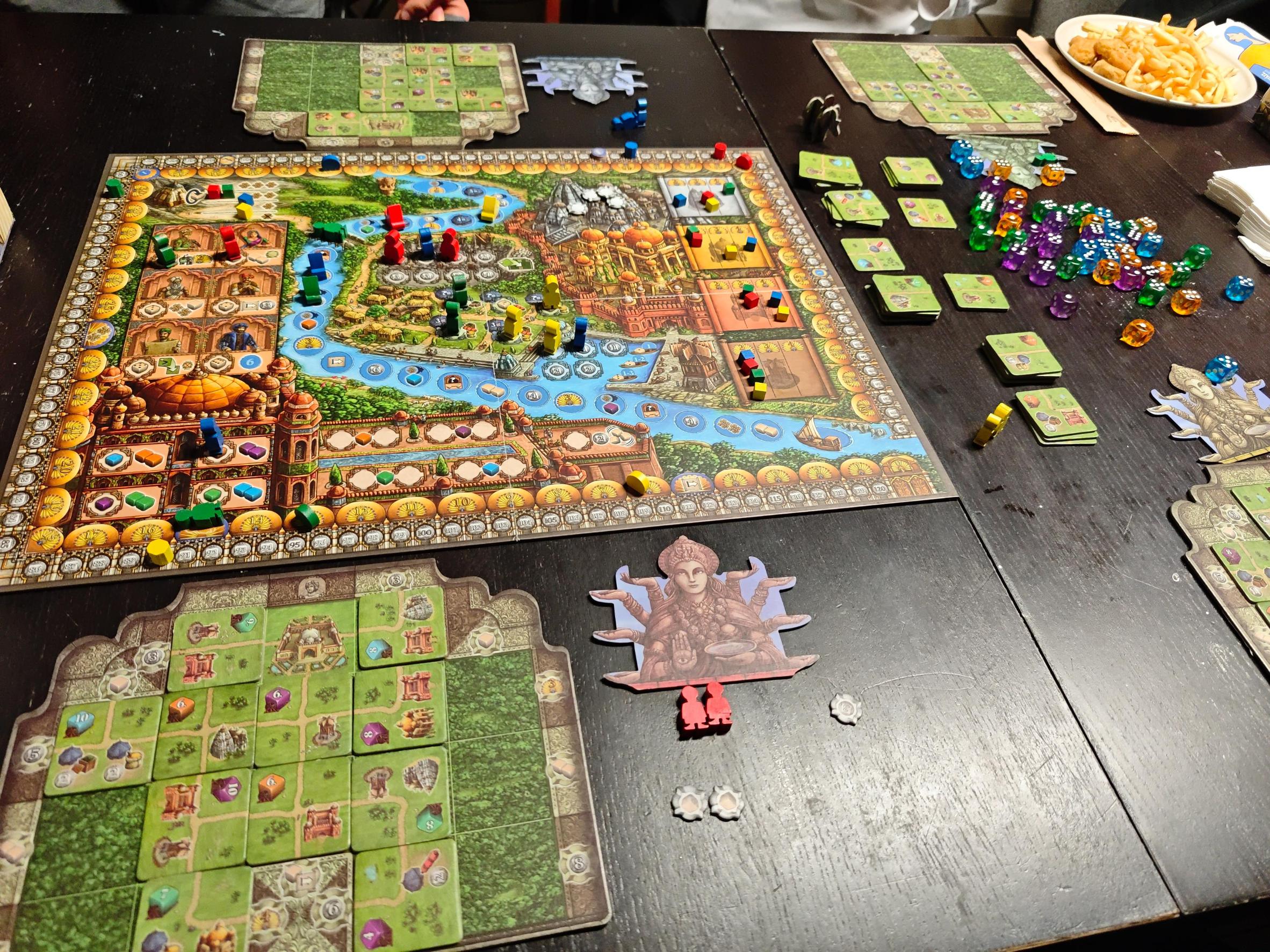
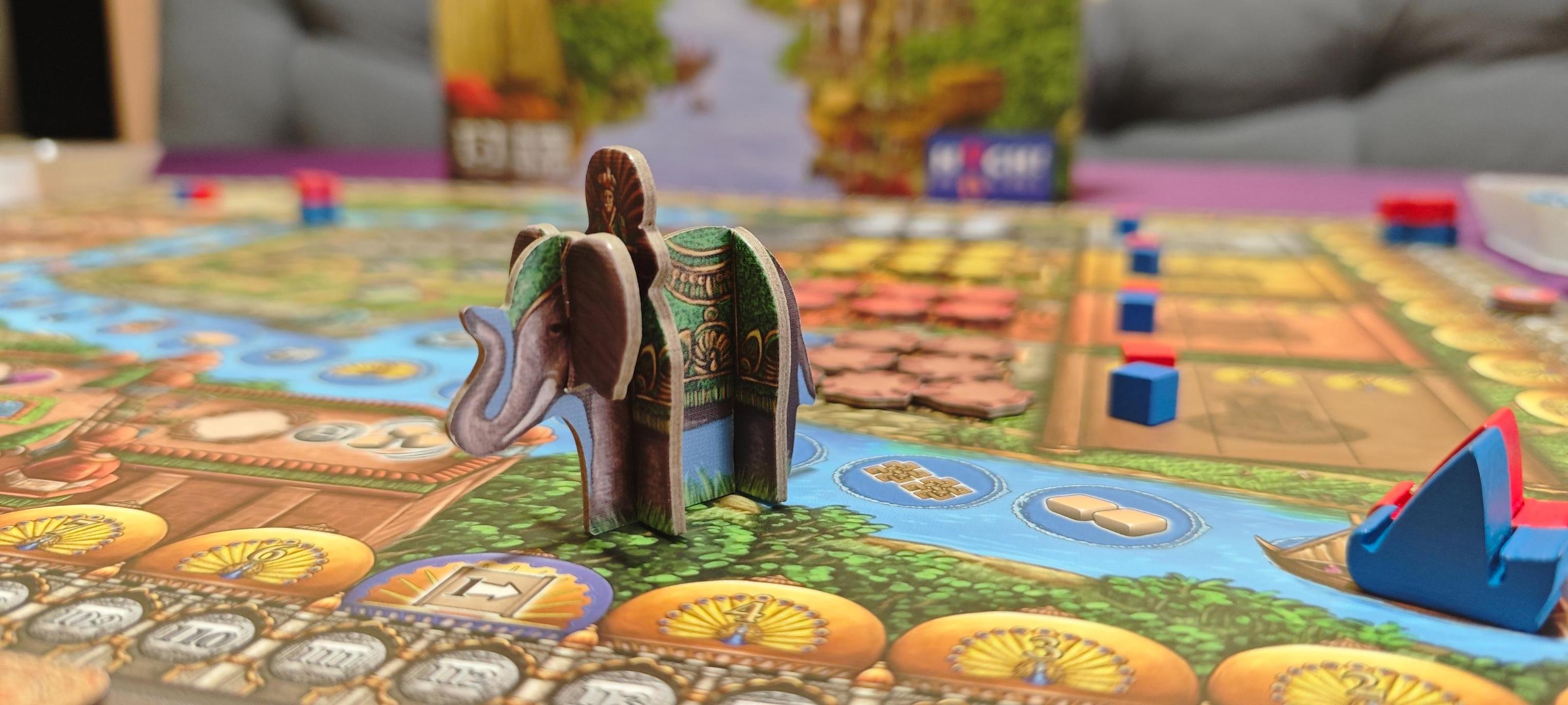
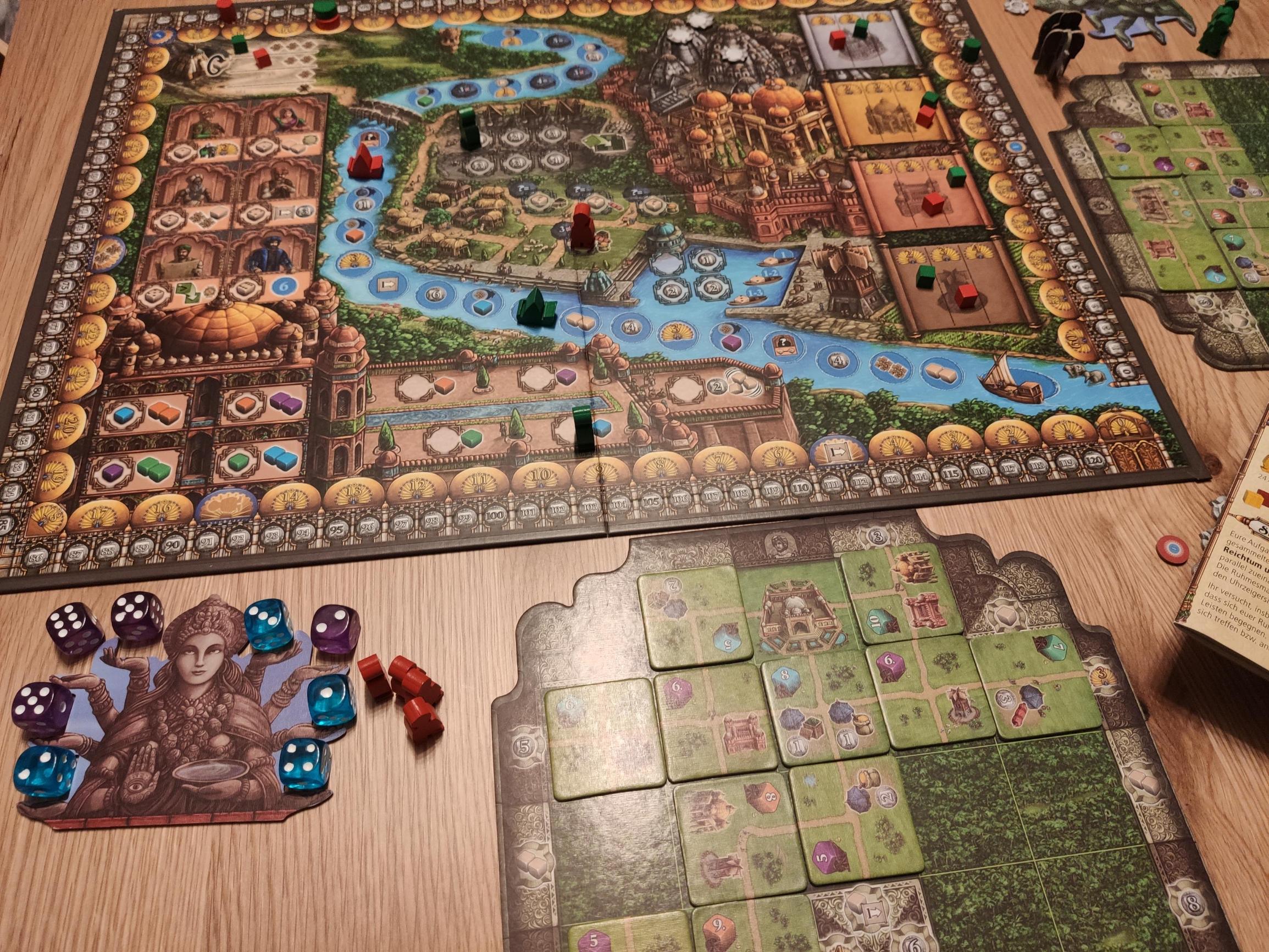
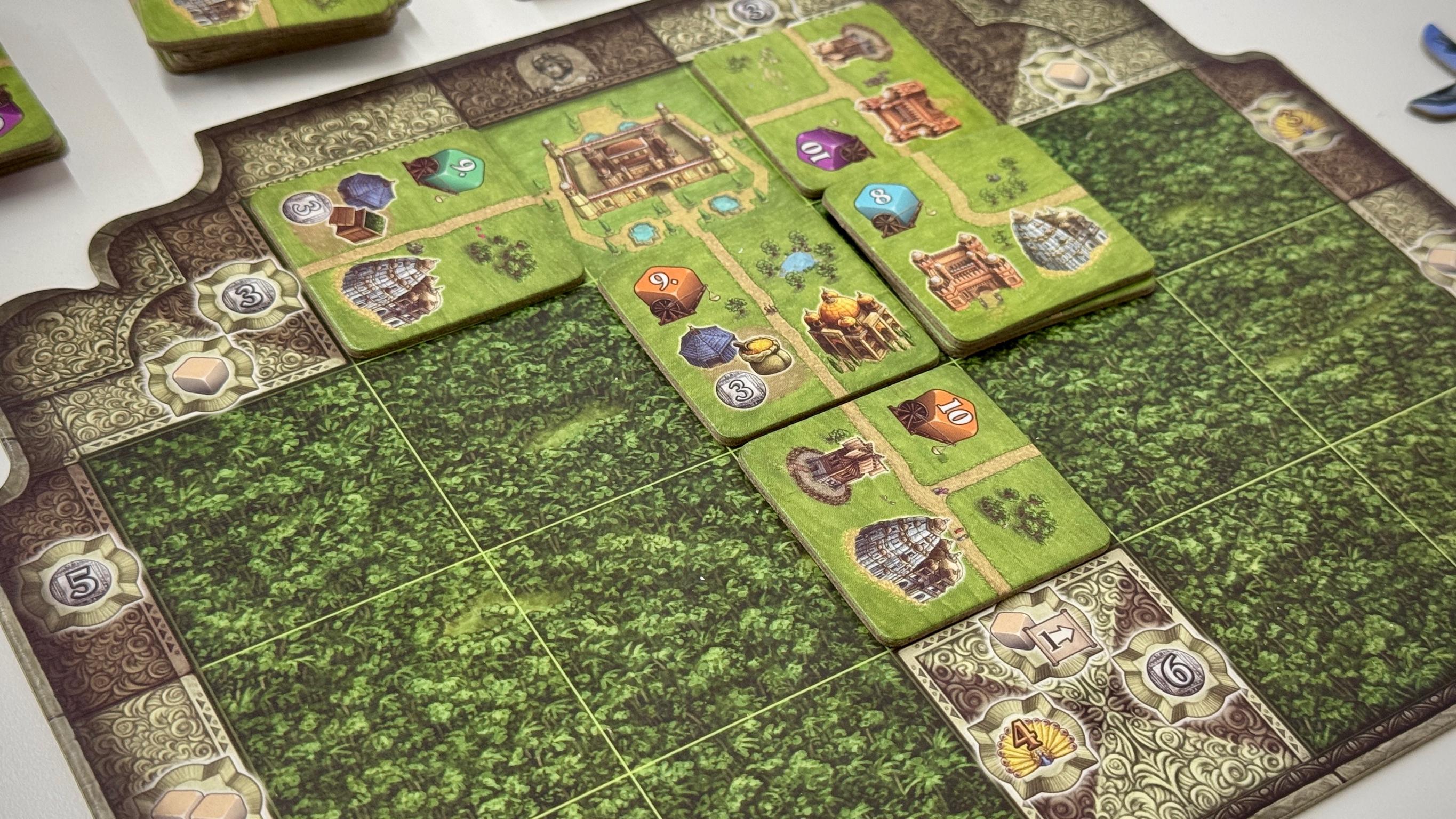
Photos from Ludoya tables
All photos in Ludoya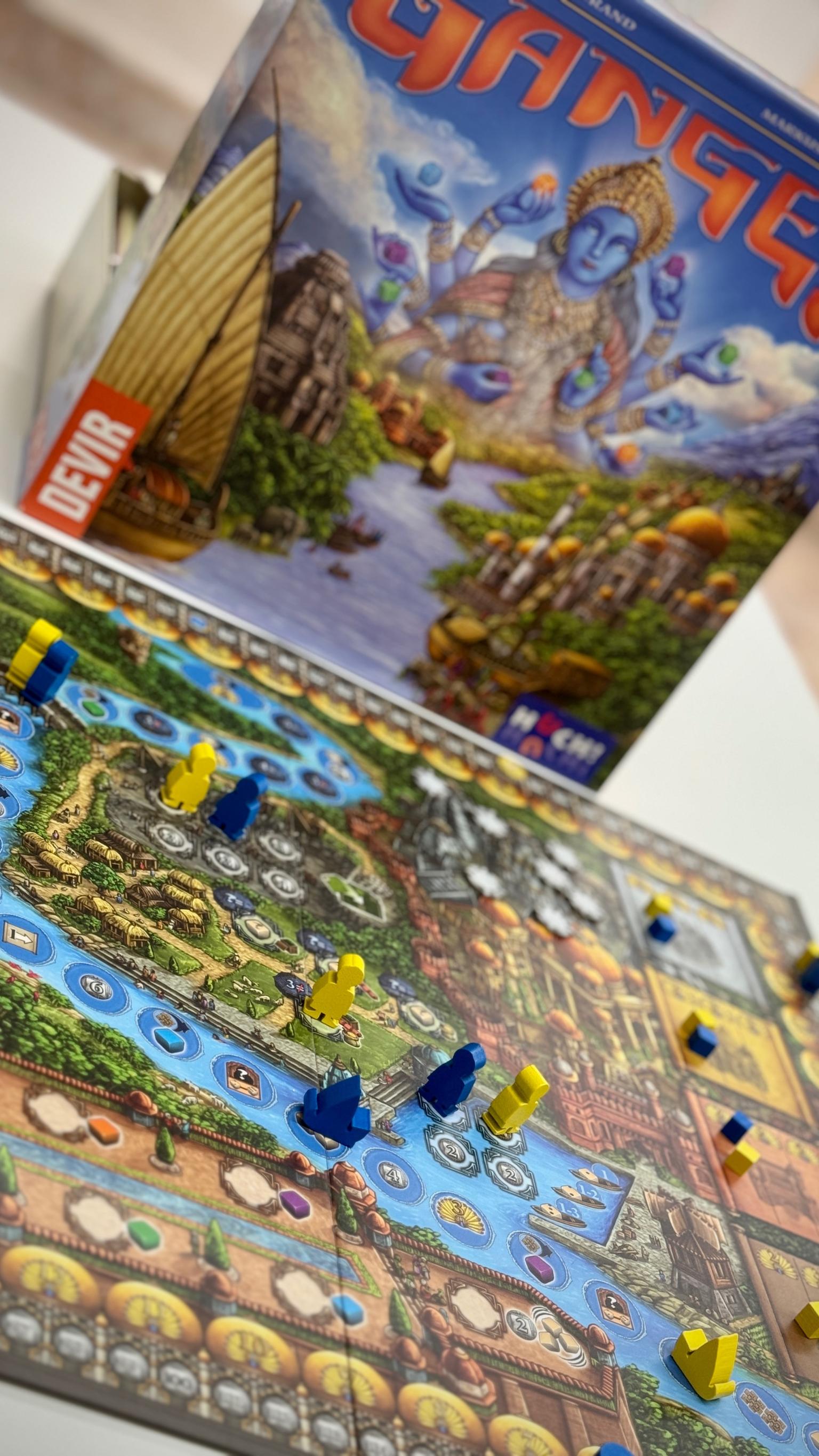
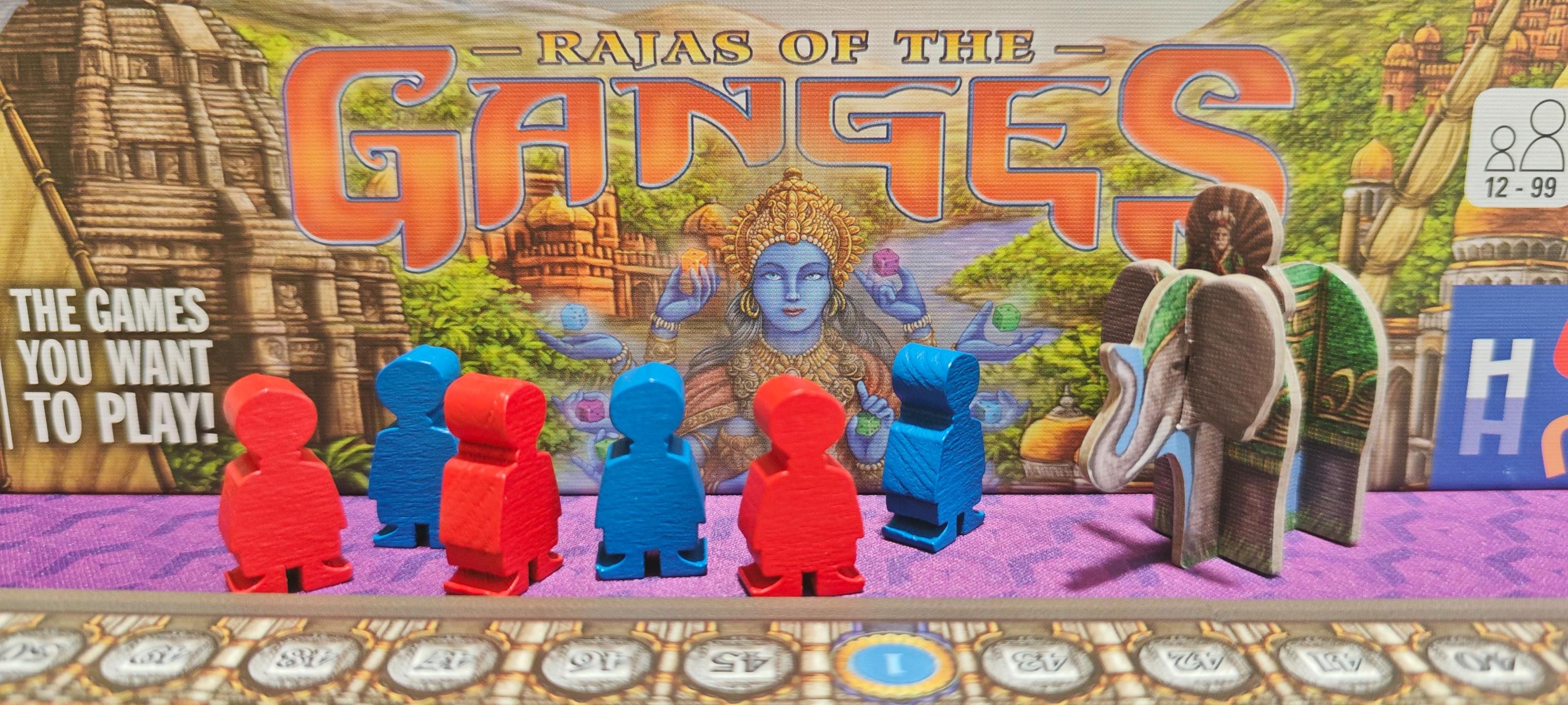

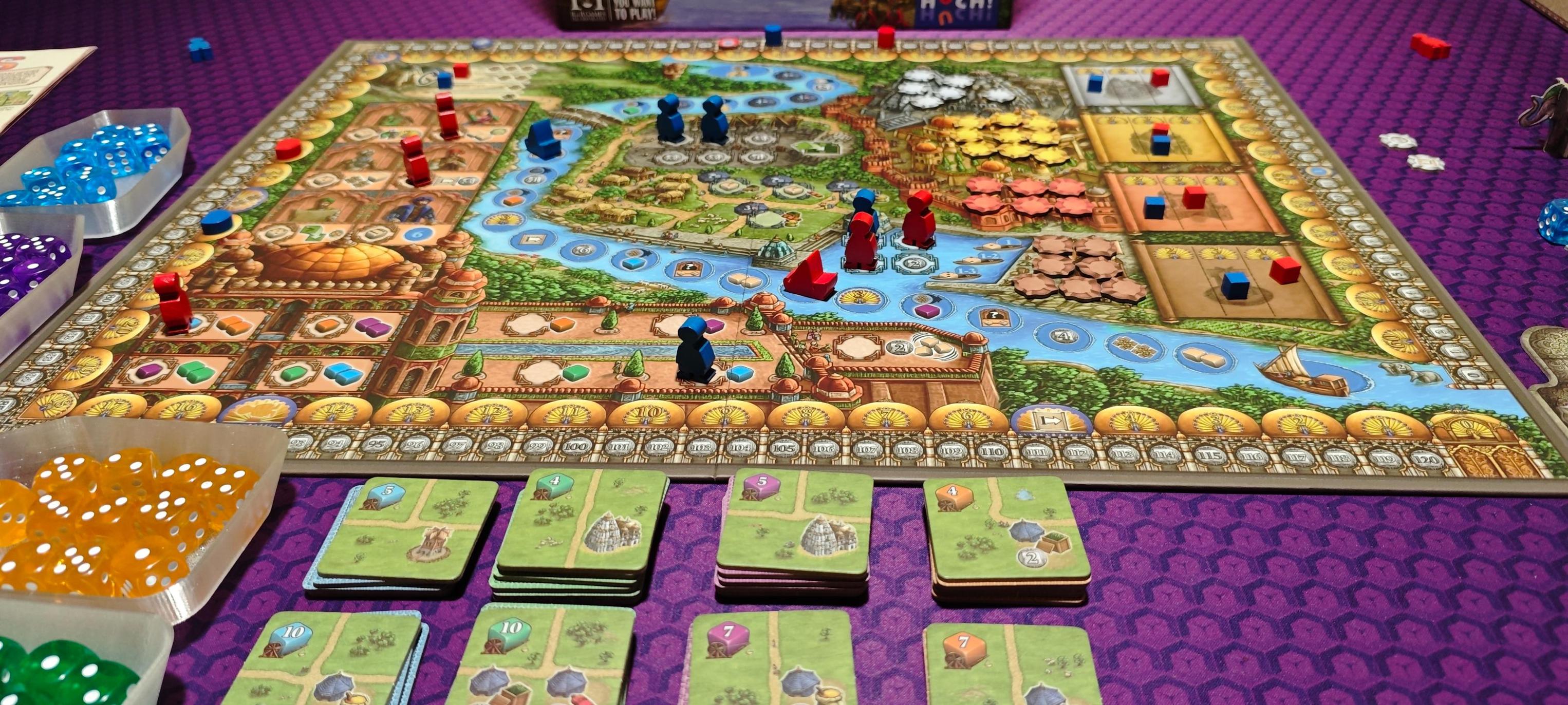
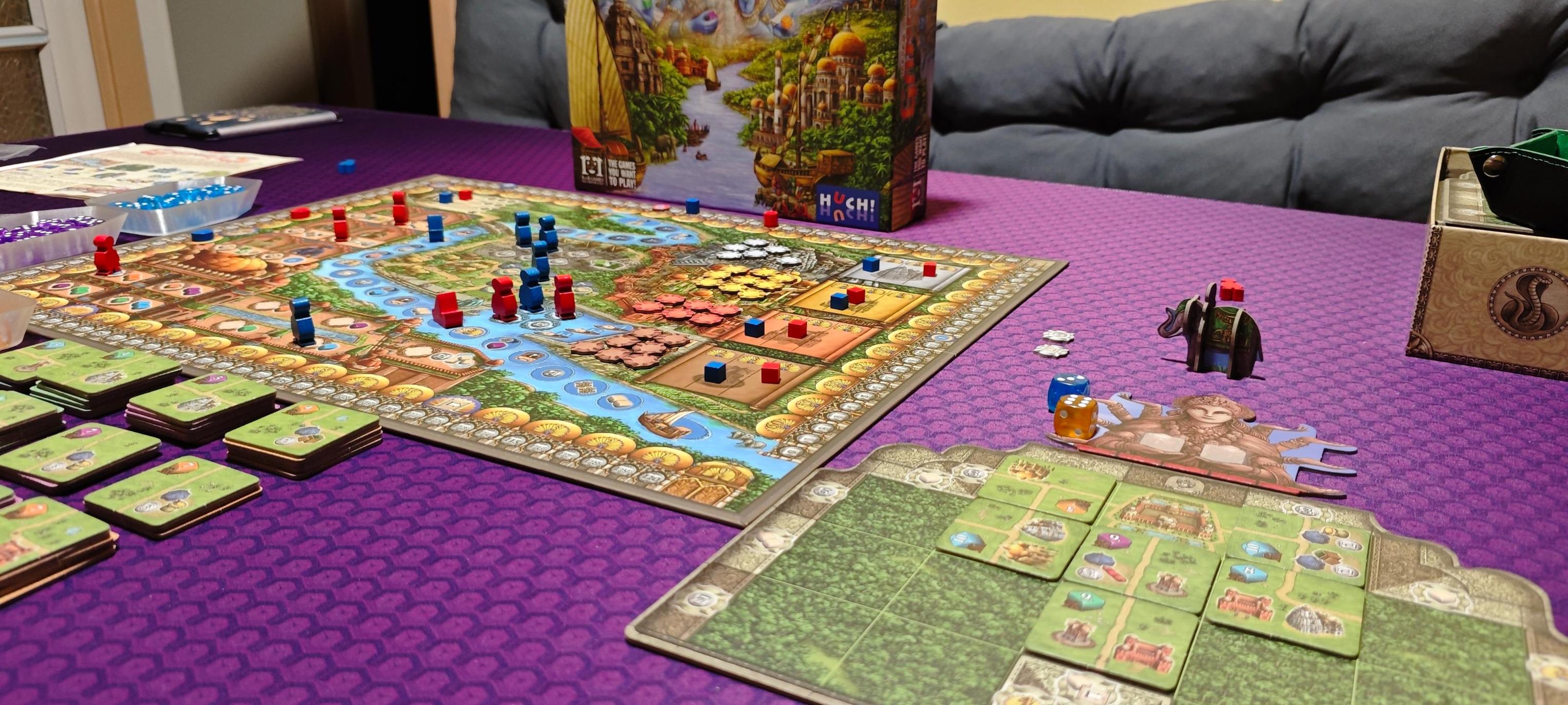
Where to buy it
Shop prices and second-hand copies, checked every day.
On Ludoya's tables
Full stats in Ludoya- 813
- Plays logged
- 592
- Players
- 1h 3m
- Average play
- 170
- In collections
- 30
- On wishlists
- 1
- Pre-ordered
7.4/10
from 111 Ludoya reviews
Garfield2.0 It's all about getting the good buildings. The better buildings requiring higher dice. So if you are constantly rolling low you can't afford the good buildings. But you need the good ones to make more profit from selling goods and for the glory points. And there is way overpowered action that was chosen as first everytime in our game -> the one you could do with a 2, getting the bonus tile and 2 dice of your choice. [c] Theme: :star::nostar::nostar::nostar::nostar: <!-- size 7]Very abstract --> Gameplay: :star::star::nostar::nostar::nostar: <!-- size 7]Placing dice all over the place --> Interaction: :star::nostar::nostar::nostar::nostar: <!-- size 7]Almost none --> Artwork: :star::star::star::nostar::nostar: <!-- size 7]Ok --> Luck: :star::star::star::star::star: <!-- size 7]Dice rolling --> Strategy: :star::star::nostar::nostar::nostar: <!-- size 7]There is only one strategy --> Components: :star::star::star::star::nostar: <!-- size 7]Nice --> Play duration: :star::star::star::star::nostar: <!-- size 7]Very good --> Easy to teach: :star::star::star::nostar::nostar: <!-- size 7]Ok (25min) --> Rules quality: <!-- size 7]not read --> Setup time: :star::star::star::nostar::nostar: <!-- size 7]Ok --> No downtime: :star::star::star::nostar::nostar: <!-- size 7]Ok --> Replay value: :star::nostar::nostar::nostar::nostar: <!-- size 7]Nothing changes --> [/c]
Evan10.0 I don't generally like race to the finish games, but this one blew me away. The way the game works is each player has three workers, and some number of dice. The dice get rolled, and represent the different resources in the game. Some action spots only require a worker. Others need a worker and then a die of a specific value or value range. Still others require a worker and one or more dice of a specific color, with the pips across all dice needing to total or exceed the requirement. The game doesn't have any inherent die income, so you have to be careful and clever about where and how to get more dice. The main purpose of the dice is to purchase tiles which get laid into your player board. The tiles have roads that must connect to your starting spot, but which may also connect to the edge of your board which grants you a special reward. We played the advanced game where the printed rewards are pretty dull, but you can get much better ones to replace them through a few ways, which allows you to customize your path through the game in a really compelling way. The game ends during a round that someone's dollars marker meets their points marker on the oppositely oriented tracks. This means a big money strategy is just as effective as a big points strategy in theory, although you'll want to do some of everything in this game, as each major track has a spot it grants an extra worker. Turns are pretty quick, there are marvelous combos you can line up with the various rewards, the iconography is consistent and clear. The components look nice, especially the dice. The process of solving the puzzle feels satisfying. When you run aground it's because of your choices as opposed to die luck or being punched by other players. There's some, but minimal player interaction. It's mostly the occupying of action spots you wanted and the taking of the edge of board scoring tiles you needed. :star: Art, Iconography and components functional :star: Clever or interesting mechanisms :star: Reasonably low downtime between turns with mildly AP players :star: Multiple plays stay interesting :star: Low or mitigatable luck elements :star::star::star::star::star: Raw enjoyment
Mestremuten7.0 Rating: 3/5 Production value: 3/4 Is the game in my collection/Love to have?: 1/1
Rules questions
Answered from the rulebook by Ludoya's rules assistant.
Do I have to pay money to place a worker, or can I use dice instead?
You pay the cost shown on the action space — some spaces are paid with money, others with dice; where a space allows dice you may spend the required dice instead of money, and dice use is limited each round. (page 3)
Can I place any die value on an action, and how does flipping a die with Karma work?
You must use a die showing the value required by the action or space; Karma lets you spend to flip one of your dice to its opposite face (changing its value) as a paid effect. (pages 3, 8)
When I acquire a province tile, do roads have to match or connect to my existing provinces?
Province tiles must be placed following the road-connection placement rules so they connect legally to your network and follow placement restrictions; some province backs also give special yields when placed. (page 4)
How does the river/boat action work — how many spaces can I move per die and can I take palace actions after moving?
You may spend 1–3 dice to move your boat up to that many spaces (maximum three), collect the income on the space you land on, and optionally take palace actions if the river space permits. (page 7)
What's the difference between assorted markets and single-good markets, and do upgrades change market costs or scoring?
Assorted markets accept any goods and score differently than single-good markets which reward specific goods; upgrades can be acquired and applied to alter market payouts and sometimes reduce the die costs for market actions. (page 5)
When does the game end and how are fame and money compared at the end?
The end-game is triggered by the final-turn condition (a track reaching its end); final scoring compares each player’s fame and money markers on the two tracks and applies the final-turn scoring rules to determine winners. (page 9)
Similar games
 The Castles of Burgundy: Special Edition2023
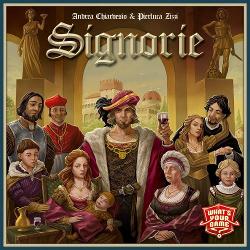 Signorie2015
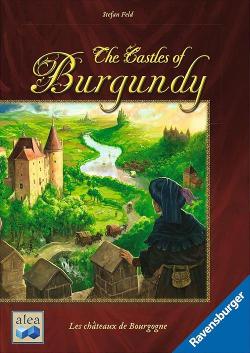 The Castles of Burgundy2011
 Lorenzo il Magnifico2016
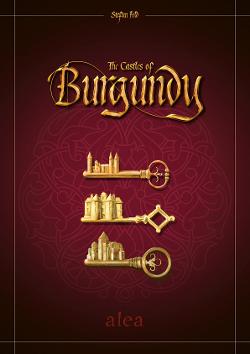 The Castles of Burgundy2019
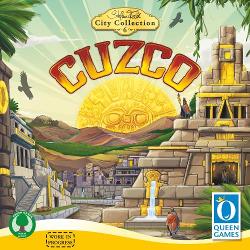 Cuzco2023
 Bora Bora2013
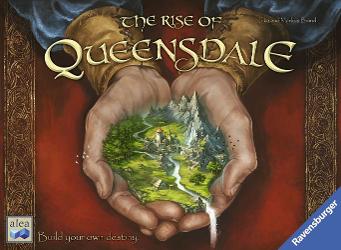 The Rise of Queensdale2018
 The Taverns of Tiefenthal2019
 Euphoria: Build a Better Dystopia2013
 Marco Polo II: In the Service of the Khan2019
 Shaolia: Warring States2020




Free, on web, Android and iOS
Play Rajas of the Ganges with Ludoya
- Keep it in your collectionTrack your copy and its expansions, lend it to friends, or put it on your wishlist and get told when the price drops.Add it to your collection
- Log every playScores, winners, timers and photos, then your stats: win rate, favourite player count, best score.Log a play
- Settle rules questionsAsk anything about the rules and get an answer from the rulebook, with the page to check it on.Ask the rules assistant
- Find people to play it withClubs, game nights and events near you that bring this game to the table.See events
Game facts (players, playing time, age, credits) from BoardGameGeek.