
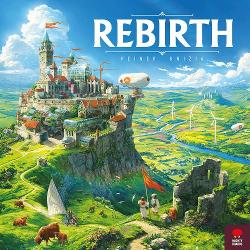
2024 · Fantasy
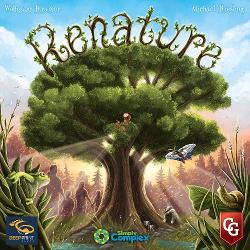
Rebirth
Players take the roles of clan leaders restoring a post‑calamity landscape in a future where nature and settlement coexist. Each turn, players draw and place tiles from a personal supply to expand territory, connect features, and claim castle sites on the shared map. Strategic placement, area control, and planning ahead determine access to scoring opportunities as the board fills and options narrow. Gameplay emphasizes spatial tactics and resource management through tile choices and positioning, with scoring tied to constructed castles and controlled regions.
- Players
- 2–4 best 3
- Playing time
- 45–60 min
- Age
- 10+
- Complexity
- 2 / 5
About the game
- Design
- Publisher


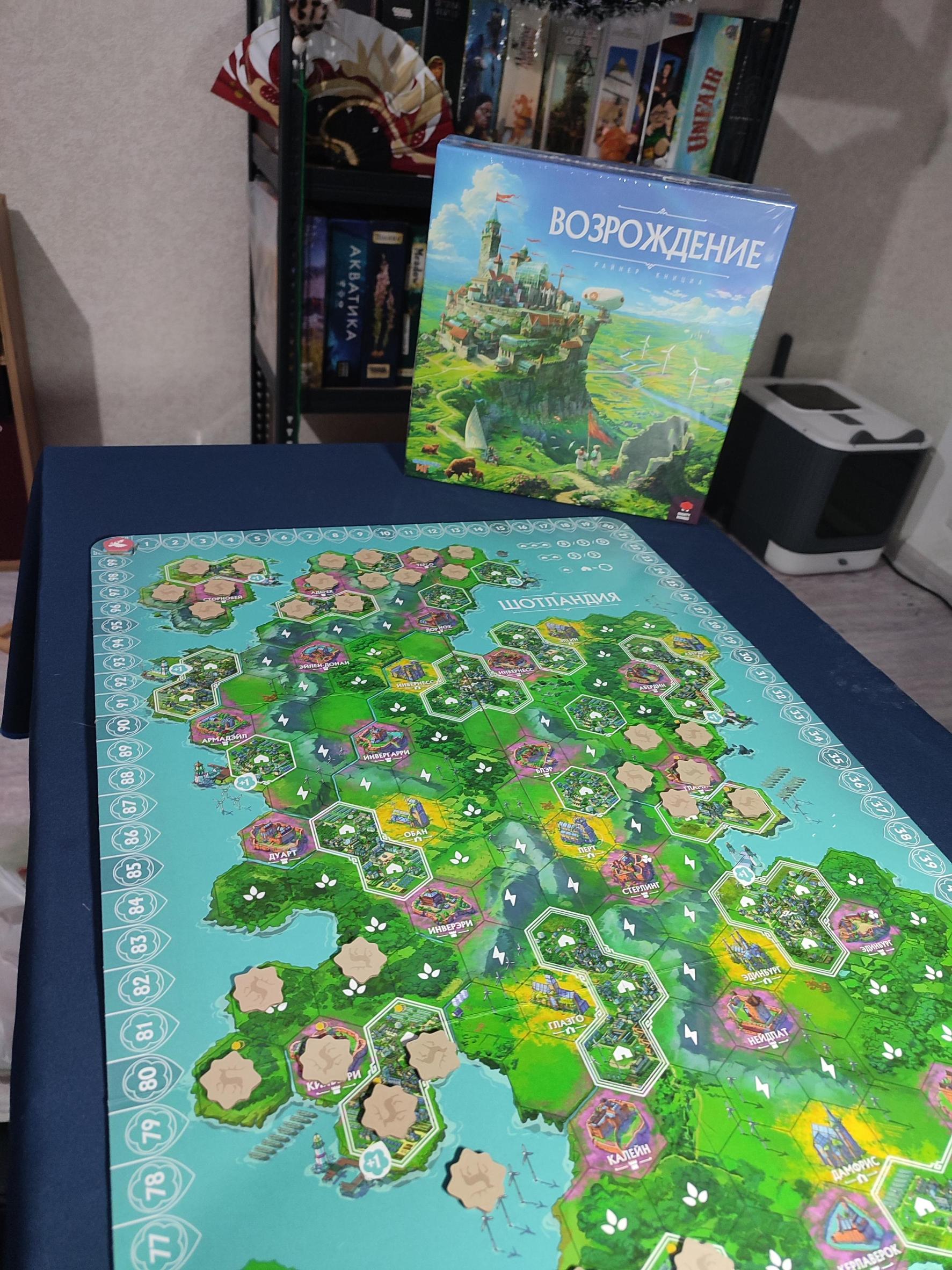
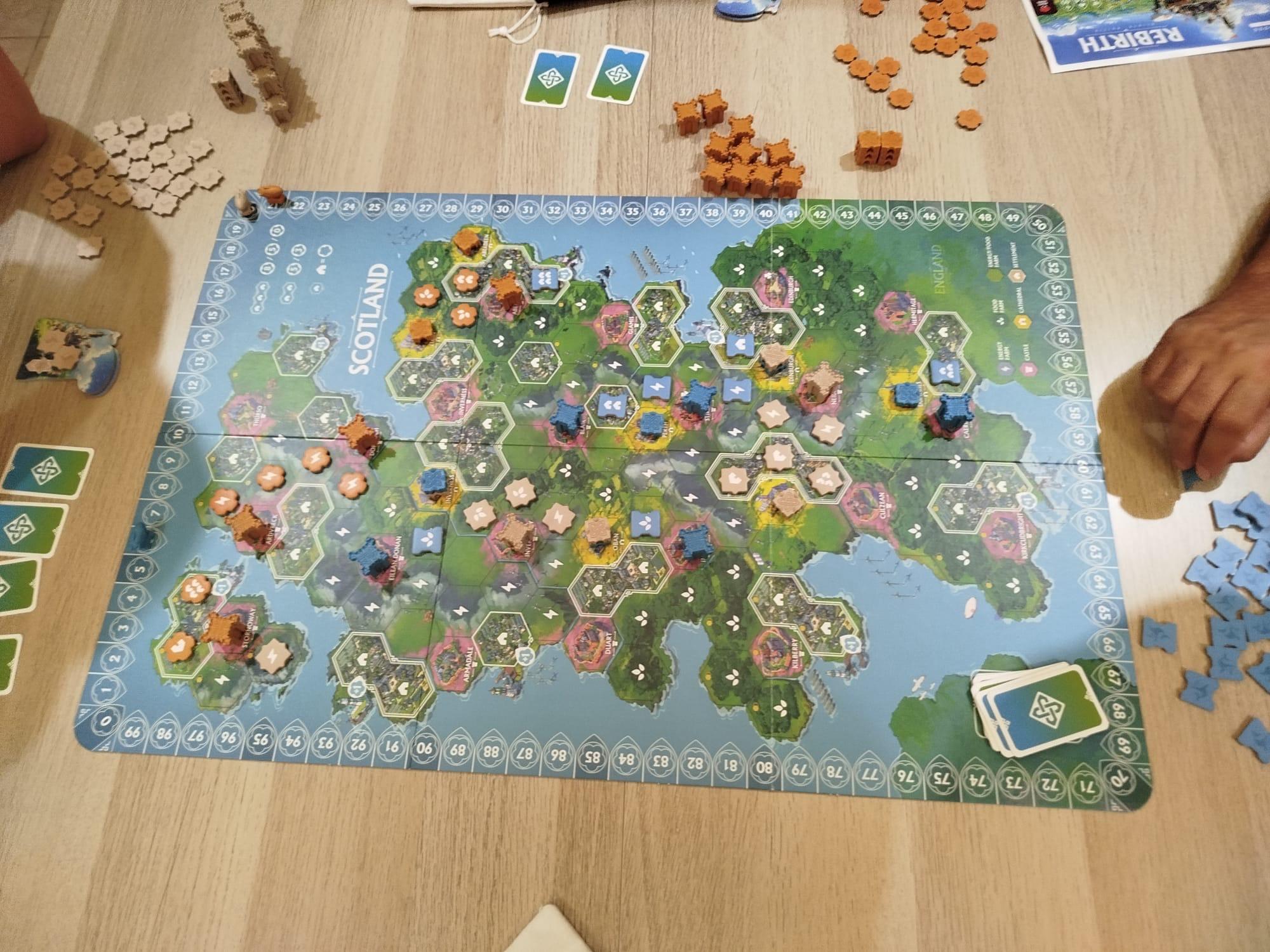
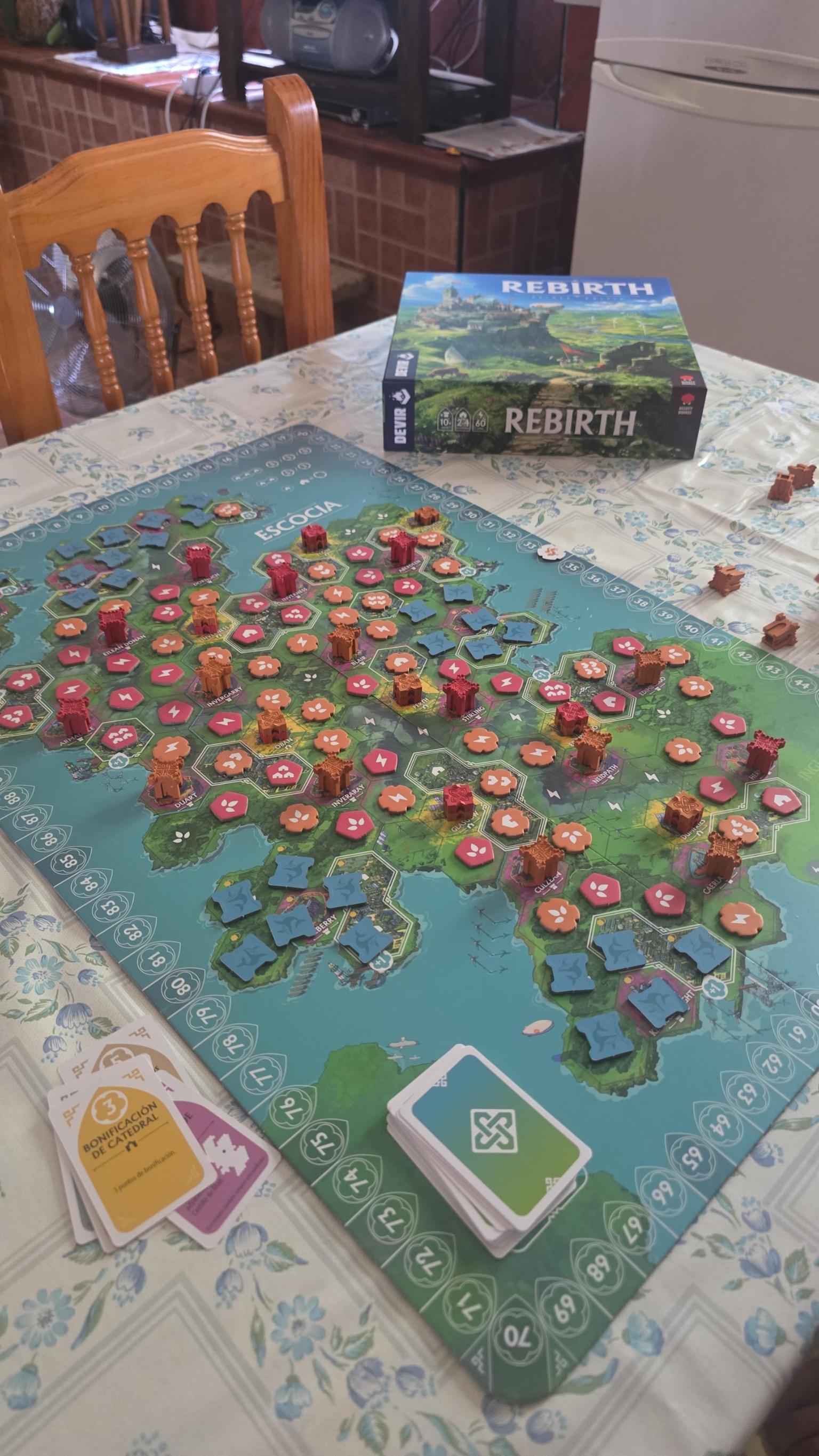
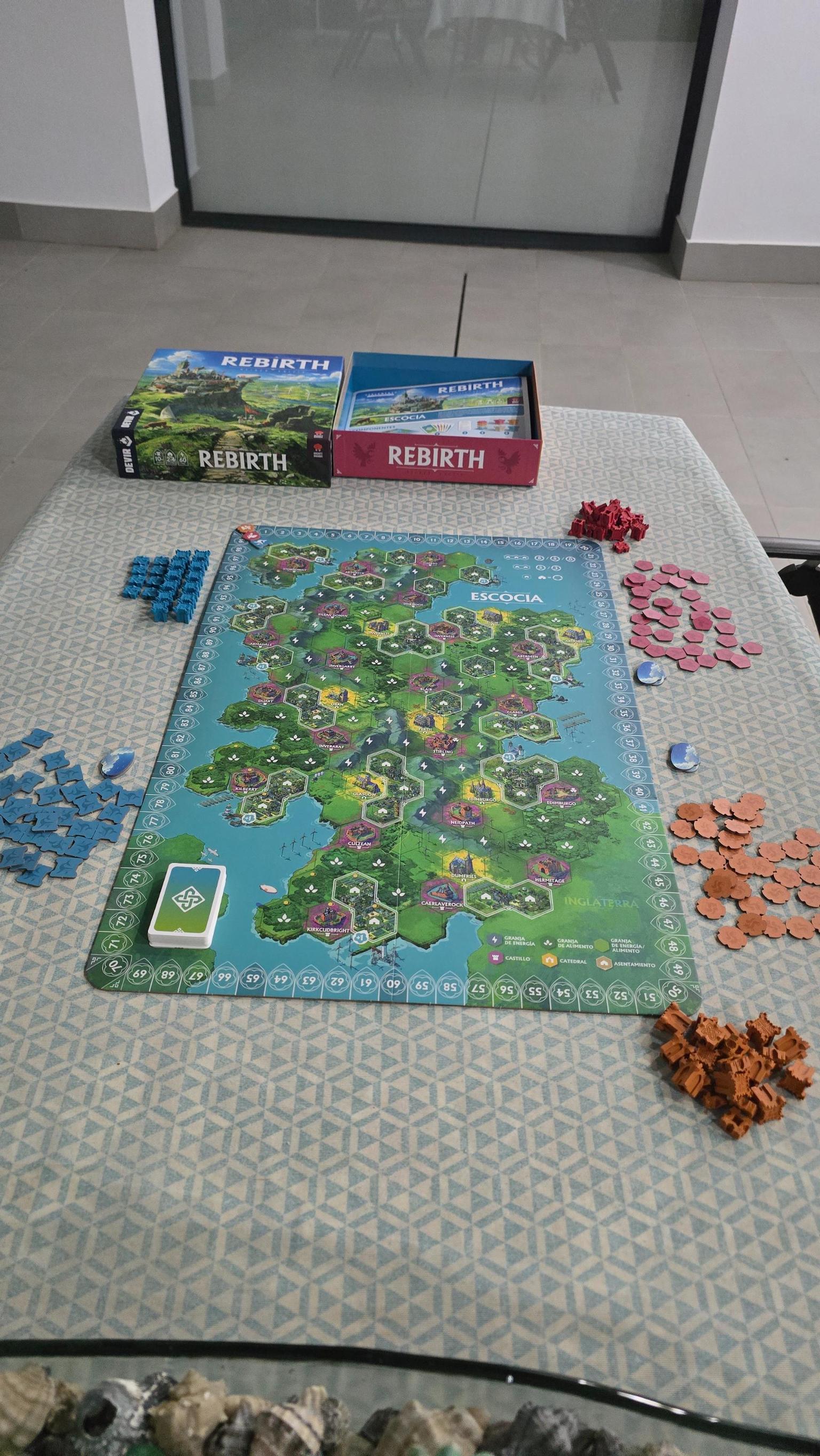
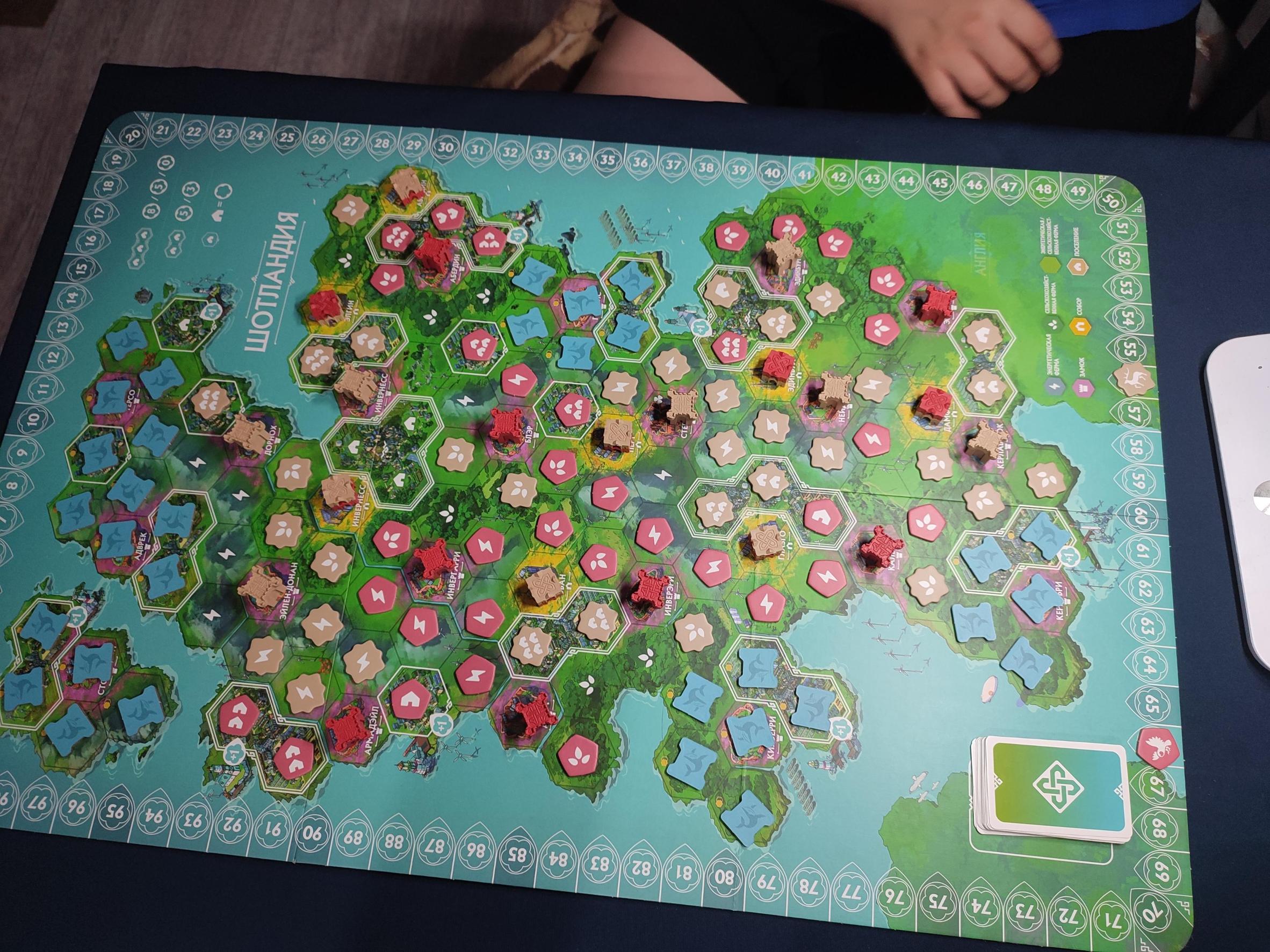
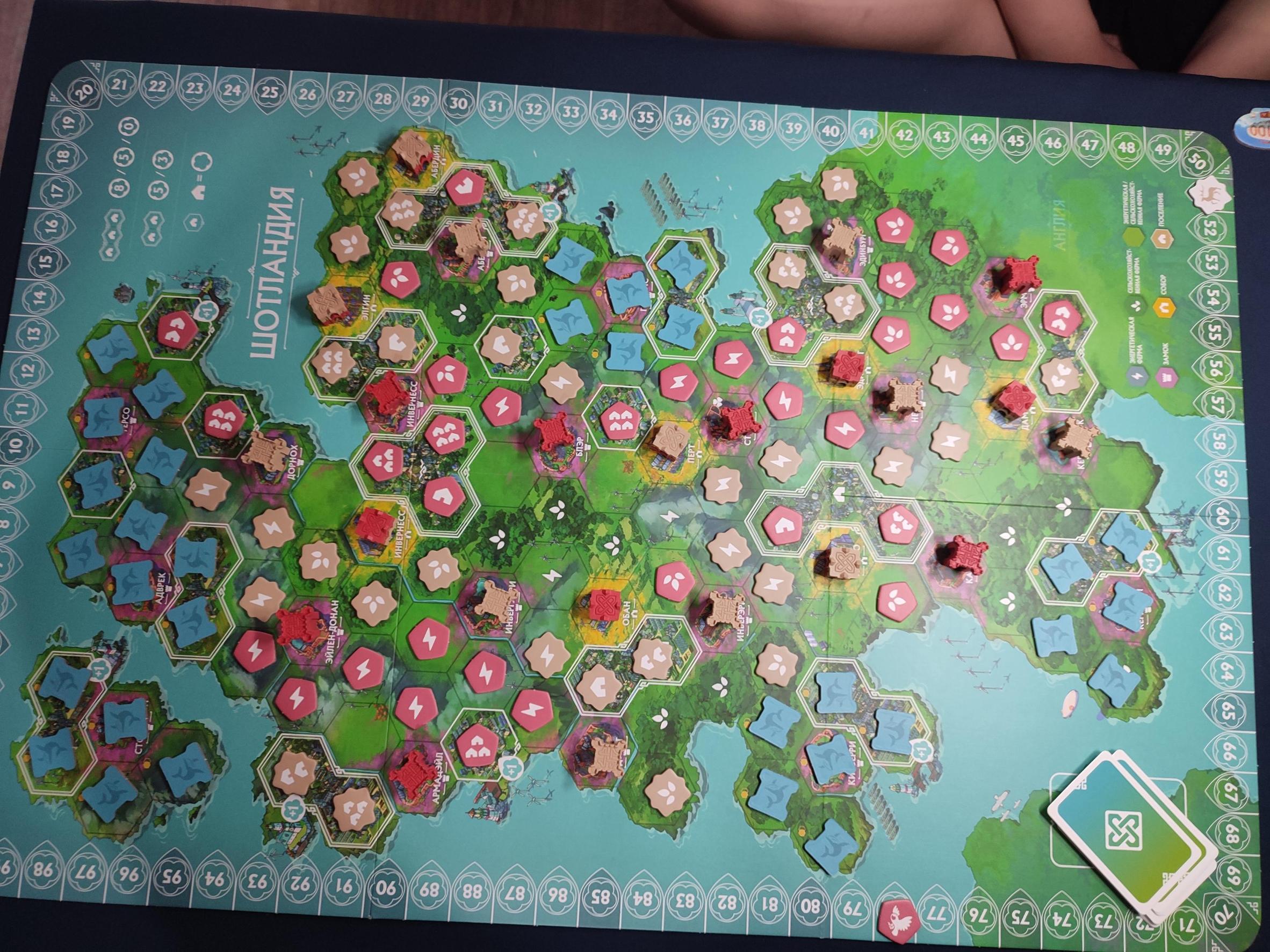
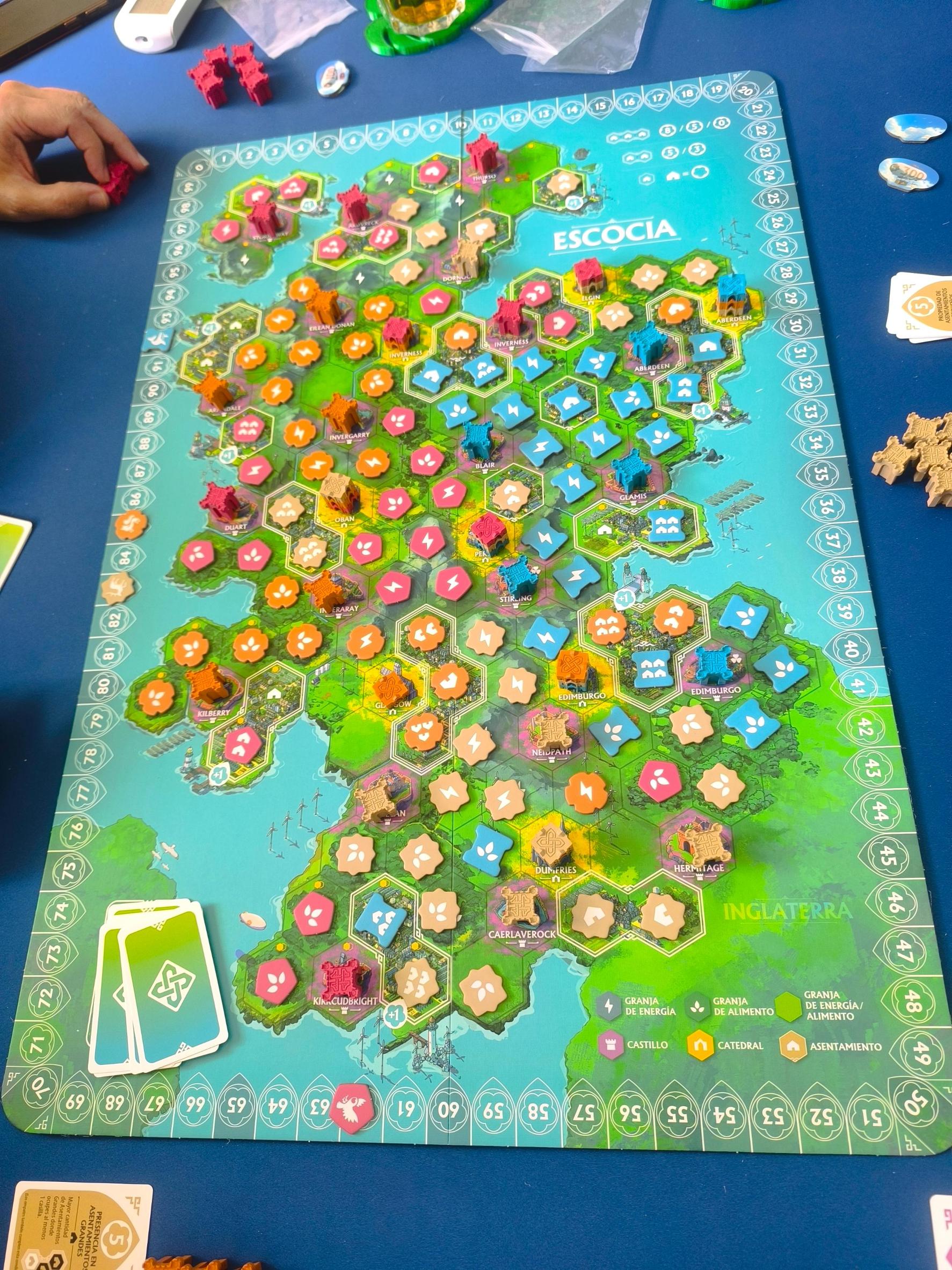
Photos from Ludoya tables
All photos in Ludoya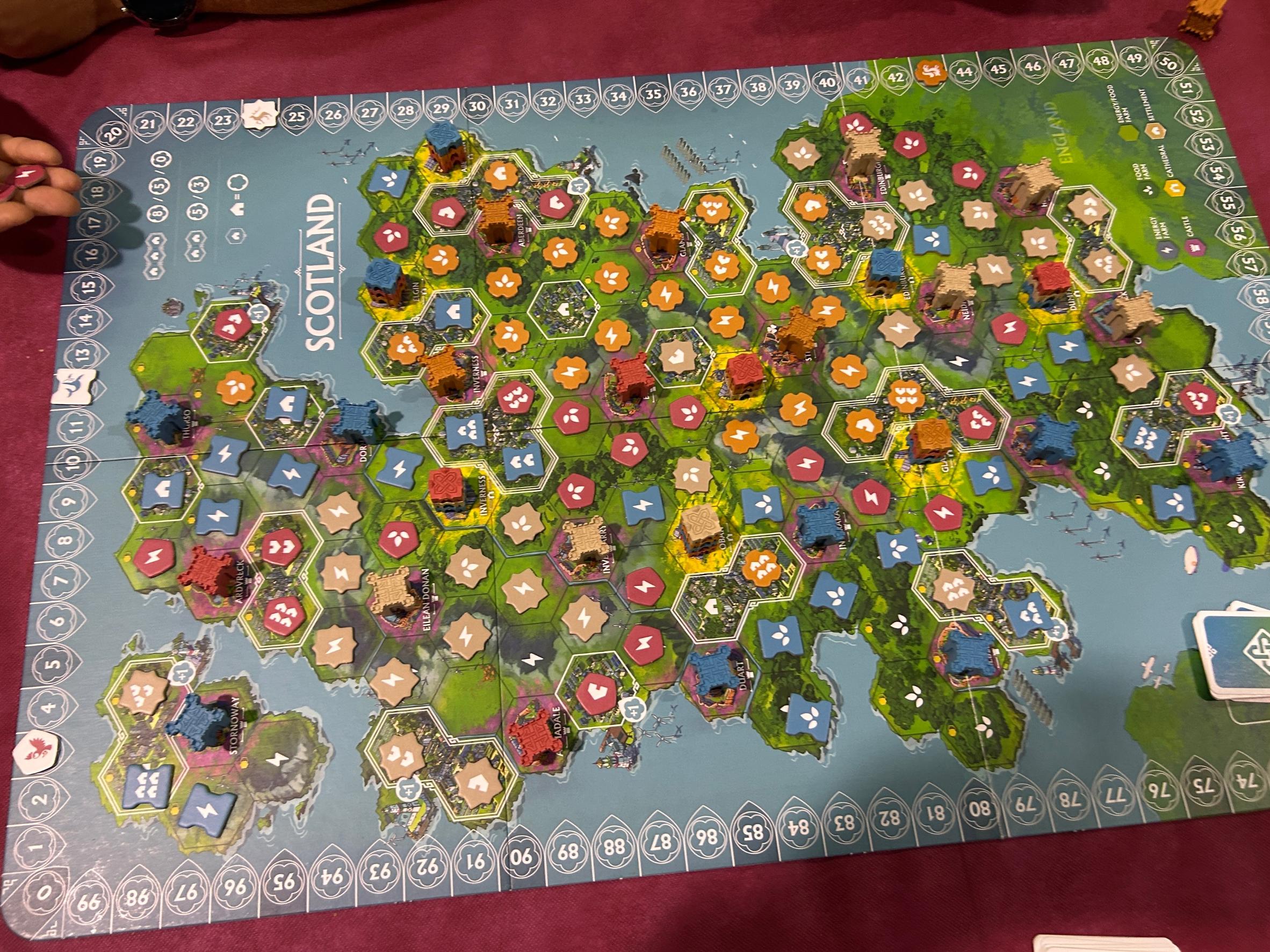
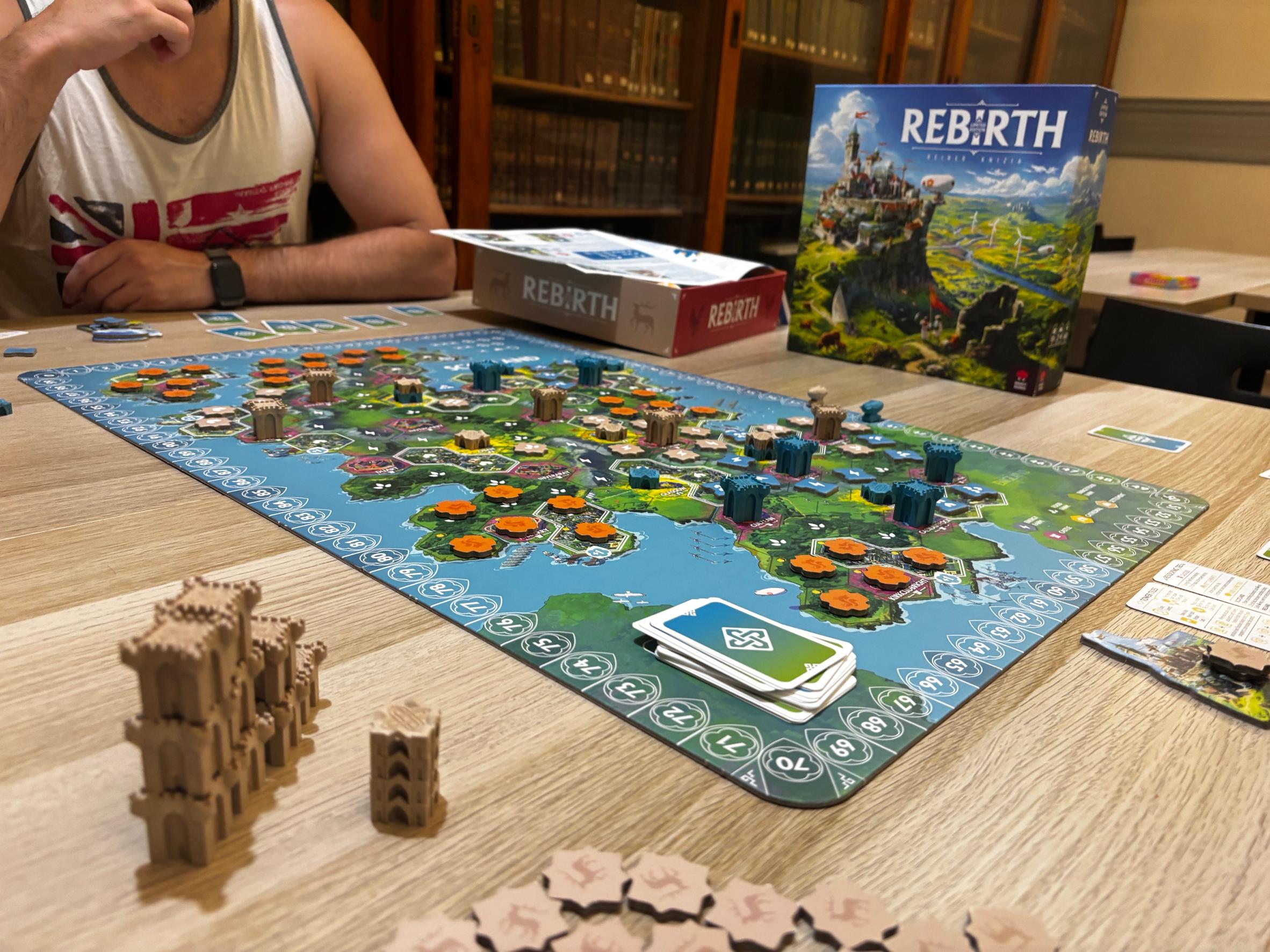
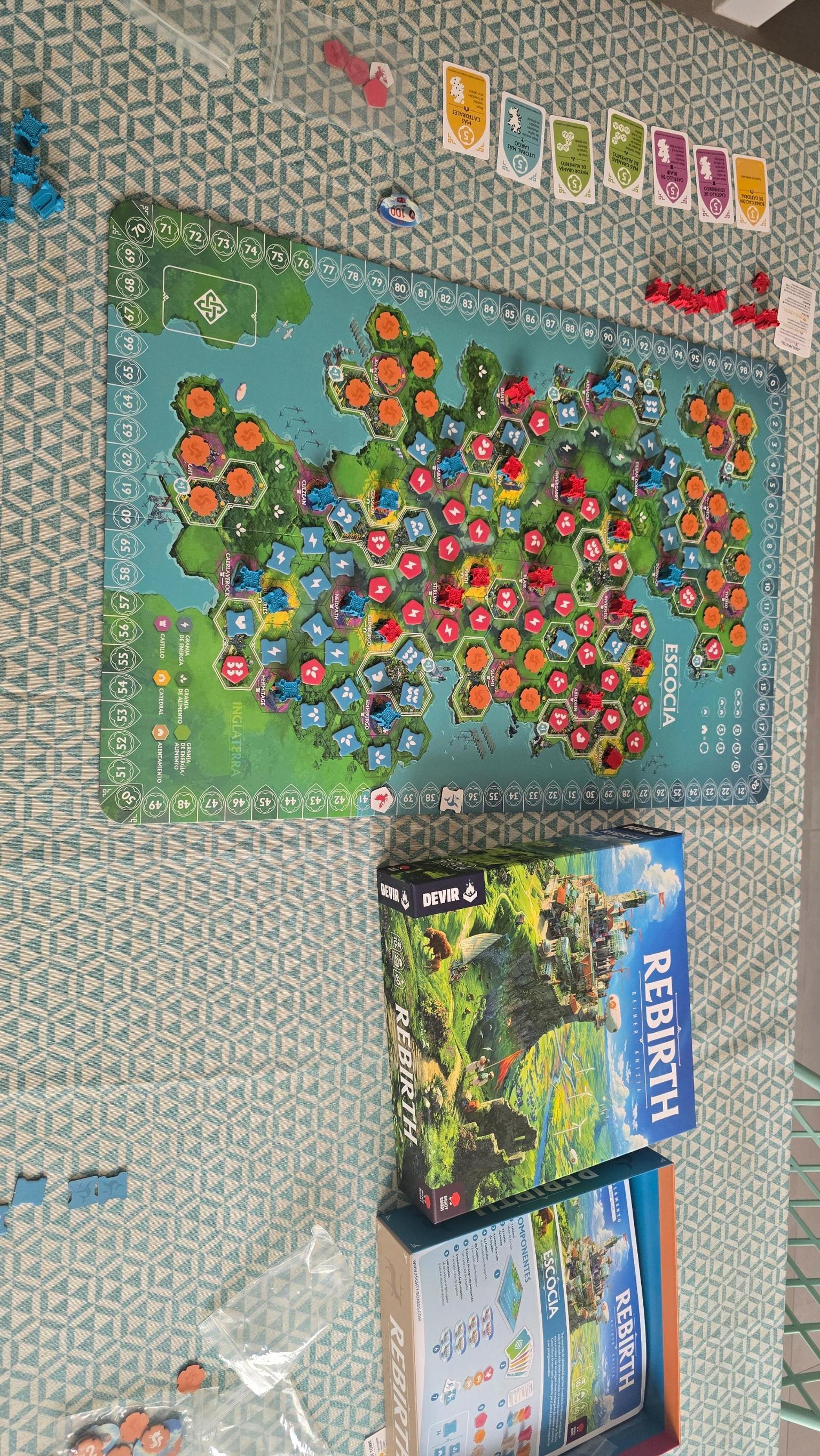
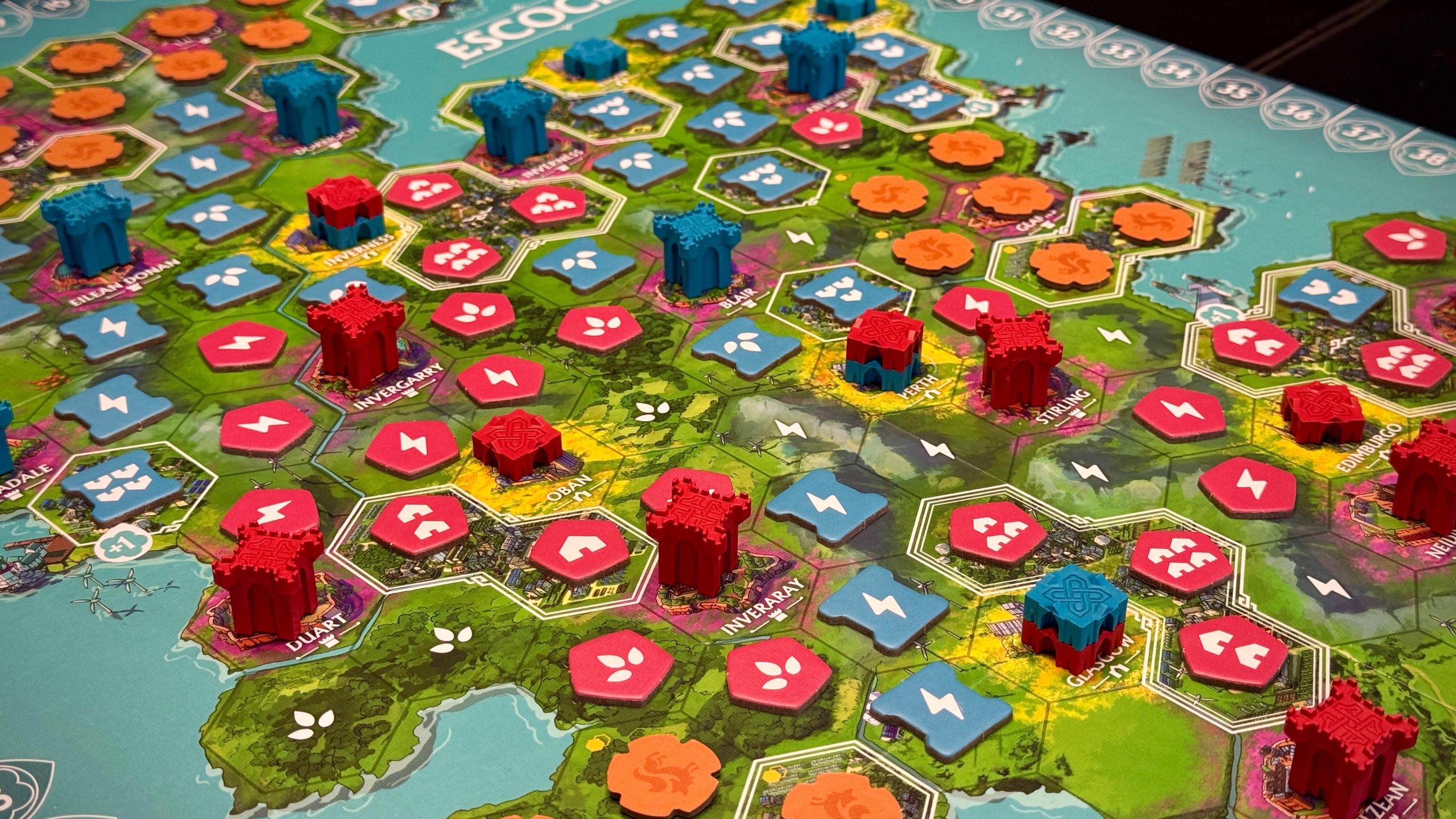
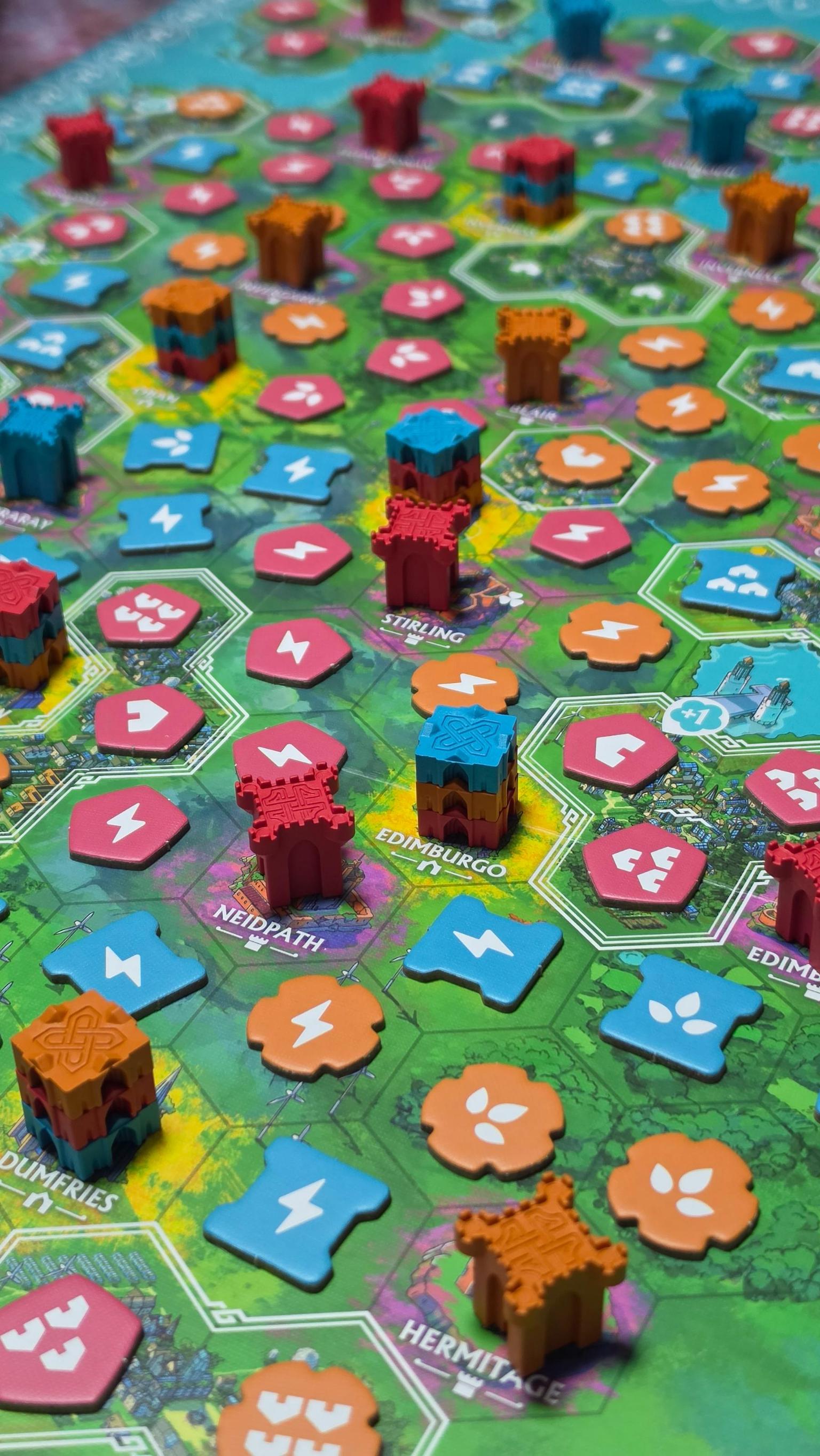
Where to buy it
Shop prices and second-hand copies, checked every day.
On Ludoya's tables
Full stats in Ludoya- 361
- Plays logged
- 515
- Players
- 44m 40s
- Average play
- 97
- In collections
- 51
- On wishlists
7.7/10
from 34 Ludoya reviews
I don't get the love for this game. It is the least tense and competitive game of his I've ever played. I am a HUGE Knizia fan and love Babylonia, Cascadero, Blue Lagoon, Through the Desert, Modern Art and so many more. I just feel this game is kind of boring and lacks that competitive tension. I loved the production and it is a beautiful game but for me this is an inferior design and a step back for me.
Oconnel8.0 Reseña: Rebirth 🌍🏰 Rebirth es un juego de colocación de losetas y control de territorio que consigue algo poco común: ser muy accesible y, al mismo tiempo, ofrecer decisiones interesantes en cada turno. 📌 Primeras impresiones Las reglas se explican en minutos: en cada turno se coloca una loseta, se puntúa lo que se acaba de colocar y se roba una nueva loseta para el siguiente turno. Cualquier persona puede entender la estructura del turno y ponerse a jugar casi de inmediato. El despliegue también es muy rápido: tablero al centro, losetas barajadas, castillos y catedrales preparados, y la partida puede empezar sin apenas preparación. ⚙️ Mecánicas y jugabilidad El corazón del juego está en cómo se colocan las losetas sobre el mapa común: Granjas de comida y de energía: se puntúan por el tamaño del grupo de granjas del mismo tipo y color que se va formando. Cuanto más grande sea el grupo, más puntos, pero es muy fácil que otro jugador lo divida con una mala colocación “a propósito”. Poblados: cuando se completan, se puntúan por mayorías de influencia, contando los iconos de casa de cada loseta. El primero se lleva más puntos, el segundo algo menos; con empates, las reglas favorecen a unos u otros según quién cierre el poblado. Castillos: se controlan teniendo más losetas adyacentes que los demás. Si otro jugador supera ese número, toma el control y sustituye el castillo anterior. A esto se suman las misiones de catedral y, en el mapa avanzado, las misiones públicas y las torres, que añaden objetivos adicionales sin complicar demasiado las reglas. 🤝 Interacción entre jugadores La interacción es muy directa y constante: Cortar líneas de granjas para reducir la puntuación de un grupo ajeno. Entrar en un poblado solo para cambiar quién gana la mayoría. Colocar una loseta clave junto a un castillo para arrebatarlo en el último momento. Todo se entiende de inmediato, pero cada decisión puede tener bastante impacto en el mapa. ⚖️ Ritmo y duración El juego mantiene un ritmo ágil: los turnos son cortos, no hay apenas mantenimiento entre rondas y la partida termina cuando todas las losetas se han colocado, con un recuento final muy sencillo. Se juega rápido, invita a repetir y funciona igual de bien con personas poco acostumbradas a los juegos de mesa como con grupos más jugones. 🔎 Conclusión Rebirth es un juego que combina sencillez de reglas, partidas rápidas e interacción constante en el mapa. La lucha por las granjas, las mayorías en los poblados y el control de castillos crea una experiencia dinámica y tensa, pero muy fácil de sacar a mesa. En conjunto, un producto muy redondo: accesible, ágil y con suficiente profundidad táctica como para no aburrir a quienes buscan algo más que un simple familiar.
Javo8.0 Se explica rápido y se juego rápido. MUy bonito en mesa. Pero tampoco es el juegazo que se habla. Está bien y ya. Me entra en duda la rejugablidad.


Rules questions
Answered from the rulebook by Ludoya's rules assistant.
Can I place a Food or Energy Farm on any empty space, or only on matching icons? What are the exceptions?
You may place a Food Farm on a Food Farm icon or any blank space, and an Energy Farm on an Energy Farm icon or blank space; only if all matching and blank spaces are occupied may you place an Energy Farm on a Food Farm space (and vice versa). (page 2)
Do farm clusters mix types or different players' colors when scoring?
No — clusters score only for contiguous Tiles of the same type and the same color; you score 1 point per Tile in the cluster you created or added to, including the Tile you just placed. (page 3)
When does a Settlement score, how are points divided, and who wins ties?
A Settlement scores only when all its spaces are occupied: small settlements score the placed Tile's influence, medium and large settlements award fixed points to highest/second-highest influences, and ties are lost by the player who completed the settlement (further ties favor players clockwise from that player). (page 3)
How do I gain or lose control of a Castle when I place a Tile next to it?
Control goes to the player with the most Tiles adjacent to the Castle; if tied, the player with the most Energy and Food Farm Tiles adjacent wins the tie, and if still tied the tie is resolved against the player who just placed the Tile. (page 4)
How do Cathedrals and Mission Cards work — how many can I get and can I complete a mission if I'm tied with another player?
The first time you place a Tile next to a Cathedral you place one of your Cathedrals there, and if one already exists you stack yours and draw a Mission Card (you can only gain one Mission from each Cathedral and up to 8 total); you may satisfy a Mission Card's condition even if you are tied with other players. (page 4)
If a Round Tower lets me place a second Tile, can that second Tile trigger another Tower ability (or the same ability) in the same turn?
No — the "Place a second Tile" Round Tower ability can only be triggered once per turn, and if the second Tile is adjacent to a Tower that grants the same ability you must ignore that additional ability (you still score normally for placing the Tile). (page 8)




Free, on web, Android and iOS
Play Rebirth with Ludoya
- Keep it in your collectionTrack your copy and its expansions, lend it to friends, or put it on your wishlist and get told when the price drops.Add it to your collection
- Log every playScores, winners, timers and photos, then your stats: win rate, favourite player count, best score.Log a play
- Settle rules questionsAsk anything about the rules and get an answer from the rulebook, with the page to check it on.Ask the rules assistant
- Find people to play it withClubs, game nights and events near you that bring this game to the table.See events
Game facts (players, playing time, age, credits) from BoardGameGeek.