
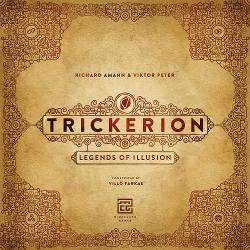
2015 · Post-Napoleonic
Trickerion: Legends of Illusion
Rival stage illusionists compete for fortune and fame in a late-19th-century, slightly supernatural cityscape. Players hire and deploy a team of Engineer, Assistant, Manager and Apprentices, acquire blueprints and components, and build increasingly complex tricks across Optical, Spiritual, Mechanical and Escape categories. Gameplay uses worker placement and simultaneous action selection to operate on a main city board and on each magician’s Workshop. Performances are staged at the Theater via a tile-placement mini-game that scores Fame and Coins; Fame is both currency and the win condition after the final Performance round. Numerous character abilities, Special Assignments and optional modules provide strategic variety.
- Players
- 2–4 best 4
- Playing time
- 60–180 min
- Age
- 14+
- Complexity
- 4.3 / 5
About the game
- Publisher





Expansions
See them in Ludoya
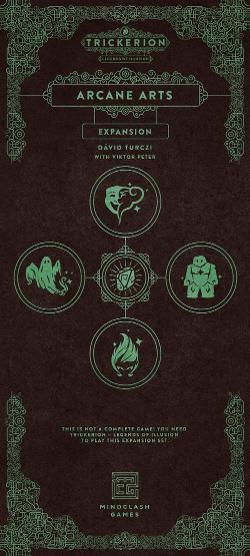
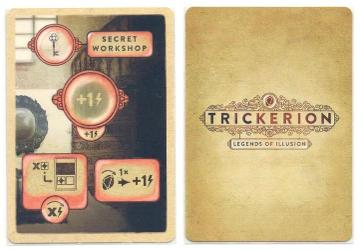
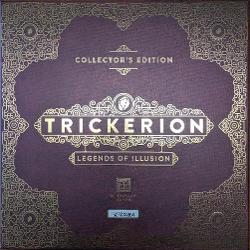
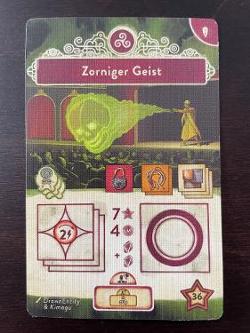
Photos from Ludoya tables
All photos in Ludoya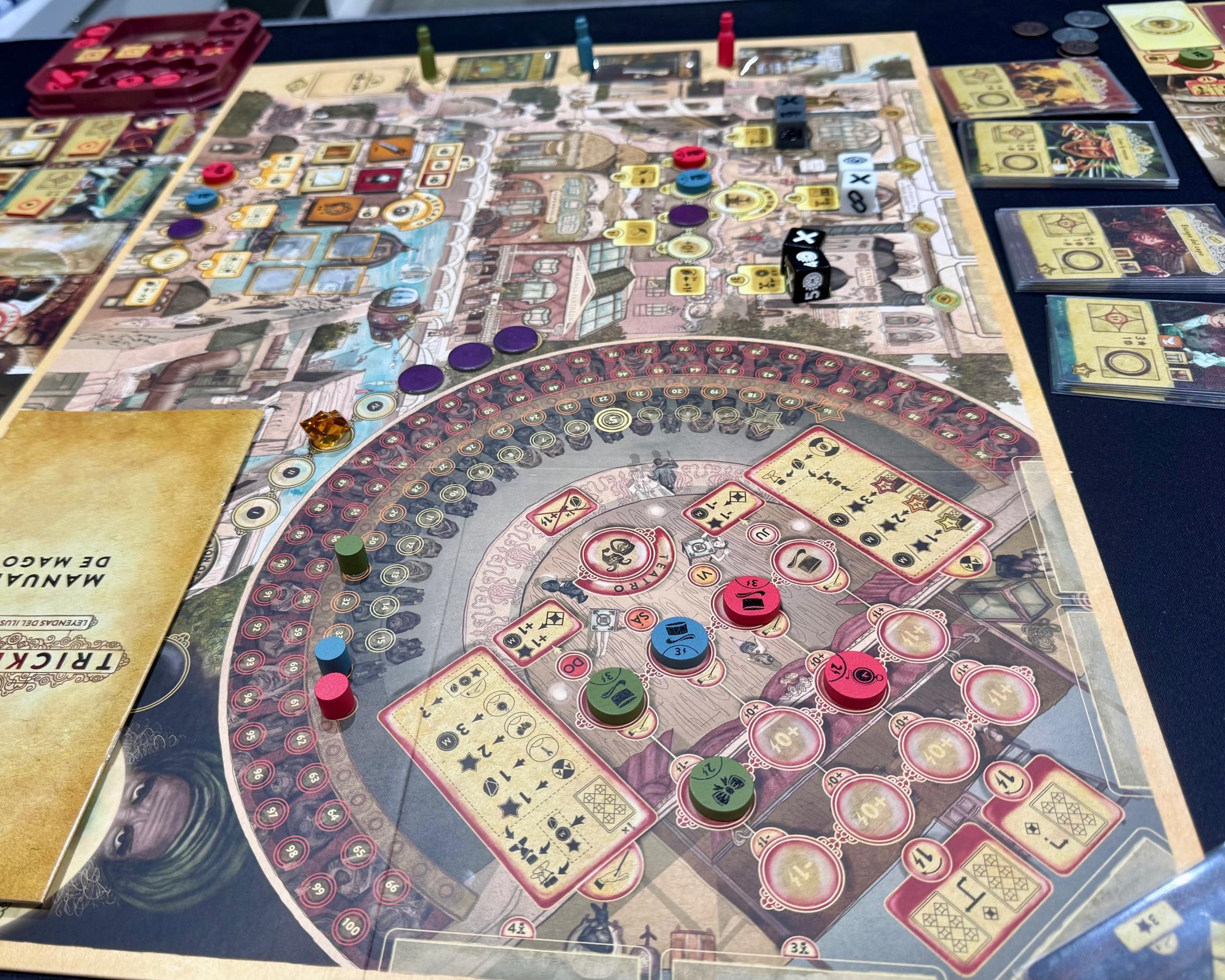
Where to buy it
Shop prices and second-hand copies, checked every day.
On Ludoya's tables
Full stats in Ludoya- 270
- Plays logged
- 385
- Players
- 2h 47m
- Average play
- 86
- In collections
- 23
- On wishlists
- 2
- Pre-ordered
8.7/10
from 72 Ludoya reviews
Evan10.0 This game has the depth of a light to medium euro, but with none of the refinement. The pointless over-complication leads to massive downtime between turns. The game asks you to make a lot of potentially game ruining decisions during setup as to your spells, faction and starting assistant. The character abilities are drastically different in their usefulness. The game also has just a little card flip and die rolling luck, but what there is can create unrecoverable problems for you. Some specific problems: all actions in the game you can take multiple times except for the action that banks tricks. Each time a trick card has a trick banked you can't make that trick again until the card it spent. This simply makes no sense with the rest of the design. The symbol matching mini game you play when staging the trick adds a lot of time for meager rewards and you don't have much if any ability to control the payout. The catch-up mechanism to the game is spending a dollar at the start of the game to get 2 points. This makes no sense as if you prob have run aground on dollars if you need catch-up. This problem is compounded by the way to collect dollars is to spend 3 actions, which means you are usually making the choice between getting dollars or scoring anything in the round, since both require your post powerful worker or for the stars to align and other players make bad decisions. This leads to the poor getting poorer. The game also gives you this big list of tricks and sort of demands you plan a route through them where you use as many of the similar requirements. This ads a ton of time to the game, flipping through the pages and looking for efficient resource linkages, but in reality the luck of the dice prevents you from buying any trick outside your starting card tree. In terms of components, the tokens and the art on the board are decent but the portraits of the characters are really amateurish. :nostar: Art, Iconography and components functional :nostar: Clever or interesting mechanisms :nostar: Reasonably low downtime between turns with mildly AP players :star: Multiple plays stay interesting :nostar: Low or mitigatable luck elements :nostar::nostar::nostar::nostar::nostar: Raw enjoyment
Mestremuten9.0 Rating: 4/5 Production value: 4/4 Is the game in my collection/Love to have?: 1/1
Jan Solo8.0 Impro-Reseña⇒

Rules questions
Answered from the rulebook by Ludoya's rules assistant.
Do I have to have the Components required by a Trick before I learn it in Downtown?
No — you do not have to meet a Trick’s Component requirements to learn it; you only need to meet (or pay the difference for) its Fame Threshold and pick a die/category (p.13).
Can I spend a Trickerion Shard to buy +1 Action Point for a Character placed in the Theater?
No — you may buy +1 Action Point with a Trickerion Shard when placing a Character at any Location except the Theater; the Theater explicitly forbids the ‘Enhance Character’ option (pp.12, 16).
If I place a Character and end the placement with unused Action Points, can I save them for later turns?
No — a placed Character’s Action Points must be spent immediately on one or more Actions at that Location and cannot be saved for later (p.12).
What's the difference between Order and Quick Order in the Market Row?
Order (1 AP) places a Component into the Order area so it arrives in the Buy area next turn during 'Orders Arrive', while Quick Order (2 AP) puts a Component into the Market Row stock this turn (available to buy by anyone) but it costs +1 Coin and is returned to the supply at end of turn (p.14).
If a Performance card has Trick Markers from several players, who gets the Yields?
Every player with at least one Trick Marker on the Performance receives the Yields (Fame, Coins, Shards) for their own Trick cards represented on that Performance card (p.17).
How do Thursday/Sunday yield modifiers work if I'm not present in the Theater when my Tricks are performed?
Yield modifiers apply to a player’s Tricks regardless of whether their Magician is present; Thursday subtracts 1 Fame/Coin and Sunday adds 1 Fame/Coin to each performed Trick (never below 0), and this applies even when your Tricks are part of another player's Performance (p.17).
Similar games
 Trickerion: Collector's Edition2019
 Trickerion: Anniversary Edition2025
 Hybris: Disordered Cosmos2023
 Dungeon Lords: Happy Anniversary2014
 The Royal Society of Archeology2025
 Andromeda's Edge: Deluxe Edition2024
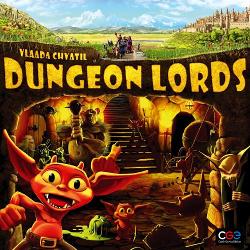 Dungeon Lords2009
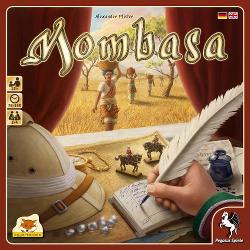 Mombasa2015
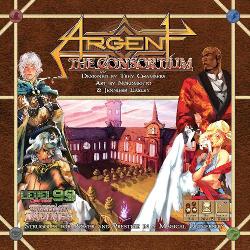 Argent: The Consortium2015
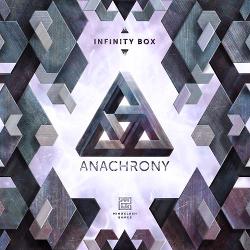 Anachrony: Infinity Box2020
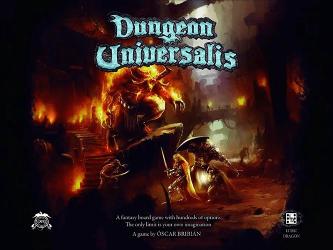 Dungeon Universalis2019
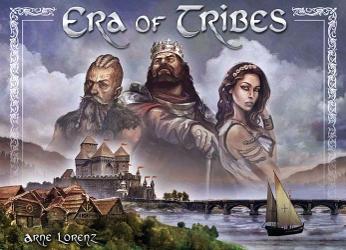 Era of Tribes2019
People who own it also own





Free, on web, Android and iOS
Play Trickerion: Legends of Illusion with Ludoya
- Keep it in your collectionTrack your copy and its expansions, lend it to friends, or put it on your wishlist and get told when the price drops.Add it to your collection
- Log every playScores, winners, timers and photos, then your stats: win rate, favourite player count, best score.Log a play
- Settle rules questionsAsk anything about the rules and get an answer from the rulebook, with the page to check it on.Ask the rules assistant
- Find people to play it withClubs, game nights and events near you that bring this game to the table.See events
Game facts (players, playing time, age, credits) from BoardGameGeek.