

2020 · Kaartspel
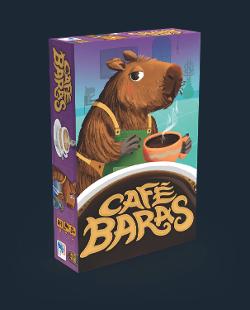
Café
Players run coffee companies in early 20th-century Portugal, building a supply chain from plantation through drying, roasting and distribution. Cards and worker-placement-like actions are used to establish and upgrade production, process coffee beans, and fulfill orders to prestigious cafés. Players manage resources, optimize card placement to chain abilities, and compete for market control and reputation across several rounds.
- Spelers
- 1–4 best met 2
- Speeltijd
- 20–45 min
- Leeftijd
- 8+
- Complexiteit
- 2,1 / 5
Over het spel
- Illustraties
- Uitgever



Uitbreidingen
Bekijk ze in Ludoya
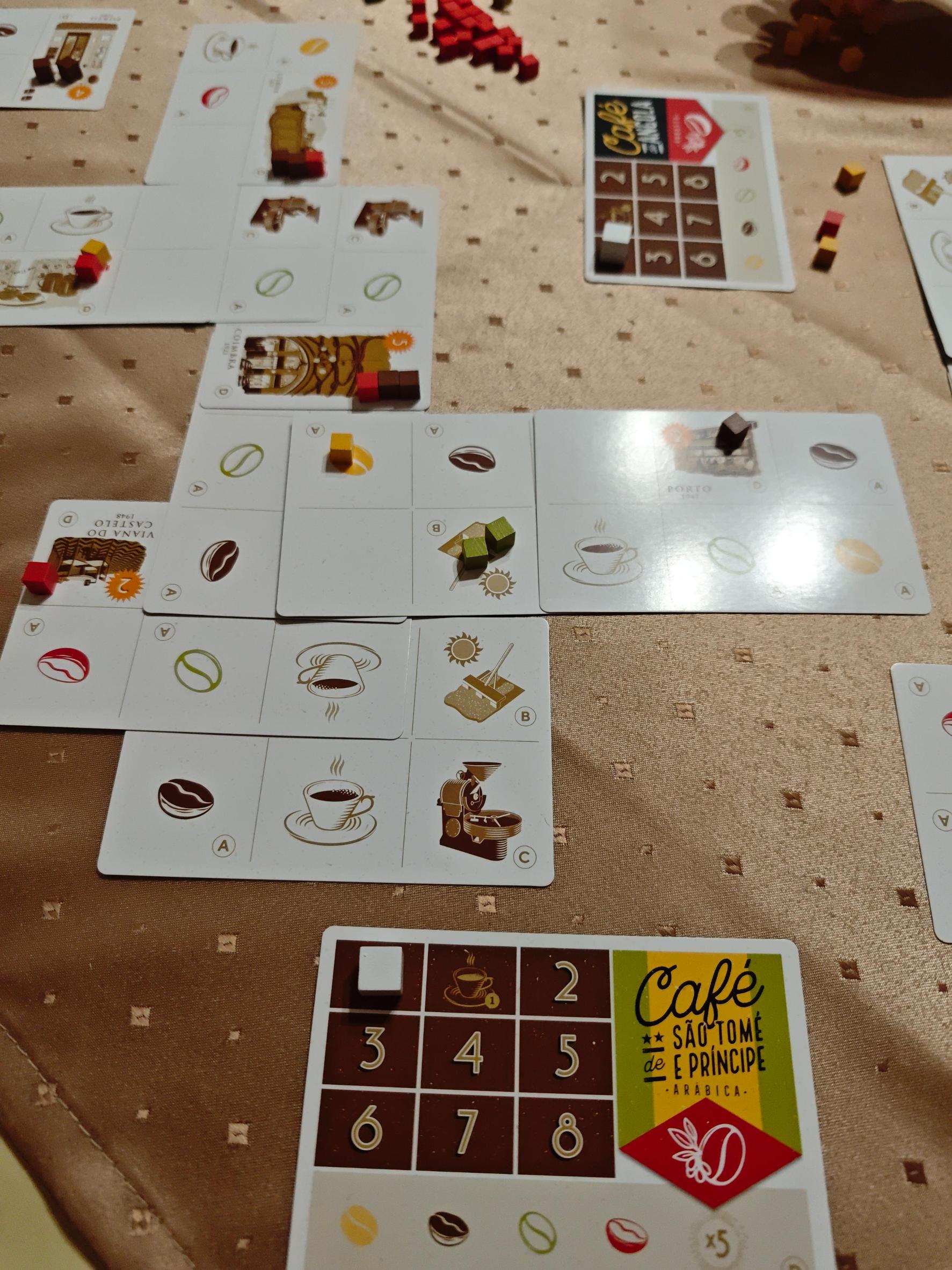
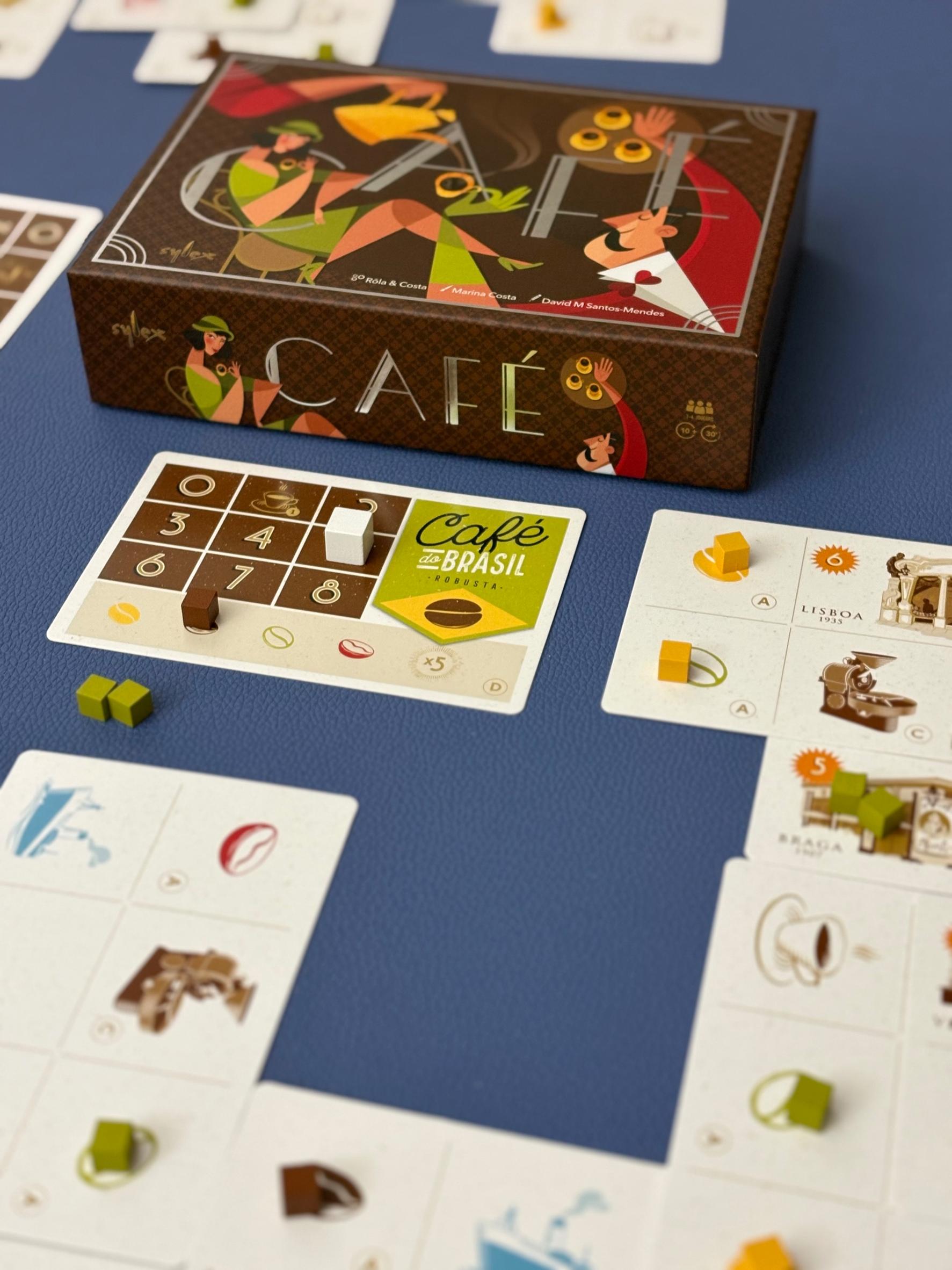
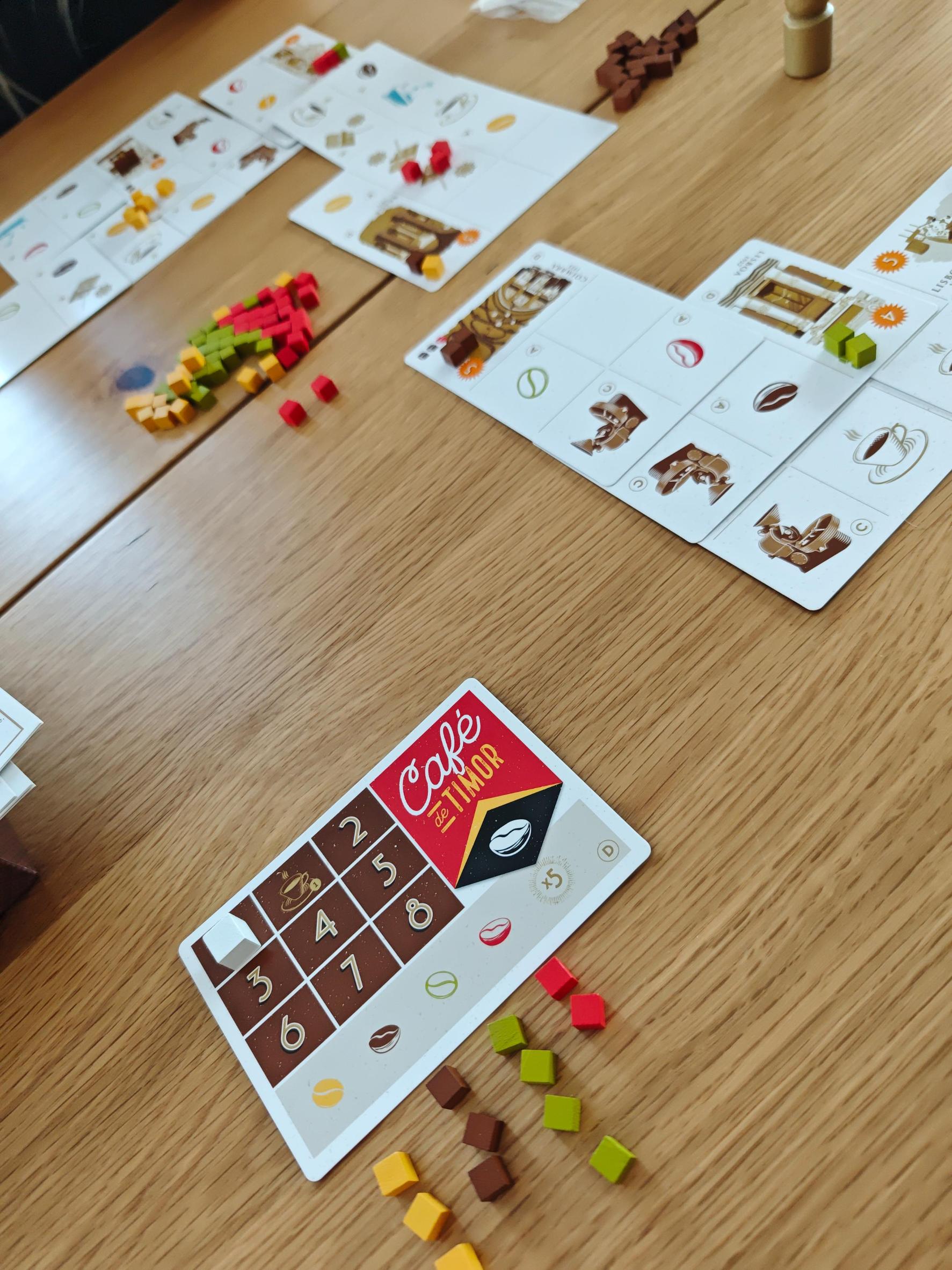
Foto's van Ludoya-tafels
Alle foto's in Ludoya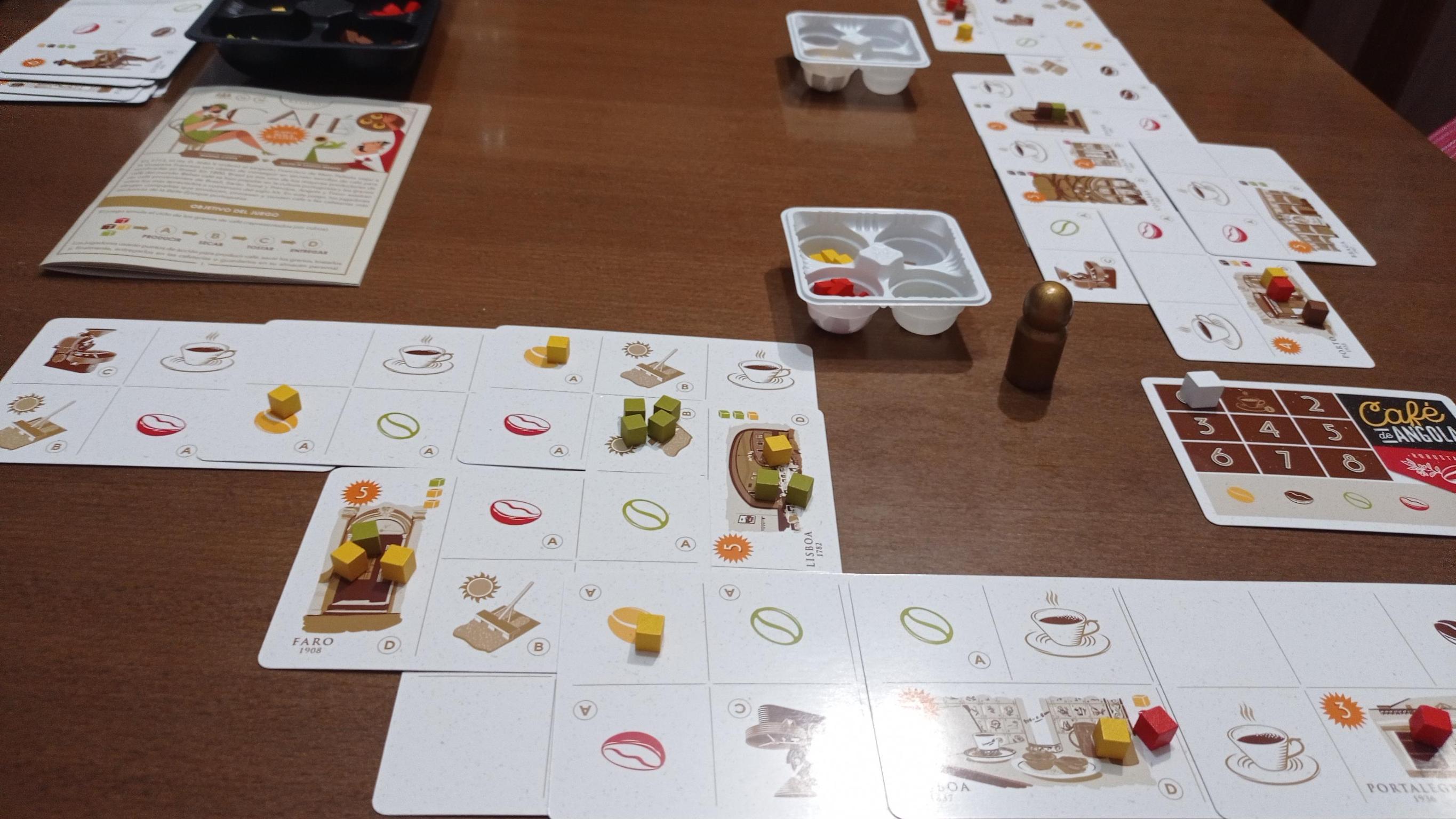
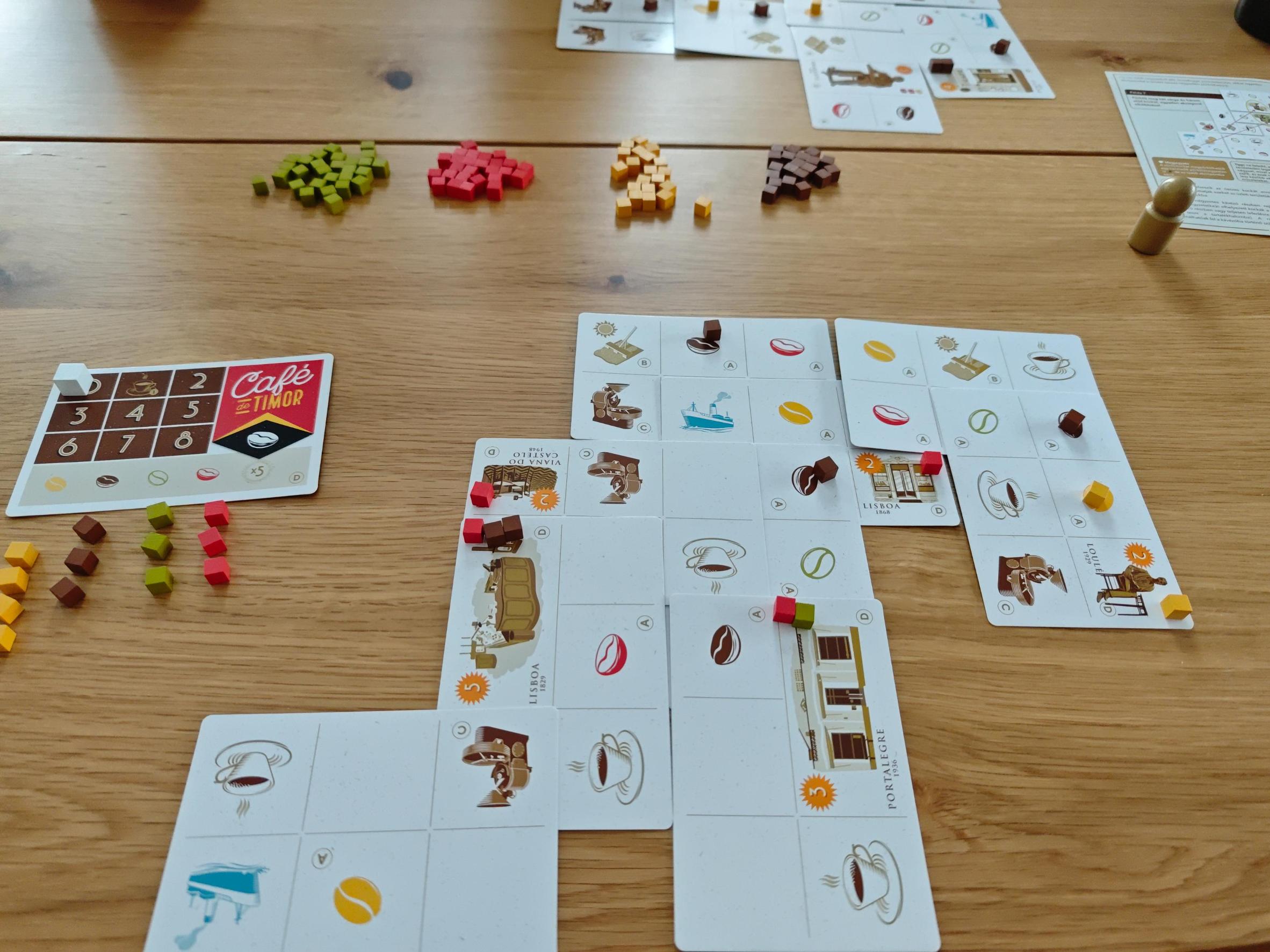
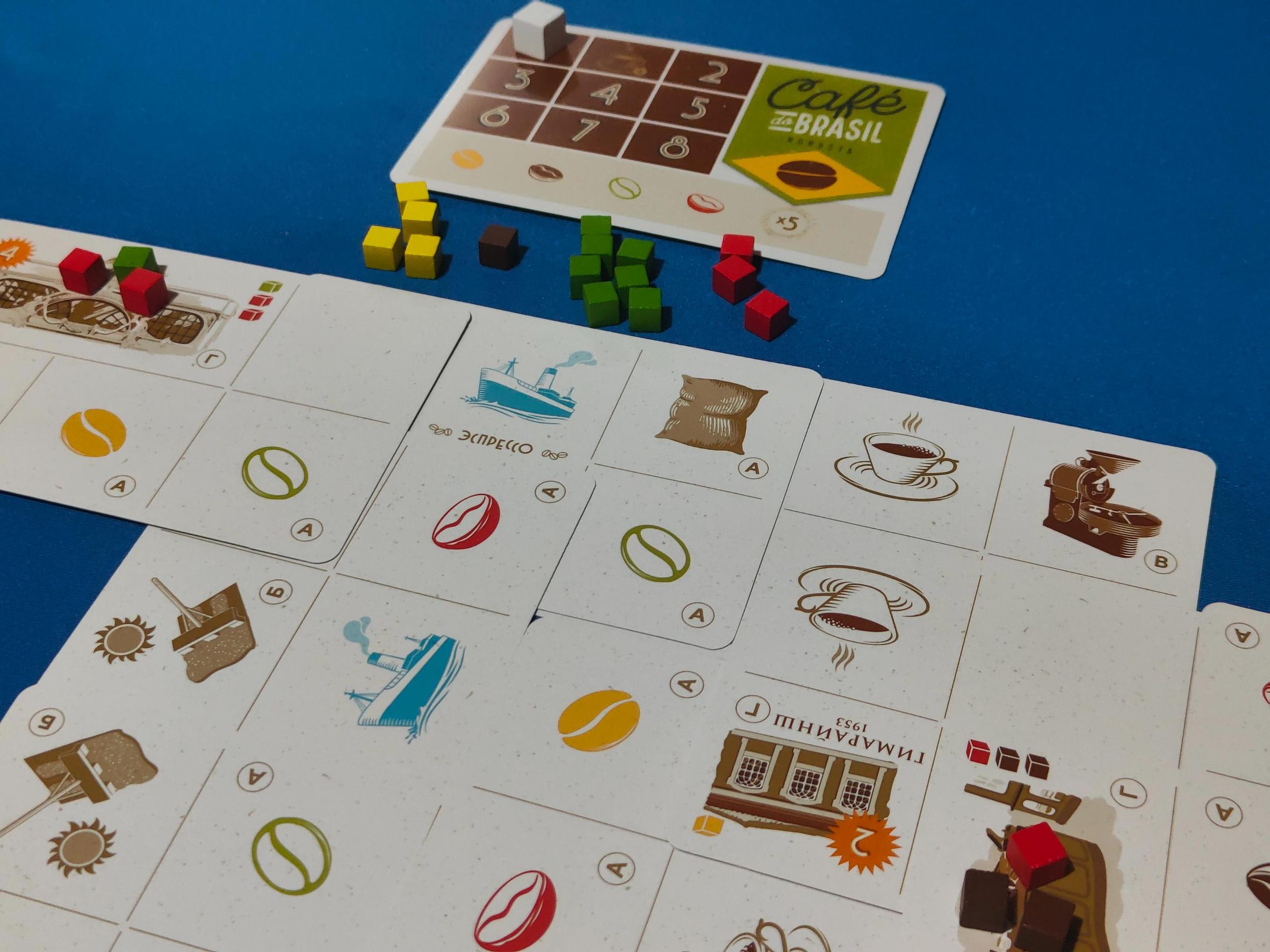
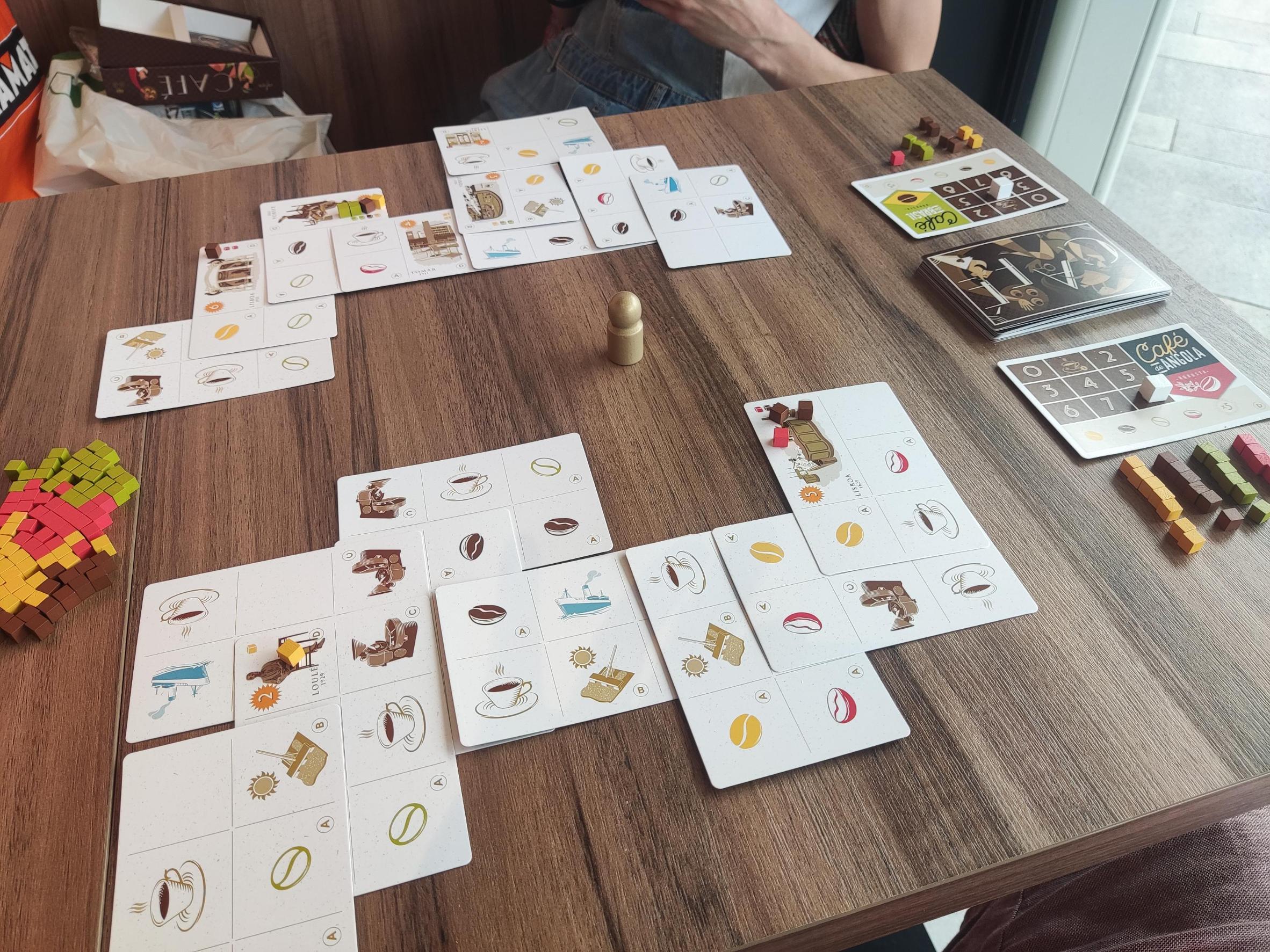
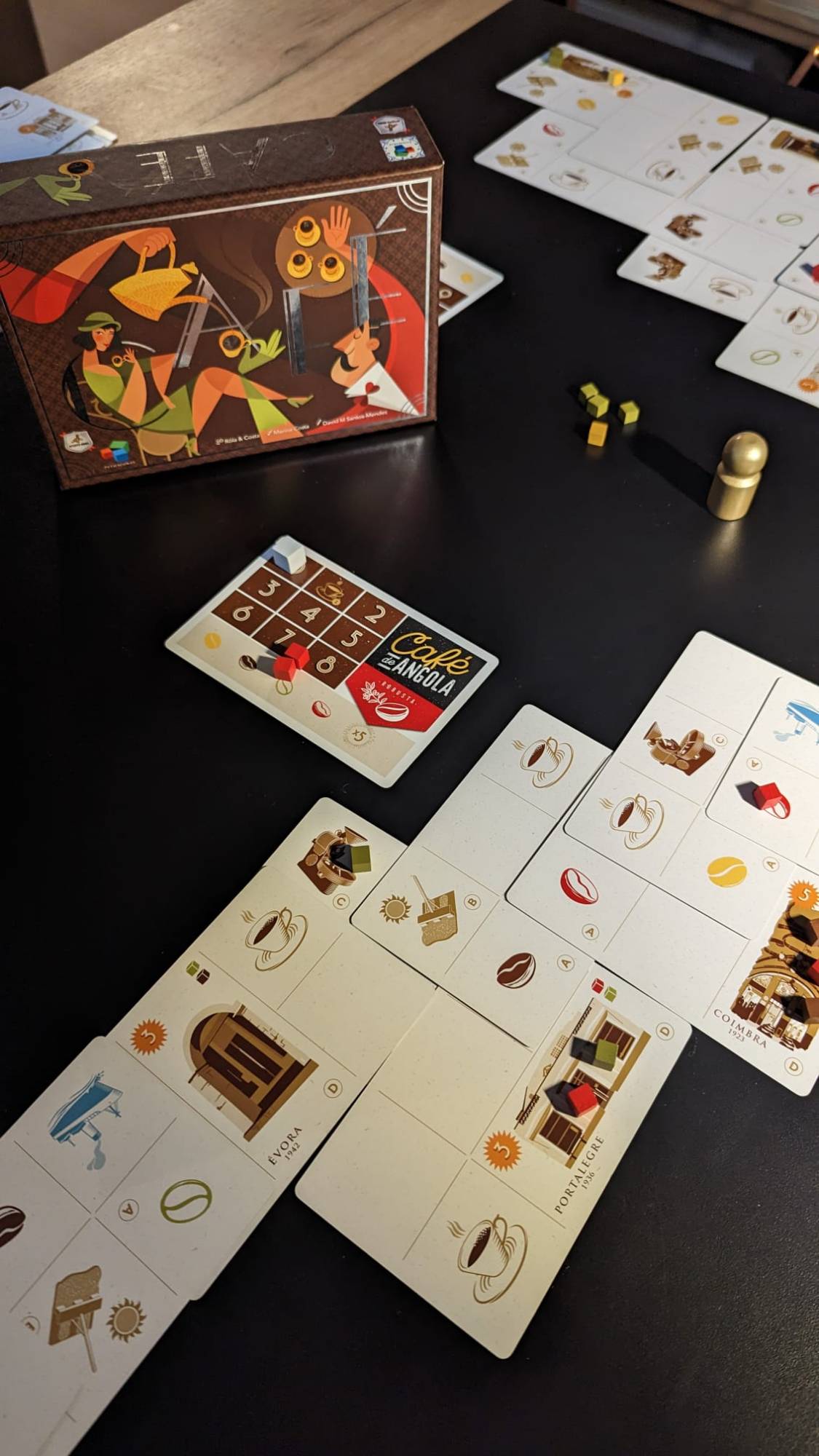
Waar te koop
Winkelprijzen en tweedehands exemplaren, elke dag gecontroleerd.
Aan de tafels van Ludoya
Alle statistieken in Ludoya- 549
- Vastgelegde speelsessies
- 363
- Spelers
- 28m 51s
- Gemiddeld potje
- 133
- In collecties
- 15
- Op verlanglijsten
7,2/10
uit 54 Ludoya-recensies
- Base [ 01 ] -
Eerste indrukken · 2 speelsessies
Viciados7,0 Great looking, nice little game for couples too. Haven't played with more people. The theme doesn't really matter in the game, it's the only thing I didn't like.
Geen speelsessies geregistreerd


Regelvragen
Beantwoord vanuit het spelregelboek door de regelassistent van Ludoya.
Do Plan cards have to be placed on consecutive spaces, and can they overlap other cards?
Plan cards are placed sequentially covering 2–4 squares in your tableau and must follow the placement rules shown in the examples; you do not overlap existing cards when placing them (see p.5).
Can I buy a Plan card I can’t currently afford or ‘bank’ discounts for a later purchase?
You may only buy Plan cards if you can pay their cost after applying any discounts; you cannot reserve or buy cards you cannot afford (see p.4).
When I take a Produce action, do I also produce cubes on adjacent/connected spaces (the cluster)?
Producing places cubes on the chosen production space and also affects connected production spaces as a cluster—cluster production rules and examples explain how multiple cubes are produced together (see p.6).
If I dry or roast one cube, does that affect nearby cubes in the cluster too?
Drying and roasting can apply to clusters: the rules and examples show how drying/roasting actions convert cubes in connected clusters according to the cluster rules (see p.7–p.8).
What’s the difference between delivering roasted cubes to a coffee shop versus to the warehouse?
Delivering to a coffee shop places roasted cubes for immediate scoring on that shop’s scale, while sending cubes to the warehouse stores them for end‑game scoring under different warehouse scoring rules (see p.8–p.11).
When does the game end and how is final scoring, especially for the warehouse, calculated?
The game ends after the final round, then you perform final scoring: score coffee shops immediately and then score the warehouse using the warehouse score scales and examples provided (see p.10–p.11).
Officieel scoreblad
Scoreblad van Café
Elke scorecategorie, uit de Ludoya-kit. Op je telefoon tellen de totalen zichzelf op.












Gratis, op het web, Android en iOS
Speel Café met Ludoya
- Houd het bij in je collectieHoud je exemplaar en de uitbreidingen bij, leen het uit aan vrienden of zet het op je verlanglijst en krijg bericht als de prijs daalt.Voeg het toe aan je collectie
- Leg elke speelsessie vastScores, winnaars, timers en foto's, en dan je statistieken: winpercentage, favoriete spelersaantal, beste score.Speelsessie vastleggen
- Regelvragen beslechtenVraag alles over de regels en krijg een antwoord uit het spelregelboek, met de pagina om het na te lezen.Vraag de regelassistent
- Vind mensen om het mee te spelenClubs, spelavonden en evenementen bij jou in de buurt waar dit spel op tafel komt.Bekijk evenementen
Speldata (spelers, speeltijd, leeftijd, makers) van BoardGameGeek.