
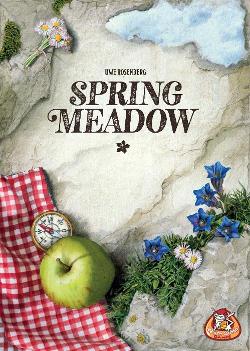
2018 · Puzzel
Spring Meadow
De lente komt naar de bergen en spelers leggen een bloeiende weide aan door onregelmatige tegels met 0–2 gaten op hun eigen bergborden te plaatsen. Tegels worden gedraft van een centraal bord; door tegels te plaatsen om groepen gaten te maken of uit te breiden verdien je extra tegels, terwijl marmottenholen op de tegels bepalen waar stukken geplaatst mogen worden. Spelers moeten hun beperkte snacks (beurtenvolgorde en tegelkeuzes) en ruimtelijke beperkingen beheren om hun weide te laten groeien. Scoren gebeurt op vaste momenten op basis van de weidetegels die uit het midden gekozen worden, waarbij de grootste weide een wandelspeld krijgt. De eerste speler die tijdens het scoren twee wandelspelden verzamelt, wint.
- Spelers
- 1–4 best met 2
- Speeltijd
- 15–60 min
- Leeftijd
- 10+
- Complexiteit
- 1,8 / 5
Over het spel
- Ontwerp
- Illustraties
- Publisher


Uitbreidingen
Bekijk ze in Ludoya
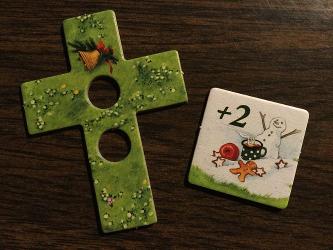
Foto's van Ludoya-tafels
Alle foto's in Ludoya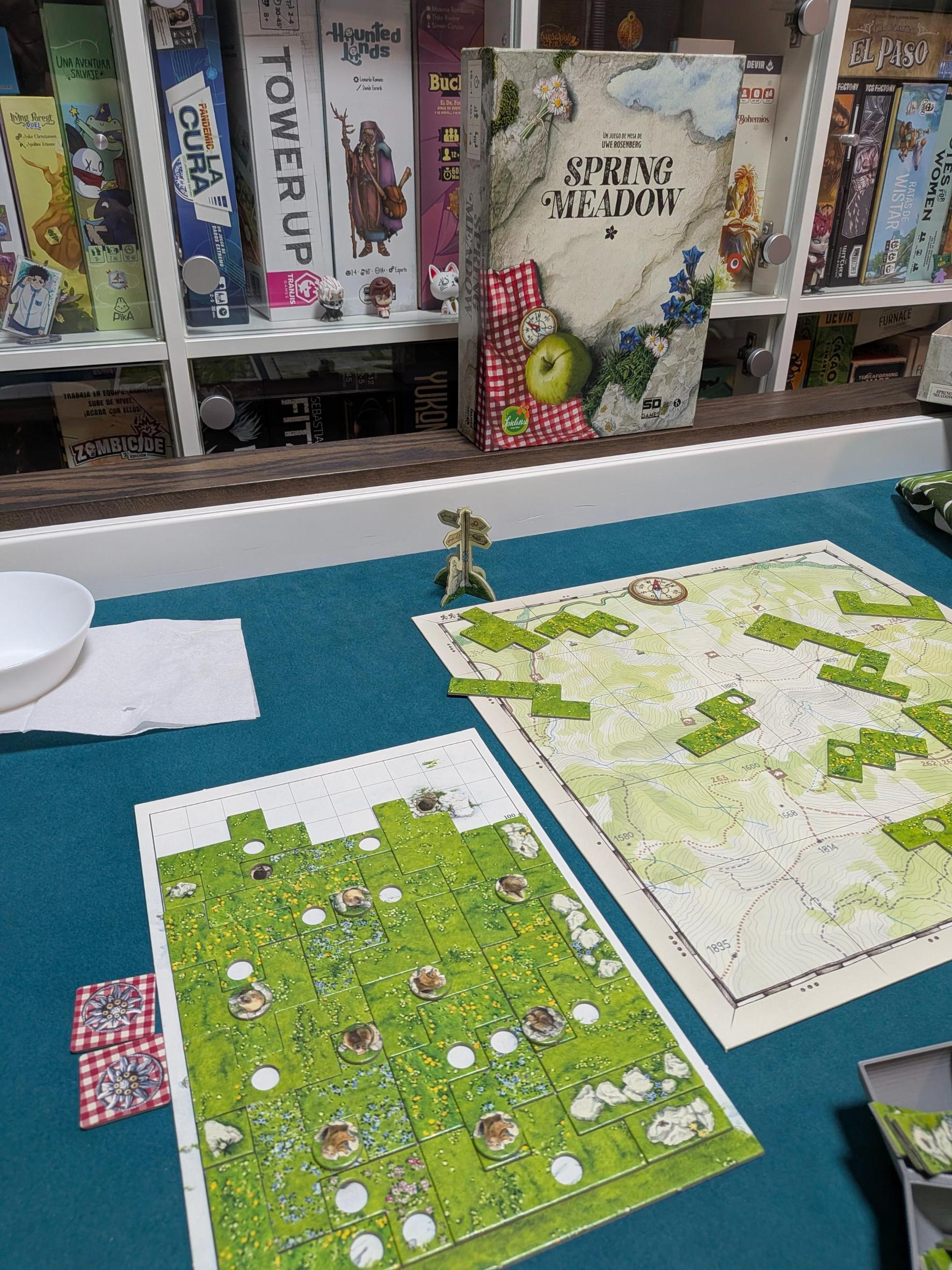
Waar te koop
Winkelprijzen en tweedehands exemplaren, elke dag gecontroleerd.
- MathomOp voorraad 12 €
- Miniature MarketNiet op voorraad 43.99 $
- Cardhaus GamesOp voorraad 44.95 $
- Juegos de la Mesa RedondaOp voorraad 21.97 €
- BoardGames.BGNiet op voorraad 23 €
- Gamers Guild AZOp voorraad 40.96 $
- ZacatrusNiet op voorraad 35.95 €
- Dungeon MarvelsVoorbestelling 35.96 €
Aan de tafels van Ludoya
Alle statistieken in Ludoya- 236
- Vastgelegde speelsessies
- 147
- Spelers
- 31m 28s
- Gemiddeld potje
- 37
- In collecties
- 4
- Op verlanglijsten
6,6/10
uit 14 Ludoya-recensies
Evan5,9 In this game, players are drafting tiles from a grid as in Cottage Garden. This is a wonderful tile selection method as you can clearly see what tiles are coming up and you can plan your future moves reducing downtime substantially. You lay your tiles as evenly as possible into your player board aiming to complete rows. When a selection row on the grid would be selected from yet is mostly depleted, the game pauses for a scoring. Players get 10 vp for each completed row plus 1 vp for each completed square in their lowest incomplete row, and a few mini points for various features. Winner gets a VP chip, and then you refill the grid, and play continues until someone manages to get 2 chips. The interesting part of the game is that the tetris tiles have holes in them like in Indian Summer, and if you line up the holes with the printed spaces on your map, you get bonus points in the next scoring, and if you line the holes up with each other, you get to lay down bonus tiles to cover new areas. There's a nice tension between wanting to get the tile that perfectly fits your situation, vs wanting to extend your chain of contiguous holes. Of the three games in the series, I think Indian Summer is still my favorite, because this game is very low on player interaction, and the art on the tiles is by far the blandest of the three. That being said I'm looking forward for more of this game, and I hope it grows on me over time. :star: Art, Iconography and components functional :star: Clever or interesting mechanisms :star: Reasonably low downtime between turns with mildly AP players :star: Multiple plays stay interesting :star: Low or mitigatable luck elements :star::star::star::nostar::nostar: Raw enjoyment
Won in Rifa. Sold in LaBSK.


















Gratis, op het web, Android en iOS
Speel Spring Meadow met Ludoya
- Houd het bij in je collectieHoud je exemplaar en de uitbreidingen bij, leen het uit aan vrienden of zet het op je verlanglijst en krijg bericht als de prijs daalt.Voeg het toe aan je collectie
- Leg elke speelsessie vastScores, winnaars, timers en foto's, en dan je statistieken: winpercentage, favoriete spelersaantal, beste score.Speelsessie vastleggen
- Scoor zonder papierGebruik de scoreformulieren en speelhelpers van de community en laat Ludoya de punten optellen.Scoreformulieren zoeken
- Vind mensen om het mee te spelenClubs, spelavonden en evenementen bij jou in de buurt waar dit spel op tafel komt.Bekijk evenementen
Speldata (spelers, speeltijd, leeftijd, makers) van BoardGameGeek.