
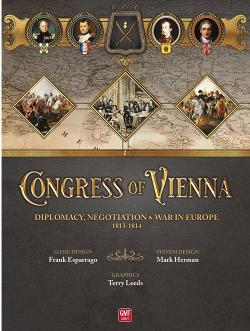
2025 · Napoleonsk
Congress of Vienna
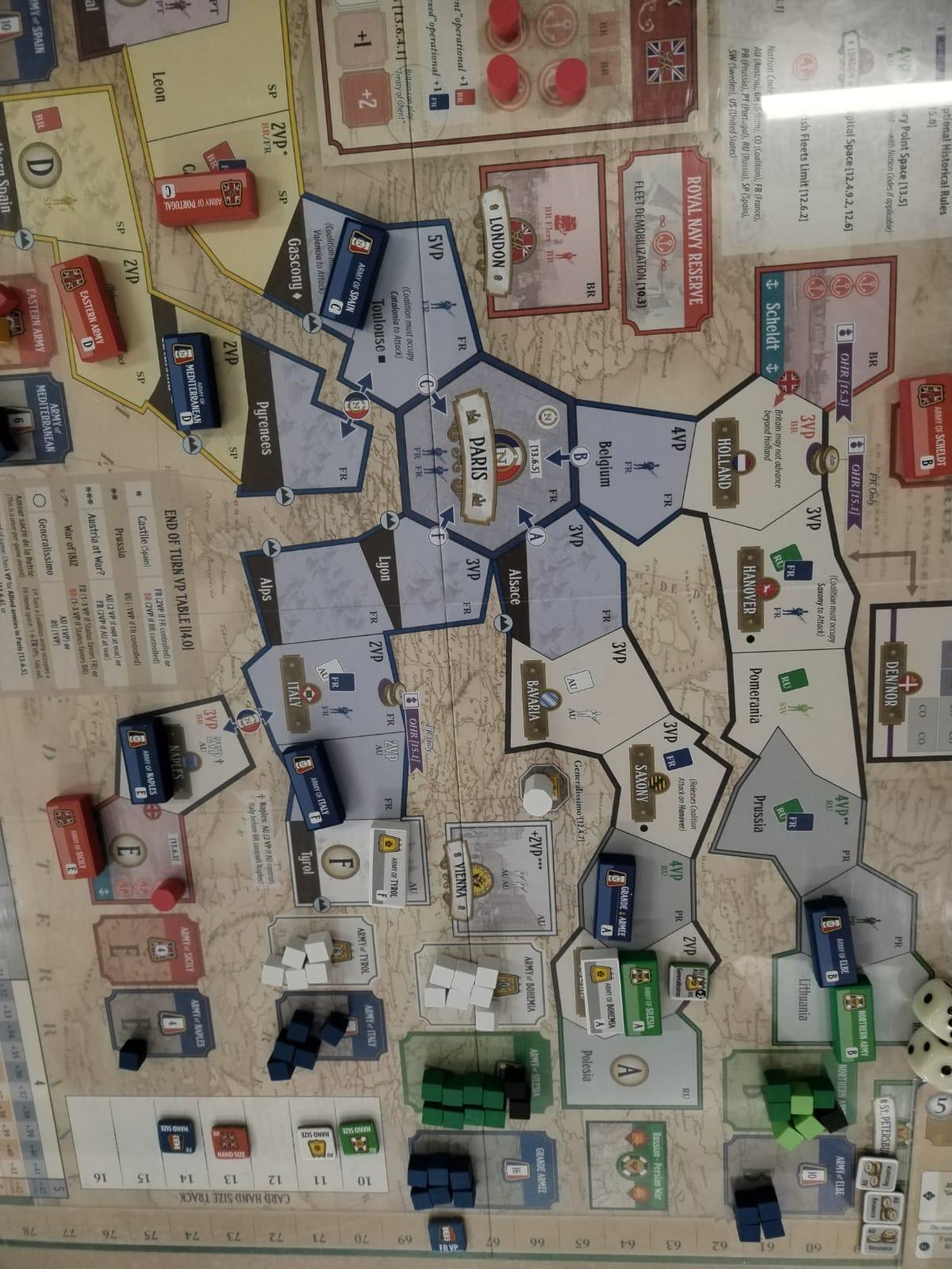
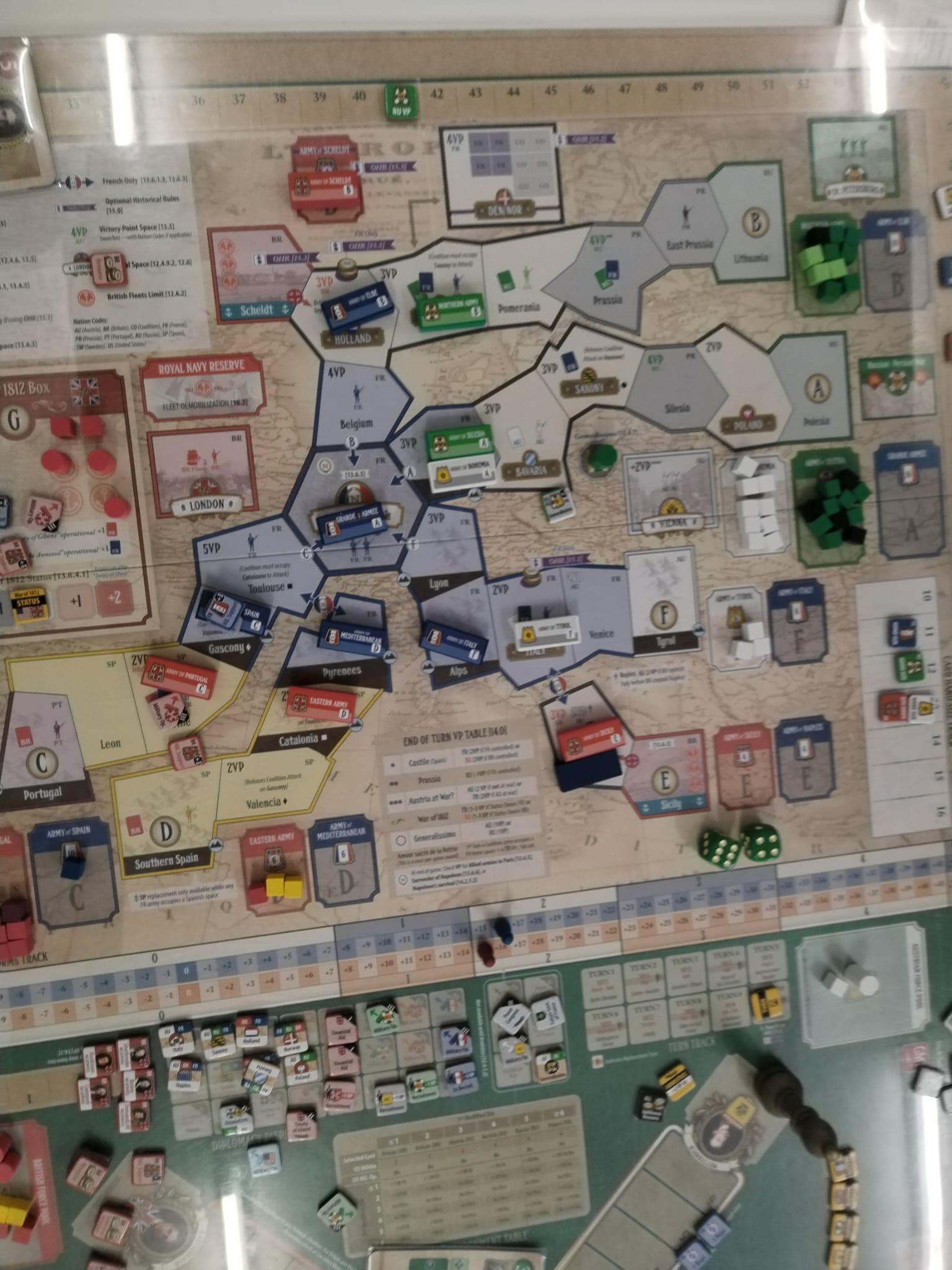
Players take the roles of the major powers fighting the aftermath of Napoleon’s 1812 retreat, running diplomatic influence and coalition strategy across a map of Europe from Iberia to the Polish-Prussian border, with secondary fronts in Italy and naval/War of 1812 areas. Play proceeds through card-driven turns that resolve diplomatic actions, alliances, and military campaigns; players allocate resources, move armies and fleets, and contest key theaters while managing political standing and victory points. The game ends when a major power reaches the victory threshold, Napoleon surrenders, or the scenario concludes.
- Spillere
- 1–4 best 4
- Spilletid
- 90–360 min
- Alder
- 12+
- Kompleksitet
- 3,9 / 5
Om spillet
- Design
- Utgiver

Bilder fra Ludoyas bord
Alle bilder i Ludoya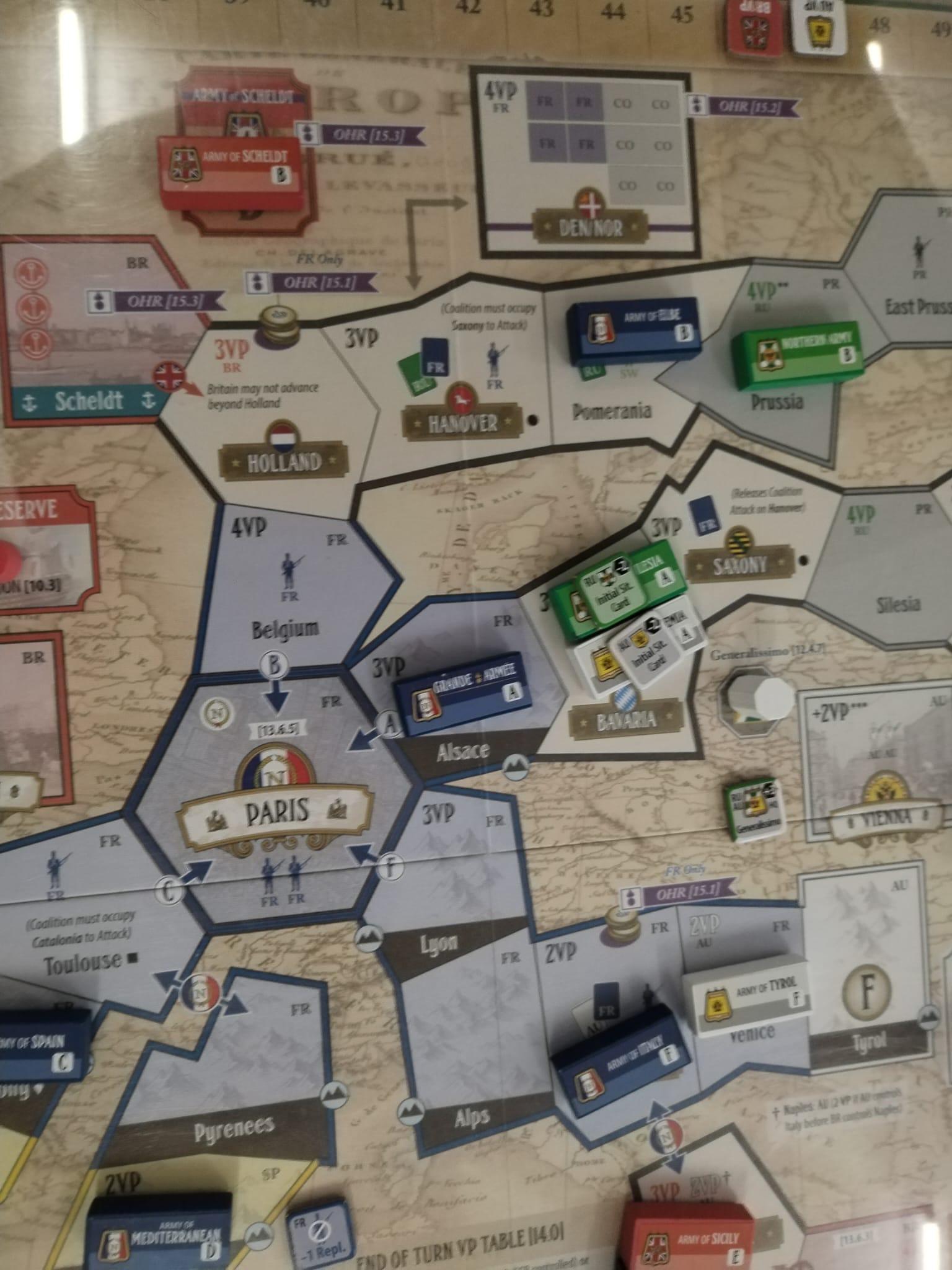
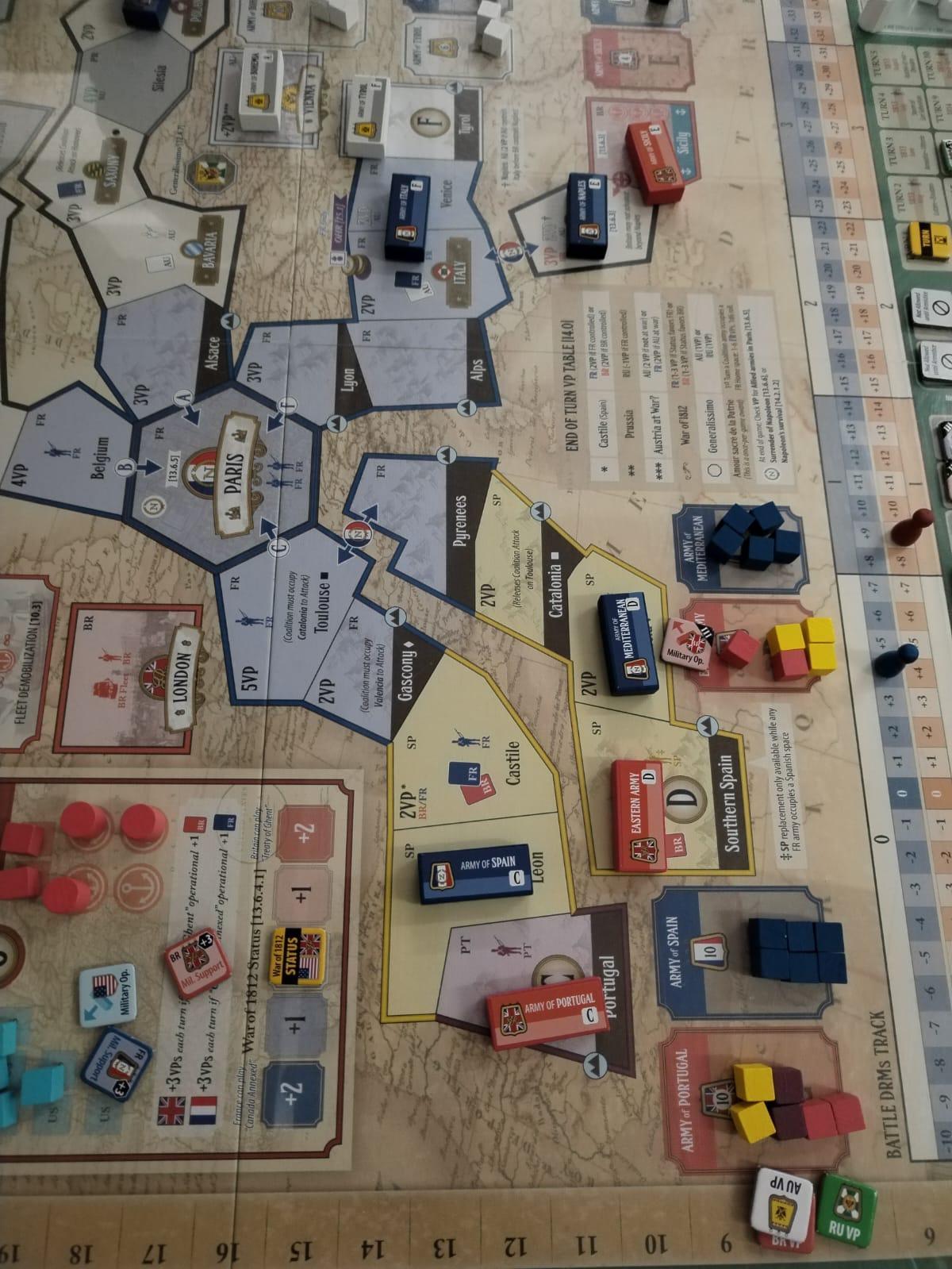
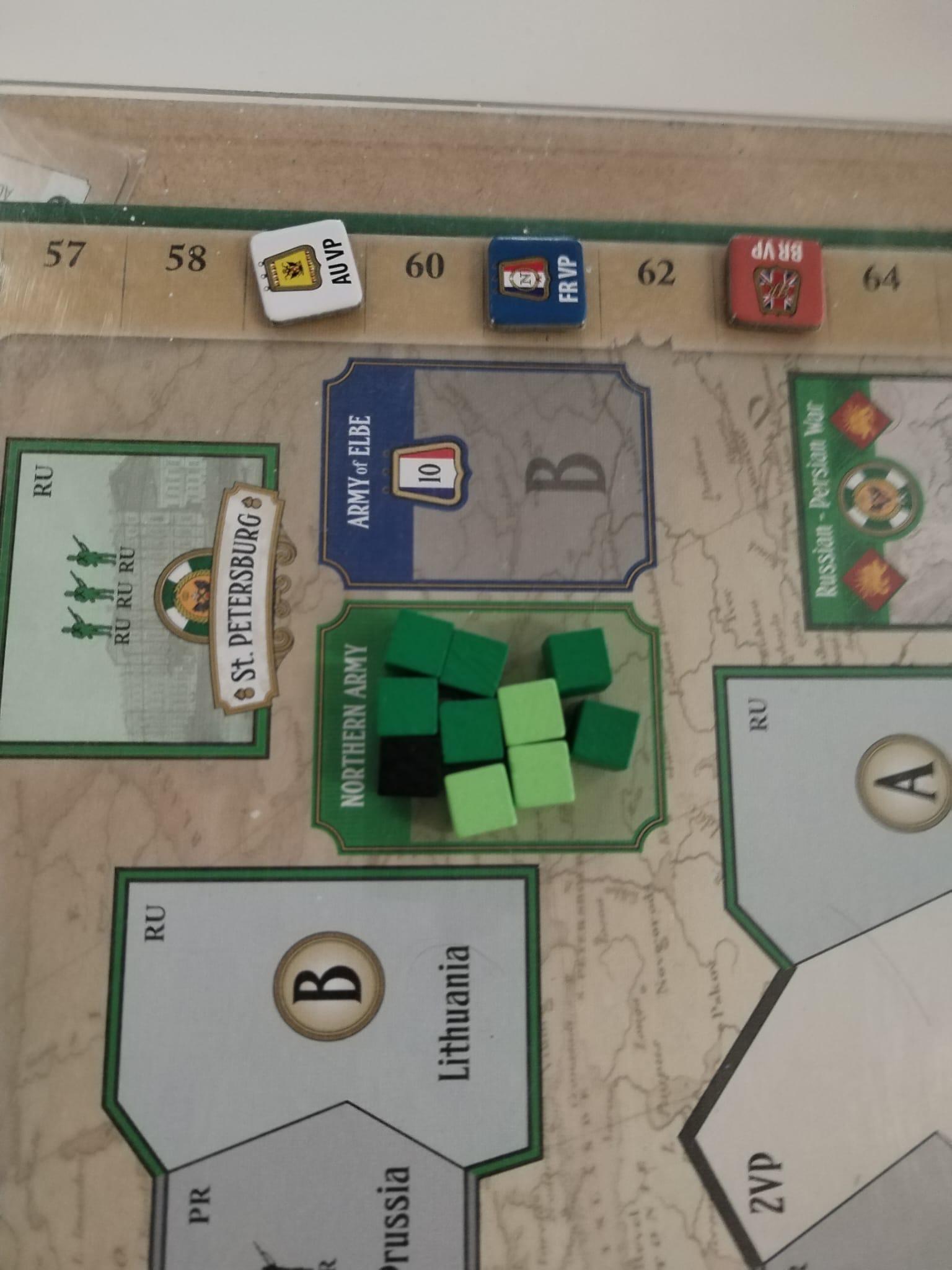
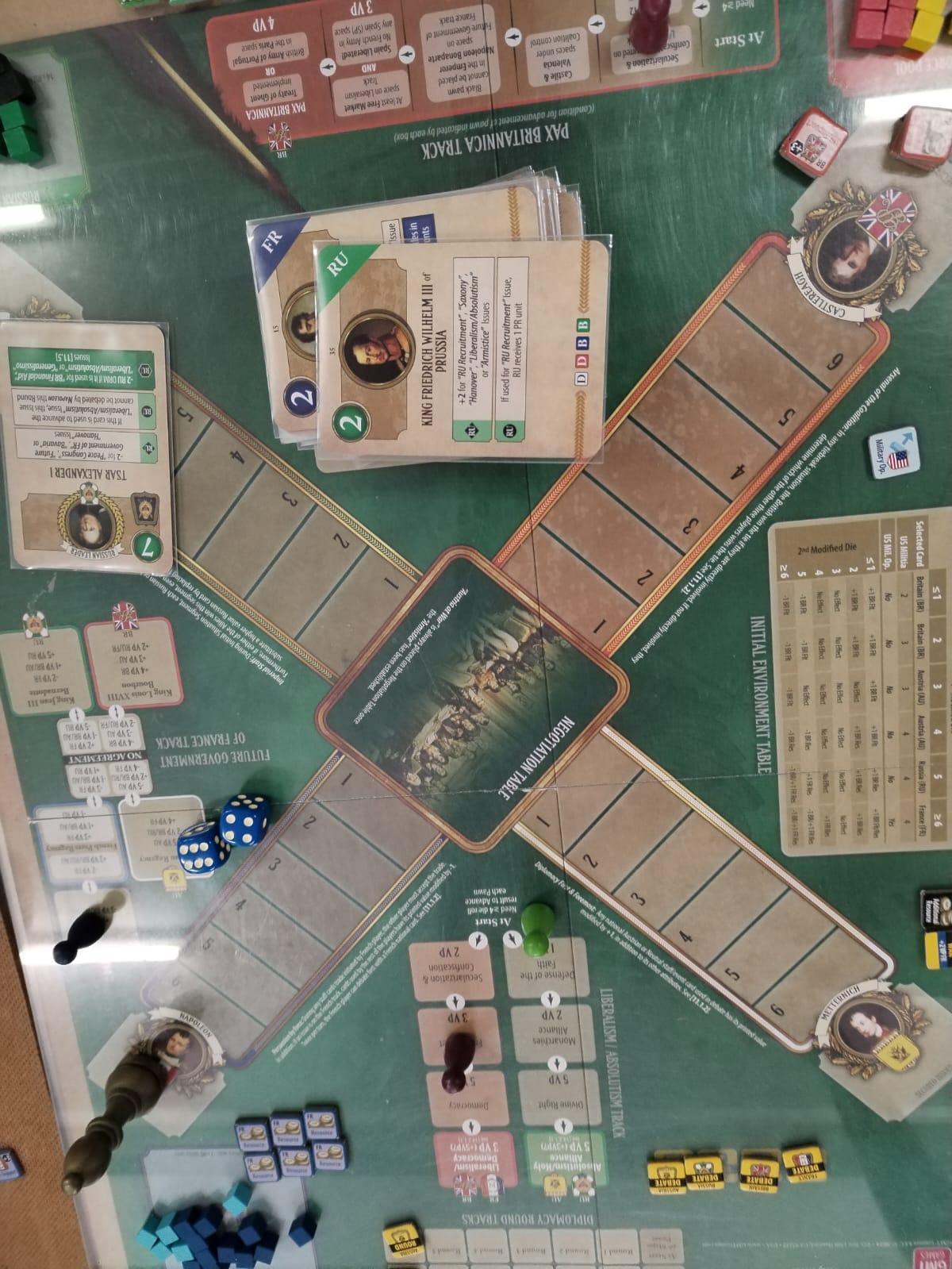
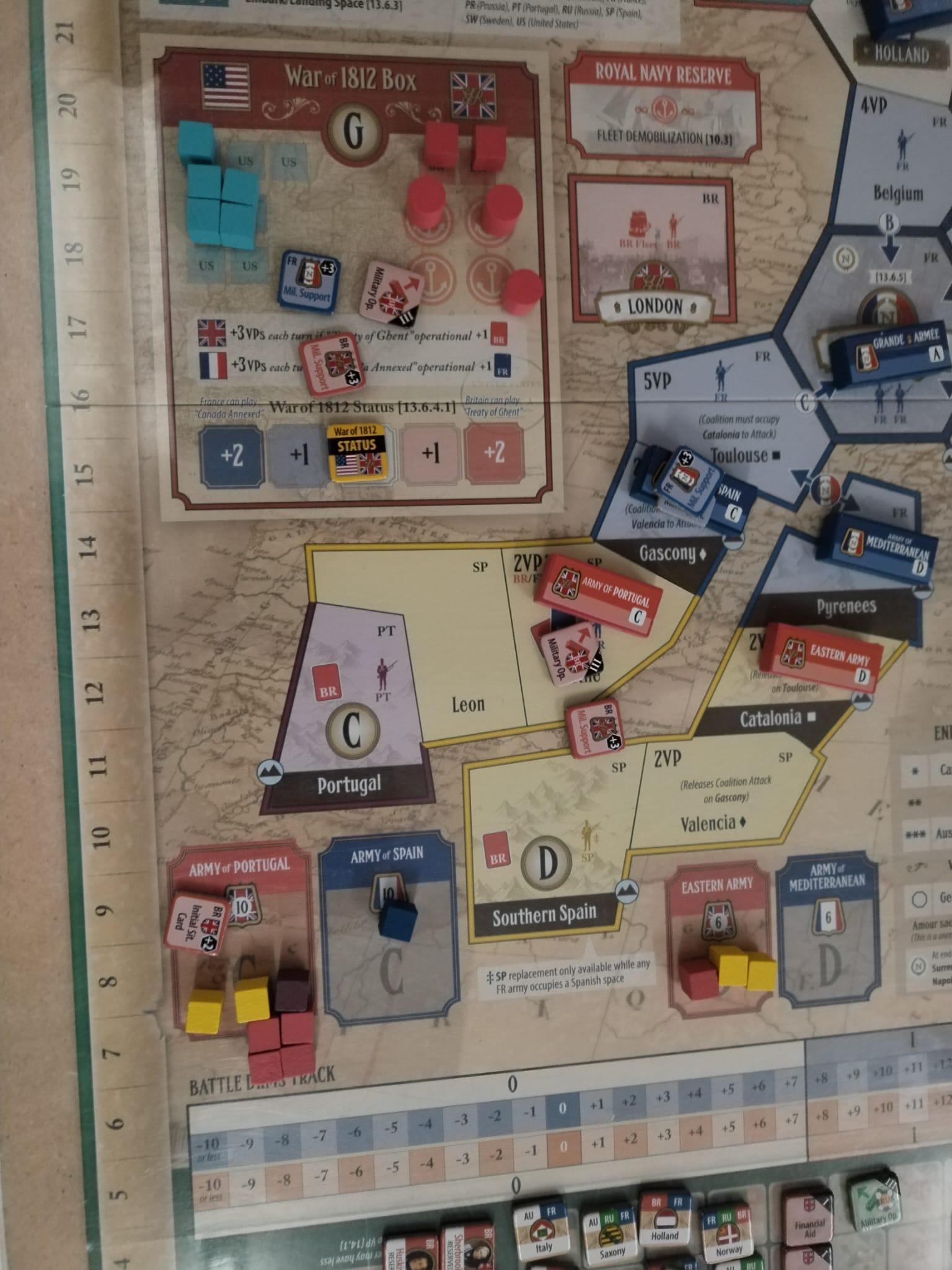
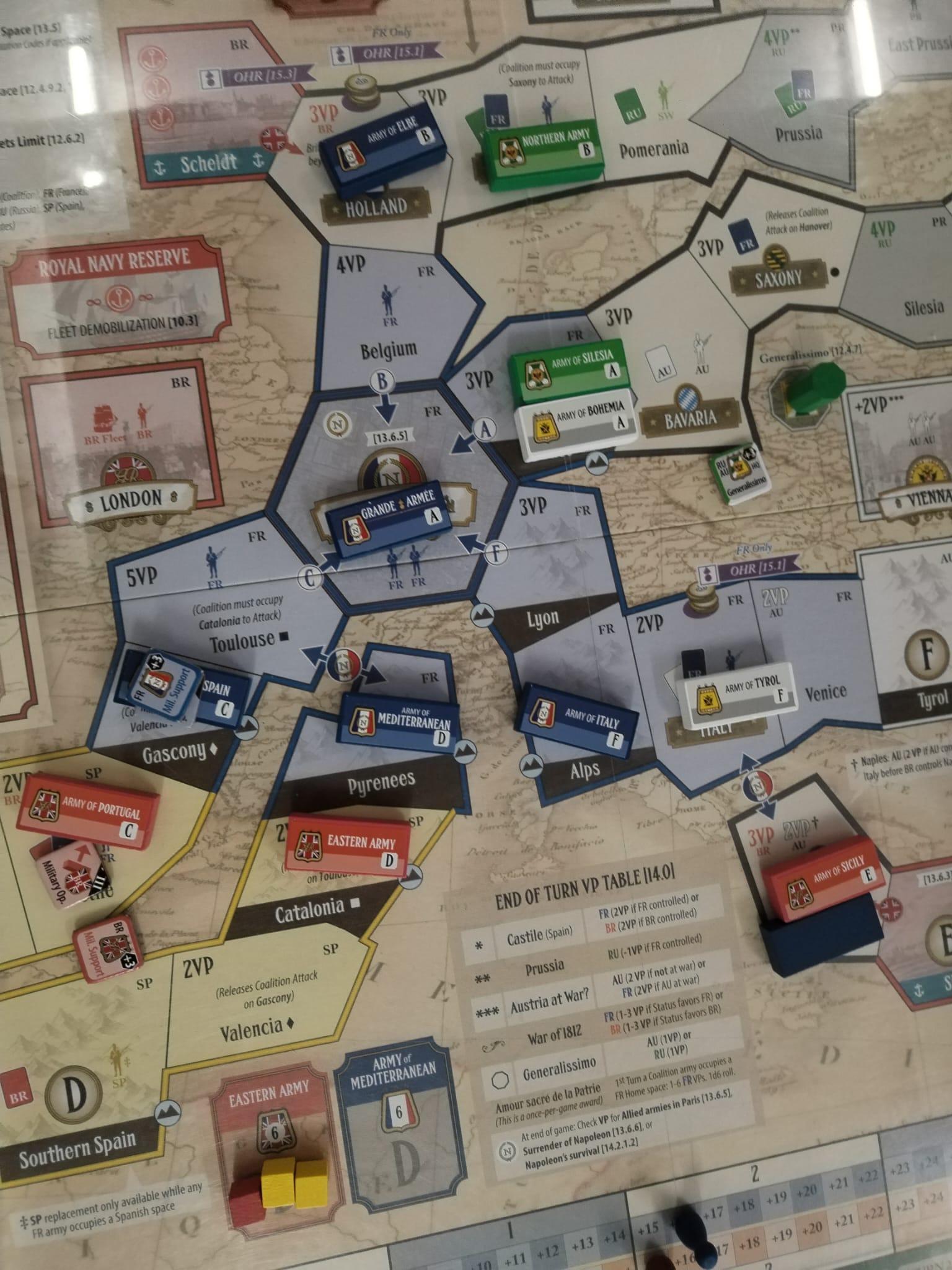
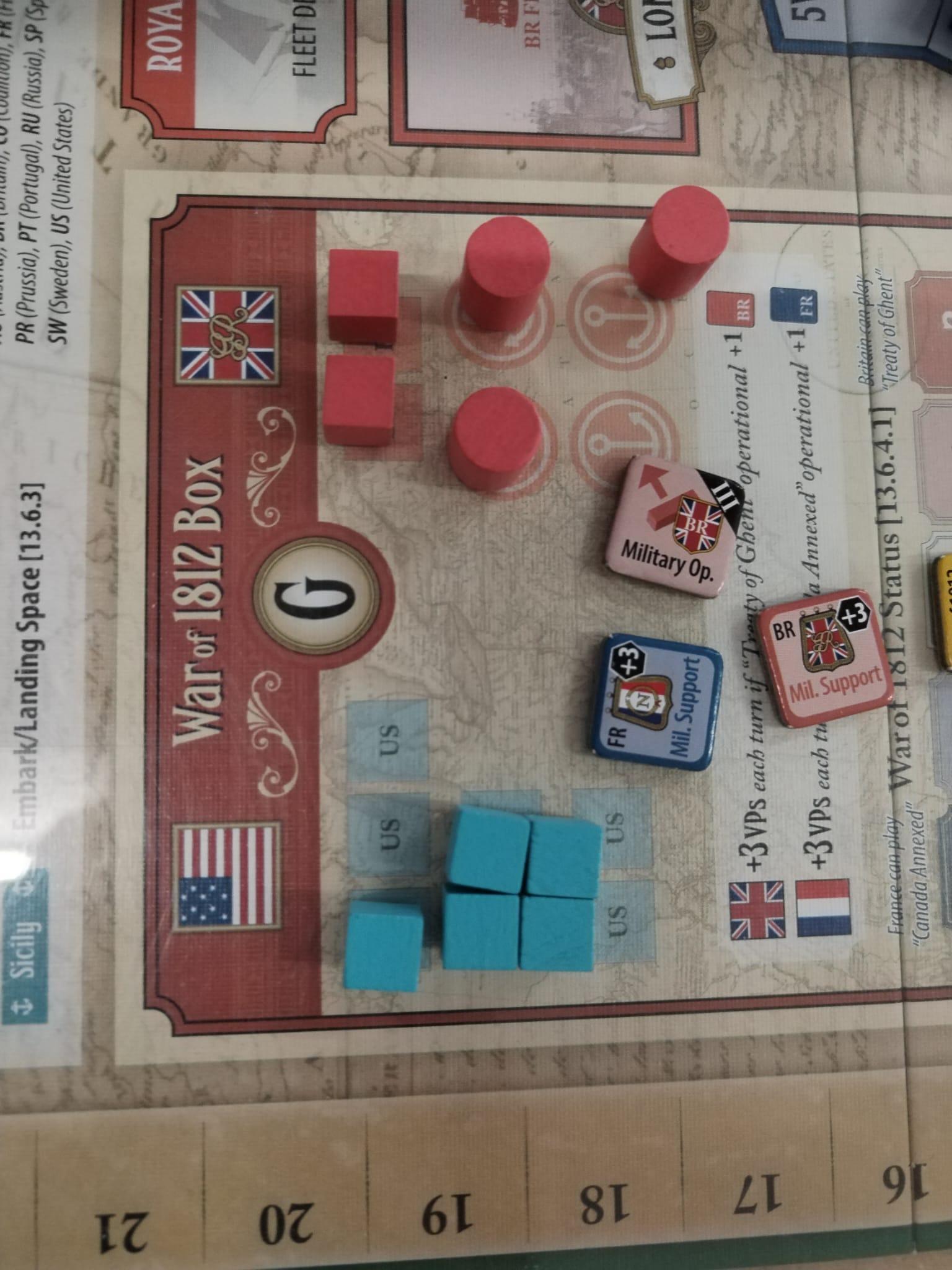
Hvor du kan kjøpe det
Butikkpriser og brukte eksemplarer, sjekket hver dag.
På Ludoyas bord
All statistikk i Ludoya- 11
- Registrerte spilløkter
- 15
- Spillere
- 5h 18m
- Gjennomsnittlig spilletid
- 5
- I samlinger
- 1
- På ønskelister
- 1
- Forhåndsbestilt
Regelspørsmål
Besvart fra regelboka av Ludoyas regelassistent.
How is the Diplomacy Phase winner determined — what actually decides who wins and what do they get?
After six Diplomacy Rounds, Issue markers remaining on Major Powers’ National Tracks are counted as “won” and the player with the most won Issues is the Diplomacy Phase winner; Britain breaks ties. The winner gains VP (2VP for Britain/Austria/Russia, 4VP for France) and is granted the advantage of playing last in later phases. (See rulebook pp. 21–24.)
Can I trade Character/Leader cards during the Diplomacy Phase, and can France force a trade?
On your Diplomacy turn you may offer a Character-card trade instead of negotiating; both players turn an eligible card face-down and swap if the trade is accepted (neutral cards may not be traded). The French national advantage forces an opponent to trade a French Character card to France if that opponent has one. (See rulebook pp. 24 and 20–21.)
How do I calculate a battle’s DRM — what modifiers do I add or subtract?
Each side’s initial DRM starts with its unit/fleet count in the Army/Box, then add/subtract modifiers such as +3 per Military Support marker, Homeland or Guerilla bonuses, terrain penalties (e.g., −3 for mountain), amphibious penalties, special Leader/character effects (including the Meddling Tsar), and any Military card DRMs revealed; final 2d6 are then rolled and applied on the Battle DRM Track. Use the track and the order of application described to get the final DRM. (See rulebook pp. 36–40.)
Can an army withdraw from a battle to avoid worse losses, and what happens if it does?
After initial DRMs are calculated, one eligible Army may choose to Withdraw (French decides first); withdrawal applies a −6 DRM to both sides and the withdrawing Army retreats one space backward, with additional movement/advance rules depending on whether both sides had Military Operation markers. Some forces (e.g., armies in Front Start spaces, the Grande Armée in Paris, War of 1812) cannot withdraw. (See rulebook p. 37.)
How are casualties and retreats resolved after the dice are rolled — who chooses which units are lost and where armies retreat/advance?
Final pawn positions on the Battle DRM Track indicate losses each side inflicts; both players simultaneously choose which of their units/fleets to remove to satisfy those losses and move them to their Force Pools, then the side inflicting more losses (and not having Withdrawn) is the victor and advances into the vacated space while the loser retreats to the rear unless exceptions apply. There are special rules for cancelling retreats in mountains, Major Battle VP effects, and allocation of losses for multinational Allied armies. (See rulebook pp. 39–41.)
What happens when the Grande Armée is in Paris — can it move, absorb units, and how does Napoleon’s surrender work?
Once the Grande Armée enters Paris it can never leave, immediately absorbs French units placed into Paris up to its 16‑unit limit (excess go to the Force Pool), and the French player may not strategically reduce it below four units; if the Grande Armée is reduced below four units in Paris while France is not the VP leader, the Surrender of Napoleon occurs and triggers end‑of‑game procedures. Paris is treated as French‑controlled while Grande Armée is embedded and has special co‑existence/attack/retreat rules for Allied armies. (See rulebook pp. 46–47.)
Lignende spill
 Churchill2015
 Maria2009
 Napoleon against Europe2013
 The Napoleonic Wars (Second Edition)2008
 Europe in Turmoil: Prelude to the Great War2018
 The Napoleonic Wars2002
 Europa Universalis: The Price of Power2023
 Europa Universalis: The Price of Power (Deluxe Edition)2023
 Pericles: The Peloponnesian Wars2017
 Weimar: The Fight for Democracy2023
 Napoleon's Triumph: The Battle of Austerlitz, 2 December 18052007
 Land and Freedom: The Spanish Revolution and Civil War2023
De som eier det, eier også

Gratis, på nett, Android og iOS
Spill Congress of Vienna med Ludoya
- Ha det i samlingen dinHold oversikt over eksemplaret ditt og utvidelsene, lån det ut til venner, eller legg det på ønskelisten og få beskjed når prisen faller.Legg det til i samlingen din
- Registrer hver spilløktPoeng, vinnere, tidtakere og bilder, og så statistikken din: vinnerprosent, favorittantall spillere, beste poengsum.Registrer en spilløkt
- Avgjør regelspørsmålSpør om hva som helst i reglene og få svar fra regelboka, med siden du kan sjekke det på.Spør regelassistenten
- Finn folk å spille det medKlubber, spillkvelder og arrangementer nær deg der dette spillet kommer på bordet.Se arrangementer
Spillfakta (spillere, spilletid, alder, bidragsytere) fra BoardGameGeek.