

2010 · Zwierzęta
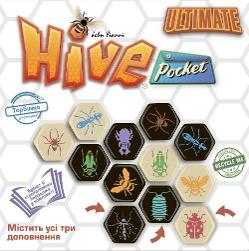
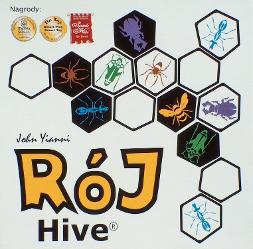
Rój kieszonkowy
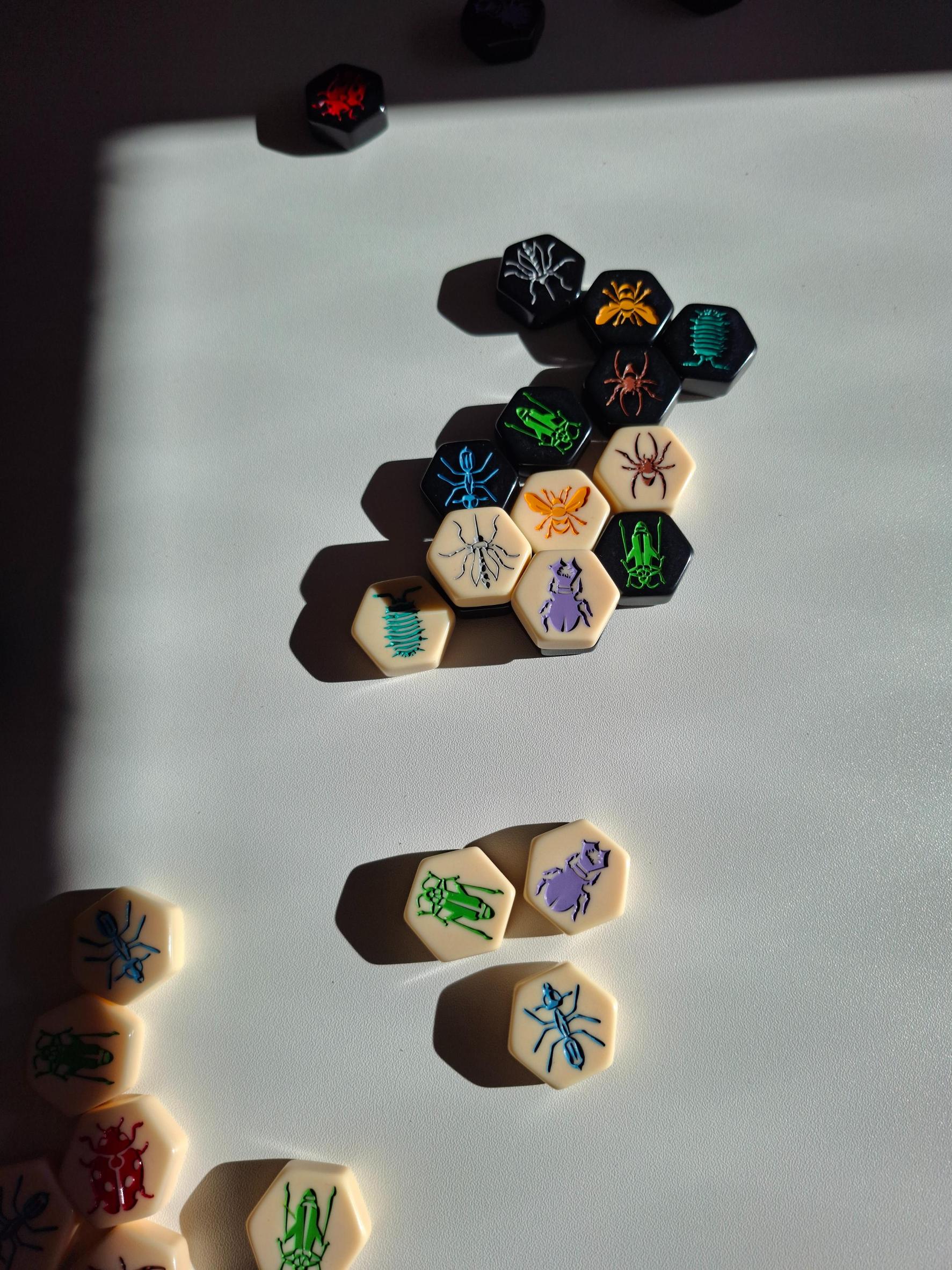
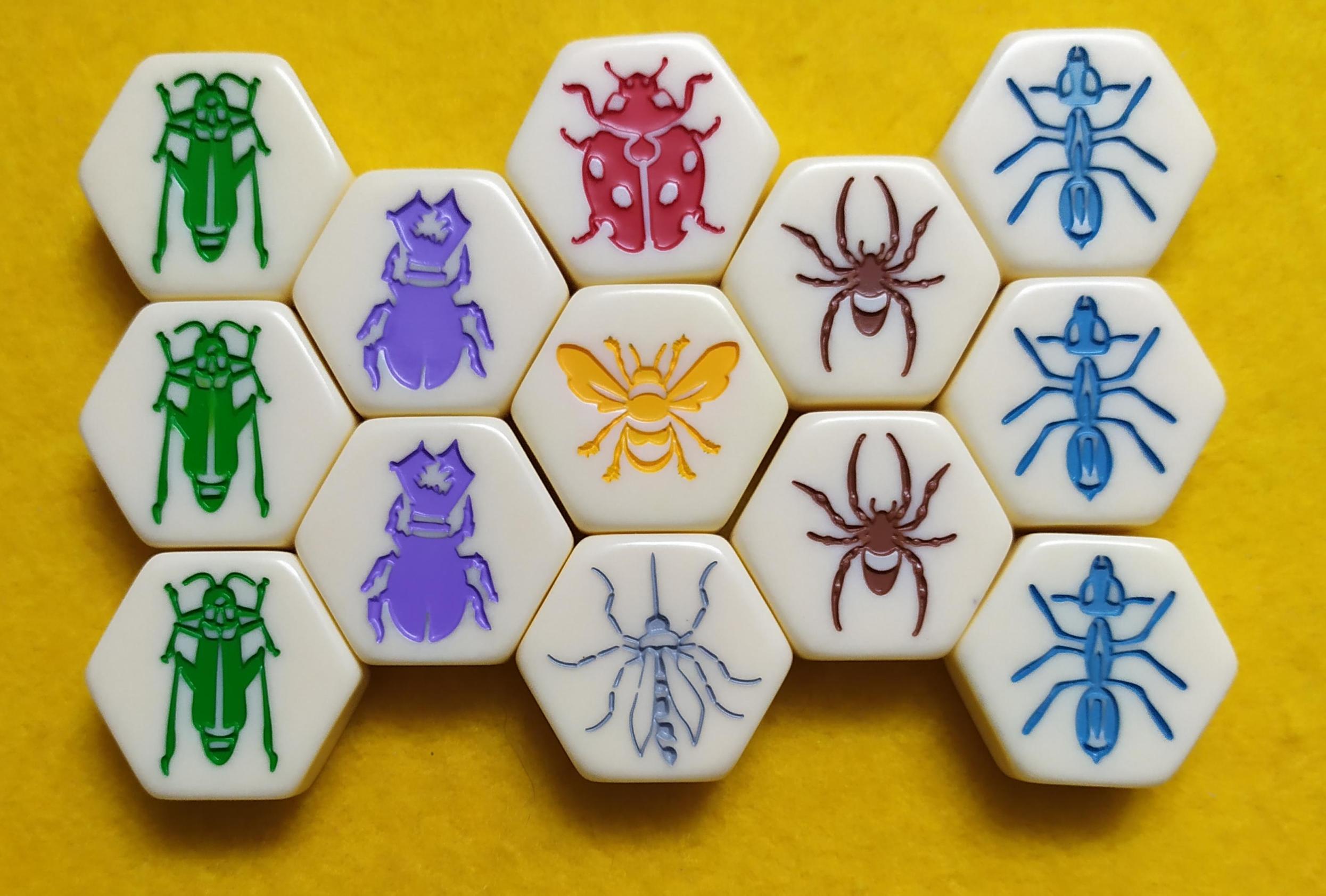
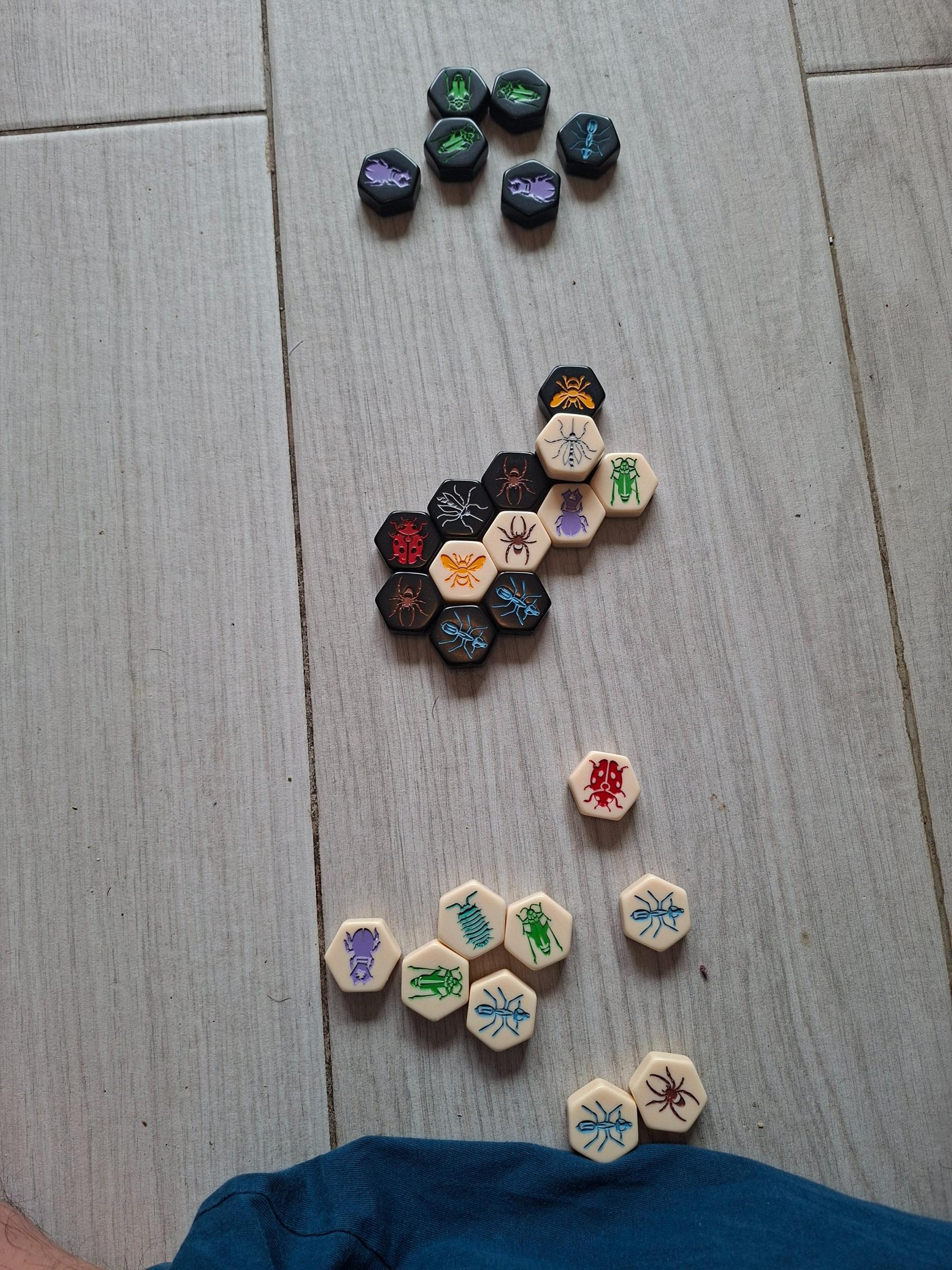
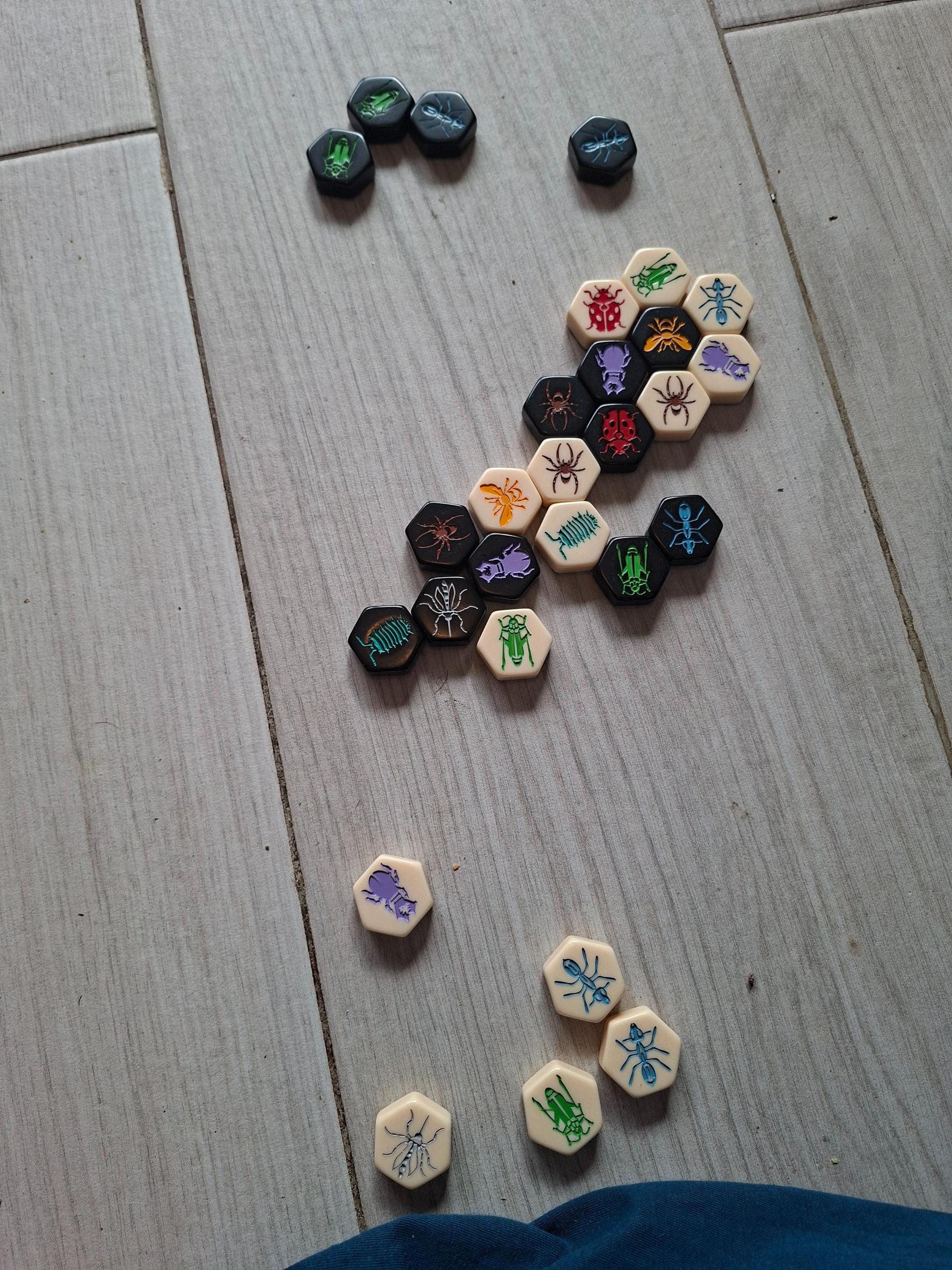
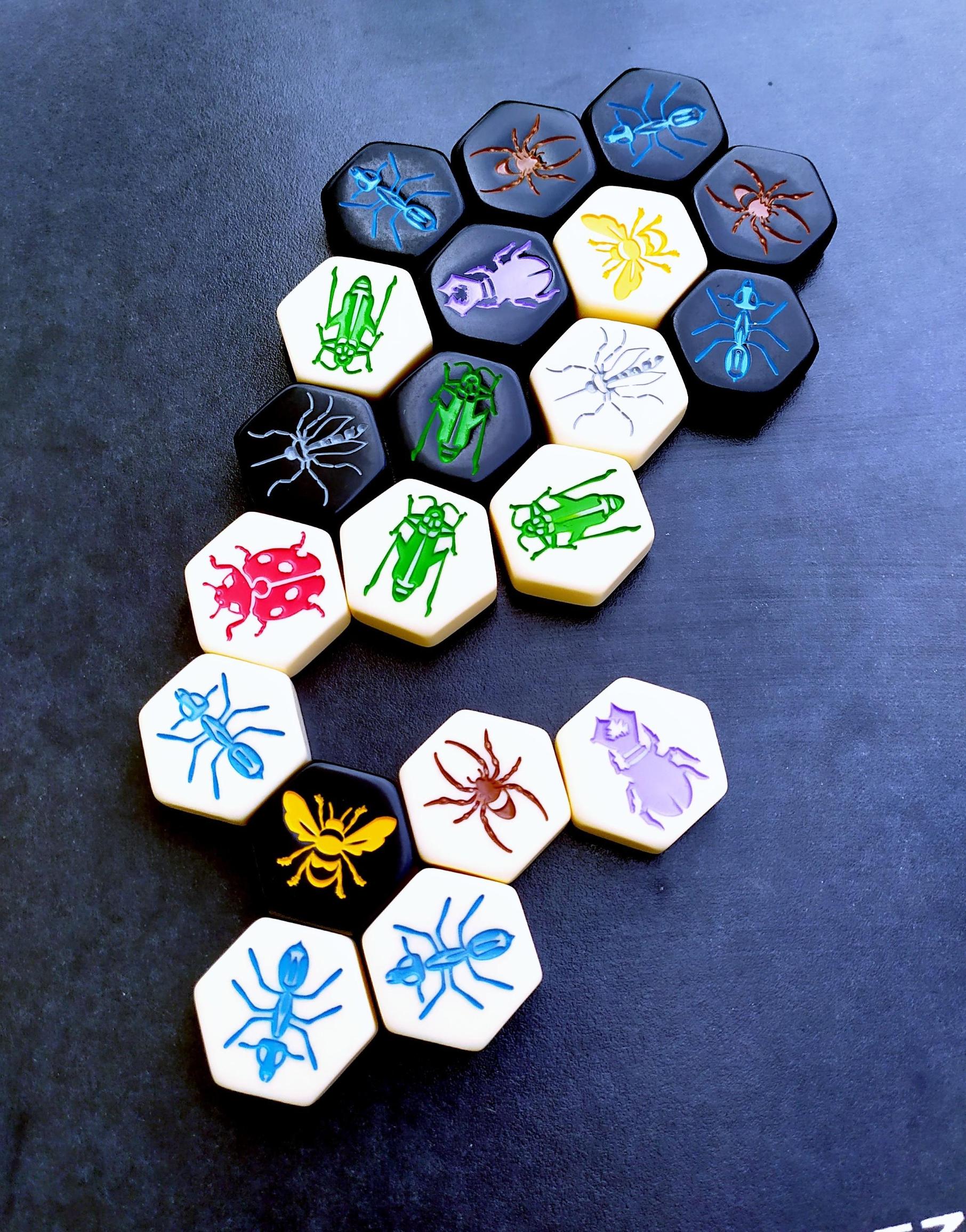
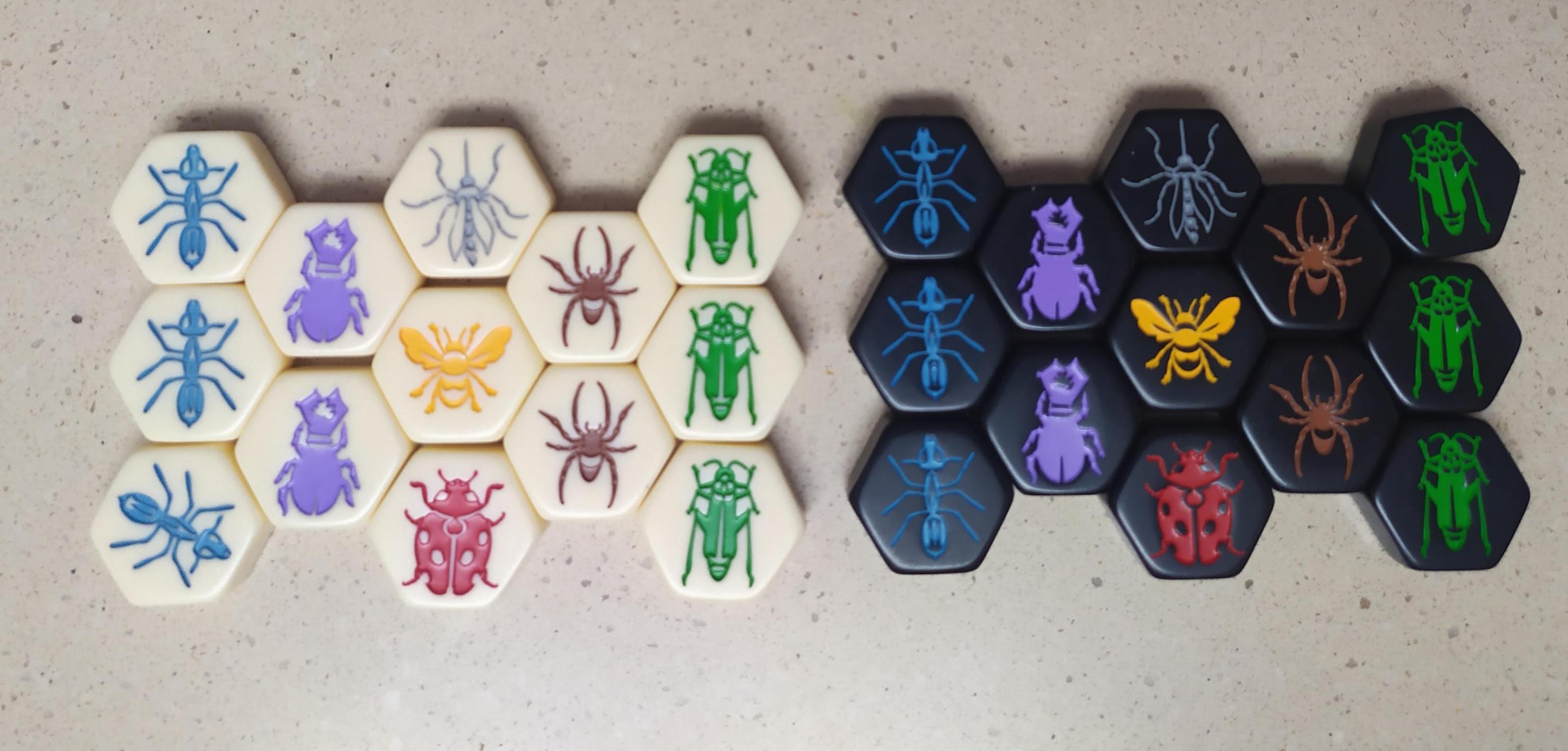
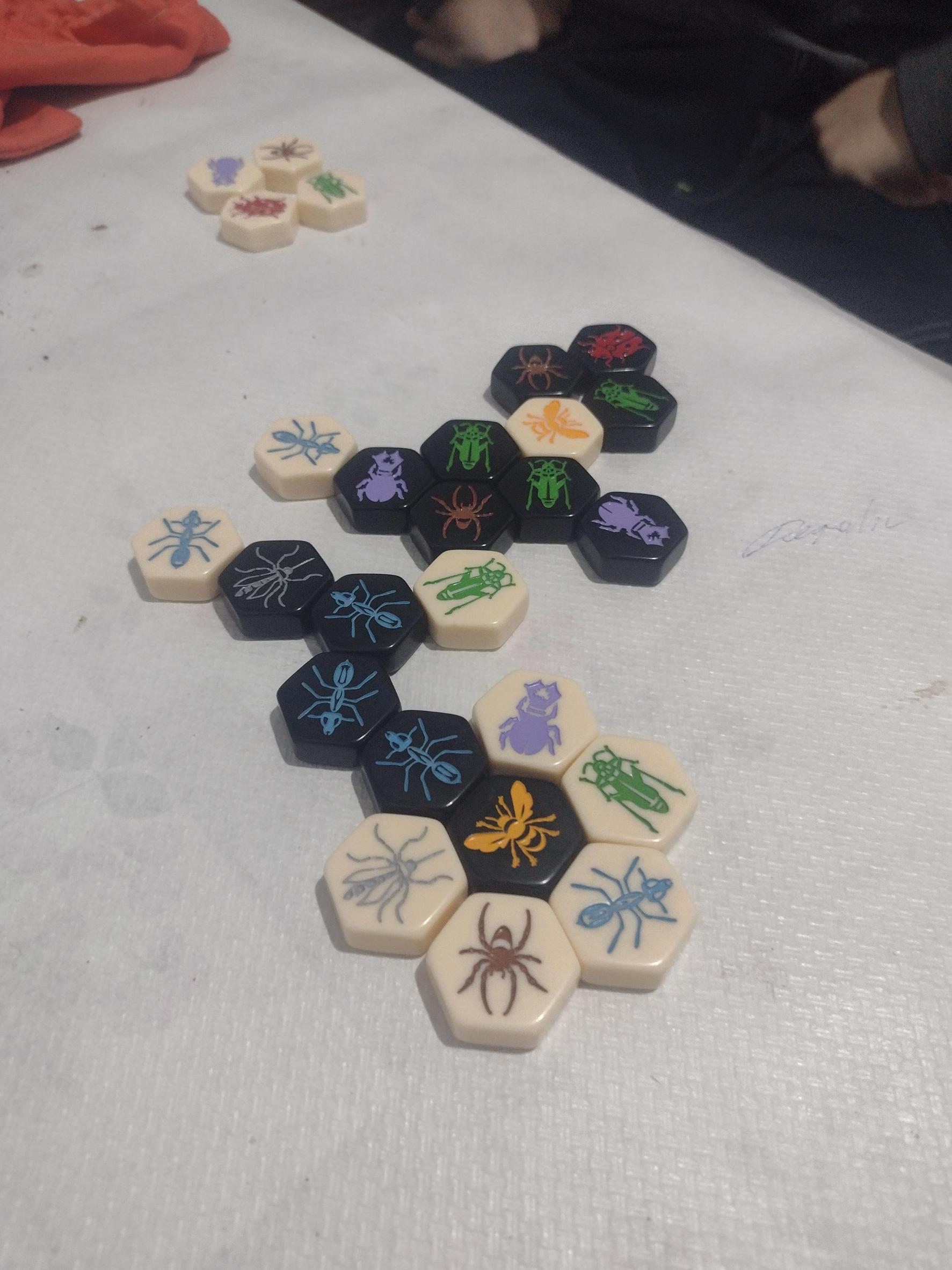
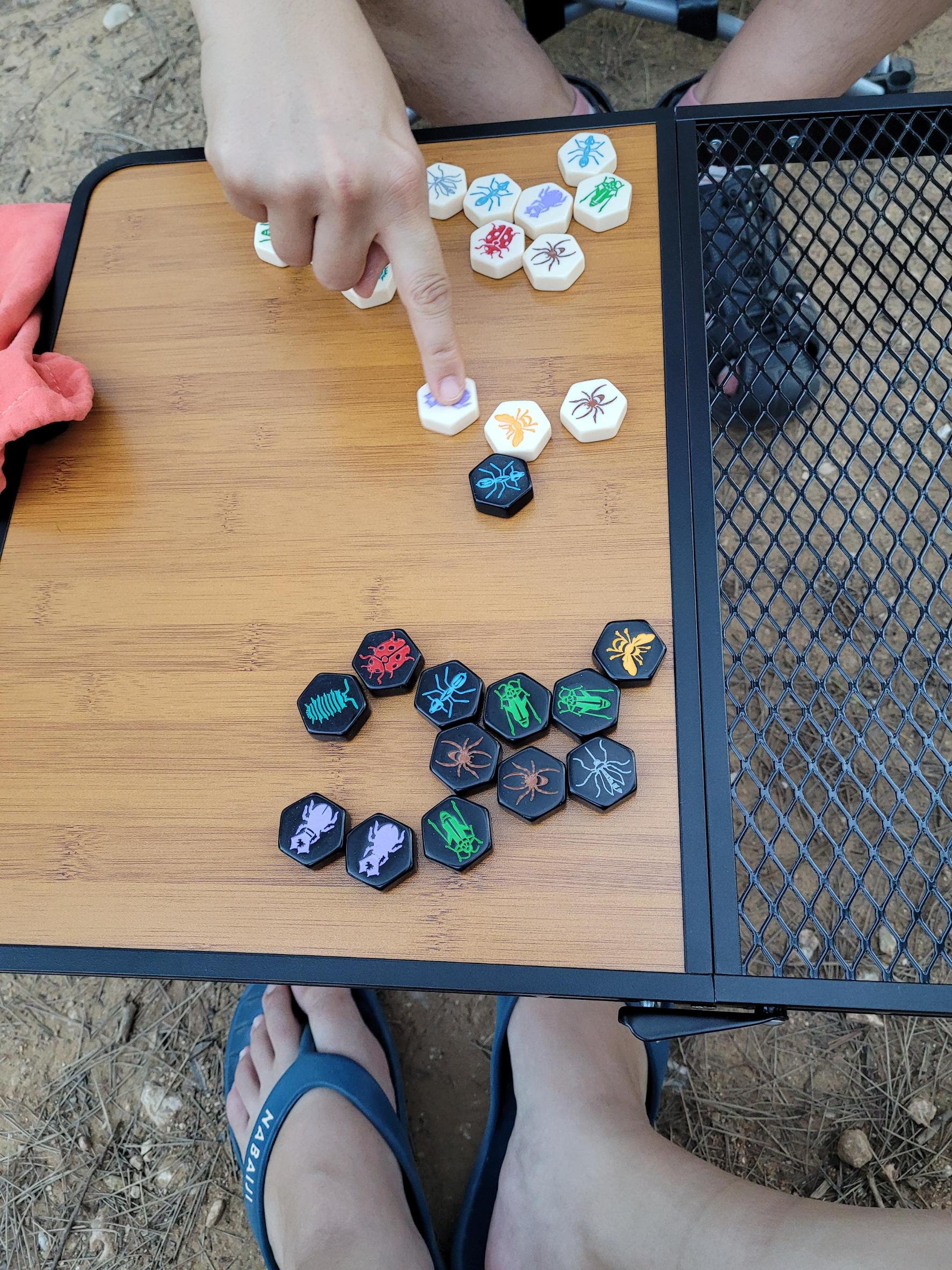
Two players deploy insect-themed hexagonal tiles to form a growing hive on any flat surface. Each tile represents a creature with a unique movement rule; pieces are placed and moved to create and reshape the shared playing area (the pieces themselves form the board). Pieces are never removed from play, and some may remain unplayed. Players aim to completely surround the opponent’s Queen Bee while preventing the opponent from surrounding theirs; the first player to fully encircle the opposing queen wins.
- Gracze
- 2
- Czas gry
- 20 min
- Wiek
- 9+
- Złożoność
- 2,2 / 5
O grze
- Projekt
- Grafika
- Wydawcy



Dodatki
Zobacz je w Ludoya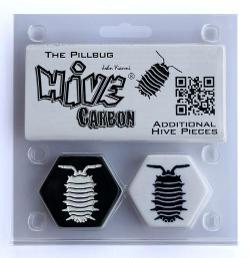
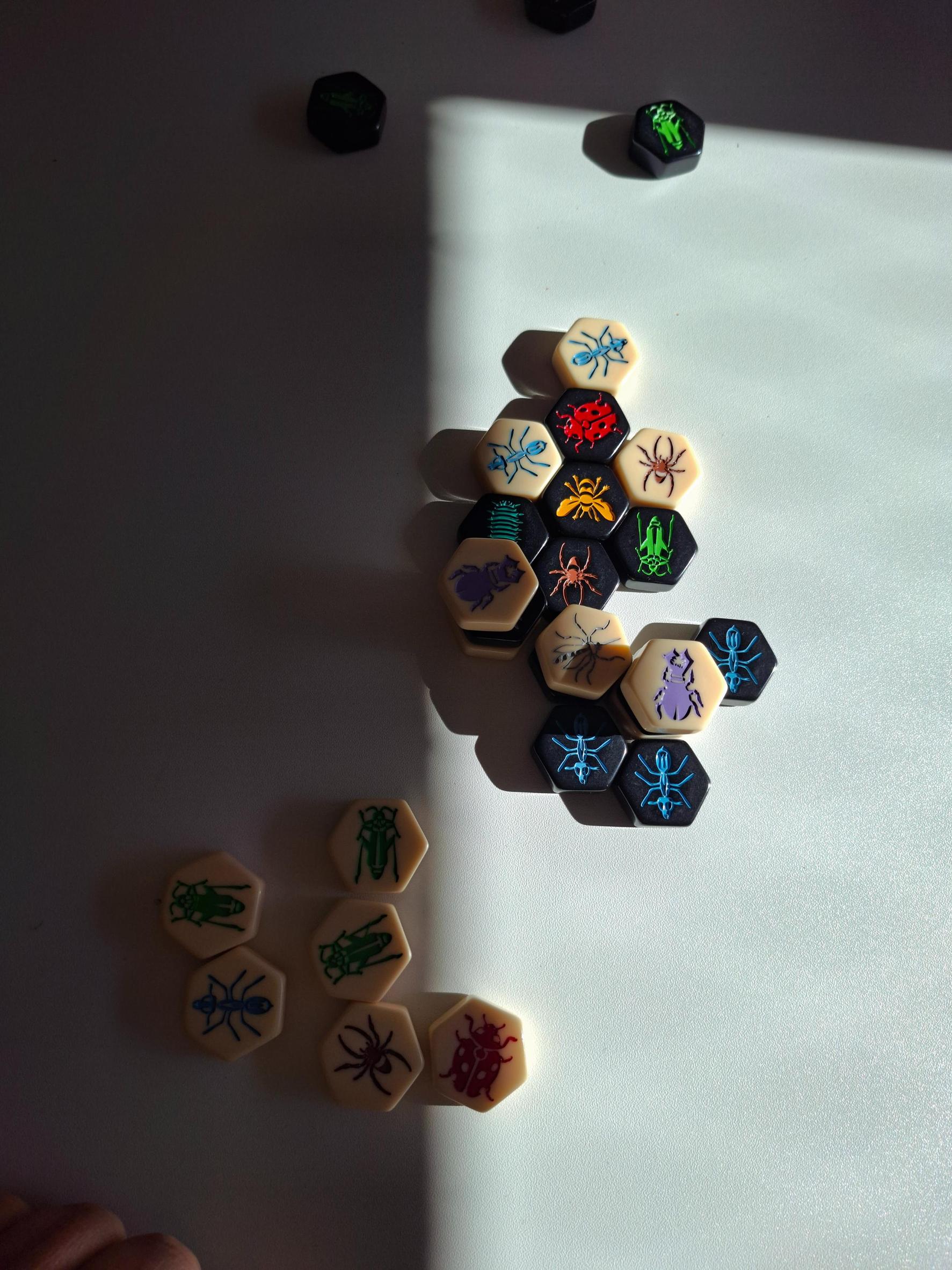
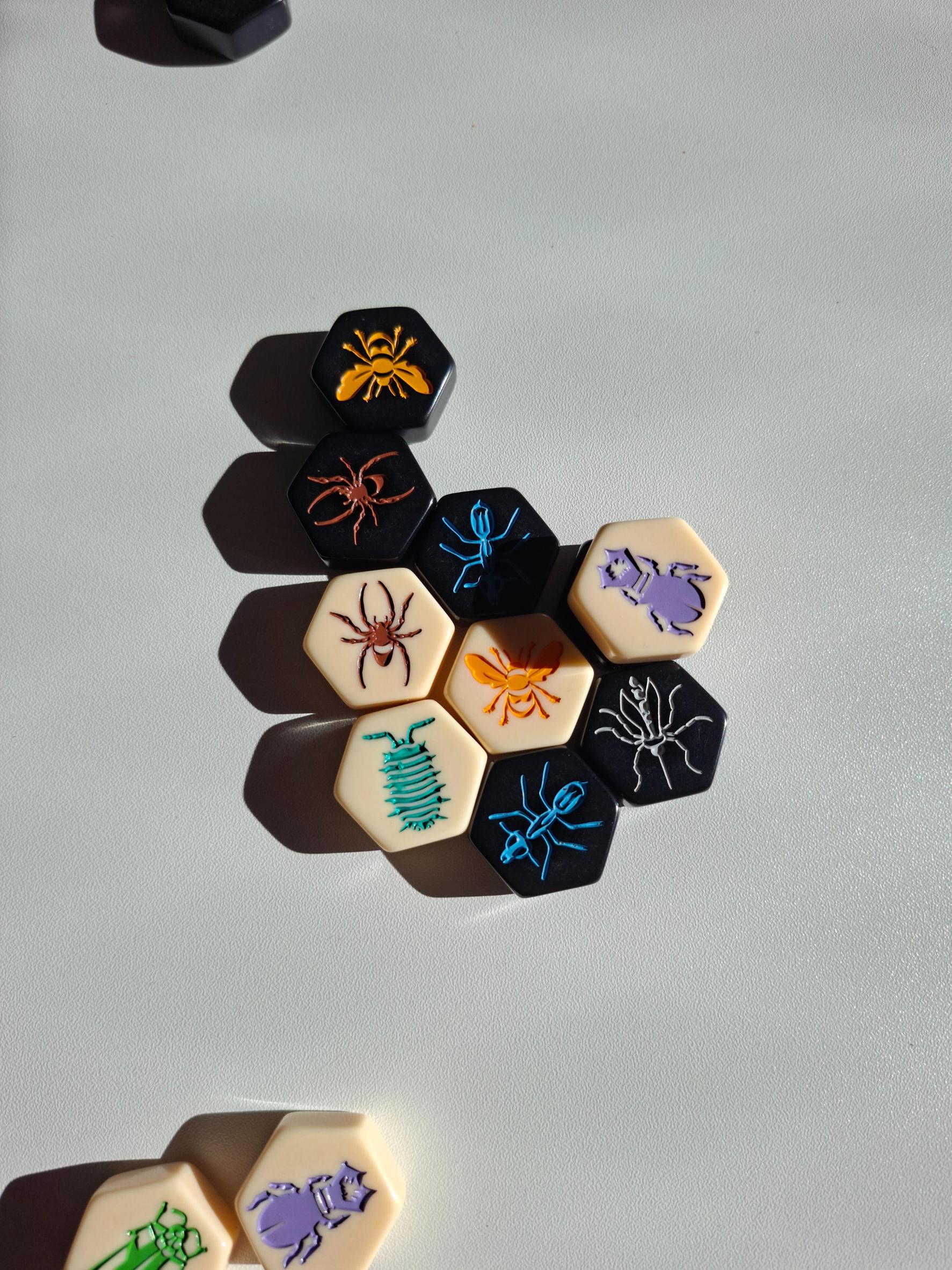
Zdjęcia ze stołów Ludoya
Wszystkie zdjęcia w Ludoya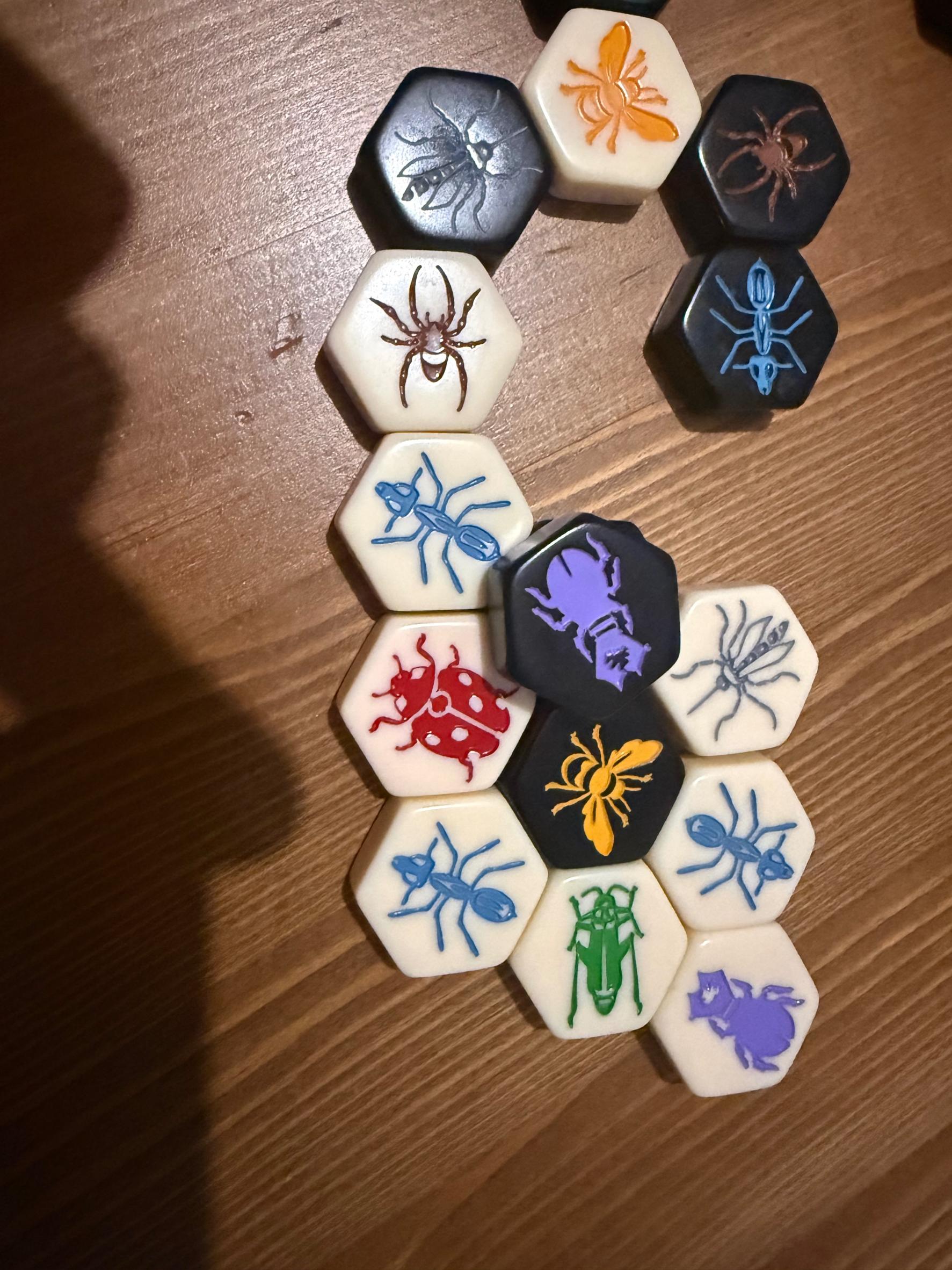
Gdzie kupić
Ceny w sklepach i egzemplarze z drugiej ręki, sprawdzane codziennie.
Przy stołach Ludoya
Pełne statystyki w Ludoya- 1261
- Zapisane rozgrywki
- 339
- Gracze
- 18m 36s
- Średnia rozgrywka
- 284
- W kolekcjach
- 12
- Na listach życzeń
7,5/10
z 87 recenzji w Ludoya
Vic Granell8,5 Excellent abstract game with deep strategy. You can learn it in 5 minutes

Pytania o zasady
Odpowiedzi z instrukcji od asystenta zasad Ludoya.
Do I have to place my Queen Bee by a certain turn?
Your Queen Bee can be placed anytime from your first to your fourth turn, and you must place it on your fourth turn if you haven't already (p.3).
Can I place a new piece touching an opponent's piece?
Except for the very first piece each player places, new pieces may not be placed next to (i.e., touching) an opponent's piece (p.2).
Can I move a piece if that move would split the Hive into two parts?
No — the pieces in play must remain linked at all times, so you may not move a piece that would leave any part of the Hive unconnected or 'stranded' (One Hive rule, p.9).
If a Beetle climbs on top of another piece, which colour counts and can that covered piece still move?
A piece with a Beetle on top cannot move, and for the placing rules the entire stack takes on the colour of the Beetle; Beetles may move on top of the Hive and can drop into surrounded spaces (pp.4–5).
How does the Mosquito move — does it copy the piece under it or nearby pieces?
Once in play the Mosquito takes on the movement characteristics of any creature it is touching at that moment; if moved as a Beetle on top of the Hive it remains a Beetle until it climbs down, and if touching only Mosquitoes it may not move (p.8).
Why can't my piece 'slide' out even though there are empty adjacent spaces?
Most pieces must physically slide into their destination; if a piece is blocked so it cannot slide out it may not move — exceptions are the Grasshopper (jumps), the Beetle and Ladybug (climb), and the Mosquito (which can mimic one of those) (p.10).







Za darmo, w przeglądarce, na Androidzie i iOS
Graj w Rój kieszonkowy z Ludoya
- Miej ją w swojej kolekcjiŚledź swój egzemplarz i jego dodatki, pożyczaj go znajomym albo dodaj go do listy życzeń i dostań powiadomienie, gdy cena spadnie.Dodaj do swojej kolekcji
- Zapisuj każdą rozgrywkęPunkty, zwycięzcy, minutniki i zdjęcia, a potem twoje statystyki: procent zwycięstw, ulubiona liczba graczy, najlepszy wynik.Zapisz rozgrywkę
- Rozstrzygaj spory o zasadyZapytaj o dowolną zasadę i dostań odpowiedź z instrukcji, ze stroną do sprawdzenia.Zapytaj asystenta zasad
- Znajdź ludzi do wspólnej gryKluby, wieczory gier i wydarzenia w pobliżu, na których ta gra trafia na stół.Zobacz wydarzenia
Dane gry (gracze, czas gry, wiek, twórcy) z BoardGameGeek.