
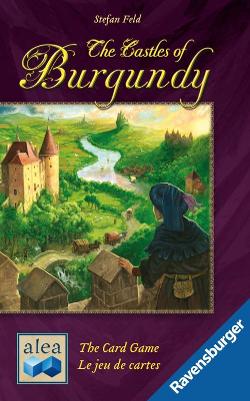
2016 · Gra karciana
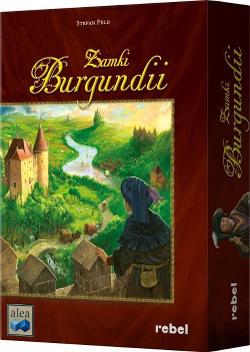
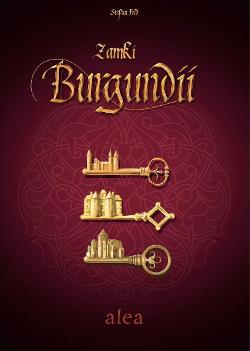
The Castles of Burgundy: The Card Game
Players expand a Renaissance-era estate in the Loire Valley by drafting and playing cards that represent settlements, castles, trade, mines, livestock and other developments. Play proceeds over five phases of five rounds each as players collect resources, manage workers and money, and place cards to score points. Actions include trading along the river, exploiting silver mines, delivering goods, and building tiles that grant end-game bonuses. The game ends after the fifth phase; final scoring counts unused money and workers, undelivered goods, and any settlement tile bonuses.
- Gracze
- 1–4 najlepiej w 2
- Czas gry
- 30–60 min
- Wiek
- 12+
- Złożoność
- 2,6 / 5
O grze
- Projekt
- Grafika



Zdjęcia ze stołów Ludoya
Wszystkie zdjęcia w Ludoya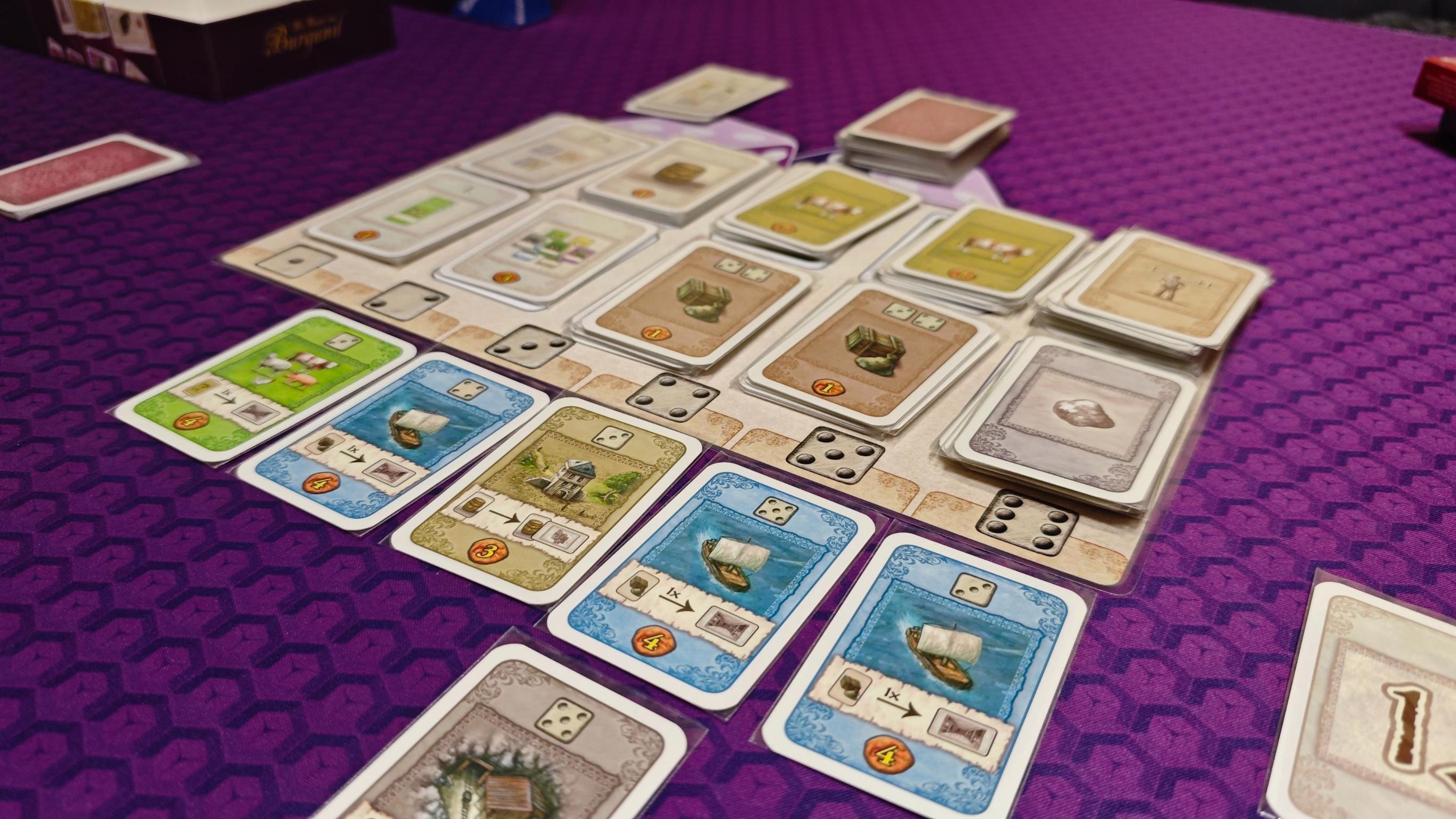
Gdzie kupić
Ceny w sklepach i egzemplarze z drugiej ręki, sprawdzane codziennie.
Przy stołach Ludoya
Pełne statystyki w Ludoya- 254
- Zapisane rozgrywki
- 138
- Gracze
- 39m 57s
- Średnia rozgrywka
- 53
- W kolekcjach
- 3
- Na listach życzeń
6,3/10
z 28 recenzji w Ludoya
Pytania o zasady
Odpowiedzi z instrukcji od asystenta zasad Ludoya.
Do I use all the information on the action card, or just the die number?
Use only the die number on the action card; ignore all other information. You must discard one action card and use its die for each action (p. 4).
Can I change the die number after I discard an action card?
Yes. After discarding the card, you may return one worker to the supply to change the die number by 1, including changing 1 to 6 or 6 to 1; multiple workers allow larger changes (p. 7).
When I take the “Restock workers” or “Take 1 silver” action, does the die number matter?
No. Restock workers to exactly 2 cards, regardless of the die number, or take exactly 1 silver, also regardless of the die number (pp. 6–7).
If I sell goods, does the starting-player card change the turn order right away?
No. The player who sells goods takes the starting-player card face down, but the current round’s turn order does not change. The card determines the starting player for the next round (pp. 6, 14).
Can I place a cloister with any type of card, and does it give me that card’s bonus?
Yes. A cloister may be placed with any other card type and becomes that type for the rest of the game, but it does not grant an immediate bonus function (pp. 11–12).
What happens when I place a fourth card of the same type?
The fourth card starts a new triple; it can score at the end of the game if you complete that triple. Cards already placed in your estate cannot be moved (pp. 12–13).




Kto ma tę grę, ma też
 Spyrium2013
 Crown of Emara2018
 Chimera Station2017
 Caylus 13032020
 The Ravens of Thri Sahashri2013
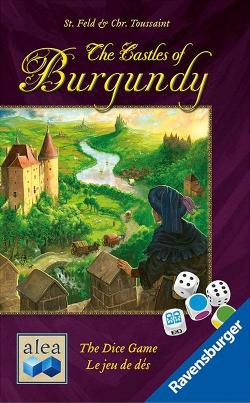 The Castles of Burgundy: The Dice Game2017
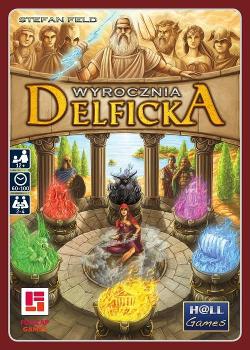 Wyrocznia Delficka2016
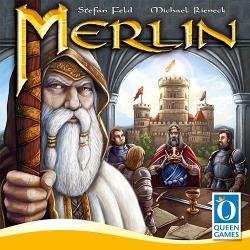 Merlin2017
 Masters of Renaissance: Lorenzo il Magnifico – The Card Game2019
 Crusaders: Thy Will Be Done2018
 A Fistful of Meeples2019
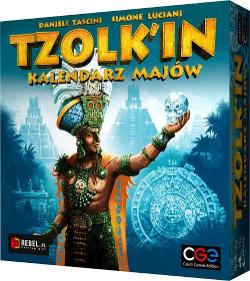 Tzolk'in: Kalendarz Majów2012
Za darmo, w przeglądarce, na Androidzie i iOS
Graj w The Castles of Burgundy: The Card Game z Ludoya
- Miej ją w swojej kolekcjiŚledź swój egzemplarz i jego dodatki, pożyczaj go znajomym albo dodaj go do listy życzeń i dostań powiadomienie, gdy cena spadnie.Dodaj do swojej kolekcji
- Zapisuj każdą rozgrywkęPunkty, zwycięzcy, minutniki i zdjęcia, a potem twoje statystyki: procent zwycięstw, ulubiona liczba graczy, najlepszy wynik.Zapisz rozgrywkę
- Rozstrzygaj spory o zasadyZapytaj o dowolną zasadę i dostań odpowiedź z instrukcji, ze stroną do sprawdzenia.Zapytaj asystenta zasad
- Znajdź ludzi do wspólnej gryKluby, wieczory gier i wydarzenia w pobliżu, na których ta gra trafia na stół.Zobacz wydarzenia
Dane gry (gracze, czas gry, wiek, twórcy) z BoardGameGeek.