
2019 · Kości
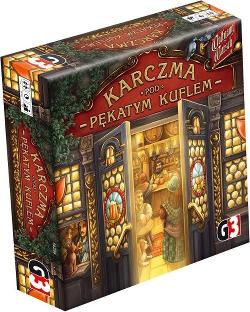
Karczma pod pękatym kuflem
Gracze prowadzą konkurencyjne karczmy w rustykalnej wiosce, rekrutując personel i rozbudowując pomieszczenia, aby przyciągać zamożniejszych gości oraz szlachtę. W każdej rundzie gracze draftują kości, by wykonywać akcje, a następnie wykorzystują je do zagrywania i zdobywania kart, które poszerzają ich dostępne możliwości oraz zwiększają dochody. Zarządzają zasobami, takimi jak pieniądze i piwo, jednocześnie rozwijając własną talię i wybierając, jakie ulepszenia karczmy chcą zdobyć. Gra wykorzystuje modułowe elementy, które pozwalają dostosować poziom złożoności, łącząc draft kości z budowaniem talii, aby zapewnić różnorodne decyzje podczas tur i długofalowy rozwój karczmy.
- Gracze
- 2–4 najlepiej w 3
- Czas gry
- 60 min
- Wiek
- 12+
- Złożoność
- 2,7 / 5
O grze
- Projekt
- Grafika
- Wydawca



Dodatki
Zobacz je w Ludoya
Zdjęcia ze stołów Ludoya
Wszystkie zdjęcia w Ludoya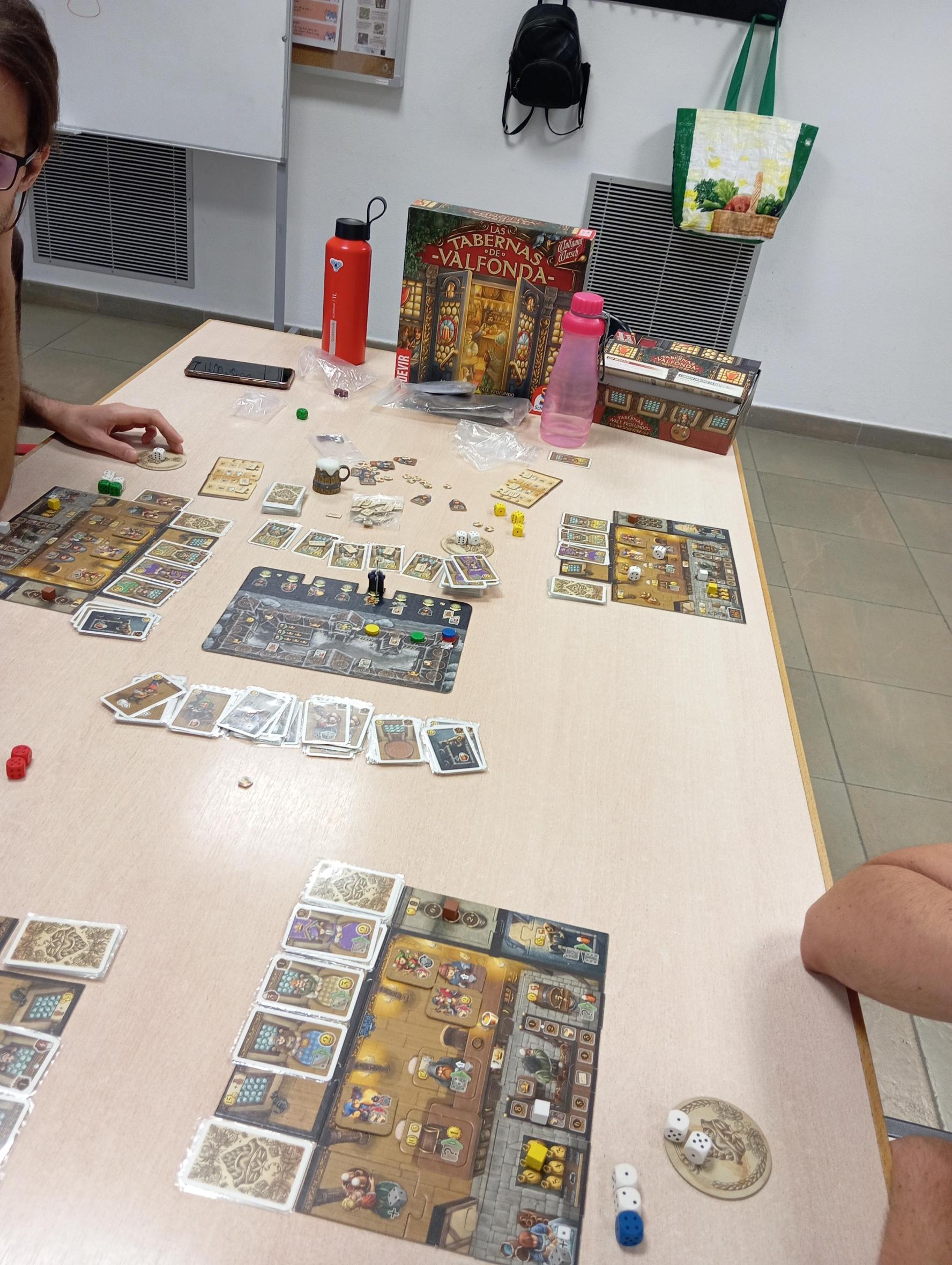
Gdzie kupić
Ceny w sklepach i egzemplarze z drugiej ręki, sprawdzane codziennie.
Przy stołach Ludoya
Pełne statystyki w Ludoya- 533
- Zapisane rozgrywki
- 500
- Gracze
- 1h 8m
- Średnia rozgrywka
- 196
- W kolekcjach
- 17
- Na listach życzeń
6,7/10
z 90 recenzji w Ludoya
Garfield4,0 Nice, but it's just a multiplayer solitaire. [c] Theme: ★★★☆☆ <!-- size 7]Ok --> Gameplay: ★★☆☆☆ <!-- size 7]A litte bit too repetitive --> Interaction: ★☆☆☆☆ <!-- size 7]None --> Artwork: ★★☆☆☆ <!-- size 7]Ok --> Luck: ★★★★☆ <!-- size 7]Dice rolling and deck drawing --> Strategy: ★★☆☆☆ <!-- size 7]Not really --> Components: ★★☆☆☆ <!-- size 7]Nothing special --> Play duration: ★☆☆☆☆ <!-- size 7]Far too long for what it is --> Easy to teach: ★★★☆☆ <!-- size 7]ok --> Rules quality: <!-- size 7]not read --> Setup time: ★★★☆☆ <!-- size 7]Ok --> No downtime: ★★★★☆ <!-- size 7]Simultaneous gameplay possible --> Replay value: ★☆☆☆☆ <!-- size 7]Not much I can think of --> [/c]
Evan4,6 We played the first recommended setup, so like many dominion-esque deck builders, what we saw might not have been the game's full potential. In fact, this is a very interesting take on a deckbuilder. Essentially you have a highly modular player board, with lots of action areas that can receive upgrades by paying however many dollars and flipping that piece of board over to it's improved side. These improvements persist round to round. Your basic capacity to draw cards from your deck is three, but can be increased once by upgrading that part of your board, and then more by purchasing more "table" cards, each table card can hold one additional card. Then, most cards you purchase over the course of the game click into one side of your board or the other, enhancing the matching action space for the round they make it into play. Since these cards don't use tables, they effectively don't count against the size of your deck, which is very clever again. Unfortunately, what this leads to is boom and bust turns. If your top three cards are ones that occupy your tables, you might have nothing doing on for you that round. The next round, you might get a huge string of extra cards and put out most of your deck, but even then you might get a bust turn as the other half of being able to use any of these cards is a dice drafting phase where to use an action you need to get a die of the exact matching value needed. I think ultimately this would be forgivable if the design didn't fall down a little when it gets to scoring. Despite all the really solid innovation this game has over dominion in a similar deckbuilding genre type of game, what you do ultimately is still buy silvers, and buy provinces, and the provinces are high vp cards, but clog your deck. it's just a little disappointing that at the end of all these interesting ideas, we're still clicking back to a dominion feeling. ★ Art, Iconography and components functional ★ Clever or interesting mechanisms ★ Reasonably low downtime between turns with mildly AP players ★ Multiple plays stay interesting ☆ Low or mitigatable luck elements ★★☆☆☆ Raw enjoyment
Un très bon choix pour amateurs de jeux déjà un peu plus "complexes", un léger cran au dessus des Charlatans. Avec des dés (donc du hasard inévitable). Une sorte de TRES FUTé en jeu de plateau. Notre avis ultra illustré comme toujours : https://www.adayagame.fr/famille/349-test-du-jeu-les-tavernes-de-la-vallee-profonde-bon-comme-la-biere

Pytania o zasady
Odpowiedzi z instrukcji od asystenta zasad Ludoya.
How does the white-dice drafting and the waitress (colored) dice work — when do we roll them and how many colored dice can I have?
All players roll the 4 white dice at the start of Phase D and then draft them one-by-one by taking one die and passing the coaster to the left until everyone has four white dice (page 6). For each Waitress card you drew in Phase B you immediately take and roll a die in your color, and a permanent Waitress gives an additional colored die in later rounds; you may have at most 3 dice in your color at any time (page 6).
Can I place any die value on any action space, or do the numbers have to match?
You may place dice on "?" spaces or spaces showing a specific number only if the die shows that value, except Dishwashers let you treat a placed die as +1 per Dishwasher used (the die is not rotated and values don’t wrap from 6→1); you may stack multiple Dishwashers on the same die (page 7).
Which die values count for the Beer Supplier, and how do Beer Merchants interact with that?
Only dice showing 1 and 6 may be placed on the Beer Supplier; each die removed gives 1 Beer plus 1 extra Beer per Beer Supplier card present, and an upgraded Beer Supplier yields 2 Beers per die (page 8). Beer Merchants grant exactly 1 Beer each in Phase F and do not increase the Beer-per-die from your Beer Supplier (page 8).
If I upgrade an area of my tavern, do I get its benefit right away and do I receive a Noble?
Some upgrades (Beer Supplier, Cashbox, Barrel, Safe, Beer Storage and Monk) are effective immediately, while others (Waitress, Dishwasher, Table) take effect next round; see the upgrade list for which is which (page 10). Whenever you upgrade a tile you immediately take 1 Noble from the supply and place it face down on top of your draw deck (page 8).
How do I pay for actions with dice — can I combine dice, and what happens to unused or excess Doubloons/Beer?
You remove dice one at a time to generate virtual Doubloons and Beer and may combine multiple dice to pay for an action (page 7). Excess Doubloons/Beer earned by removing dice can be spent later that turn or saved in your Safe/Beer Storage if you have the upgrades (otherwise they are lost at the end of the action phase), and used/unused resources not saved are forfeited (pages 7, 10).










Za darmo, w przeglądarce, na Androidzie i iOS
Graj w Karczma pod pękatym kuflem z Ludoya
- Miej ją w swojej kolekcjiŚledź swój egzemplarz i jego dodatki, pożyczaj go znajomym albo dodaj go do listy życzeń i dostań powiadomienie, gdy cena spadnie.Dodaj do swojej kolekcji
- Zapisuj każdą rozgrywkęPunkty, zwycięzcy, minutniki i zdjęcia, a potem twoje statystyki: procent zwycięstw, ulubiona liczba graczy, najlepszy wynik.Zapisz rozgrywkę
- Rozstrzygaj spory o zasadyZapytaj o dowolną zasadę i dostań odpowiedź z instrukcji, ze stroną do sprawdzenia.Zapytaj asystenta zasad
- Znajdź ludzi do wspólnej gryKluby, wieczory gier i wydarzenia w pobliżu, na których ta gra trafia na stół.Zobacz wydarzenia
Dane gry (gracze, czas gry, wiek, twórcy) z BoardGameGeek.