

1995 · Kortspil
High Society
Players compete to acquire luxury items and social advantages by bidding against each other, collecting positive-value and multiplier cards while avoiding negative-value and divisor cards. Bids are made from a limited cash supply; players must balance spending to win desirable cards against conserving money, since the player with the least remaining cash is excluded from winning at game end. Rounds proceed through sequential auctions until the deck is exhausted, then scores are calculated from collected cards to determine the winner among eligible players.
- Spillere
- 3–5 bedst 4
- Spilletid
- 15–30 min
- Alder
- 10+
- Kompleksitet
- 1,5 / 5
Om spillet
- Design
- Publisher





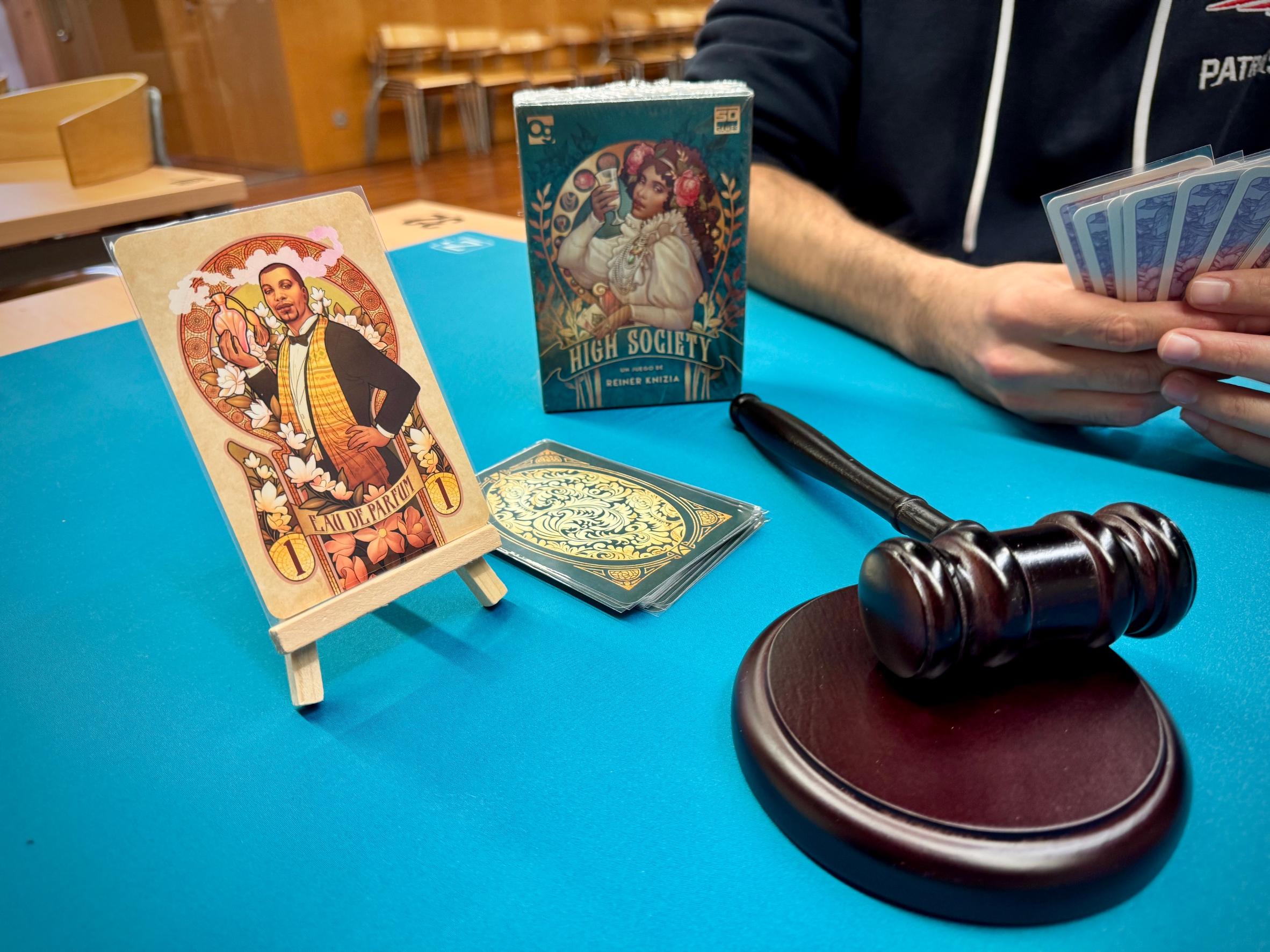
Fotos fra Ludoyas borde
Alle fotos i Ludoya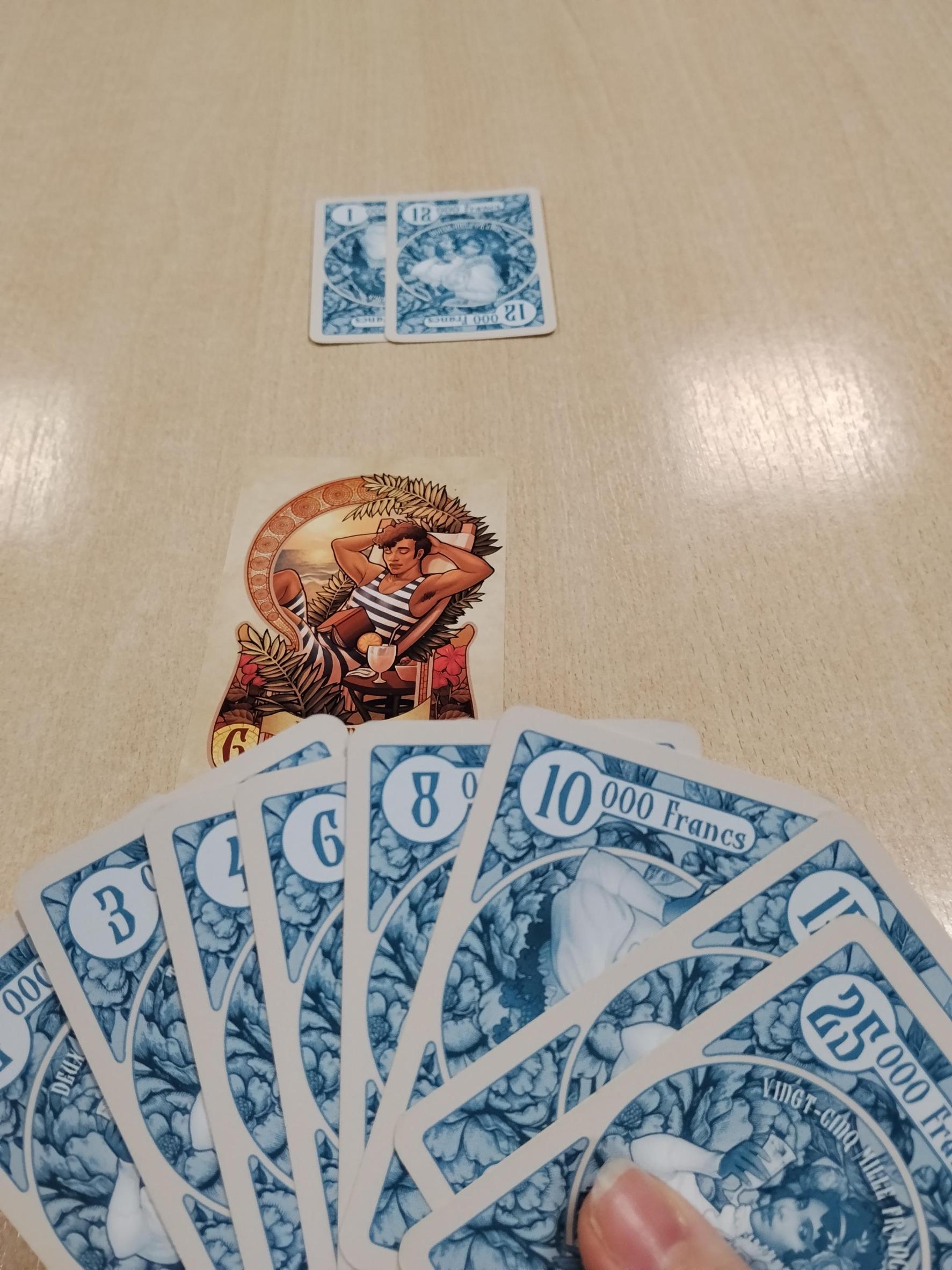
Hvor du kan købe det
Butikspriser og brugte eksemplarer, tjekket hver dag.
På Ludoyas borde
Al statistik i Ludoya- 1.434
- Registrerede partier
- 1.286
- Spillere
- 19m 39s
- Gennemsnitligt parti
- 238
- I samlinger
- 24
- På ønskelister
7,6/10
fra 123 anmeldelser på Ludoya
Vic Granell8,0 Greatly designed auction game where you may lose without expecting it!
Plaisant, dès 7 ans, on le retrouve avec plaisir dans une éditions bien plus jolie de nos jours ! Enchères et bluff sauce Knizia, ça passe encore très bien en 2019
Nacho Ramírez10,0 Sin duda alguna mi juego favorito de subastas, y he probado varios. Tiene las ventajas de ser fácil de entender, tiemoi denjuego preciso, muy social, portable, hermoso e inmersivo. Los piques son muchísimos. Modern Art es un gran juego, pero creo que por todo lo expuesto, HS es bastante superior.



Regelspørgsmål
Besvaret ud fra regelbogen af Ludoyas regelassistent.
Can I pick up money cards I've already played to increase my bid?
No — you cannot pick up cards you have already played; you may only increase your bid by adding new money cards to the ones already on the table (page 4).
If I pass after placing a bid, do I get my money back?
Yes — if you have already bid and then pass you return all your face-up money cards to your hand, but you may no longer bid that round (page 4).
What changes when the revealed card is a disgrace? How does that auction work?
You are bidding to avoid taking the disgrace: the round ends as soon as any one player passes, that passing player picks up their money cards and must take the disgrace, while all other players discard their money cards face-down; the passing player starts the next round (page 5).
If I take the Faux Pas card, what do I have to discard?
If you take the Faux Pas you must immediately discard one luxury card you have in front of you (or the next luxury you receive if you have none), and once a luxury has been discarded the Faux Pas card itself is discarded (page 5).
When does the game end and what does 'cast out' mean?
The game ends immediately when the fourth dark-green card (the three prestige cards and the Scandale) is revealed — there is no bidding for that card — then all players reveal their hands and the player(s) with the least remaining money are cast out and cannot win (page 6).
How is final status calculated and how are ties broken?
Add up luxury card values, apply prestige multipliers (each prestige doubles your status; two = ×4, three = ×8) and apply disgrace effects (e.g., Passé −5, Scandale halves status); the highest status among players not cast out wins, with ties broken by most money left and then by the single most valuable luxury card (pages 5–6).












Gratis, på web, Android og iOS
Spil High Society med Ludoya
- Hav det i din samlingHold styr på dit eksemplar og dets udvidelser, lån det ud til venner, eller sæt det på din ønskeliste, og få besked, når prisen falder.Føj det til din samling
- Registrér hvert partiPoint, vindere, timere og fotos, og så din statistik: vinderprocent, foretrukket spillerantal, bedste score.Registrér et parti
- Afgør regelspørgsmålSpørg om hvad som helst i reglerne, og få et svar fra regelbogen med siden, hvor du kan tjekke det.Spørg regelassistenten
- Find nogen at spille det medKlubber, spilaftener og arrangementer nær dig, hvor dette spil kommer på bordet.Se arrangementer
Spilfakta (spillere, spilletid, alder, medvirkende) fra BoardGameGeek.