

2025 · Fantasy
The Druids of Edora
Players take on the role of druids exploring an ancient, mist‑shrouded forest and place dice to perform actions. Each turn involves assigning dice to gather provisions, collect herbs, brew potions, gain knowledge, and construct stone structures. Actions and placements generate bonuses and prestige points; strategic timing and die values influence which opportunities are available and how efficiently resources are converted into points. The game focuses on tactical dice placement, route planning through the woodland, and engine‑building as players improve their capabilities and leave lasting marks on the sacred wood.
- Spillere
- 2–4 bedst 4
- Spilletid
- 60–90 min
- Alder
- 14+
- Kompleksitet
- 3,1 / 5
Om spillet
- Design
- Illustration

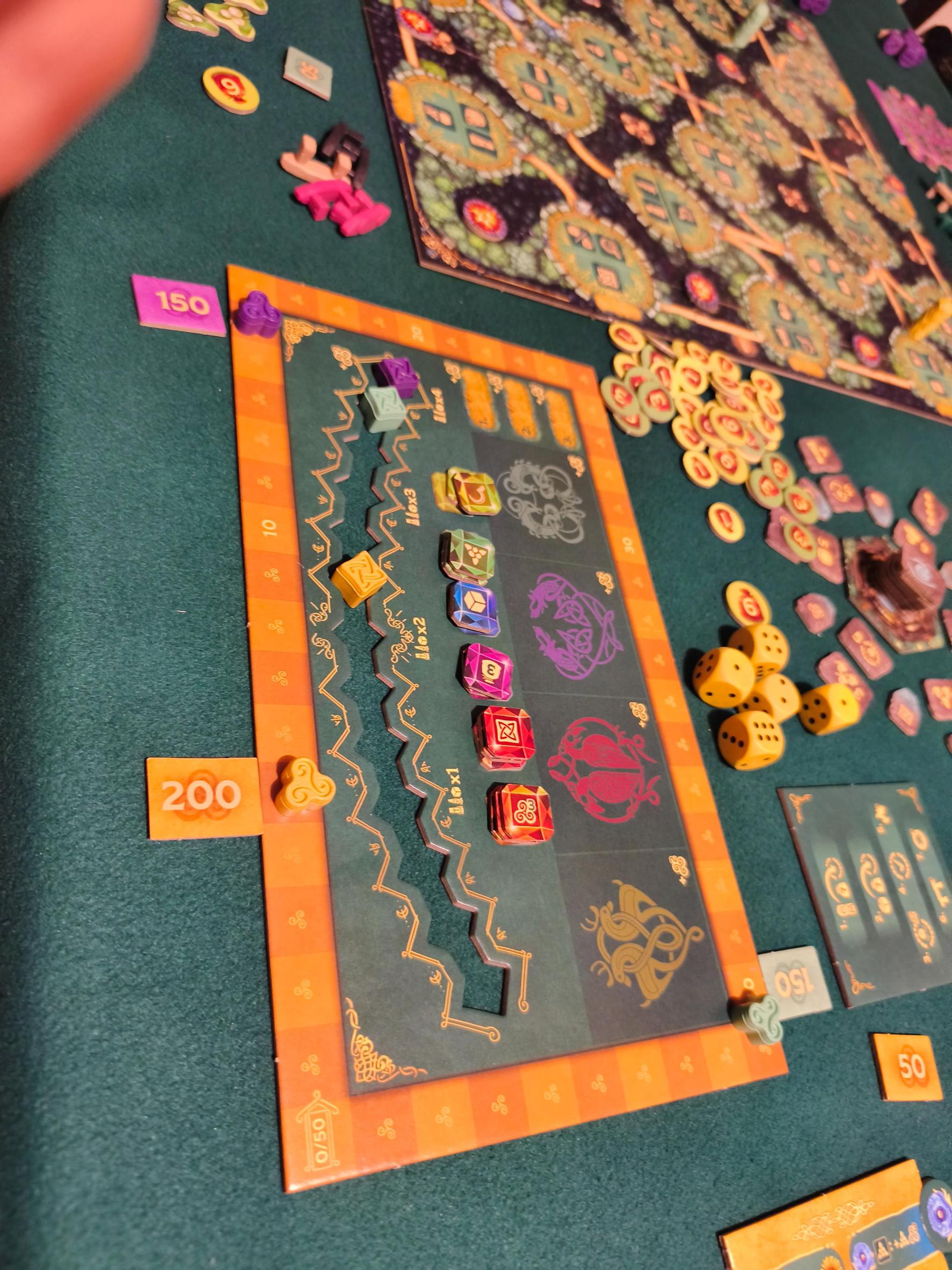
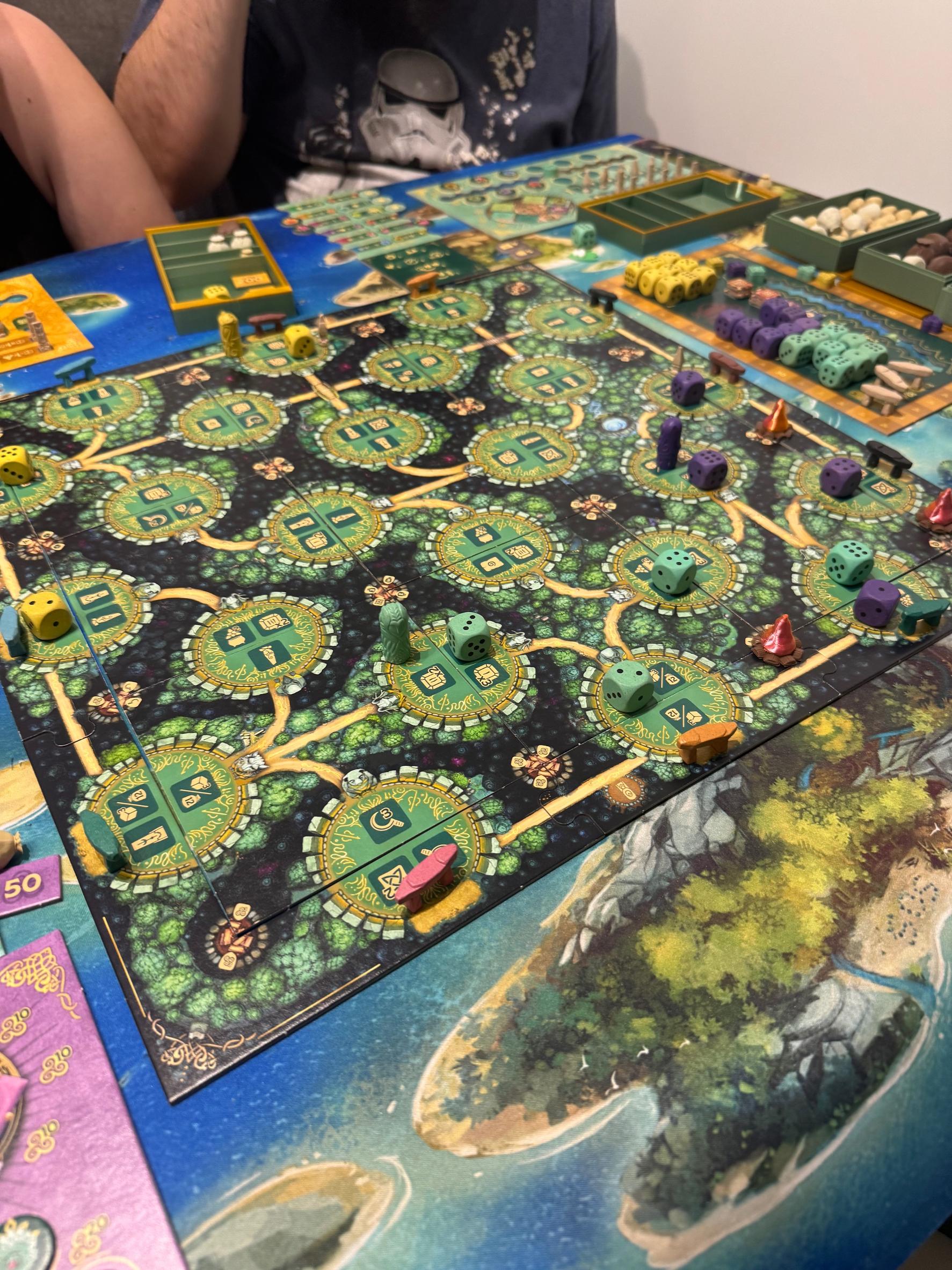
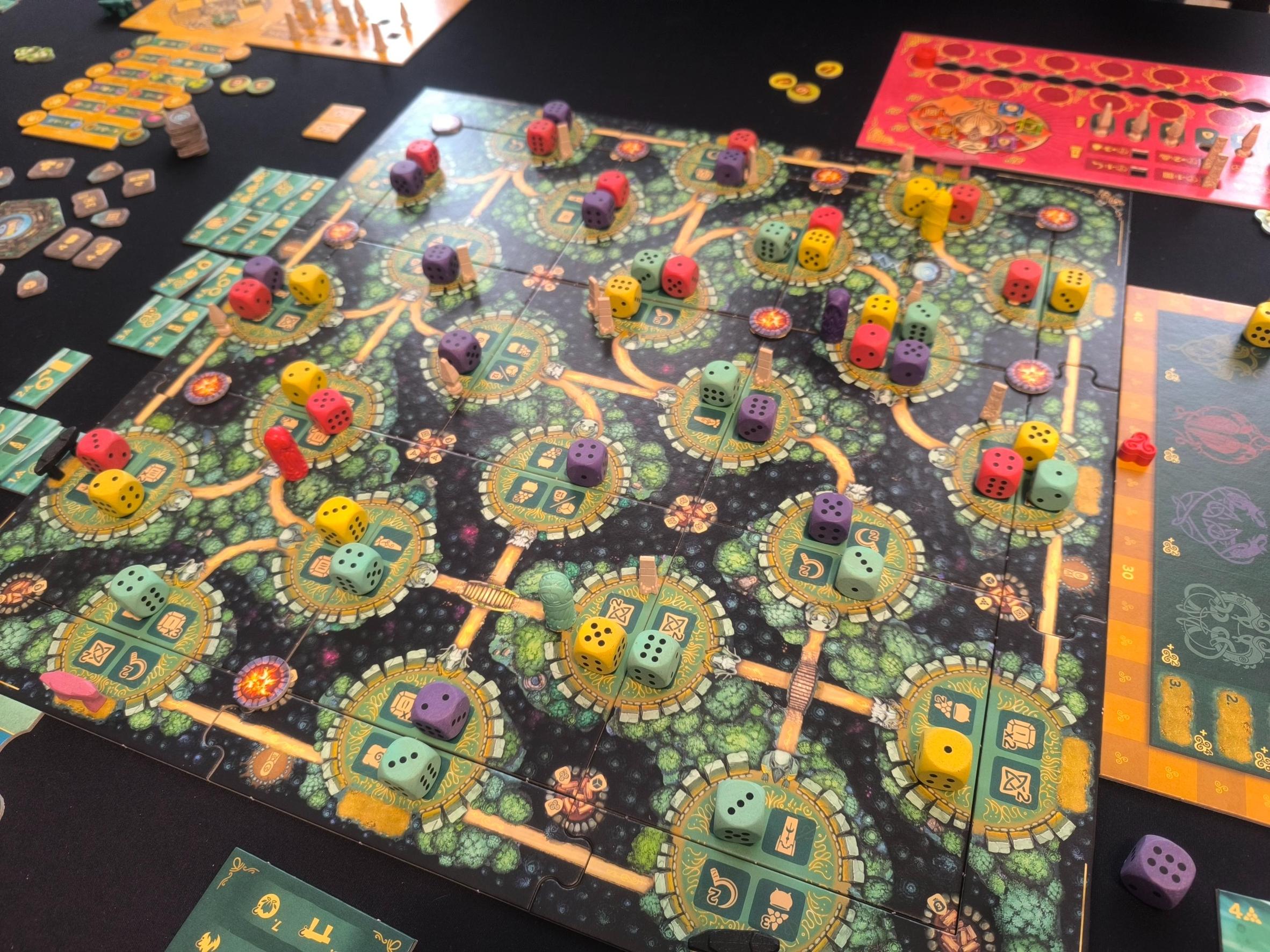
Fotos fra Ludoyas borde
Alle fotos i Ludoya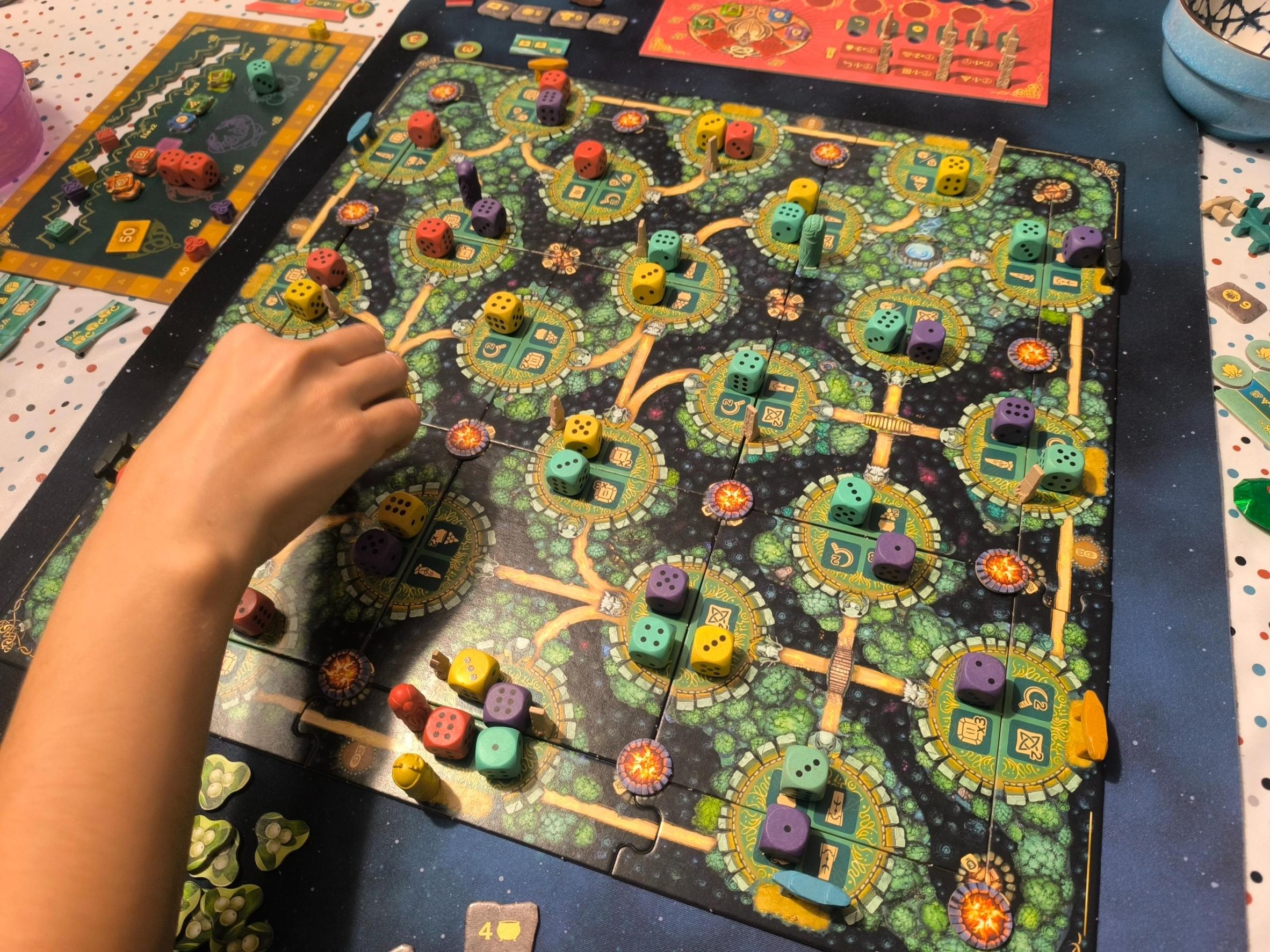
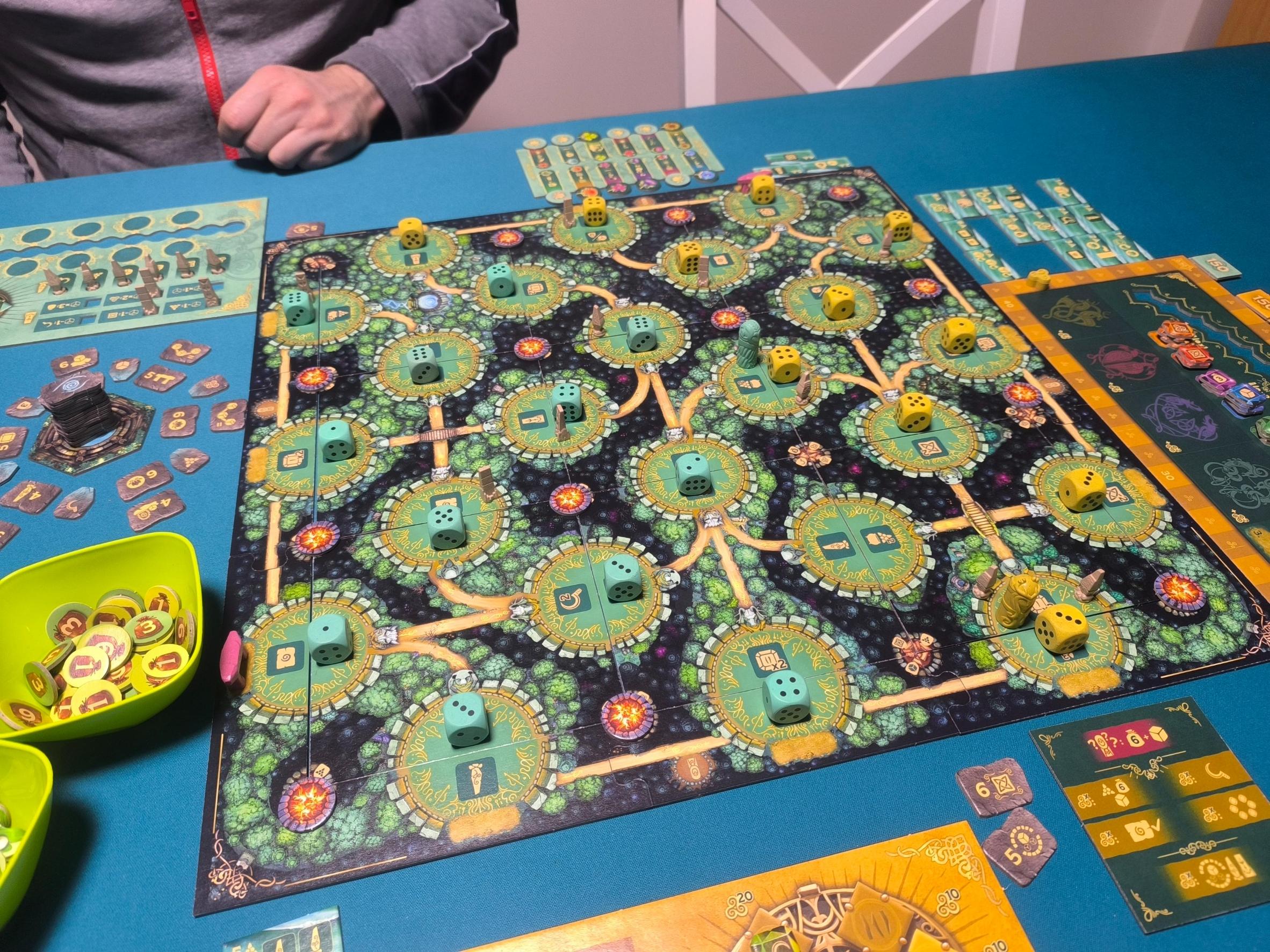
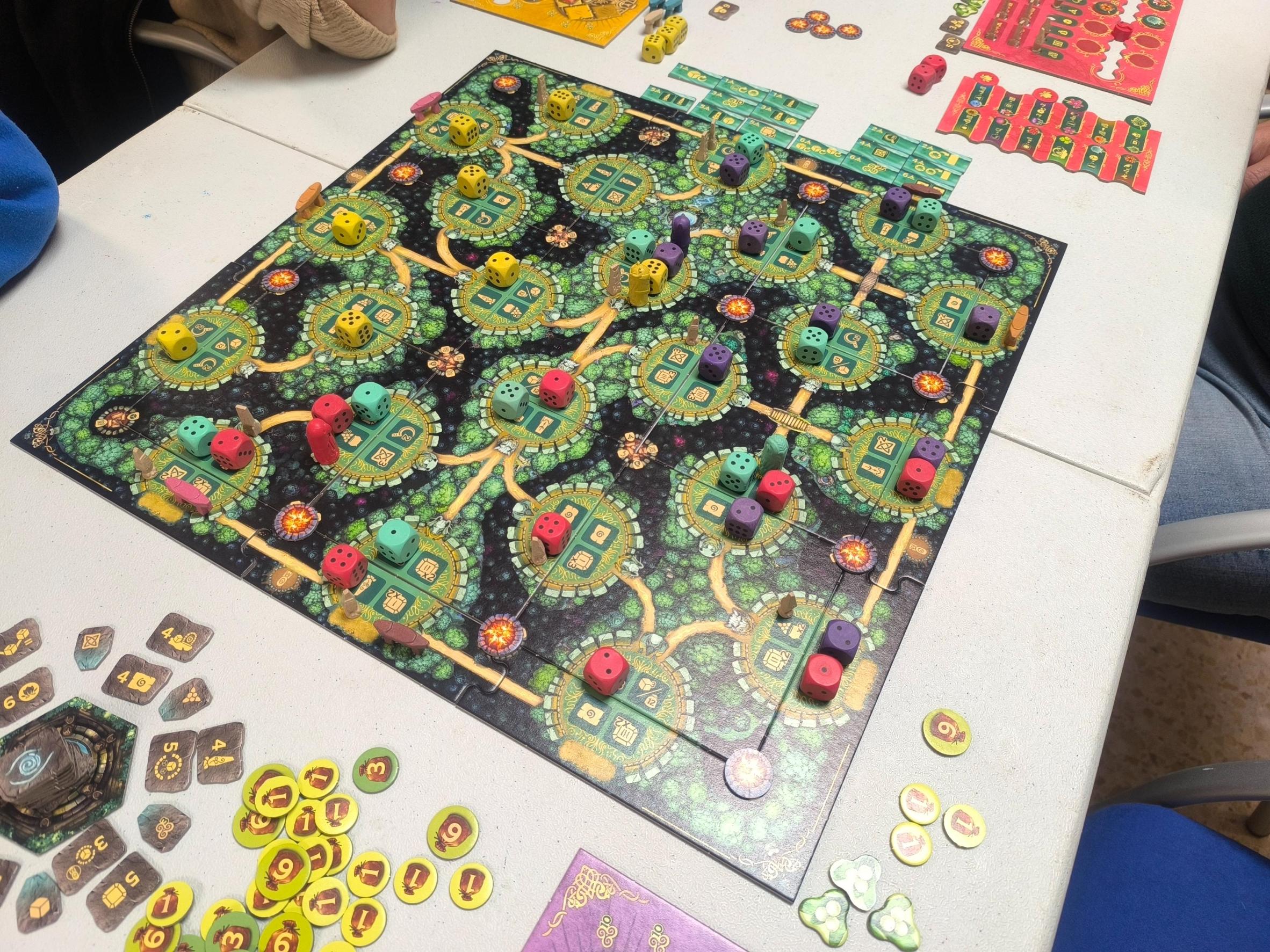
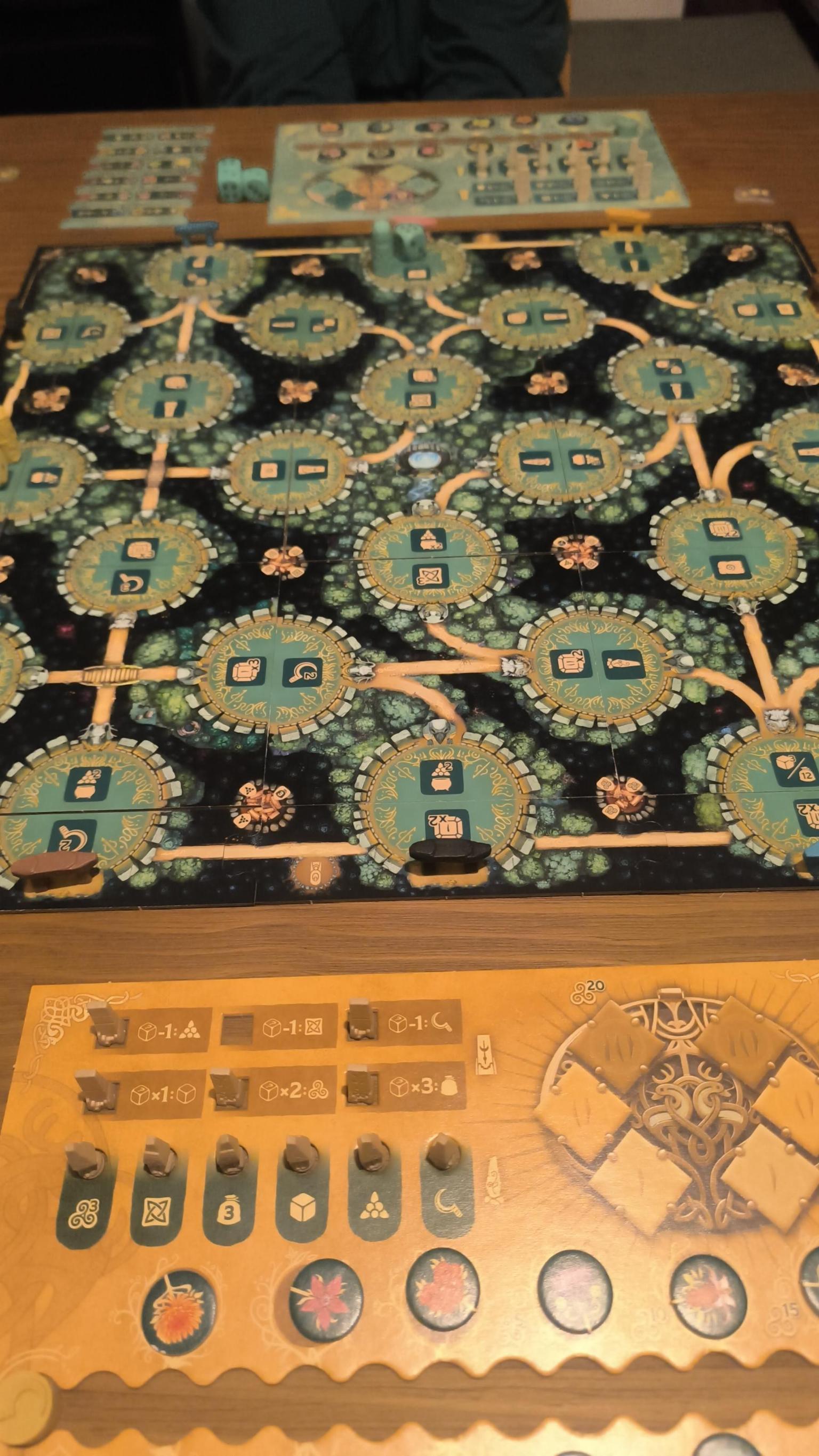
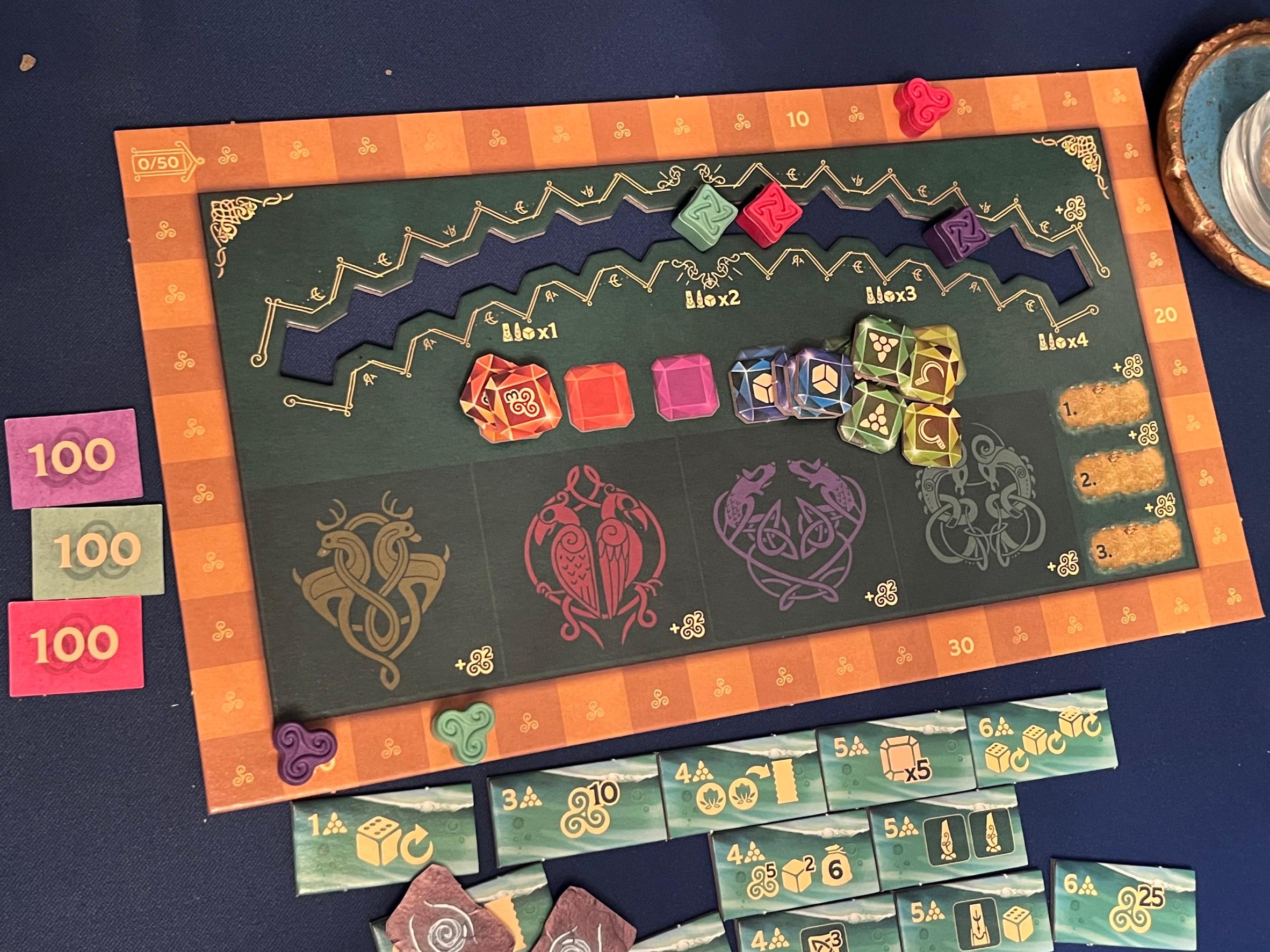
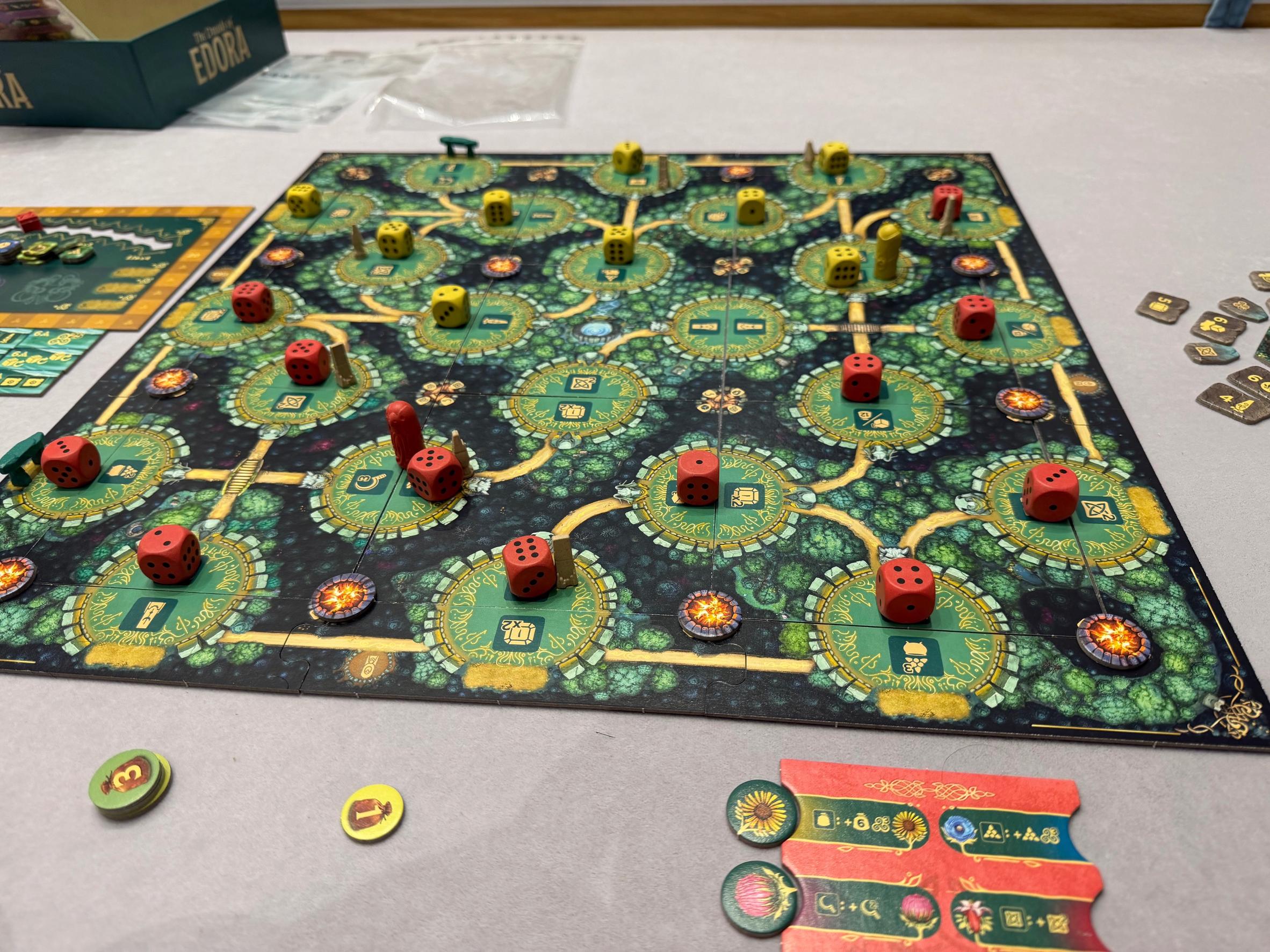
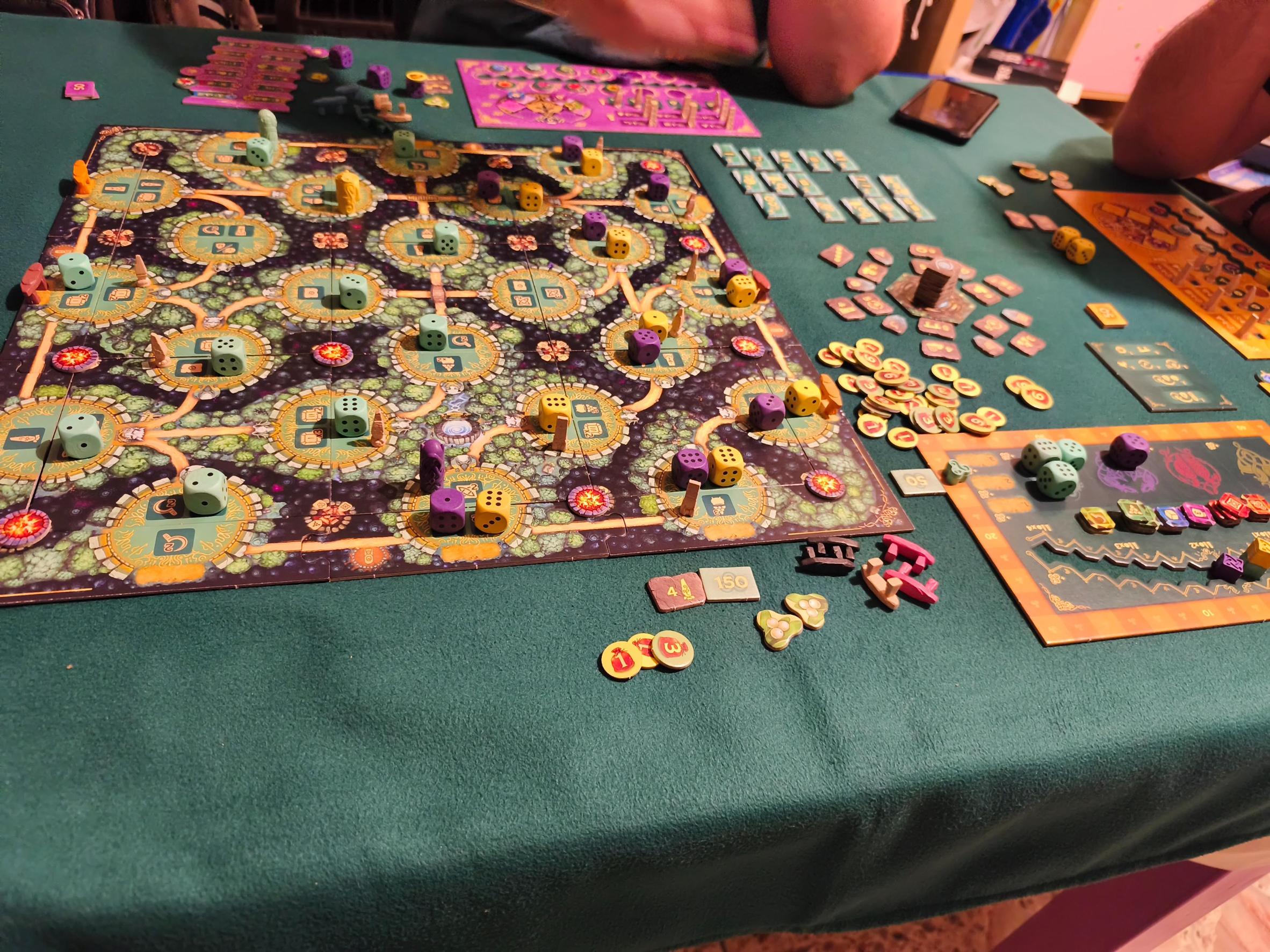
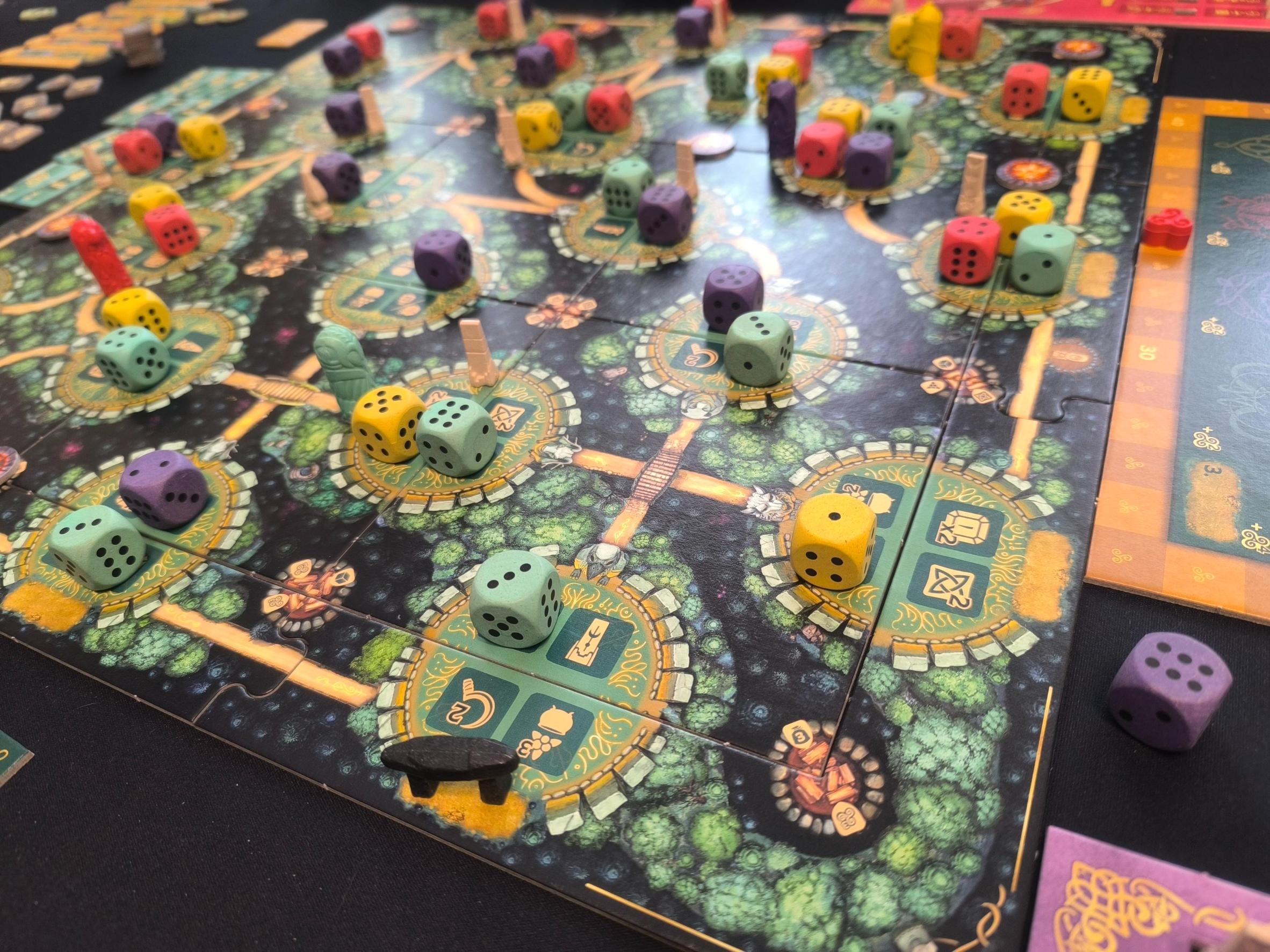
Hvor du kan købe det
Butikspriser og brugte eksemplarer, tjekket hver dag.
På Ludoyas borde
Al statistik i Ludoya- 92
- Registrerede partier
- 158
- Spillere
- 1h 23m
- Gennemsnitligt parti
- 48
- I samlinger
- 13
- På ønskelister
7,7/10
fra 17 anmeldelser på Ludoya
Regelspørgsmål
Besvaret ud fra regelbogen af Ludoyas regelassistent.
How far can my druid move on my turn — can I stop in the forest or move through other shrines for free?
You always move from one shrine to another along pathways and may not stop in the forest or on a pathway; each shrine you visit and each dark forest area you pass costs one provision (special first turn is exempt). There is also a special move action that lets you move to any other shrine in the same clearing for exactly one provision (pages 4, 10).
When I place a die, do I immediately pay and resolve its action — and can I place a die even if I don't want the action?
When you place a die you pay provisions equal to its pip value and then resolve competition on that shrine and perform the action on the field you occupied; you are allowed to place a die even if you cannot or choose not to perform the action (pages 4–6).
Can I have more than one of my dice on the same shrine or end my move on a shrine I already activated?
You may not have more than one die of your color in any given shrine, and although you may move through a shrine that already contains one of your dice, you may not stop on a shrine you have previously activated (page 5).
How do dolmen links work — do the shrines need to be connected by pathways and how is scoring calculated?
A valid dolmen link requires you to occupy all shrines for a gapless link that are connected by pathways (the shortest link counts); you score two prestige points for each of your dice used and can earn extra beige-dolmen bonus points for the first three links (page 5).
How do medicinal herbs activate and what exactly do the active herbs do?
When your sickle reaches or crosses a herb field you place the two released herb tiles on your small board (one face up = active, one face down = inactive); active herbs give persistent benefits (examples: provisions herb gives +6 provisions and +3 prestige when you take provisions, the die herb lets you turn a die ±2 before placing it), and these benefits apply only when you perform the corresponding action yourself (page 9).
What happens at final scoring (especially the “shrines” step) and what is the 3→5 prestige rule?
Final scoring has five steps (remaining materials, sickle, stone tablets, amulet, shrines); in the "shrines" step remove all dice except the highest on each shrine and the owner of each remaining die takes that die plus all runestones and standing stones there, then multiply the total by your highest knowledge multiplier to get shrine prestige (page 11). Also, whenever you would receive exactly 3 prestige points (from various sources), you receive 5 instead — this 3→5 rule applies before multipliers and repeated-bonus effects like fires (page 10).















Gratis, på web, Android og iOS
Spil The Druids of Edora med Ludoya
- Hav det i din samlingHold styr på dit eksemplar og dets udvidelser, lån det ud til venner, eller sæt det på din ønskeliste, og få besked, når prisen falder.Føj det til din samling
- Registrér hvert partiPoint, vindere, timere og fotos, og så din statistik: vinderprocent, foretrukket spillerantal, bedste score.Registrér et parti
- Afgør regelspørgsmålSpørg om hvad som helst i reglerne, og få et svar fra regelbogen med siden, hvor du kan tjekke det.Spørg regelassistenten
- Find nogen at spille det medKlubber, spilaftener og arrangementer nær dig, hvor dette spil kommer på bordet.Se arrangementer
Spilfakta (spillere, spilletid, alder, medvirkende) fra BoardGameGeek.