
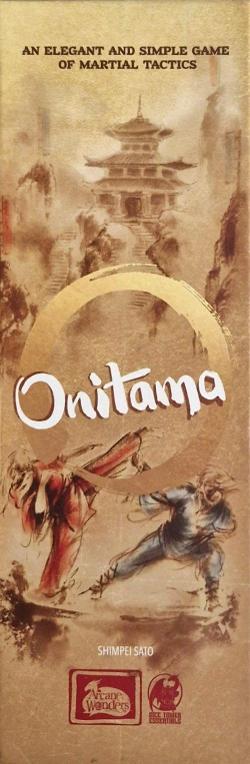
2014 · Abstract Strategy
Onitama
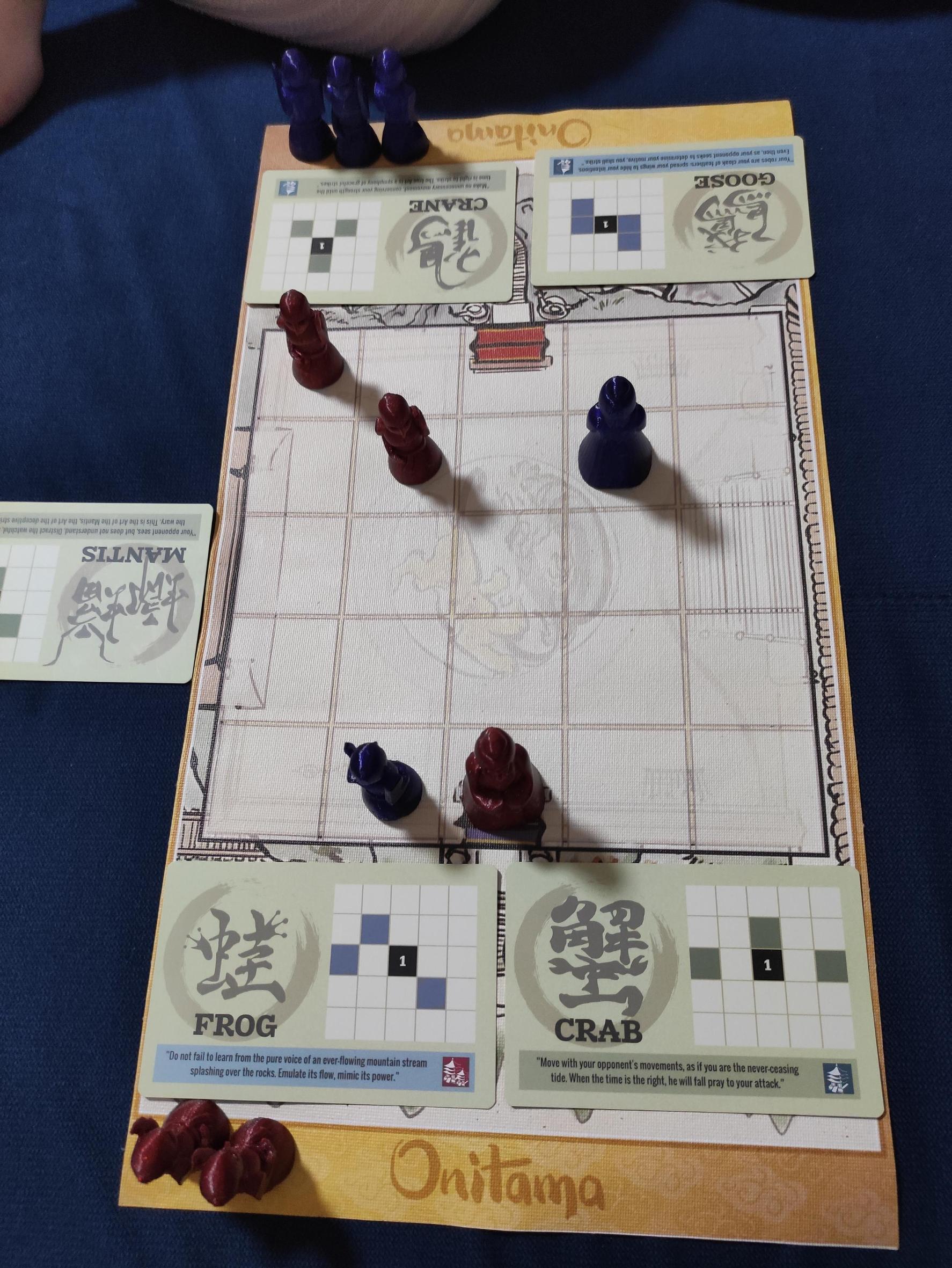
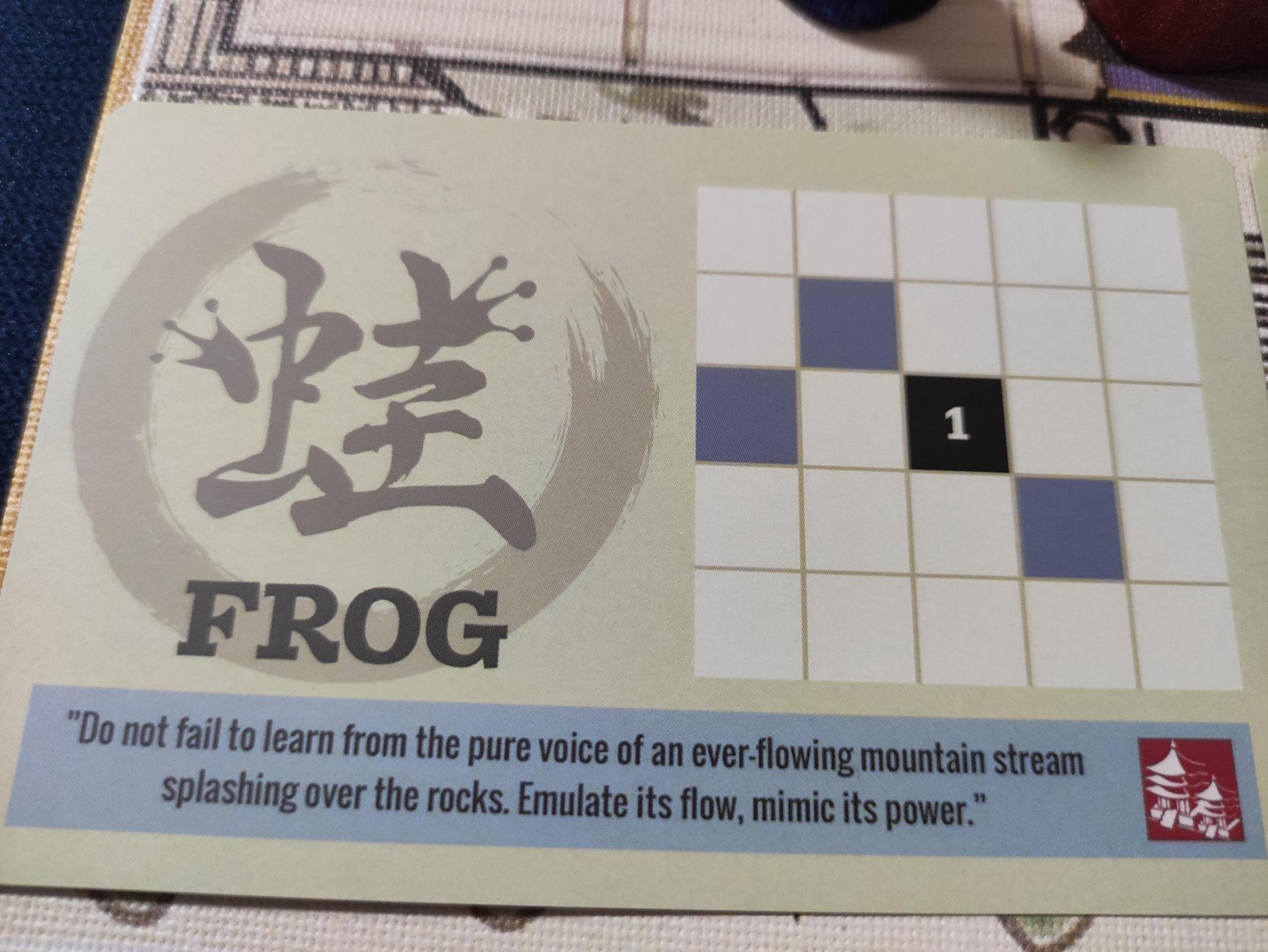
Two players command a small force on a 5×5 board, each with a central master and four students. Movement options are determined by a rotating set of five visible cards: each player holds two cards, one card sits aside, and players select a card to move any of their pieces then swap that card with the spare. Pieces capture by moving onto an opponent’s pawn. A player wins by capturing the opponent’s master or by moving their master into the opponent master’s starting temple. The game is perfect information with a randomized initial card draw that changes tactical options each session.
- Players
- 2
- Playing time
- 15–20 min
- Age
- 10+
- Complexity
- 1.7 / 5
About the game
- Design
Expansions
See them in Ludoya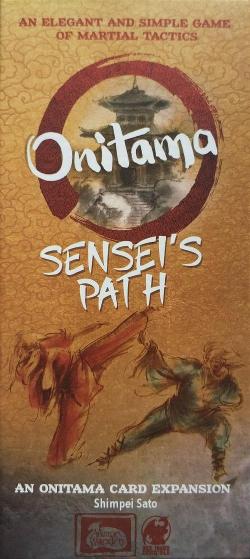 Onitama: Sensei's Path2017
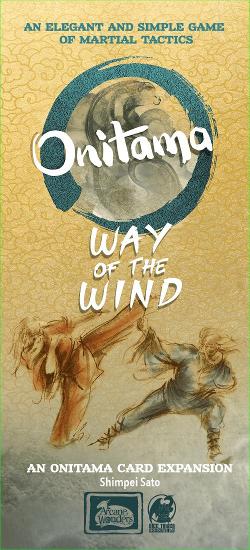 Onitama: Way of the Wind2018
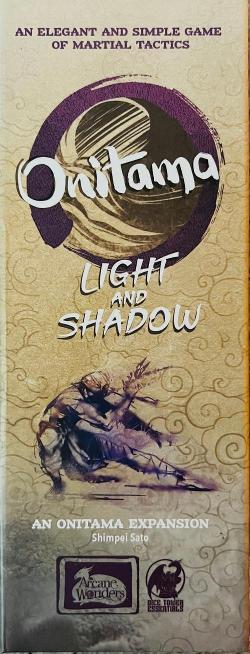 Onitama: Light and Shadow2022
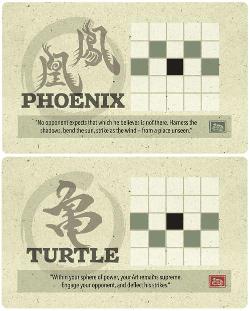 Onitama: Phoenix and Turtle Promo Cards2016
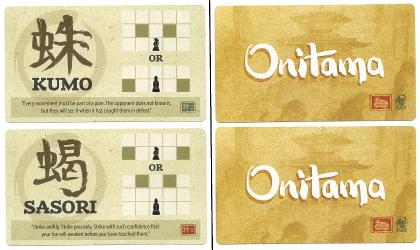 Onitama: Kumo and Sasori Promo Cards2019
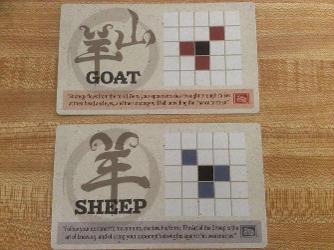 Onitama: Goat and Sheep Promo Cards2017
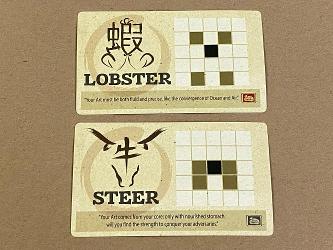 Onitama: Steer and Lobster Promo Cards2022
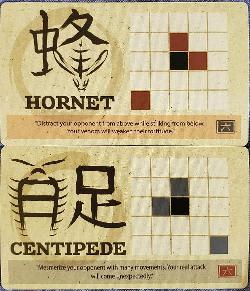 Onitama: Hornet and Centipede Promo Cards2022
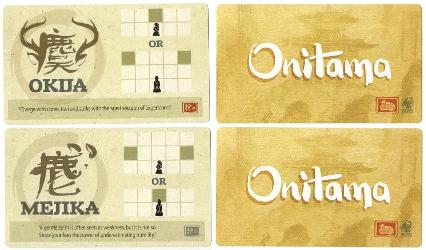 Onitama: Mejika and Okija Promo Cards2018
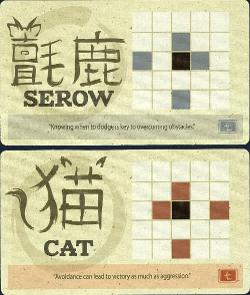 Onitama: Cat and Serow Promo Cards2023
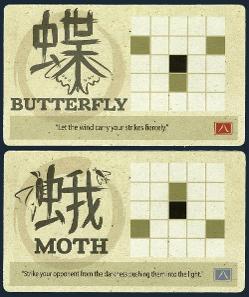 Onitama: Moth and Butterfly Promo Cards2024
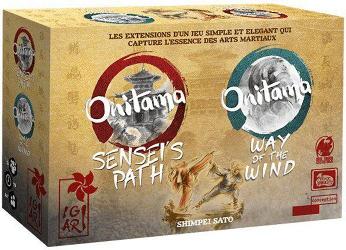 Onitama: Sensei's Path et Way of the Wind2019
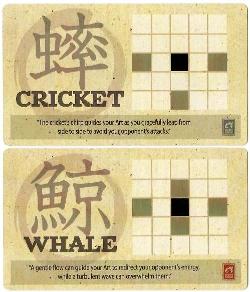 Onitama: Whale and Cricket Promo Cards2025
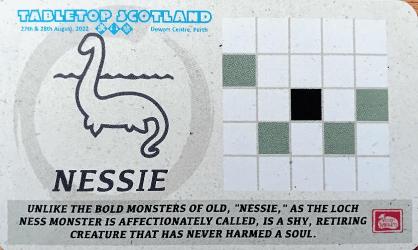 Onitama: Nessie Promo Card2022
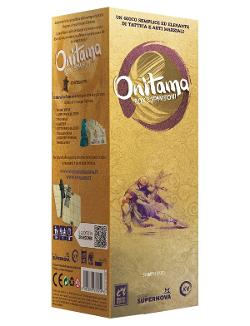 Onitama: Box Espansioni2026
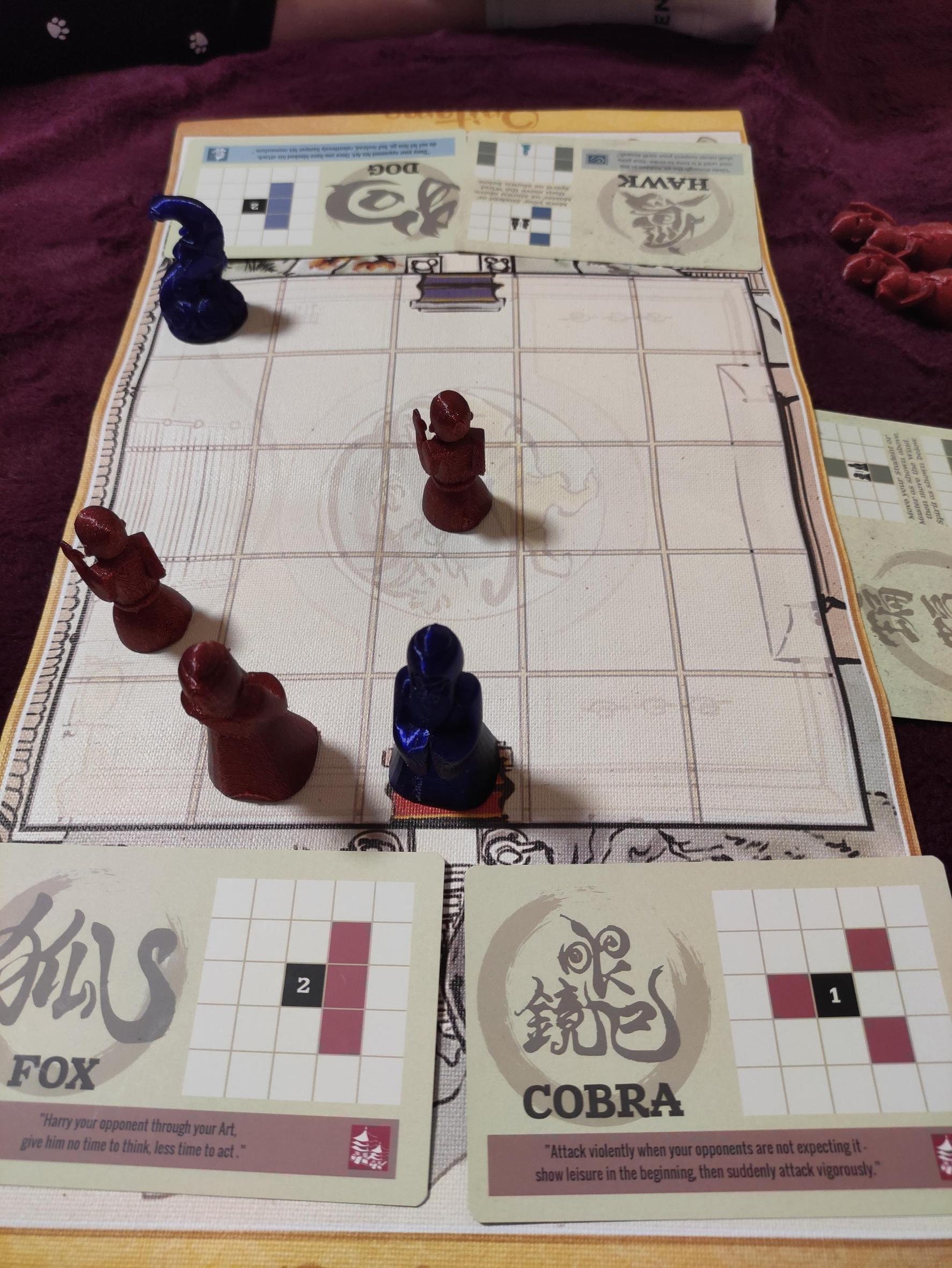
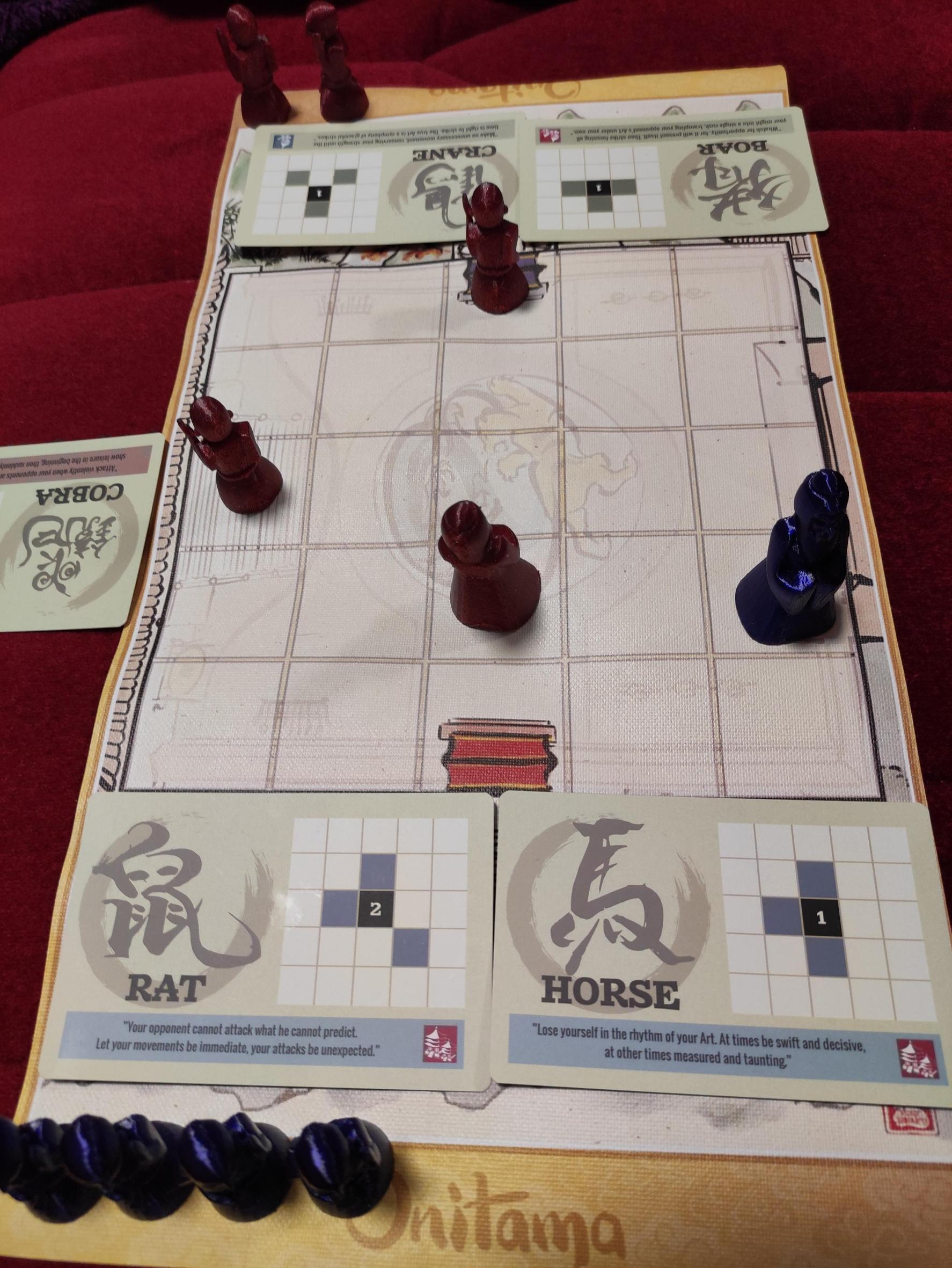
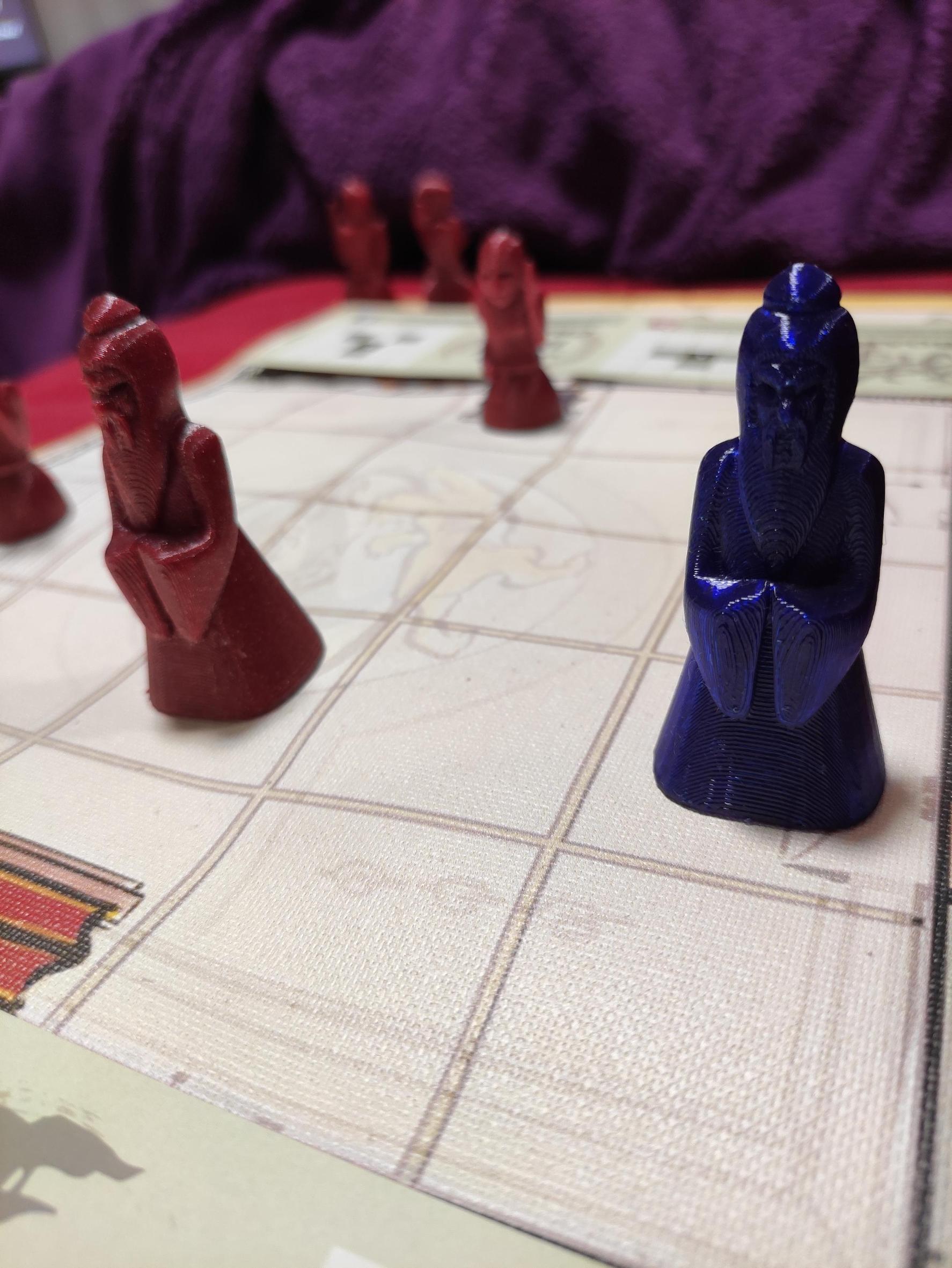
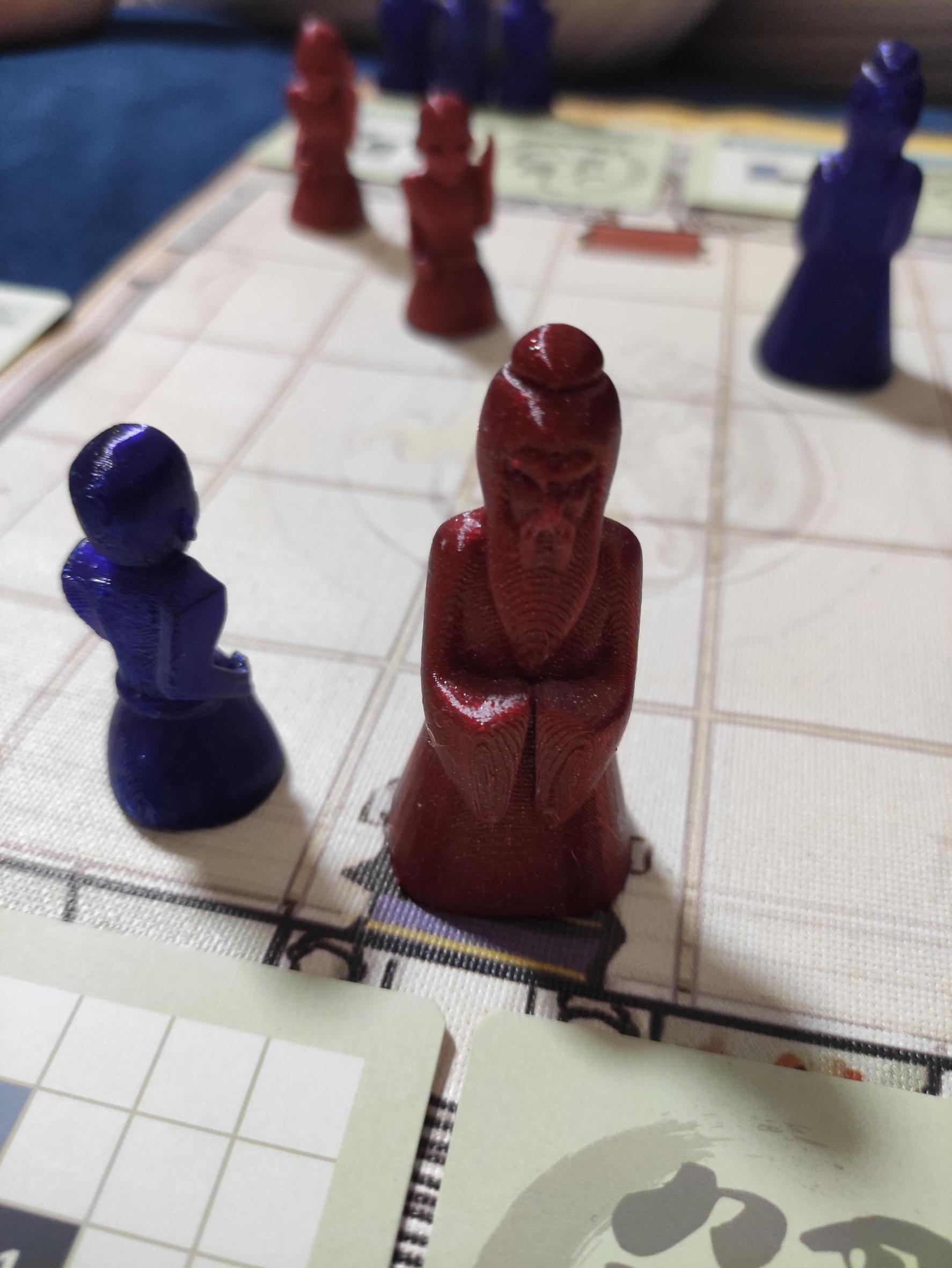
Photos from Ludoya tables
All photos in Ludoya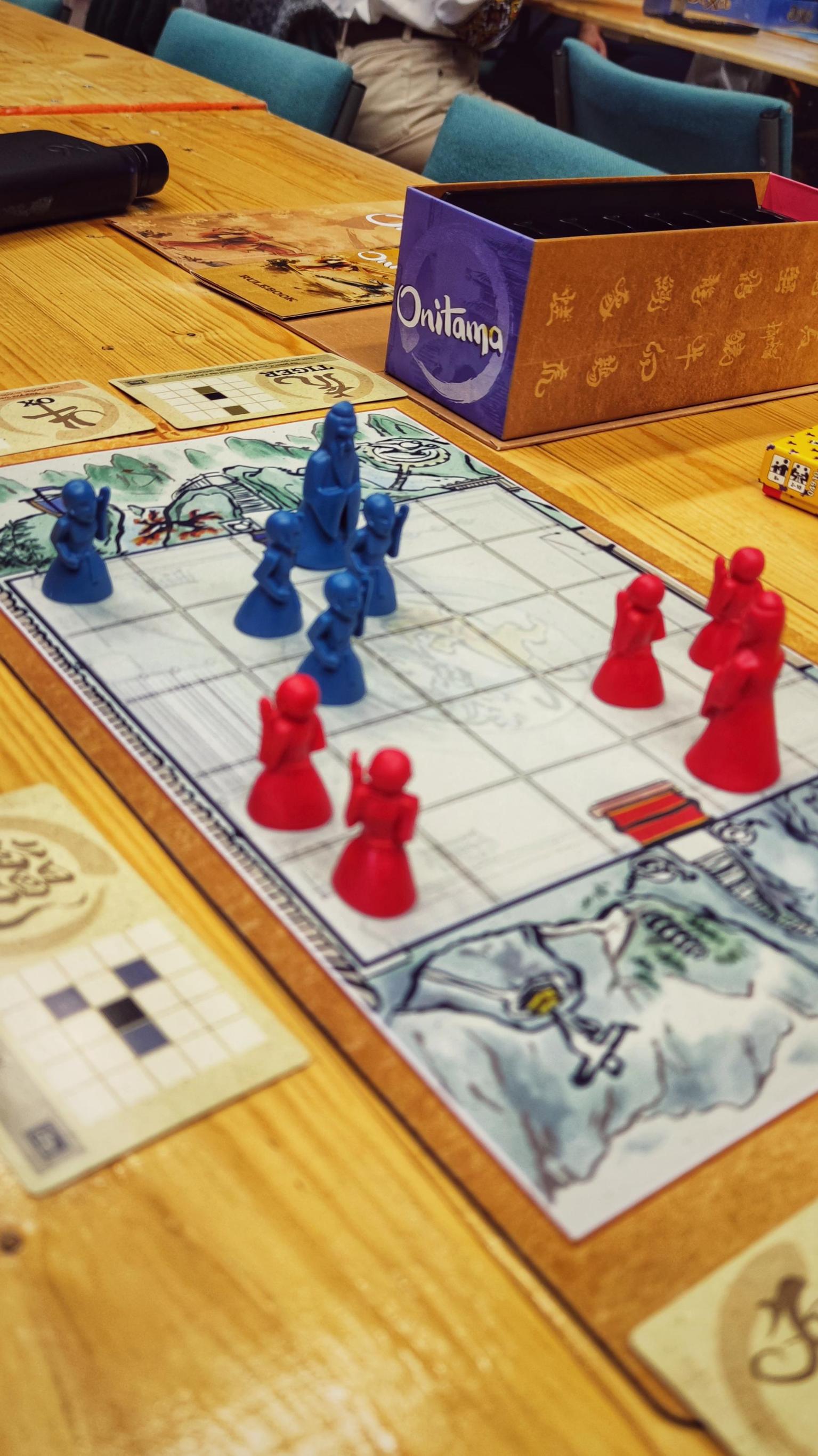
Where to buy it
Shop prices and second-hand copies, checked every day.
On Ludoya's tables
Full stats in Ludoya- 1,018
- Plays logged
- 368
- Players
- 16m 53s
- Average play
- 170
- In collections
- 26
- On wishlists
- 2
- Pre-ordered
6.9/10
from 84 Ludoya reviews
Garfield6.0 #17 Chess-like game that plays very quickly. [c] Theme: :nostar::nostar::nostar::nostar::nostar: <!-- size 7]No --> Gameplay: :star::star::nostar::nostar::nostar: <!-- size 7]Move your figure, that's it --> Interaction: :star::star::nostar::nostar::nostar: <!-- size 7]Not really --> Artwork: :star::star::star::star::nostar: <!-- size 7]Appealing --> Luck: :nostar::nostar::nostar::nostar::nostar: <!-- size 7]Nope --> Strategy: :star::star::star::star::star: <!-- size 7]Purely tactital --> Components: :star::star::star::star::nostar: <!-- size 7]Very good --> Play duration: :star::star::star::star::star: <!-- size 7]Perfect --> Easy to teach: :star::star::star::star::nostar: <!-- size 7]Really easy --> Rules quality: :star::star::star::star::star: <!-- size 7]Everything is clear --> Setup time: :star::star::star::star::star: <!-- size 7]Very fast --> No downtime: :star::star::star::star::nostar: <!-- size 7]Little --> Replay value: :star::star::nostar::nostar::nostar: <!-- size 7]Different movement cards --> [/c]
BWizard7.5 [c] (15x) GAMING EXPERIENCE: :star::star::star::star::star::star::star::nostar::nostar::nostar: (5x) DEPTH / WEIGHT: :star::star::star::star::star::star::nostar::nostar::nostar::nostar: (5x) LUCK: :star::star::star::star::star::star::star::star::star::nostar: (10x) REPLAYABILITY: :star::star::star::star::star::star::nostar::nostar::nostar::nostar: (6x) MECHANICS: :star::star::star::star::star::star::nostar::nostar::nostar::nostar: (6x) PLAYER INTERACTION: :star::star::star::star::star::star::star::star::star::star: (3x) SCALABILITY (PLAYER COUNT): :star::star::star::star::star::star::star::star::star::star: (2x) LENGTH: :star::star::star::star::star::star::star::nostar::nostar::nostar: (2x) CLARITY OF RULES: :star::star::star::star::star::star::star::star::star::star: (6x) COMPONENT QUALITY: :star::star::star::star::star::star::star::star::nostar::nostar: [/c] Homemade :thumbsup: With all expansions and cards. :thumbsup: I made the whole game myself. New design, same rules.
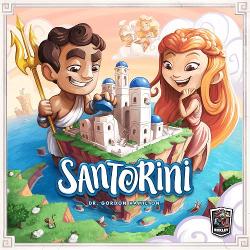
Mohasz7.6 I think I'd like it, but it gets no love in my family. My biggest problem with these pure abstract games is that we don't play them enough to get better at them. So in the end, our moves are quite arbitrary, and games often end like "Oh, I guess I've / you've won..." because someone has made a mistake. The other one is Santorini, and If I had to choose between the two, Onitama would have to go. As much as I found it fascinating and beautiful, I have to admit that pure abstract games are still not my thing, I had to sell it. The app is still there if I'd ever want to play it again.
Rules questions
Answered from the rulebook by Ludoya's rules assistant.
Are the moves on a spirit card rotated depending on which side I'm playing, or are they absolute on the board?
Movement patterns on spirit cards are applied relative to the player whose turn it is (they face the player who uses them), so you do not rotate the card—use the pattern from your side of the board (page 1).
What happens to a spirit card after I use it—do I discard it? How do the cards move between players?
When you play one of your two spirit cards, perform the move, then place the card you played into the center as the neutral card and take the neutral card into your hand, so the three cards rotate between players (page 1).
How do I win the game?
There are two immediate win conditions: capture the opponent’s Master piece, or move your Master onto the opponent’s Temple Arch square; achieving either ends the game instantly (page 1).
Can I move onto a square already occupied by my own pawn?
No; a legal move must land on an empty square or on a square occupied by an opponent’s pawn (in which case you capture it), you cannot move onto a square occupied by your own piece (page 1).
What if I have no legal moves on my turn—do I skip or lose?
If, on your turn, you have no legal move available using either of your spirit cards, you lose the game (page 1).
If I capture the opponent’s Master, does the card rotation still happen or is the game over immediately?
The game ends immediately when the opponent’s Master is captured, so no further card rotation or actions occur after that capture (page 1).




Free, on web, Android and iOS
Play Onitama with Ludoya
- Keep it in your collectionTrack your copy and its expansions, lend it to friends, or put it on your wishlist and get told when the price drops.Add it to your collection
- Log every playScores, winners, timers and photos, then your stats: win rate, favourite player count, best score.Log a play
- Settle rules questionsAsk anything about the rules and get an answer from the rulebook, with the page to check it on.Ask the rules assistant
- Find people to play it withClubs, game nights and events near you that bring this game to the table.See events
Game facts (players, playing time, age, credits) from BoardGameGeek.