
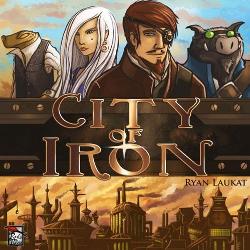
2013 · Fantasy
City of Iron
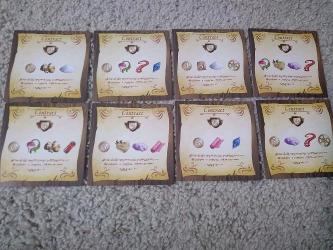
I giocatori guidano una delle quattro nazioni rivali in un mondo steampunk fatto di macchine, magia e commercio, sviluppando città, flotte e tecnologie attraverso un continente condiviso e isole volanti. Il gameplay combina la costruzione di motori basata sulle carte e il controllo delle aree: i giocatori personalizzano due mazzi, producono e vendono merci come componenti meccanici o demoni imbottigliati, ricercano tecnologie dell’era del vapore, reclutano mercenari e costruiscono o demoliscono edifici cittadini per gestire una capacità limitata. Navi e aeronavi permettono di espandersi verso terre e isole lontane, mentre sia le rotte economiche sia quelle militari offrono percorsi per raggiungere la supremazia nazionale.
- Giocatori
- 2–4 ideale in 4
- Tempo di gioco
- 120 min
- Età
- 13+
- Complessità
- 3,2 / 5


Dove comprarlo
Prezzi dei negozi e copie usate, controllati ogni giorno.
- Cardhaus GamesDisponibile59.99 $
- AlphaspelDisponibile649 kr
- Gamers Guild AZDisponibile49.94 $
- SpelexpertenDisponibile649 kr
Sui tavoli di Ludoya
Tutte le statistiche in Ludoya- 4
- Partite registrate
- 3
- Giocatori
- 1
- Nelle ludoteche
- 1
- Nelle liste dei desideri
4,7/10
da 2 recensioni Ludoya
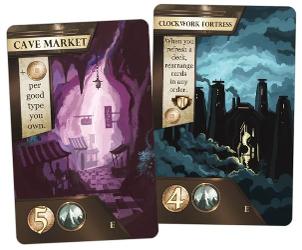
Evan4,6 In this game, players build two different decks of cards simultaneously with the purpose of collecting money to spend on building cards, and attacking neutral town cards, which is all in service of collecting resource symbols which bump your cube on the matching track in the central board. The player with the highest position in each resource will be granted extra money as well as victor points at the end of each of the three scoring rounds. The abstracted map-less area majority game here used to really excite me. The innovation of having these floating provinces distilled down to only needing a single cube to represent your presence there, fueled by card pulls. I also used to be very excited by the two deck element, where one deck is focused more on buildings and the other more on attacking neutral cards, with the neural cards being slightly stronger than the buildings, but the downside is that other players can then attack the cards you defeated to steal them from you, so there's a risk reward thing going on. All that being said, I'm much less into deckbuilders these days than I was when I first was enamored of it. In particular, the way you buy new cards is you can spend whatever money you have left at the end of the round on any card from a fairly large personal supply of cards. Looking through and reading everything at the end of round one is a lot of information to frontload onto players. Then having to manage two draw piles, and make sure you unlock ways to automatically draw from both decks just feels like a pain now where once It was an exciting new challenge. Additionally, the way that military players need to self balance each other is also troublesome. If you wind up with one player going heavy military, and everyone else either doesn't push into military or they do so ineffectively you'll have a run away player and nobody who has even built into the option to slow them down. I still think this is a good game for an ameritrash / euro hybrid enthusiast, but I think it's just not for me anymore. ★ Art, Iconography and components functional ★ Clever or interesting mechanisms ☆ Reasonably low downtime between turns with mildly AP players ★ Multiple plays stay interesting ★ Low or mitigatable luck elements ★★☆☆☆ Raw enjoyment
Giochi simili
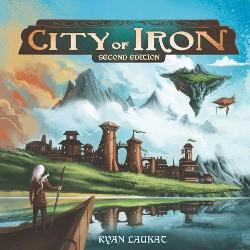 City of Iron: Second Edition2016
 Uprising: Curse of the Last Emperor2021
 London2010
 Epochs: Course of Cultures2025
 Path of Light and Shadow2017
 Pillars of Heracles2025
 Imperium: Horizons2024
 Cerebria: The Inside World – Origin Box2018
 Feudalia2011
 Skytear2020
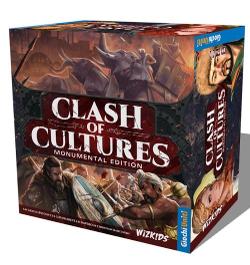 Clash of Cultures: Monumental Edition2021
 Carson City: Big Box2024
Gratis, sul web, Android e iOS
Gioca a City of Iron con Ludoya
- Tienilo nella tua ludotecaTieni traccia della tua copia e delle sue espansioni, prestala agli amici o mettila nella lista dei desideri e ricevi un avviso quando il prezzo scende.Aggiungilo alla tua ludoteca
- Registra ogni partitaPunteggi, vincitori, timer e foto, poi le tue statistiche: percentuale di vittorie, numero di giocatori preferito, miglior punteggio.Registra una partita
- Segna i punti senza cartaUsa i fogli punteggio e gli assistenti di gioco della community e lascia che Ludoya sommi i punti.Trova fogli punteggio
- Trova persone con cui giocarloClub, serate di gioco ed eventi vicino a te che portano questo gioco in tavola.Vedi gli eventi
Dati del gioco (giocatori, durata, età, crediti) da BoardGameGeek.