
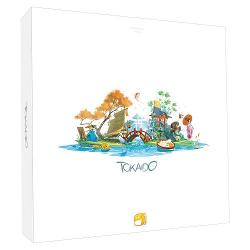
2012 · 旅行
東海道
Travel along a historic coastal road in Edo‑period Japan, stopping at villages, temples, hot springs and scenic viewpoints. Players advance their traveler token down a linear track, choosing when to move slowly for extra turns or rush ahead to claim action spaces. Actions include buying and tasting meals, collecting panoramas and souvenir sets, meeting people for bonuses, visiting temples, and earning or spending money for points. Scoring comes from a variety of small, interlocking objectives and set collections, while turn order and positioning on the track shape strategic choices.
- プレイ人数
- 1–5 ベスト4人
- プレイ時間
- 45分
- 対象年齢
- 8+
- 複雑さ
- 1.7 / 5








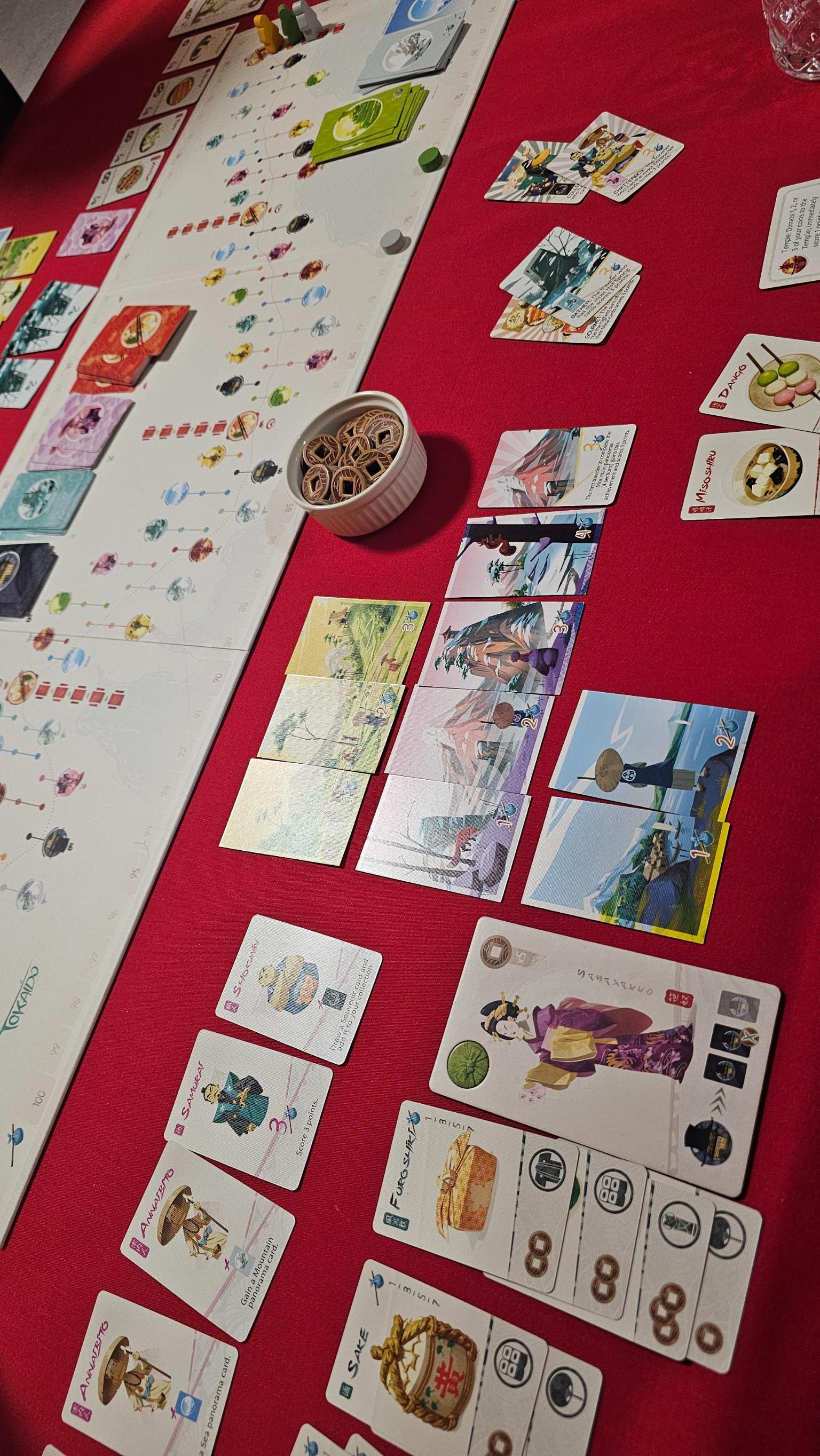
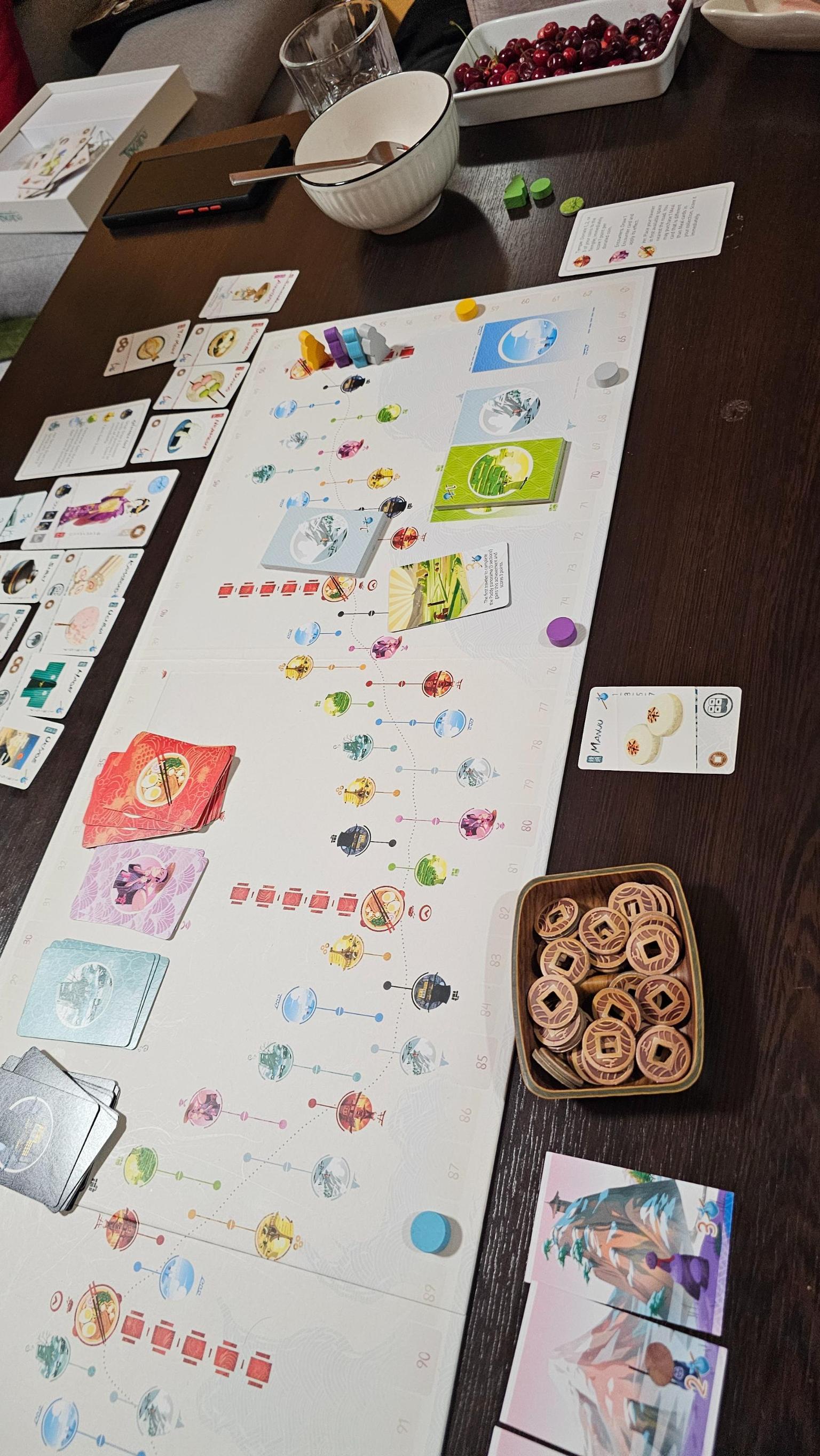
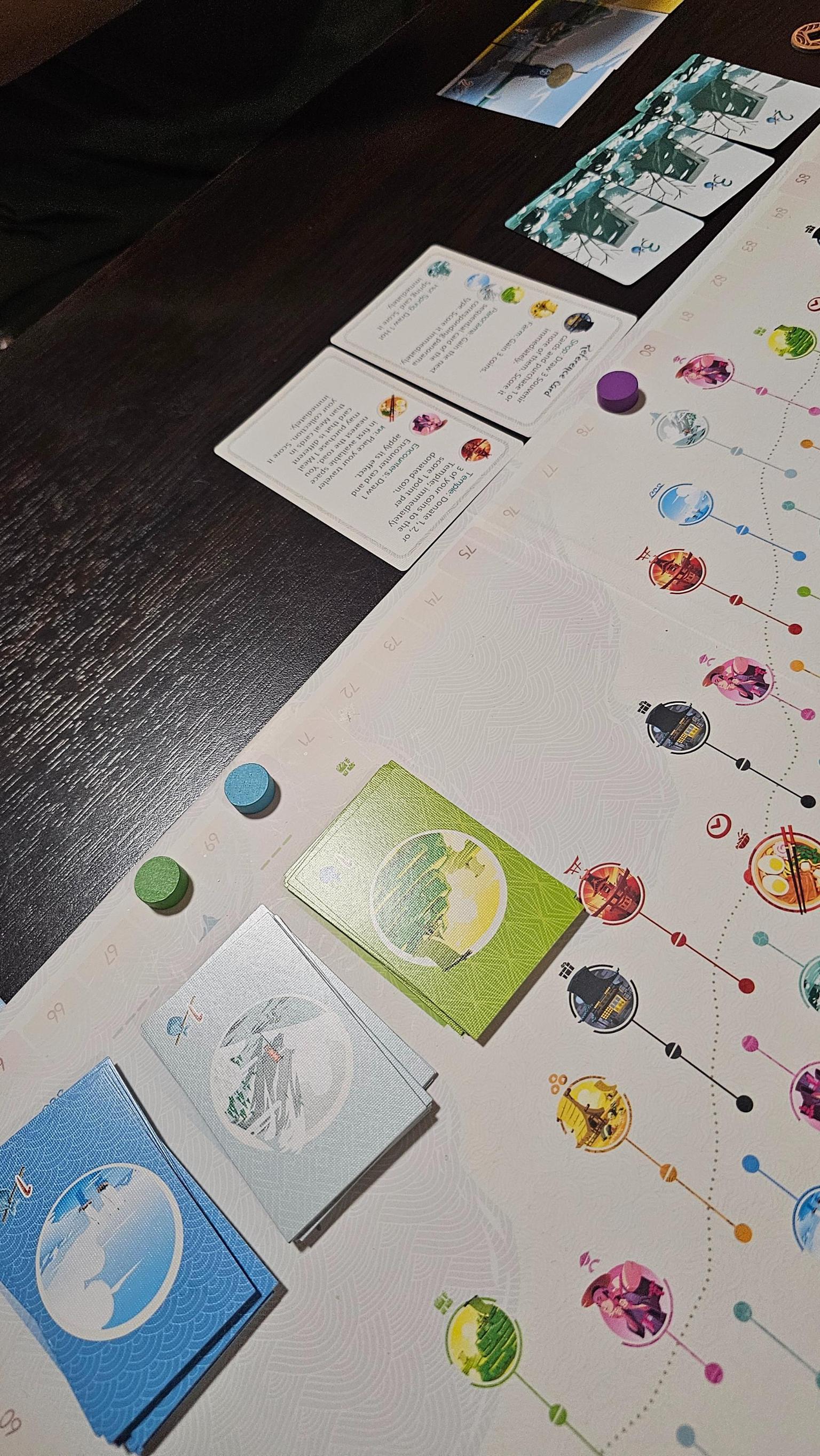
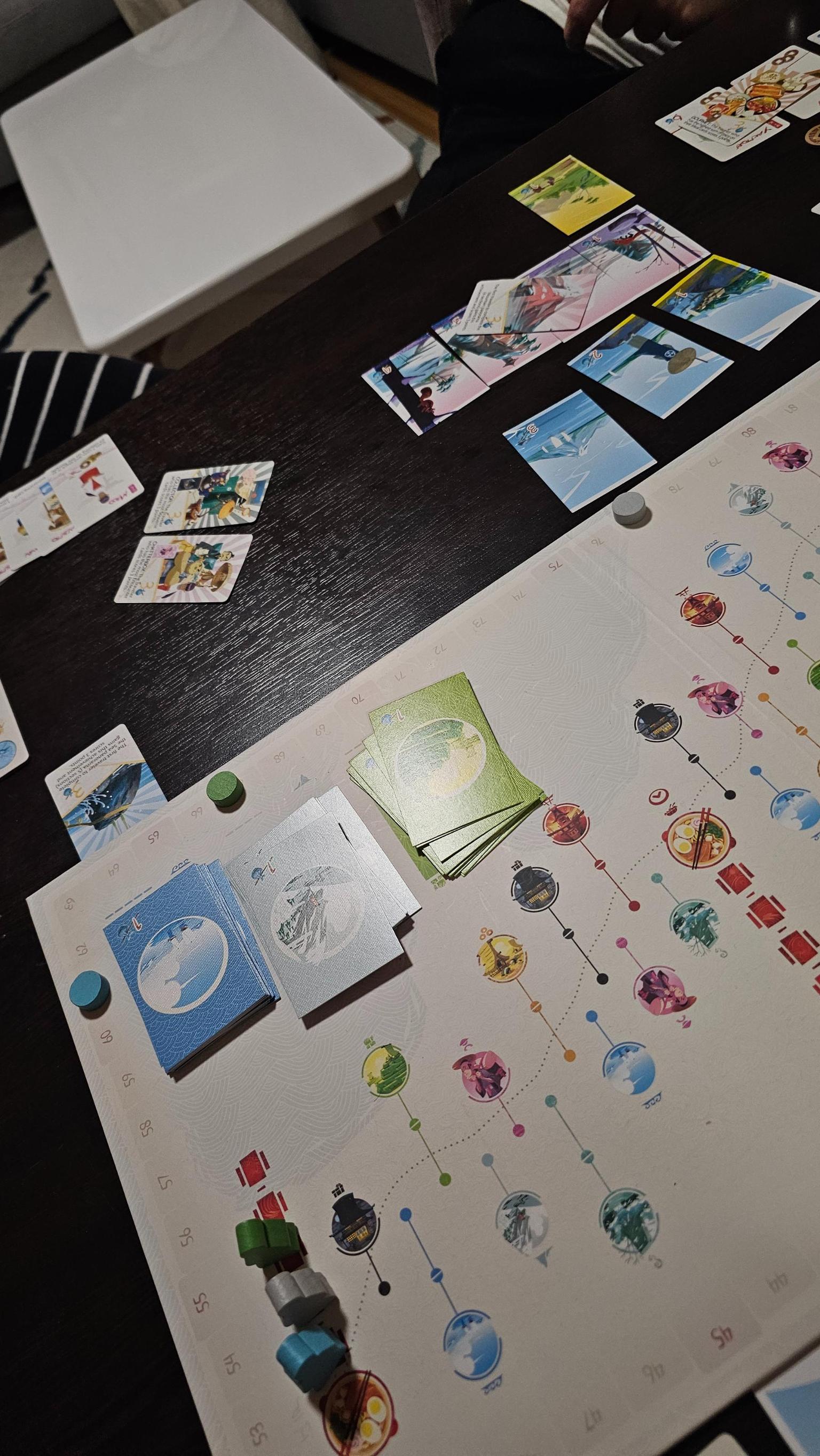
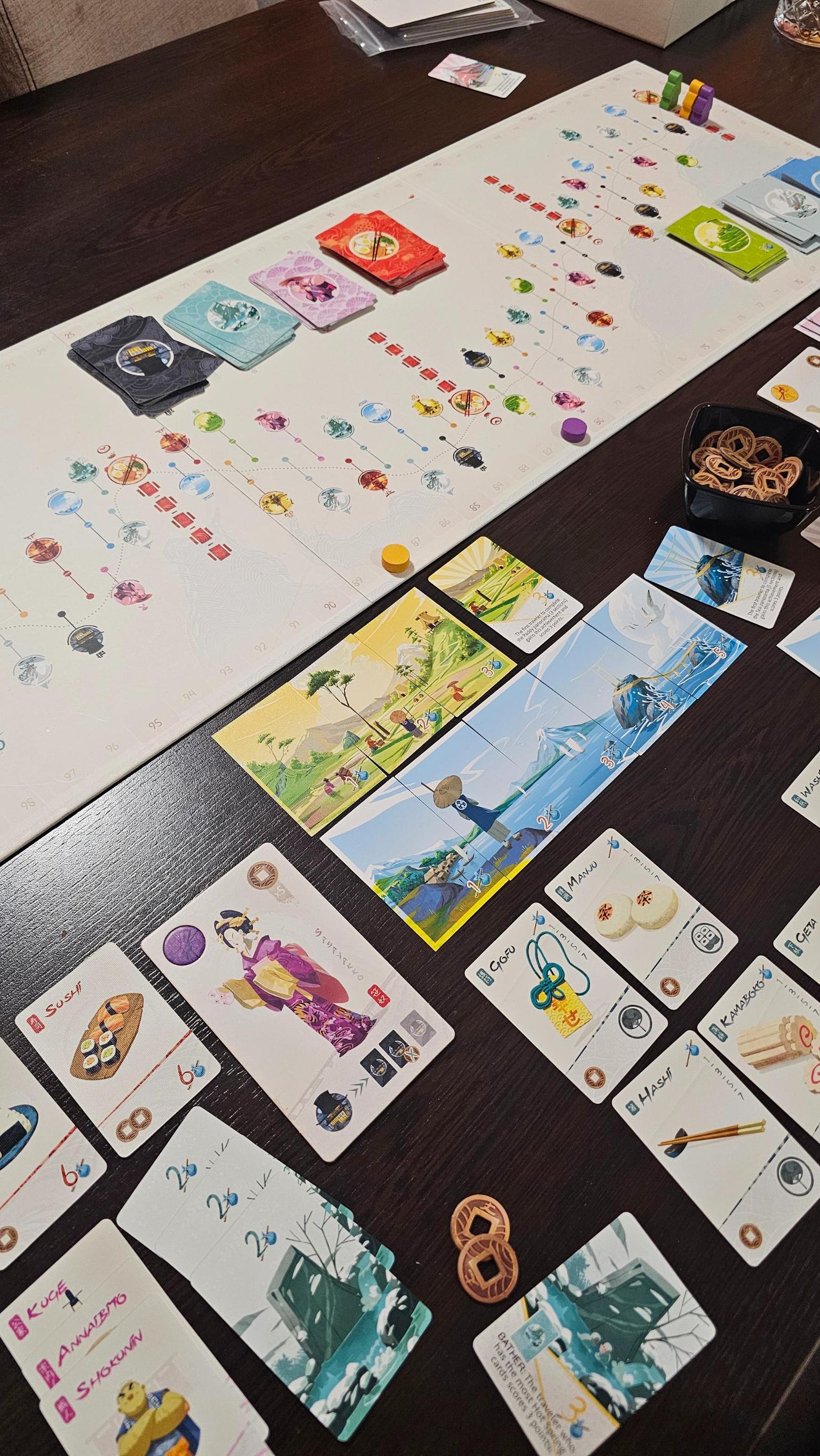
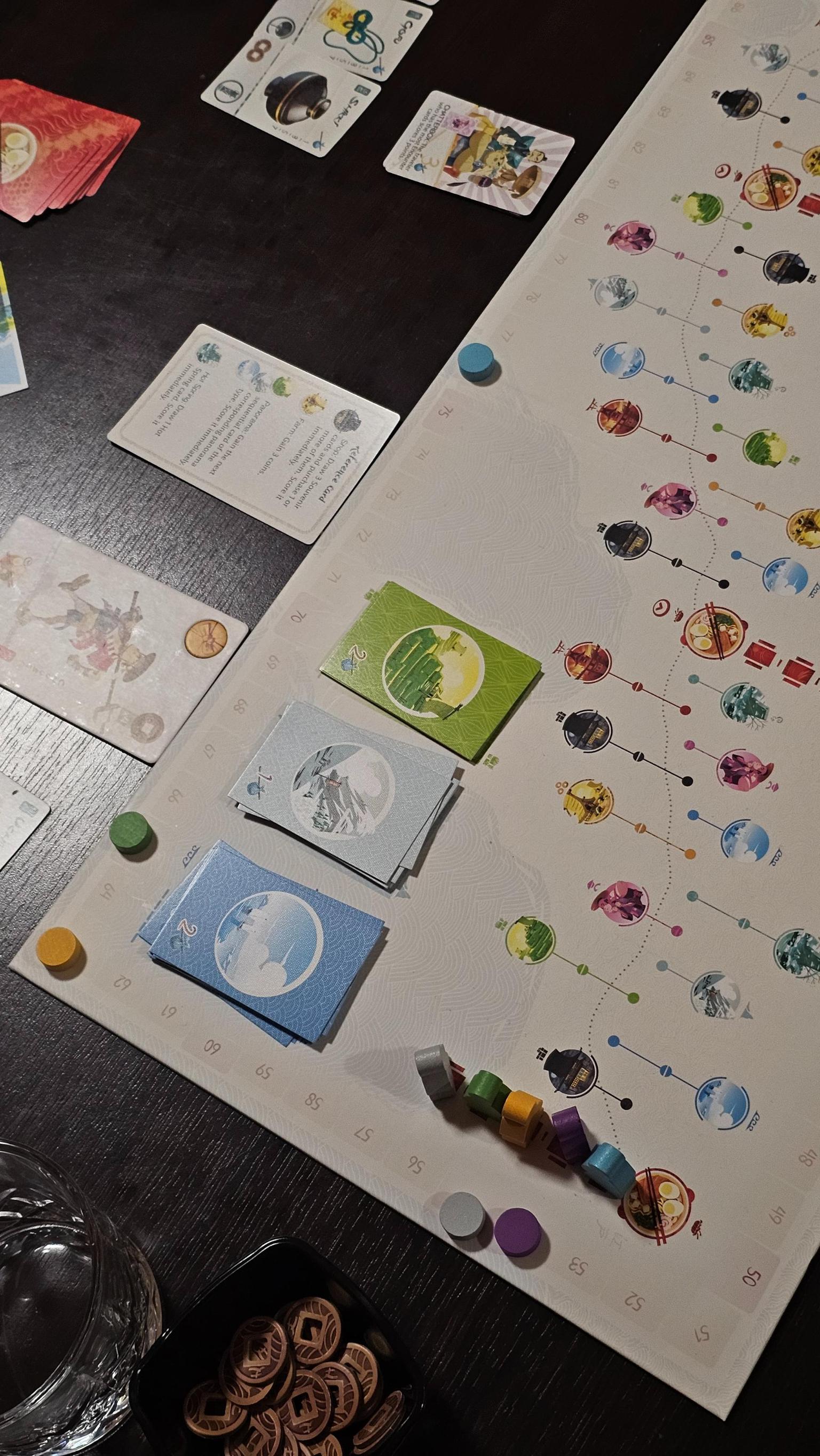
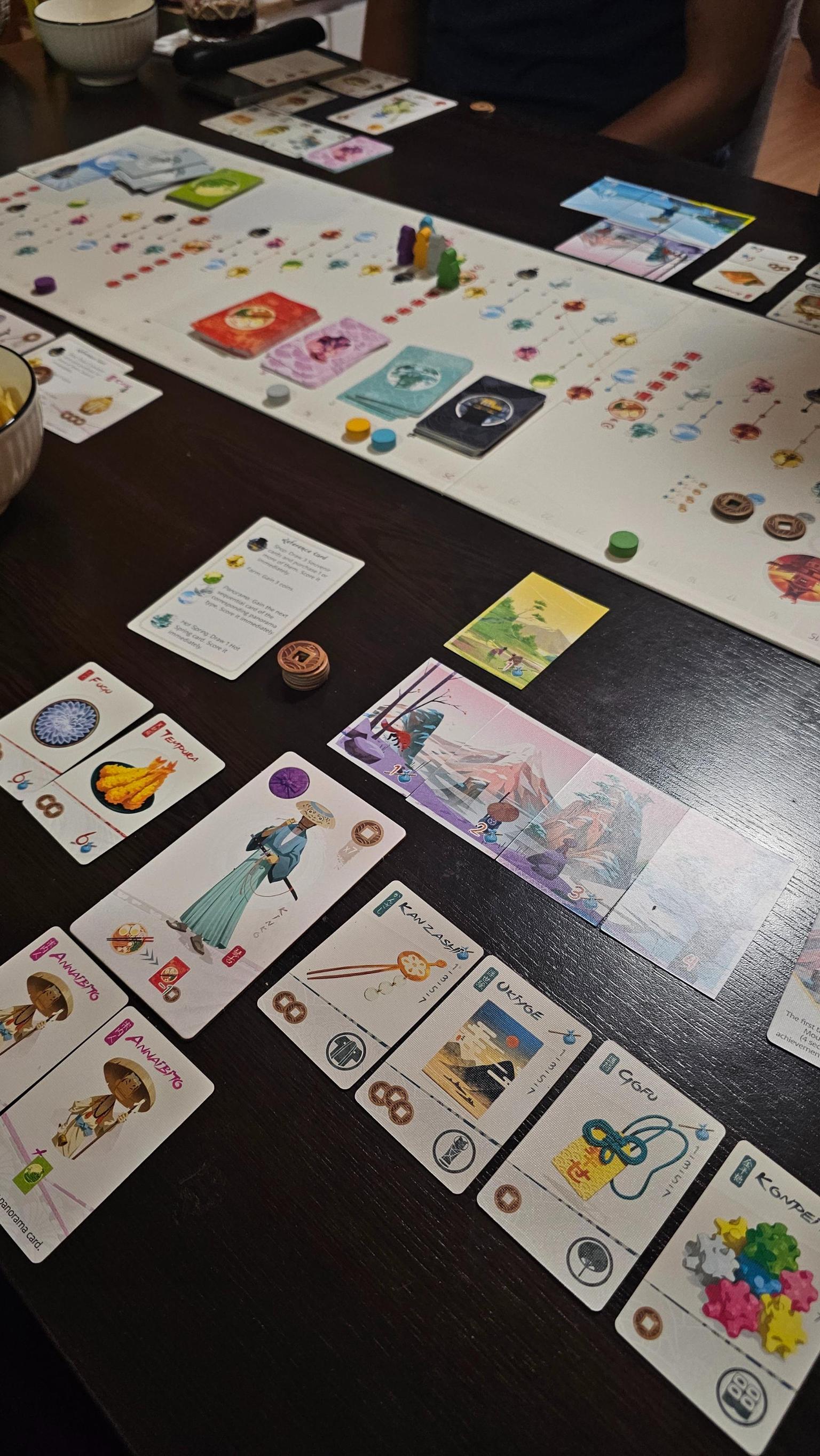
Ludoyaのテーブルでは
Ludoyaで詳しい統計を見る- 701
- 記録されたプレイ
- 510
- プレイヤー
- 29m 11s
- 平均プレイ時間
- 137
- コレクション登録
- 21
- ウィッシュリスト登録
- 1
- 予約済み
5.9/10
Ludoyaのレビュー73件より
Mestremuten6.0 Rating: 2/5 Production value: 4/4 Is the game in my collection/Love to have?: 0/1
Awesome game plenty of beautiful things. You have to walk a peaceful way and trying to fill your soul with the best of the path. Amazing

ルールに関する質問
Ludoyaのルールアシスタントがルールブックに基づいて回答しています。
Who takes the next turn — the player furthest behind on the road or the one who just moved?
The player whose Traveler is farthest behind on the road takes the next turn; that player must move forward to an open space of his choice, and if he remains last after moving he goes again immediately. (page 2)
Can I pass over spaces when I move, and can I stop on any open space ahead?
Yes — on your turn you move your Traveler forward toward Edo to any open space of your choice and may freely pass over one or more open spaces; movement is always forward along the road. (page 2)
How do double spaces work — and do they apply in 2‑ or 3‑player games?
When a traveler lands on a double space he must take the road (first) space if it is free and later arrivals occupy the second/off‑road space; double spaces are used only in 4‑ or 5‑player games and the second space cannot be occupied in 2‑ or 3‑player games. (page 2)
If I stop in a Village, do I have to buy a Souvenir, and do I need coins to stop there?
You must have at least 1 coin to stop in a Village, but you are not required to purchase any Souvenirs; draw the first three Souvenir cards, you may buy one or more and any unpurchased cards are placed face down on the bottom of the pile. (pages 2–3)
How do Panorama cards progress — can I take them out of order or make more than one panorama of the same type?
When you stop on a Panorama station you take the next numbered card of that panorama type (start at value 1 if you have none) and immediately score its value; each traveler can create only one panorama of each type, and once a panorama is completed you can no longer stop on spaces of that type. (page 3)
What happens at the Temple — how much must I donate and how are donations scored at the end?
When you stop on a Temple you must donate at least 1 and at most 3 coins, scoring 1 point immediately per donated coin; at game end donors are ranked for bonus points (1st=10, 2nd=7, 3rd=4, others=2) and ties each receive the points for that rank. (pages 3–4)

















ゲーム情報(人数、プレイ時間、対象年齢、クレジット)の出典:BoardGameGeek。