
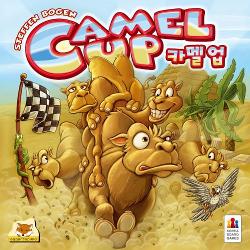
2014 · 경주
카멜 업
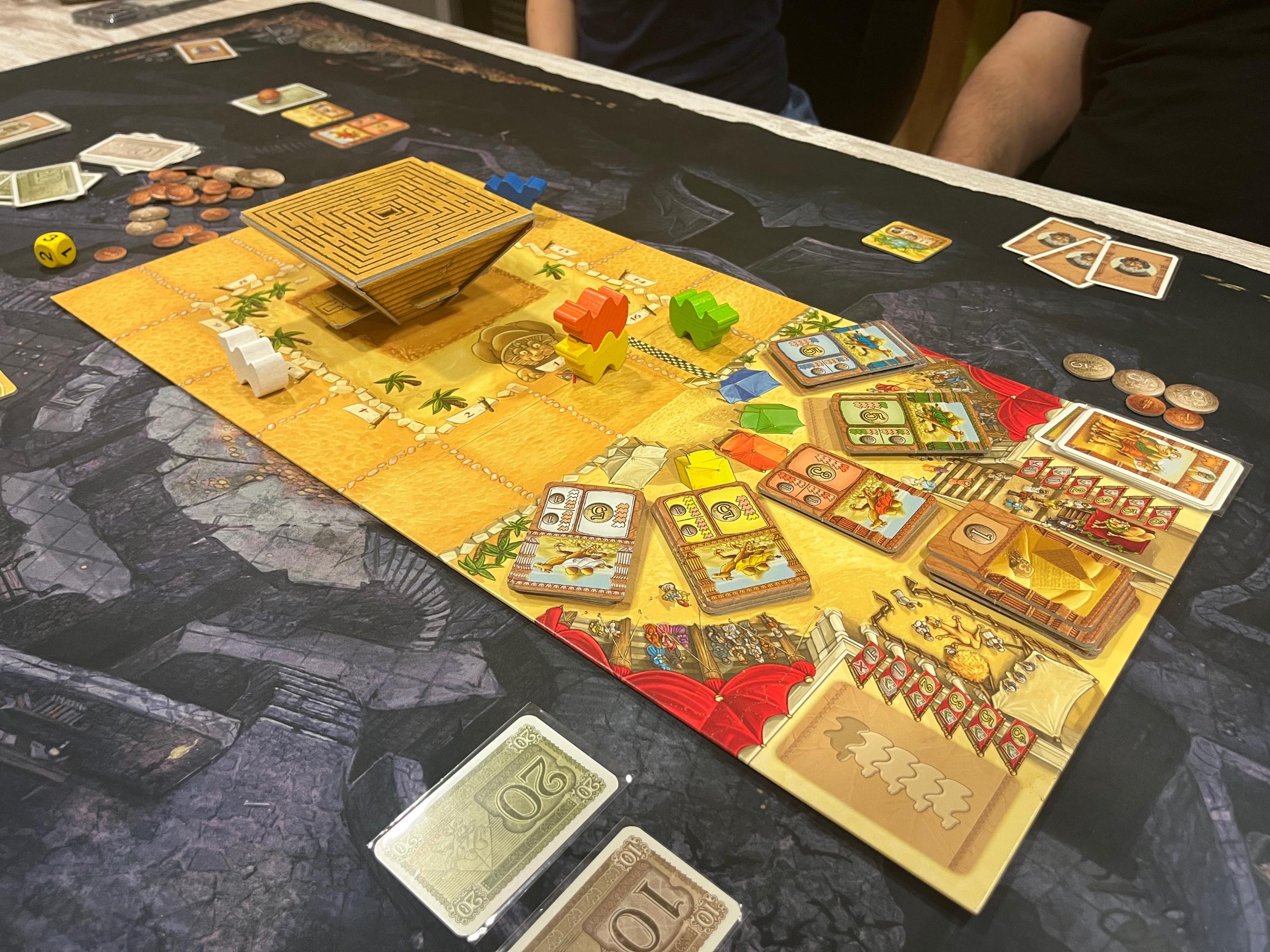
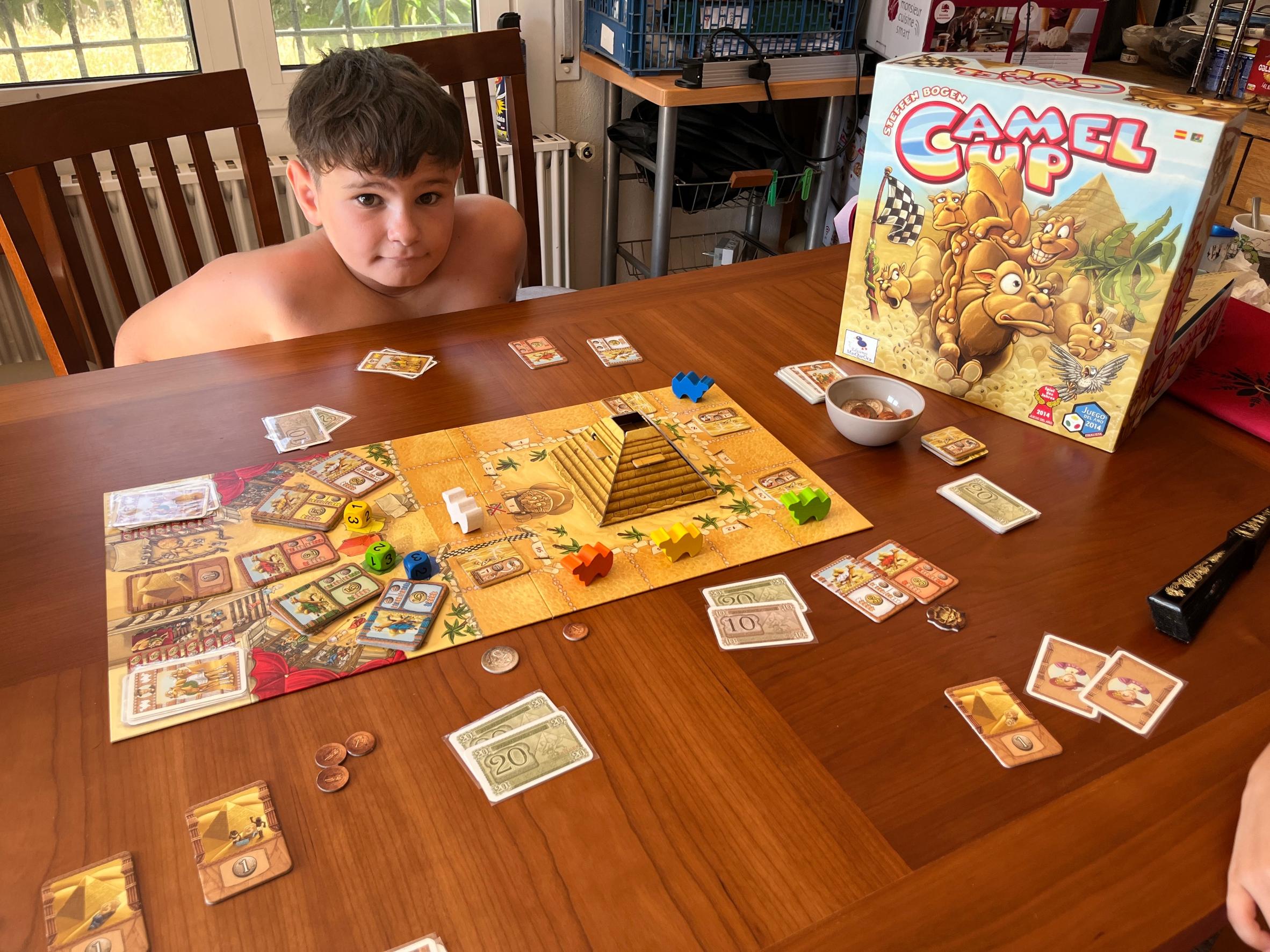
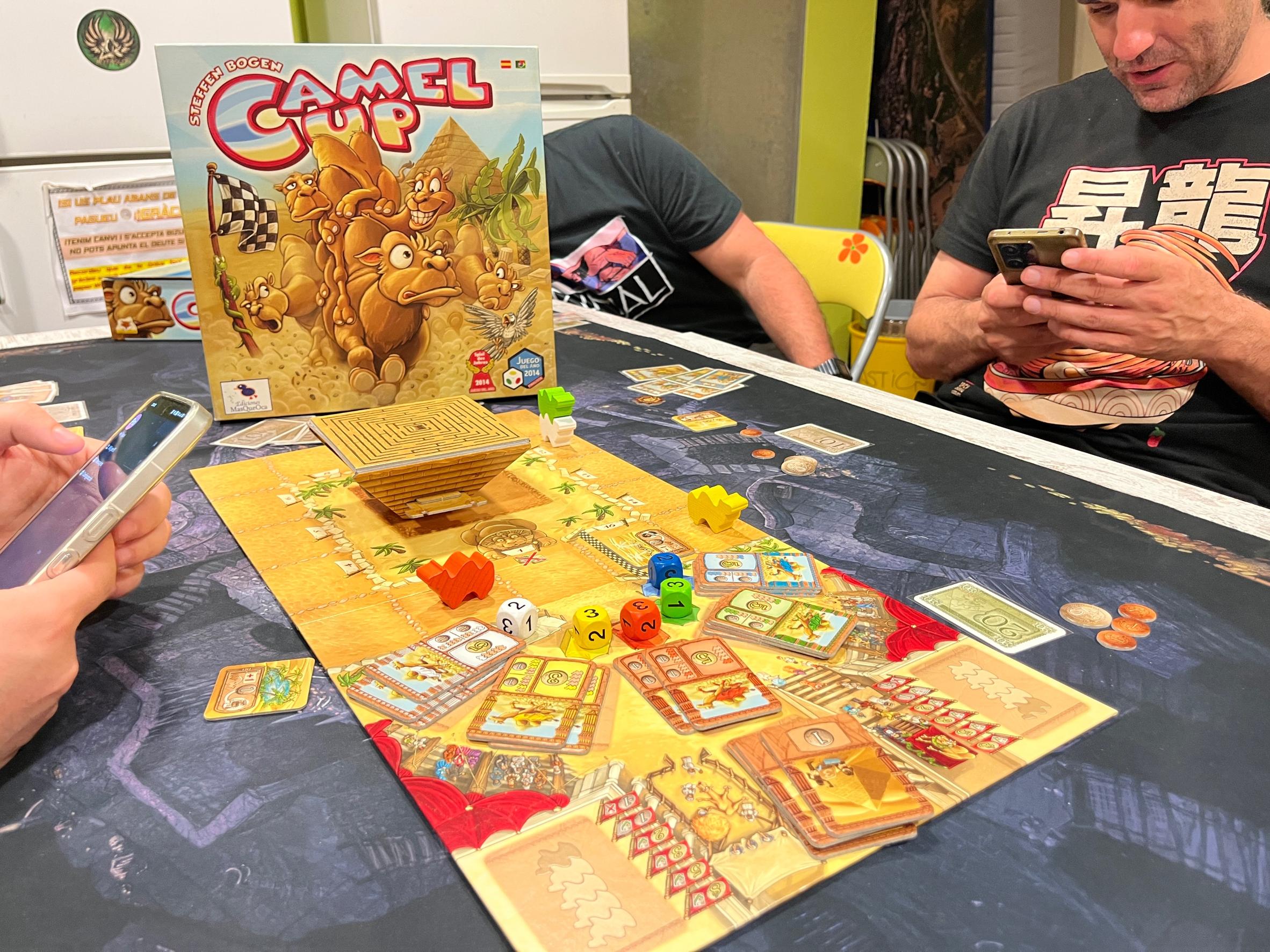
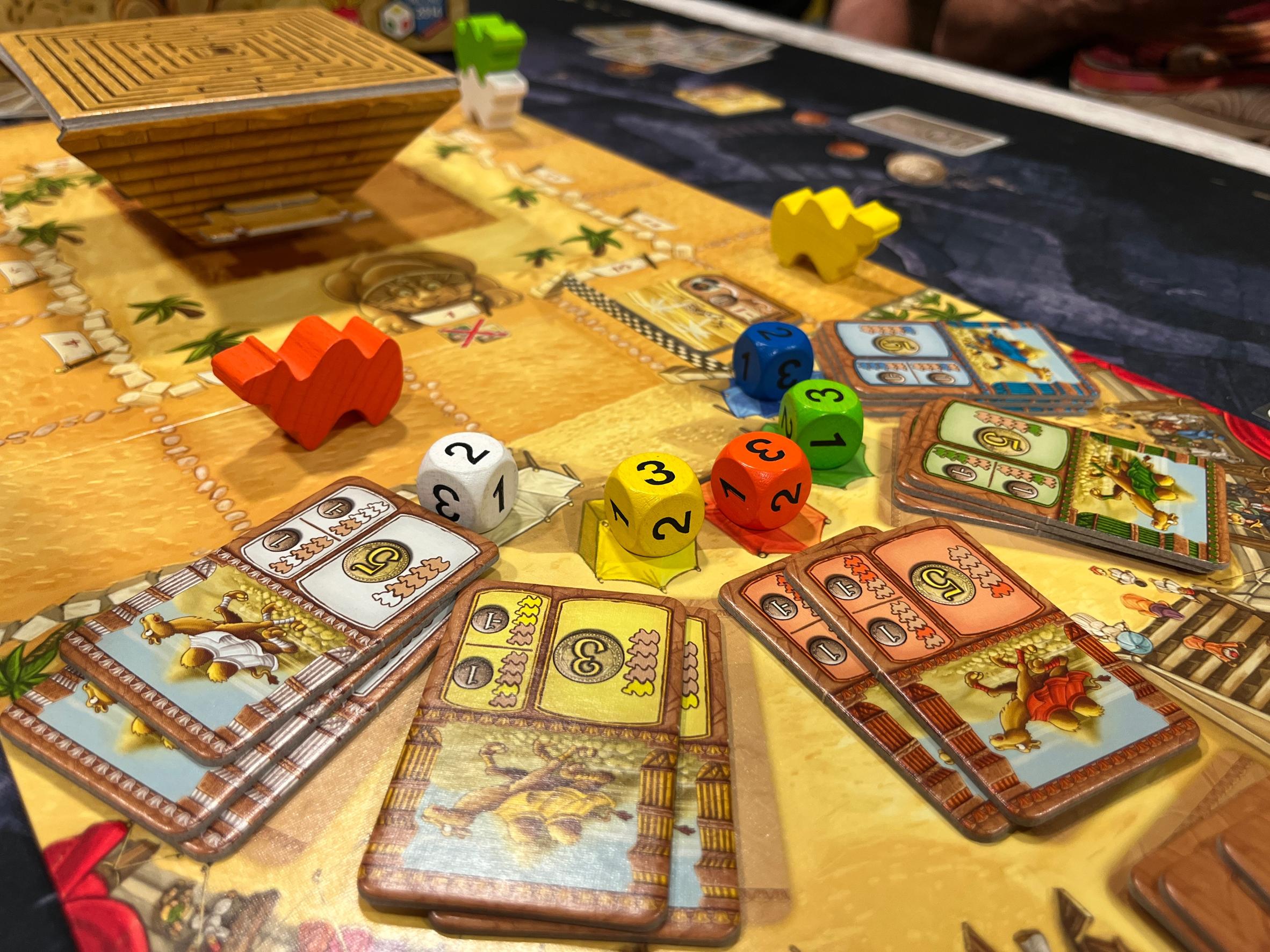
Players bet on a field of five racing camels as they compete around a track. Each round, players take betting cards on which camel will finish first and second and may place oasis tiles for extra payouts, then use a pyramid dice shaker that releases one die at a time to determine which camel moves and in what order. Camels can stack when one lands on another and carry stacks forward, so positions change unpredictably over a short race. Legs end after all five dice have been drawn, bets are resolved, and play repeats until a camel crosses the finish line and final bets are scored.
- 인원
- 2–8 최적 5명
- 플레이 시간
- 20–30분
- 연령
- 8+
- 복잡성
- 1.5 / 5




Ludoya 테이블에서는
Ludoya에서 전체 통계 보기- 763
- 기록된 플레이
- 946
- 플레이어
- 34m 33s
- 평균 플레이 시간
- 151
- 컬렉션 보유
- 7
- 위시리스트 등록
6.6/10
Ludoya 리뷰 105개 기준
Mestremuten5.0 Rating: 3/5 Production value: 2/4 Is the game in my collection/Love to have?: 0/1
룰 질문
Ludoya 룰 도우미가 룰북을 바탕으로 답변했습니다.
If a camel in the middle of a stack moves, which camels move with it and what happens to the ones left behind?
A camel carries along all camels that sit on top of it while any camels beneath it stay where they are; when the moving camel unit finishes on a space with another camel unit it jumps on top of that unit. (See pages 2–3.)
How do the crazy camels work — which way do they move, which grey die moves which crazy camel, and do they count for ranking?
The two crazy camels move counterclockwise when the grey die is revealed (the grey die indicates white or black, with exceptions if only one crazy camel carries racing camels or if one crazy camel sits on top of the other), and any camels on top of a crazy camel are carried along. Crazy camels are ignored for ranking purposes, except that if a crazy camel carries racing camels across the finish line counterclockwise those racing camels count as the least advanced. (See pages 2–4.)
What happens when a camel unit lands on a spectator tile — does it move and does it end up on top or underneath other camels?
The tile owner immediately gains 1 EP; if the tile is cheering the camel unit moves 1 space forward and, if it lands on another unit, it jumps on top; if the tile is booing the unit moves 1 space backward and, if it lands on another unit, it is placed underneath that unit (crazy camels are affected in the opposite direction). (See page 3.)
When does a leg end and how is leg scoring calculated?
A leg ends when five of the six dice have been revealed; when the last pyramid ticket is taken the player still reveals/moves a die and then a leg scoring round occurs before the next player's turn. During leg scoring the leading racing camel’s betting tickets pay the large printed values (5/3/2), second-place tickets pay 1 EP, all other racing tickets cost −1 EP, and each pyramid ticket is worth +1 EP. (See pages 2 and 4.)
How are overall winner/loser face-down finish bets resolved and scored?
Turn each face-down betting pile face up so the card placed first is on top, then read the pile from top to bottom awarding 8/5/3/2/1 EP to the first through fifth cards that show the actual winner (each card that shows a non-winning camel costs its owner −1 EP); repeat the same procedure for the overall loser. (See page 4.)
What exactly happens when someone takes the last pyramid ticket — who reveals the die and who starts the next leg?
The player who takes the last pyramid ticket still immediately reveals a die and moves the camel, then the starting-player marker is given to the player to that mover’s left and a leg scoring round and cleanup occur before the next leg begins with the new starting player. (See page 4.)








게임 정보(인원, 플레이 시간, 연령, 제작진) 출처: BoardGameGeek.