
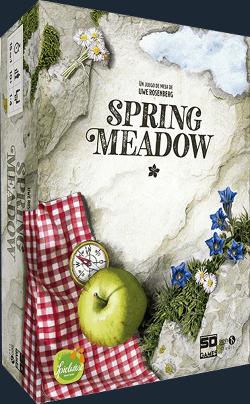
2018 · Rompecabezas
Spring Meadow
La primavera llega a las montañas y los jugadores montan una pradera en flor colocando losetas irregulares con 0–2 agujeros sobre sus tableros personales de montaña. Las losetas se eligen de un tablero central; colocar losetas para crear o ampliar grupos de agujeros otorga losetas extra, mientras que las madrigueras de marmotas en las losetas restringen dónde se pueden colocar las piezas. Los jugadores gestionan sus provisiones limitadas (orden de turno y elección de losetas) y las restricciones de espacio para hacer crecer su pradera. La puntuación se realiza en intervalos según las losetas de pradera elegidas del centro, y la pradera más grande se lleva una insignia de senderismo. El primer jugador en conseguir dos insignias de senderismo durante la puntuación gana.
- Jugadores
- 1–4 mejor con 2
- Duración
- 15–60 min
- Edad
- 10+
- Complejidad
- 1,8 / 5
Sobre el juego
- Diseño
- Arte
- Publisher


Expansiones
Verlas en Ludoya
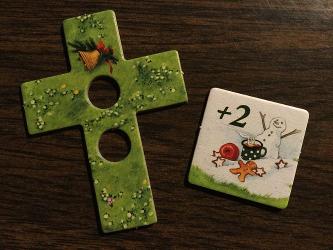
Fotos de mesas de Ludoya
Todas las fotos en Ludoya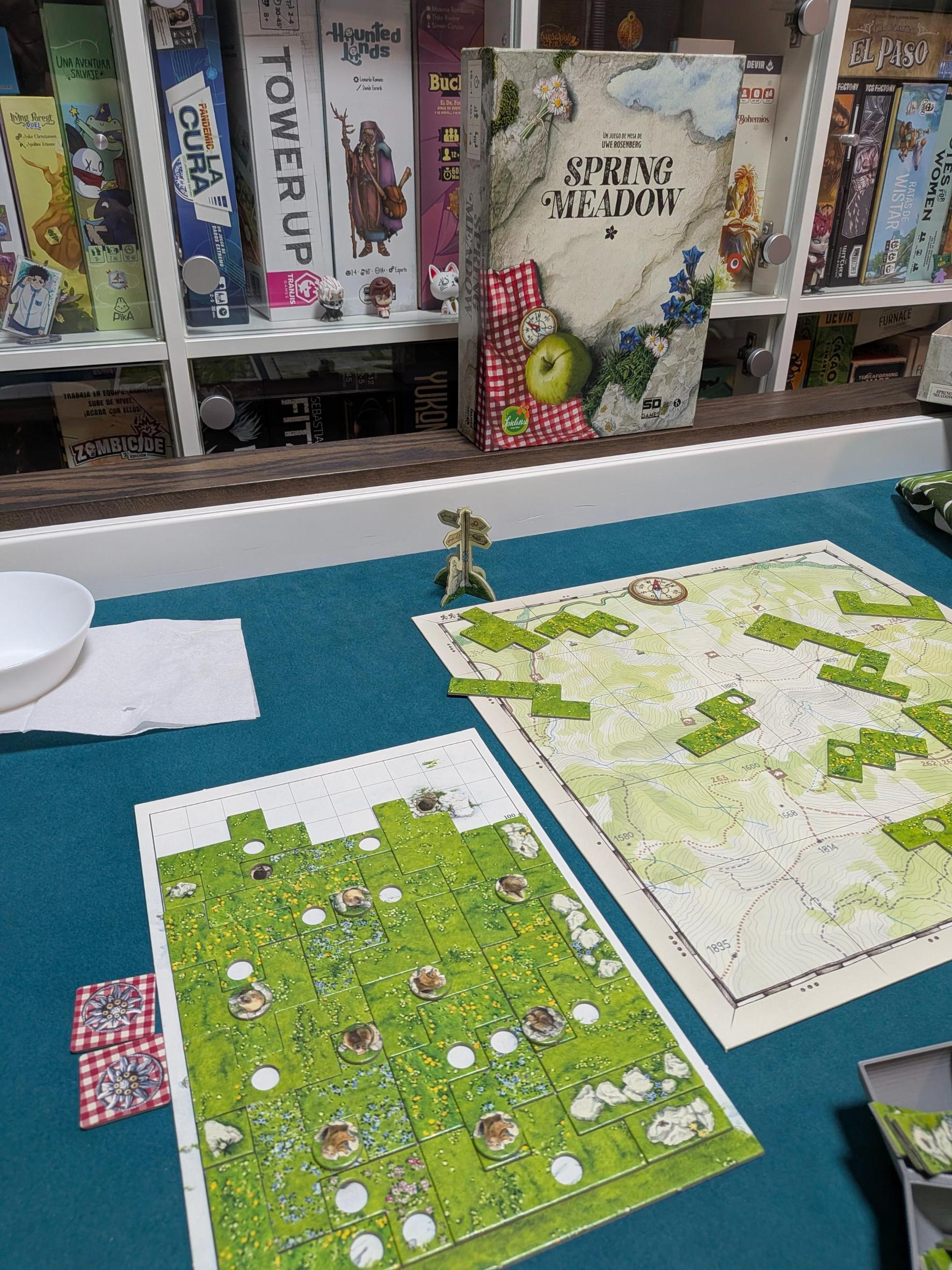
Dónde comprarlo
Precios de tiendas y copias de segunda mano, revisados cada día.
En las mesas de Ludoya
Todas las estadísticas en Ludoya- 236
- Partidas registradas
- 147
- Jugadores
- 31m 28s
- Partida media
- 37
- En colecciones
- 4
- En listas de deseos
6,6/10
de 14 reseñas en Ludoya
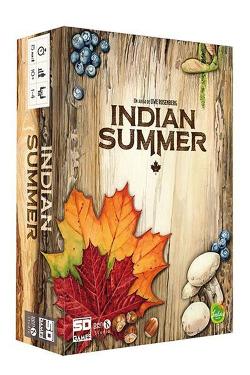
Evan5,9 In this game, players are drafting tiles from a grid as in Cottage Garden. This is a wonderful tile selection method as you can clearly see what tiles are coming up and you can plan your future moves reducing downtime substantially. You lay your tiles as evenly as possible into your player board aiming to complete rows. When a selection row on the grid would be selected from yet is mostly depleted, the game pauses for a scoring. Players get 10 vp for each completed row plus 1 vp for each completed square in their lowest incomplete row, and a few mini points for various features. Winner gets a VP chip, and then you refill the grid, and play continues until someone manages to get 2 chips. The interesting part of the game is that the tetris tiles have holes in them like in Indian Summer, and if you line up the holes with the printed spaces on your map, you get bonus points in the next scoring, and if you line the holes up with each other, you get to lay down bonus tiles to cover new areas. There's a nice tension between wanting to get the tile that perfectly fits your situation, vs wanting to extend your chain of contiguous holes. Of the three games in the series, I think Indian Summer is still my favorite, because this game is very low on player interaction, and the art on the tiles is by far the blandest of the three. That being said I'm looking forward for more of this game, and I hope it grows on me over time. :star: Art, Iconography and components functional :star: Clever or interesting mechanisms :star: Reasonably low downtime between turns with mildly AP players :star: Multiple plays stay interesting :star: Low or mitigatable luck elements :star::star::star::nostar::nostar: Raw enjoyment
Won in Rifa. Sold in LaBSK.























Gratis, en web, Android e iOS
Juega a Spring Meadow con Ludoya
- Tenlo en tu colecciónControla tu copia y sus expansiones, préstala a tus amigos o ponla en tu lista de deseos y te avisamos cuando baje de precio.Añadirlo a tu colección
- Registra cada partidaPuntuaciones, ganadores, temporizadores y fotos, y luego tus estadísticas: porcentaje de victorias, número de jugadores favorito, mejor puntuación.Registrar una partida
- Puntúa sin papelUsa las hojas de puntuación y ayudas de juego de la comunidad, y deja que Ludoya sume los puntos.Buscar hojas de puntuación
- Encuentra gente con quien jugarloClubes, noches de juegos y eventos cerca de ti que sacan este juego a la mesa.Ver eventos
Datos del juego (jugadores, duración, edad, créditos) de BoardGameGeek.