

2011 · パーティーゲーム
A Fake Artist Goes to New York
Players take turns setting a category and choosing a target word while one player secretly receives an “X” and does not learn the word. Everyone else receives the word and contributes one contiguous stroke per turn to a shared drawing, attempting to depict the prompt without revealing it outright. After two rounds of strokes, players discuss and vote to identify who lacks the word. Scoring awards points to the fake artist and the question master if the fake artist avoids detection, or to the artists if they catch the impostor and the impostor cannot guess the word. Supports 5–10 players and plays as a social, deduction-focused drawing party game.
- プレイ人数
- 5–10 ベスト6人
- プレイ時間
- 20分
- 対象年齢
- 8+
- 複雑さ
- 1.1 / 5
ゲームについて
- デザイン
- アート
- 出版社


Ludoyaのテーブルからの写真
Ludoyaですべての写真を見る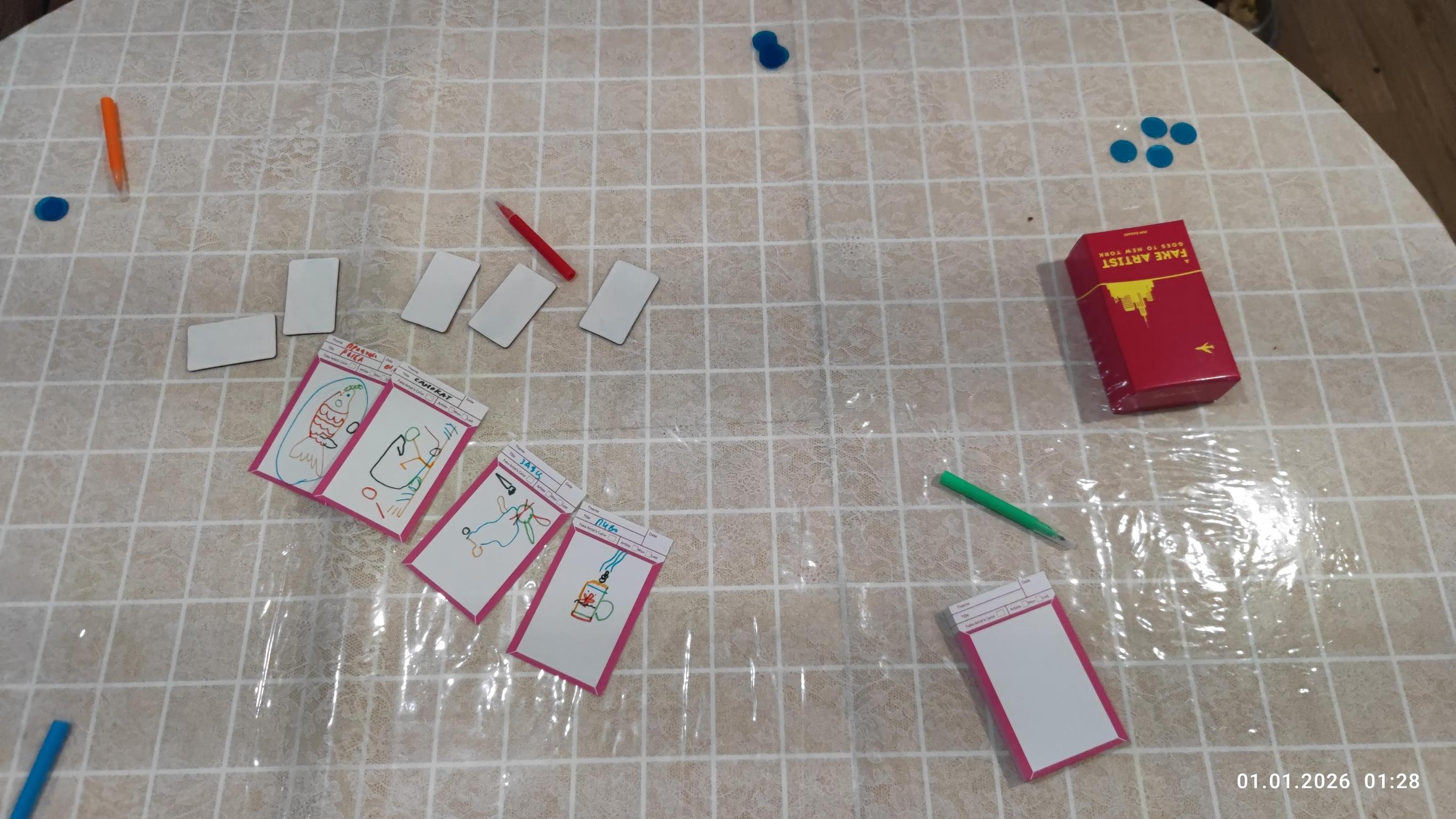
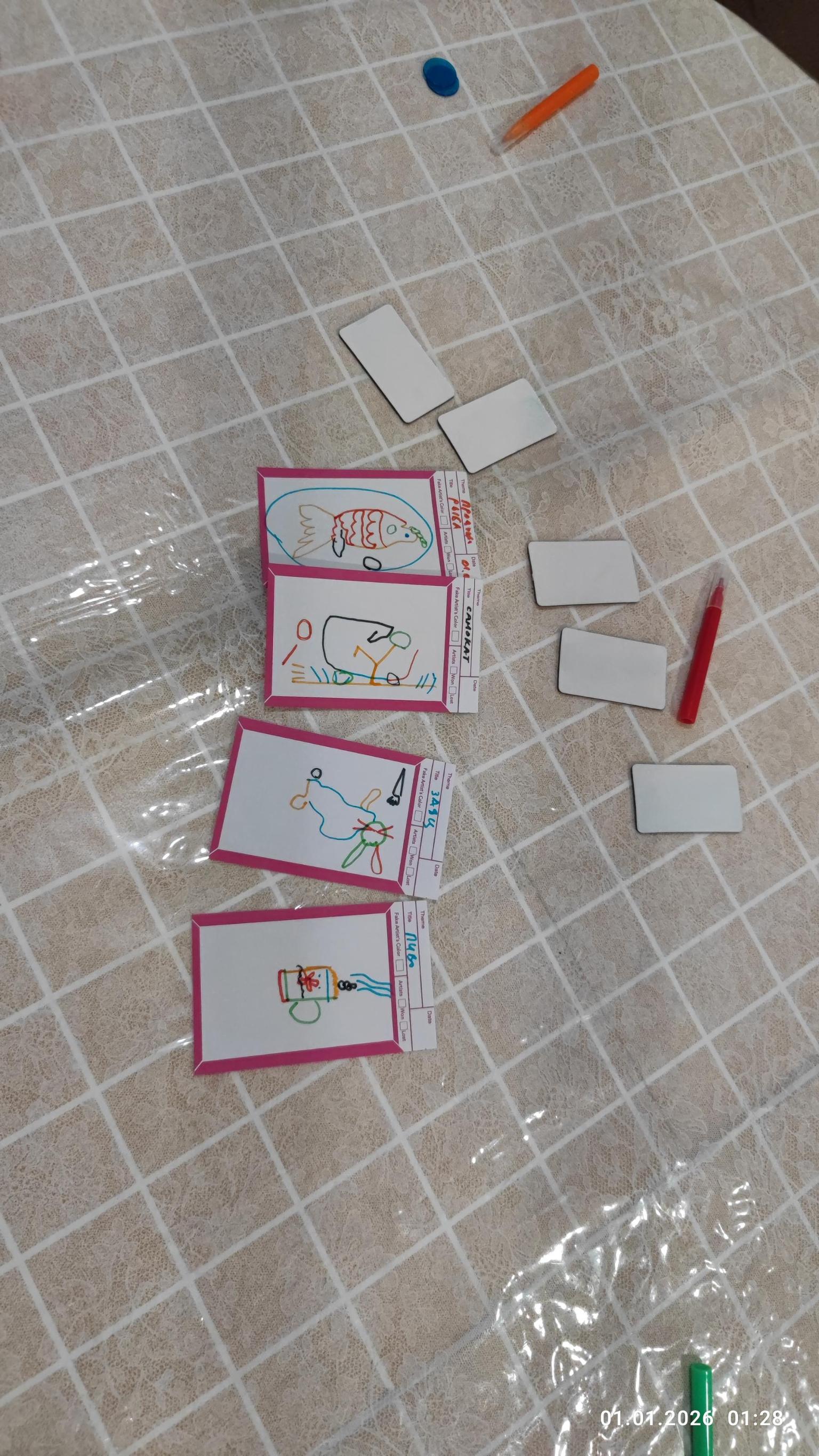
Ludoyaのテーブルでは
Ludoyaで詳しい統計を見る- 302
- 記録されたプレイ
- 371
- プレイヤー
- 16m 7s
- 平均プレイ時間
- 136
- コレクション登録
- 17
- ウィッシュリスト登録
7.2/10
Ludoyaのレビュー36件より
Vic Granell7.0 Played in a group of 6. So much fun, but you might want to get some colour markers, as they come a bit dry... Sometimes it's difficult to keep it hard for the Fake Artist to guess the drawing, and that's the real challenge for the real artists!
FazerGD7.5 +
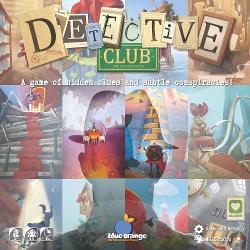
Mohasz7.5 Way too overpriced, honestly. This should be a $10 game. The components are not great either (low quality pens, tiny notepad). Not proud of this purchase, but I hope the game will at least turn out to be great for us. It is a very solid party game, although not an instant favorite for everyone. Bought a set of colored pens and an A/4 dry erase board, much more enjoyable than with original components. Works well, somewhere between Chameleon and Detective Club (in terms of fun factor). Best with 6 and 7.


ルールに関する質問
Ludoyaのルールアシスタントがルールブックに基づいて回答しています。
How do we choose the Question Master and the fake artist?
Players pick a Question Master (QM); the QM takes the title cards, selects a category and marks one card with an 'X' (the fake) and writes the chosen title on the other cards, then secretly deals the cards so the player who receives the X is the fake artist (pages 4–5).
Does the fake artist get to see the title?
No — the fake artist receives the card marked with an X and does not see the written title, while the other artists receive cards showing the actual title (pages 4–5).
What are artists allowed to do during the drawing phase — how do turns work?
Players (artists) take turns adding a single mark to the communal drawing with their colored pen on each turn; they must not reveal the title or explicitly identify the fake artist (pages 3 and 5).
When do we accuse someone of being the fake artist and what happens next?
After the drawing phase ends players perform a countdown vote to accuse who they think is the fake; if accused the fake artist reveals themself and must state the title of the finished artwork (page 6).
How is scoring determined — what happens if the fake is caught or names the title?
Scoring depends on two things: whether the fake artist was correctly identified and whether the fake can correctly name the title after being revealed; different score outcomes follow each combination of those results (see page 7 for the full breakdown).











無料・Web、Android、iOS対応
LudoyaでA Fake Artist Goes to New Yorkを遊ぼう
ゲーム情報(人数、プレイ時間、対象年齢、クレジット)の出典:BoardGameGeek。