
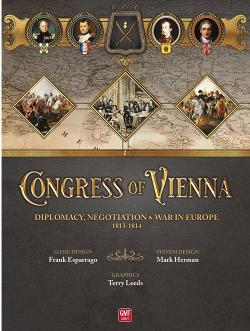
2025 · 나폴레옹 시대
Congress of Vienna
Players take the roles of the major powers fighting the aftermath of Napoleon’s 1812 retreat, running diplomatic influence and coalition strategy across a map of Europe from Iberia to the Polish-Prussian border, with secondary fronts in Italy and naval/War of 1812 areas. Play proceeds through card-driven turns that resolve diplomatic actions, alliances, and military campaigns; players allocate resources, move armies and fleets, and contest key theaters while managing political standing and victory points. The game ends when a major power reaches the victory threshold, Napoleon surrenders, or the scenario concludes.
- 인원
- 1–4 최적 4명
- 플레이 시간
- 90–360분
- 연령
- 12+
- 복잡성
- 3.9 / 5
게임 소개
- 출판사

Ludoya 테이블의 사진
Ludoya에서 모든 사진 보기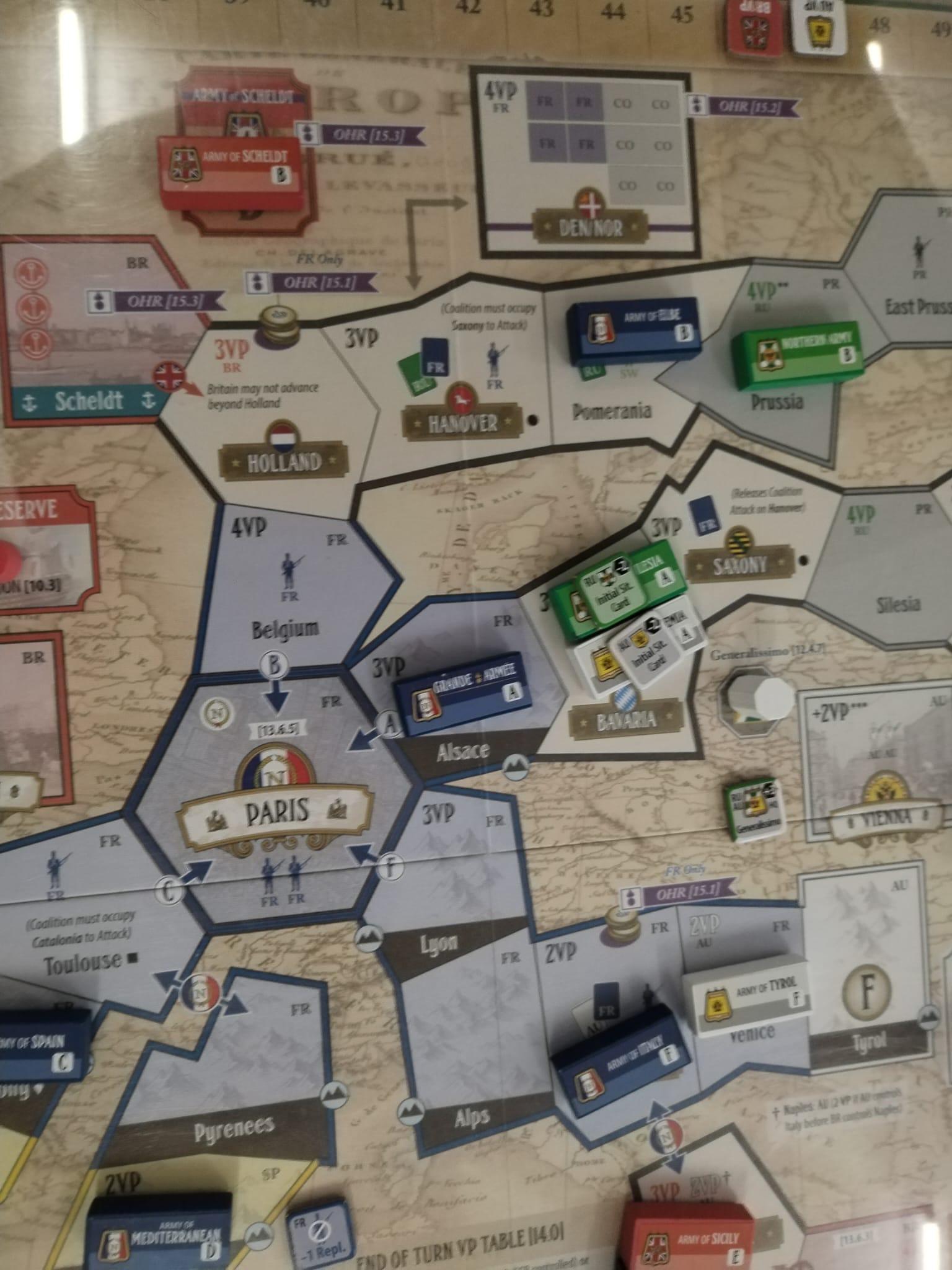
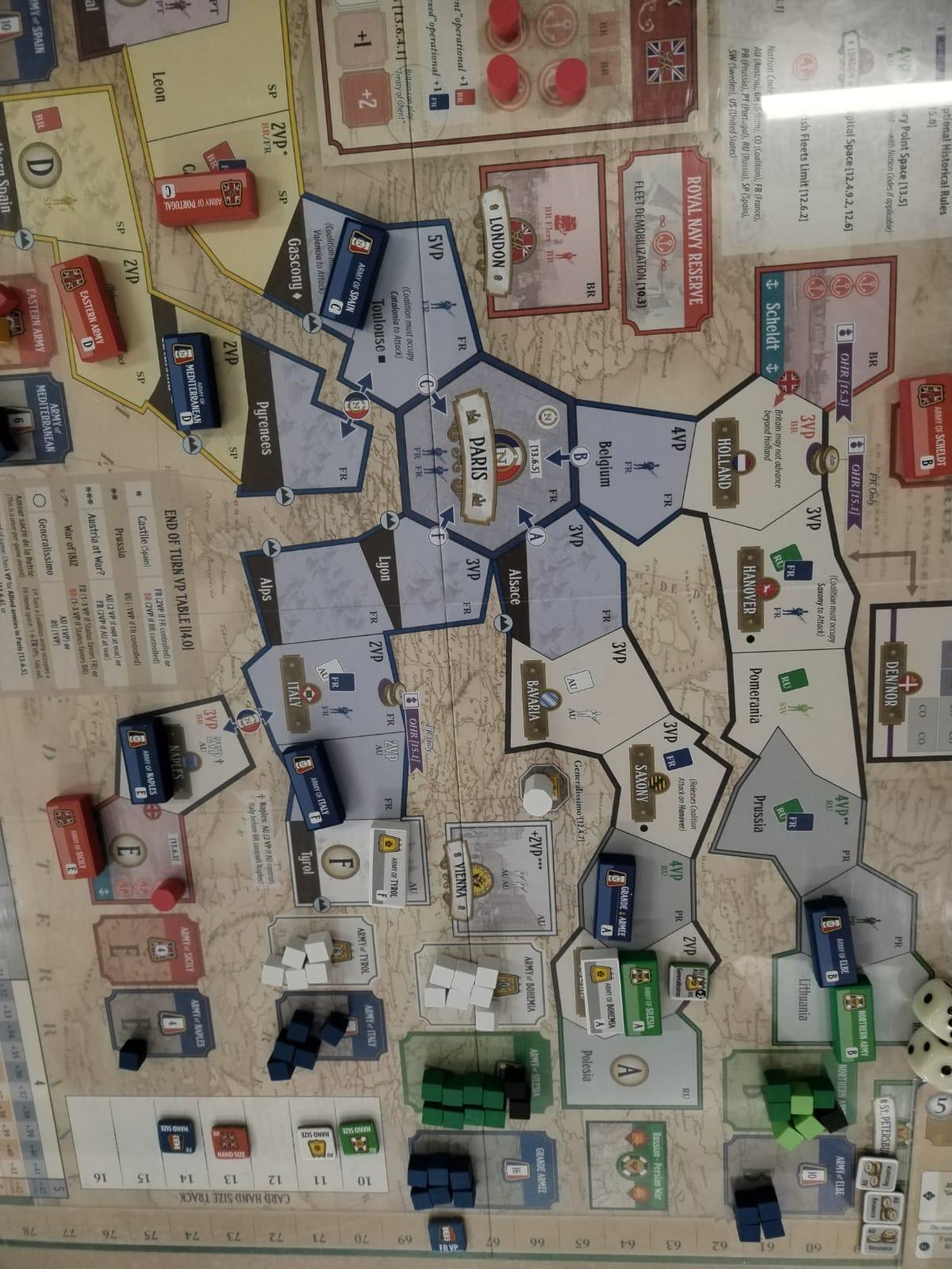
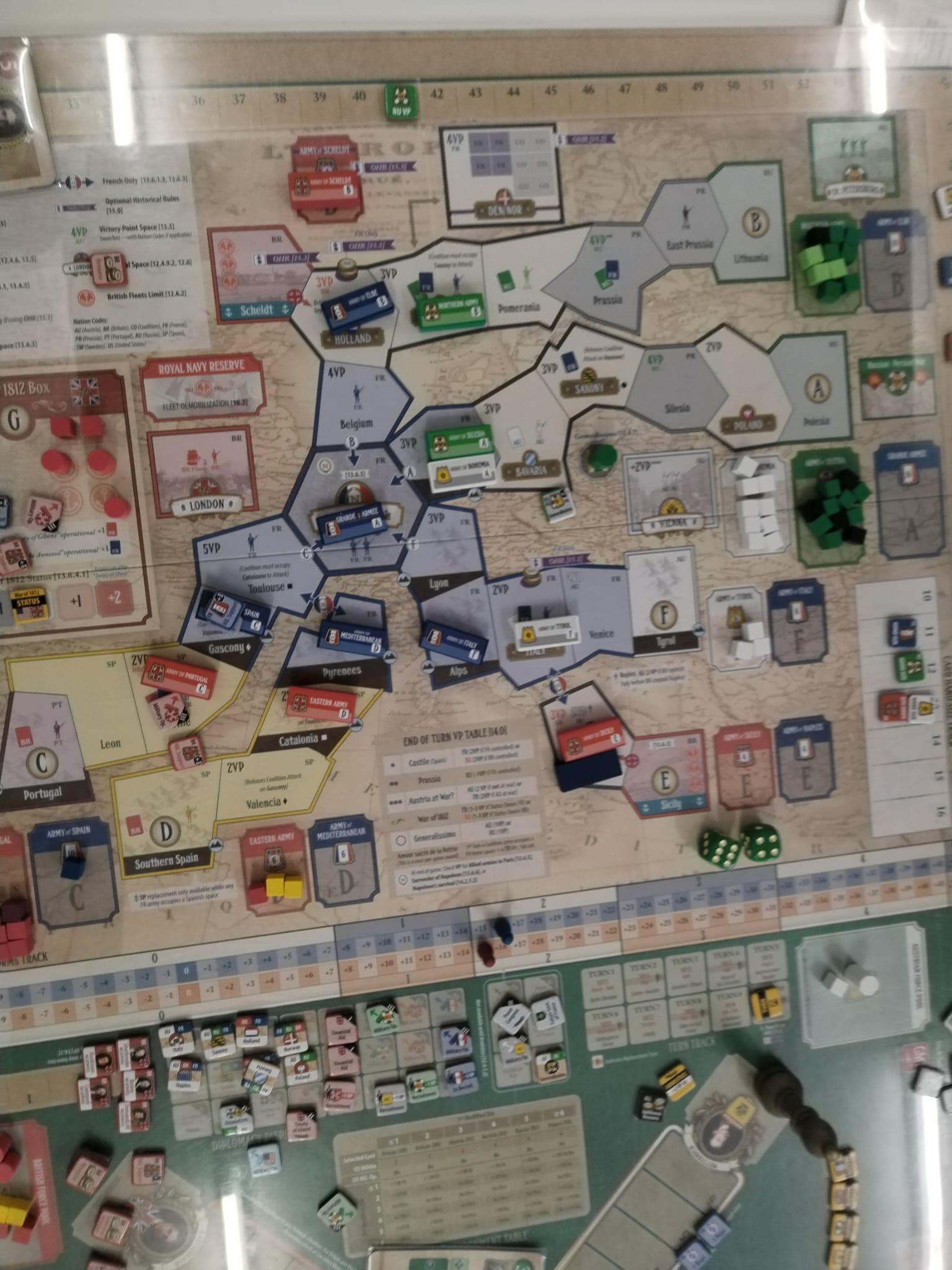
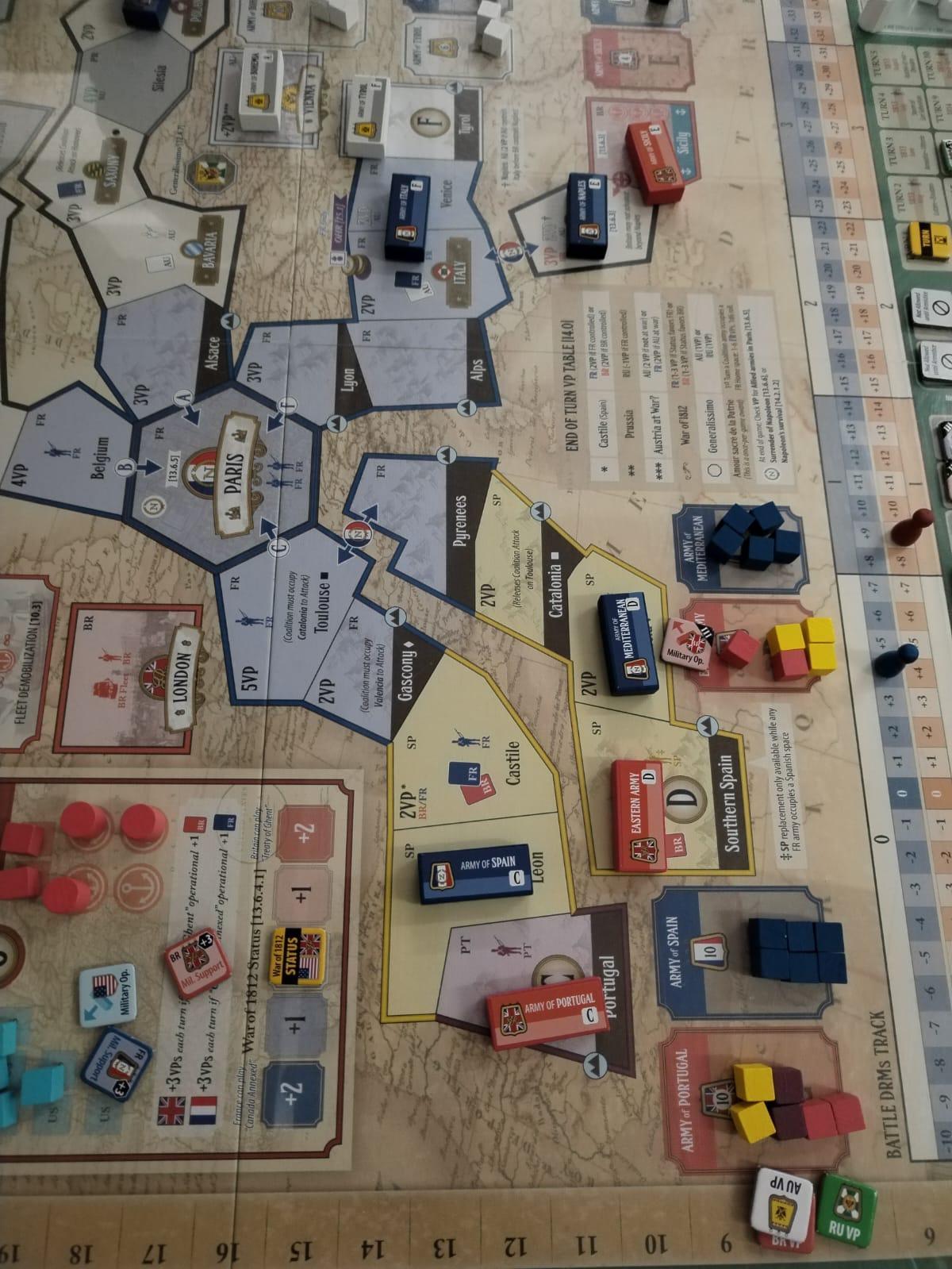
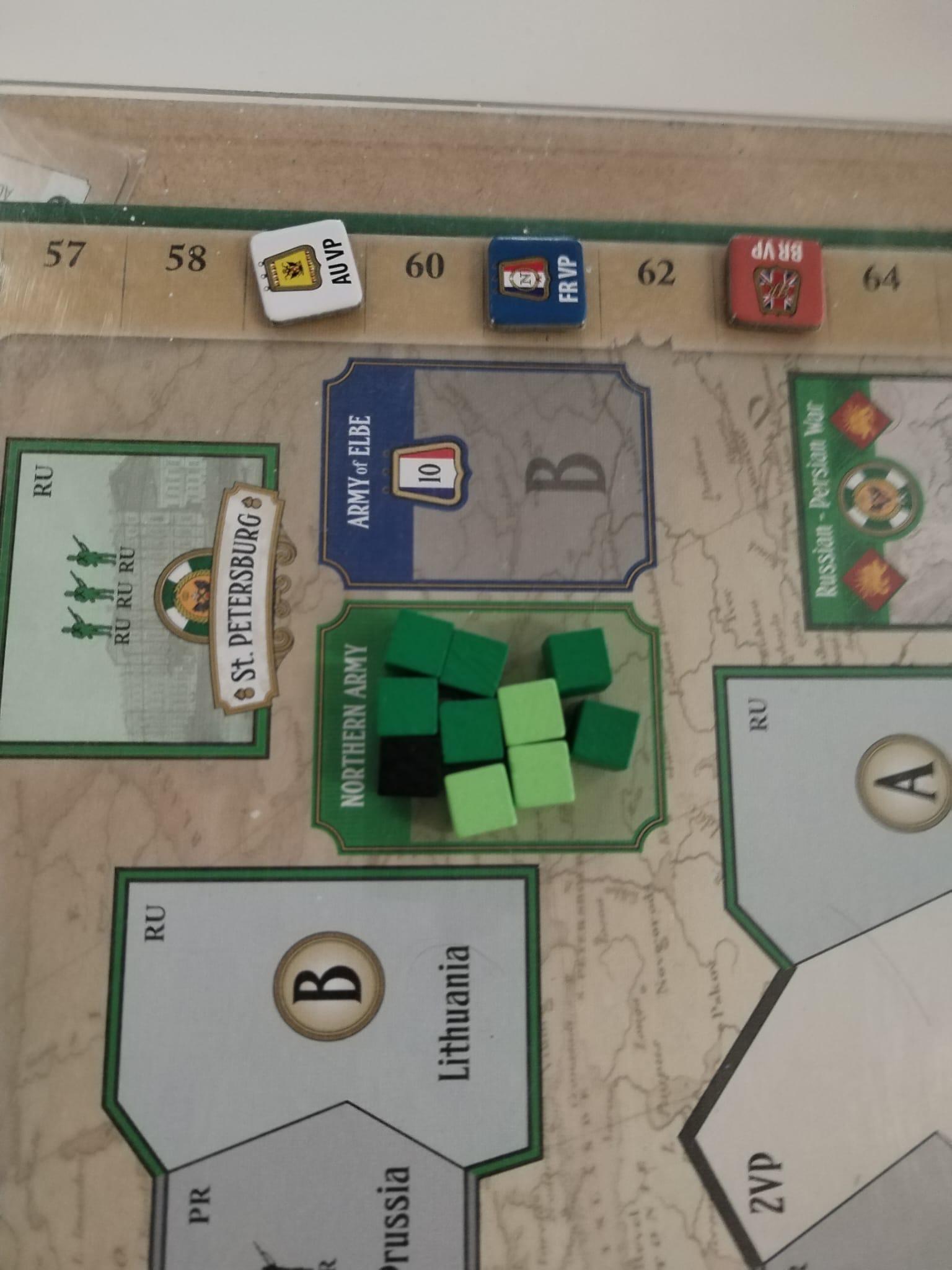
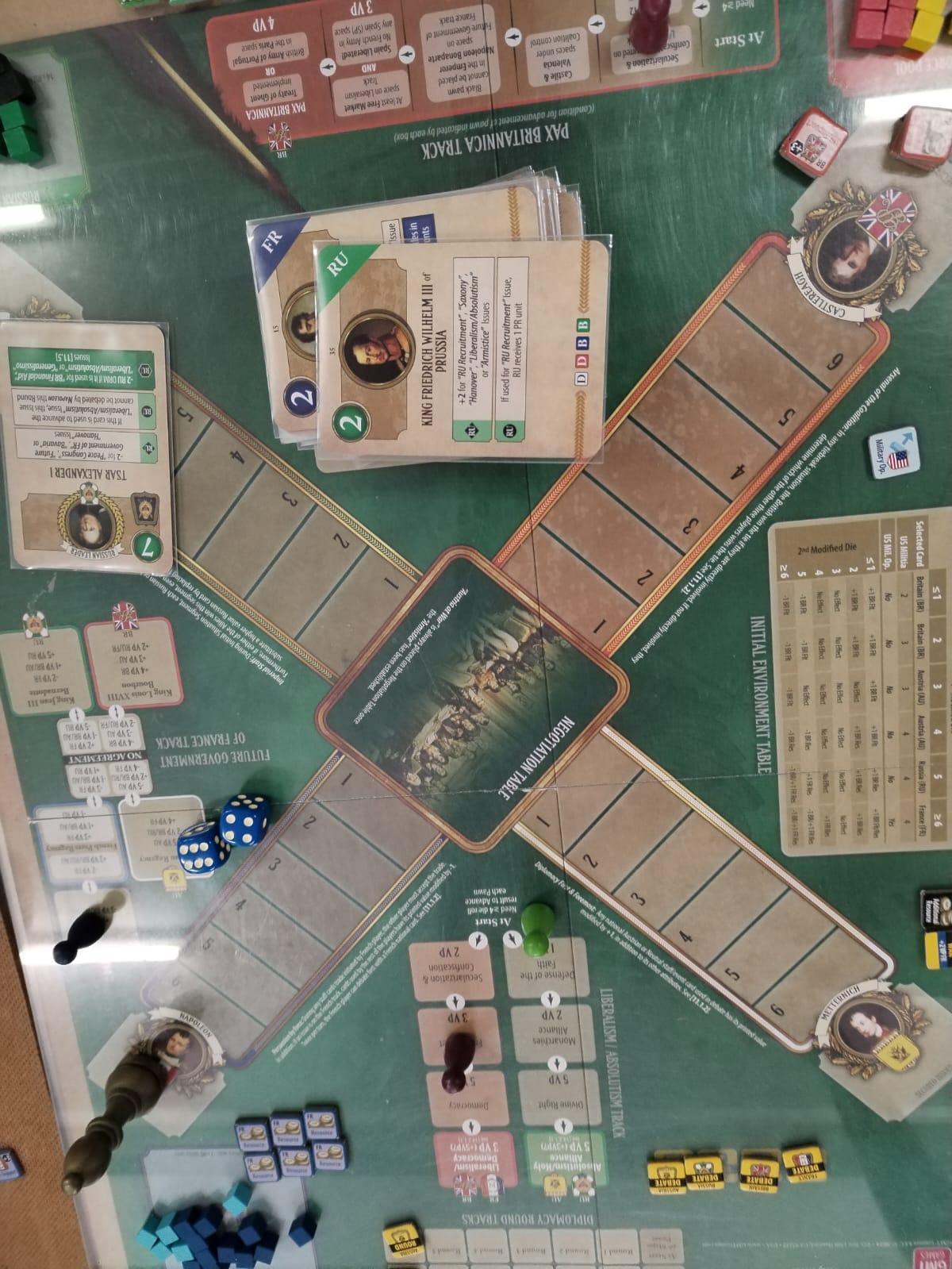
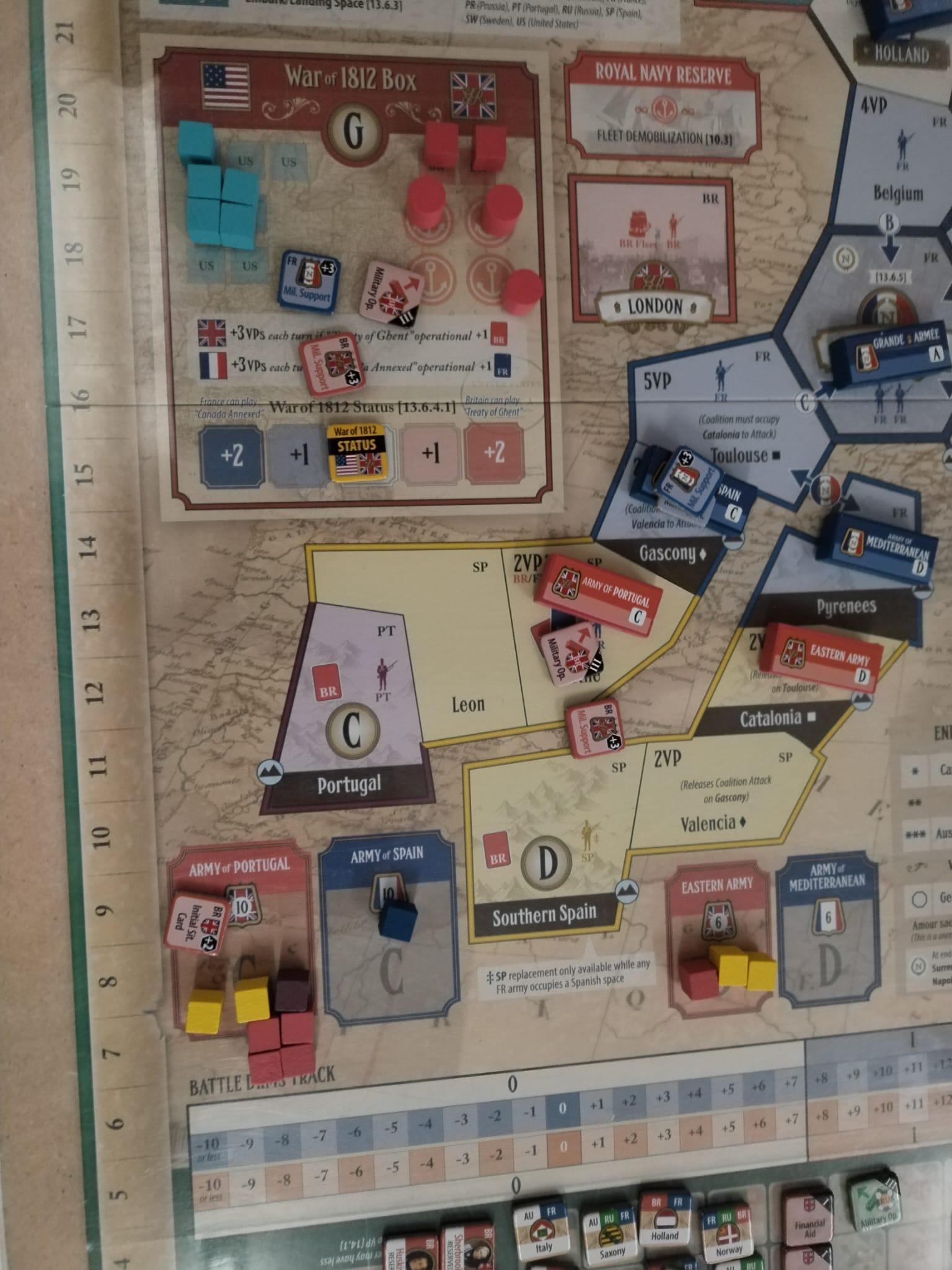
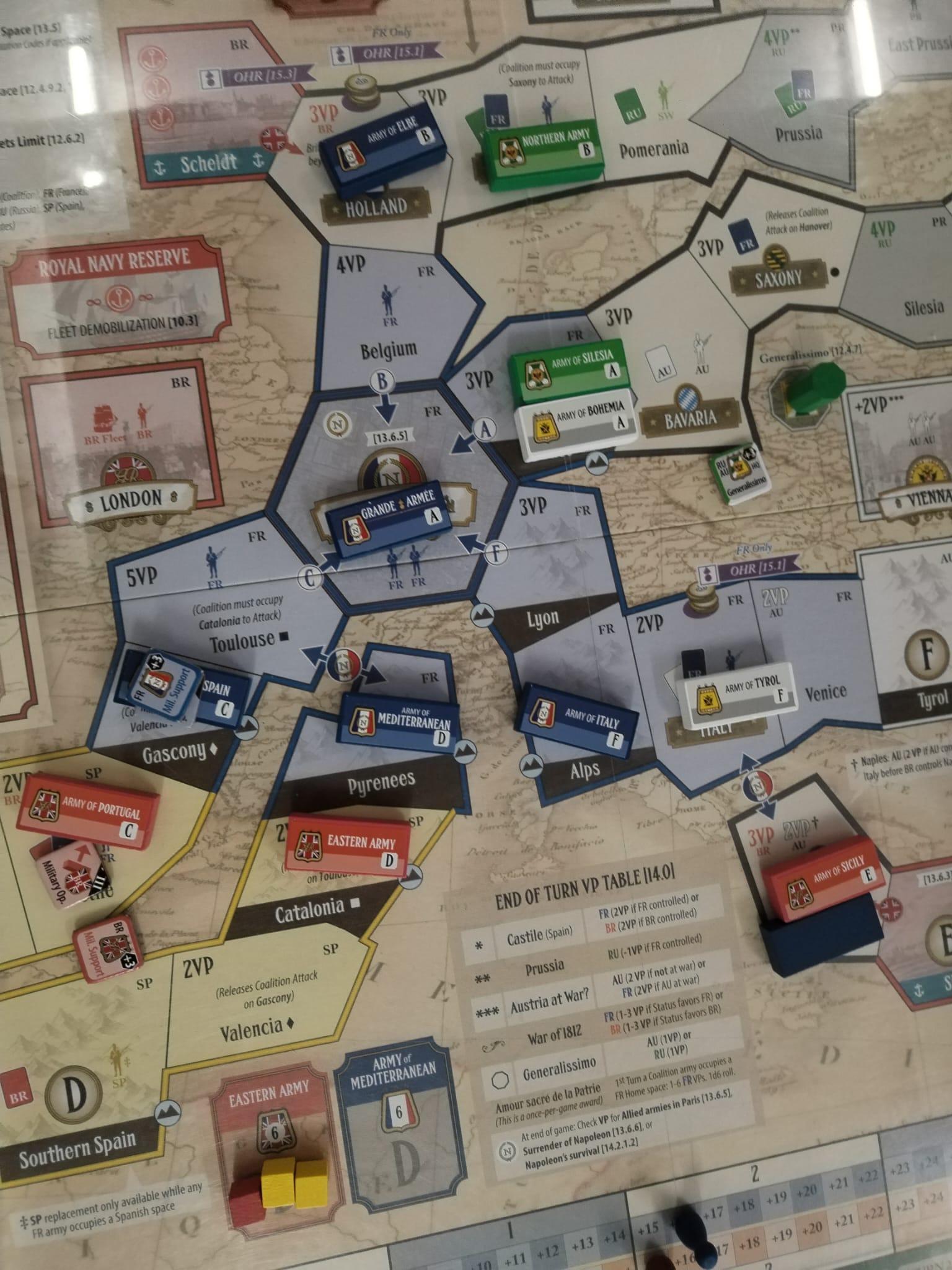
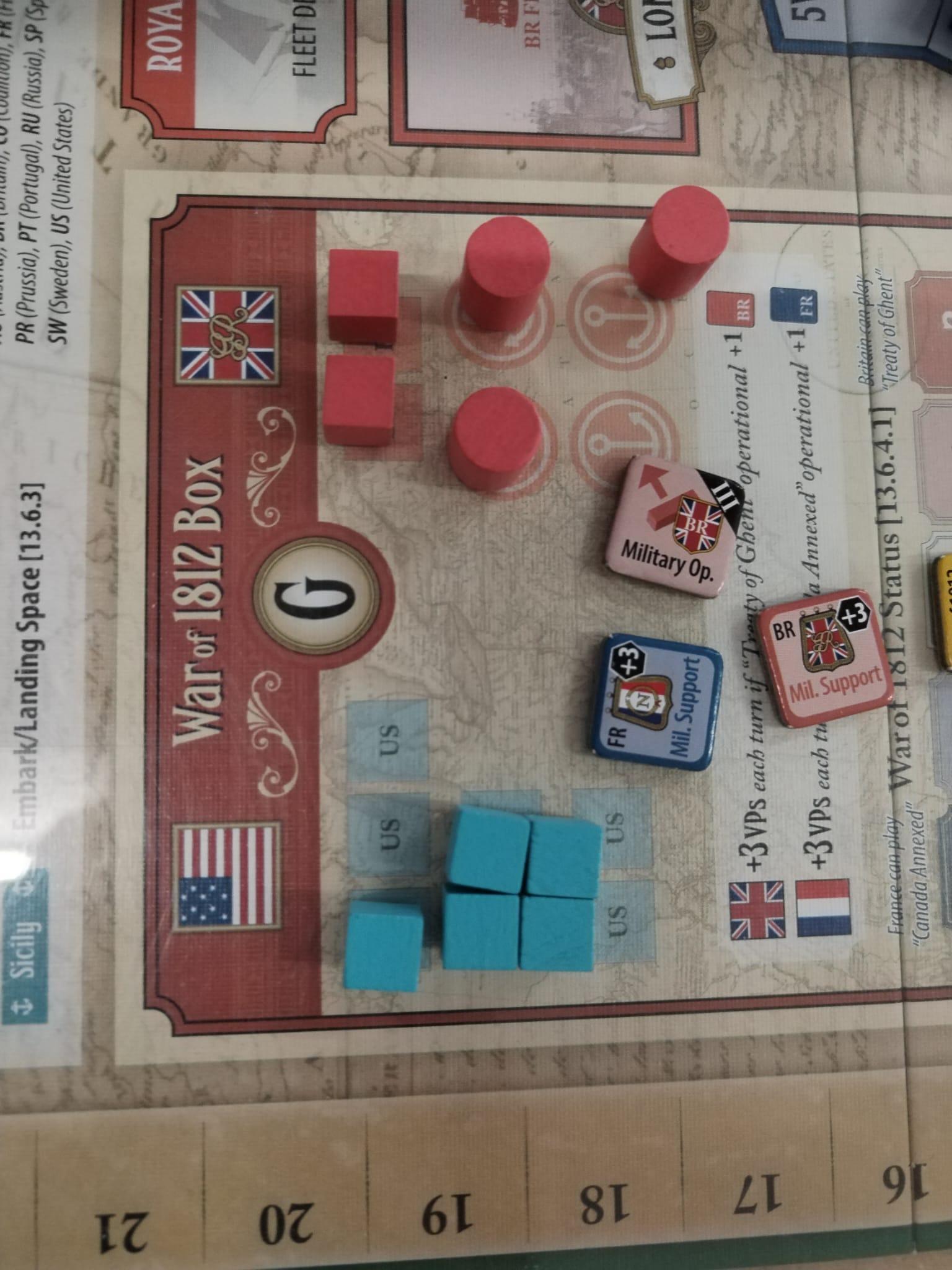
Ludoya 테이블에서는
Ludoya에서 전체 통계 보기- 11
- 기록된 플레이
- 15
- 플레이어
- 5h 18m
- 평균 플레이 시간
- 5
- 컬렉션 보유
- 1
- 위시리스트 등록
- 1
- 예약 구매
룰 질문
Ludoya 룰 도우미가 룰북을 바탕으로 답변했습니다.
How is the Diplomacy Phase winner determined — what actually decides who wins and what do they get?
After six Diplomacy Rounds, Issue markers remaining on Major Powers’ National Tracks are counted as “won” and the player with the most won Issues is the Diplomacy Phase winner; Britain breaks ties. The winner gains VP (2VP for Britain/Austria/Russia, 4VP for France) and is granted the advantage of playing last in later phases. (See rulebook pp. 21–24.)
Can I trade Character/Leader cards during the Diplomacy Phase, and can France force a trade?
On your Diplomacy turn you may offer a Character-card trade instead of negotiating; both players turn an eligible card face-down and swap if the trade is accepted (neutral cards may not be traded). The French national advantage forces an opponent to trade a French Character card to France if that opponent has one. (See rulebook pp. 24 and 20–21.)
How do I calculate a battle’s DRM — what modifiers do I add or subtract?
Each side’s initial DRM starts with its unit/fleet count in the Army/Box, then add/subtract modifiers such as +3 per Military Support marker, Homeland or Guerilla bonuses, terrain penalties (e.g., −3 for mountain), amphibious penalties, special Leader/character effects (including the Meddling Tsar), and any Military card DRMs revealed; final 2d6 are then rolled and applied on the Battle DRM Track. Use the track and the order of application described to get the final DRM. (See rulebook pp. 36–40.)
Can an army withdraw from a battle to avoid worse losses, and what happens if it does?
After initial DRMs are calculated, one eligible Army may choose to Withdraw (French decides first); withdrawal applies a −6 DRM to both sides and the withdrawing Army retreats one space backward, with additional movement/advance rules depending on whether both sides had Military Operation markers. Some forces (e.g., armies in Front Start spaces, the Grande Armée in Paris, War of 1812) cannot withdraw. (See rulebook p. 37.)
How are casualties and retreats resolved after the dice are rolled — who chooses which units are lost and where armies retreat/advance?
Final pawn positions on the Battle DRM Track indicate losses each side inflicts; both players simultaneously choose which of their units/fleets to remove to satisfy those losses and move them to their Force Pools, then the side inflicting more losses (and not having Withdrawn) is the victor and advances into the vacated space while the loser retreats to the rear unless exceptions apply. There are special rules for cancelling retreats in mountains, Major Battle VP effects, and allocation of losses for multinational Allied armies. (See rulebook pp. 39–41.)
What happens when the Grande Armée is in Paris — can it move, absorb units, and how does Napoleon’s surrender work?
Once the Grande Armée enters Paris it can never leave, immediately absorbs French units placed into Paris up to its 16‑unit limit (excess go to the Force Pool), and the French player may not strategically reduce it below four units; if the Grande Armée is reduced below four units in Paris while France is not the VP leader, the Surrender of Napoleon occurs and triggers end‑of‑game procedures. Paris is treated as French‑controlled while Grande Armée is embedded and has special co‑existence/attack/retreat rules for Allied armies. (See rulebook pp. 46–47.)
유사한 보드게임
 Churchill2015
 Maria2009
 Napoleon against Europe2013
 The Napoleonic Wars (Second Edition)2008
 Europe in Turmoil: Prelude to the Great War2018
 The Napoleonic Wars2002
 Europa Universalis: The Price of Power2023
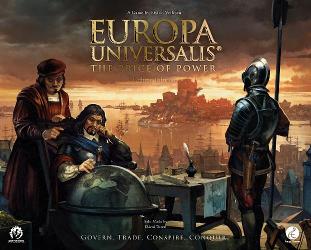 유로파 유니버설리스: 권력의 대가 (디럭스 에디션)2026
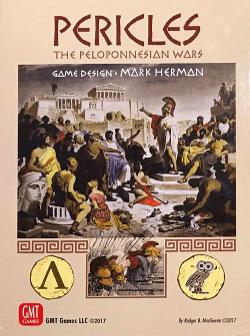 Pericles: The Peloponnesian Wars2017
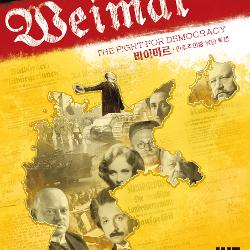 바이마르: 민주주의를 위한 투쟁2024
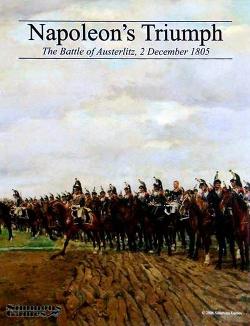 Napoleon's Triumph: The Battle of Austerlitz, 2 December 18052007
 Land and Freedom: The Spanish Revolution and Civil War2023
이 게임 소유자가 함께 가진 게임
무료, 웹·Android·iOS 지원
Ludoya로 Congress of Vienna 플레이하기
게임 정보(인원, 플레이 시간, 연령, 제작진) 출처: BoardGameGeek.