
2020 · 동물
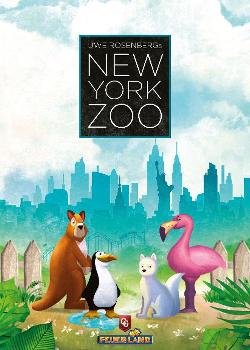
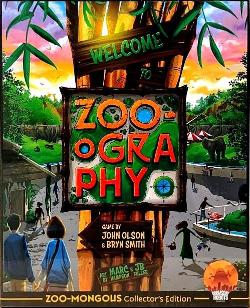
New York Zoo
Construct an urban animal park by placing enclosure tiles and expanding a personal zoo layout. On each turn choose between adding a new enclosure tile to the board or acquiring animals to populate enclosures, then manage introductions and breedings to produce offspring. Timing and tile placement matter because breeding opportunities depend on enclosure adjacency and animal presence.
- 인원
- 1–5 최적 3명
- 플레이 시간
- 30–60분
- 연령
- 10+
- 복잡성
- 2 / 5



Ludoya 테이블에서는
Ludoya에서 전체 통계 보기- 329
- 기록된 플레이
- 358
- 플레이어
- 47m 26s
- 평균 플레이 시간
- 112
- 컬렉션 보유
- 17
- 위시리스트 등록
6.6/10
Ludoya 리뷰 41개 기준
룰 질문
Ludoya 룰 도우미가 룰북을 바탕으로 답변했습니다.
How far do I have to move the elephant on my turn, and which spaces count when I count movement?
You must move the elephant forward clockwise the number of spaces shown on your board (you may not leave it where it is); in 2/4‑player games you move 1–4 and in 3/5‑player games 1–3. When counting, only blue Animal Acquisition spaces and any slot that has at least one Enclosure Tile count — empty slots and the breeding lines are skipped. (See page 5.)
If the elephant lands on a slot with Enclosure Tiles, do I have to take the top tile and place it immediately, and must I add animals then?
Yes — you must take the topmost Enclosure Tile from that slot and immediately place it on your construction area following the puzzle rules, and then fill that new Enclosure with 1–2 of your animals (from houses and/or other Enclosures). If you cannot add an animal (or have no space), you are not allowed to take that Enclosure Tile and must instead move to a blue Animal Acquisition space. (See pages 5–6.)
Can I rearrange animals freely between my Enclosures and houses when placing or acquiring animals?
No — you may not freely rearrange animals except where the rules explicitly allow it; when you place a new Enclosure you may move animals to fill it but at least one animal must remain behind in any Enclosure you take from, and a maximum of 2 animals may be added to an Enclosure per action. (See page 6.)
When exactly does Animal Breeding happen and who receives offspring?
If your elephant crosses a breeding line, you complete your main action first and then Animal Breeding occurs for all players: any player who has at least 2 animals of that species in an Enclosure receives 1 additional animal in that same Enclosure (maximum one per Enclosure, up to two Enclosures), and for each offspring you may also add one same‑species animal from a house; in 2–3 player games a Bonus Breeding gives one extra offspring in another Enclosure if you had at least one offspring. (See pages 5 and 7.)
If an Enclosure fills up, do I immediately exchange those animals for an Attraction and can I keep one animal?
Yes — when an Enclosure is completed you immediately remove its animals and return them to the supply, but you may place exactly one of those animals into an empty house if you have space (otherwise it also returns); then you immediately choose and place an Attraction in your construction area. (See page 6.)
If the game ends during Animal Breeding and several players complete their boards, how is the winner determined?
If the game ends with Animal Breeding and multiple players complete their construction area in the same phase, the player with more animals wins (ties can produce multiple winners); other rankings follow the usual rules for ending with the main action (fewer free spaces, then more animals as tiebreaker). (See page 8.)


게임 정보(인원, 플레이 시간, 연령, 제작진) 출처: BoardGameGeek.