
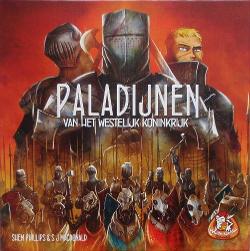
2019 · Middeleeuws
Paladijnen van het Westelijk Koninkrijk
Gesitueerd in het vroege middeleeuwse West-Francië, spelen de spelers als edelen die arbeiders werven en koninklijke ridders inzetten om de grensgebieden te beschermen en hun invloed uit te breiden. Elke ronde wordt een specifieke paladijn geactiveerd en verzamelen spelers arbeiders om buitenposten en versterkingen te bouwen, monniken in te schakelen, binnenvallende groepen te confronteren en hun geloofs-, kracht- en invloedssporen te verbeteren. Overwinningspunten komen van gebouwde gebouwen, religieuze opdrachten en succesvolle conflicten; het spel eindigt na zeven rondes. Spelers plannen worker placement en het gebruik van grondstoffen om acties en timing te maximaliseren, terwijl ze de dreigingen op de kaart beheren.
- Spelers
- 1–4 best met 2
- Speeltijd
- 90–120 min
- Leeftijd
- 12+
- Complexiteit
- 3,7 / 5
Over het spel
- Ontwerp
- Illustraties
- Uitgevers




Uitbreidingen
Bekijk ze in Ludoya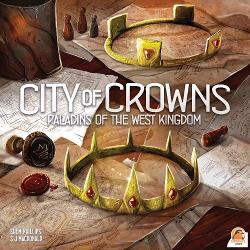 Paladins of the West Kingdom: City of Crowns2021
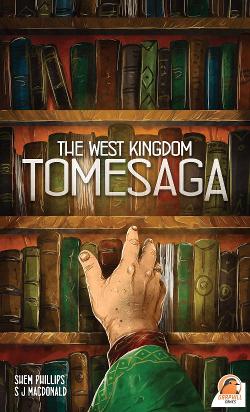 The West Kingdom Tomesaga2023
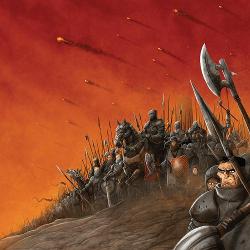 Paladins of the West Kingdom: The Vassals Mini-Expansion2021
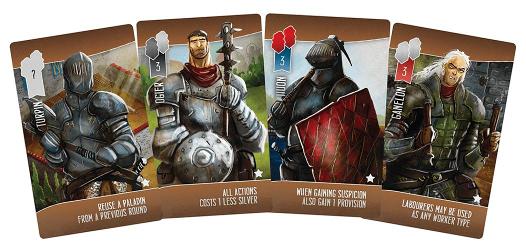 Paladins of the West Kingdom: 2019 Promos2019
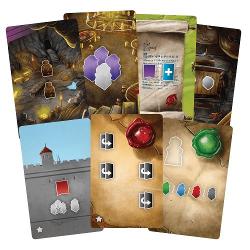 West Kingdom Mini Card Set2019
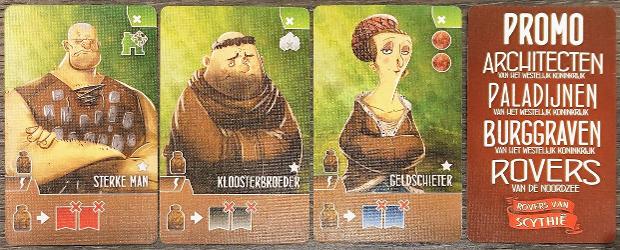 Paladins of the West Kingdom: Dice Tower 2021 Pack2023
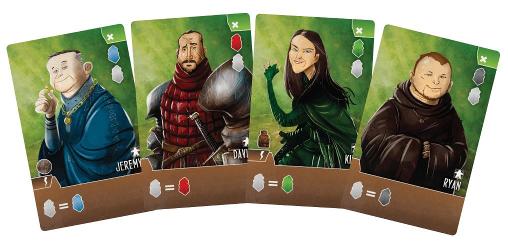 Paladins of the West Kingdom: Meeple Folk2020
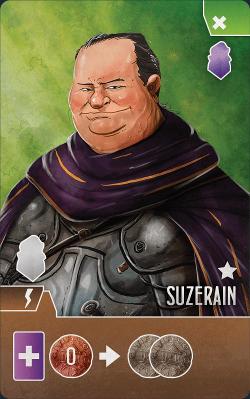 Paladins of the West Kingdom: Suzerain2021
 Paladins of the West Kingdom: King Dan2020
 Level Up Loot 22019
 Paladins of the West Kingdom: Player Suspicion Decks2025
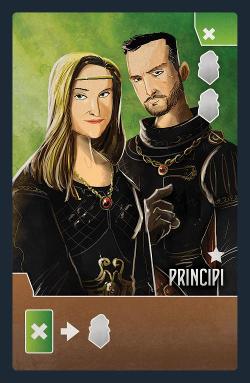 Paladins of the West Kingdom: Principi Promo Card2022
 West Kingdom Trilogy: Promo Pack 22025
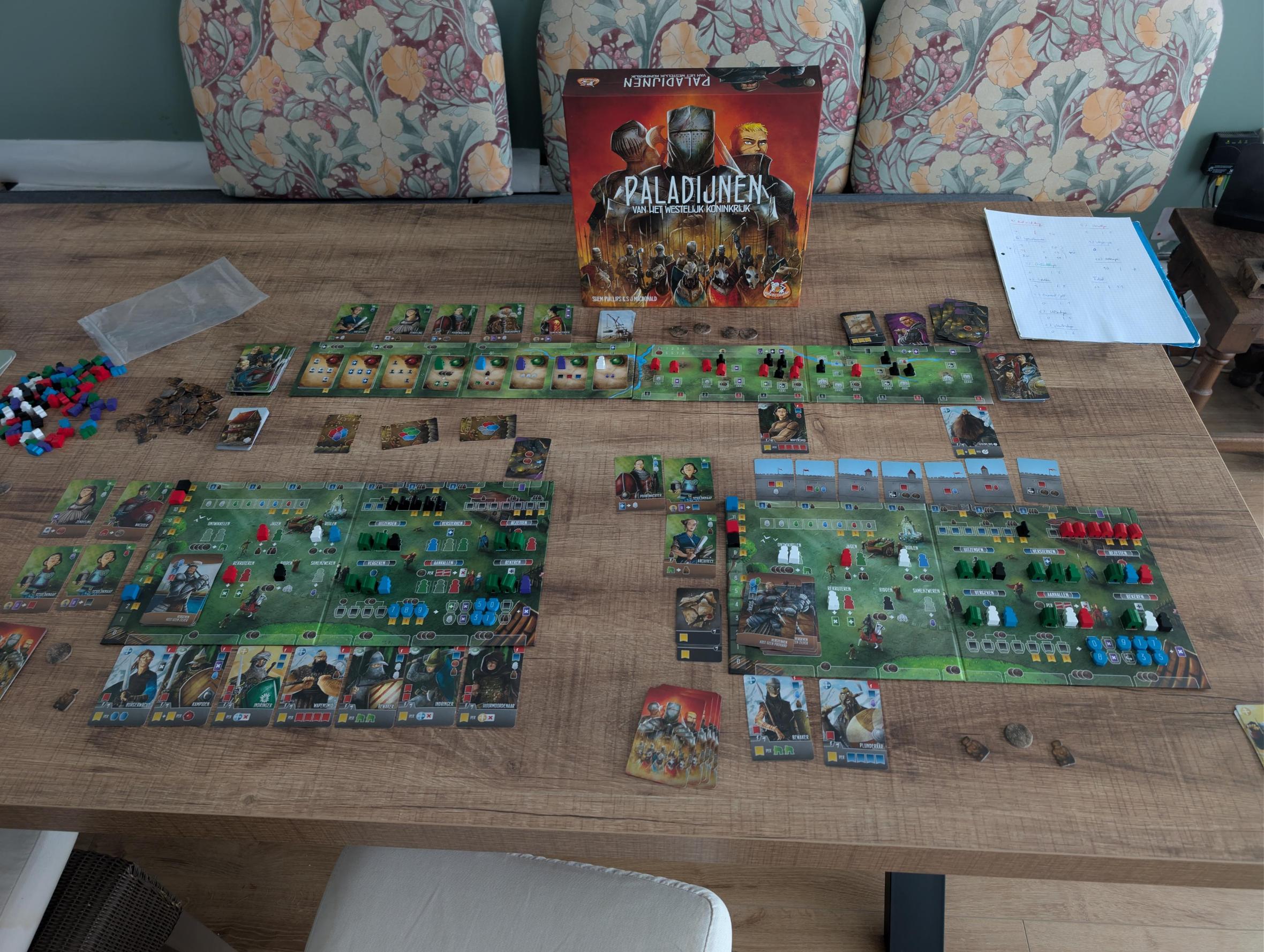
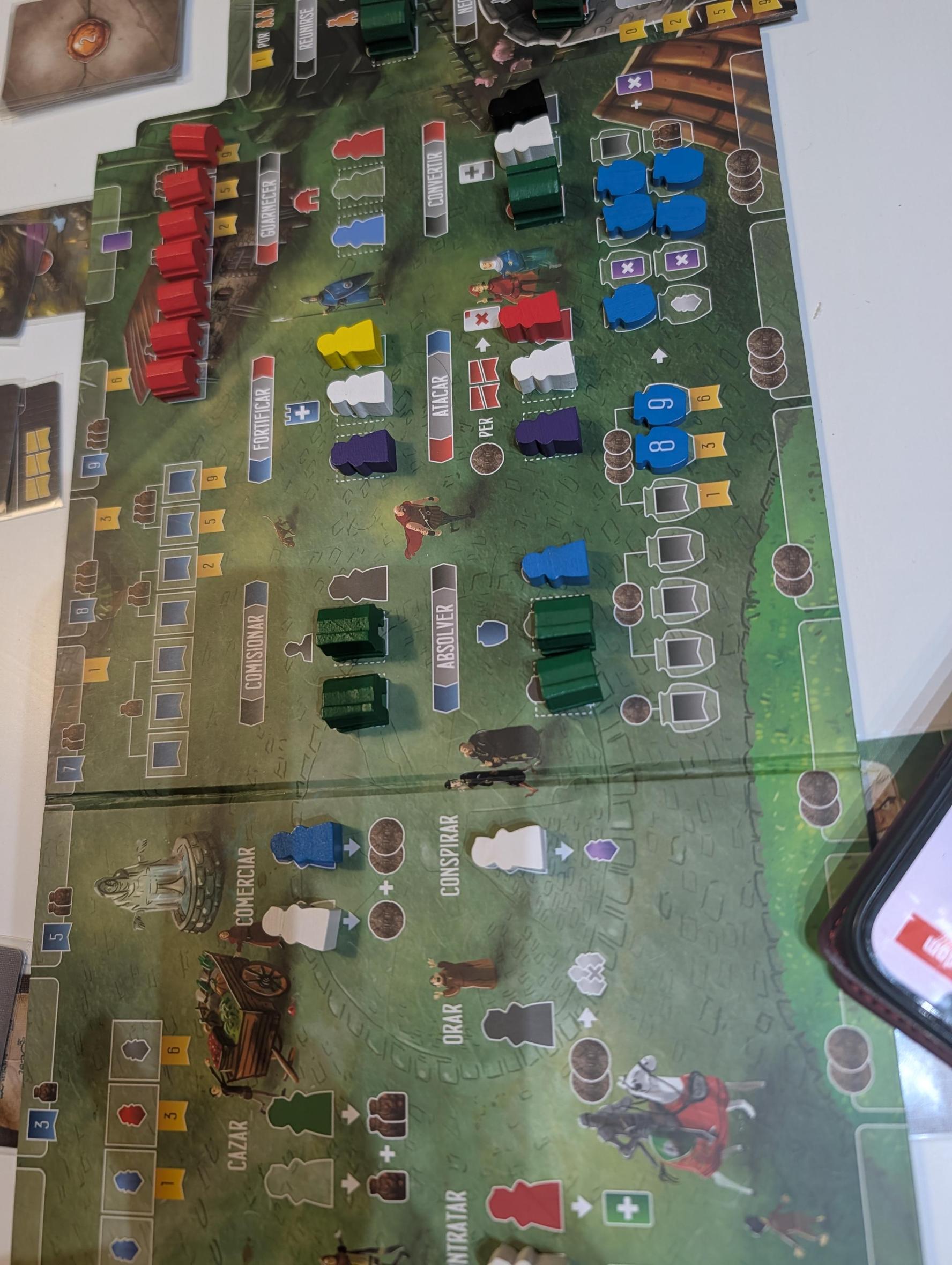
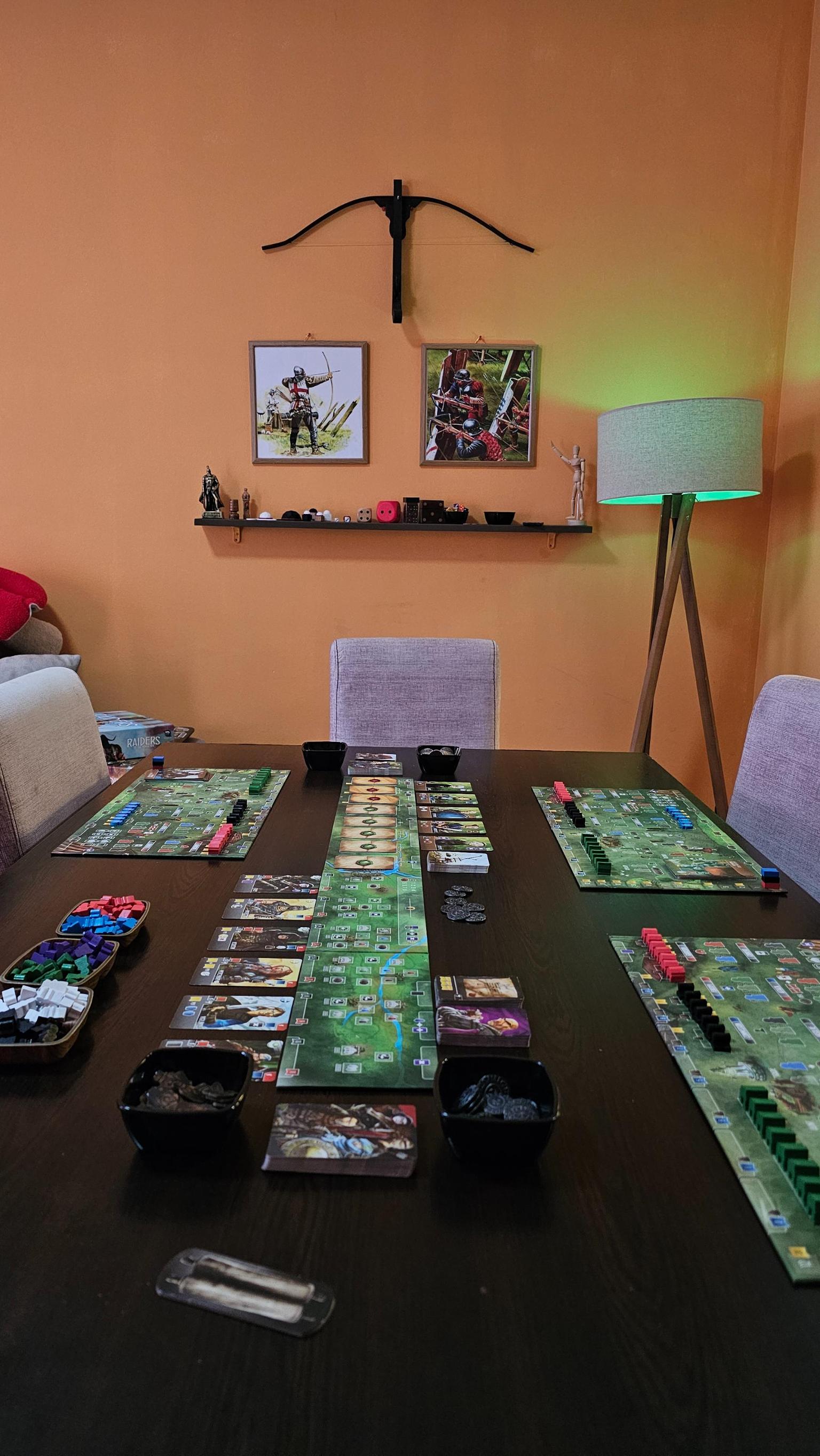
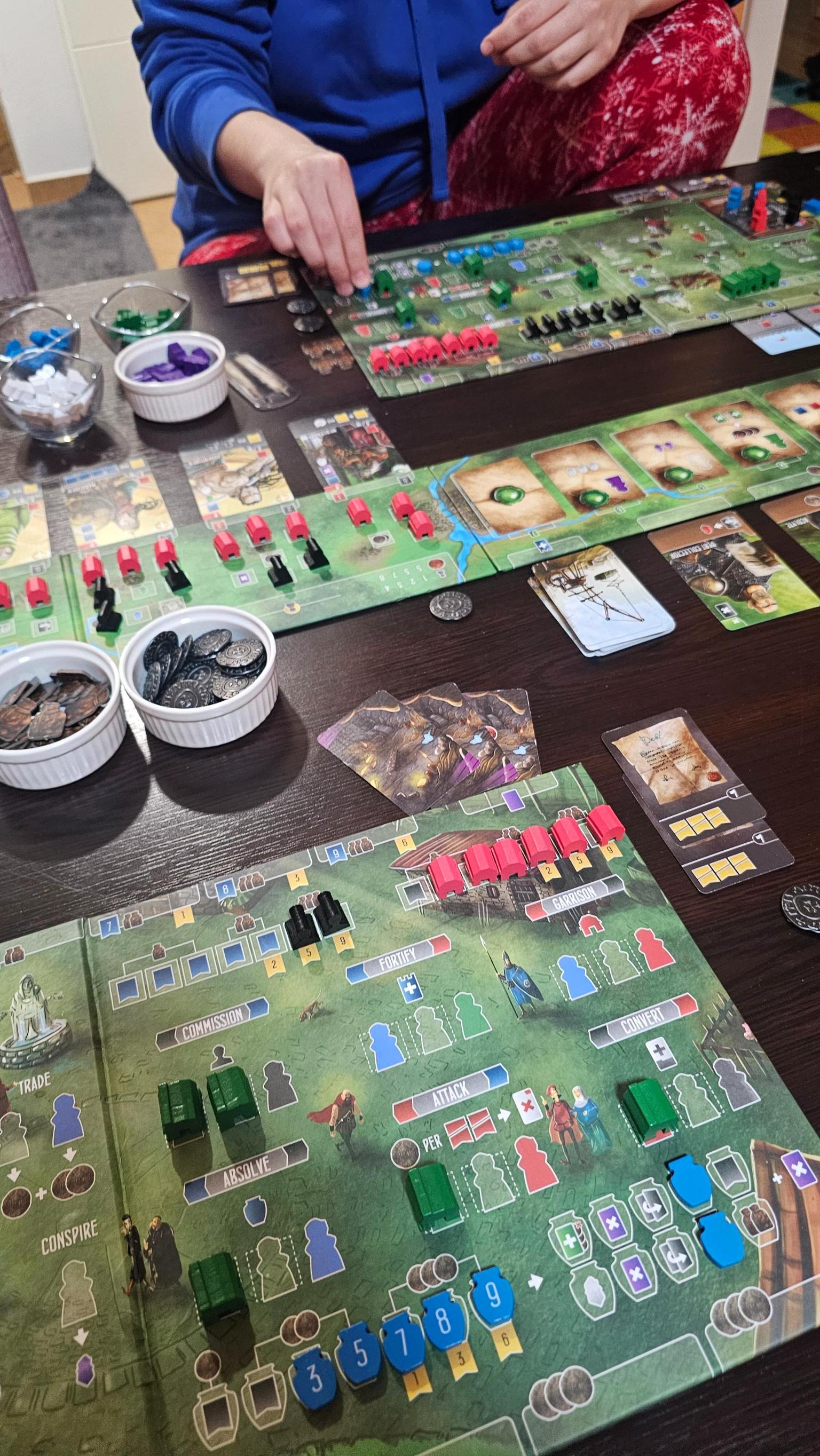
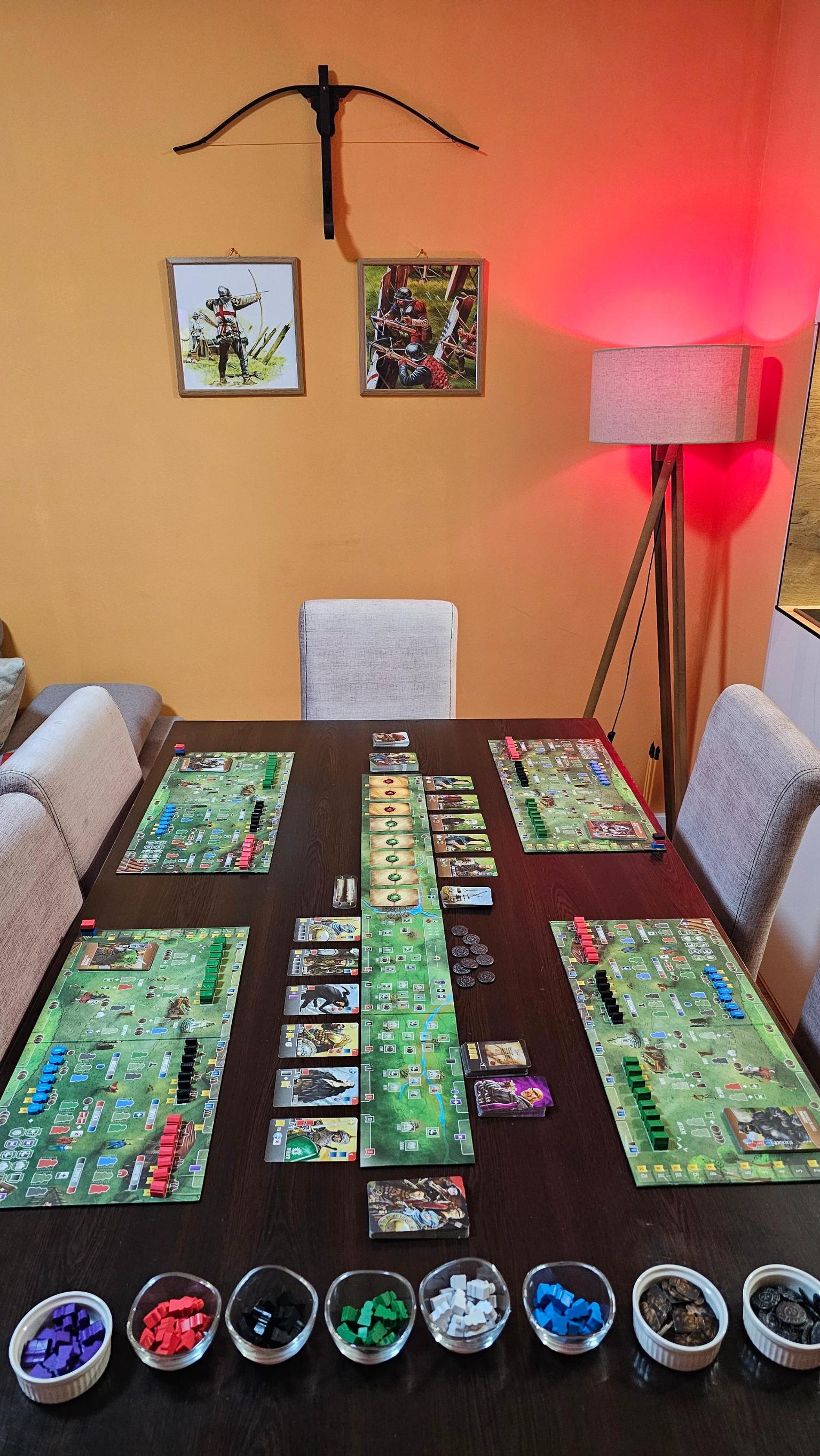
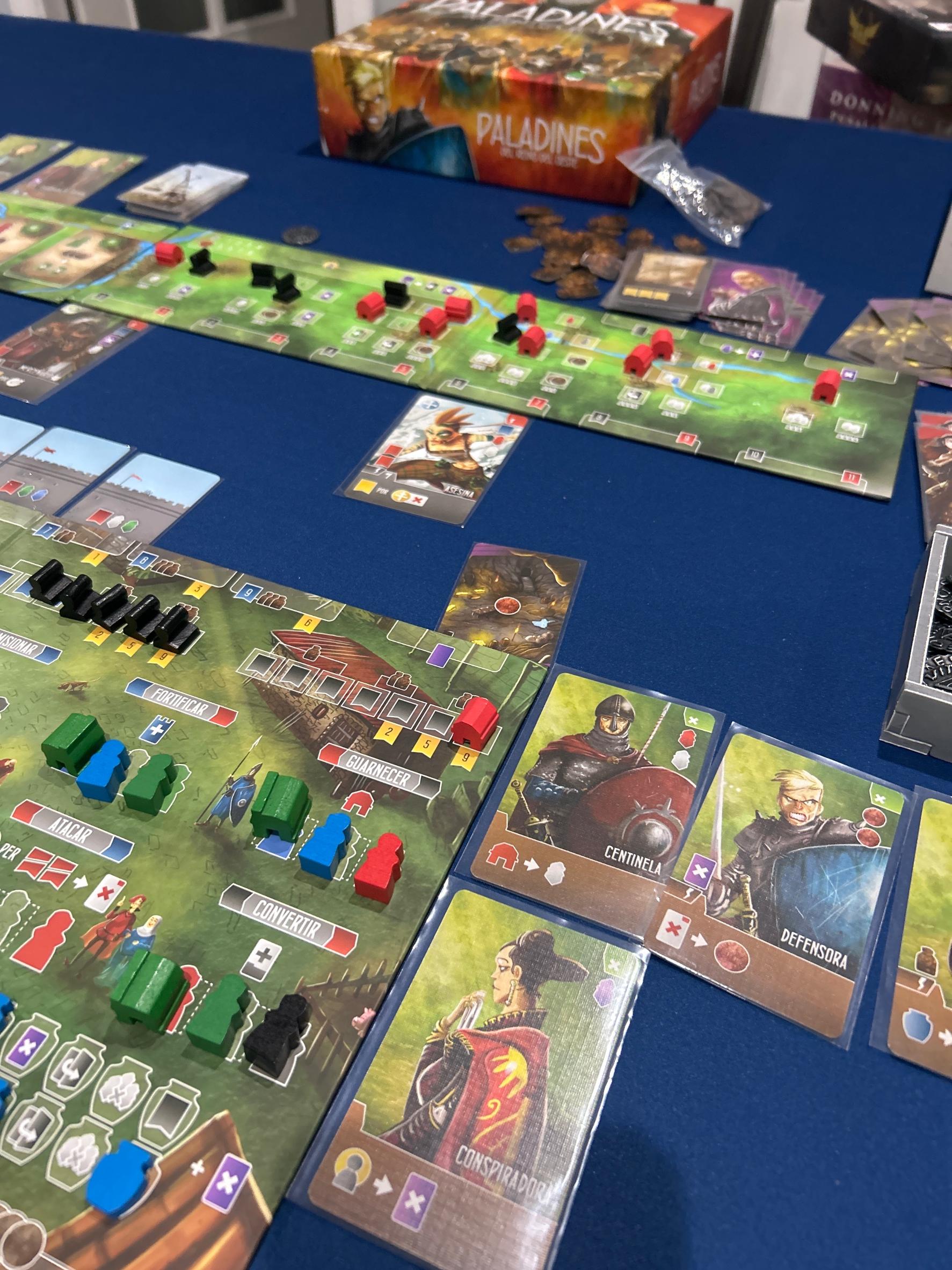
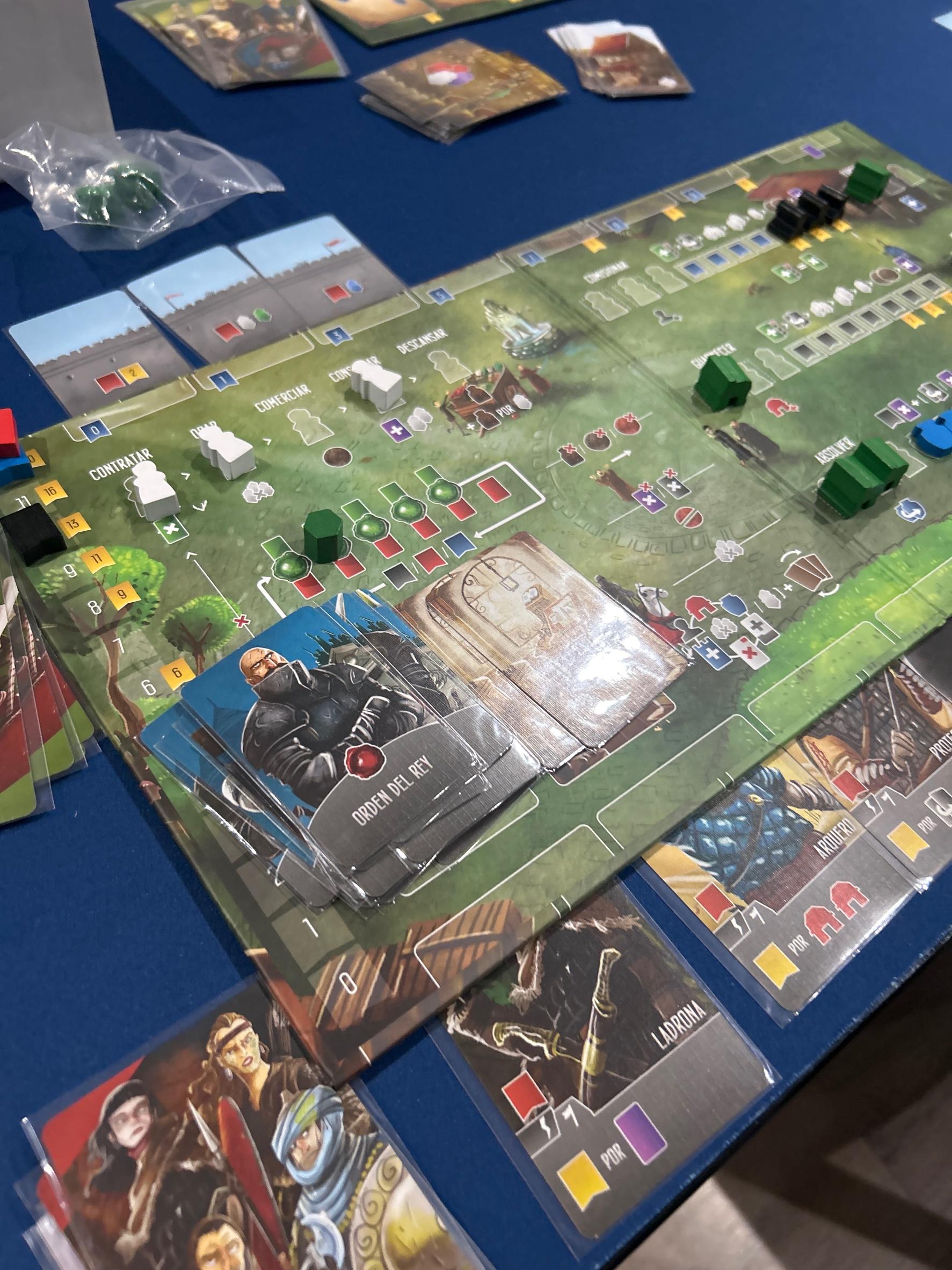
Foto's van Ludoya-tafels
Alle foto's in Ludoya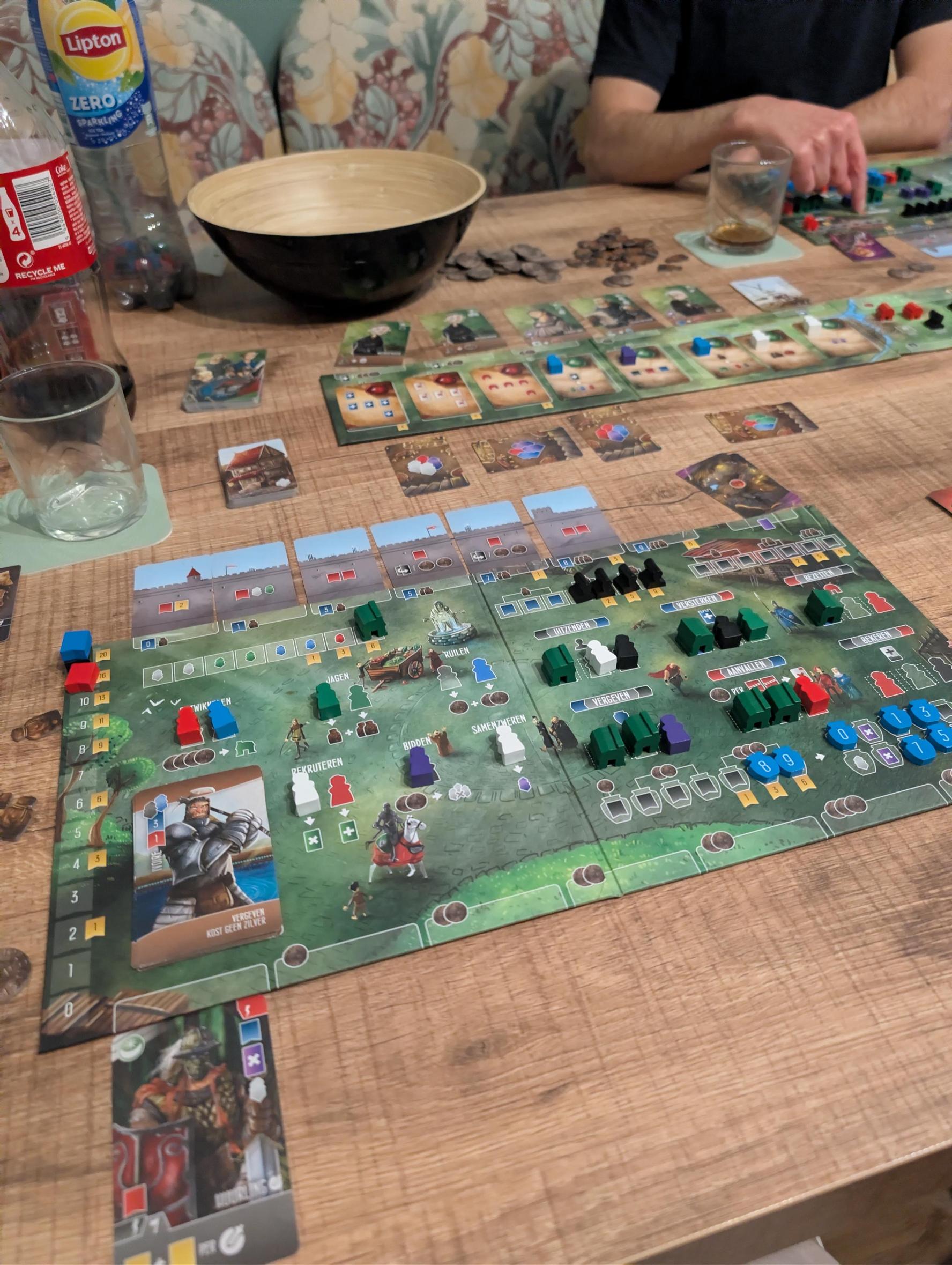
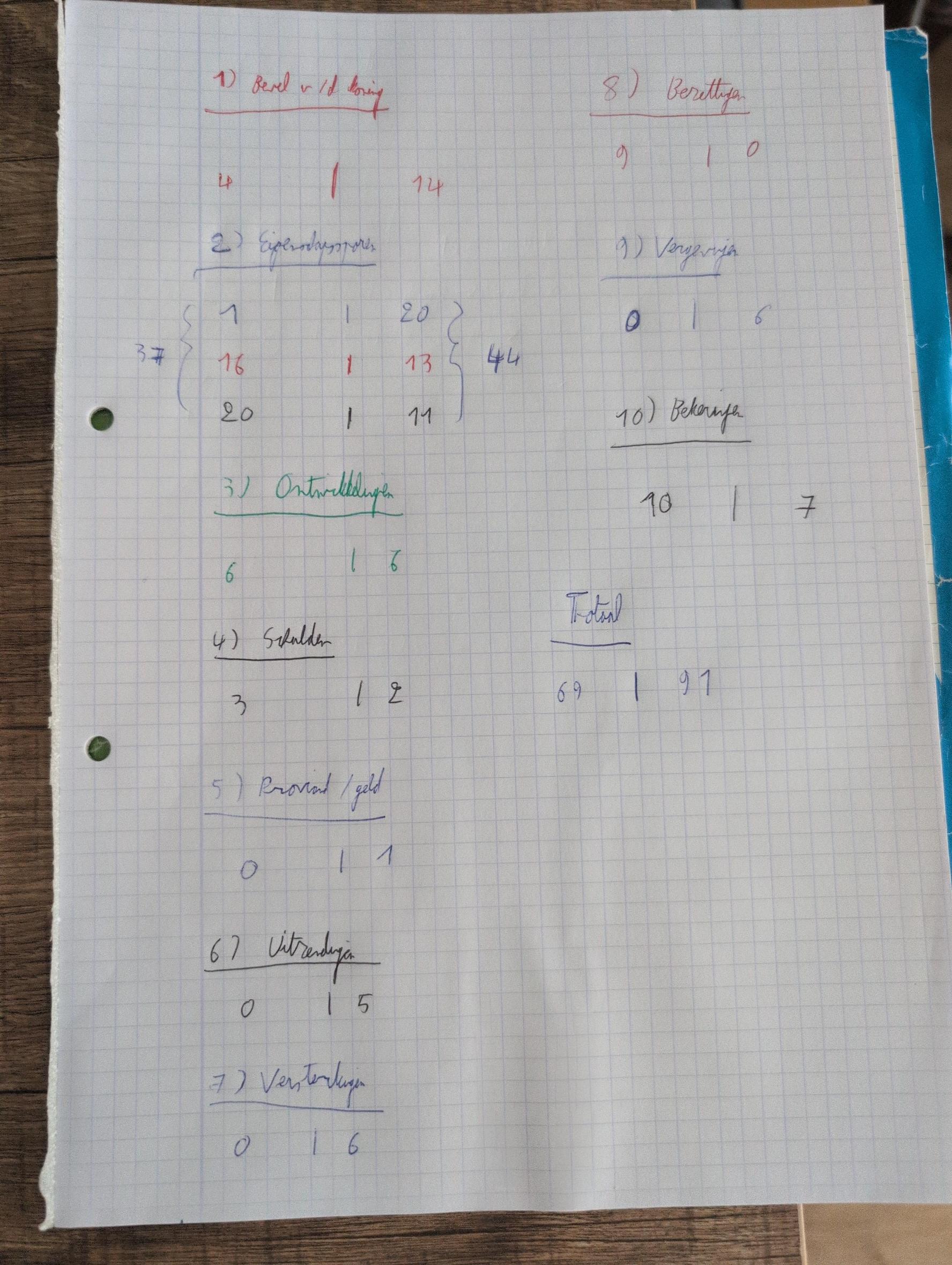
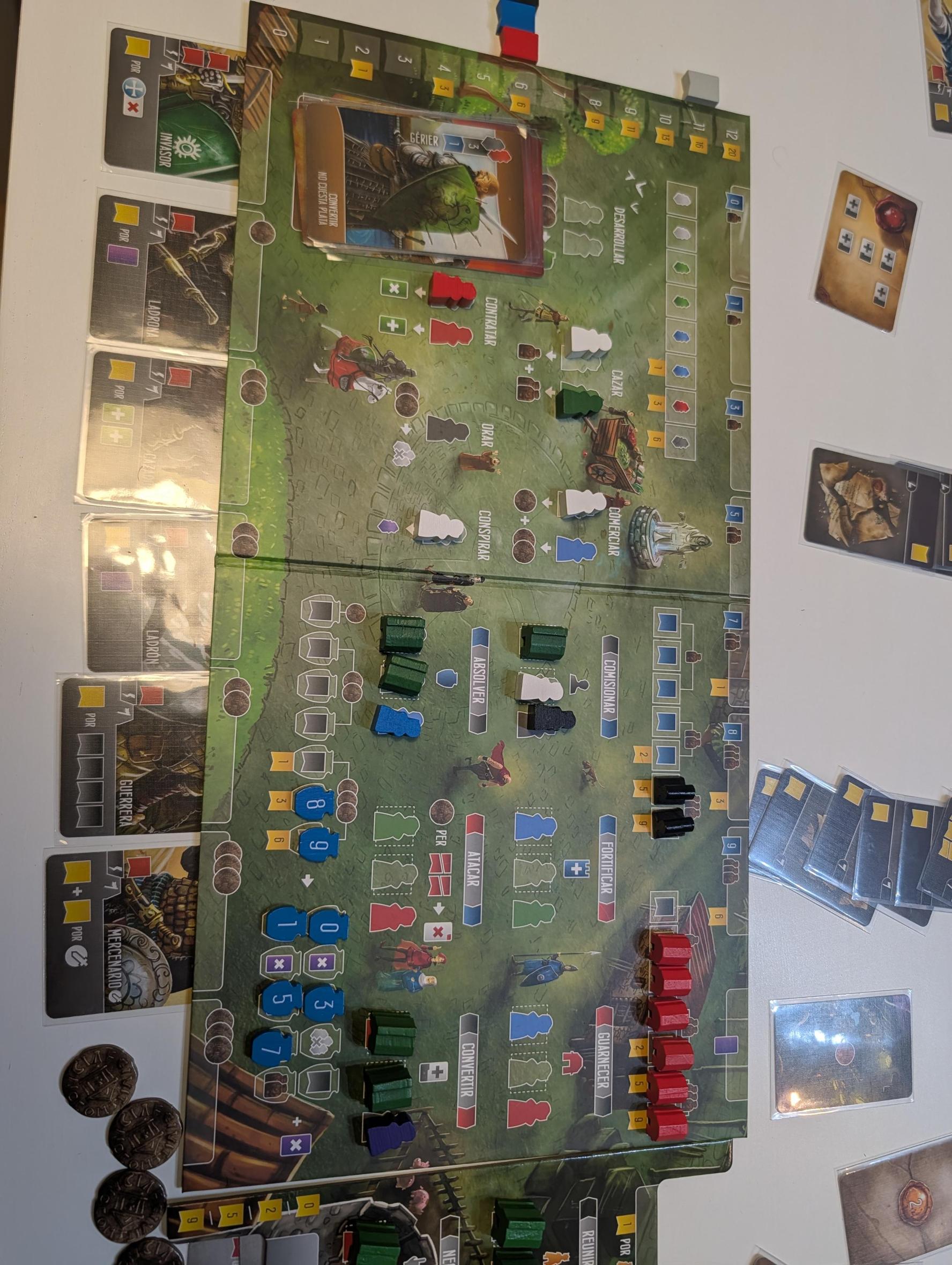
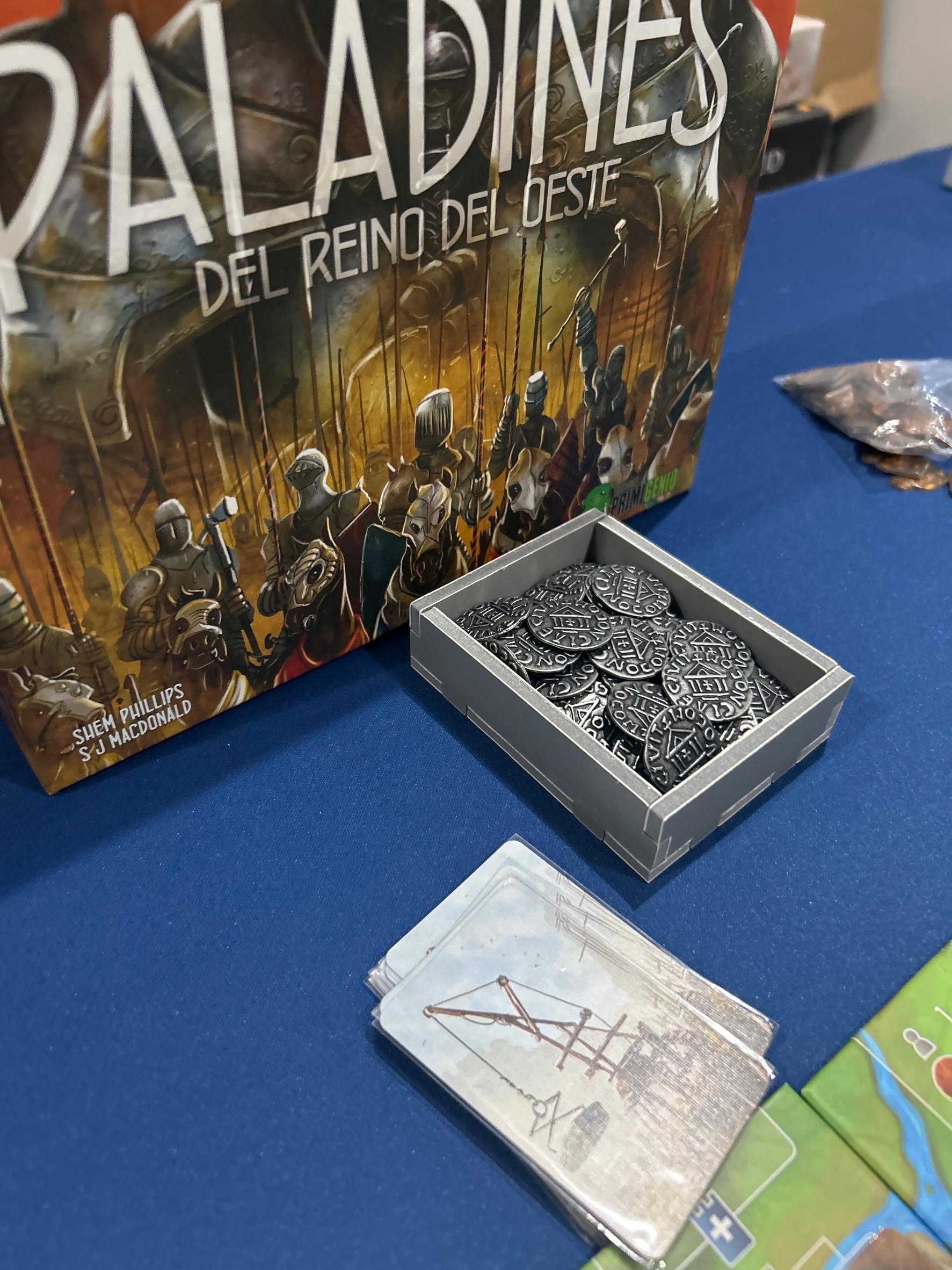
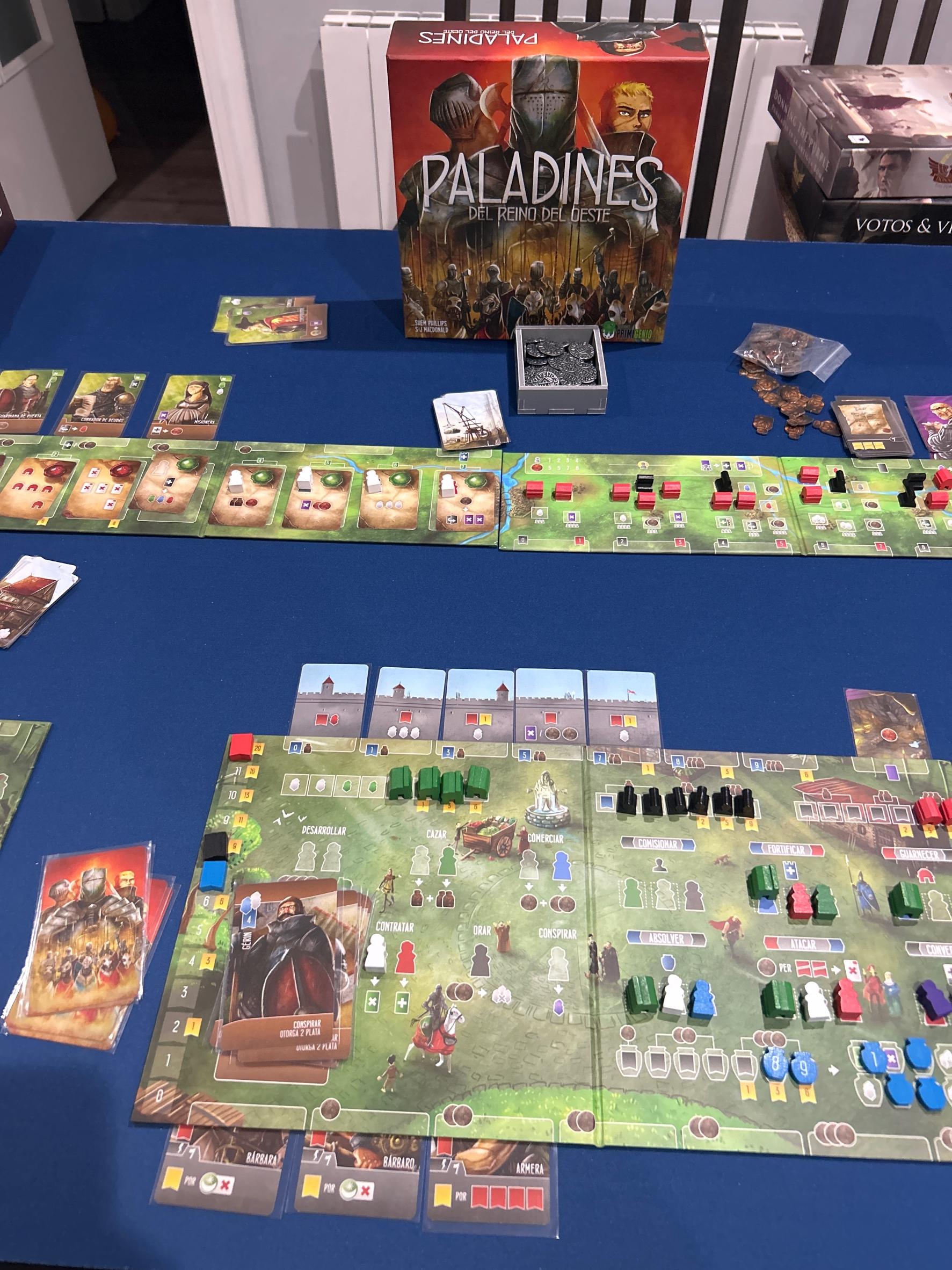
Waar te koop
Winkelprijzen en tweedehands exemplaren, elke dag gecontroleerd.
- SpellenhuisVoorraad controleren64.99 €
- ReflexshopOp voorraad10490 Ft
- Miniature MarketNiet op voorraad45 $
- LudifolieOp voorraad39.9 €
- AlphaspelOp voorraad579 kr
- Cardhaus GamesOp voorraad60 $
- GameplayVoorraad controleren59.95 €
- Get Your FunOp voorraad65.99 €
Aan de tafels van Ludoya
Alle statistieken in Ludoya- 646
- Vastgelegde speelsessies
- 487
- Spelers
- 1h 58m
- Gemiddeld potje
- 207
- In collecties
- 38
- Op verlanglijsten
7,1/10
uit 125 Ludoya-recensies
Balleflass5,0 Very multiplayer solitare. Not my type of game. Architects is my favorite from Garphil by a long shot, but I havent tried Circadians Chaos Order yet which I hope doesnt have the same flaws as Scythe.
Evan4,6 At the start of each of seven rounds, players draw three cards. Each has it's own ability that focuses on making a specific action cheaper or more effective, and comes with two workers. Then in turn order players draft a card that comes with four additional workers. The workers come in a variety of different colors. Once this is done players take their actions one at a time clockwise by laying workers of the correct colors into the action spaces of their boards. Some actions on your board collect resources, others give you steps on one of three scoring tracks, and at times they also come with a bonus reward. There is an action space that places a building onto a worker space making that action cheaper in further rounds, and a space that lets you pays some resources to clear the workers from an action, allowing you to resolve it twice in that round. To further build your engine, there is a belt of purchasable cards that provide additional bonuses when you resolve a specific action in the future. The game has a number of random elements that are a little troublesome. Money is very tight in the game. When you take a wild-colored (represented as purple) worker, you also take a purple card. The back of the purple card has 0, 1 or 2 free dollars on it. These dollars pull from a separate bank, which when depleted refills and then punishes the player with the most purple cards. A player who lucks into getting mostly $2 vs a player who badlucks into getting mostly $0 has a substantial advantage. Additionally, there's an action where you build wall cards at the top of your board. These too come with random rewards, that might help you a lot in your chosen path, or might just wind up a waste of your precious few workers. Another big advantage comes to the player who draws the helper card that reduces the cost of the building that substitutes the worker on your board by half in the first round. Add to this the way the belts of faceup cards work. Each round you refill the two card displays. One is full of cards that can be taken to improve your engine, but they can also be discarded for a one-time bonus. First come first serve. The cards don't appear to repeat as well, so it's easy to miss out on an effect you need because someone else wants the one time benefit for punting them. It works the same with the second display of cards, but those have a mix of one time bonuses at the top, and bonus scoring criteria at the bottom. Mild randomness frustrations aside, the game is enjoyable overall. I like working a personal management board, and it reminds me a lot of Orleans, minus the bag building, plus a little more randomness. This is a game where you need to laser focus on your goals, since workers and money are in short supply, and the rewards for track bumps only come at the very end of the tracks. In that way it's mildly disappointing since it seems like there is a lot of cool stuff to do but really you pick one or two goals at the start of the game and then just push as hard as you can in that straight line. Aside from beating each other to cards, there's very little player interaction. ★ Art, Iconography and components functional ☆ Clever or interesting mechanisms ★ Reasonably low downtime between turns with mildly AP players ★ Multiple plays stay interesting ☆ Low or mitigatable luck elements ★★★☆☆ Raw enjoyment
Very good and fun game. The rules are very easy while the game brings a lot of strategy. It feels well balanced. The main interaction between players comes from people not taking your spots. The decisions matter. Slightly long is my only minus.

Regelvragen
Beantwoord vanuit het spelregelboek door de regelassistent van Ludoya.
Do I have to pay Tax every time an effect gives me Tax, and what happens if the Tax supply runs out?
Taking Tax (the red coin) is mandatory and you must take the required Silver from the Tax supply when instructed; if you need more Silver than is in the Tax supply, take the remainder from the main Silver supply and taking the last Silver from the Tax supply immediately triggers an Inquisition. When an Inquisition occurs, the player(s) with the most Suspicion each gain 1 Debt and discard half their Suspicion (round down), then the Tax supply is refilled (pages 22–23).
If I choose to pass, do I have to return my Workers and can I carry any into the next round?
When you pass you clear all Workers from your Player Board back to the main supply, but you may carry up to 3 Workers from your personal supply into the next Round (any excess must be returned); once passed you cannot take further actions that Round though you can still be affected by Inquisitions and some Townsfolk abilities (page 24).
Do I have to match worker colours on action spaces, and what about Criminals?
Workers placed on coloured spaces must match the space colour, while any Worker may be placed on transparent spaces; Criminals (purple) are wild and may be placed on both coloured and transparent action spaces (page 12).
If I place one Worker on Recruit, can I place the second Worker later to recruit instead of discarding the Townsfolk?
No — you must decide to place either 1 or both Workers as a single Recruit action; placing only 1 Worker discards a Townsfolk for its immediate reward, and you cannot add the second Worker on a later turn to instead recruit that card (page 14).
How does the Develop action work — which Workshop moves and do I get a Worker from the target space? What if a Worker is already on that action space?
Develop costs 2 Workers and 4 Silver and moves your left-most Workshop to one of the right-side action spaces (in the dotted boxes), and you immediately gain the Worker shown on that action space; if a Worker already occupies that space, return that Worker to the supply before placing your Workshop (page 13).
Is there any limit to how many times I can take actions like Commission, Fortify, Garrison, Absolve or Convert?
Yes — you can only ever perform up to 7 of each of the Commission, Fortify, Garrison, Absolve and Convert actions during the game (there is no limit on how many times you may Attack) (page 12).






Wie dit heeft, heeft ook
 Burggraven van het Westelijk Koninkrijk2022
 Architecten van het Westelijk Koninkrijk2020
 Reizigers van de Zuidelijke Tigris2023
 Geleerden van de Zuidelijke Tigris2024
 Underwater Cities2018
 Concordia2014
 Maracaibo2020
 On Mars2020
 Inventors of the South Tigris2024
 Scheepsbouwers van de Noordzee: Redux2024
 Rovers van de Noordzee2019
 De verdwenen ruïnes van Arnak2021
Gratis, op het web, Android en iOS
Speel Paladijnen van het Westelijk Koninkrijk met Ludoya
- Houd het bij in je collectieHoud je exemplaar en de uitbreidingen bij, leen het uit aan vrienden of zet het op je verlanglijst en krijg bericht als de prijs daalt.Voeg het toe aan je collectie
- Leg elke speelsessie vastScores, winnaars, timers en foto's, en dan je statistieken: winpercentage, favoriete spelersaantal, beste score.Speelsessie vastleggen
- Regelvragen beslechtenVraag alles over de regels en krijg een antwoord uit het spelregelboek, met de pagina om het na te lezen.Vraag de regelassistent
- Vind mensen om het mee te spelenClubs, spelavonden en evenementen bij jou in de buurt waar dit spel op tafel komt.Bekijk evenementen
Speldata (spelers, speeltijd, leeftijd, makers) van BoardGameGeek.