
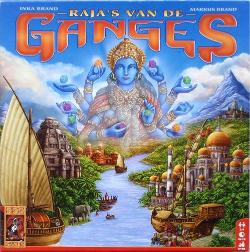
2017 · Dobbelstenen
Raja's van de Ganges
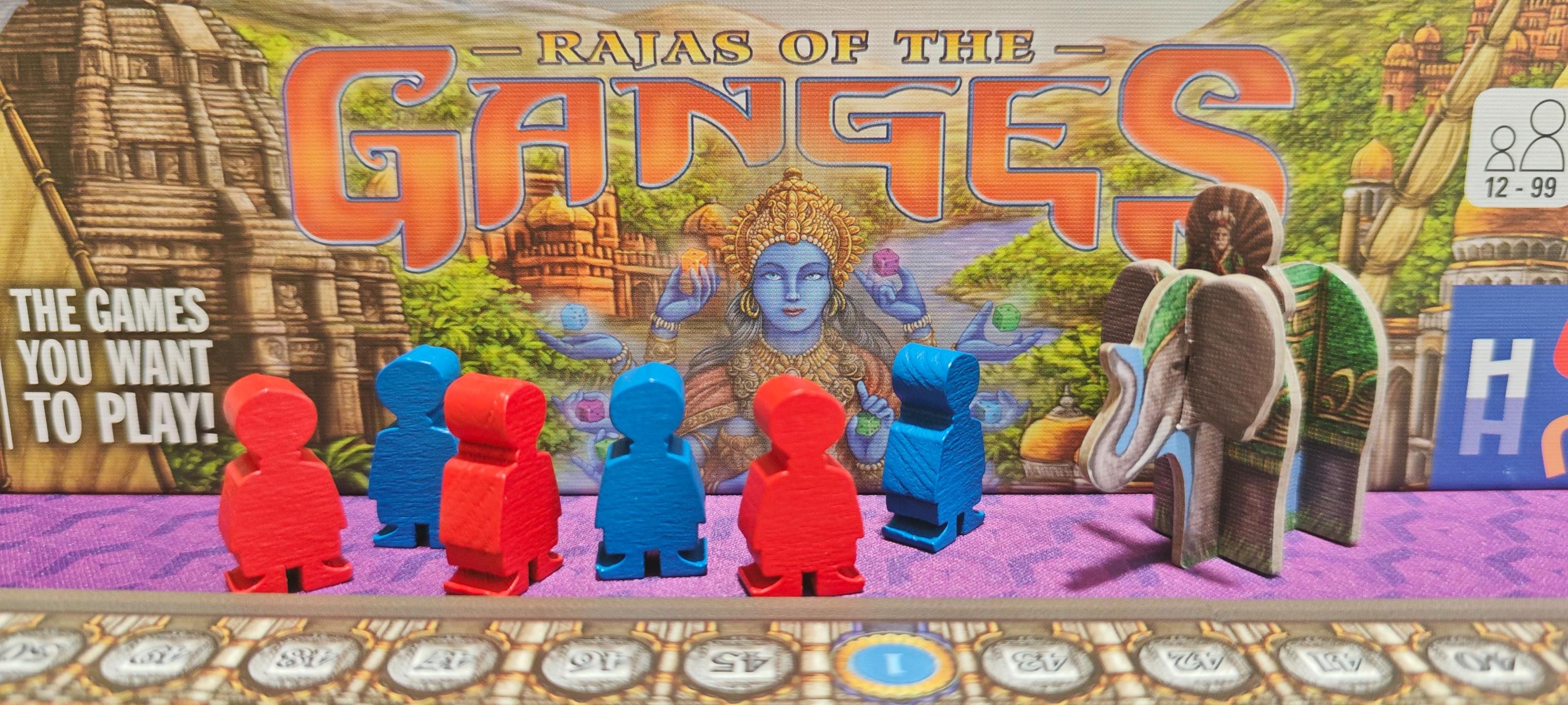
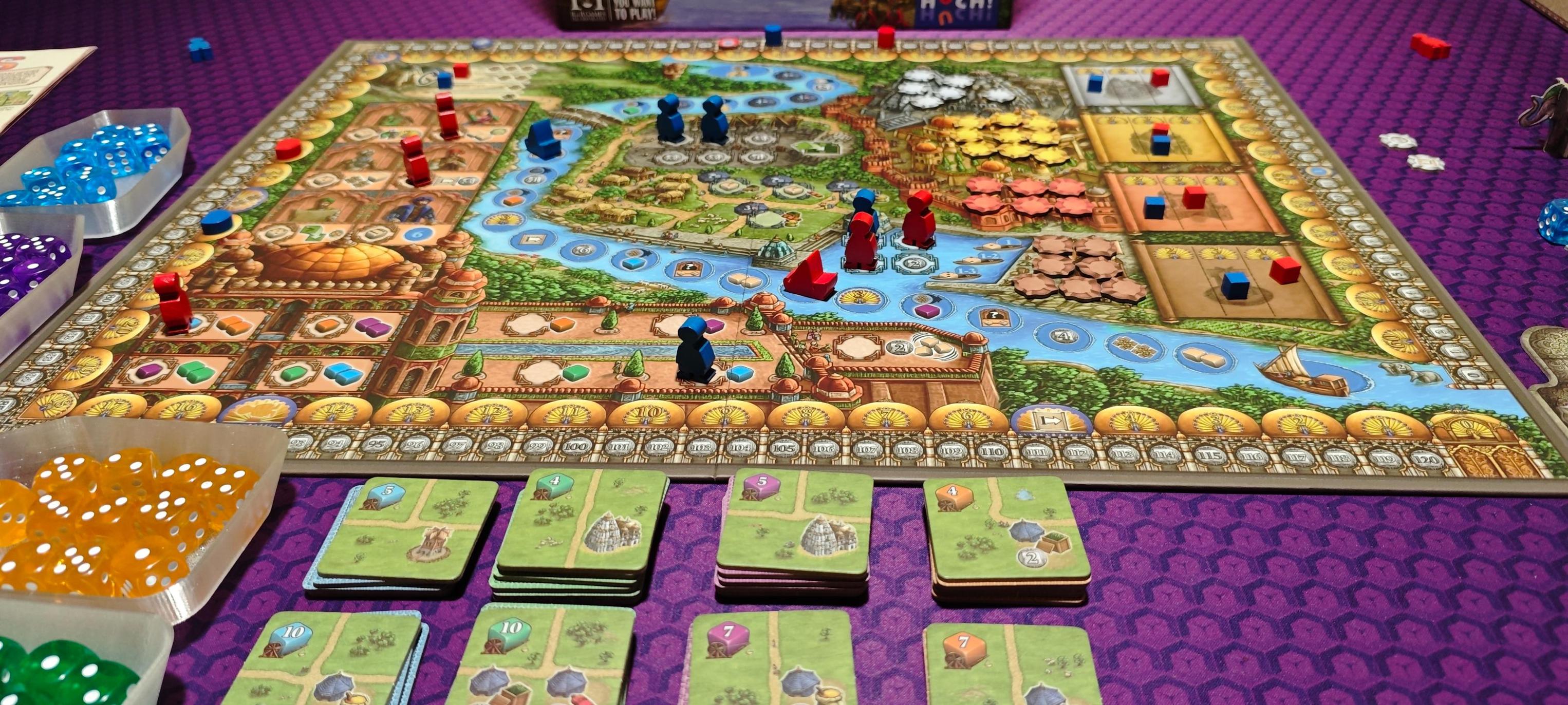
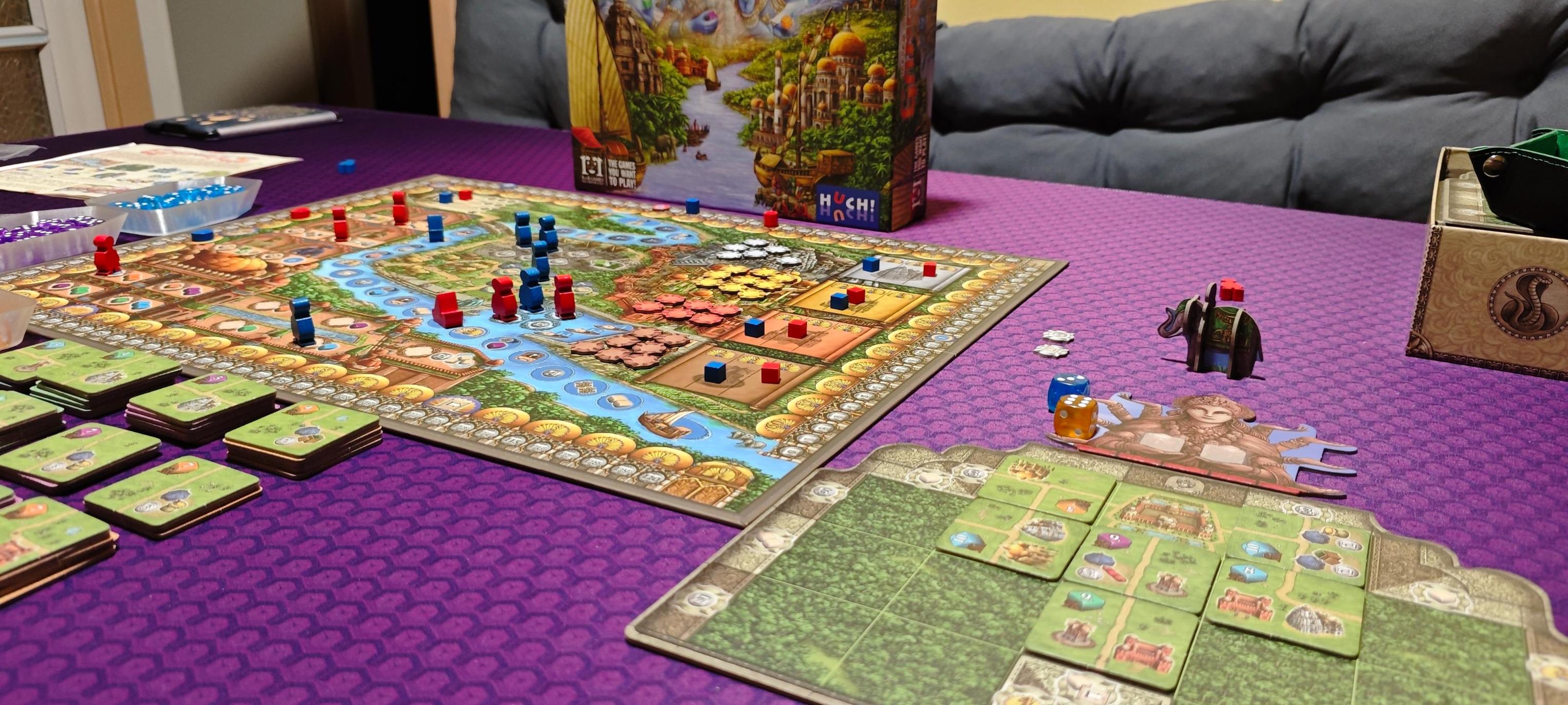
Players act as 16th-century Indian nobles developing their estates into prosperous provinces for the empire. They roll and assign dice as workers to take actions on a shared board, building market tiles and monuments, expanding estates, and managing resources. A parallel karma track affects scoring and grants immediate and endgame benefits, so players balance short-term wealth against long-term reputation. Play focuses on dice management, worker placement, and timing to optimize income, expansion, and fame.
- Spelers
- 2–4 best met 4
- Speeltijd
- 45–75 min
- Leeftijd
- 12+
- Complexiteit
- 2,9 / 5
Over het spel
- Ontwerp
- Illustraties
- Uitgever




Uitbreidingen
Bekijk ze in Ludoya Rajas of the Ganges: Goodie Box 12019
 Rajas of the Ganges: Goodie Box 22020
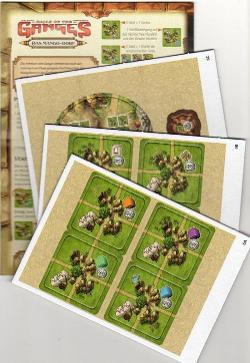 Rajas of the Ganges: Mango Village2017
 Rajas of the Ganges: Snake Expansion2018
 Rajas of the Ganges: Tiger Expansion2018
 Deutscher Spielepreis 2018 Goodie Box2018
 Brettspiel Adventskalender 20172017
 Brettspiel Adventskalender 20182018
 Rajas of the Ganges: Blessings of Kedarnath2019
Foto's van Ludoya-tafels
Alle foto's in Ludoya
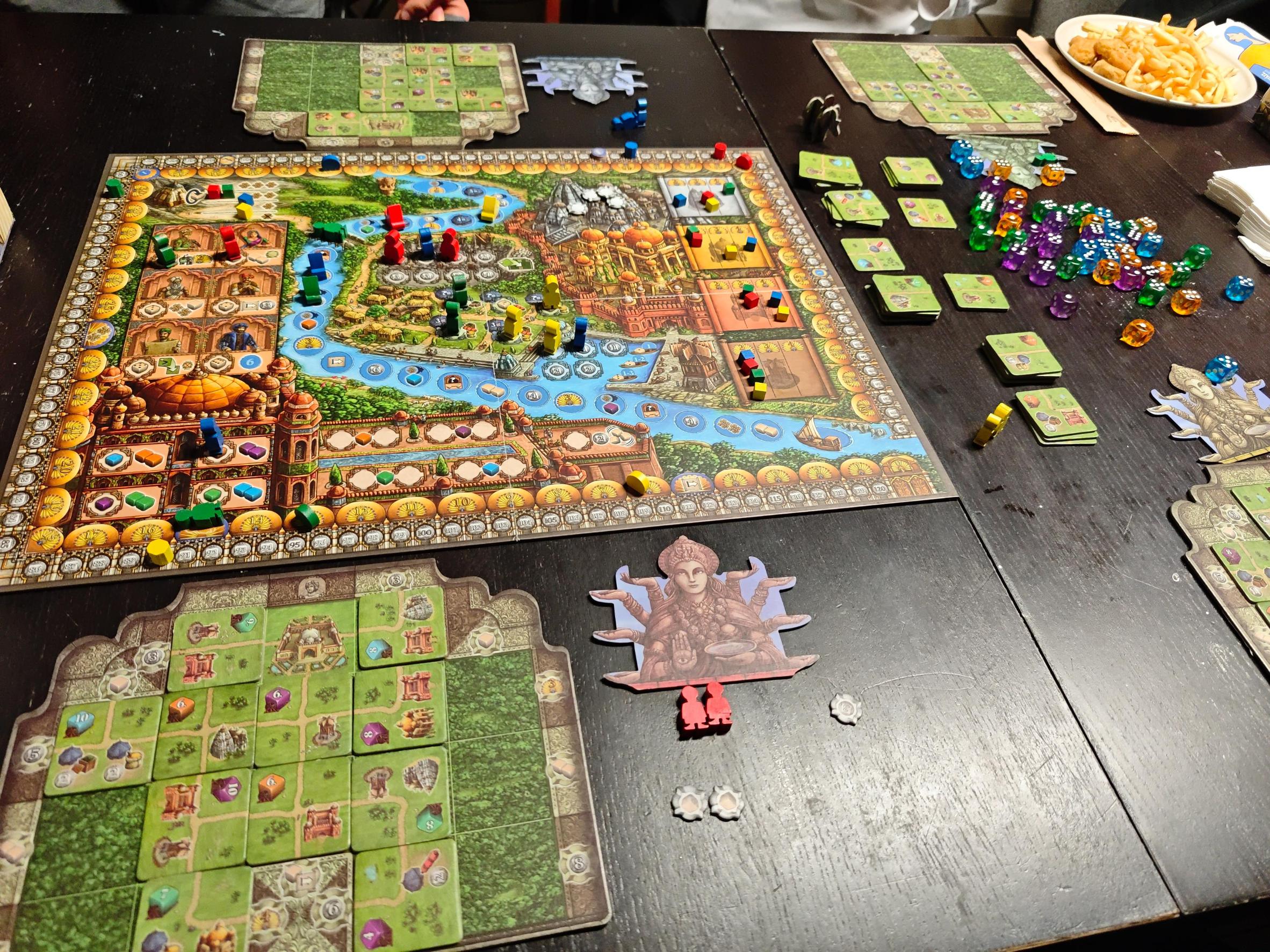
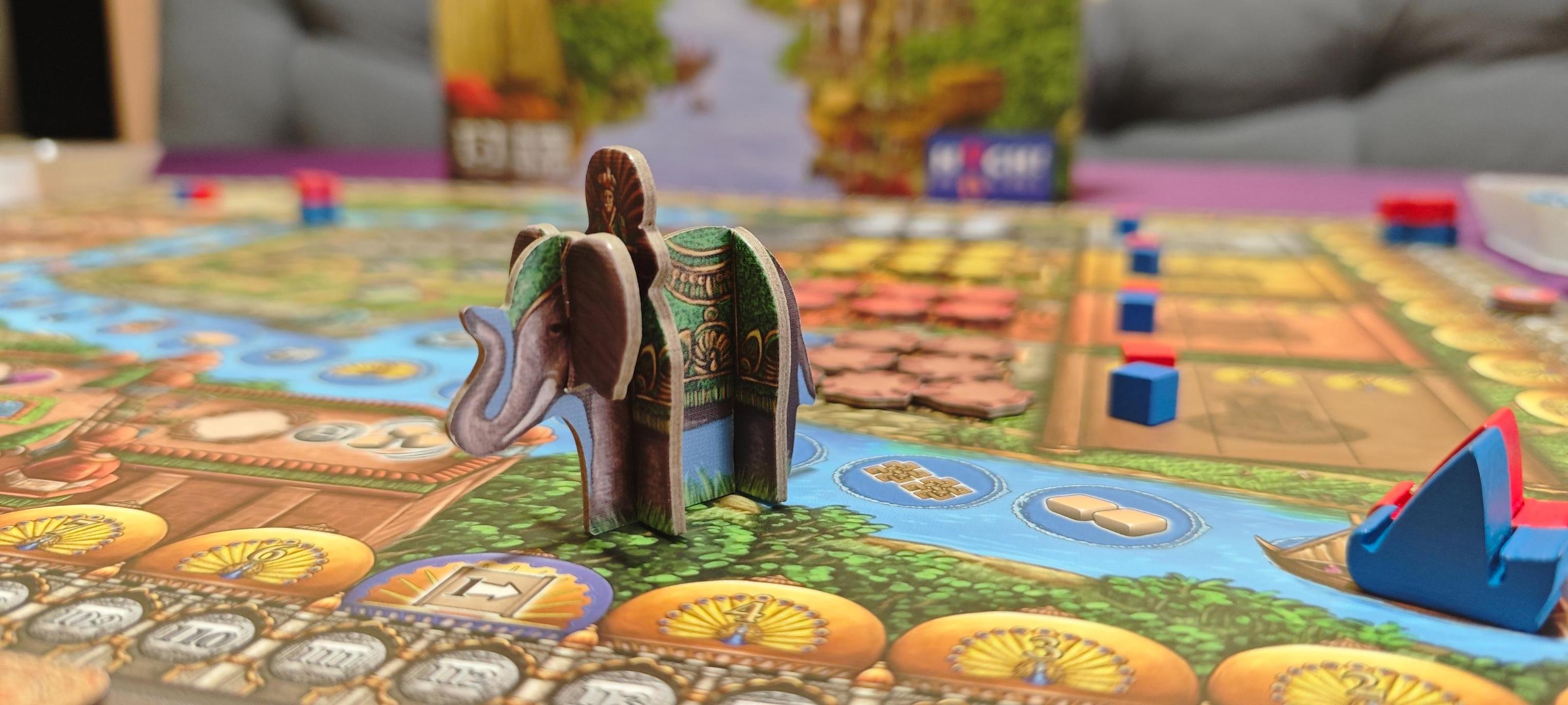
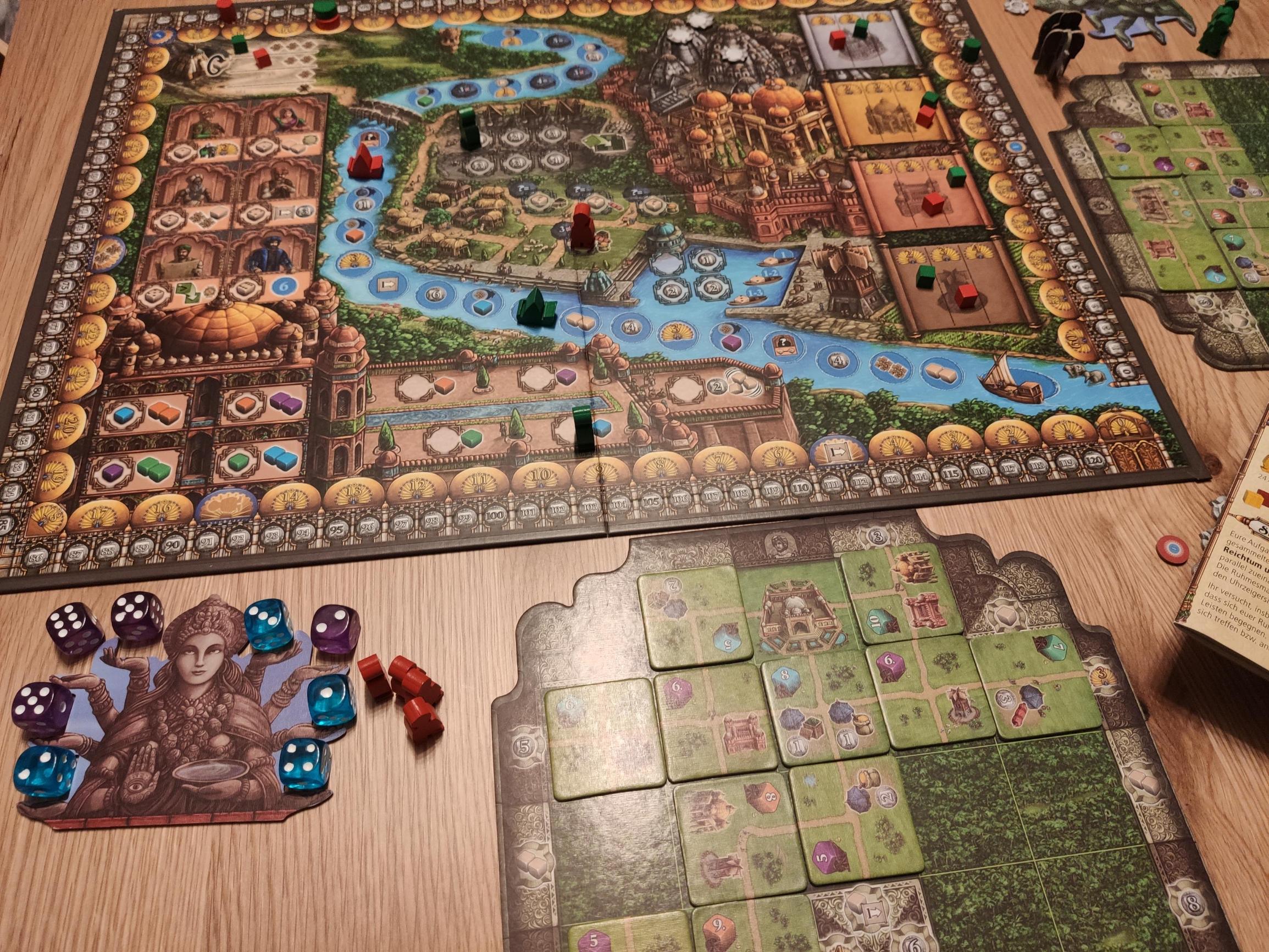
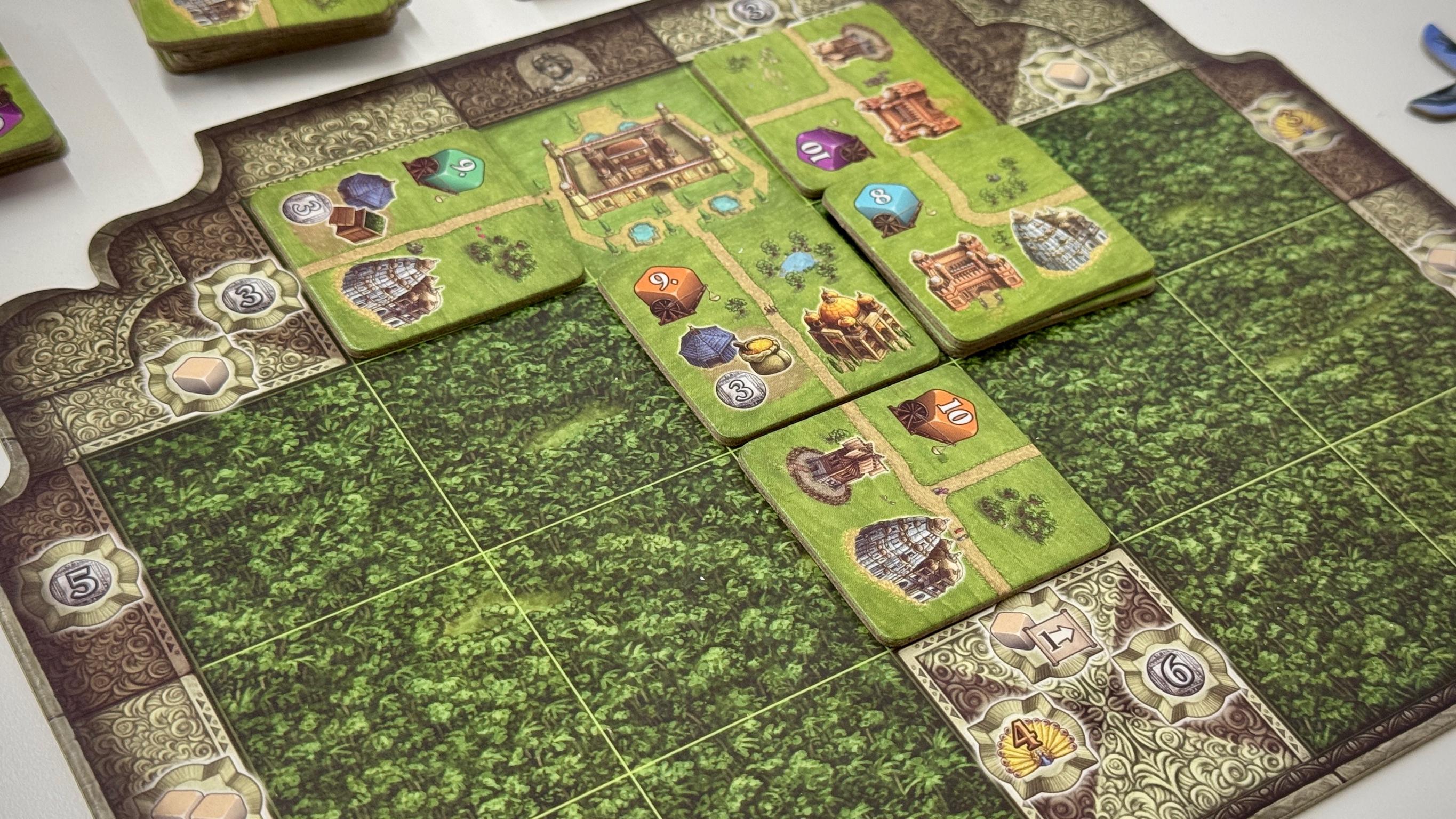

Waar te koop
Winkelprijzen en tweedehands exemplaren, elke dag gecontroleerd.
Aan de tafels van Ludoya
Alle statistieken in Ludoya- 816
- Vastgelegde speelsessies
- 602
- Spelers
- 1h 4m
- Gemiddeld potje
- 174
- In collecties
- 30
- Op verlanglijsten
- 1
- Voorbesteld
7,4/10
uit 112 Ludoya-recensies
Garfield2,0 It's all about getting the good buildings. The better buildings requiring higher dice. So if you are constantly rolling low you can't afford the good buildings. But you need the good ones to make more profit from selling goods and for the glory points. And there is way overpowered action that was chosen as first everytime in our game -> the one you could do with a 2, getting the bonus tile and 2 dice of your choice. [c] Theme: ★☆☆☆☆ <!-- size 7]Very abstract --> Gameplay: ★★☆☆☆ <!-- size 7]Placing dice all over the place --> Interaction: ★☆☆☆☆ <!-- size 7]Almost none --> Artwork: ★★★☆☆ <!-- size 7]Ok --> Luck: ★★★★★ <!-- size 7]Dice rolling --> Strategy: ★★☆☆☆ <!-- size 7]There is only one strategy --> Components: ★★★★☆ <!-- size 7]Nice --> Play duration: ★★★★☆ <!-- size 7]Very good --> Easy to teach: ★★★☆☆ <!-- size 7]Ok (25min) --> Rules quality: <!-- size 7]not read --> Setup time: ★★★☆☆ <!-- size 7]Ok --> No downtime: ★★★☆☆ <!-- size 7]Ok --> Replay value: ★☆☆☆☆ <!-- size 7]Nothing changes --> [/c]
Evan10,0 I don't generally like race to the finish games, but this one blew me away. The way the game works is each player has three workers, and some number of dice. The dice get rolled, and represent the different resources in the game. Some action spots only require a worker. Others need a worker and then a die of a specific value or value range. Still others require a worker and one or more dice of a specific color, with the pips across all dice needing to total or exceed the requirement. The game doesn't have any inherent die income, so you have to be careful and clever about where and how to get more dice. The main purpose of the dice is to purchase tiles which get laid into your player board. The tiles have roads that must connect to your starting spot, but which may also connect to the edge of your board which grants you a special reward. We played the advanced game where the printed rewards are pretty dull, but you can get much better ones to replace them through a few ways, which allows you to customize your path through the game in a really compelling way. The game ends during a round that someone's dollars marker meets their points marker on the oppositely oriented tracks. This means a big money strategy is just as effective as a big points strategy in theory, although you'll want to do some of everything in this game, as each major track has a spot it grants an extra worker. Turns are pretty quick, there are marvelous combos you can line up with the various rewards, the iconography is consistent and clear. The components look nice, especially the dice. The process of solving the puzzle feels satisfying. When you run aground it's because of your choices as opposed to die luck or being punched by other players. There's some, but minimal player interaction. It's mostly the occupying of action spots you wanted and the taking of the edge of board scoring tiles you needed. ★ Art, Iconography and components functional ★ Clever or interesting mechanisms ★ Reasonably low downtime between turns with mildly AP players ★ Multiple plays stay interesting ★ Low or mitigatable luck elements ★★★★★ Raw enjoyment
#Ganges ha sido uno de los grandes descubrimientos del año. El juego estéticamente es una maravilla y la combinación de colocación de trabajadores y el uso de dados para obtener losetas me ha conquistado. Inicialmente puede parecer un juego con demasiadas posibles acciones, sin embargo esta muy equilibrado y la partida se disfruta muchísimo. Me parece muy original el track de puntuación doble e invertido, que ofrece que haya multitud de estrategias válidas y hace que más partidas sean muy diferentes. Otro punto muy positivo del juego es su precio, siendo económico si consideramos la cantidad y la calidad de los componentes que trae. No tengo nada negativo que decir de #Ganges, un juego que ha llegado a la ludoteca para convertirse en un favorito.

Regelvragen
Beantwoord vanuit het spelregelboek door de regelassistent van Ludoya.
Moet ik geld betalen om een werker te plaatsen, of kan ik ook dobbelstenen gebruiken?
Je betaalt de kosten die op het actievak staan — sommige vakken betaal je met geld, andere met dobbelstenen; waar een vak dobbelstenen toestaat, mag je de vereiste dobbelstenen gebruiken in plaats van geld, en het gebruik van dobbelstenen is per ronde beperkt. (pagina 3)
Kan ik elke dobbelsteenwaarde op een actie plaatsen, en hoe werkt het om een dobbelsteen om te draaien met Karma?
Je moet een dobbelsteen gebruiken met de waarde die door de actie of het vakje wordt vereist; met Karma kun je betalen om een van je dobbelstenen om te draaien naar de tegenoverliggende zijde (en zo de waarde te veranderen) als een betaald effect. (pagina's 3, 8)
Als ik een provincietegel neem, moeten wegen dan overeenkomen of aansluiten op mijn bestaande provincies?
Provincietegels moeten worden geplaatst volgens de regels voor wegverbindingen, zodat ze legaal aansluiten op je netwerk en de plaatsingsbeperkingen volgen; sommige achterzijden van provincies geven bovendien speciale opbrengsten wanneer ze worden geplaatst. (pagina 4)
Hoe werkt de rivier-/bootactie — hoeveel vakjes kan ik per dobbelsteen bewegen, en kan ik na het bewegen ook paleisacties uitvoeren?
Je mag 1–3 dobbelstenen uitgeven om je boot tot dat aantal vakjes te verplaatsen (maximaal drie), de opbrengst te innen op het vakje waar je landt, en eventueel paleisacties te nemen als het rivervakje dat toelaat. (pagina 7)
Wat is het verschil tussen markten met verschillende goederen en markten met één soort goed, en veranderen upgrades de kosten van markten of de score?
Gevarieerde markten accepteren alle goederen en scoren anders dan markten met één soort goed, die specifieke goederen belonen; upgrades kunnen worden verkregen en toegepast om marktuitbetalingen aan te passen en soms de dobbelsteen-kosten voor marktacties te verlagen. (pagina 5)
Wanneer eindigt het spel en hoe worden roem en geld aan het einde vergeleken?
Het einde van het spel wordt getriggerd door de eindbeurt-voorwaarde (een spoor dat het einde bereikt); de eindscore vergelijkt de roem- en geldmarkers van elke speler op de twee sporen en past de scoringsregels voor de eindbeurt toe om de winnaars te bepalen. (pagina 9)
Vergelijkbare spellen
 The Castles of Burgundy: Special Edition2023
 Signorie2015
 The Castles of Burgundy2011
 Lorenzo il Magnifico2016
 The Castles of Burgundy2019
 Cuzco2023
 Bora Bora2013
 The Rise of Queensdale2018
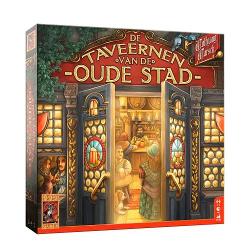 De Taveernen van de Oude Stad2019
 Euphoria: Build a Better Dystopia2013
 Marco Polo II: Op bevel van de Khan2020
 Shaolia: Warring States2020




Gratis, op het web, Android en iOS
Speel Raja's van de Ganges met Ludoya
- Houd het bij in je collectieHoud je exemplaar en de uitbreidingen bij, leen het uit aan vrienden of zet het op je verlanglijst en krijg bericht als de prijs daalt.Voeg het toe aan je collectie
- Leg elke speelsessie vastScores, winnaars, timers en foto's, en dan je statistieken: winpercentage, favoriete spelersaantal, beste score.Speelsessie vastleggen
- Regelvragen beslechtenVraag alles over de regels en krijg een antwoord uit het spelregelboek, met de pagina om het na te lezen.Vraag de regelassistent
- Vind mensen om het mee te spelenClubs, spelavonden en evenementen bij jou in de buurt waar dit spel op tafel komt.Bekijk evenementen
Speldata (spelers, speeltijd, leeftijd, makers) van BoardGameGeek.