
2020 · Ekonomi
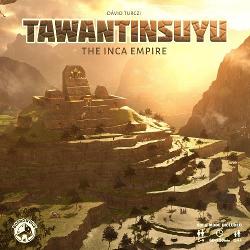
Tawantinsuyu: The Inca Empire
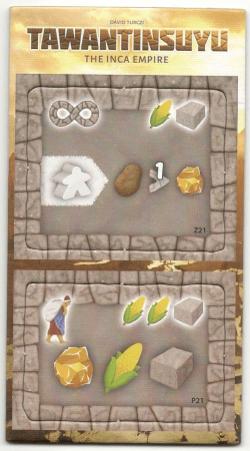
Players assume the roles of rival heirs in the Inca capital, recruiting villagers with five distinct worker types and placing them on terraced locations below the Sun Temple to perform actions. Workers remain on the board and trigger linked actions; matching adjacent workers grant extra actions while some types grant placement bonuses or removal abilities. Manage resources (potatoes, corn, stone, gold), discard god cards or pay gold to place workers, build production buildings and stairs up the temple hill, sculpt statues, and muster armies to conquer villages across four regions. Move a High Priest around the Coricancha to access powerful temple actions, reduce placement costs, and score points from stairs, statues, temple advancements, military control, and finished tapestries.
- Spelare
- 1–4 bäst 3
- Speltid
- 60–120 min
- Ålder
- 14+
- Komplexitet
- 4,1 / 5
Om spelet
- Design


Expansioner
Se dem i Ludoya
Var du kan köpa det
Butikspriser och begagnade exemplar, kontrollerade varje dag.
På Ludoyas bord
All statistik i Ludoya- 70
- Registrerade spelomgångar
- 102
- Spelare
- 2h 26m
- Genomsnittlig speltid
- 71
- I samlingar
- 5
- På önskelistor
- 2
- Förbeställda
6,5/10
från 15 recensioner på Ludoya
Regelfrågor
Besvarat ur regelboken av Ludoyas regelassistent.
Do roaming and descending movement cost food, and how do Steps reduce those costs?
Yes — Roaming and Descending require you to pay the food cost shown, and each built Step reduces those food costs as specified; Steps also grant VP when built (p.9).
Can I place multiple workers on the same space/task, and how does adjacency affect task results?
You can place more than one worker and adjacent workers increase the number of tasks/resources gained (adjacency bonuses apply); follow the space’s icons for any stacking limits or special distribution rules (pp.9–10).
What's the difference between Passive and Production buildings — when do Production buildings trigger and flip?
Passive buildings provide their listed effects when you use their placement/action and remain as passive effects, while a Production building’s “Produce One” action gives its benefit and the production building is then resolved/flipped as described (pp.12,16,19).
How does Conquest work in 2-player games — do I flip and discard Soldiers and what rewards do I get?
In 2‑player Conquest you play Army cards and follow the flip/discard soldier steps, place the conquest marker, and immediately receive the VP and region rewards listed for that conquest (p.15).
What happens at the Festival — how are potatoes penalized and how is VP scored?
Festival scoring awards VP in the listed tiers (1/2/4), resolves merchant/Temple/Conquest scoring and other festival effects, and applies potato penalties (negative VP for leftover potatoes) as specified during the Festival resolution (p.17).
If I buy a worker during my turn, can I use it immediately or exceed the 2-worker placement limit?
You cannot exceed the 2‑worker placement limit and worker purchases occur at end of turn (subject to the recruit cap), so newly bought workers are not available for actions until after purchase resolution (pp.16,8).
Liknande spel
 Teotihuacan: City of Gods – Deluxe Master Set2024
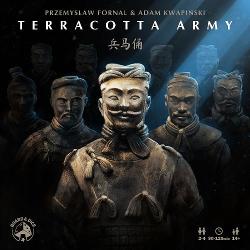 Terracotta Army2022
 Galileo Galilei2024
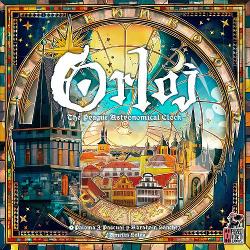 Orloj: The Prague Astronomical Clock2025
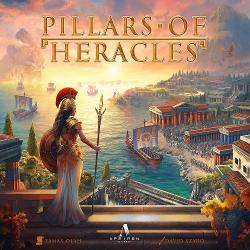 Pillars of Heracles2025
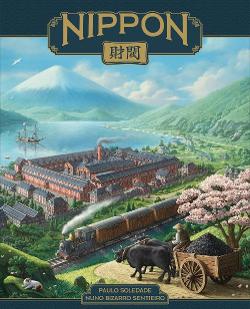 Nippon: Zaibatsu2026
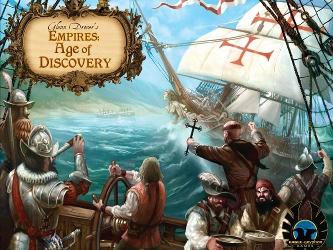 Empires: Age of Discovery2015
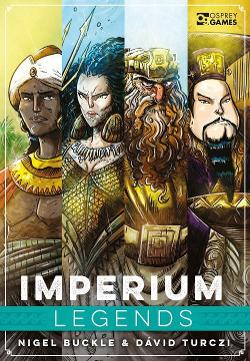 Imperium: Legends2021
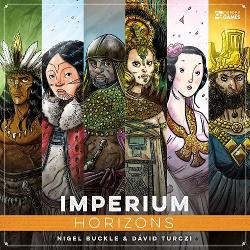 Imperium: Horizons2024
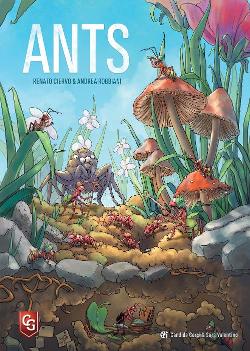 Ants2025
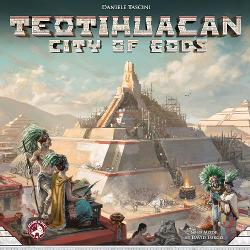 Teotihuacan: City of Gods2018
 Amritsar: The Golden Temple2023

Gratis, på webben, Android och iOS
Spela Tawantinsuyu: The Inca Empire med Ludoya
- Ha det i din samlingHåll koll på ditt exemplar och dess expansioner, låna ut det till vänner, eller lägg det på din önskelista och få veta när priset sjunker.Lägg till i din samling
- Registrera varje spelomgångPoäng, vinnare, timers och foton, sedan din statistik: vinstprocent, favoritantal spelare, bästa poäng.Registrera en spelomgång
- Lös regelfrågorFråga vad som helst om reglerna och få ett svar ur regelboken, med sidan där du kan kontrollera det.Fråga regelassistenten
- Hitta folk att spela det medKlubbar, spelkvällar och evenemang nära dig där det här spelet kommer på bordet.Se evenemang
Speldata (spelare, speltid, ålder, medverkande) från BoardGameGeek.