
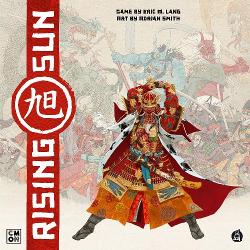
2018 · Fantasy
Rising Sun
Players lead rival clans in legendary feudal Japan, competing across four Seasons to earn Victory Points through warfare, alliances, and devotion to the Kami. Each clan has unique abilities, income, honor rank, and a home province; gameplay cycles through setup, a Tea Ceremony for negotiating seasonal alliances, a Political Phase to select mandates and position forces, a War Phase of area battles, and cleanup. Diplomacy, binding and nonbinding deals, honor standing, and seasonal cards shape outcomes; ties are broken by Honor and points come from winning battles, controlling provinces, and fulfilling clan virtues.
- Spillere
- 3–5 bedst 4
- Spilletid
- 90–120 min
- Alder
- 14+
- Kompleksitet
- 3,3 / 5
Om spillet
- Design
- Illustration




Udvidelser
Se dem i Ludoya Rising Sun: Kami Unbound2018
 Rising Sun: Monster Pack2018
 Rising Sun: Dynasty Invasion2018
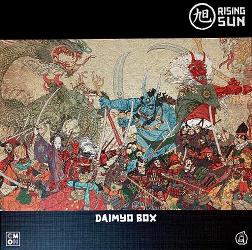 Rising Sun: Daimyo Box2018
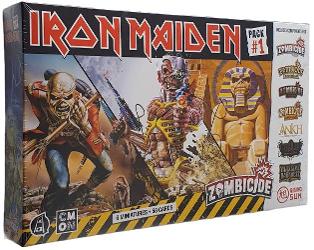 Iron Maiden Pack #12023
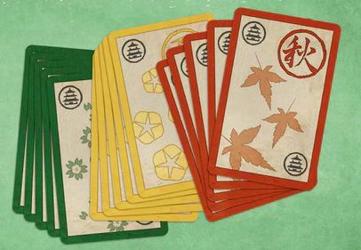 Rising Sun: Tower Season Cards Set2019
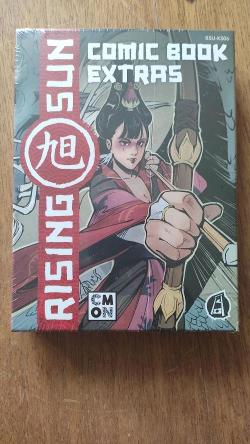 Rising Sun: Comic Book Extras2021
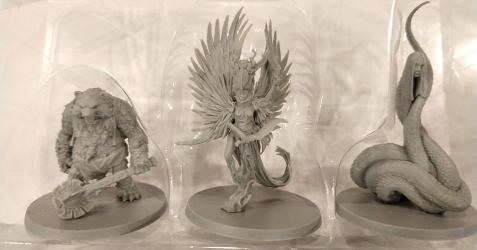 Rising Sun: Promo 1 – Sacred Warrior, Phoenix, and Nure-Onna2019
 Cthulhu: Death May Die – Fear of the Unknown: R'lyeh Rising2024
 Raging Sun (fan expansion for Rising Sun)2018
 Rising Sun (2nd Edition): Celestial Influence2026
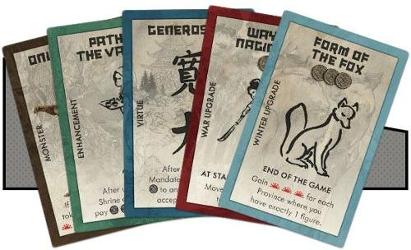 Rising Sun: CMON Comics – Vol. 1 Promos2021
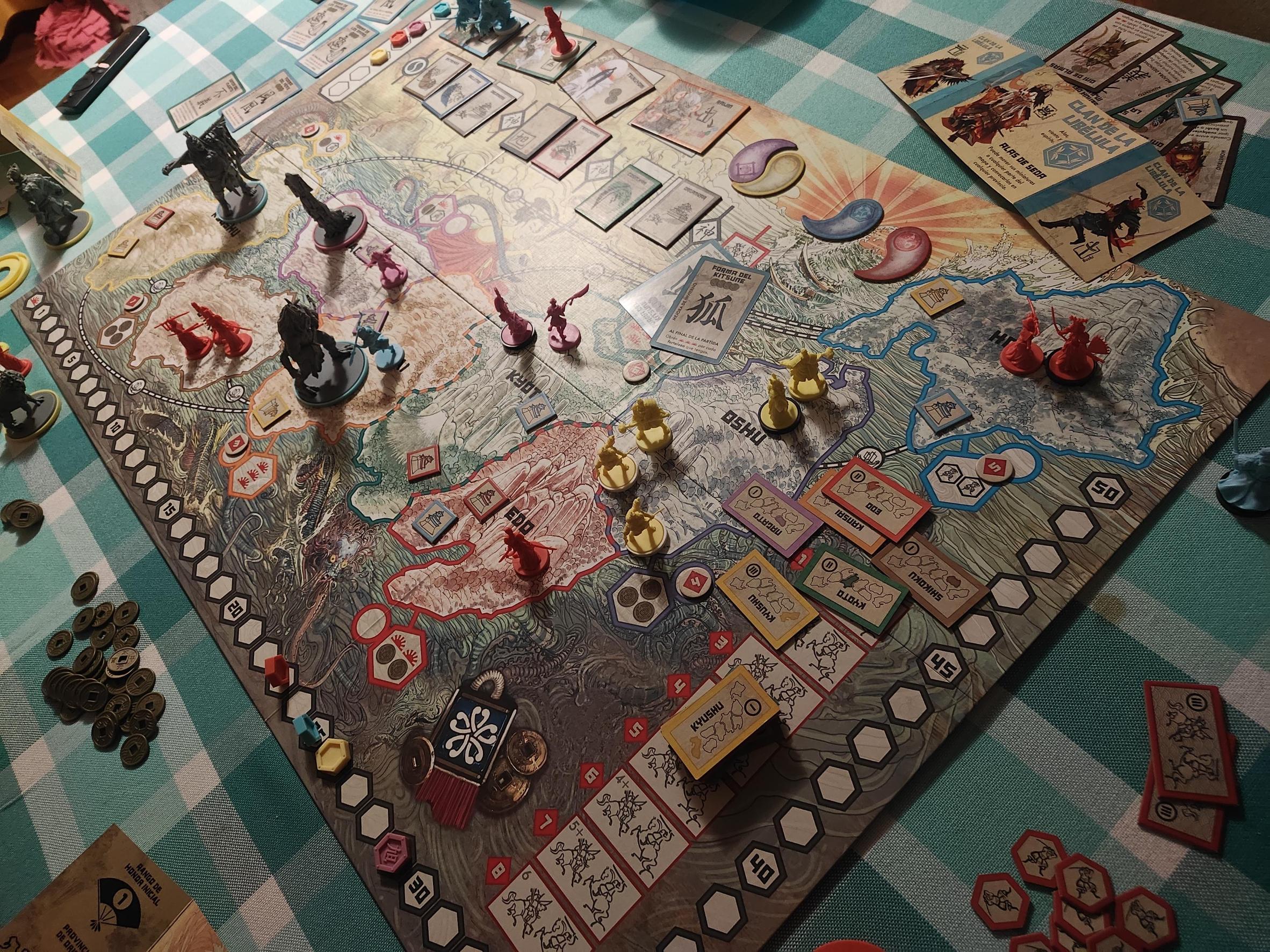
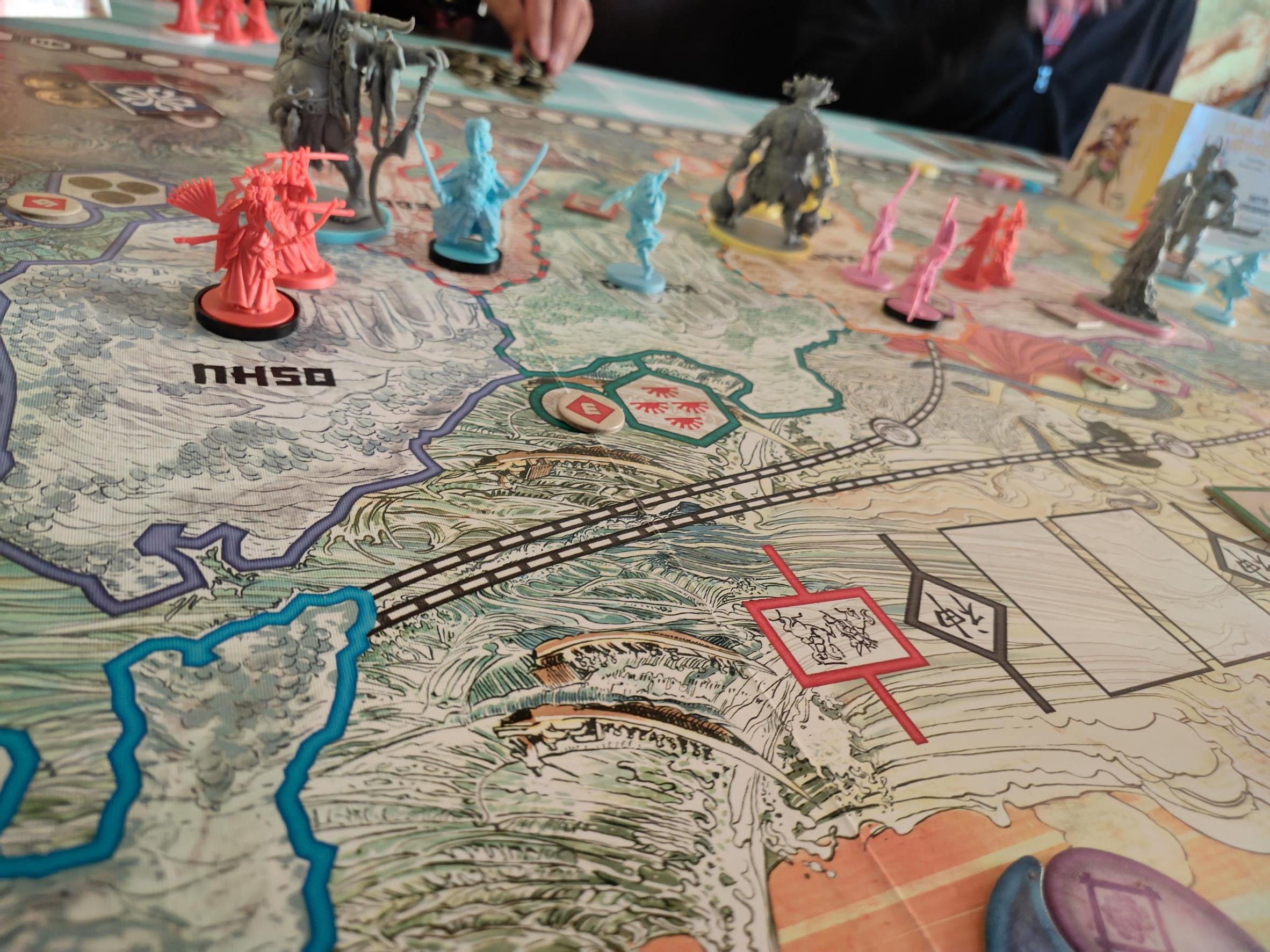
Fotos fra Ludoyas borde
Alle fotos i Ludoya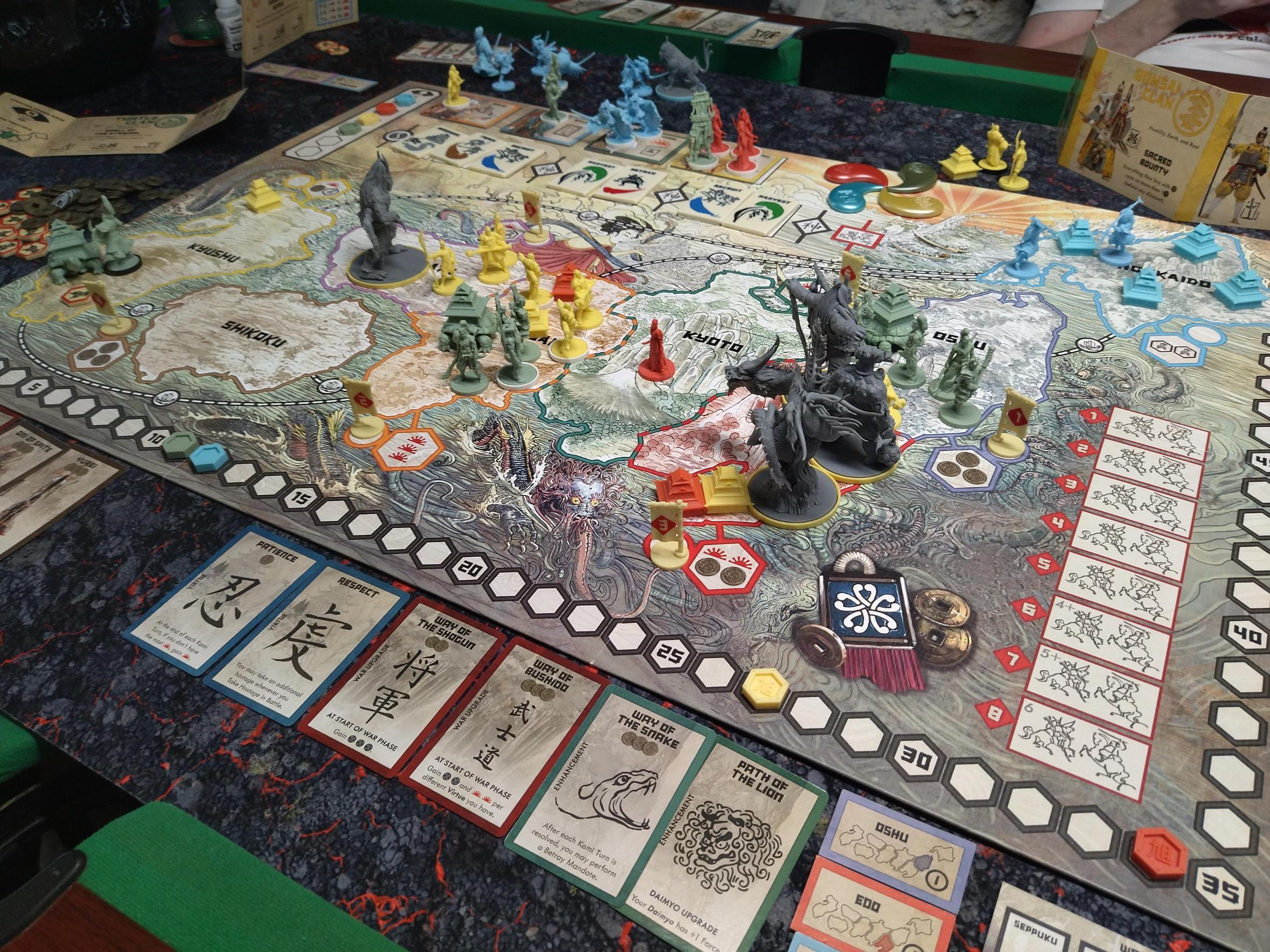
Hvor du kan købe det
Butikspriser og brugte eksemplarer, tjekket hver dag.
På Ludoyas borde
Al statistik i Ludoya- 247
- Registrerede partier
- 472
- Spillere
- 2h 52m
- Gennemsnitligt parti
- 111
- I samlinger
- 18
- På ønskelister
- 1
- Forudbestilt
7,0/10
fra 72 anmeldelser på Ludoya
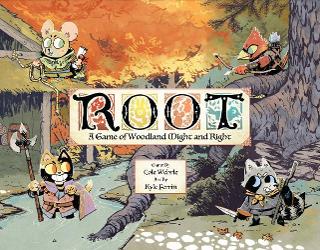
Balleflass7,0 Maybe E. Lang's best, but not for me. It was fun the first 3 times with and without thr Kami expansion, but it gets old quite fast as the season card abilites starts to feel samey and mundane. Some cards and gods are really subpar compared to their price and early/late availability. Auction combat is ok, but this just makes the economy cards so much more important than most others. It's much harder and riskt to gain money through taxation than "War income" cards. Sold as I found Cthulhu Wars, Kemet, Root, Inis, Forbidden Stars, Starcraft, Falling Sky and Time of Crisis as better dudes on a map games at 4.
Vic Granell8,5 Love the asymmetry, the action minis and like the combat system quite a bit! It feels like an improvement over Blood Rage, but I don't know which one I enjoy more!
Evan4,6 This is a dudes on the map game. Each player gets a strong asymmetric power. The balance of these powers is somewhat questionable, especially with one of the expansion factions. The game functions around these action tiles. In turn order, one player selects a tile from the top 4 in the pile, then they and each other player get to resolve the action on that tile. The person doing the choosing and their ally if they have one for that round, get an extra benefit. There are seven action selections that resolve each turn, which means there's a substantial advantage to ally with someone early in turn order for that round, just so you get two action effect bonuses, and thusly get to do more. Combat is resolved in a frustrating, but unique way. Each player gets a little action board where you make blind bids with money into the boxes you want to resolve. Everyone reveals, and the player who spent the most on the effect gets to resolve it. After resolving the effects you look to see who has the most strength left with each unit typically being 1, then the losers kill their remaining figures, and the winner gives the losers all the money they spent on those special actions divided evenly. This makes for some odd play in a number of ways. First, it's strange the way the special monsters are largely treated as regular 1 strength units. Actually, when they do have some different rule or strength applied to them, it can often be hard to remember as several of the monsters have similar looks to them. For example, one oni is 1 strength, and another might be 2 or 3. Additionally, some of the effects are rough. One captures an opponent's unit off the board, and steals a point from them. Another gives you victory points for each guy killed. Yet another kills all your own units and gives you steps on the tiebreaker track. Adding to this, is the idea that you never really hold territory in the game, and you never have a safe space. Players can place their stronghold markers anywhere regardless of presence, from which new units can summon, and there's an action tile that swaps 1 unit from 2 opponents off the board with yours that can be done from anywhere. The central idea is you are looking to win one battle in at least 7 different areas before the end of the third round, to max out your endgame score, and I don't mind other games which encourage mobility over turtling such as Forbidden Stars and Kemet, but in those games there's a more natural flow of units moving. This has more of a feeling of teleporting things around. Most crucial is an utter lack of being able to follow through with your plans unless players ignore you. Even the smallest goal in the furthest corner of the map can be easily thwarted by someone who bothers to do so. Something I harp on about games I enjoy is a sense of back and forth. When my opponent makes a move against me, I like to be able to respond, and then have them respond in kind. This isn't that. It's more like a feeling of you trying to walk and other players constantly remotely untying your shoes somehow. :star: Art, Iconography and components functional :star: Clever or interesting mechanisms :star: Reasonably low downtime between turns with mildly AP players :star: Multiple plays stay interesting :star: Low or mitigatable luck elements :star::nostar::nostar::nostar::nostar: Raw enjoyment

Regelspørgsmål
Besvaret ud fra regelbogen af Ludoyas regelassistent.
If I form an alliance, what does it actually do for me and my ally—do we both get the same bonuses and can one of us betray later?
An alliance grants non‑aggression and shared benefits on certain actions (both players may receive the ally bonus on Mandates and other effects); however either player may betray later, which breaks the alliance and costs Honor—see pages 11–13 and the Betray rules on page 18.
When I pick a Political Mandate, do I always act first and does my ally get discounts or bonuses?
The current player’s Mandate turn gives them initiative: you draw/choose Mandates in the Political Phase and the current player (and their ally when specified) receives the primary bonus or discount for that Mandate (see page 13 for choosing Mandates and pages 14–16 for Recruit/Marshal/Train specifics and who gets the bonus).
How do Shrine (Kami) resolutions work—do all shrines resolve at once, and how are ties decided?
Kami Turns trigger shrine resolutions one at a time from left to right on the board; for each shrine compare total Force to determine the reward and use players’ Honor to break ties (see pages 19–20, with Honor tiebreak explained on page 7).
In a battle, how does the coin bidding and hiring Ronin work, and what breaks ties in combat?
Before resolving a contested province players may bid coins for War advantages (per the bidding rules) and may hire Ronin to add +1 Force each; the highest total Force wins and ties are broken by Honor (see pages 21–24 for battle sequence, coin bidding, hiring Ronin, and tie resolution).
What exactly happens when I use the Betray action—do I lose Honor and can I replace my pieces on the map?
Betray breaks your alliance, causes an Honor loss, and lets you replace up to two of your map figures with same‑type reserve pieces (note Daimyo and Shrine figures are immune to replacement); full Betray effects are on page 18.

Folk, der ejer det, ejer også

Gratis, på web, Android og iOS
Spil Rising Sun med Ludoya
- Hav det i din samlingHold styr på dit eksemplar og dets udvidelser, lån det ud til venner, eller sæt det på din ønskeliste, og få besked, når prisen falder.Føj det til din samling
- Registrér hvert partiPoint, vindere, timere og fotos, og så din statistik: vinderprocent, foretrukket spillerantal, bedste score.Registrér et parti
- Afgør regelspørgsmålSpørg om hvad som helst i reglerne, og få et svar fra regelbogen med siden, hvor du kan tjekke det.Spørg regelassistenten
- Find nogen at spille det medKlubber, spilaftener og arrangementer nær dig, hvor dette spil kommer på bordet.Se arrangementer
Spilfakta (spillere, spilletid, alder, medvirkende) fra BoardGameGeek.