
2012 · Abstrakte Strategie
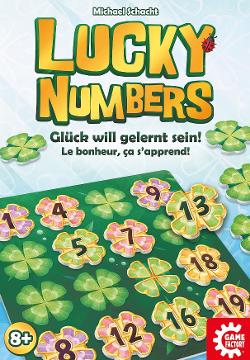
Lucky Numbers
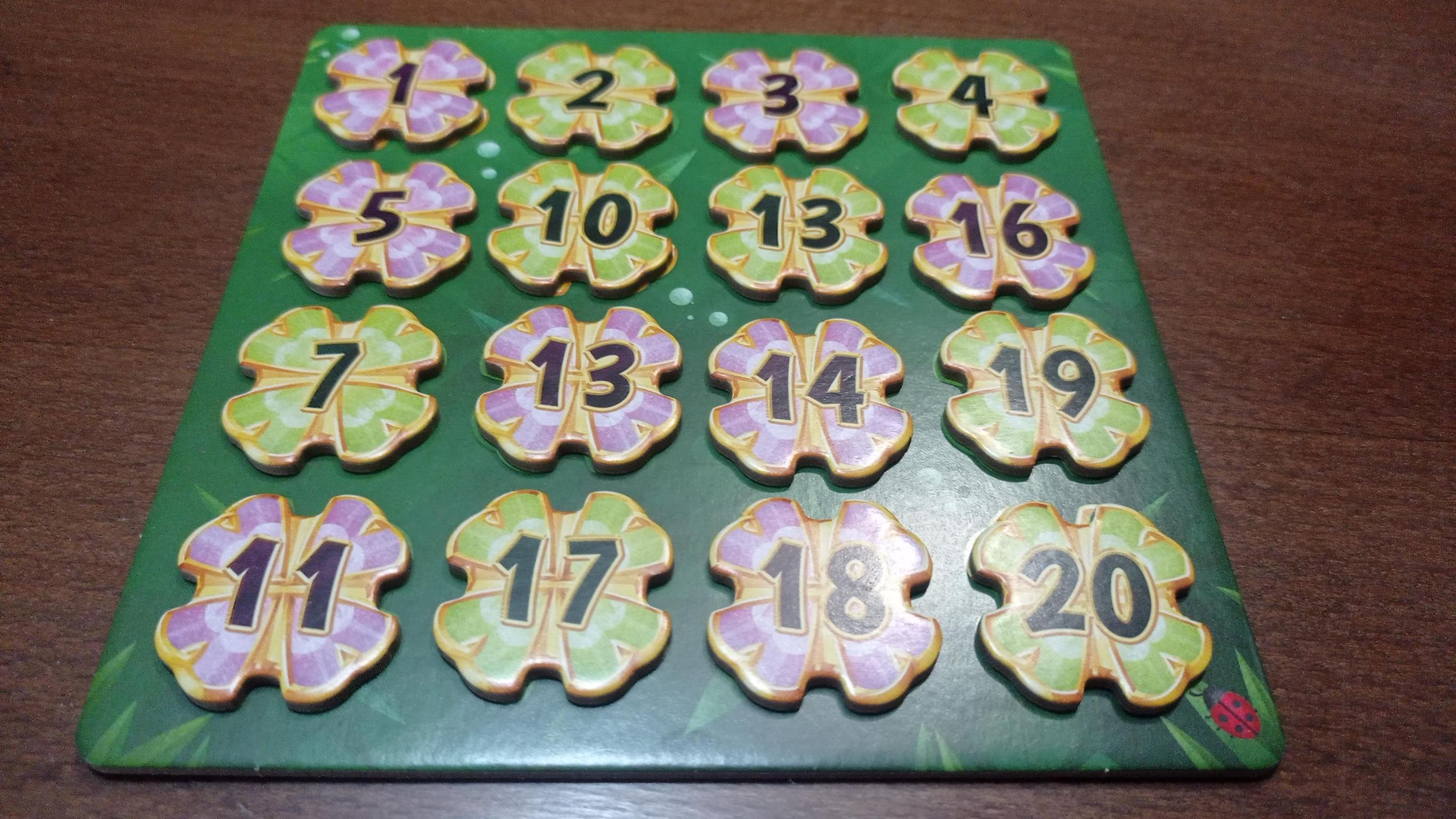
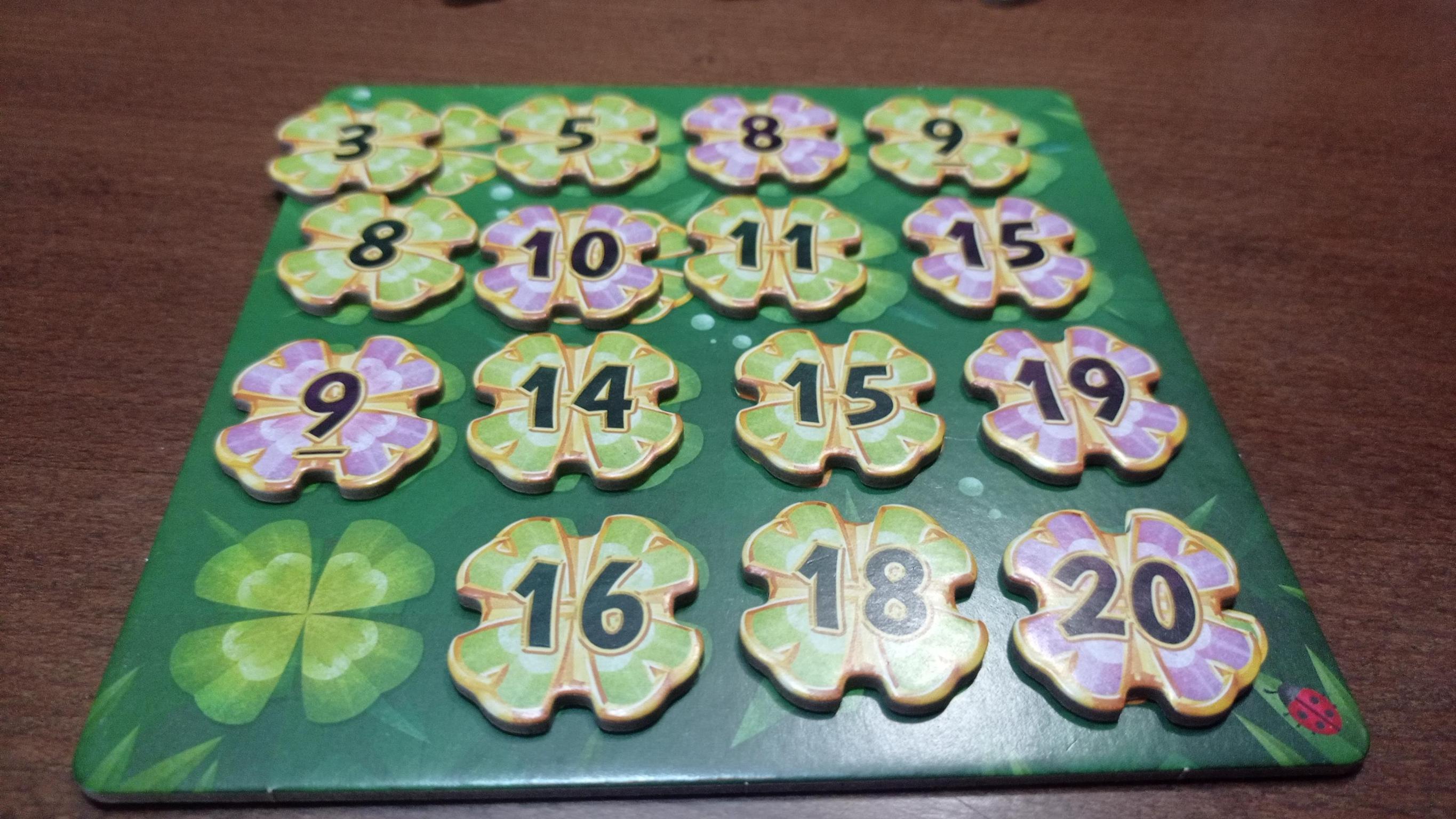
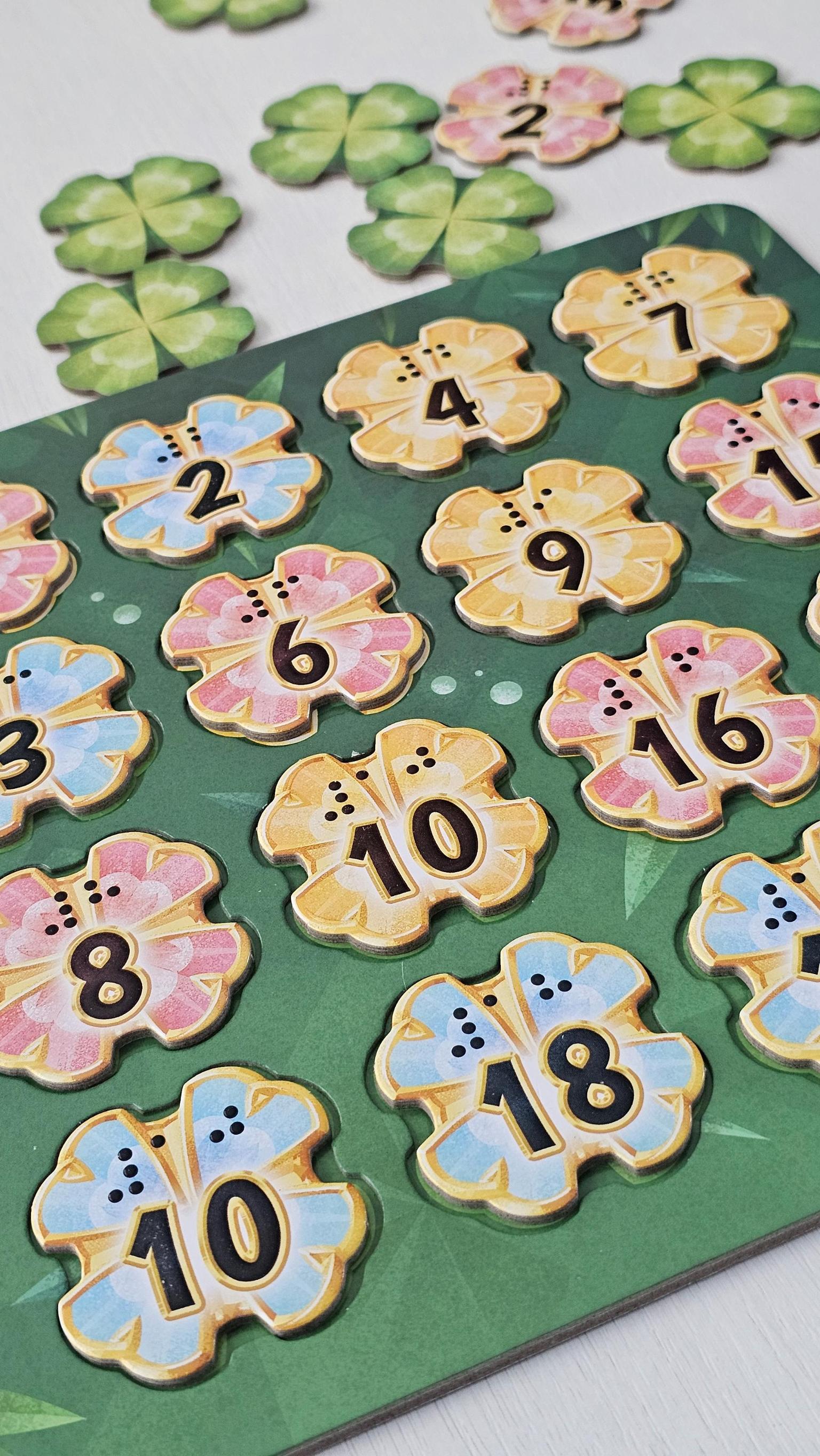
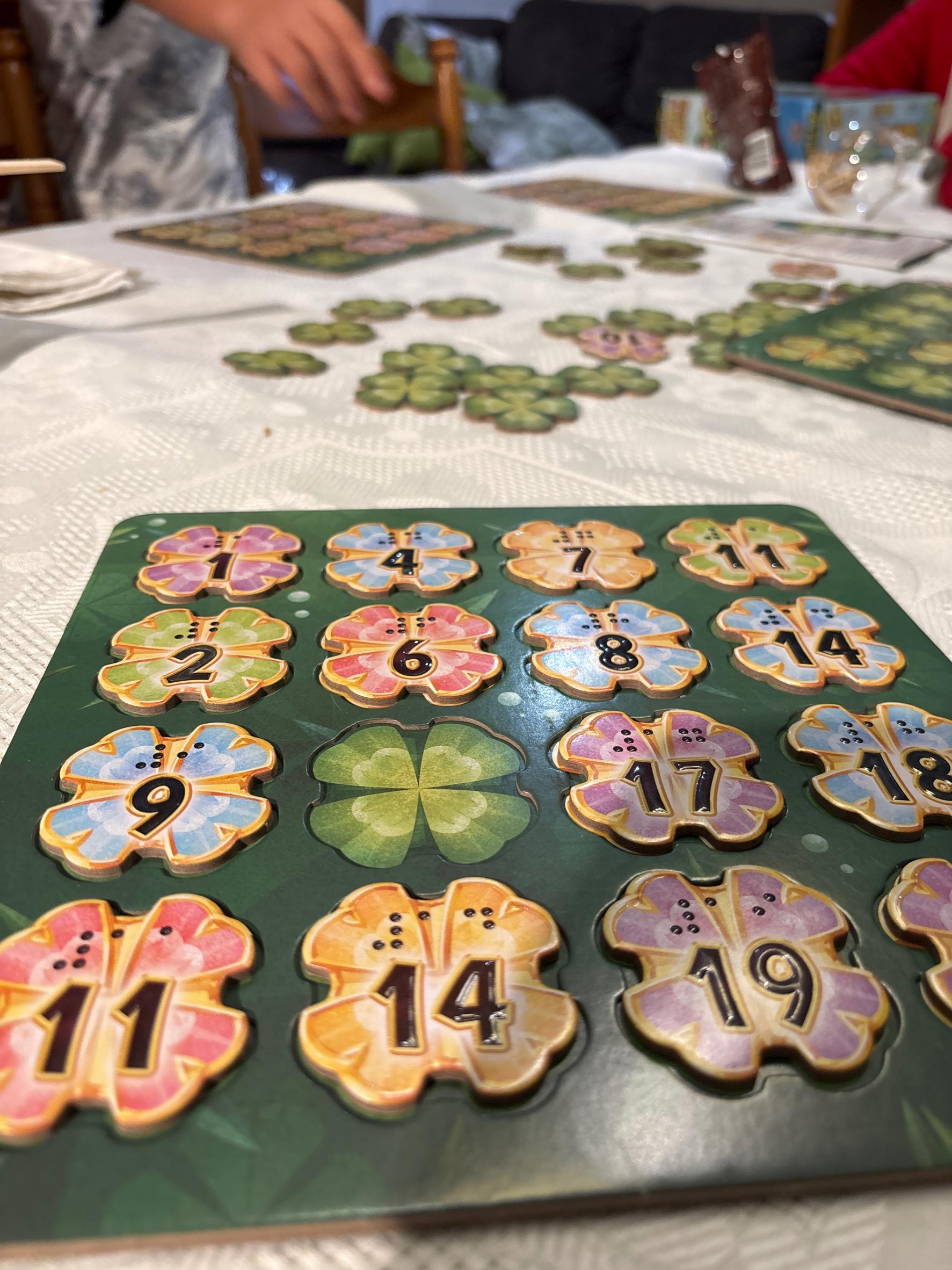
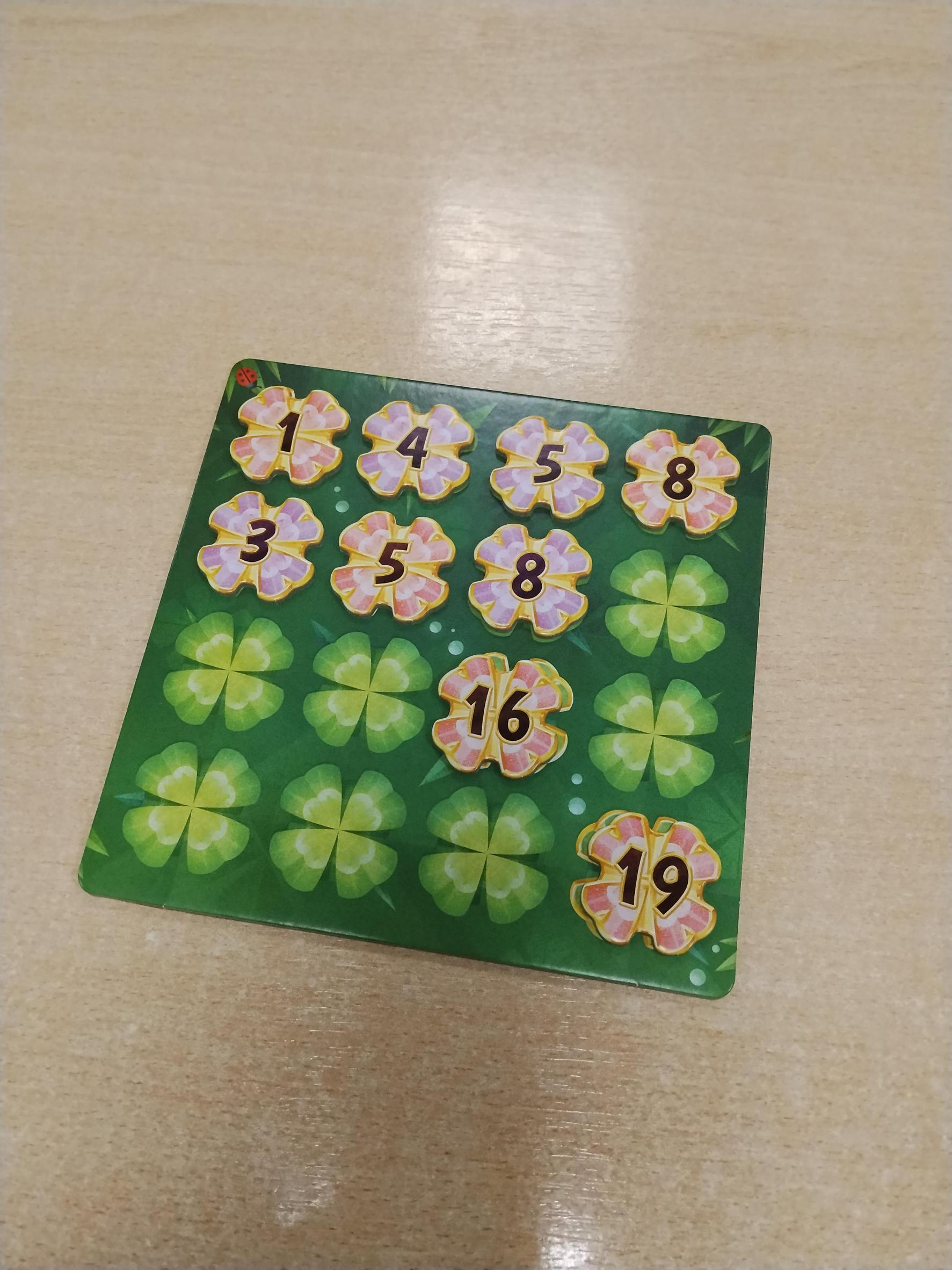
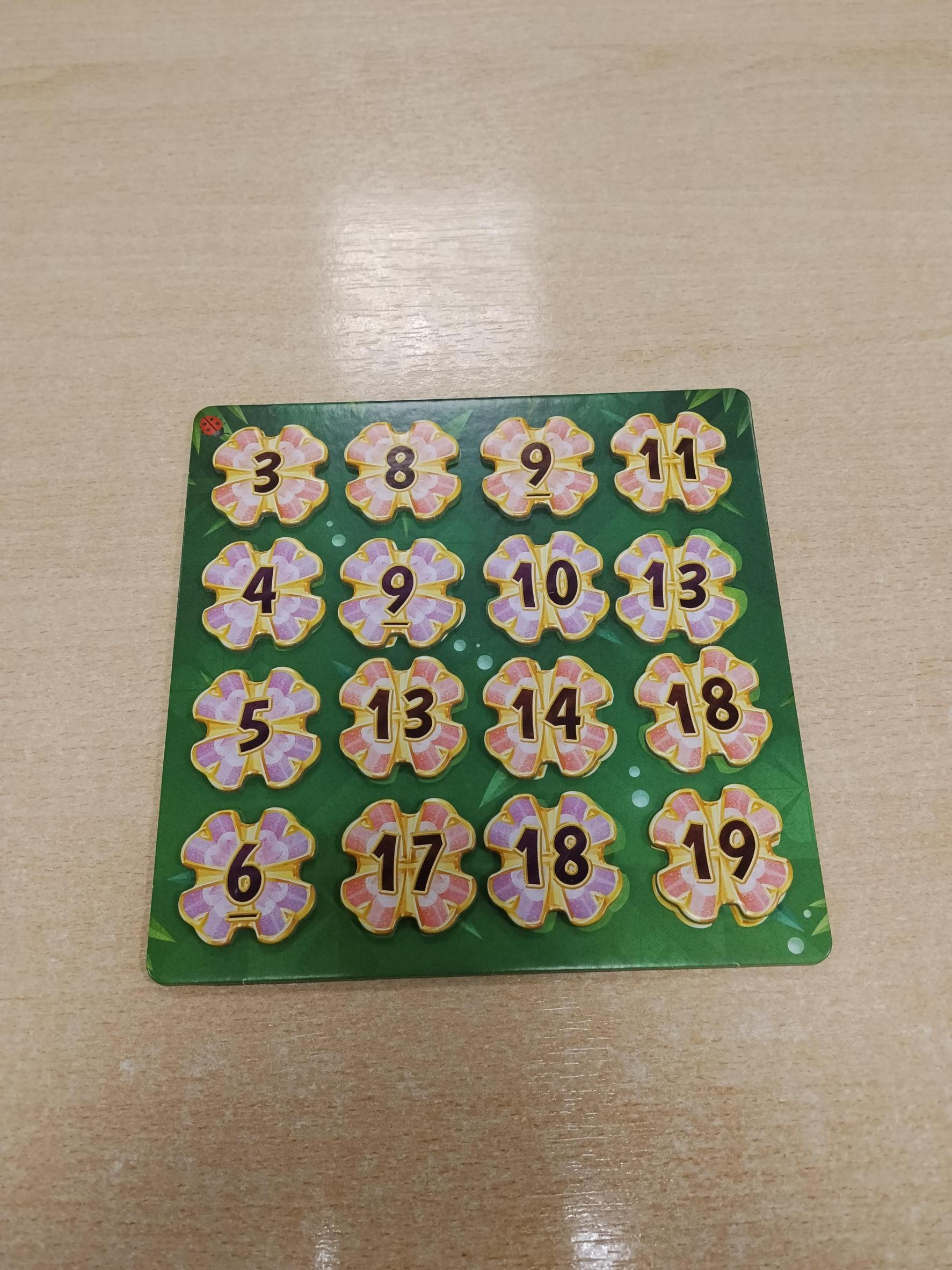
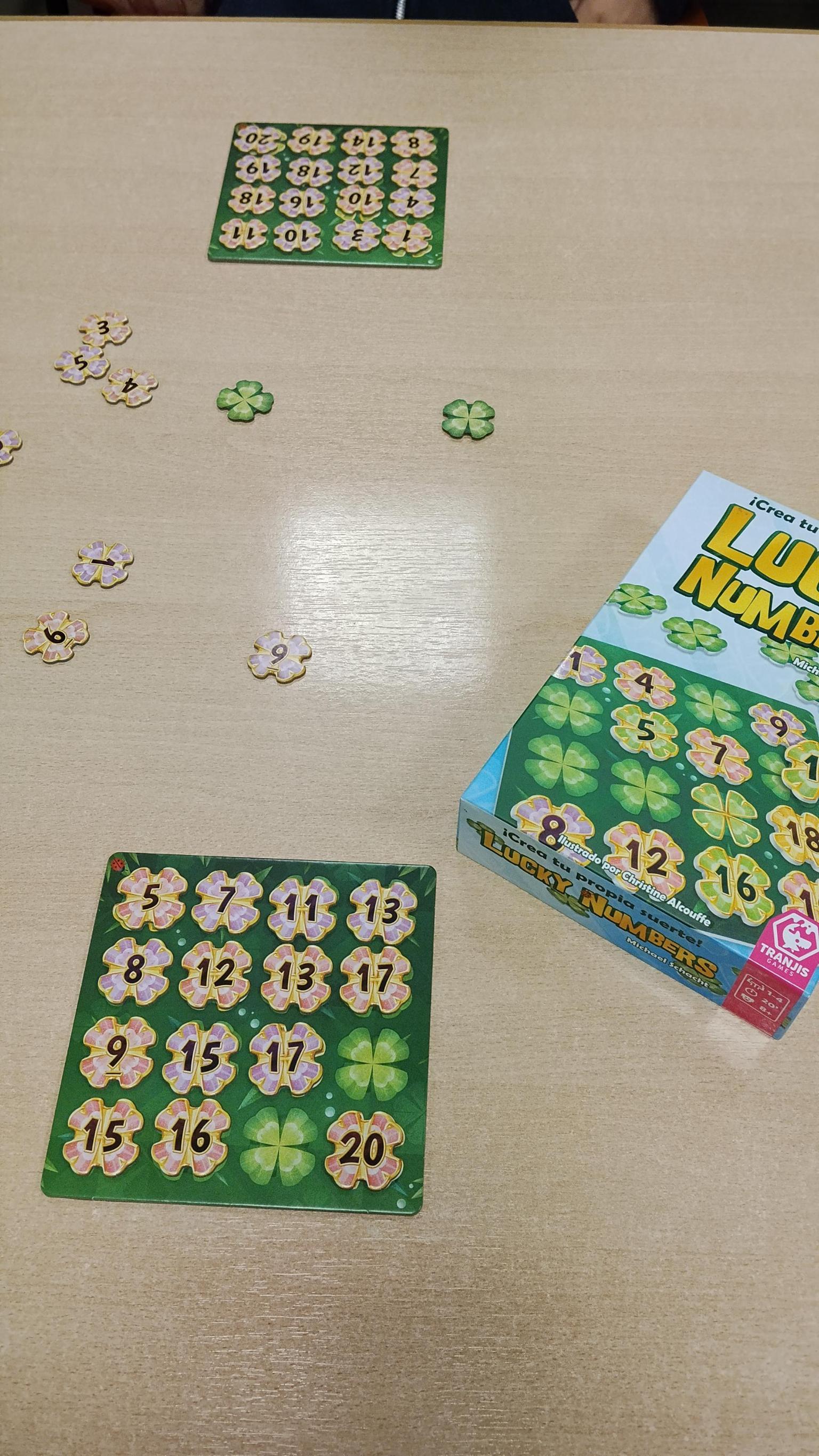
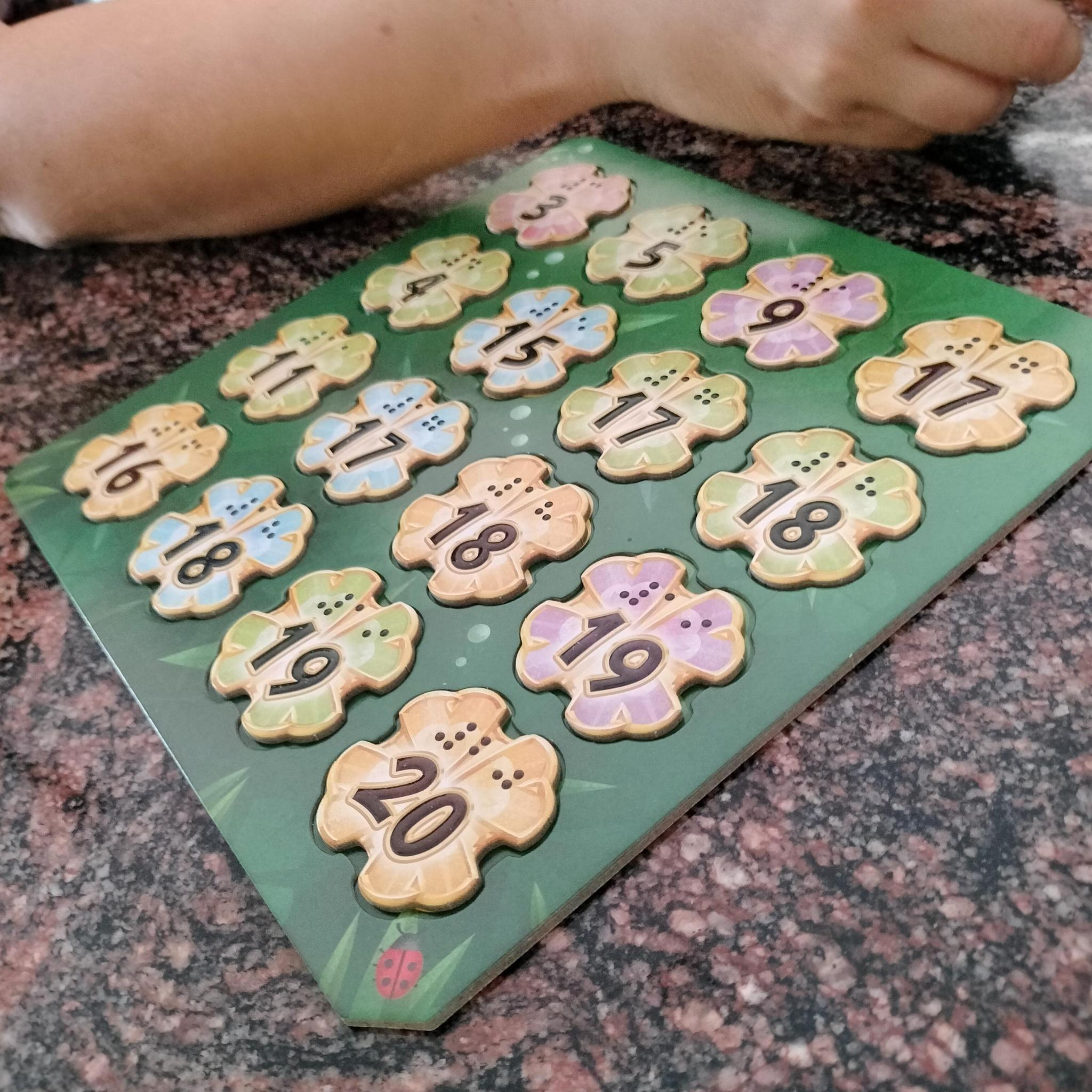
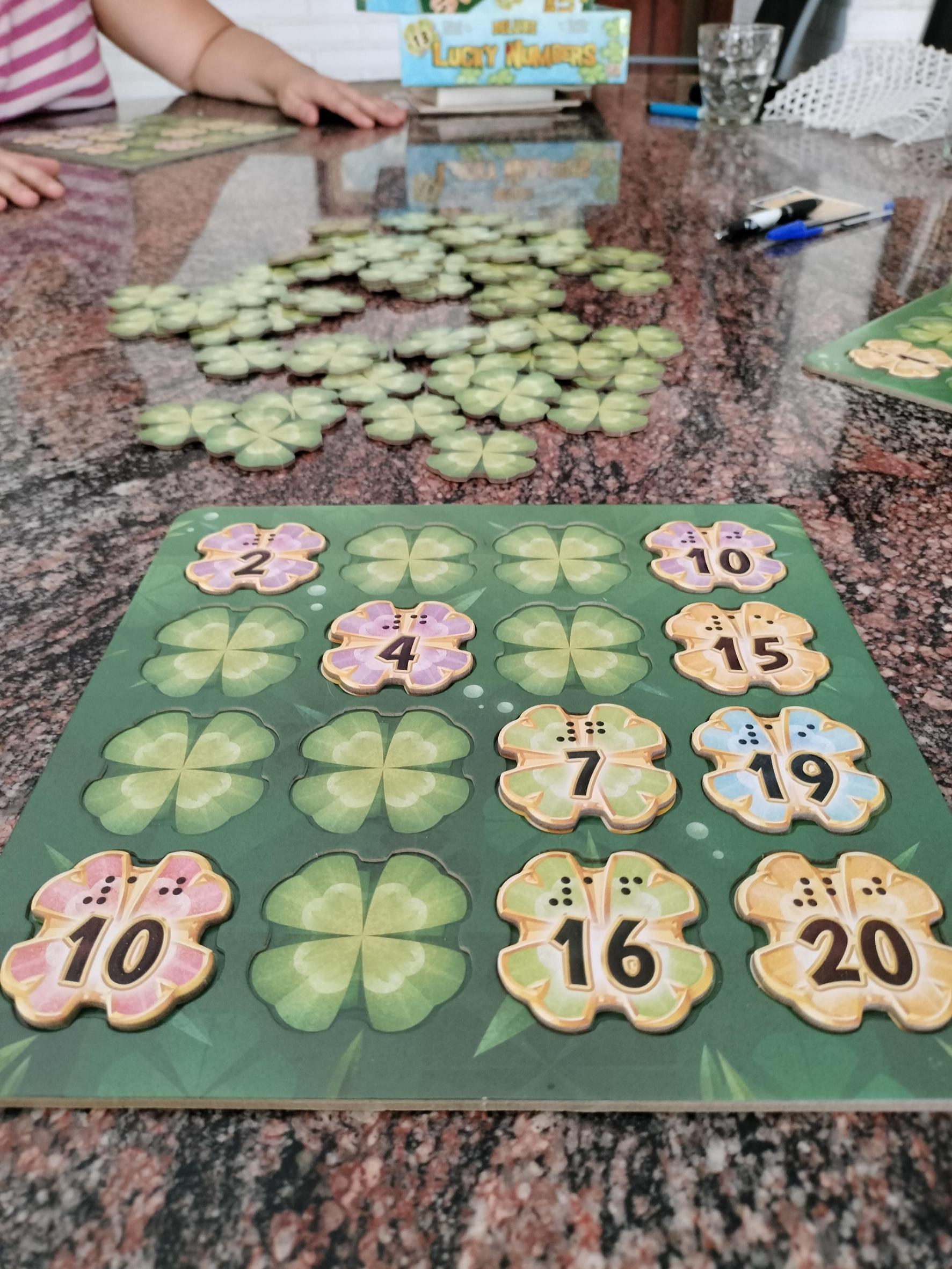
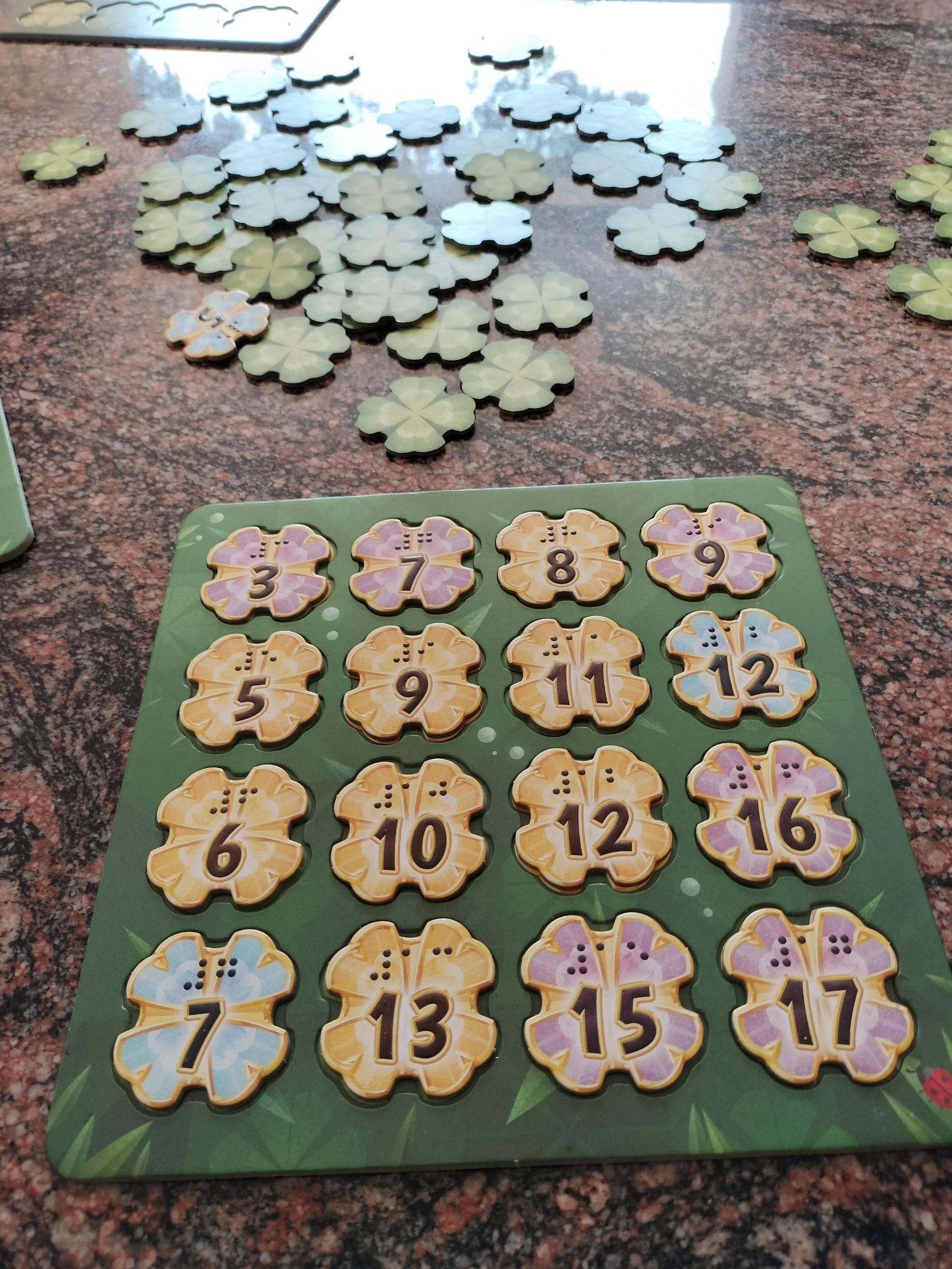
Die Spieler rennen darum, ein persönliches 4x4-Raster mit nummerierten Plättchen zu füllen, wobei eine lokale Sortierregel eingehalten werden muss: Jedes Plättchen muss höher sein als alle direkt darüber oder links davon liegenden und niedriger als alle direkt darunter oder rechts davon liegenden. In einem Zug zieht ein Spieler entweder ein verdecktes Plättchen oder einen offenen Ablagestapel und darf es in ein leeres Feld legen, es mit einem bereits im Raster liegenden Plättchen austauschen oder es auf den Tisch ablegen. Zu Beginn werden vier zufällig gezogene Plättchen in der Hauptdiagonale in aufsteigender Reihenfolge platziert. Das Spiel endet, wenn ein Spieler alle sechzehn Felder füllt (oder wenn der Nachziehstapel leer ist; dann gewinnt das am vollsten gefüllte Raster). Außerdem sind Turnierwertung und ein Solo-Puzzle-Modus enthalten.
- Spieler
- 1–4 am besten mit 3
- Spielzeit
- 20 Min.
- Alter
- 8+
- Komplexität
- 1,1 / 5
Über das Spiel
- Autoren
- Illustration
- Verlage




Erweiterungen
In Ludoya ansehen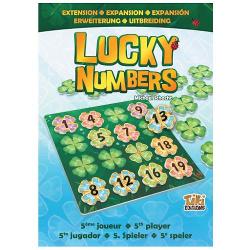
Fotos von Ludoya-Tischen
Alle Fotos in Ludoya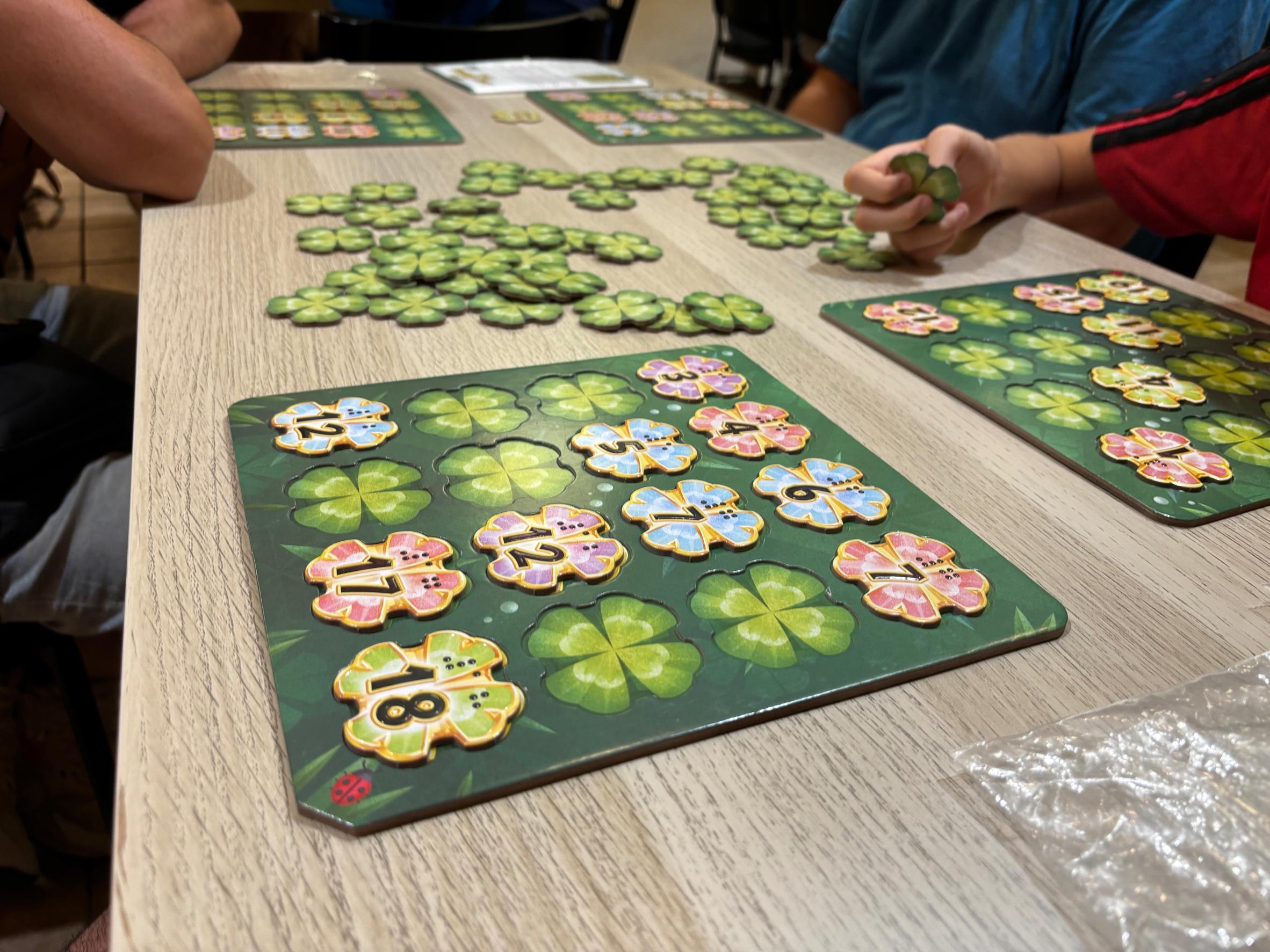
Wo kaufen
Shop-Preise und gebrauchte Exemplare, täglich geprüft.
- Milan SpieleAusverkauft17.1 €
- LudifolieLagerstand prüfen17.9 €
- Zatu GamesAuf Lager16.75 £
- Board Game BlissAuf Lager52.95 $
- SpelexpertenLagerstand prüfen199 kr
- Juegos de la Mesa RedondaAusverkauft17.96 €
- Dungeon MarvelsAusverkauft17.96 €
- ZacatrusAuf Lager17.99 €
An Ludoyas Tischen
Alle Statistiken in Ludoya- 3.002
- Erfasste Partien
- 941
- Spieler
- 13m 33s
- Durchschnittliche Partie
- 113
- In Sammlungen
- 6
- Auf Wunschlisten
6,9/10
aus 64 Ludoya-Rezensionen
A pesar del nombre, #LuckyNumbers no es para nada un juego de azar. Se trata de un juego sencillo en el que hay que tomar decisiones a corto plazo y en el que podemos solucionar facilmente nuestros errores intercambiando las fichas de trébol en nuestro turno. Me gustan los componentes y la estética del juego, siendo muy amigable y haciendo que un juego de estadística y probabilidad se combierta en algo atractivo para el público. Lo más interesante son las variantes que trae el juego y la opción de modo solitario que trae en la que se nos ofrecen 40 retos distintos. Un juego muy recomendable y más aún con el precio que tiene.
Julio CC6,0 A pesar del nombre, #LuckyNumbers no es para nada un juego de azar. Se trata de un juego sencillo en el que hay que tomar decisiones a corto plazo y en el que podemos solucionar facilmente nuestros errores intercambiando las fichas de trébol en nuestro turno. Me gustan los componentes y la estética del juego, siendo muy amigable y haciendo que un juego de estadística y probabilidad se combierta en algo atractivo para el público. Lo más interesante son las variantes que trae el juego y la opción de modo solitario que trae en la que se nos ofrecen 40 retos distintos. Un juego muy recomendable y más aún con el precio que tiene.
- Base -



Regelfragen
Aus der Spielanleitung beantwortet von Ludoyas Regelassistenten.
Can I rearrange or freely move tiles on my board later in the game?
No — you may only change your board when you place a new clover: you can add it to an empty space or exchange it for a previously-placed clover (returning the exchanged clover face-up to the middle); you cannot otherwise rearrange tiles (page 2).
If I draw a face-down clover and can't or don't want to place it, what do I do with it?
You leave it face-up in the middle of the table for anyone to take on a later turn (page 2).
If I take a face-up clover from the middle, can I also draw a face-down clover on the same turn?
No — if you take a face-up clover you do not reveal another clover on that turn (page 2).
Do the numbers in each row and column have to be consecutive (like 7,8,9) or something else?
They do not need to be consecutive; the number you place must simply be in ascending order with the other numbers in its row (left to right) and column (top to bottom) (pages 1–2).
What happens when the last clover from the draw pile is revealed? How does the game end?
If a player reveals the last clover and completes their turn, the game ends; normally the winner is the first to fill their board, but in this rare case the winner is the player with the fewest empty spaces (ties mean multiple winners) (page 1).
Are the four starting clovers placed on the diagonal locked in place, or can they be exchanged later?
The four starting clovers are placed face-up on the four diagonal spaces and may be exchanged later like any previously-placed clover under the Placement Rules, except in the Michael’s Setup variant where tiles placed during that setup may not be relocated (pages 2 and 1).


















Kostenlos, im Web, für Android und iOS
Spiel Lucky Numbers mit Ludoya
- Hab es in deiner SammlungVerwalte dein Exemplar und seine Erweiterungen, leih es Freunden oder setz es auf deine Wunschliste und erfahre, wenn der Preis fällt.Zur Sammlung hinzufügen
- Erfasse jede PartiePunkte, Sieger, Timer und Fotos, dann deine Statistiken: Siegquote, liebste Spielerzahl, beste Punktzahl.Partie erfassen
- Regelfragen klärenFrag alles zu den Regeln und erhalte eine Antwort aus der Spielanleitung, mit der Seite zum Nachprüfen.Den Regelassistenten fragen
- Finde Leute, mit denen du es spielstClubs, Spieleabende und Veranstaltungen in deiner Nähe, bei denen dieses Spiel auf den Tisch kommt.Veranstaltungen ansehen
Spieldaten (Spieler, Spielzeit, Alter, Mitwirkende) von BoardGameGeek.