
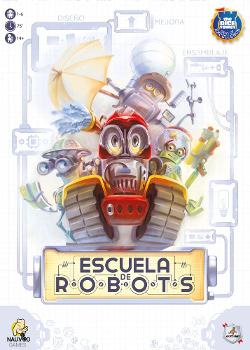
2023 · Ciencia ficción
Escuela de robots
Los jugadores asumen el papel de inventores que van reuniendo una colección de robots a lo largo de ocho rondas. En cada ronda, los jugadores asignan poder simultáneamente y realizan varias acciones —mejorar, ensamblar, diseñar, fabricar y reciclar—; cuanto más poder, mejor el efecto de la acción, pero también benefician a los oponentes. Los jugadores construyen y mejoran un motor de piezas y habilidades de robots con estas decisiones, con el objetivo de sumar la mayor cantidad de puntos optimizando el poder y el momento de las acciones, mientras gestionan las consecuencias compartidas sobre sus rivales.
- Jugadores
- 1–6 mejor con 4
- Duración
- 60–90 min
- Edad
- 14+
- Complejidad
- 3,2 / 5
Sobre el juego
- Publisher




Expansiones
Verlas en Ludoya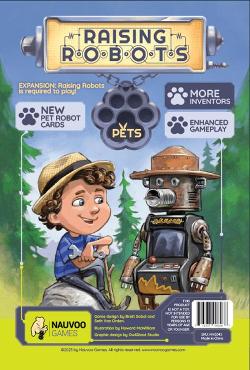

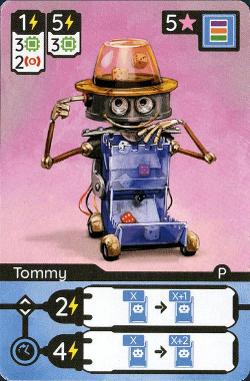
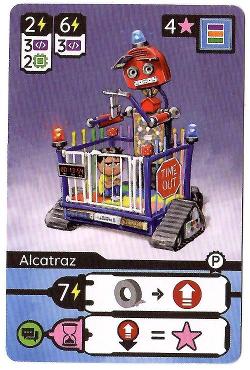
Fotos de mesas de Ludoya
Todas las fotos en Ludoya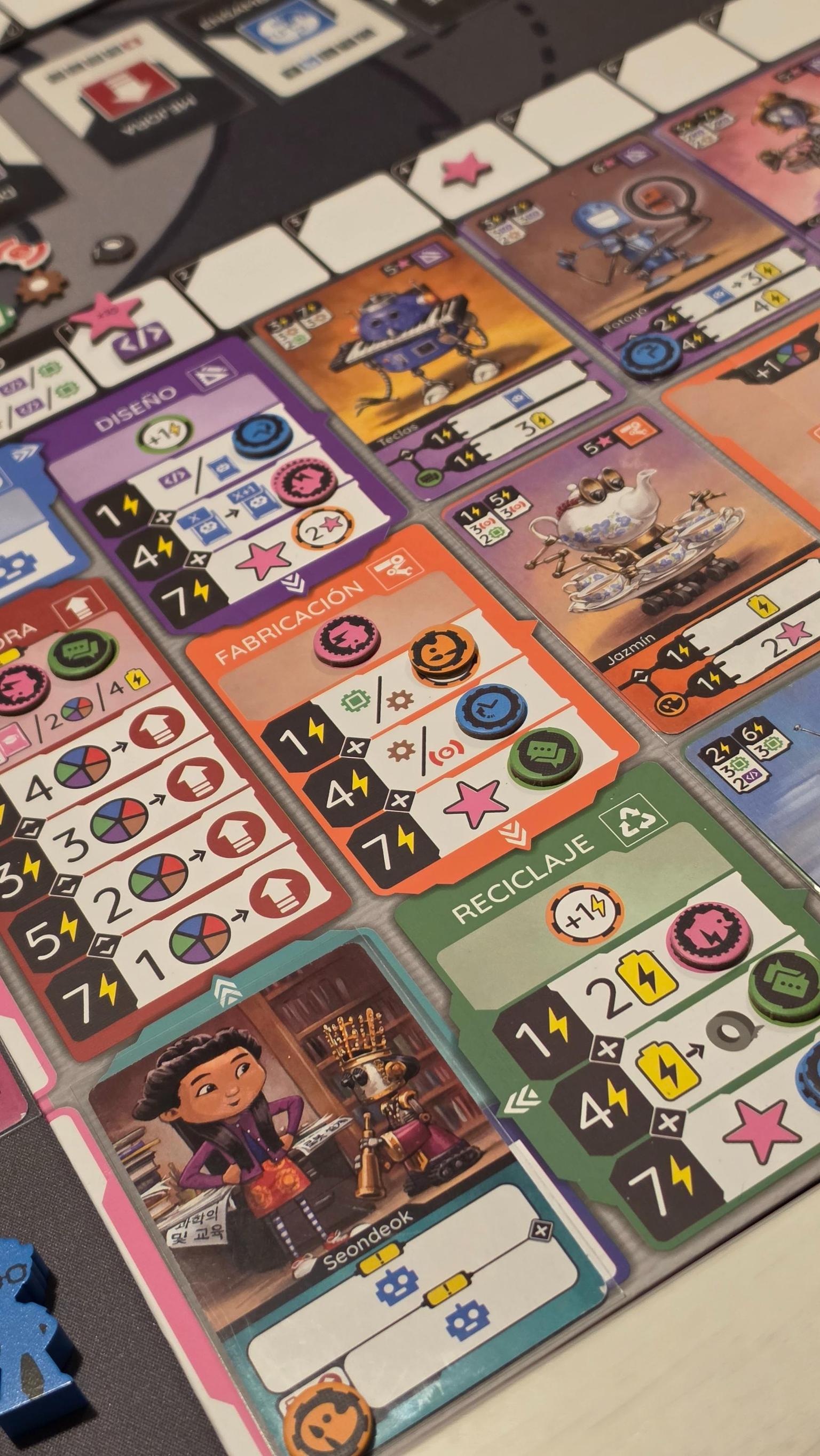
Dónde comprarlo
Precios de tiendas y copias de segunda mano, revisados cada día.
En las mesas de Ludoya
Todas las estadísticas en Ludoya- 58
- Partidas registradas
- 107
- Jugadores
- 1h 37m
- Partida media
- 32
- En colecciones
- 14
- En listas de deseos
7,2/10
de 9 reseñas en Ludoya
- Base -
Sleeved
Ressenya en català [aquí](https://www.instagram.com/p/DGvdkOqtZYq)



Dudas de reglas
Respondidas a partir del reglamento por el asistente de reglas de Ludoya.
Do I have to perform the phases in the order on the central board, or can I skip/reorder them?
Phases are always performed in the printed order each round (Upgrade → Assemble → Design → Fabricate → Recycle), and each phase must be completed before moving to the next; you may only perform a phase if you assigned its Phase Card or there is an Energy Cube on that phase (pages 11, 28).
How do Wilds work — can I save them or spend them as any resource?
Each Wild is immediately converted into a Sensor, Gear, Program, Microchip, or a Robot Card when gained or spent and Wilds are not tracked in your Inventory, so you cannot save unconverted Wilds (page 7); note that Robot Cards count as a Wild option and Duct Tape can be spent as a Wild but cannot be gained from one (pages 7, 26).
When I assemble a robot do I pay the full assembly cost right away, and can I split my energy to build multiple robots in the same Assemble phase?
When assembling you pick one of the two Assembly Cost columns and pay the energy and resource costs immediately (including any Extra Resource Cost), and you may split your Total Energy to assemble multiple Robot Cards in the same Assemble Phase (pages 14–15, 26).
If I place an Upgrade Token onto a card, can I move or remove it later?
No — once an unlocked Upgrade Token is placed onto a Robot Card, Class Card, or Inventor Card, it cannot be moved again (page 13).
How many Class Cards can I hold, and when do they score?
You may have a maximum of 3 Class Cards (you start with 1 and pick another at the Break Period, and can gain more via Inspiration but must replace or discard if over the limit), and each Class Card is scored at game end by counting items that meet its objective and applying the grade table (pages 19–20).
How do Batteries affect a phase’s Total Energy — can Batteries let me perform a phase I didn’t assign?
Each Battery you spend adds +1 to that phase’s Total Energy and Batteries stack with Energy Cards, Energy Cubes, and upgrades when calculating Total Energy, but Batteries do not let you perform a phase you are not eligible for (you still must have assigned the Phase Card or have an Energy Cube there), and you must determine Total Energy before taking phase actions (pages 9–10, 26).








Gratis, en web, Android e iOS
Juega a Escuela de robots con Ludoya
- Tenlo en tu colecciónControla tu copia y sus expansiones, préstala a tus amigos o ponla en tu lista de deseos y te avisamos cuando baje de precio.Añadirlo a tu colección
- Registra cada partidaPuntuaciones, ganadores, temporizadores y fotos, y luego tus estadísticas: porcentaje de victorias, número de jugadores favorito, mejor puntuación.Registrar una partida
- Resuelve dudas de reglasPregunta lo que quieras sobre las reglas y obtén una respuesta sacada del reglamento, con la página donde comprobarla.Preguntar al asistente de reglas
- Encuentra gente con quien jugarloClubes, noches de juegos y eventos cerca de ti que sacan este juego a la mesa.Ver eventos
Datos del juego (jugadores, duración, edad, créditos) de BoardGameGeek.