

2017 · 宇宙探索
パルサー2849
プレイヤーは未来のエネルギー起業家となり、宇宙を探査し、パルサーを確保し、星々にパルサーの電力を届けるためのインフラを建設します。 全8ラウンドは、全員で行うダイスロールとドラフトから始まります。プレイヤーは共有プールからダイスを選び、探査船の移動、パルサーの開発、送信ベクトルの建設、テクノロジーの獲得、ダイス修正効果の購入、本部での特別プロジェクトの完成などのアクションに支払います。 各ラウンドでは、探査、開発したパルサー、特許、共有目標の達成度に応じて得点計算を行います。複数の戦略ルートとエンジン構築の選択が、ゲーム終了時の結果を左右します。
- プレイ人数
- 2–4 ベスト4人
- プレイ時間
- 60–90分
- 対象年齢
- 14+
- 複雑さ
- 3.3 / 5
ゲームについて
- デザイン
- アート


Ludoyaのテーブルからの写真
Ludoyaですべての写真を見る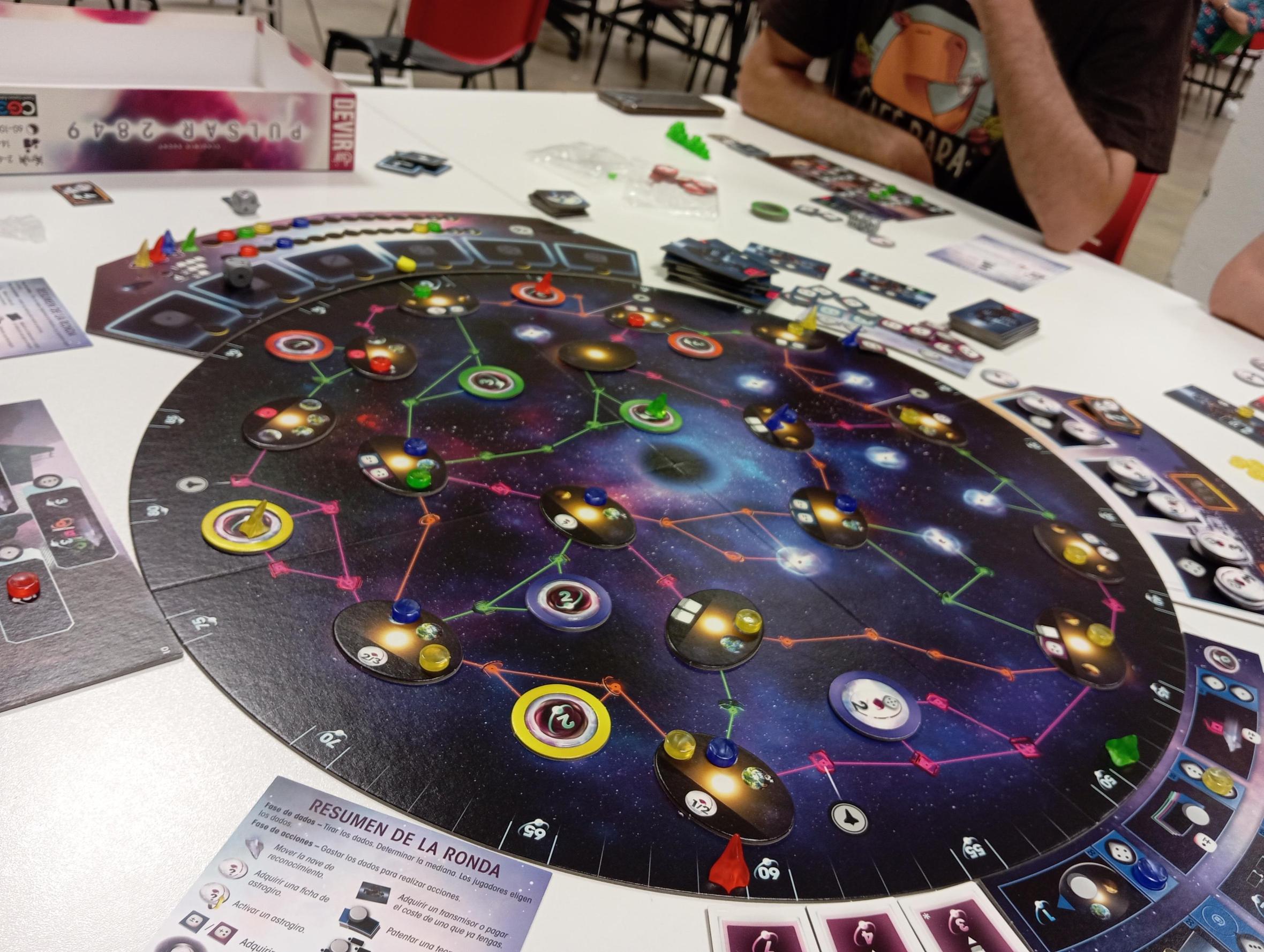
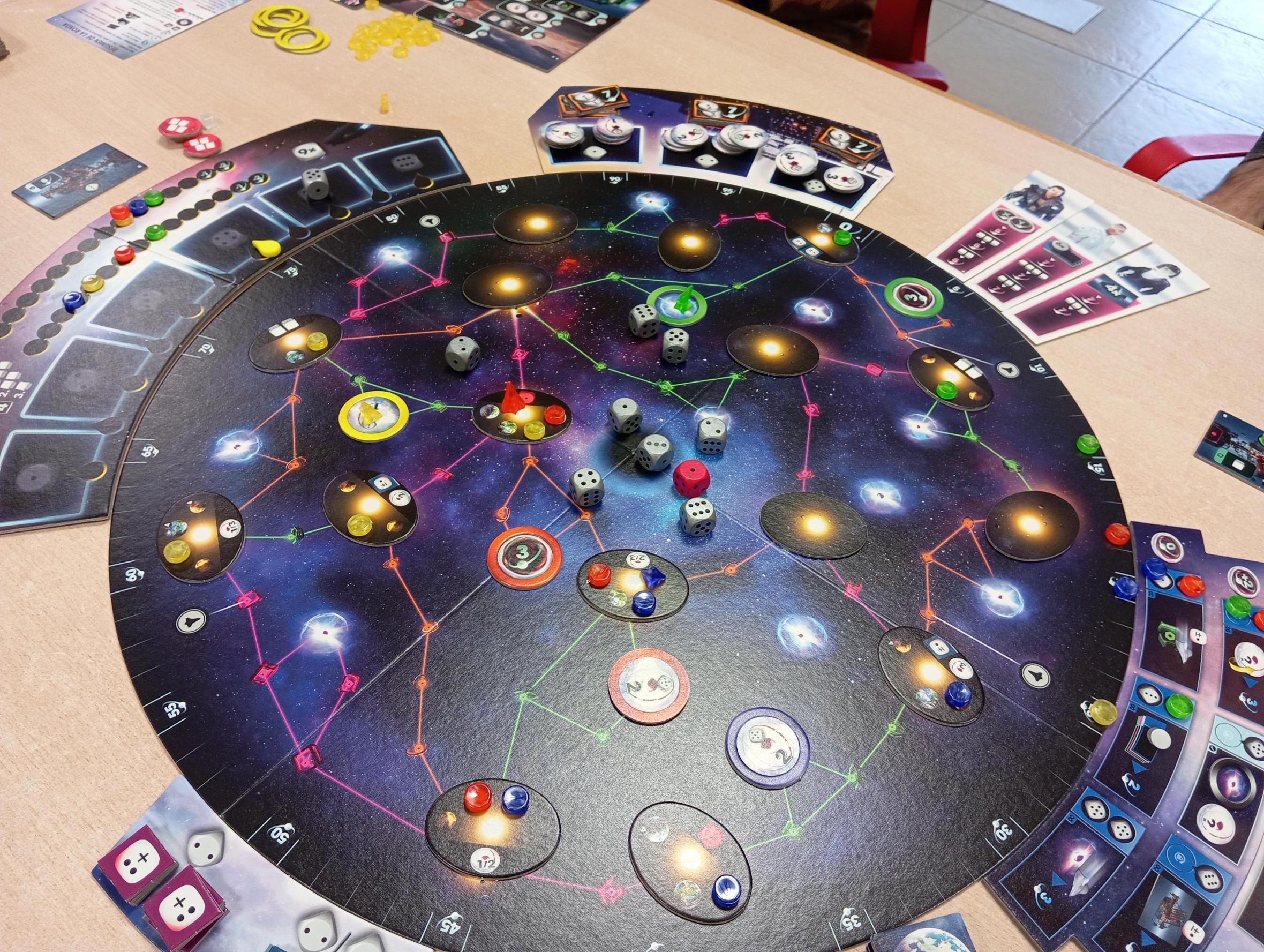
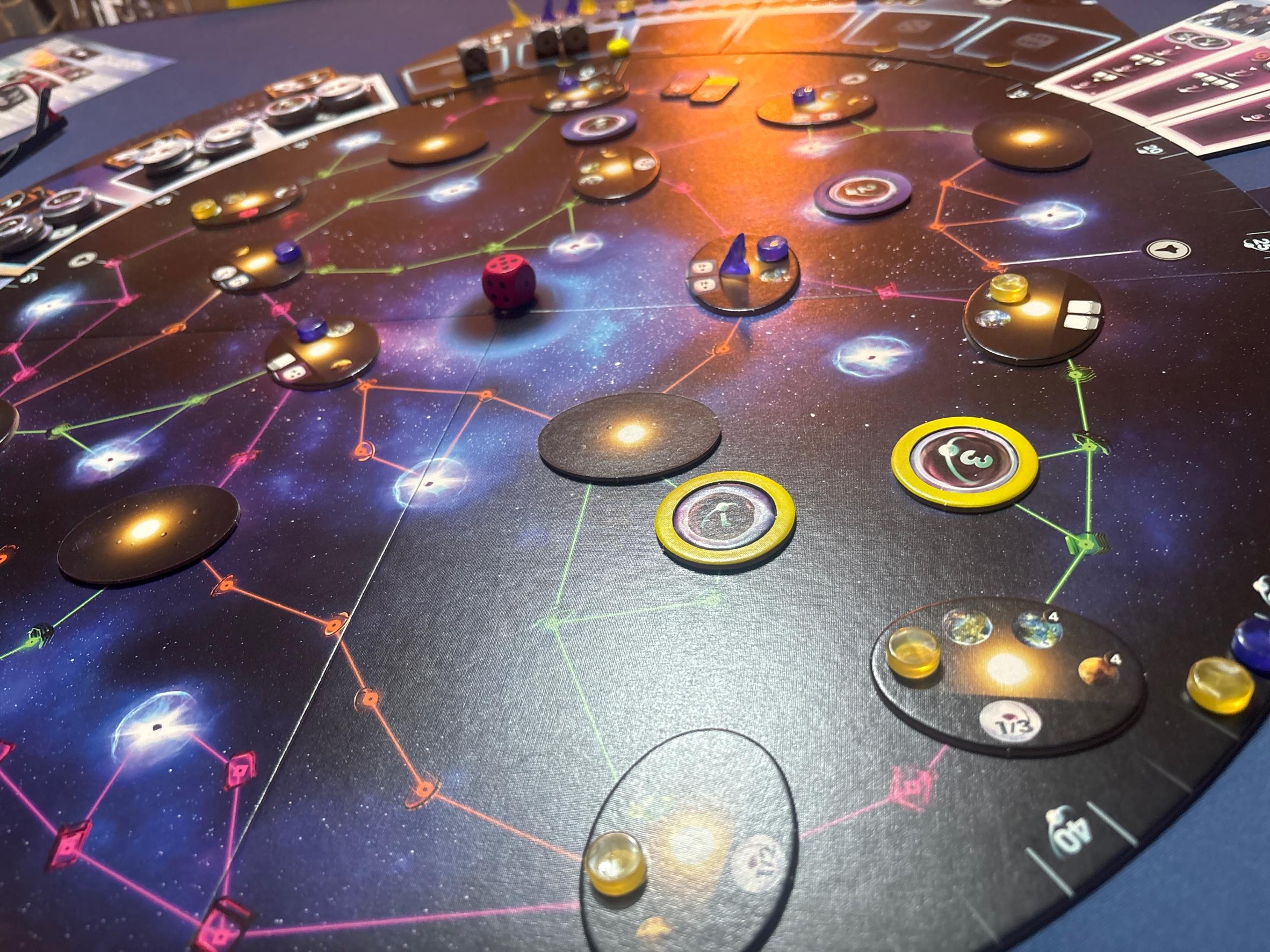
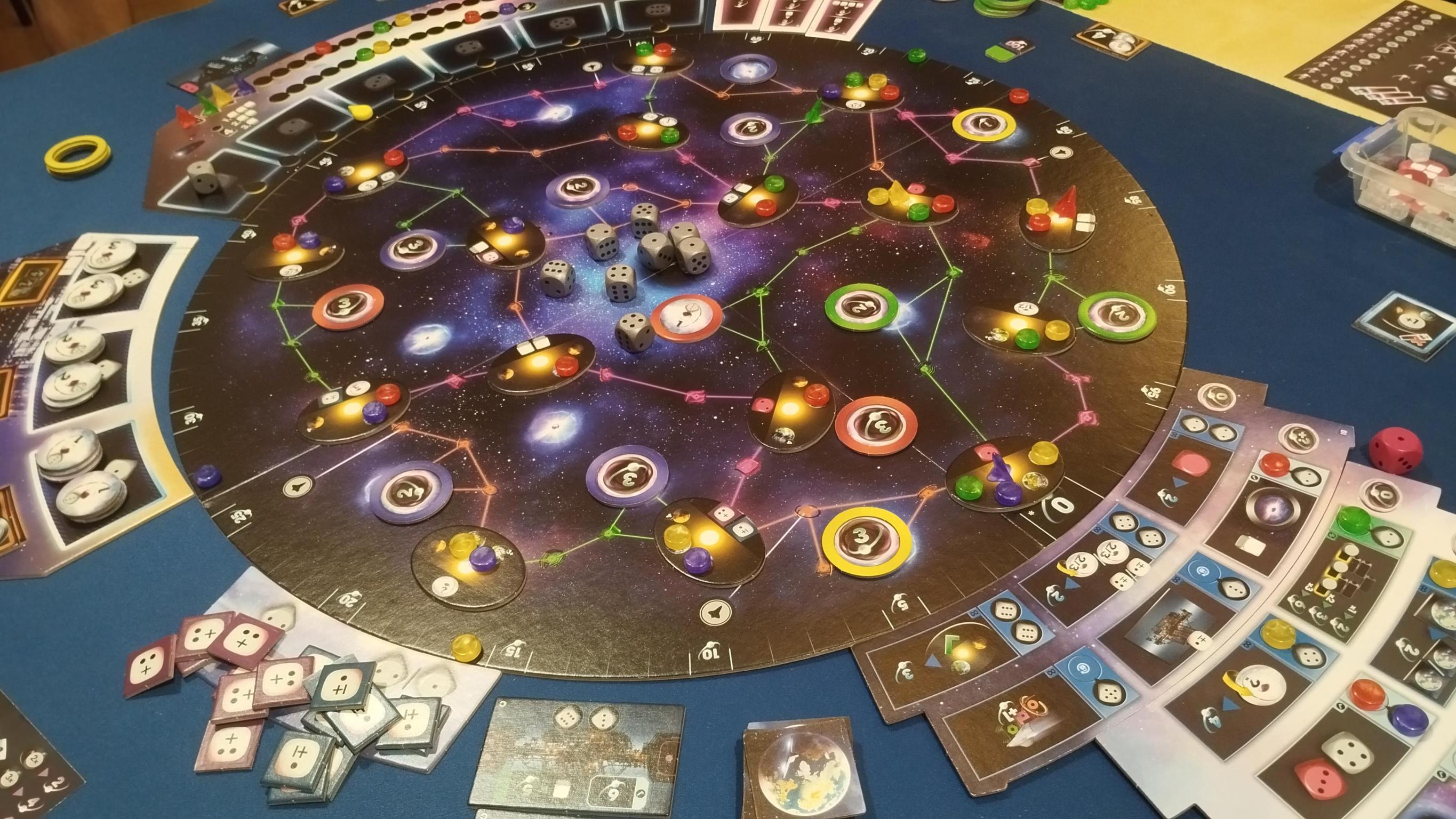
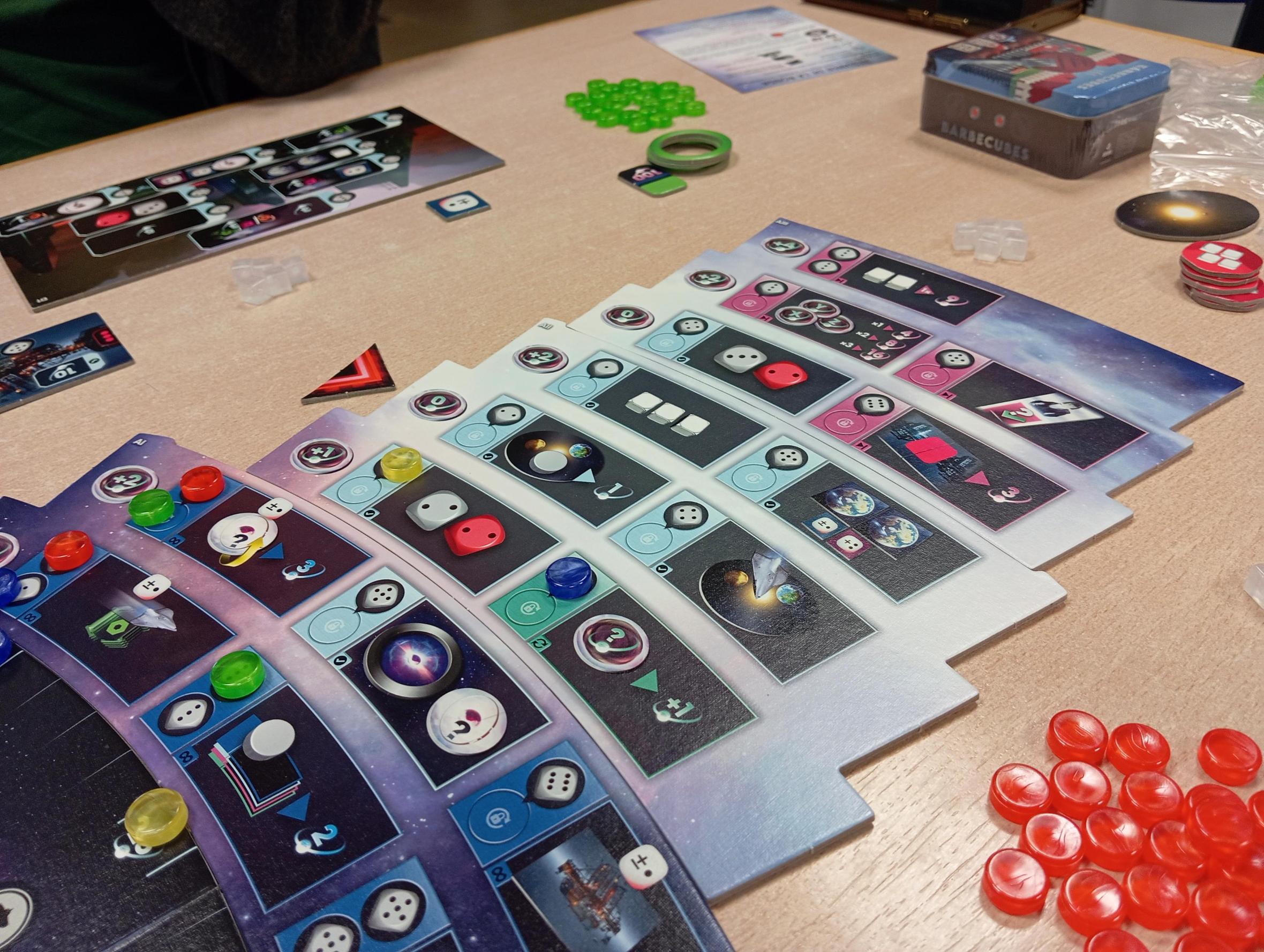
Ludoyaのテーブルでは
Ludoyaで詳しい統計を見る- 221
- 記録されたプレイ
- 328
- プレイヤー
- 1h 54m
- 平均プレイ時間
- 118
- コレクション登録
- 30
- ウィッシュリスト登録
7.7/10
Ludoyaのレビュー56件より
- Base -
第一印象 · 2回プレイ
Eric9.1 Diversión 5/5 · Interacción 5/5 · Atractivo 3/5 · Originalidad 4/5 · Rejugabilidad 5/5 · Accesibilidad 3/5
第一印象 · 2回プレイ
Cool dice placement games with point salad system. Nice theme, cool mechanics and low interaction.
プレイ履歴なし



ルールに関する質問
Ludoyaのルールアシスタントがルールブックに基づいて回答しています。
How do I determine the median after rolling the dice, and what does it do when we take dice?
Line the rolled silver dice in order; the median is the middle die and you place the median marker on it (if more dice sit to one side, move the marker one space toward that side so it sits between spaces). When you take a die you move either your initiative or engineering counter left or right relative to the median marker by the number of die spaces between the marker and the die you took, which affects play order and cube income later (p.7-8).
When I fly my survey ship, do I have to move the exact number of segments and can I retrace segments?
A flight must use exactly the number of segments equal to the die you pay (possibly modified) and you may not use any flight segment more than once during that single flight; flights of distance zero are not allowed and isolated pulsars with no connecting segments cannot be flown to (p.10).
If I only pass through a planetary system, can I still take the blue-planet exploration bonus?
No — if you only pass through a system you must place your token on a lifeless planet if one is available and you get no exploration bonus; you receive an exploration bonus only when your flight ends at the system and you establish a station on a blue planet (p.11).
How do gyrodyne tiles get placed, completed, and when do they score points?
You must first claim a pulsar, then take a gyrodyne tile (taking costs: 1 for small, 2 for medium, 4 for large), place it on your claimed pulsar to start construction, and later spend the tile's completion die (3 for small, 5 for medium, 6 for large) to flip it so it is spinning; spinning gyrodynes produce points each Production Phase equal to the gyrodyne's face plus the value of the current technology row (p.12, p.16).
How do transmitter links work and when do I get the red bonus die from them?
When you take transmitter tiles you decide immediately whether to link them end-to-end into an array (links are permanent) and you must pay each printed die cost to flip a transmitter online (one cost is covered when you take it); if you have two linked transmitters that are flipped online you gain the red bonus die formed by their link, which you may use as your bonus die that turn (p.13, p.15).























ゲーム情報(人数、プレイ時間、対象年齢、クレジット)の出典:BoardGameGeek。