
2018 · 경제
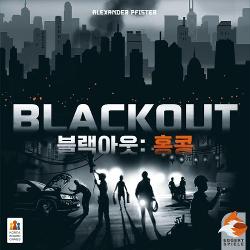
블랙아웃: 홍콩
A sudden citywide blackout throws civic systems into disarray and prompts competing groups to restore order. Players recruit and deploy specialists, collect and spend fluctuating resources, and complete tasks to stabilize neighborhoods and critical infrastructure. The game uses changing resource availability and a shared market to force adaptation each turn. Players balance short-term relief actions against long-term influence, use specialist abilities to chain effects, and vie for control of key locations as the city recovers.
- 인원
- 1–4 최적 3명
- 플레이 시간
- 75–150분
- 연령
- 14+
- 복잡성
- 3.5 / 5
게임 소개
- 출판사



Ludoya 테이블의 사진
Ludoya에서 모든 사진 보기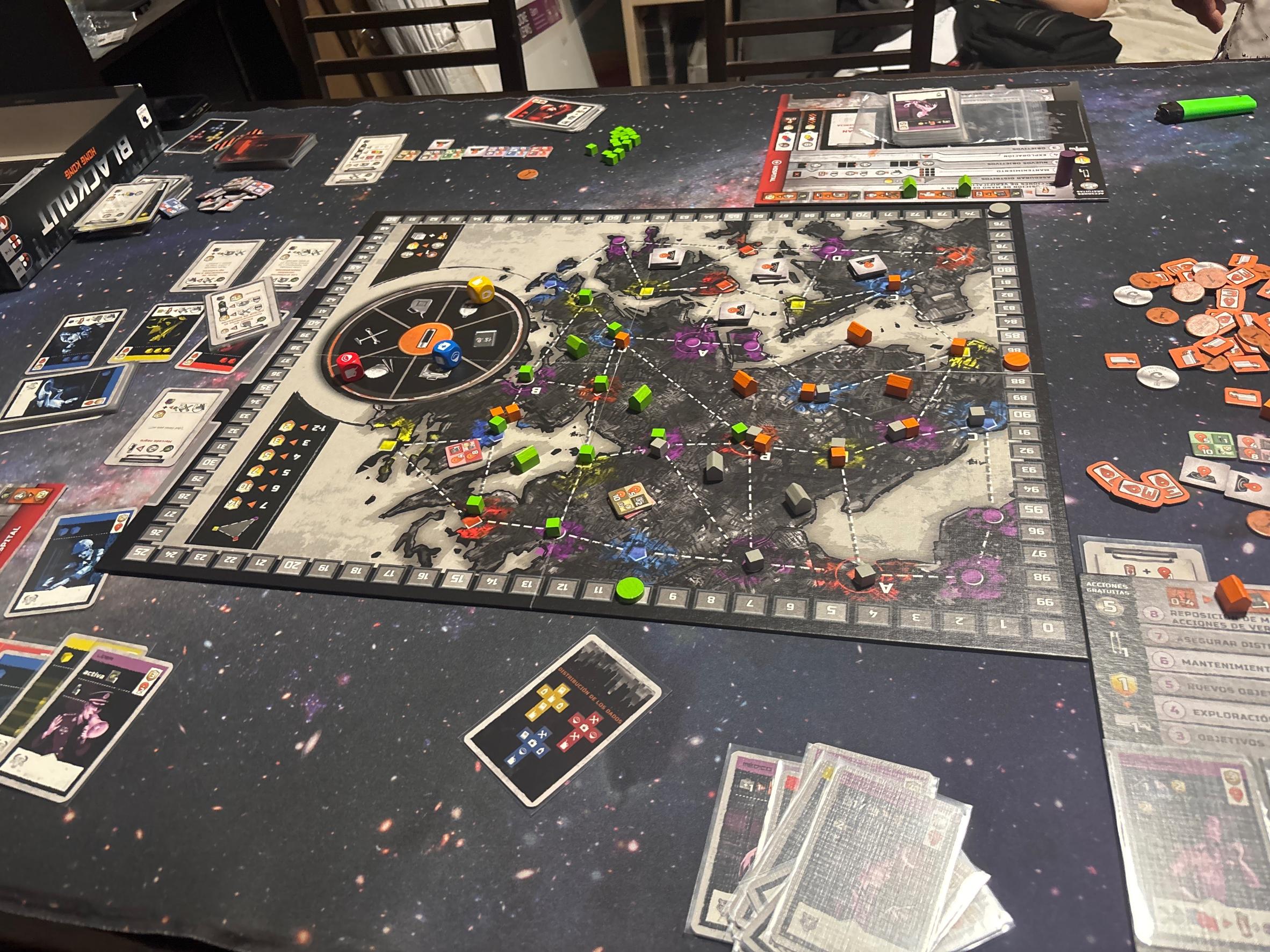
Ludoya 테이블에서는
Ludoya에서 전체 통계 보기- 177
- 기록된 플레이
- 134
- 플레이어
- 1h 45m
- 평균 플레이 시간
- 59
- 컬렉션 보유
- 12
- 위시리스트 등록
6.7/10
Ludoya 리뷰 31개 기준
Poteet7.8 Not my favorite Pfister, but still a solid game.
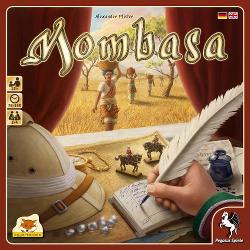
Evan5.9 Each round, the start player rolls three dice and places them on the resource area matching the icon on the die. Players get what start as symmetrical decks of cards where the majority of the cards are played for their cube icons. Each cube icon on a card produces a cube into the box where the die of the matching color currently resides. Once players resolve their cards, they take turns completing goals. The goals tend to give you a cube on the central map, and a new card for your hand for future rounds, although two of them are printed on your board and give you the ability to reset your hand faster, or play one additional card each round. Then players select a pile of facedown tokens. The tokens have different difficulty ratings on them and if you meet the requirement to claim one, you shuffle up the cards that contributed to taking the token and place one at random in the "hospital" area of your board. This can serve to cull cards from your deck, but each player also has a doctor card that retrieves one of the injured cards and additionally produces that card's value in victory points. There's some tensions here as to wanting your best guys to get hurt so you can score the healing process, but then they're not available to be played in the next turn while they're injured. Lastly, players can buy new goal cards from the faceup display next to the board. The order the cards come out is totally random, so navigating this fliplucky process is both an interesting challenge and a somewhat frustrating one. A row replenishes immediately when it runs out of cards. Money is tight in the game, and cards cost more depending on the number of cards taken from that row. The central board has regions that score once one player has a cube on every node surrounding the area, and then there's endgame scoring for having a set of explore tokens that all have a different type of reward. The game is really hard to boil down to it's core ideas. In fact, in the process of playing it, what a good move looks like and why feels a bit hard to focus on. There's some good planning that can be done, but despite numerous luck mitigation mechanisms, the dice and the cards in the purchasable array will sometimes favor you and sometimes they don't. Engine building elements are minimal. Player interaction is also minimal. I want to play this a little more to see if I can get a better sense of it, but it hasn't been the immediate hit that Mombasa and Great Western Trail were. ★ Art, Iconography and components functional ★ Clever or interesting mechanisms ★ Reasonably low downtime between turns with mildly AP players ★ Multiple plays stay interesting ★ Low or mitigatable luck elements ★★☆☆☆ Raw enjoyment
Garfield7.0 Too dry too keep it. Unfortunately a little bit multiplayer-solitaire. But really good mechanism. The theme is not really good. I expected quests to turn on the lights again. It's too abstract. [c] Theme: ★★☆☆☆ <!-- size 7]Not really good --> Gameplay: ★★★★☆ <!-- size 7]Right amount of choices --> Interaction: ★★☆☆☆ <!-- size 7]Just 'fighting' for be the first who encloses an area --> Artwork: ★★★☆☆ <!-- size 7]Ok, nothing special --> Luck: ★★☆☆☆ <!-- size 7]Dice rolling --> Strategy: ★★☆☆☆ <!-- size 7]Not many strategies possible --> Components: ★★★☆☆ <!-- size 7]Nothing special --> Play duration: ★★★☆☆ <!-- size 7]Ok --> Easy to teach: ★★★☆☆ <!-- size 7]Really ok for such a game --> Rules quality: ★★★★★ <!-- size 7]Almost perfect --> Setup time: ★★☆☆☆ <!-- size 7]A lot, but still ok --> No downtime: ★★★★☆ <!-- size 7]Little to none, because you can play simultaneously --> Replay value: ★★☆☆☆ <!-- size 7]Not much I can think of --> [/c]






게임 정보(인원, 플레이 시간, 연령, 제작진) 출처: BoardGameGeek.