
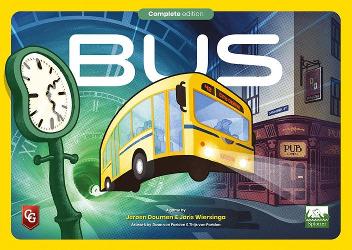
1999 · 교통
Bus
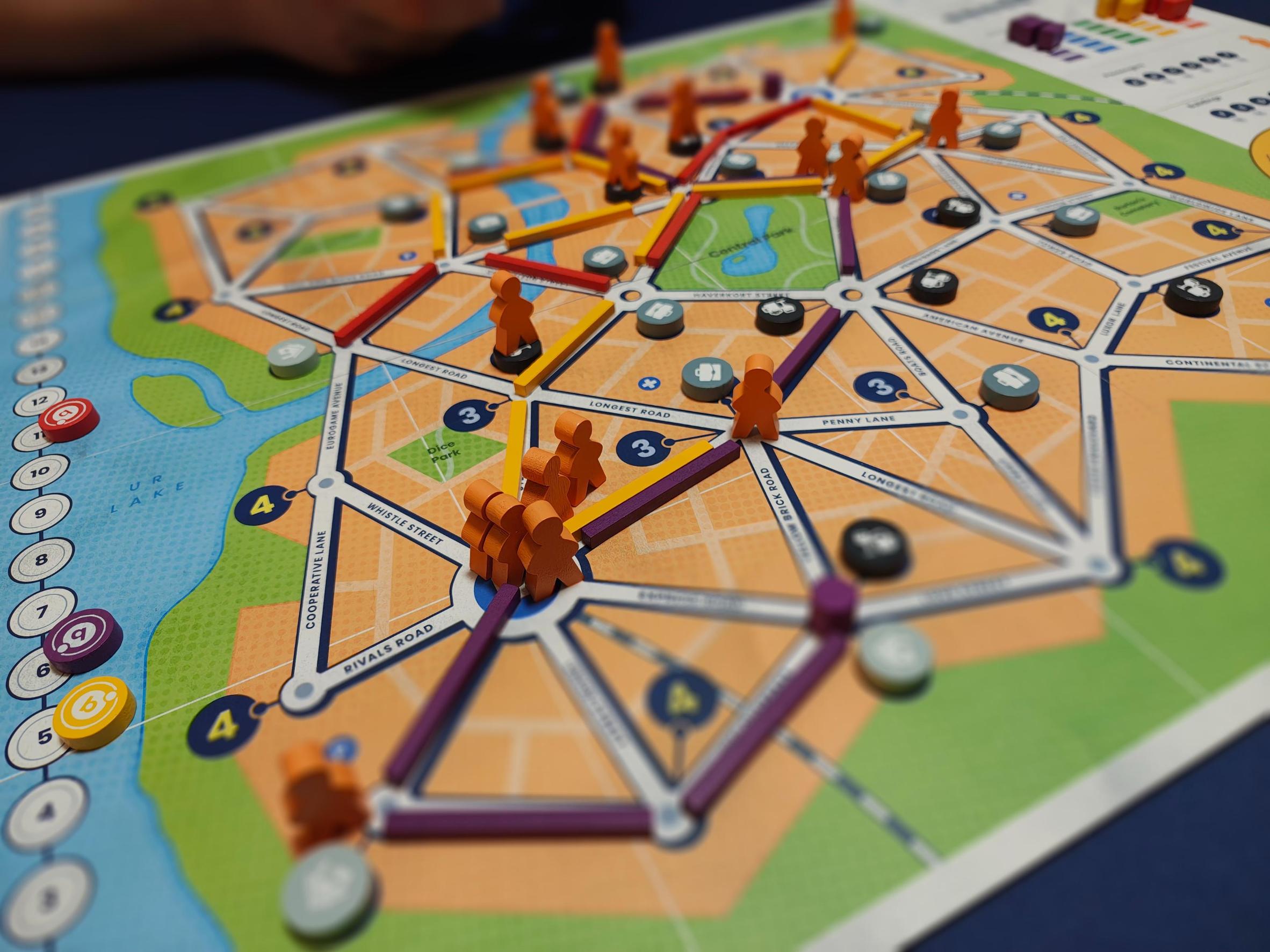
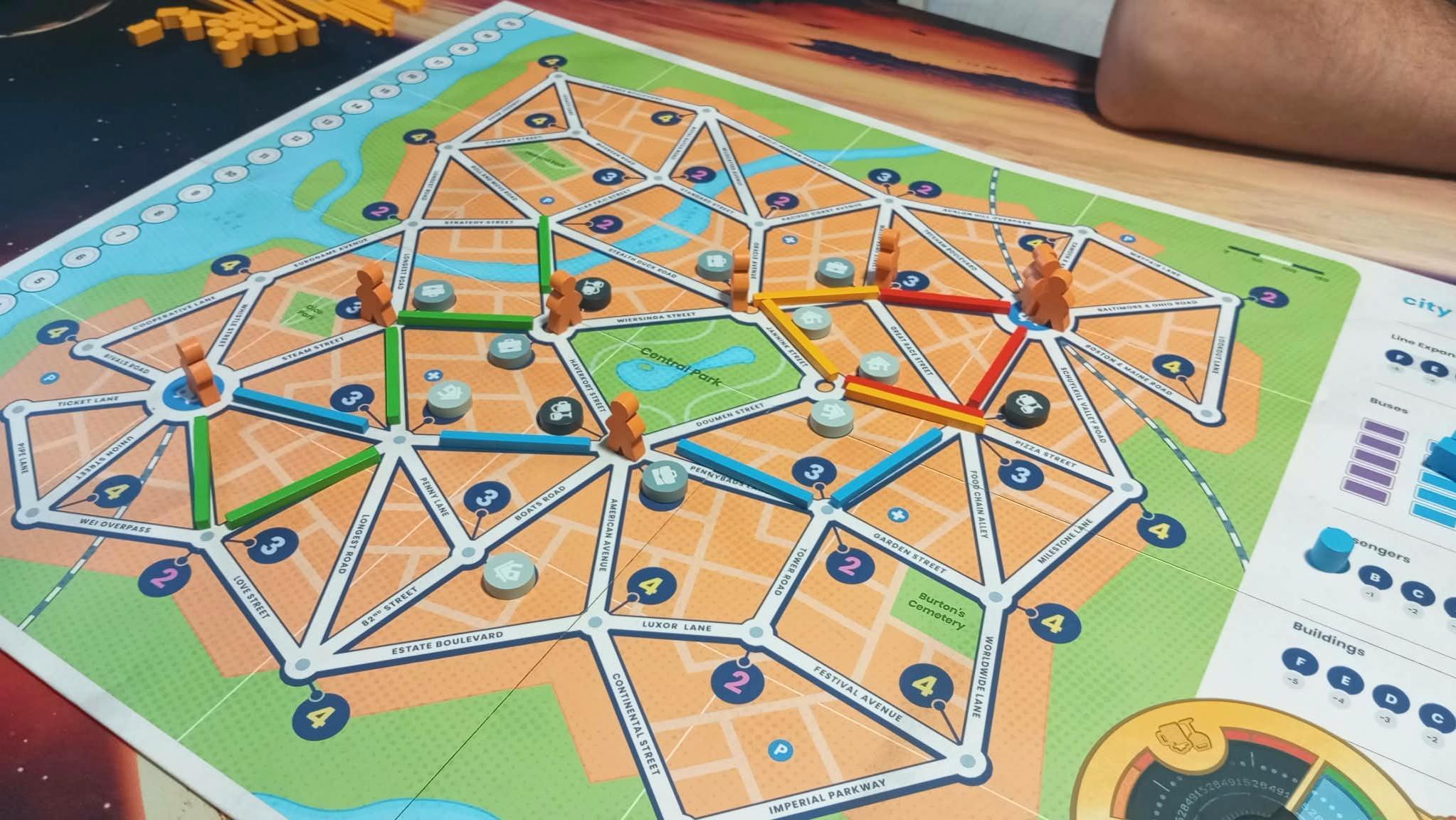
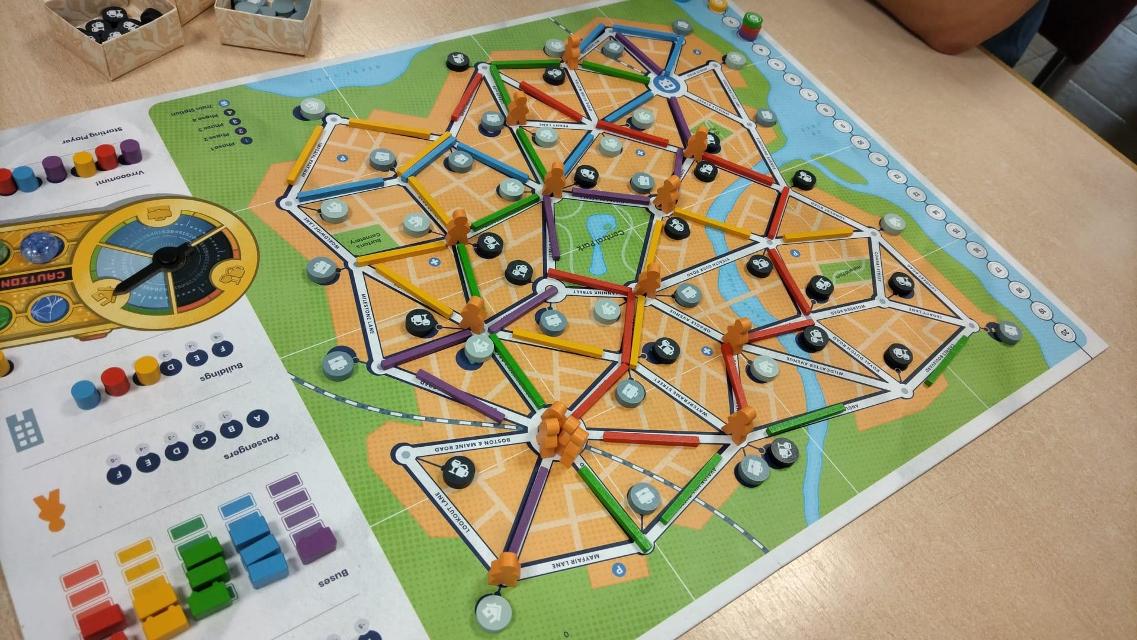
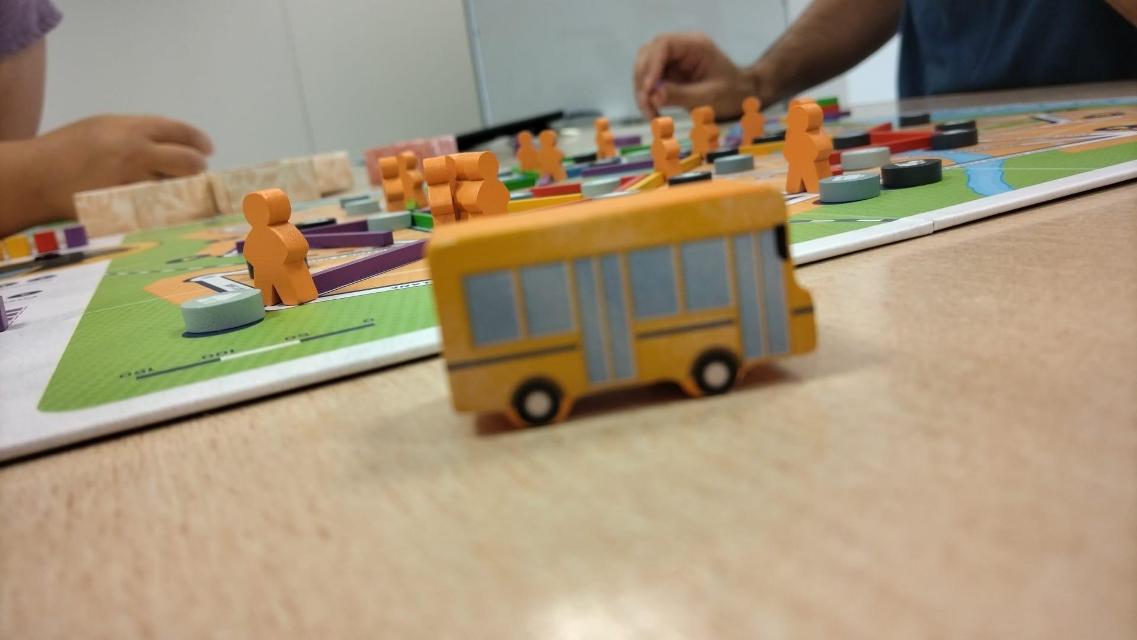
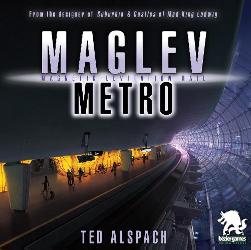
Players expand a public transit network and try to deliver passengers to their destinations over a sequence of turns. Each round players take actions from an action board: buy additional buses, extend route lines, introduce new passengers via trains, add buildings to the city, or run buses to pick up and score riders. Destination types change over time (work, bar, home), so players plan routes to follow passengers through shifting needs. Route extensions attach to either end of existing lines and must respect placement rules; building placement can block or spoil opponents’ routes. Some actions give a positional twist: the first player to take certain actions resolves them last, creating strategic timing decisions.
- 인원
- 3–5 최적 5명
- 플레이 시간
- 120분
- 연령
- 14+
- 복잡성
- 3 / 5


Ludoya 테이블에서는
Ludoya에서 전체 통계 보기- 157
- 기록된 플레이
- 317
- 플레이어
- 1h 15m
- 평균 플레이 시간
- 55
- 컬렉션 보유
- 24
- 위시리스트 등록
8.0/10
Ludoya 리뷰 33개 기준
Oscaarz6.0 Assez plaisant, 90 minutes avec 5 joueurs meme si 1er partie. J'aime bien le theme du transport en commun. A réessayer!
첫인상 · 1회 플레이
Amy7.8 Me ha gustado mucho, es un juego muy cabron que te invita a hacer daño a los demás y hacer que pierdan acciones, la duración de la partida y el diseño están ways, he disfrutado la partido mucho y me gustaría volver a jugarlo Diversión 5/5 · Interacción 5/5 · Atractivo 2/5 · Originalidad 3/5 · Rejugabilidad 5/5 · Accesibilidad 2/5
첫인상 · 2회 플레이
SirKappy7.0 Fun 4/5 · Interaction 4/5 · Appeal 3/5 · Uniqueness 3/5 · Replayability 4/5 · Accessibility 2/5
첫인상 · 1회 플레이


이 게임을 하는 예정된 이벤트
모든 이벤트룰 질문
Ludoya 룰 도우미가 룰북을 바탕으로 답변했습니다.
How many actions do I have to choose each round — do I have to pick exactly two or can I pick more?
You must choose at least two actions each round, but you may choose more up to the number of action stones you have remaining; some actions (buying a bus, clock, starting player) can be taken by only one player that round and other actions can be chosen by multiple players (page 2).
What is the “maximum number of buses” and why does it matter?
The maximum number of buses is the number of buses owned by the player who has the most buses, and it immediately determines how many passengers, line expansions and buildings players must add when those actions are taken (page 2).
When am I allowed to expand my line parallel to someone else’s line?
You may only build parallel in two cases: (1) if no empty streets are available at your head you may continue parallel until you reach an empty street, or (2) if your head is on the same crossing as another player's head (and all players with lines on that stretch also have their heads there), you may build parallel until the next crossing where you must take an empty street if available (page 3).
If I close a circle with my line, where are my line’s heads and how do I show them?
When you close a circle the line’s heads remain at the crossing where the circle was closed (giving you two heads there), and you must place the involved action stone on that crossing so everyone can see from which point you must connect next round (page 3).
How does Vrrooomm! (moving buses) work — which passengers can I move and where can I place them?
Each bus can carry one passenger; you may only transport passengers who ‘want to get away’ (i.e., are dissatisfied with the building on their crossing) and you must place them into an empty building of the correct type that lies on your own line, scoring one point per passenger moved (page 5).
What happens if I choose to stop time with the clock action?
If you stop time you take one clock stone (which counts as one minus point) and the time indicator stays where it is; if the last clock stone is taken the time-space-continuum ruptures and the game ends immediately with immediate scoring — further actions in that round are not played (page 5).









게임 정보(인원, 플레이 시간, 연령, 제작진) 출처: BoardGameGeek.