
2020 · 탐험
하이 프론티어 4 올
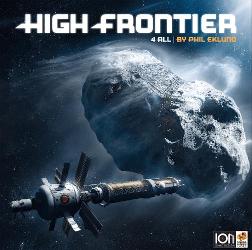
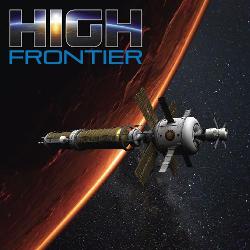
Players run competing space companies that design rockets, develop technology, and establish industry across the solar system using realistic rocketry and delta-v calculations. Gameplay uses a large delta-v map of the solar system, technology and event cards, and modular rulesets that scale from a beginner scenario to full advanced play, including politics and solitaire/cooperative variants. Players plan missions, build and upgrade launch systems, transport resources and colonists, and balance profit, research, and political factors as they race to access and exploit different orbital and planetary destinations.
- 인원
- 1–5 최적 3명
- 플레이 시간
- 30–240분
- 연령
- 14+
- 복잡성
- 4.8 / 5
게임 소개





확장판
Ludoya에서 보기 High Frontier 4 All: Module 1 – Terawatt & Futures2020
 High Frontier 4 All: Module 2 – Colonization2020
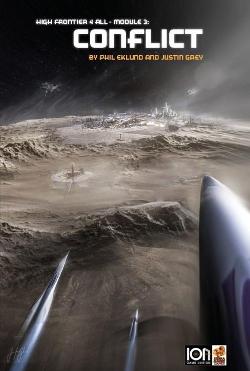 High Frontier 4 All: Module 3 – Conflict2021
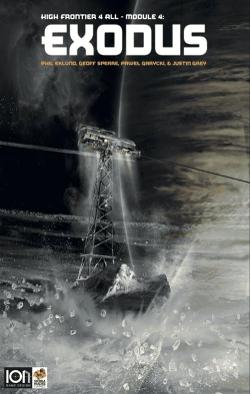 High Frontier 4 All: Module 4 – Exodus2023
 High Frontier 4 All: Tools 12024
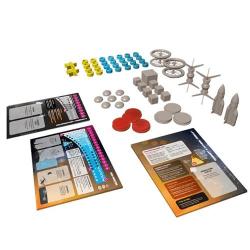 High Frontier 4 All: 6th Player Component Kit2020
 High Frontier 4 All: Module 5 – Economy2025
 High Frontier 4 All: Promo Pack 1 – The Station Pack2022
 High Frontier 4 All: Promo Pack 2 – Achievements2023
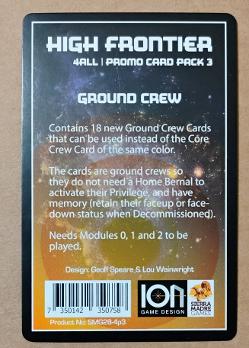 High Frontier 4 All: Promo Pack 3 – Crew2026
 High Frontier 4 All: Tools 22026
 High Frontier 4 All: Module 6 – Odyssey2026
함께 플레이 가능
Ludoya에서 보기
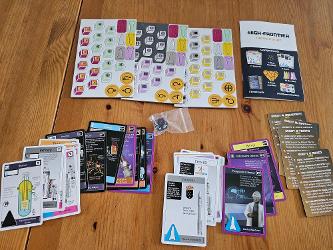
Ludoya 테이블의 사진
Ludoya에서 모든 사진 보기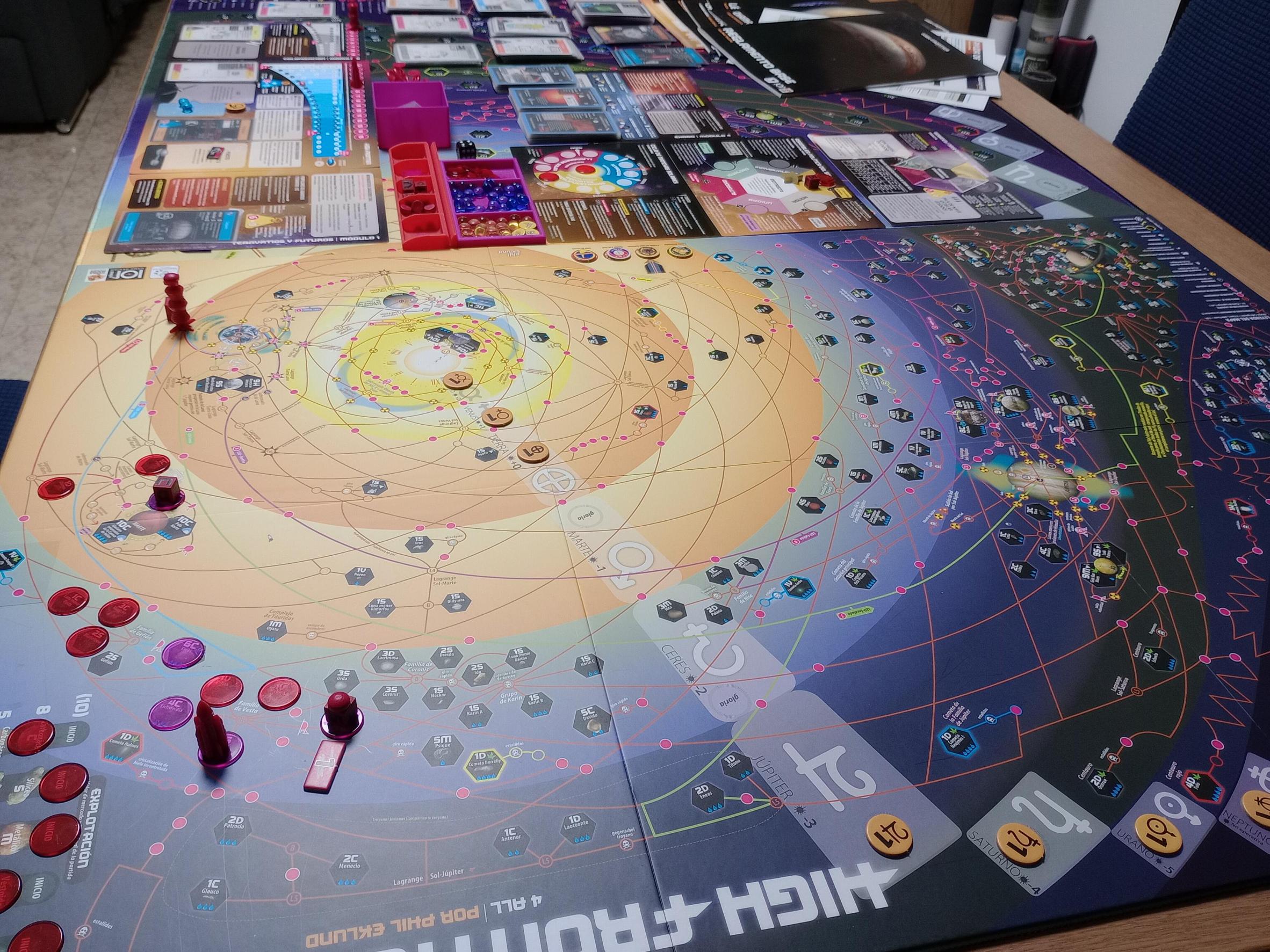
Ludoya 테이블에서는
Ludoya에서 전체 통계 보기- 231
- 기록된 플레이
- 189
- 플레이어
- 2h 57m
- 평균 플레이 시간
- 76
- 컬렉션 보유
- 20
- 위시리스트 등록
- 1
- 예약 구매
8.3/10
Ludoya 리뷰 28개 기준
xTo9.0 As an aerospace engineer I can spend hours playing in this inmmersive solar system (NOTE: I've been a rocket designer of the MIURA launcher, which is included in the promo cards, that makes me laugh every time the rocket explodes, hehe)

이 게임을 하는 예정된 이벤트
모든 이벤트룰 질문
Ludoya 룰 도우미가 룰북을 바탕으로 답변했습니다.
When do I use wet mass vs dry mass, and how do I track fuel/Wet Mass chits?
Wet mass includes all fuel and is used for thrust and movement calculations; dry mass is the spacecraft without fuel or jettisonable tanks. Track fuel and Wet Mass chits per the mass rules and adjust wet mass when fuel is spent or tanks are jettisoned (Rulebook pp. 15–16; p.54).
Can I mix different fuel grades together and will any thruster use mixed fuel?
You may mix fuel grades in a tank but each thruster requires a compatible fuel grade to fire; mixing doesn’t make an incompatible thruster usable (see Fuel grades, mixing rules and thruster compatibility) (Rulebook p.17).
How do I create a valid stack (LEO, Rocket, Outpost) and what are the permitted stack rules?
Follow the permitted Stacks rules when assembling components, create LEO and Rocket stacks using the step-by-step stack creation rules and checks, and obey load/mass and tankage constraints shown in the examples; Outposts have their own creation steps (Rulebook pp.11–13).
Do aerobrake and factory-assist landings/liftoffs use fuel, and how do hazards apply to them?
Aerobrake or factory-assist landings/liftoffs use the special aerobrake/factory rules instead of or in addition to burn fuel as specified, and hazards (belt rolls, CME, etc.) still apply per the aerobrake and factory-assist procedures and examples (Rulebook pp.24–25).
How exactly does prospecting/industrialize work — what are the steps to claim an exploitation track or build a factory?
Prospecting is a five-step operation (survey, prospect roll, place cubes, etc.) with raygun/buggy/missile variants; Industrialize and placing exploitation track cubes follow the prospect/industrialize operation rules and examples (Rulebook pp.31–32).
What happens on a Glitch or Solar Flare during the sunspot cycle?
Sunspot events list specific effects—Glitch causes hand/hazard issues and Solar Flare can damage stacks or cause CME-like effects—apply the event outcomes and remedies as described in the sunspot cycle table and examples (Rulebook p.37; example CME on p.14).




게임 정보(인원, 플레이 시간, 연령, 제작진) 출처: BoardGameGeek.