
2024 · 산업 / 제조
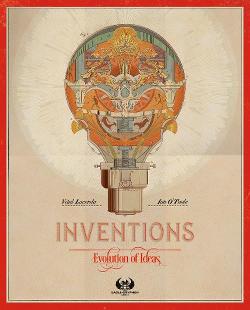
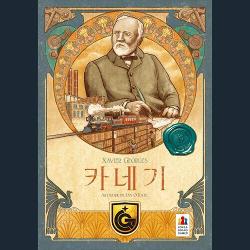
Inventions: Evolution of Ideas
Track the development of ideas and turn them into technologies to advance a society across eras. Players play cards representing concepts, develop them into inventions, and manage their spread to gain benefits for technology, economy, and culture. Cards can be shared with other players to increase their effectiveness and generate mutual gains. Play emphasizes tactical card play within a long-term strategy as players accumulate Intellectual Property Points to measure societal progress and determine the winner.
- 인원
- 1–4 최적 3명
- 플레이 시간
- 60–150분
- 연령
- 14+
- 복잡성
- 4.6 / 5



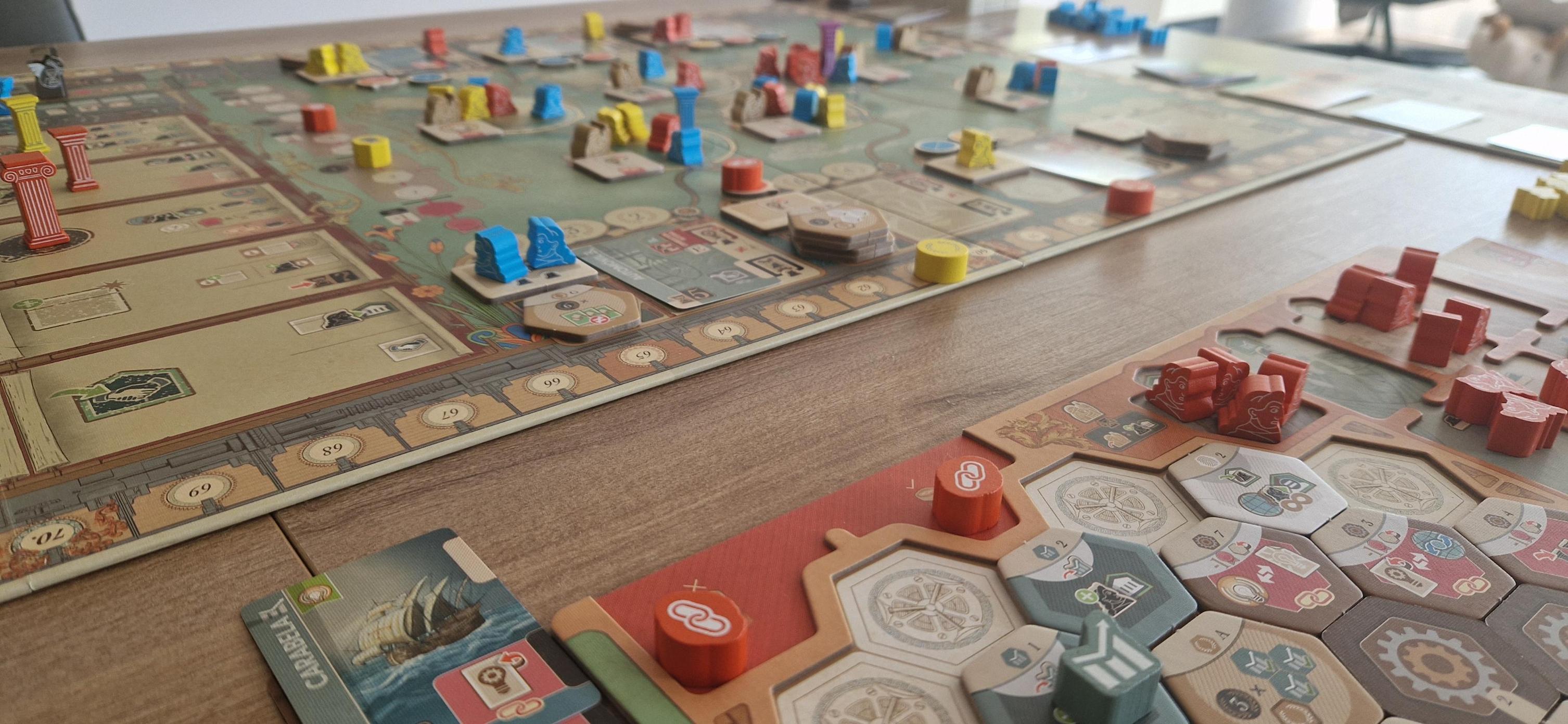
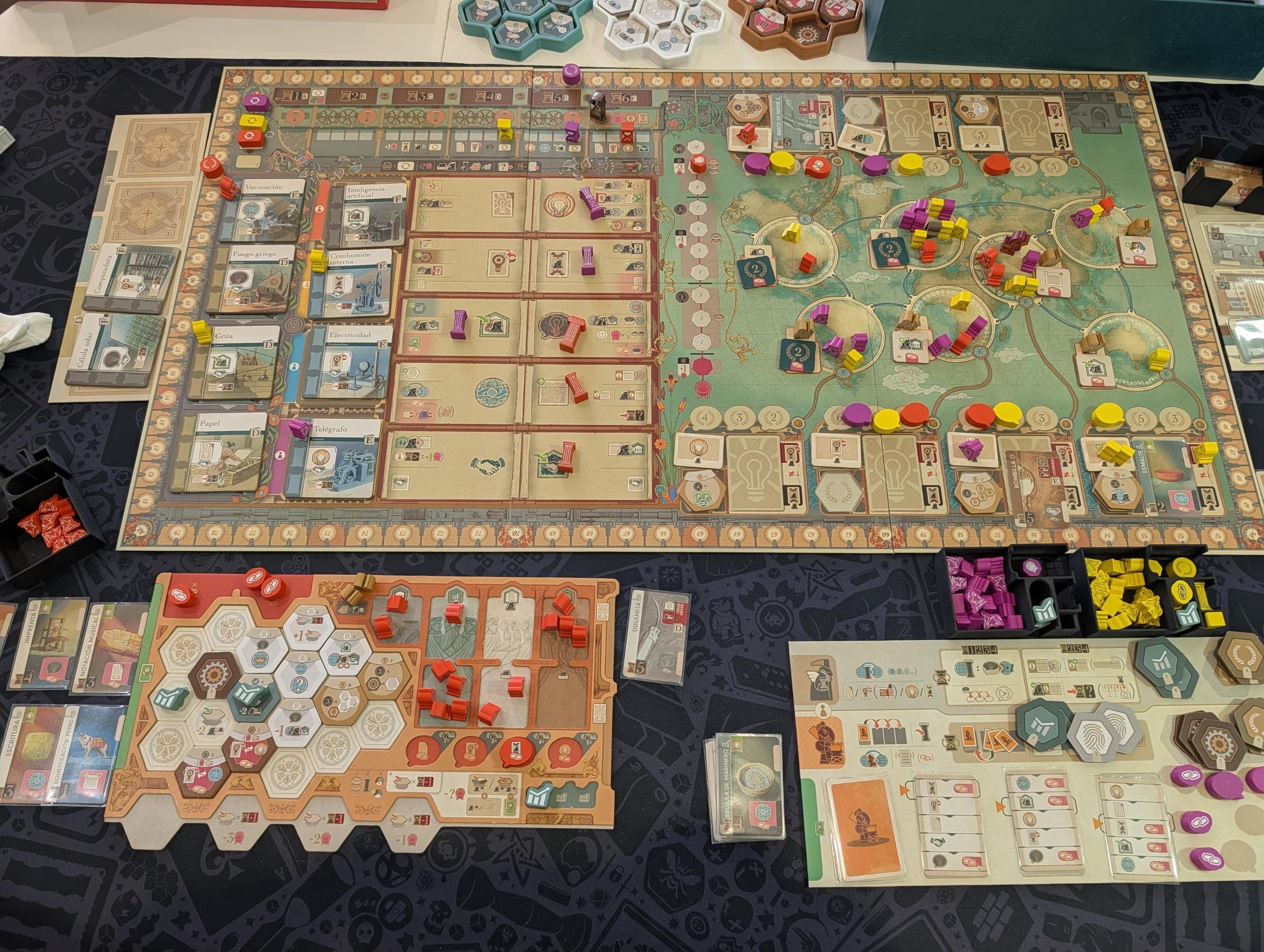
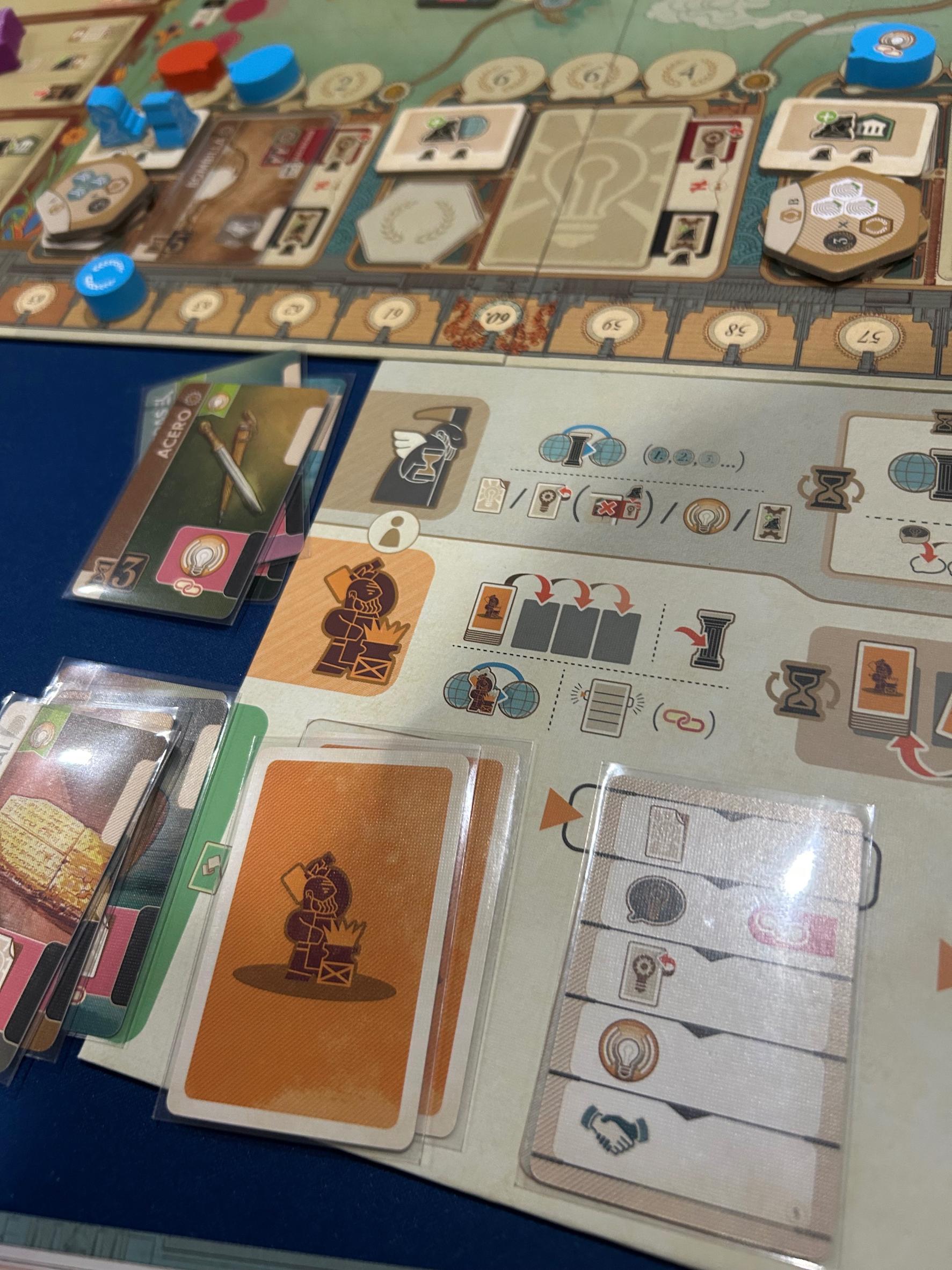
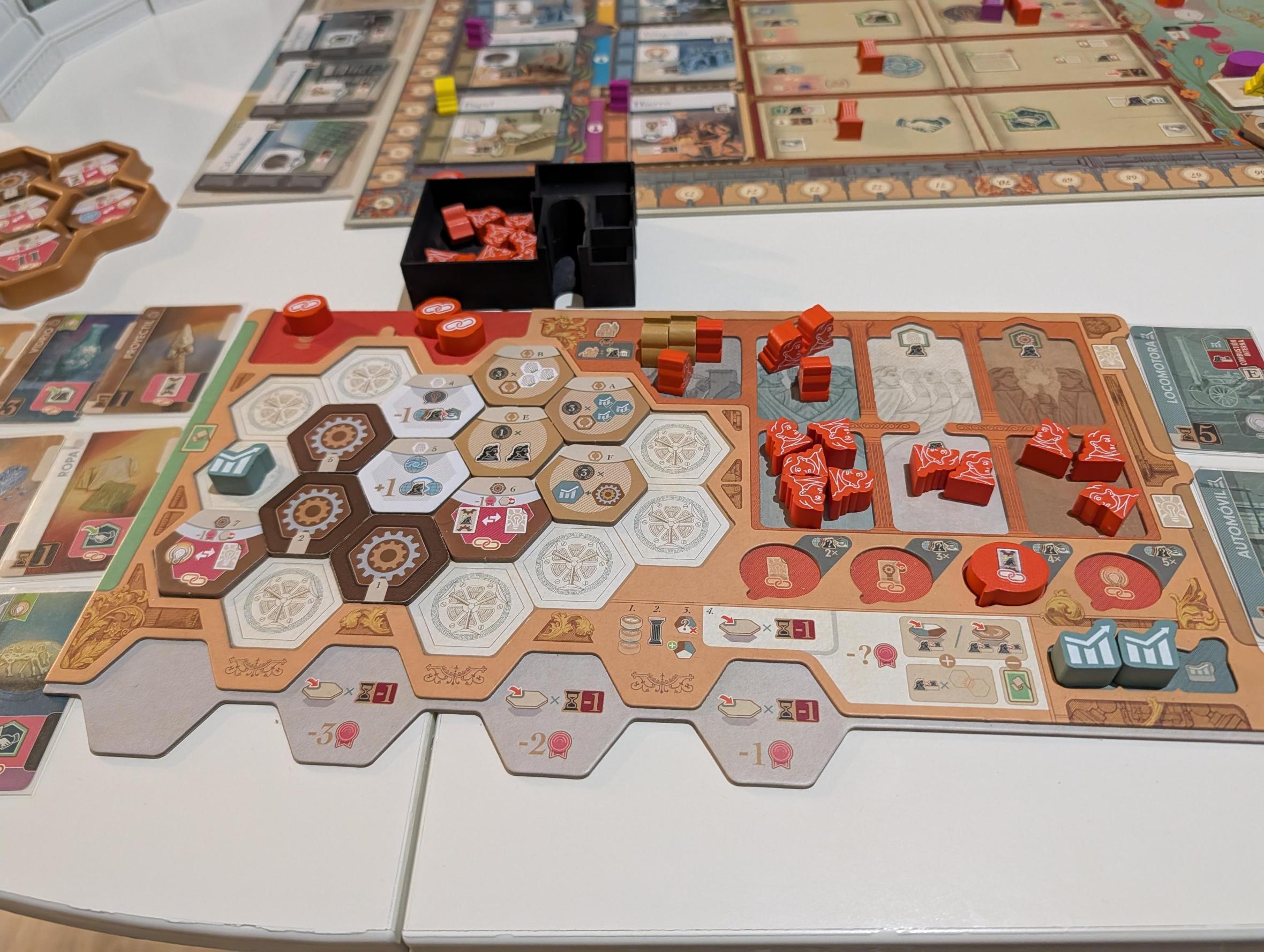
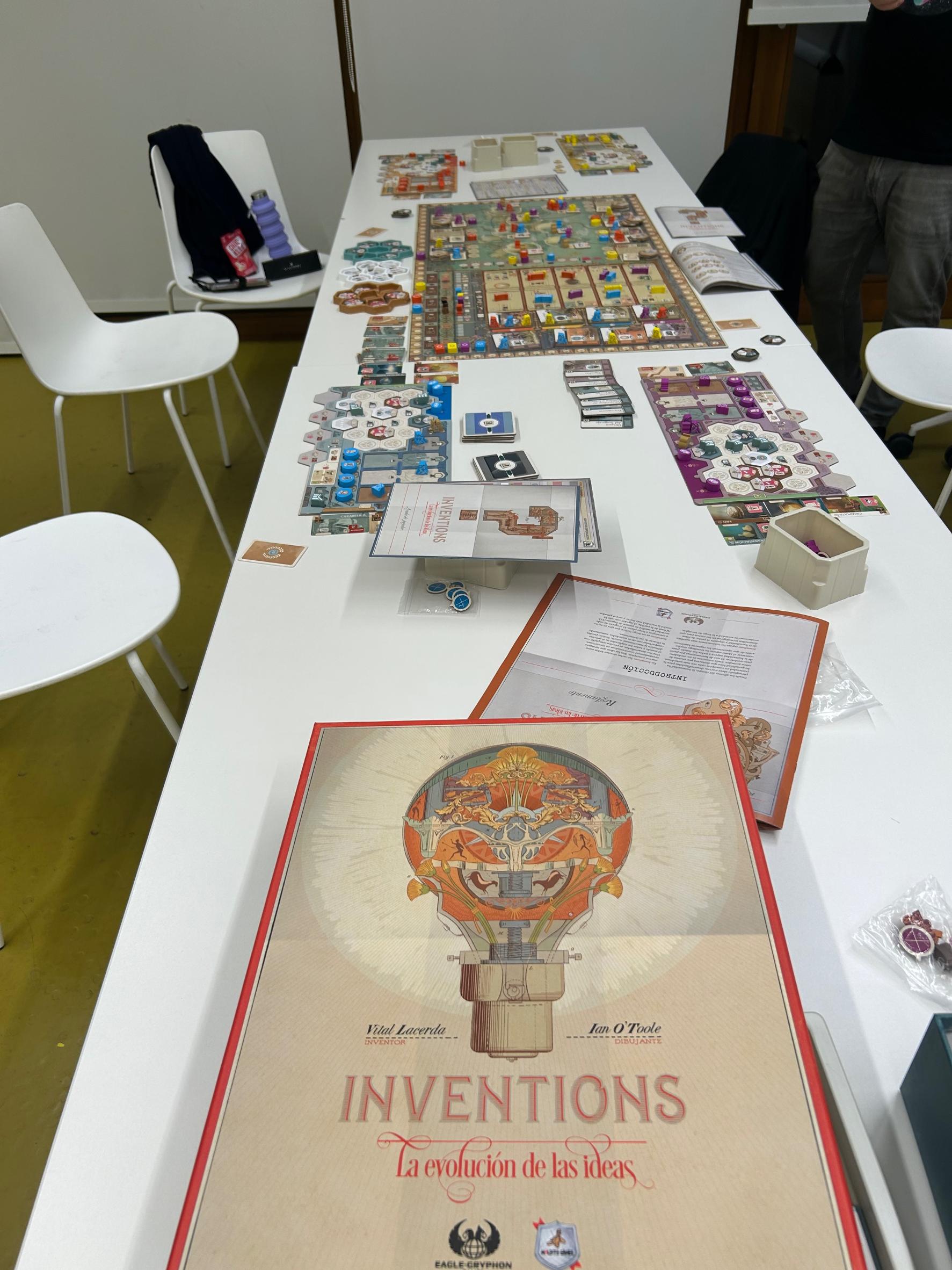
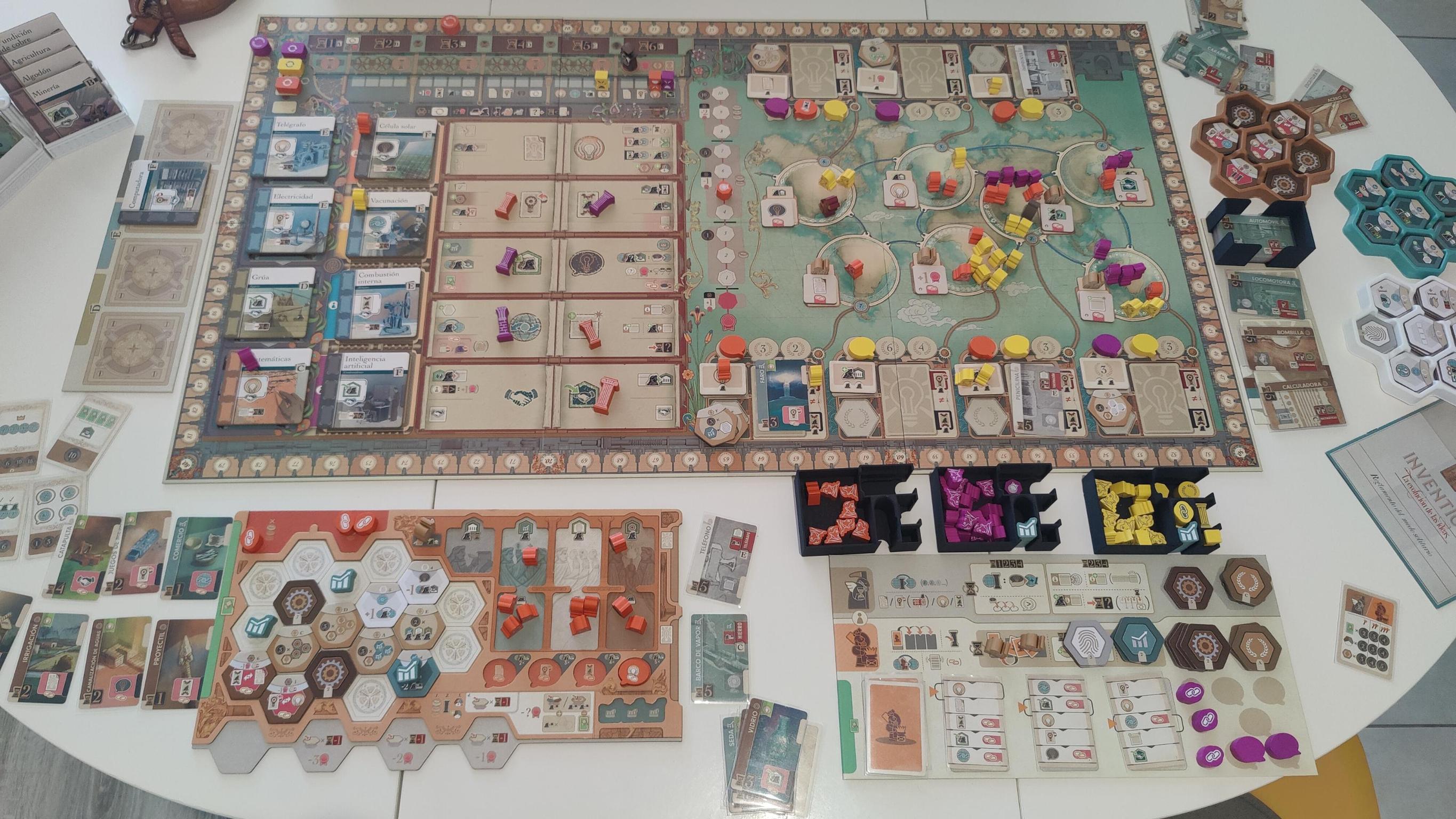
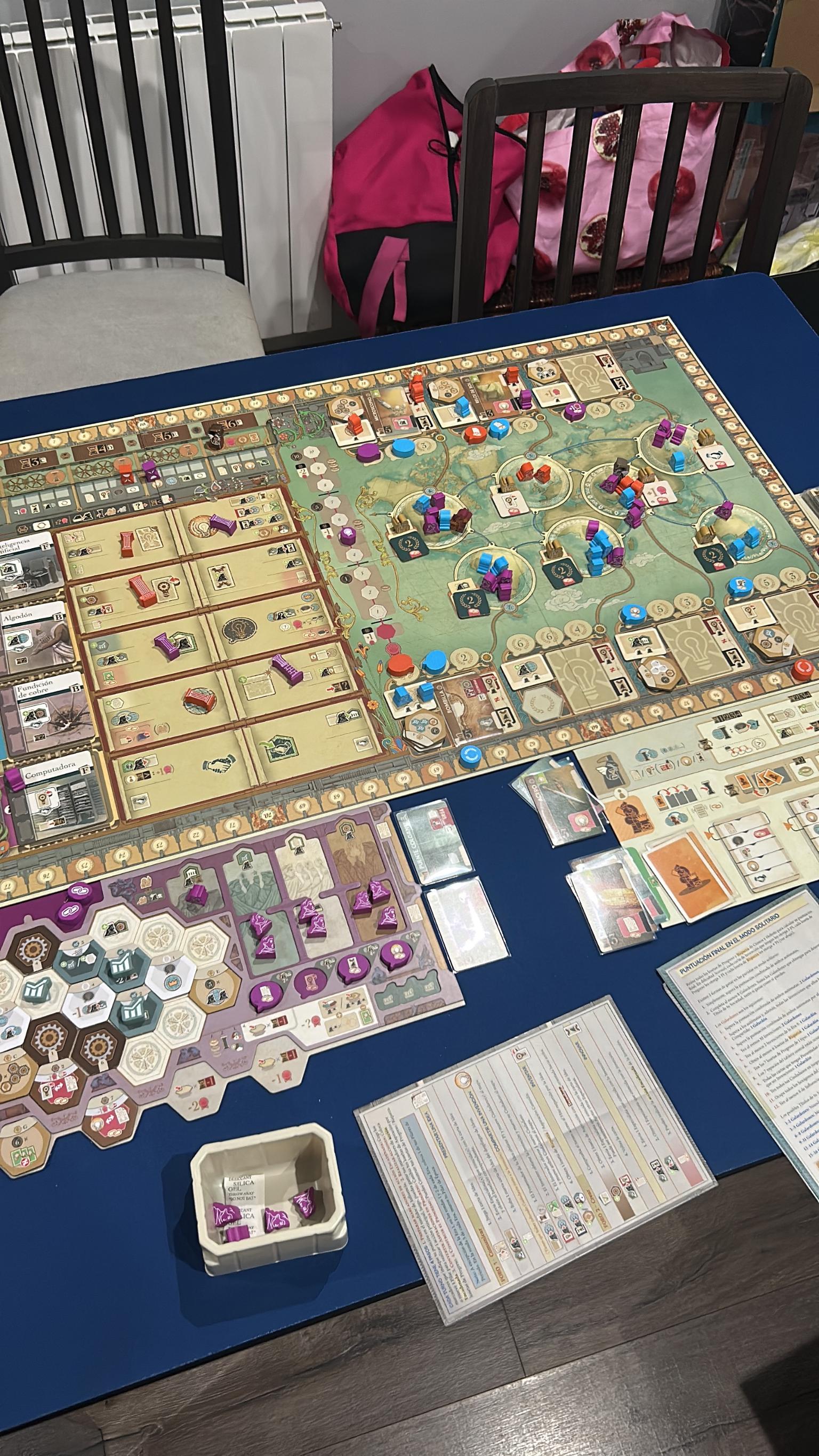
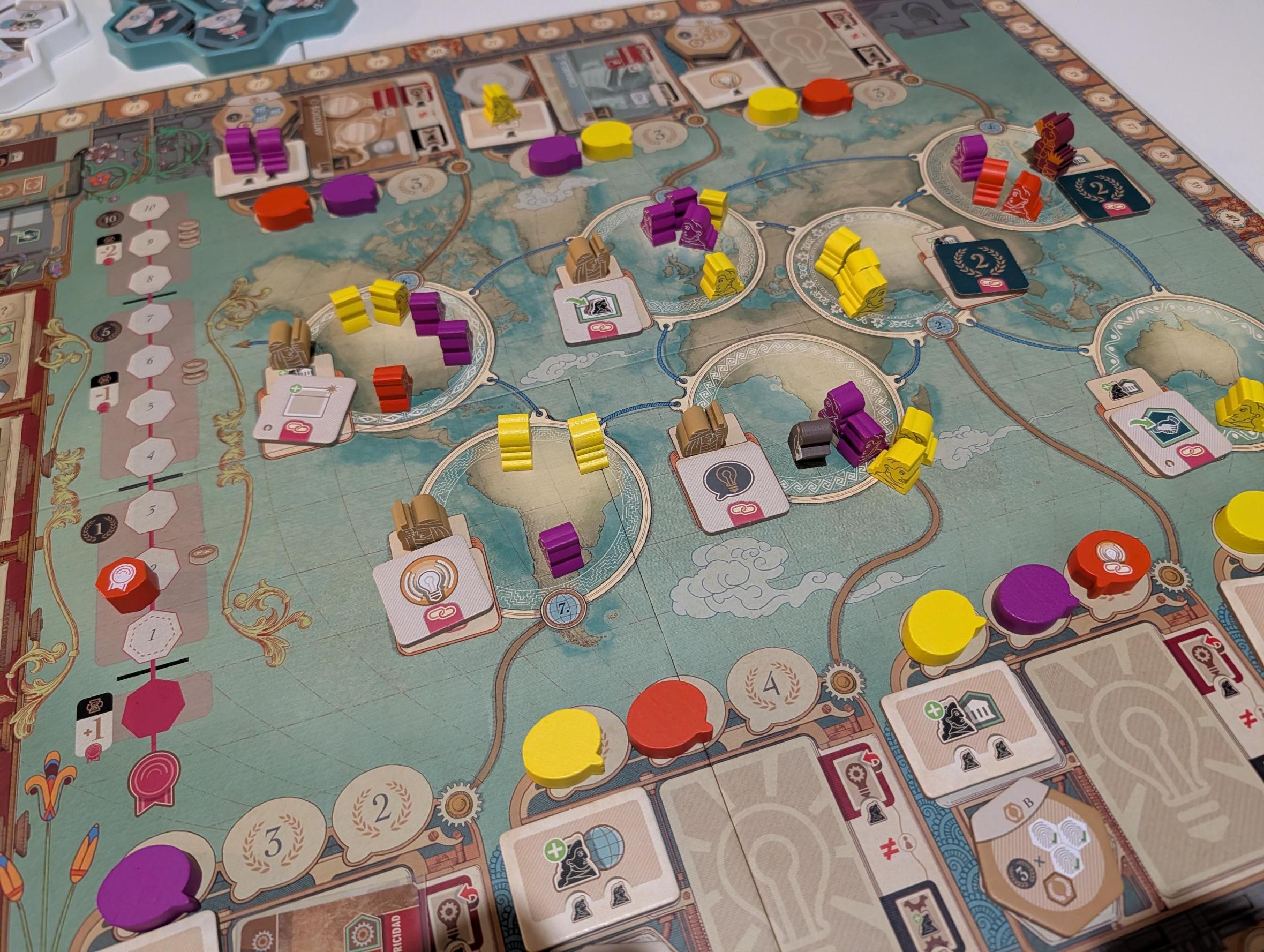
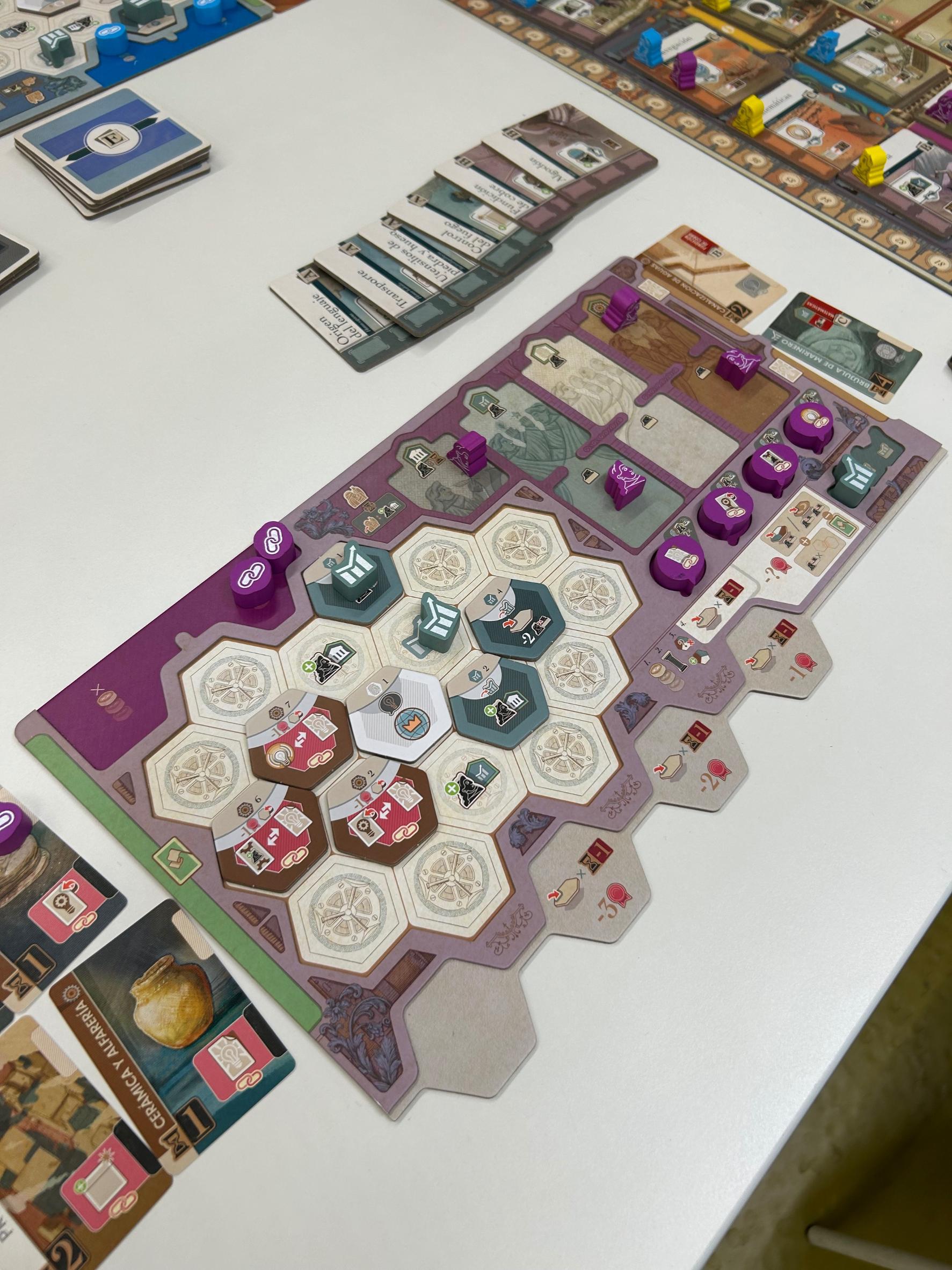
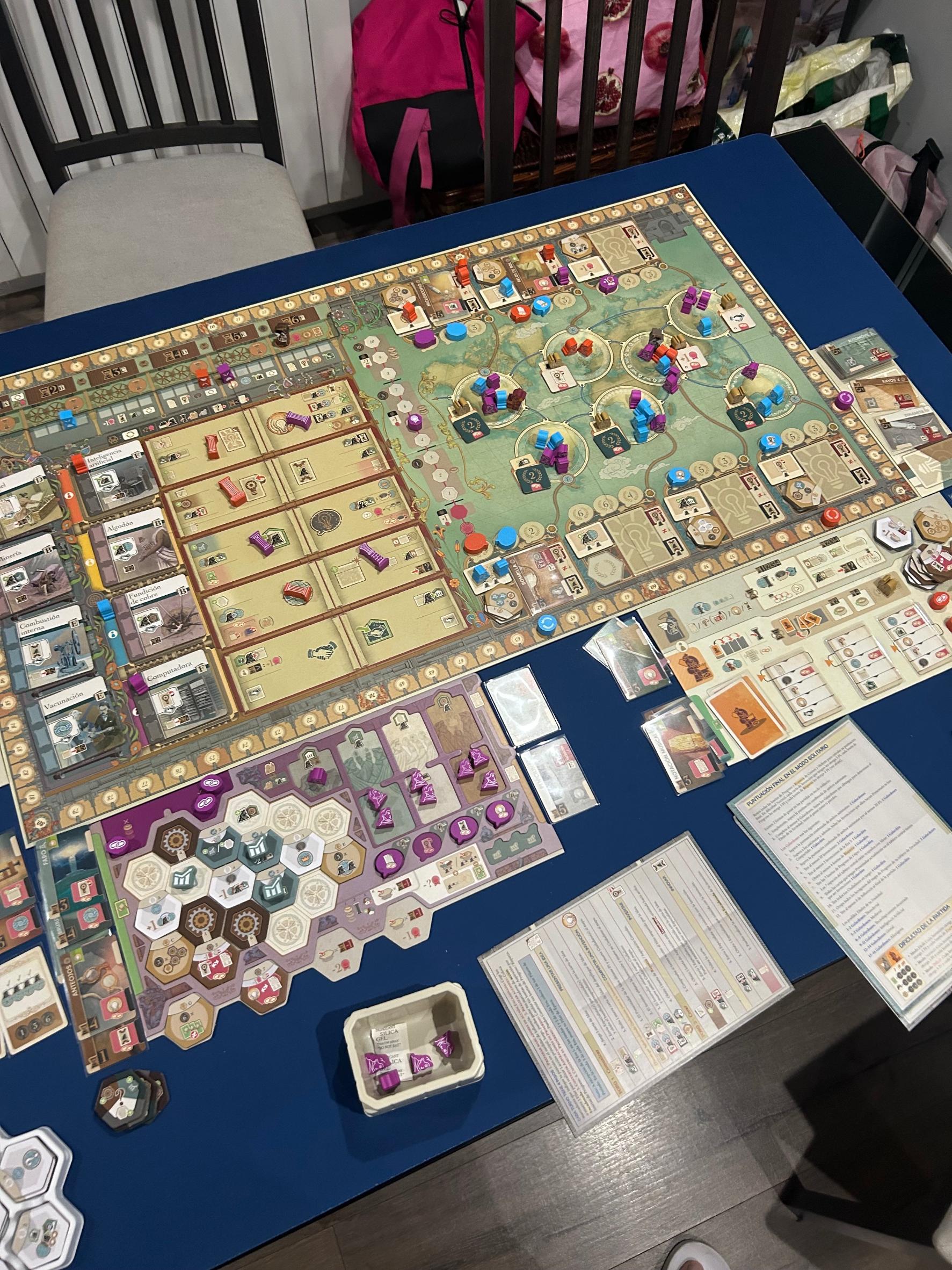
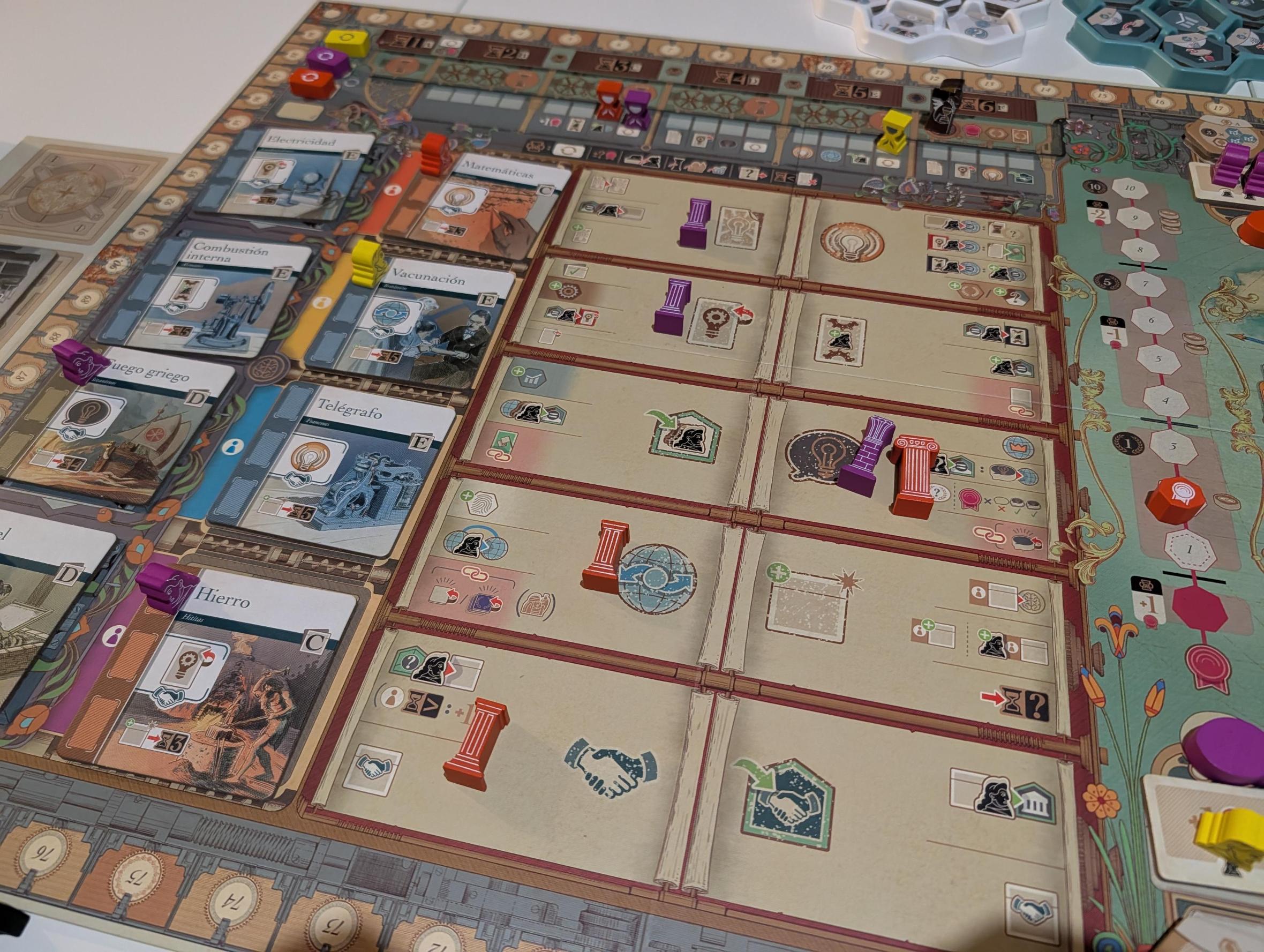
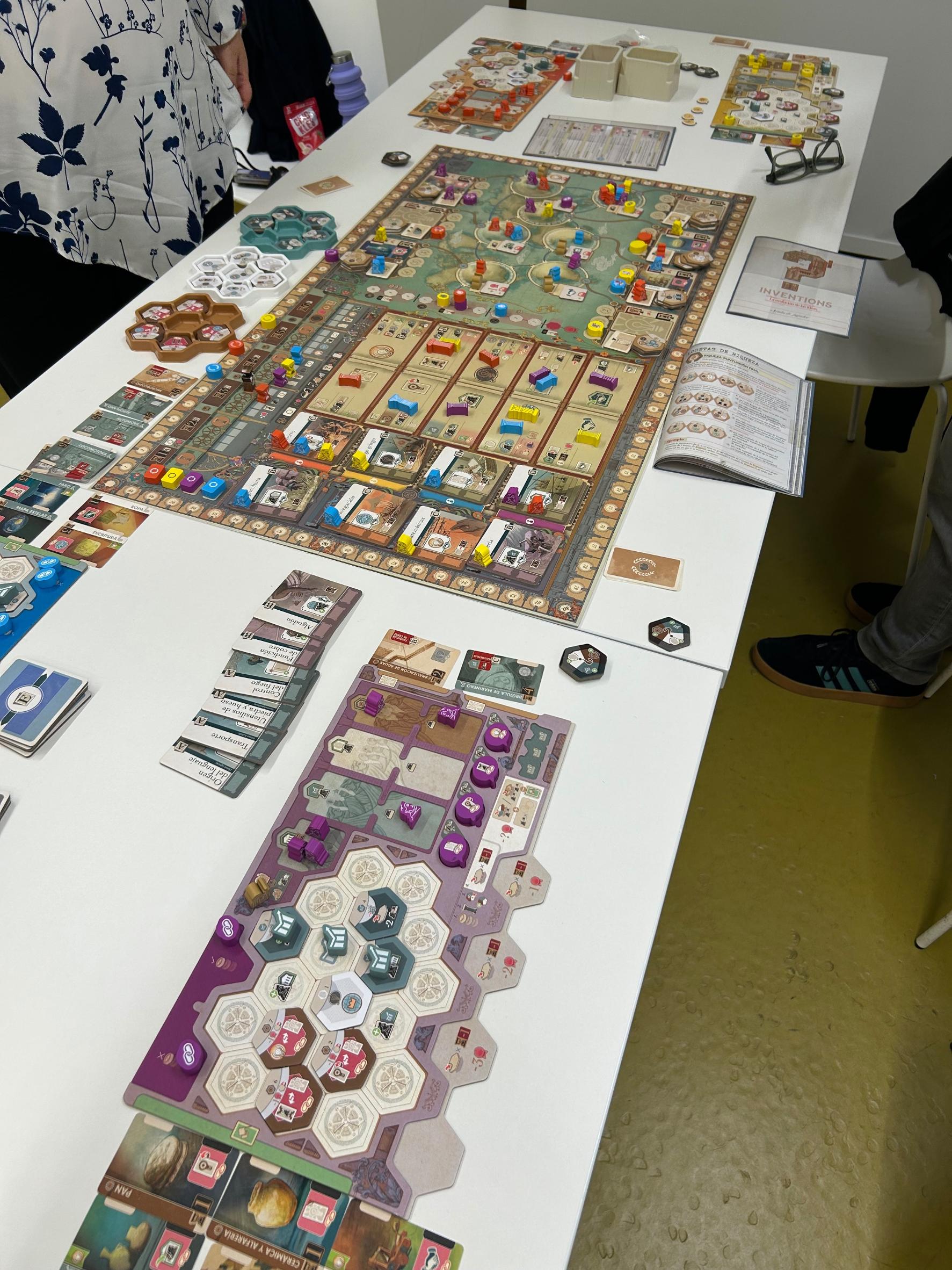
Ludoya 테이블에서는
Ludoya에서 전체 통계 보기- 165
- 기록된 플레이
- 183
- 플레이어
- 2h 55m
- 평균 플레이 시간
- 70
- 컬렉션 보유
- 27
- 위시리스트 등록
- 4
- 예약 구매
7.7/10
Ludoya 리뷰 30개 기준
The hardest game I ever played. Full of combos and difficult to master. It felt quite repetitive in the end. It's got nice ideas from other designs such as Kanban, The Gallerist ane Vinhos, but theme is lacking and made it harder to learn. Would play it again
룰 질문
Ludoya 룰 도우미가 룰북을 바탕으로 답변했습니다.
Can I use an exhausted citizen for actions or chain actions?
No — only citizens in the Home (standing) space are available to deploy; exhausted citizens (lying down) cannot be used until they return home at the next Era Change. (p.9, p.22)
What's the difference between Presenting an Idea, Inventing it, and Sharing an Invention?
Presenting puts an Idea card into a Region and requires specialists to present it and then refills the Idea display; Inventing flips a presented Idea to its Invention side if you have access to the required Milestone and you move/exhaust required specialists and take a technology Aspiration; Sharing an Invention scores the presenter for each presenter citizen, moves the inventor's card to their board, lets an innovator add a citizen to the map, and gives the sharer a Wealth or wild Aspiration tile. (pp.12,13,15)
When and how can I perform Chain Actions?
After you place or move a pillar and perform your main action (Step 2) you may perform prepared Chain Actions by placing Chain Action tokens next to a card's Chain Action icon; Chain Actions use the same action steps as main actions and are limited by your available Chain Action tokens and any special restrictions (e.g., Technology tile use). (pp.11,16,9)
How do I know whether I have access to the Milestone required to Invent an idea?
You have access if the Milestone is in a player's Private display (yours, an opponent's where you have a citizen, or an opponent's from an era earlier than Chronos' current era), or if the Milestone is in the Common Knowledge display or discard. (p.13)
If I share an invention, who scores and what happens to the citizens beside the card?
The presenter scores IP equal to the invention's era for each presenter citizen to the left of the card; the inventor moves the invention to their board; the innovator may add a citizen from their supply to the map; then all citizens that were beside the invention are moved onto the matching map region. (p.15)
How many Progress tiles can I build in one turn and what does it cost in influence?
You may build up to (your Milestone era − 1) tiles in the Build Progress step; before building you pay an influence cost based on how many tiles are in your tiles display (4 tiles = 0 influence, 3 = 1, 2 = 2, 1 = 3), and each tile then requires exhausting specialists to place. (p.21)









무료, 웹·Android·iOS 지원
Ludoya로 Inventions: Evolution of Ideas 플레이하기
게임 정보(인원, 플레이 시간, 연령, 제작진) 출처: BoardGameGeek.