
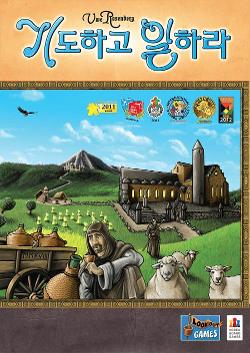
2011 · 도시 건설
기도하고 일하라
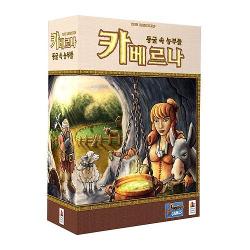
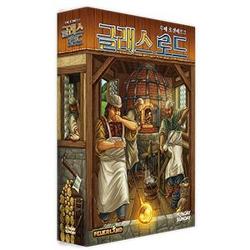
Each player runs a medieval monastery, acquiring land and constructing buildings and enterprises that produce resources and goods. Players place three workers to activate actions in buildings, using their own structures or paying others to use opponents’ buildings, and must leave workers in place until all three are placed. A shared rondel tracks available resources; turning it each round adjusts supply levels for everyone. Players gather materials, clear terrain, expand plots, and upgrade two-sided resource tiles to manufacture higher-value items like books, ceramics, ornaments, and relics. Building placement and terrain purchases shape production chains and determine final scoring.
- 인원
- 1–4 최적 3명
- 플레이 시간
- 60–180분
- 연령
- 13+
- 복잡성
- 3.9 / 5


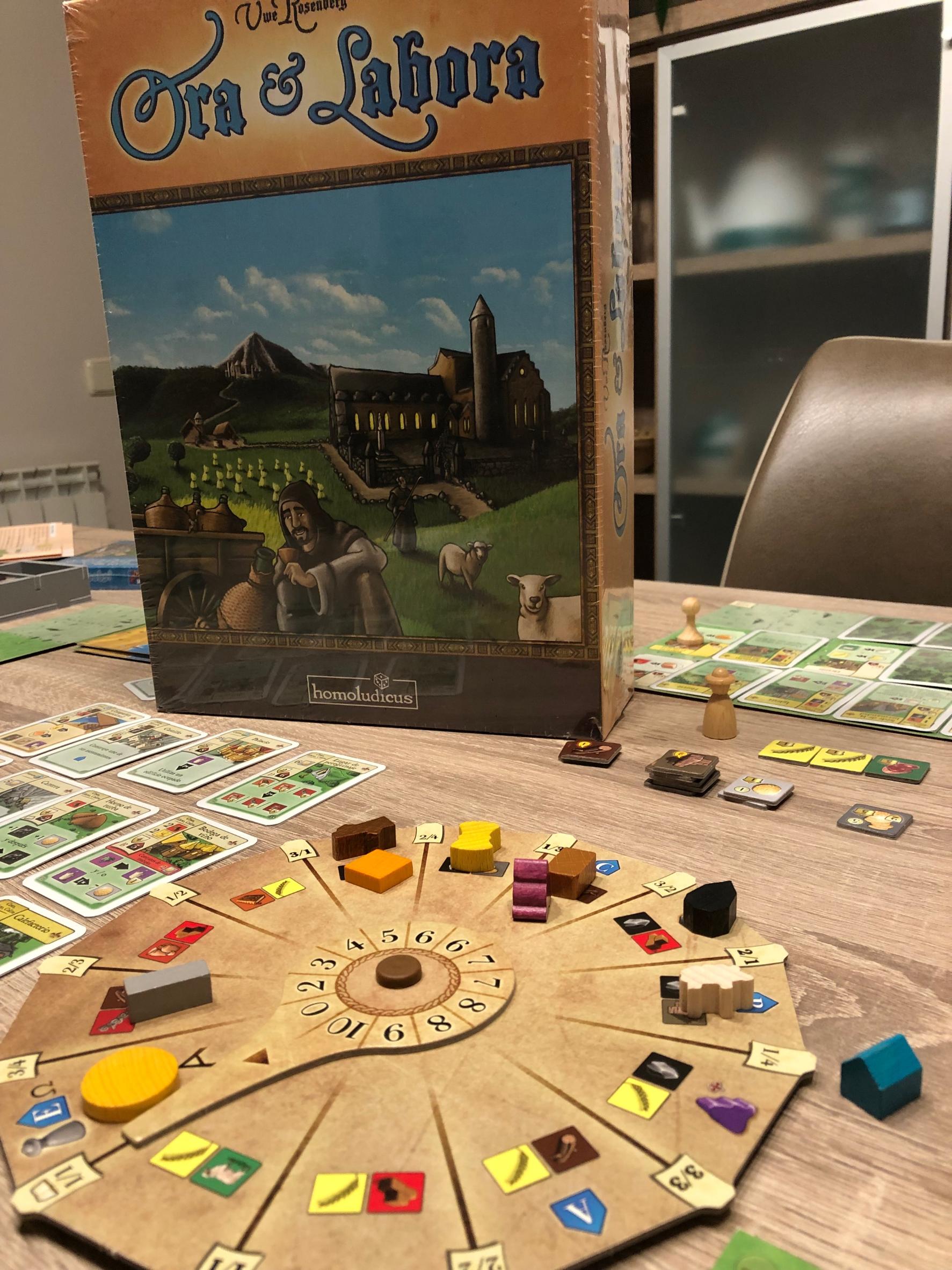
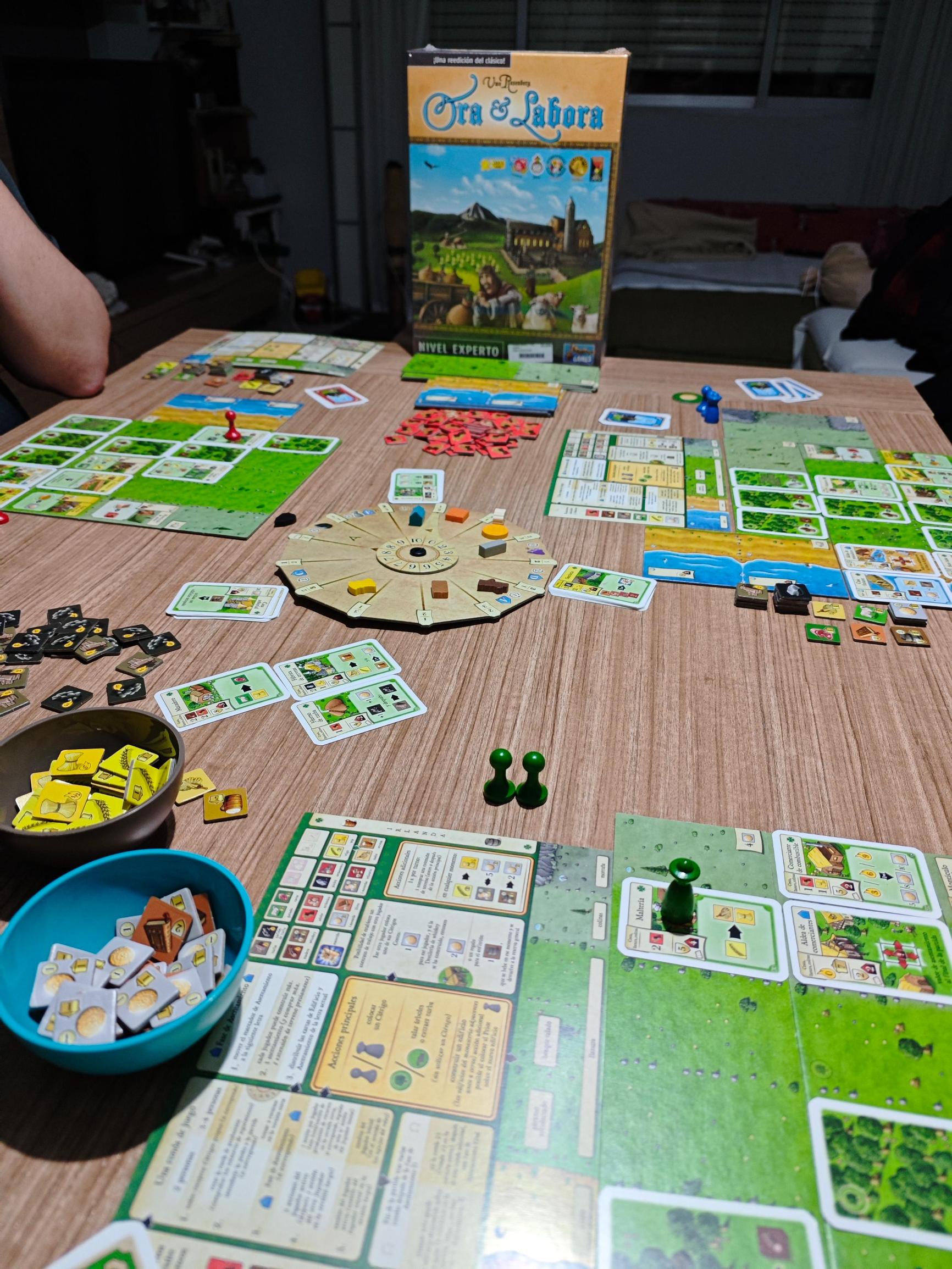
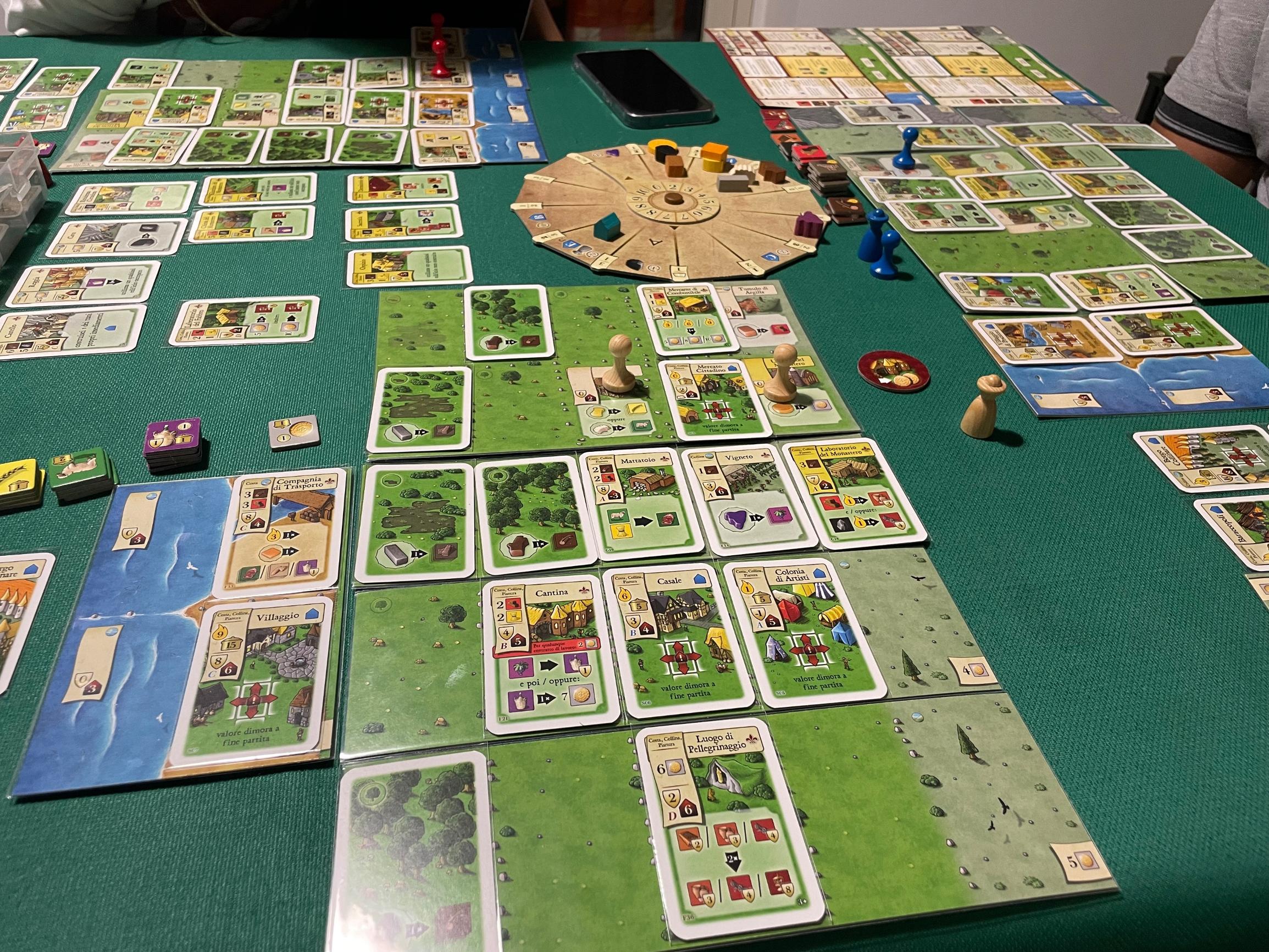
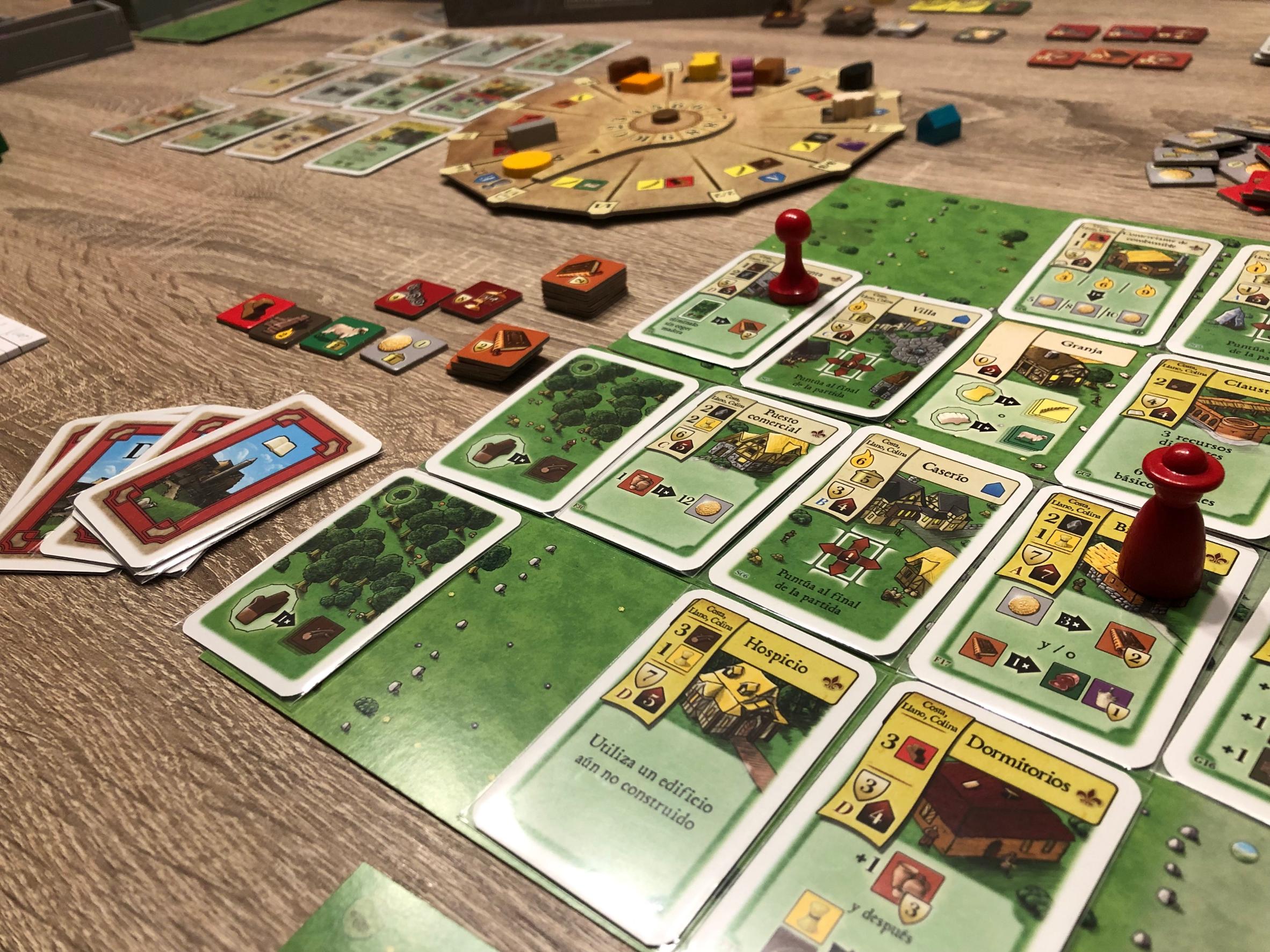
Ludoya 테이블에서는
Ludoya에서 전체 통계 보기- 144
- 기록된 플레이
- 146
- 플레이어
- 2h 30m
- 평균 플레이 시간
- 113
- 컬렉션 보유
- 17
- 위시리스트 등록
- 1
- 예약 구매
6.3/10
Ludoya 리뷰 32개 기준
Mestremuten8.0 Rating: 4/5 Production value: 3/4 Is the game in my collection/Love to have?: 1/1
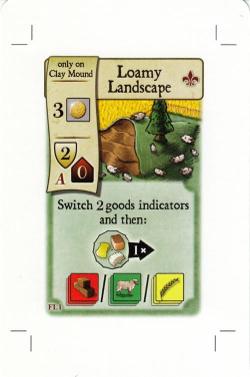
Evan3.5 This is a pretty easy game with a really tough rule book. On your turn you either build a building paying the cost, or place a worker on a building to activate the ability of that building. Most of the time it produces X resources, where X is equal to the matching resource marker on the ever rotating wheel of available resource goods. Every turn the wheel clicks one spot, which changes the quantity of each good's availability. Much of the game is turning basic resources into advanced resources by flipping them over, and positioning the buildings on your board cleverly to score points. You can expand your board, and use opponent's action spots by paying them. The text on the building cards is very small, so playing with higher player counts gets hard to track very quickly. It also becomes more difficult to predict when a resource from the wheel will flush out. The puzzle is good, but the game lacks excitement. There aren't many paths through the game, and it has only two different sets of cards. This isn't always an issue for a game, when there's enough meaningful player interaction to keep things tense, but this doesn't quite hit that mark to my taste. ☆ Art, Iconography and components functional ★ Clever or interesting mechanisms ☆ Reasonably low downtime between turns with mildly AP players ☆ Multiple plays stay interesting ★ Low or mitigatable luck elements ★★★☆☆ Raw enjoyment
Garfield2.0 #56 Ugly material. Too many buildings. Too much multiplayer solitaire. Just not interesting and entertaining enough.
룰 질문
Ludoya 룰 도우미가 룰북을 바탕으로 답변했습니다.
상품이 생산될 때 생산 휠은 어떻게 작동하나요? 그리고 조커는 어떻게 사용하나요?
각 라운드 시작에 생산 휠이 회전하면서 각 상품이 얼마나 생산되는지가 바뀐다. 어떤 상품이 생산되면 그 상품 표시물은 다시 0 칸으로 이동한다 (2페이지). 휠을 참조하는 건물을 사용할 때는 일반 상품 표시물 대신 조커 표시물을 써도 된다. 조커는 0으로 이동하며, 아직 게임에 없는 일반 표시물을 쓰는 상품에도 사용할 수 있다(예: 돌이나 포도) (3페이지).
내 성직자들은 언제 돌아오나요 — 한 명이나 두 명만 썼어도 다시 받을 수 있나요?
각 라운드 시작 시에는 세 명의 성직자를 모두 건물에 배치한 플레이어만 그들을 다시 되돌려 받습니다. 한 명이나 두 명만 사용했다면 되돌려 받지 못합니다(2페이지).
상대방의 건물을 사용하기 위해 비용을 지불하면(작업 계약), 무슨 일이 일어나나요?
작업 계약을 지불하면 상대는 자신의 사용 가능한 성직자 중 1명을 그 건물에 놓아야 하며, 당신은 즉시 비용을 지불해야 하고 그 계약은 거부할 수 없고 이미 모든 성직자를 배치한 플레이어에게는 제안할 수 없습니다(3쪽). 작업 계약 비용은 누군가 와이너리나 위스키 증류소를 건설하면 1코인에서 2코인으로 올라가며, 대신 코인 대신 1 와인 또는 1 위스키를 ‘선물’로 내줄 수도 있습니다(3쪽).
클로이스터나 다른 건물을 지을 때 특별한 배치 규칙이 있나요?
수도원 건물은 항상 다른 수도원 건물과 인접하게(가로 또는 세로로) 배치해야 하며, 각 건물 카드는 어떤 지형 유형에 지을 수 있는지 보여줍니다(예: 산 칸에는 채석장이나 성만 가능, 물 위에는 하우스보트만 가능) (4페이지). 건물을 지은 뒤, 당신의 프라이어가 사용 가능하다면 그 프라이어를 그 건물 위에 놓아 바로 그 건물을 활성화할 수 있습니다 (4페이지).
언제, 어디에서 랜드스케이프 타일(구역과 구획)을 구입해서 놓을 수 있나요?
각 턴에 한 번, 그리고 정착 단계에 한 번 경관을 구매할 수 있으며, 구매하면 즉시 배치해야 합니다. 구역은 하트랜드의 방향에 맞춰 위나 아래에 배치해야 하며(엇갈리게 두면 안 됨), 해안 타일은 왼쪽에, 산 타일은 오른쪽에 붙여야 하고, 최소 한 개의 일치하는 칸이 서로 인접해야 합니다(5쪽).
정착 단계는 언제 진행되나요, 그리고 정착지를 세울 때 기본 규칙은 무엇인가요?
정착 단계는 생산 휠의 빔이 다음 건물/정착 카드 더미를 지나갈 때마다 발생하고(그리고 보너스 라운드 후에 마지막 정착 단계가 한 번 더 있다) (5페이지). 정착 단계 동안 각 플레이어는 상품 타일로 식량과 에너지 비용을 지불하고, 합법적인 빈 지형 공간에 놓는 방식으로 정착지 하나만 지을 수 있다. (산이나 물 공간에는 지을 수 없고, 건설 직전에 지형 하나를 구매할 수도 있다) (6페이지).

게임 정보(인원, 플레이 시간, 연령, 제작진) 출처: BoardGameGeek.