
2017 · Industrie / productie
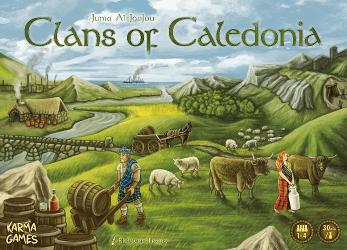
Clans of Caledonia
Players lead distinct historic Scottish clans through the 19th-century transition from agriculture to industry, producing and refining goods like grain, linen, cotton, sheep products and whisky. On each of five rounds players take turns choosing one of eight actions—build production or trading buildings, upgrade facilities, trade goods, or export—to develop their economy and expand market access. After player turns a production phase generates basic resources, refined goods and income from constructed production units, and rounds end with scoring according to a rotating tile. The game uses asymmetric clan powers, a modular map, port bonuses and changing objectives to drive economic planning and interaction.
- Spelers
- 1–4 best met 4
- Speeltijd
- 30–120 min
- Leeftijd
- 12+
- Complexiteit
- 3,5 / 5
Over het spel
- Ontwerp
- Illustraties
- Uitgever



Uitbreidingen
Bekijk ze in Ludoya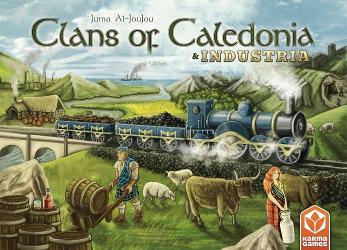
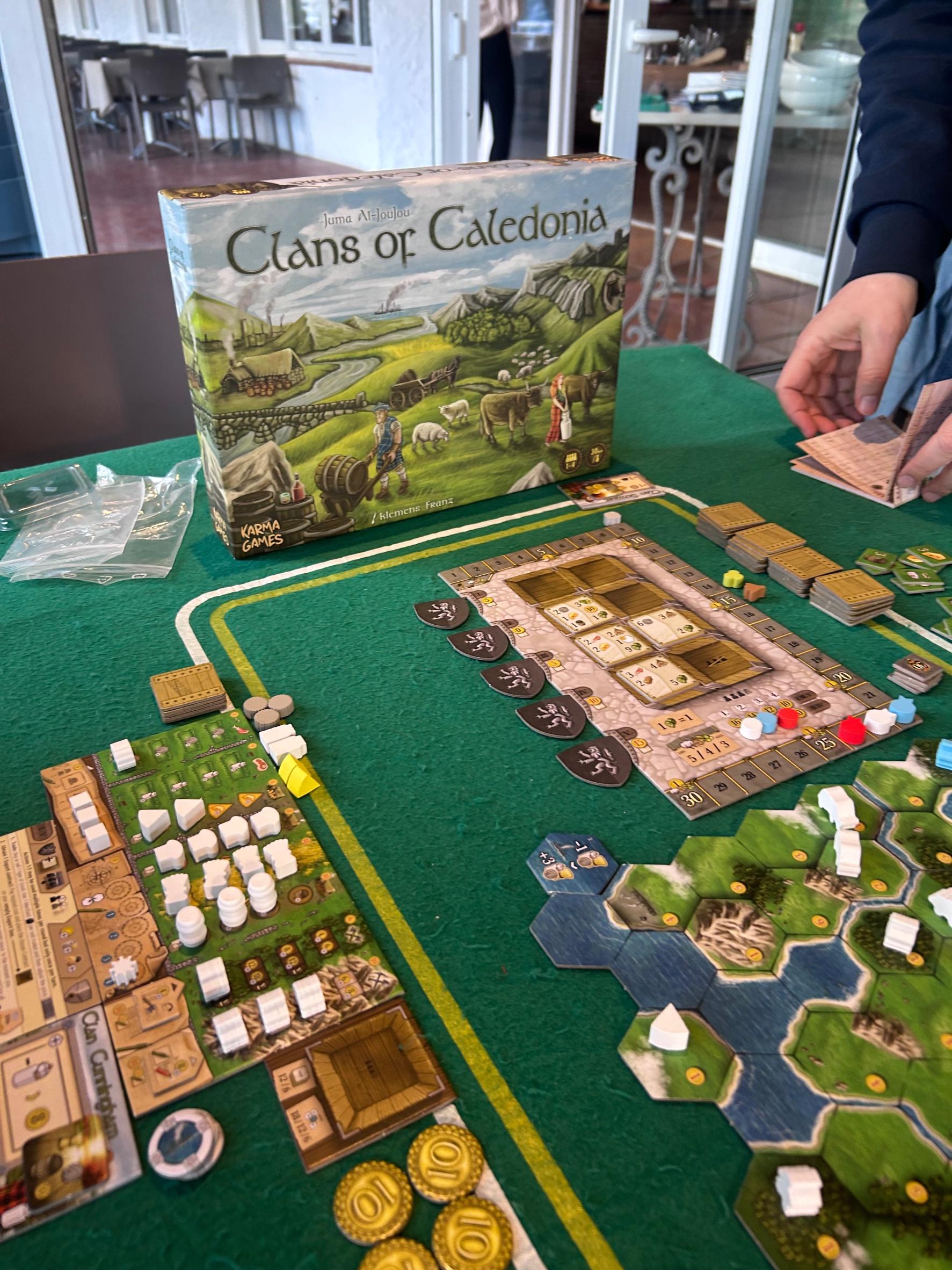
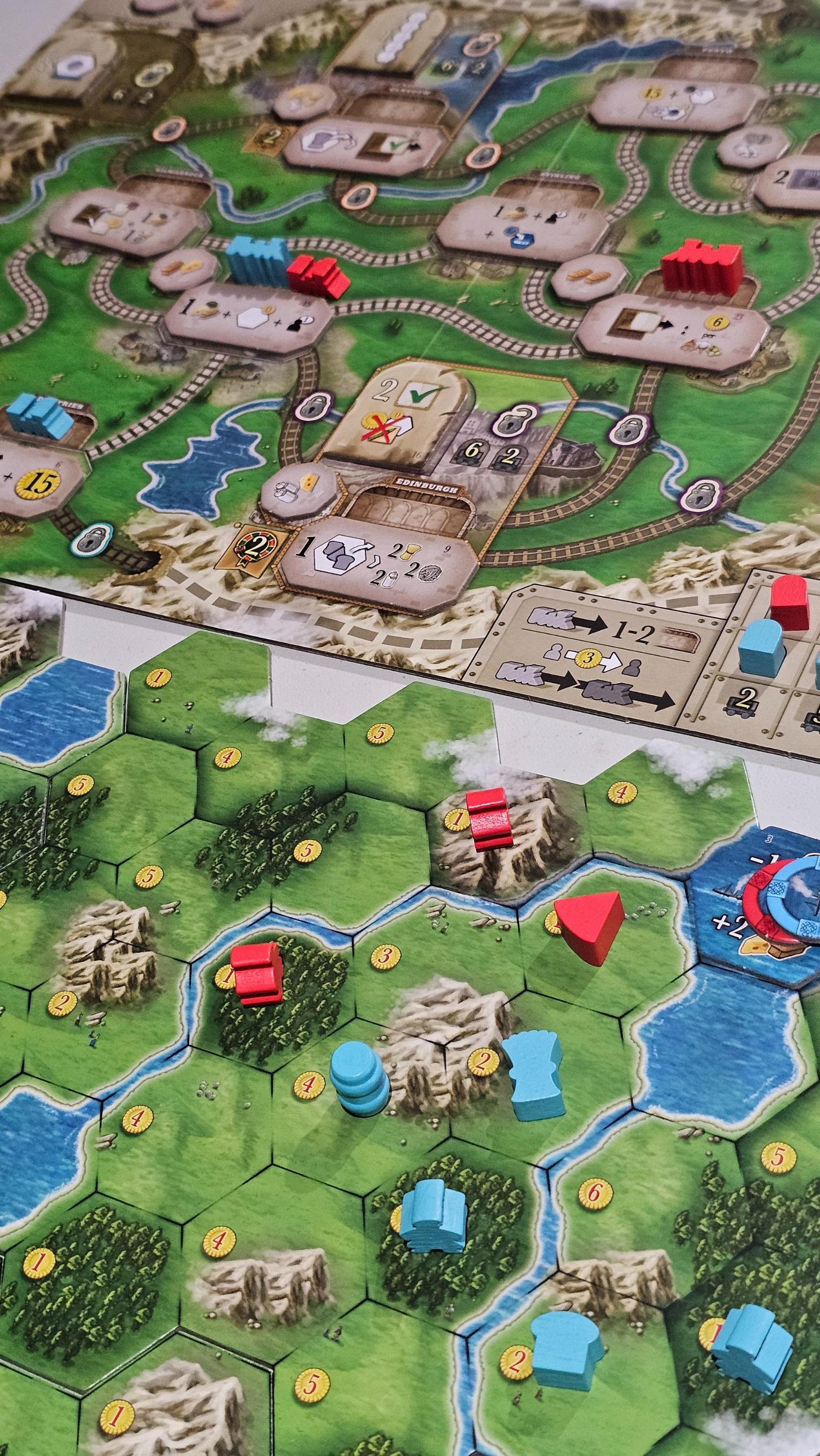
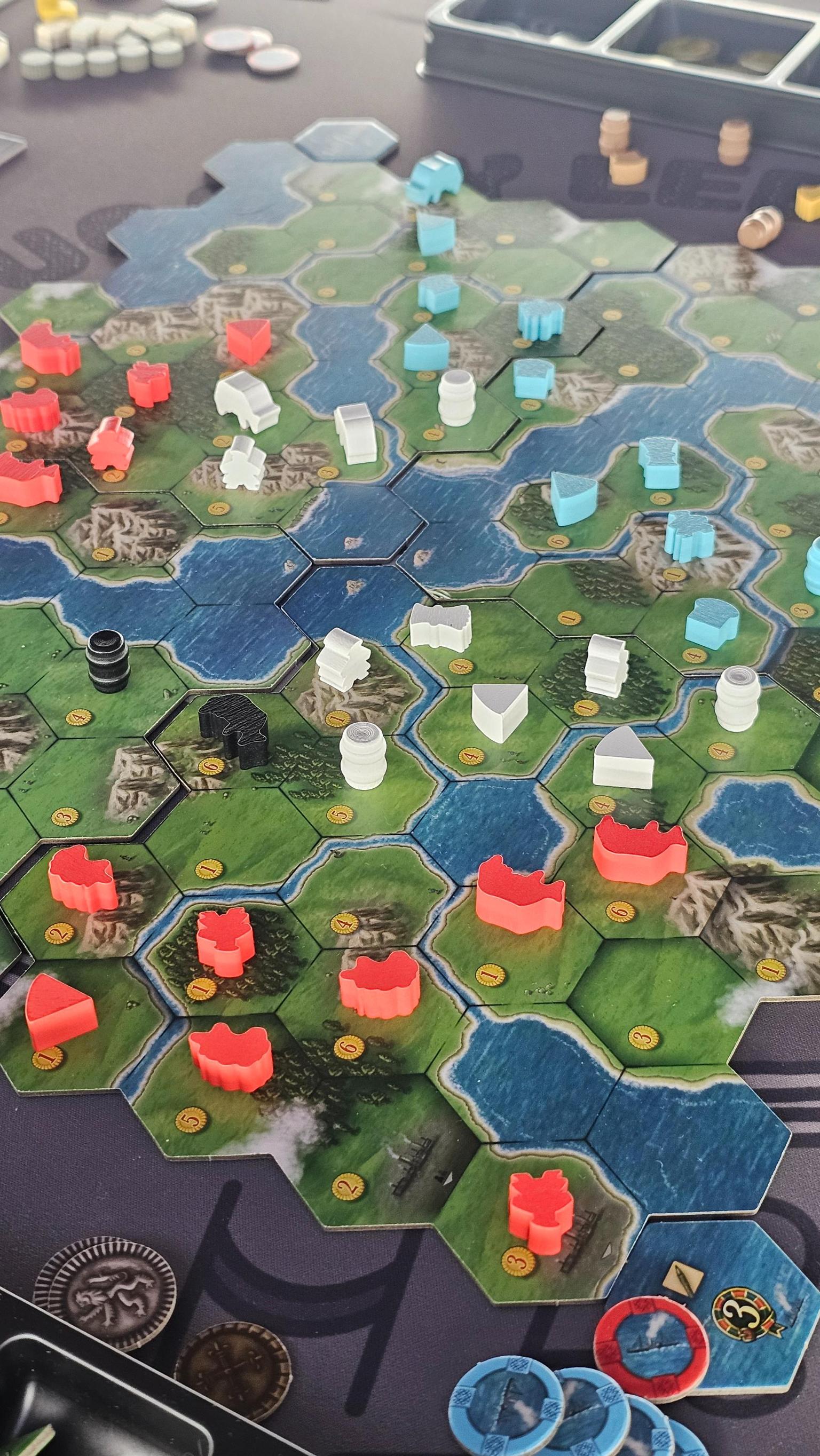
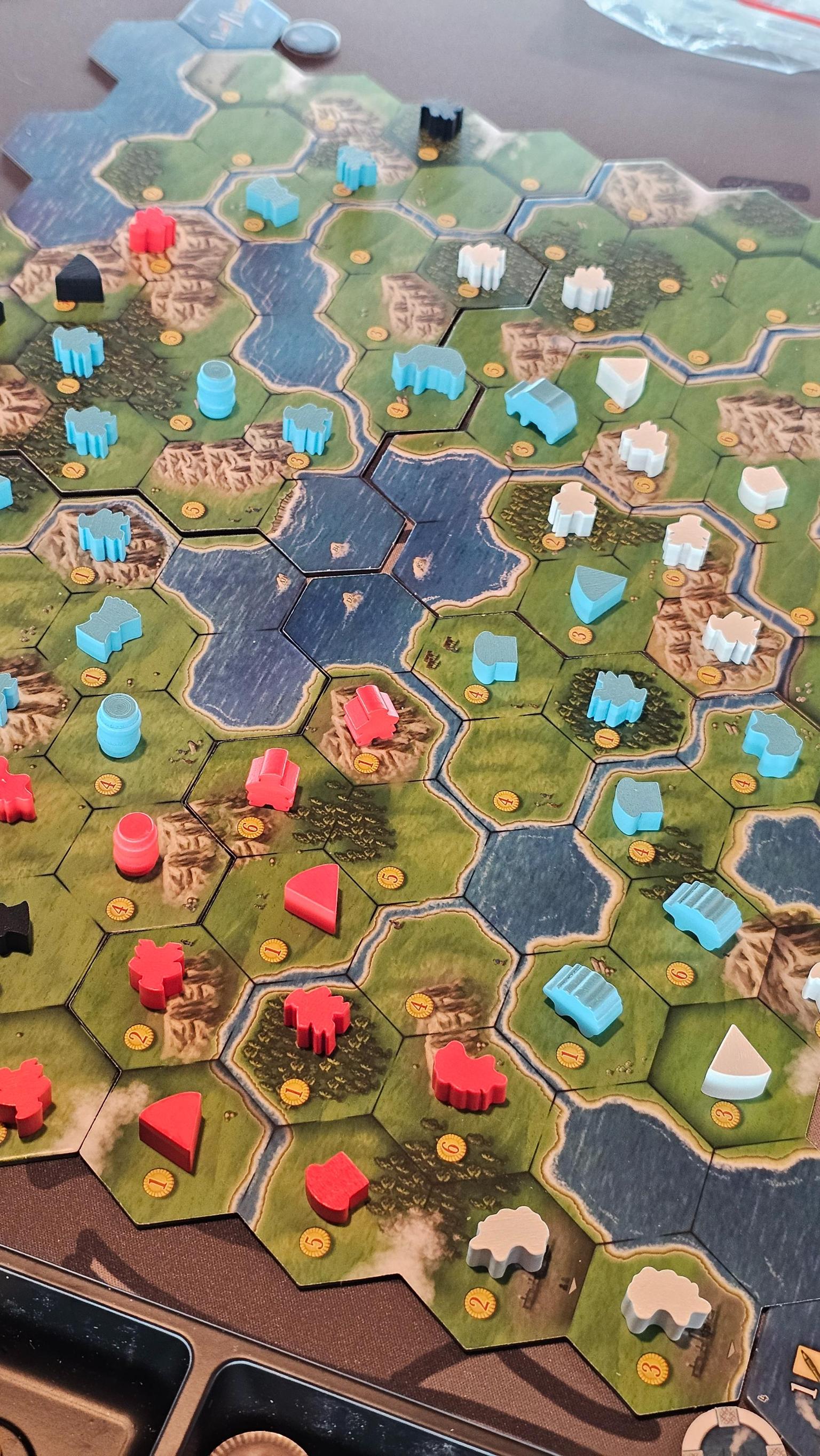
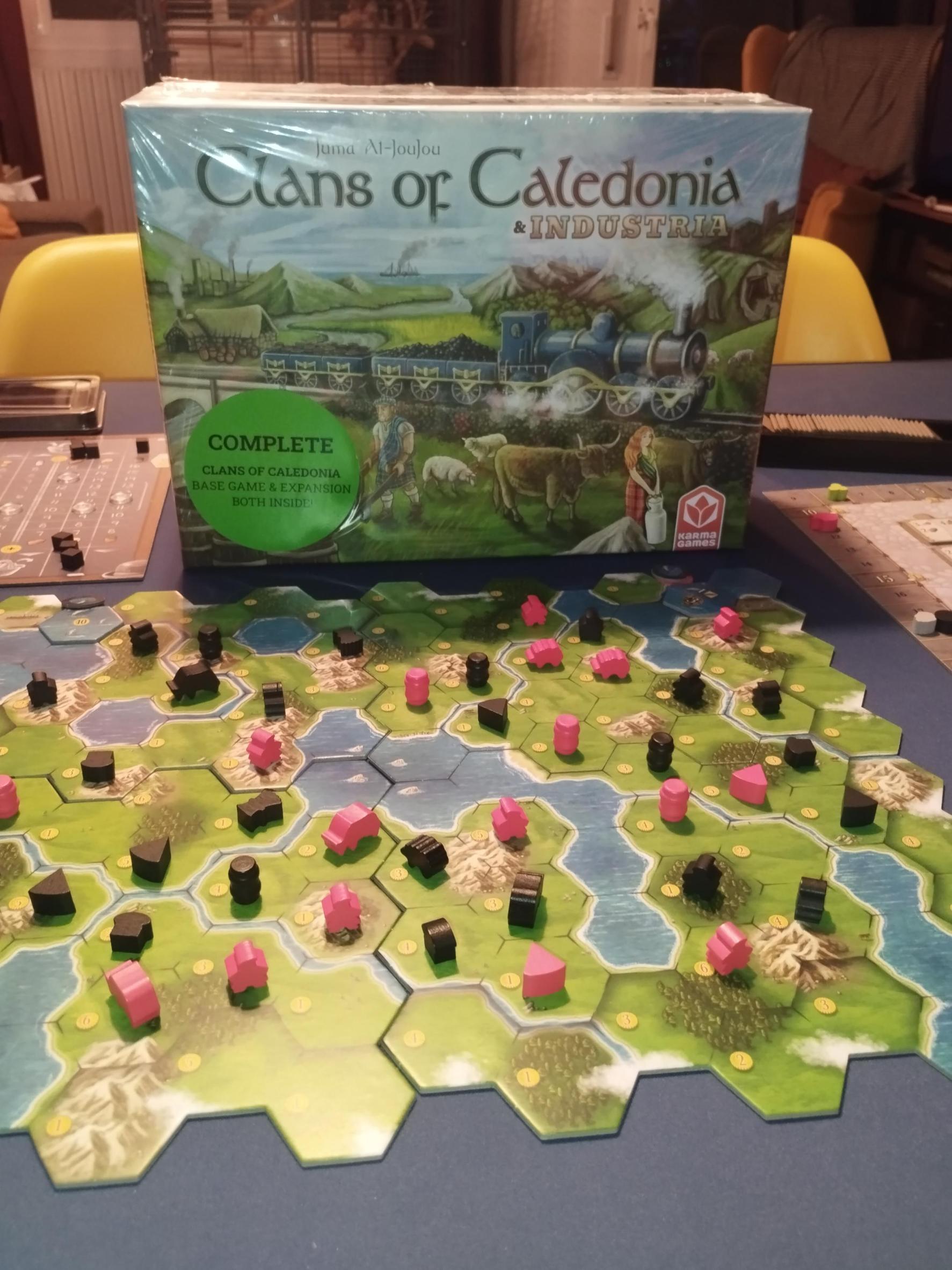
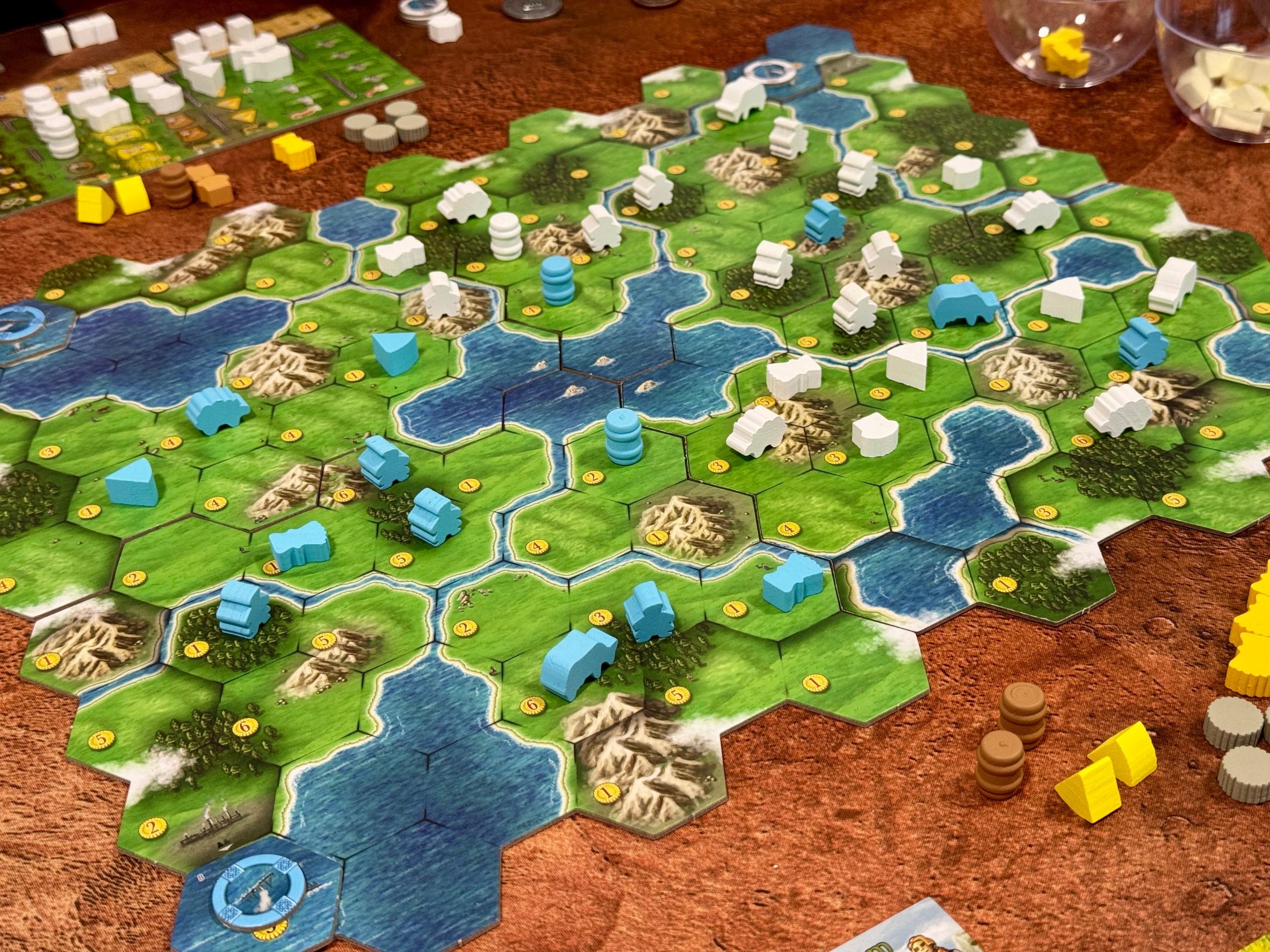
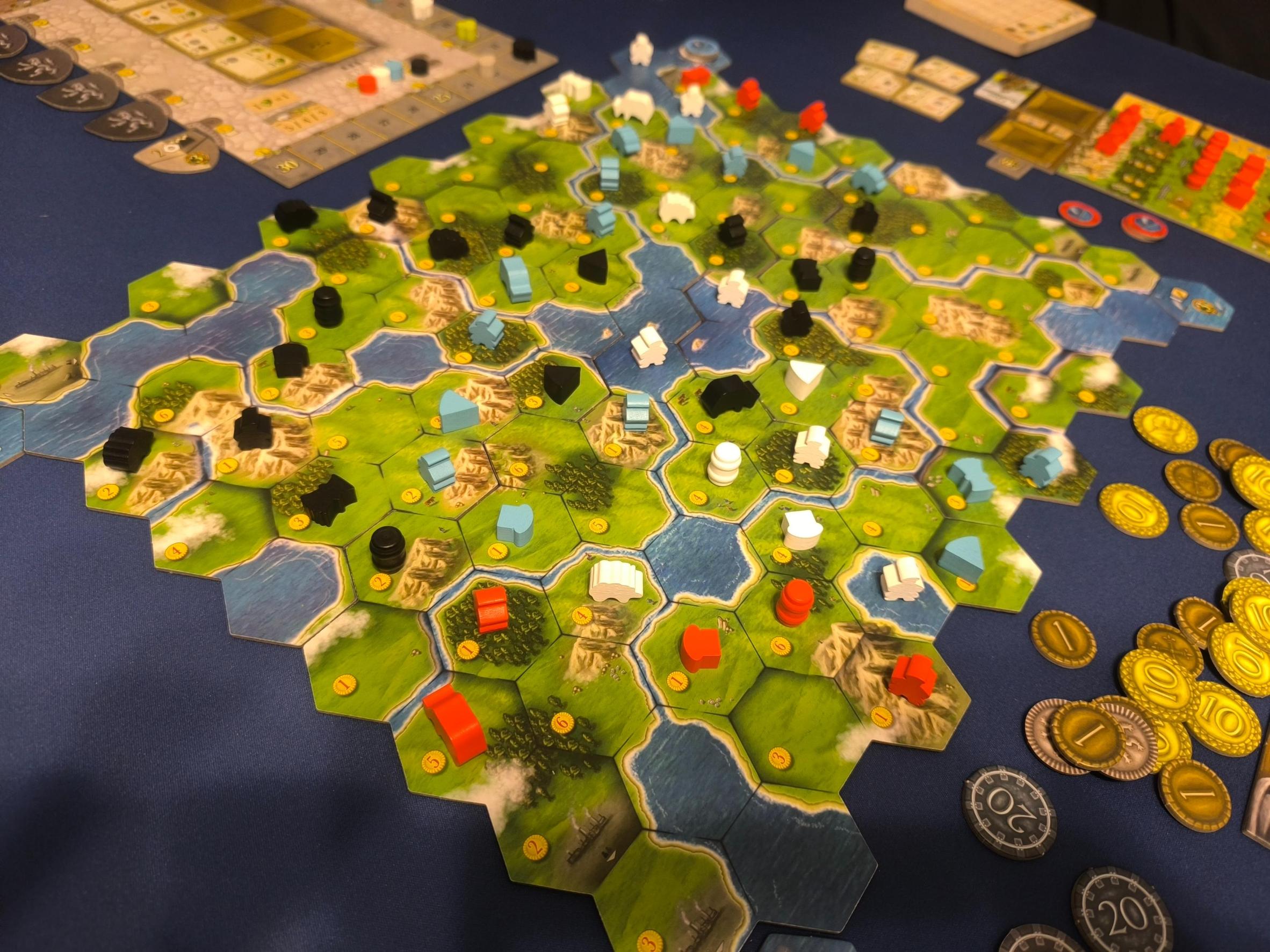
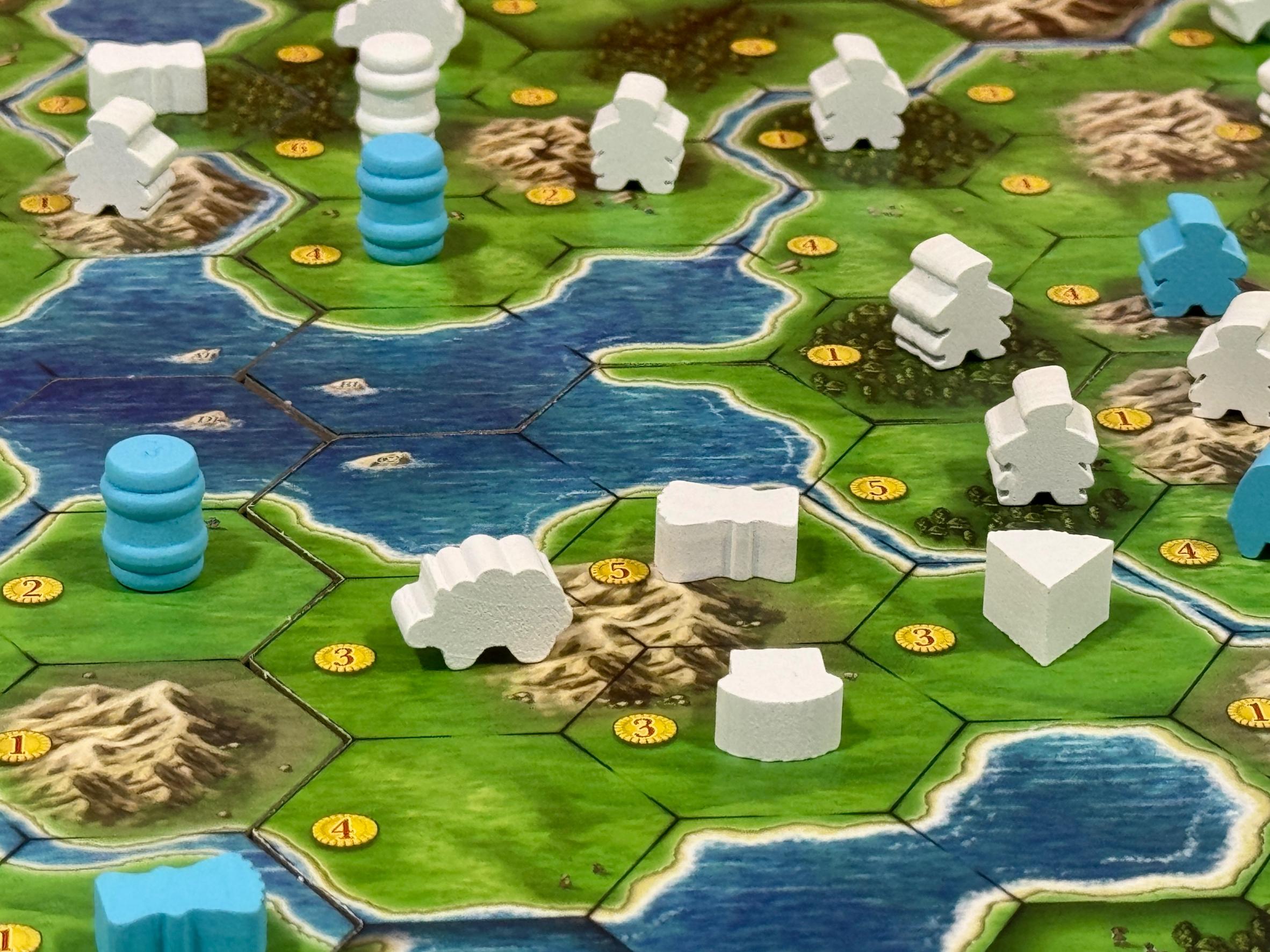
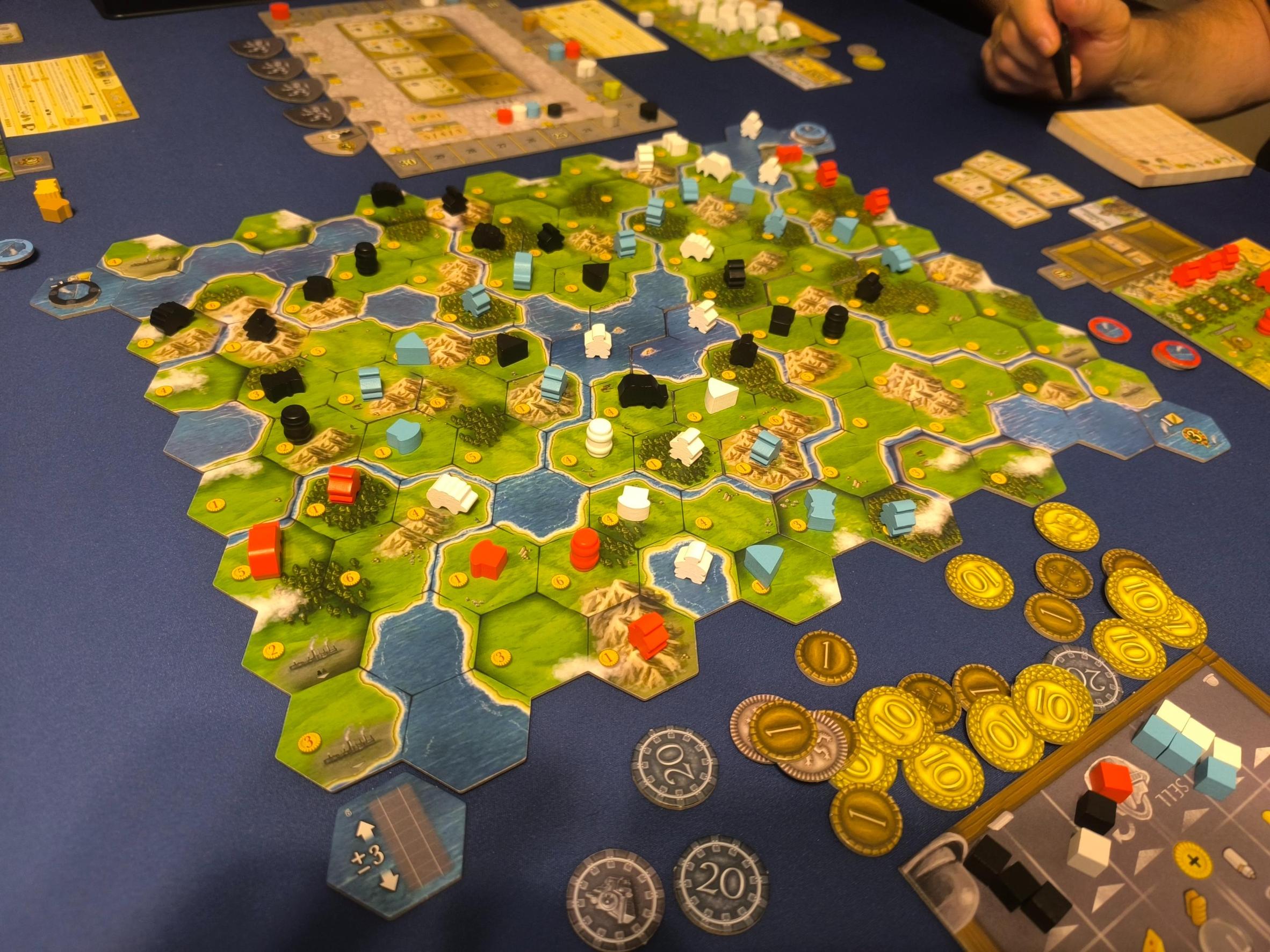
Foto's van Ludoya-tafels
Alle foto's in Ludoya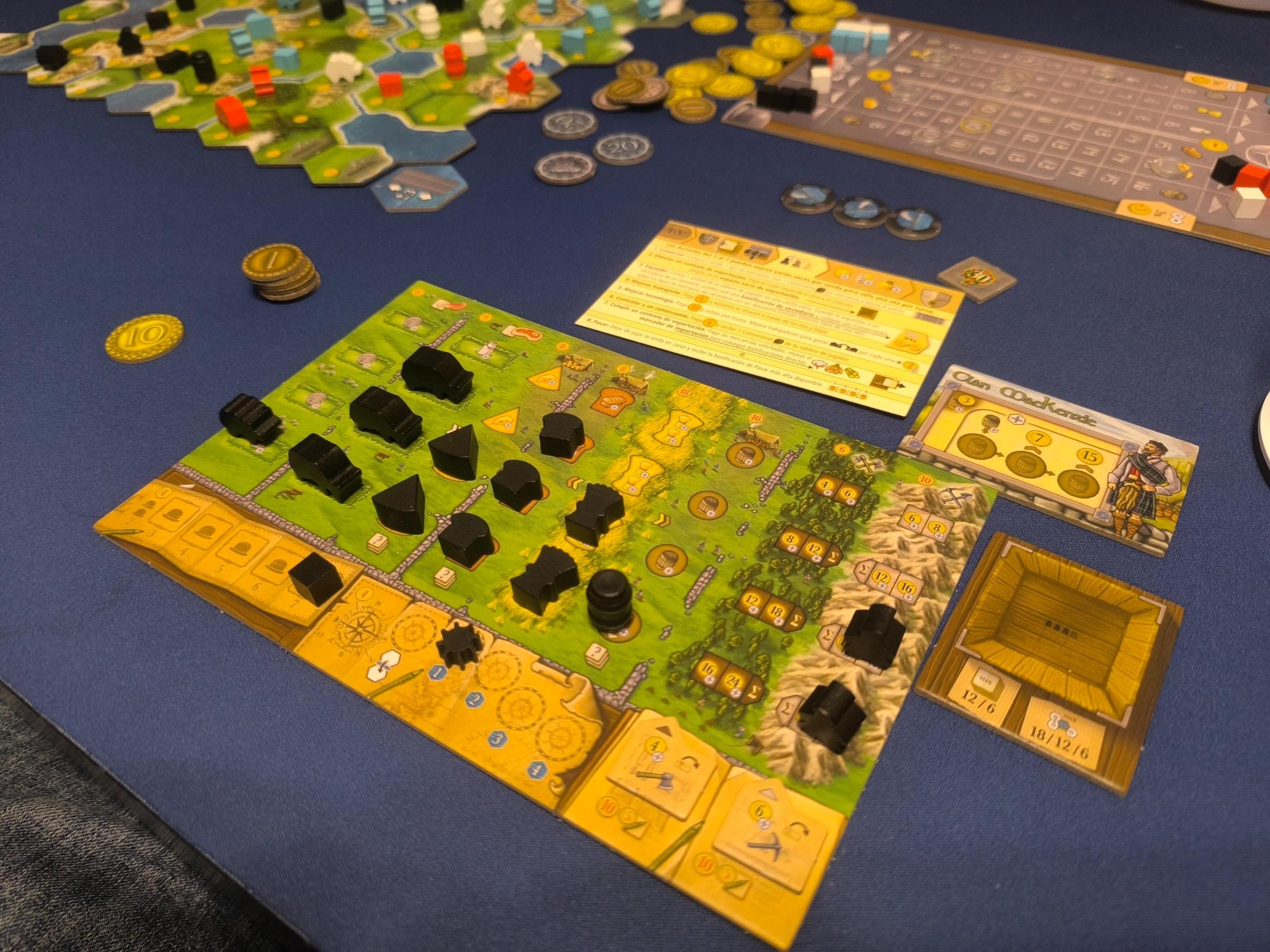
Waar te koop
Winkelprijzen en tweedehands exemplaren, elke dag gecontroleerd.
- LudifolieOp voorraad53.9 €
- GameplayVoorraad controleren61.95 €
- AlphaspelOp voorraad719 kr
- PhilibertOp voorraad64.95 €
- eFantasyOp voorraad69.99 €
- World of Board GamesOp voorraad299 kr
- 401 GamesOp voorraad79.95 $
- Juegos de la Mesa RedondaNiet op voorraad54.95 €
Aan de tafels van Ludoya
Alle statistieken in Ludoya- 885
- Vastgelegde speelsessies
- 731
- Spelers
- 1h 42m
- Gemiddeld potje
- 157
- In collecties
- 49
- Op verlanglijsten
- 4
- Voorbesteld
7,9/10
uit 104 Ludoya-recensies
Jan Solo8,7 Eurogame al estilo Terra Mystica con gestión de recursos/pedidos, mercado, etc. Ambientado en escocia y sus diferentes clanes. Es un juego que deja muy buenas sensaciones, con múltiples posibilidades estratégicas. Impro-Reseña⇒ https://youtu.be/ZPyj1jZESJQ
Garfield6,0 Hmm, beautiful looking game, but nothing new here? [c] Theme: ★★☆☆☆ <!-- size 7]Not very strong --> Gameplay: ★★★☆☆ <!-- size 7]Good --> Interaction: ★☆☆☆☆ <!-- size 7]Almost no interaction --> Artwork: ★★★☆☆ <!-- size 7]Nice design --> Luck: ★☆☆☆☆ <!-- size 7]Export objectives revealment, trading --> Strategy: ★★★★☆ <!-- size 7]Yep --> Components: ★★★★★ <!-- size 7]Great! Especially the goods --> Play duration: ★★★★☆ <!-- size 7]It's over quite fast --> Easy to teach: ★★★☆☆ <!-- size 7]Takes its time... --> Setup time: ★★☆☆☆ <!-- size 7]Fiddly --> No downtime: ★★★☆☆ <!-- size 7]Still ok --> [/c]
Evan8,5 In this game, players have to tightly budget their money to construct buildings from their player boards to the central board. Each building either produces a basic resource, or transforms a basic resource into an advanced resource. The resources are then used to either fulfill contract tiles, or can be sold on the marketplace, which shifts the values of the goods each time they are bought or sold. All of this is pretty typical euro faire, but the game shines in a number of exciting ways. The first amazing thing is that there are three types of resources printed on the contract tiles which have no physical representation. Rather, when you complete those contracts the corresponding type bumps up on the points track. At the end of the game, each resource scores for the player owning it, and the value of the scoring depends on the resource's relationship with the other 2 on the scoring track. Whichever is furthest along scores the least, and whatever players collectively have the least of scores the most. This is a fascinating dance. Another really fantastic thing is that at the end of the game the player with the highest number of unconnected settlements will score the most points. When you build, you have to either build adjacent to your stuff, which only serves to expand your settlement, rather than make a new one, unless you bump your 'shipping track' which allows you to build across rivers or along however many water spaces. This encourages players to build in a sort of a checkerboard fashion, which also encourages opponents to get up in your face. There's even a bonus you get for building next to an opponent which allows you to buy a good from the marketplace at a discount. Add to this a special scoring criteria at the end of each round, and fairly well balanced variable player powers, cute components, clear and consistent iconography, and a few other nice gameplay features that add to replayability even more, and you've got a really incredible game.

Regelvragen
Beantwoord vanuit het spelregelboek door de regelassistent van Ludoya.
Wanneer we tijdens de opzet de eerste twee Arbeiders plaatsen, moeten we dan betalen voor het land en de Arbeider?
Ja — elke keer dat er een Arbeider wordt geplaatst (ook tijdens de beginopstelling), betaal je zowel de landkosten als de Arbeiderkosten (Arbeiderkosten: Houthakker £6, Mijnwerker £10). (pagina 3)
Kan ik verschillende goederen kopen en verkopen in één Handelsactie (bijvoorbeeld whisky kopen en kaas verkopen)?
Nee — met een Handelsactie kun je maar één soort Goed kopen of verkopen; om verschillende Goederen te verhandelen, moet je de Handelsactie meerdere keren uitvoeren. (pagina 4)
Als ik naast een tegenstander uitbreid, hoeveel goederen kan ik dan kopen met de Buurt-bonus en zijn er prijskortingen?
Je mag onmiddellijk een extra Handel uitvoeren om het Goed te kopen dat door elk aangrenzend tegenstander-eenheid wordt geproduceerd, maar je kunt niet meer dan drie van hetzelfde Goed per beurt kopen (vier in een 2-spelerspel); Basisgoederen krijgen een korting van £2 en Bewerkte goederen een korting van £3, en je moet beschikbare Kooplieden hebben om te plaatsen. (pagina 5)
Kunnen exportcontracten ooit graan of melk vereisen?
Nee — exportcontracten vereisen nooit Graan of Melk, hoewel ze wel andere goederen of Vlees (Rundvlees/Schaapvlees) kunnen vereisen. (pagina 6)
Wanneer een exportcontract Vlees vereist, moet ik dan mijn dieren slachten, en heeft dat invloed op de productie?
Ja — om aan een Vleesexport te voldoen, moet je de aangegeven Koeien of Schapen slachten als onderdeel van de Vervul-actie door ze terug te leggen op je spelersbord, waardoor je Melk- of Wolproductie afneemt en de plek op de kaart vrijkomt. (pagina 6)
Als ik tijdens een Handel Merchants op de Markt plaats, wanneer krijg ik ze terug?
Kooplieden die op de Markt worden geplaatst, blijven daar liggen totdat ze in de volgende Voorbereidingsfase worden teruggehaald; tijdens de Voorbereidingsfase halen spelers hun Kooplieden van de Markt terug. (pagina 4)
Scoreformulieren en speelhelpers
- Fulla de Puntuació
- Game Kit
- Puntuación + Industria


Gratis, op het web, Android en iOS
Speel Clans of Caledonia met Ludoya
- Houd het bij in je collectieHoud je exemplaar en de uitbreidingen bij, leen het uit aan vrienden of zet het op je verlanglijst en krijg bericht als de prijs daalt.Voeg het toe aan je collectie
- Leg elke speelsessie vastScores, winnaars, timers en foto's, en dan je statistieken: winpercentage, favoriete spelersaantal, beste score.Speelsessie vastleggen
- Regelvragen beslechtenVraag alles over de regels en krijg een antwoord uit het spelregelboek, met de pagina om het na te lezen.Vraag de regelassistent
- Vind mensen om het mee te spelenClubs, spelavonden en evenementen bij jou in de buurt waar dit spel op tafel komt.Bekijk evenementen
Speldata (spelers, speeltijd, leeftijd, makers) van BoardGameGeek.