
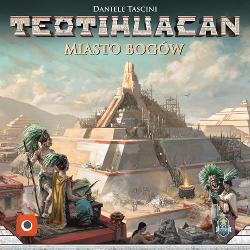
2018 · Ekonomiczny
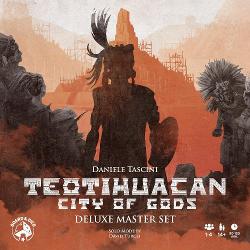
Teotihuacan: Miasto Bogów
Players control worker dice that grow in strength as they act, moving a single die around a modular city board and taking the action on one of two spaces on each tile. On turns, players choose between performing an action and upgrading that worker or taking a immediate bonus without an upgrade, while managing resources and the need to feed their workforce. Actions support developing technologies, constructing housing, advancing on three major temples, and contributing to the central stepped pyramid across three successive eras. Victory is decided by accumulated fame after periodic scoring.
- Gracze
- 1–4 najlepiej w 4
- Czas gry
- 90–120 min
- Wiek
- 14+
- Złożoność
- 3,8 / 5
O grze
- Projekt
- Grafika
- Publisher



Dodatki
Zobacz je w Ludoya Teotihuacan: Późny Okres Preklasyczny2020
 Teotihuacan: W Cieniu Xitle2020
 Teotihuacan: Okres Ekspansji2021
 Teotihuacan: Dice Settlers Promo2018
 Teotihuacan: City of Gods – Pyramid Tile Promo, Red Temple2019
 Teotihuacan: Zestaw minidodatków2020
 Teotihuacan: City of Gods – 5th Player Expansion2024
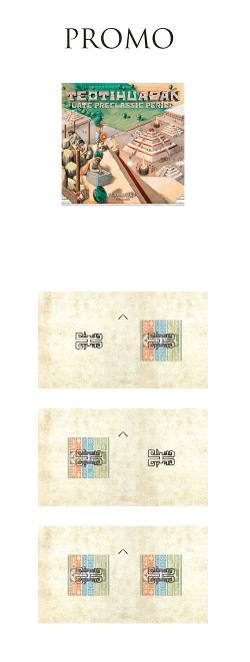 Teotihuacan: City of Gods – Decoration Tiles2019
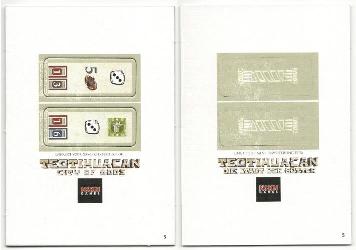 Teotihuacan: Brettspiel Adventskalender 2018 Promo2018
 Loot Box #12022
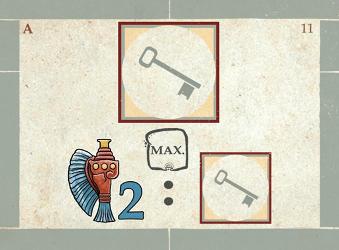 Teotihuacan: City of Gods – Man vs Meeple Promo2019
 Brettspiel Adventskalender 20182018
 Teotihuacan: Expert Challenges – Book 12021
 Teotihuacan: Expert Challenges – Book 22021
 Teotihuacan: Expert Challenges – Book 32022
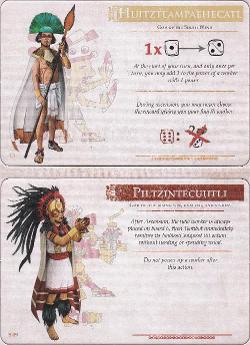 Teotihuacan: New Priests2024
 Teotihuacan: City of Gods – 5th Player Expansion2024
Zdjęcia ze stołów Ludoya
Wszystkie zdjęcia w Ludoya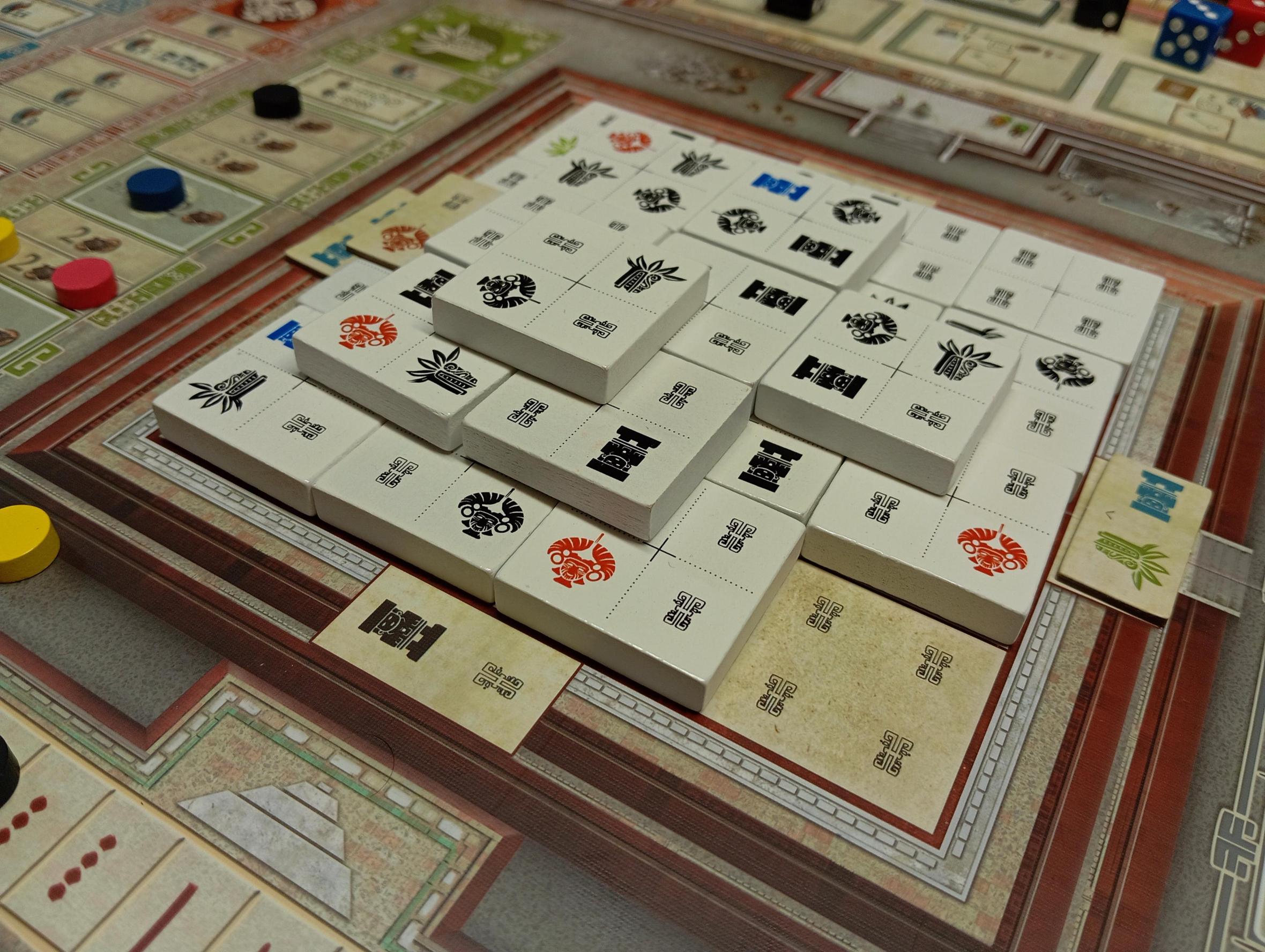
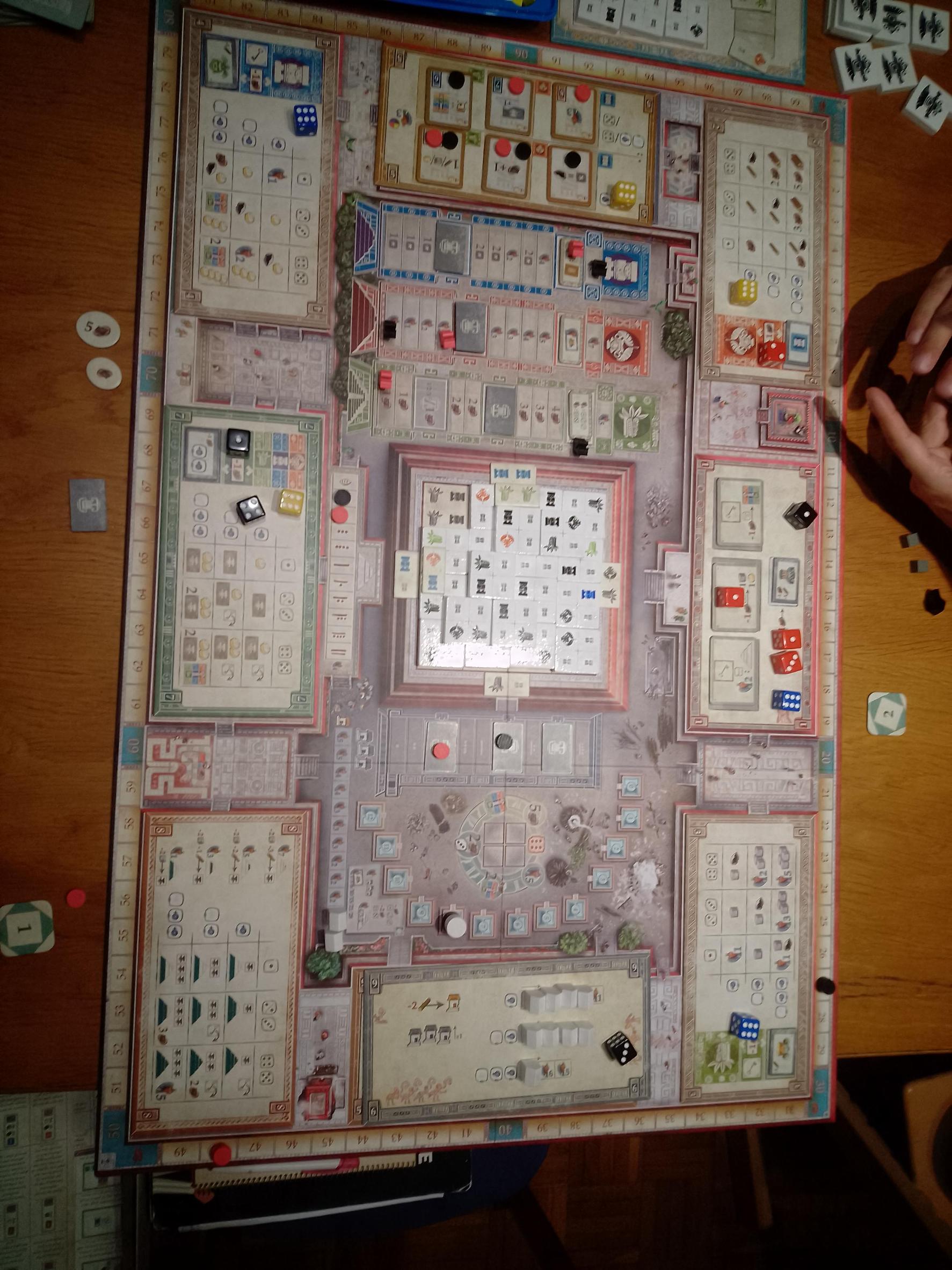
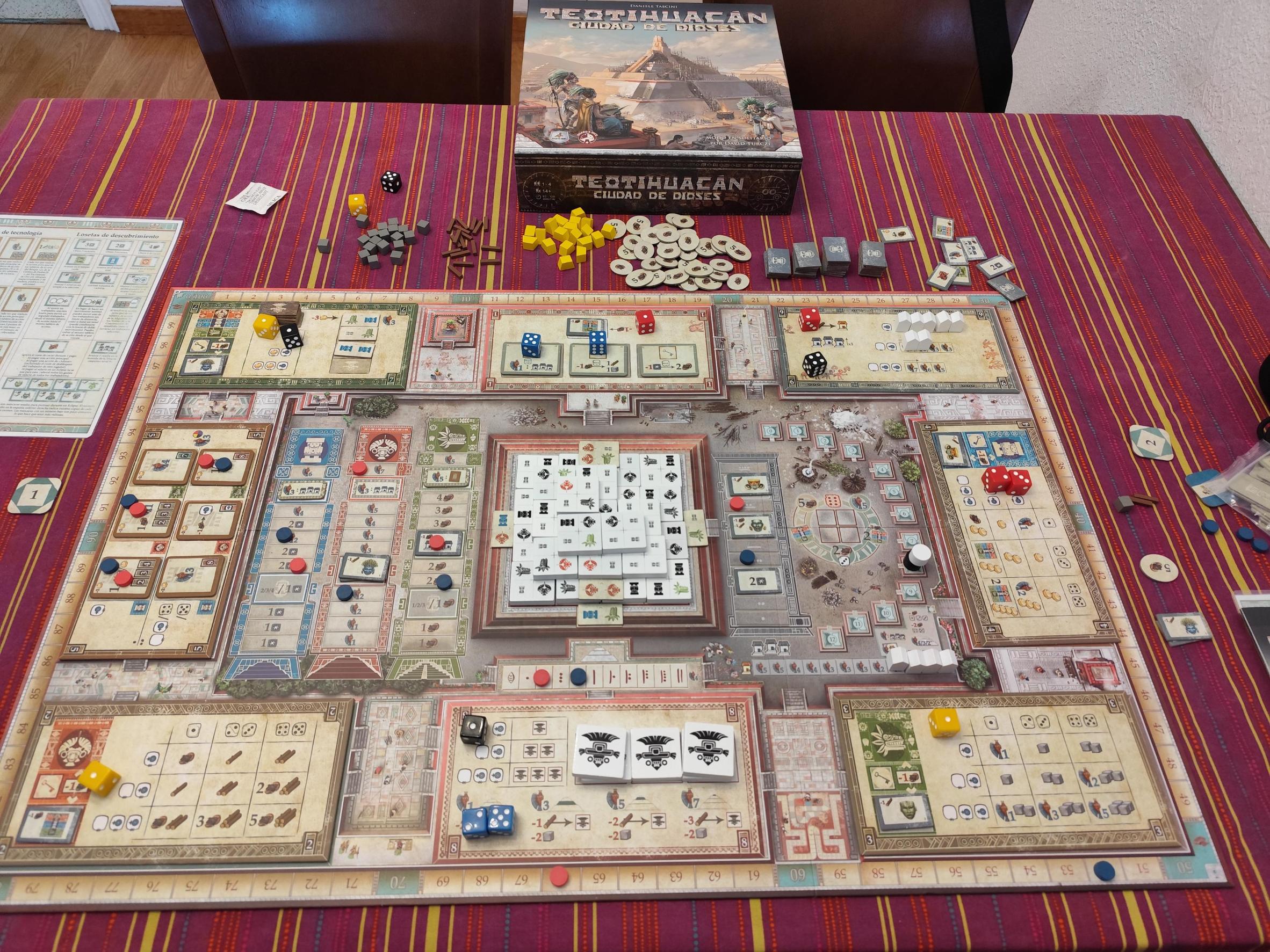
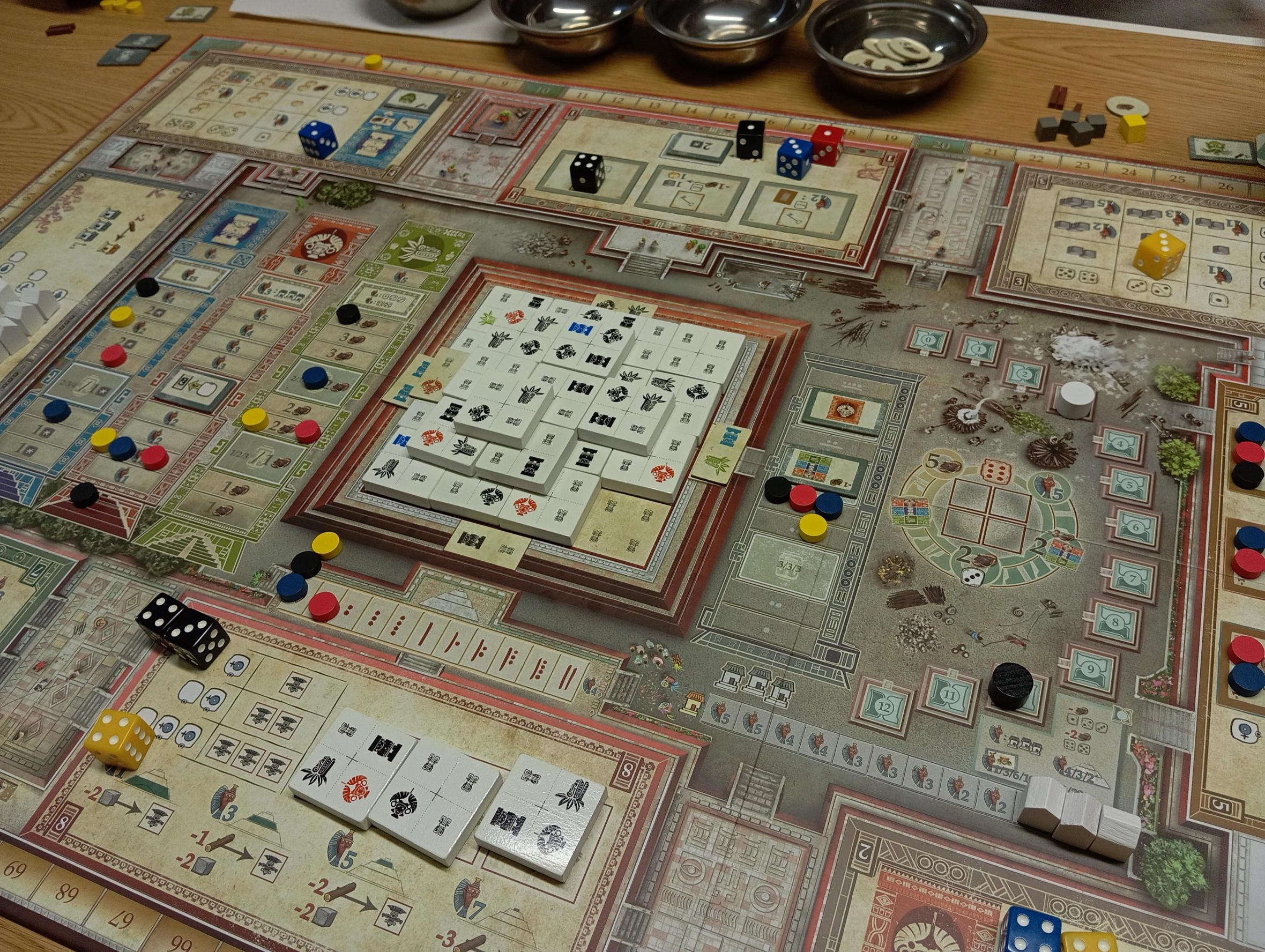
Gdzie kupić
Ceny w sklepach i egzemplarze z drugiej ręki, sprawdzane codziennie.
Przy stołach Ludoya
Pełne statystyki w Ludoya- 822
- Zapisane rozgrywki
- 632
- Gracze
- 1h 53m
- Średnia rozgrywka
- 181
- W kolekcjach
- 32
- Na listach życzeń
- 1
- Zamówione w przedsprzedaży
6,3/10
z 116 recenzji w Ludoya
Jan Solo8,0 Gran juego de gestión de recursos y construcción de la pirámide. Modo solitario interesante, pero a mi gusto excesivamente farragoso y lento.
Evan2,5 In this game you move one of your player markers around a roundel 1-3 spaces then resolve the action in the space you end at. Your makers are dice, and the effect of the action spaces is based on a table that looks for how many of your dice are in the space, then also what the pip value of your lowest die is. Often the effect of the space will then add pips to one or two of your dice. When a die hits 6, it resets to 1, and you gain a step on a track that produces points at the end of the round per step you have. Then you also gain a reward from a small wheel of options next to that track. Mostly what you are doing is collecting bricks and wood, then spending the bricks and wood to build the structure at the center of the board. There are extremely important technology tiles you can invest in to make your actions better. Another key thing to manage is the need to spend cacao tokens equal to the number of players in an action space to resolve the action. If you can't pay it, then you wind up skipping your action and instead getting the cacao tokens plus 1 instead. You can avoid this by taking gather actions more often, but since there's very little if any engine building in the game, it does feel like a large portion of your actions in the game work out to similar feeling gather then spend cycles. When you take the action to build the central structure, some but not all of the tiles have colored icons that give you a free step on the matching temple track in addition to the large number of points produced by the action normally. Ability to build is dependent on a substantial number of turns setup, getting the resouces and lining your dice up. Temple track steps are somewhat hard to come by and each step produces points, resources or cacao in addition to having high value endgame scoring criteria at the top, so when you are ready to build and all the pieces are totally colorless, and then you flip up colored pieces for the next person so they can spend exactly what you did only they get a substantial additional return doesn't feel great. Temple builds additionally come with steps on a track that gives bonus 4 points each round to the player who built the most. The track rests right next to the building space and is clearly tied to it. The problem here is that there is a second space that adds stair tokens to the temple, with a different cost, and a different place on the roundel, which makes it needlessly hard to see who has the potential to gain a step and when. Additionally, the stair tokens have a pointlessly specific orientation they need to be placed at because there is a tiny hard to see arrow on the tile that has to point inward. This is there to make matching the icons when you place the stair token more luck driven for no reason I can understand. Additionally these tiles can have either one or two bonus colored icon payouts that again, depend on luck of what's available, again rewarding players for lucking into situations they had no control over establishing. There's also a confusing action space that we rarely saw used. It awards some points, gives you a step on the death track, and then reduces the value of being on that track for everyone. Why have a space that invests in a track, and then simultaneously reduces the value of that same track? When a player's marker goes from 1 to 6, you also click ahead the round timer, which additionally moves after each player has had an action. The game has two modes, one where the round ends the moment the marker hits the end of the track producing uneven turns, or when it hits the end of the track each player gets one more turn. Neither of these is great, because if you age out one of your markers in the final round it effectively doesn't change the pace of the game. Why not just have even turns without playing a whole additional round? I suppose it's due to the fact that when a player is about to age out a die is very unpredictable, since when you resolve a space with two age icons, you can age the same die twice, rather than having to spread it across two dice. What this means is that it's vastly more influential to the flow of the game to age out early in the round than later in the round. More unevenness to the feel and flow of the game. I additionally was confused by one special reward tile that you can spend to ignore paying a food cost, even the totality of food required at the end of the round to feed your people. So, spend it now to avoid paying 3 or 4 food for a crowded action space, or spend it at the end of the round to avoid paying up to 8. There's a massive point hit for not feeding your people, it seems like a pretty core 'watch yourself' mechanism, that you can just ignore for a round by virtue of taking this tile. Very odd. I don't know, this is an ok game were everything feels just a little off. A few minor changes and I think this could have been great, it just doesn't feel very interesting or cohesive. Any of the little things I'm complaining about could probably be forgiven if the core mechanism was more interesting. :star: Art, Iconography and components functional :nostar: Clever or interesting mechanisms :star: Reasonably low downtime between turns with mildly AP players :star: Multiple plays stay interesting :nostar: Low or mitigatable luck elements :star::nostar::nostar::nostar::nostar: Raw enjoyment
Garfield8,0 #50 [c] Theme: :star::star::star::star::nostar: <!-- size 7]The pyramide is great --> Gameplay: :star::star::star::star::star: <!-- size 7]Lots of meaningful decisions --> Interaction: :star::star::star::nostar::nostar: <!-- size 7]Where are the other dice placed --> Artwork: :star::star::star::nostar::nostar: <!-- size 7]Ok --> Luck: :star::star::nostar::nostar::nostar: <!-- size 7]Pyramid tiles available at your turn --> Strategy: :star::star::star::star::nostar: <!-- size 7]Different strategies possible --> Components: :star::star::star::star::nostar: <!-- size 7]Pyramide tiles are great --> Play duration: :star::star::star::nostar::nostar: <!-- size 7]Ok --> Easy to teach: :star::star::star::nostar::nostar: <!-- size 7]Ok --> Rules quality: <!-- size 7]not read --> Setup time: :star::star::nostar::nostar::nostar: <!-- size 7]A lot to setup --> No downtime: :star::star::star::nostar::nostar: <!-- size 7]Ok --> Replay value: :star::star::star::star::star: <!-- size 7]Modular board, different strategies --> [/c]

Pytania o zasady
Odpowiedzi z instrukcji od asystenta zasad Ludoya.
When I take a Main action, how do I count workers and how much cocoa do I have to pay? Do locked workers or the worker I just moved count?
To determine the cocoa cost you first count the number of different coloured unlocked workers already on the board (ignore the arriving worker and any locked worship-space workers) and pay that much cocoa (p.7). For resolving the Main action effects you then count your own unlocked workers on that board including the worker you just placed, but never more than 3 for effect purposes (p.7).
When I take Collect Cocoa, which workers are counted — does the arriving worker or locked workers count?
For Collect Cocoa you count the number of different coloured unlocked workers already present on the Action Board (do not count the arriving worker or any locked worship-space worker) and gain that amount plus 1 cocoa; then place your moved worker in the general area (p.6).
What exactly happens when a worker reaches power 6 (Ascension)? Do I trigger an Eclipse immediately?
Ascension triggers immediately when a worker is powered to 6: advance on the Avenue of the Dead, move that die to the Palace general area and reset it to power 1, choose one Ascension reward, and then advance the light disc on the Calendar track (which may trigger an Eclipse) — resolve each ascension fully and only trigger the Eclipse after the turn if applicable (p.9).
How do Pyramid and Decoration placement restrictions work and when does the Pyramid being finished end the game?
Decoration tiles must be placed on permitted spaces only when the required underlying pyramid layers and prerequisite Decorations are present, and you score for matching icons when covering tiles (p.8). Placing the top (fourth-level) Pyramid tile requires the full third level beneath it, scores the listed VPs, and immediately moves the white Calendar disc to the black disc position, triggering the final Eclipse and ending the game (p.8).
When I take a Worship action, can I unlock another player's worker and do both the worship ability and claim the Discovery tile? Do I have to pay anything?
If another player's worker occupies the Worship space you pay 1 cocoa to unlock that worker (move it to the general area) before placing yours; you may not unlock your own workers this way (p.6). You then choose to either activate the Worship ability or claim the Discovery tile, or pay an additional 1 cocoa to do both (all cocoa costs must be paid before resolving any benefits) and if you claim a tile you pay its printed cost (p.6).






Za darmo, w przeglądarce, na Androidzie i iOS
Graj w Teotihuacan: Miasto Bogów z Ludoya
- Miej ją w swojej kolekcjiŚledź swój egzemplarz i jego dodatki, pożyczaj go znajomym albo dodaj go do listy życzeń i dostań powiadomienie, gdy cena spadnie.Dodaj do swojej kolekcji
- Zapisuj każdą rozgrywkęPunkty, zwycięzcy, minutniki i zdjęcia, a potem twoje statystyki: procent zwycięstw, ulubiona liczba graczy, najlepszy wynik.Zapisz rozgrywkę
- Rozstrzygaj spory o zasadyZapytaj o dowolną zasadę i dostań odpowiedź z instrukcji, ze stroną do sprawdzenia.Zapytaj asystenta zasad
- Znajdź ludzi do wspólnej gryKluby, wieczory gier i wydarzenia w pobliżu, na których ta gra trafia na stół.Zobacz wydarzenia
Dane gry (gracze, czas gry, wiek, twórcy) z BoardGameGeek.