
2007 · 核心规则(开始对局的最低要求)
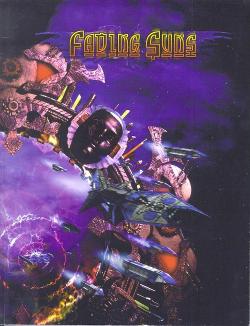
Fading Suns (Revised Second Edition)
Players take roles within a far-future, decaying interstellar civilization where feudal houses, militant orders, guilds, and religious factions compete for influence as the suns themselves dim. Play centers on character creation and campaign play that mix political intrigue, factional conflict, and exploration of strange worlds and alien secrets. Mechanics support combat, occult and psychic phenomena, starship operations, and acquisition of ancient artifacts. This revised edition updates the core rulebook with bookmarks and hyperlinks, consolidated charts and tables, a new character sheet, and an additional ready-to-run adventure.
- 复杂性
- 3 / 5

规则问题
由 Ludoya 的规则助手根据规则书回答。
“How do I make a roll, and what does rolling low mean?”
Roll 1d20 and try to get equal to or under the relevant characteristic + skill, adjusted for modifiers. A natural 1 always succeeds, a natural 19 always fails, and a natural 20 is a critical failure; rolling exactly your goal number is a critical success (pp. 69, 71–72).
“Can I attack more than once in a turn?”
You can take up to three actions, but two actions give each a −4 penalty and three give each a −6 penalty. You normally can’t repeat the same action in a turn—though ranged weapons can be fired multiple times if their rate of fire allows it (pp. 68, 177).
“If my attack hits, how do I figure out damage?”
Convert the attack’s successes to victory points, then add that many victory dice to the weapon’s damage dice. Roll the damage dice as d6s: each 1–4 inflicts a wound point, and each successful armor die cancels one wound point (pp. 70–71).
“Does a dodge completely cancel an attack?”
Only if your Dodge roll gets more successes than the attacker; otherwise, subtract your successes from the attacker’s before working out the hit’s victory points and damage. Dodging costs an action, and aborting to dodge after acting also limits your actions next turn (pp. 177–178).
“What happens when I lose all my regular Vitality?”
After losing your Endurance-derived levels, you take increasing penalties to all tasks as you lose your five vital levels. With only one vital level left, you must roll Endurance + Stoic Mind to stay conscious; losing all Vitality means death (p. 135).
“How do critical successes and failures work?”
A roll exactly equal to your goal number is a critical success and doubles your victory points; a natural 20 is a critical failure, so the action fails and the gamemaster adds a serious mishap. Don’t confuse a natural 19 with a critical failure: it always fails, but the extra mishap is tied to rolling 20 (pp. 71–72).
免费,支持网页、Android 和 iOS
用 Ludoya 玩 Fading Suns (Revised Second Edition)
游戏信息(人数、游戏时长、年龄、制作人员)来自 BoardGameGeek。