

2023 · Kartenspiel
Raising Robots
Die Spieler schlüpfen in die Rolle von Erfindern, die über acht Runden eine Sammlung von Robotern zusammenbauen. In jeder Runde setzen die Spieler gleichzeitig Energie ein und führen mehrere Aktionen aus – aufrüsten, zusammenbauen, entwerfen, fertigen und recyceln –, wobei mehr Energie die Wirkung der Aktion verbessert, aber auch den Gegnern zugutekommt. Durch diese Entscheidungen bauen und verbessern die Spieler eine Engine aus Roboterteilen und Fähigkeiten und versuchen, die meisten Punkte zu holen, indem sie Aktionsstärke und Timing optimieren und dabei die gemeinsamen Auswirkungen auf ihre Rivalen im Blick behalten.
- Spieler
- 1–6 am besten mit 4
- Spielzeit
- 60–90 Min.
- Alter
- 14+
- Komplexität
- 3,2 / 5
Über das Spiel
- Autoren
- Illustration
- Publisher




Erweiterungen
In Ludoya ansehen

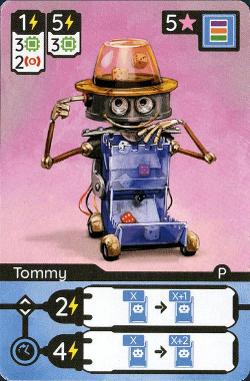
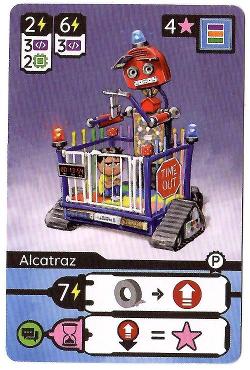
Fotos von Ludoya-Tischen
Alle Fotos in Ludoya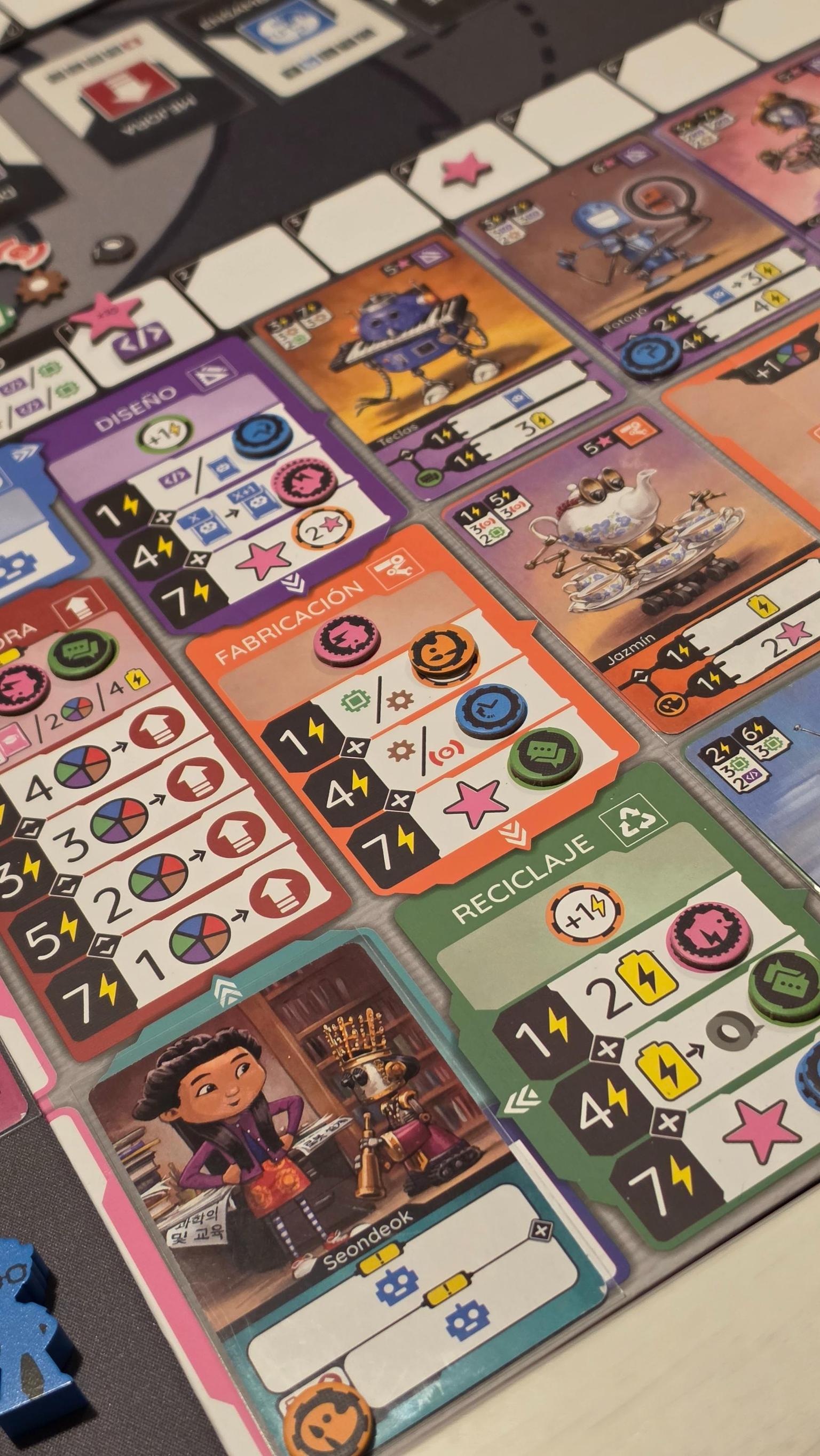
Wo kaufen
Shop-Preise und gebrauchte Exemplare, täglich geprüft.
An Ludoyas Tischen
Alle Statistiken in Ludoya- 58
- Erfasste Partien
- 107
- Spieler
- 1h 37m
- Durchschnittliche Partie
- 32
- In Sammlungen
- 14
- Auf Wunschlisten
7,2/10
aus 9 Ludoya-Rezensionen
- Base -
Sleeved
Ressenya en català [aquí](https://www.instagram.com/p/DGvdkOqtZYq)



Regelfragen
Aus der Spielanleitung beantwortet von Ludoyas Regelassistenten.
Do I have to perform the phases in the order on the central board, or can I skip/reorder them?
Phases are always performed in the printed order each round (Upgrade → Assemble → Design → Fabricate → Recycle), and each phase must be completed before moving to the next; you may only perform a phase if you assigned its Phase Card or there is an Energy Cube on that phase (pages 11, 28).
How do Wilds work — can I save them or spend them as any resource?
Each Wild is immediately converted into a Sensor, Gear, Program, Microchip, or a Robot Card when gained or spent and Wilds are not tracked in your Inventory, so you cannot save unconverted Wilds (page 7); note that Robot Cards count as a Wild option and Duct Tape can be spent as a Wild but cannot be gained from one (pages 7, 26).
When I assemble a robot do I pay the full assembly cost right away, and can I split my energy to build multiple robots in the same Assemble phase?
When assembling you pick one of the two Assembly Cost columns and pay the energy and resource costs immediately (including any Extra Resource Cost), and you may split your Total Energy to assemble multiple Robot Cards in the same Assemble Phase (pages 14–15, 26).
If I place an Upgrade Token onto a card, can I move or remove it later?
No — once an unlocked Upgrade Token is placed onto a Robot Card, Class Card, or Inventor Card, it cannot be moved again (page 13).
How many Class Cards can I hold, and when do they score?
You may have a maximum of 3 Class Cards (you start with 1 and pick another at the Break Period, and can gain more via Inspiration but must replace or discard if over the limit), and each Class Card is scored at game end by counting items that meet its objective and applying the grade table (pages 19–20).
How do Batteries affect a phase’s Total Energy — can Batteries let me perform a phase I didn’t assign?
Each Battery you spend adds +1 to that phase’s Total Energy and Batteries stack with Energy Cards, Energy Cubes, and upgrades when calculating Total Energy, but Batteries do not let you perform a phase you are not eligible for (you still must have assigned the Phase Card or have an Energy Cube there), and you must determine Total Energy before taking phase actions (pages 9–10, 26).

















Kostenlos, im Web, für Android und iOS
Spiel Raising Robots mit Ludoya
- Hab es in deiner SammlungVerwalte dein Exemplar und seine Erweiterungen, leih es Freunden oder setz es auf deine Wunschliste und erfahre, wenn der Preis fällt.Zur Sammlung hinzufügen
- Erfasse jede PartiePunkte, Sieger, Timer und Fotos, dann deine Statistiken: Siegquote, liebste Spielerzahl, beste Punktzahl.Partie erfassen
- Regelfragen klärenFrag alles zu den Regeln und erhalte eine Antwort aus der Spielanleitung, mit der Seite zum Nachprüfen.Den Regelassistenten fragen
- Finde Leute, mit denen du es spielstClubs, Spieleabende und Veranstaltungen in deiner Nähe, bei denen dieses Spiel auf den Tisch kommt.Veranstaltungen ansehen
Spieldaten (Spieler, Spielzeit, Alter, Mitwirkende) von BoardGameGeek.